Stork biology
What makes a stork a stork: bones, feathers, senses, digestion and the machinery of flight.
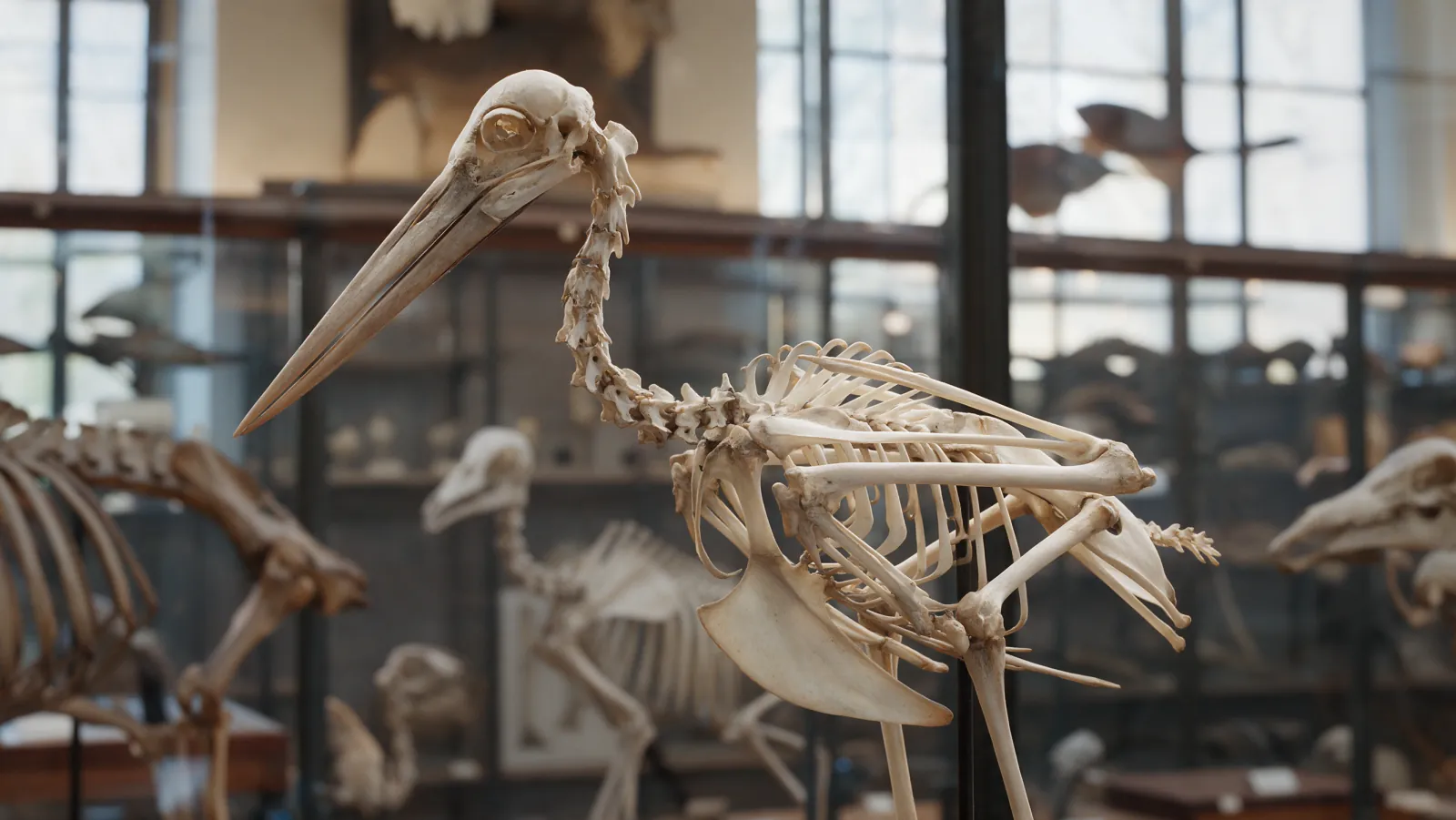
A stork's skeleton: hollow bones braced like a crane
Hollow bones braced with internal struts, a fused chest and a deep keel: how one light frame carries a metre-tall bird through wading and soaring.
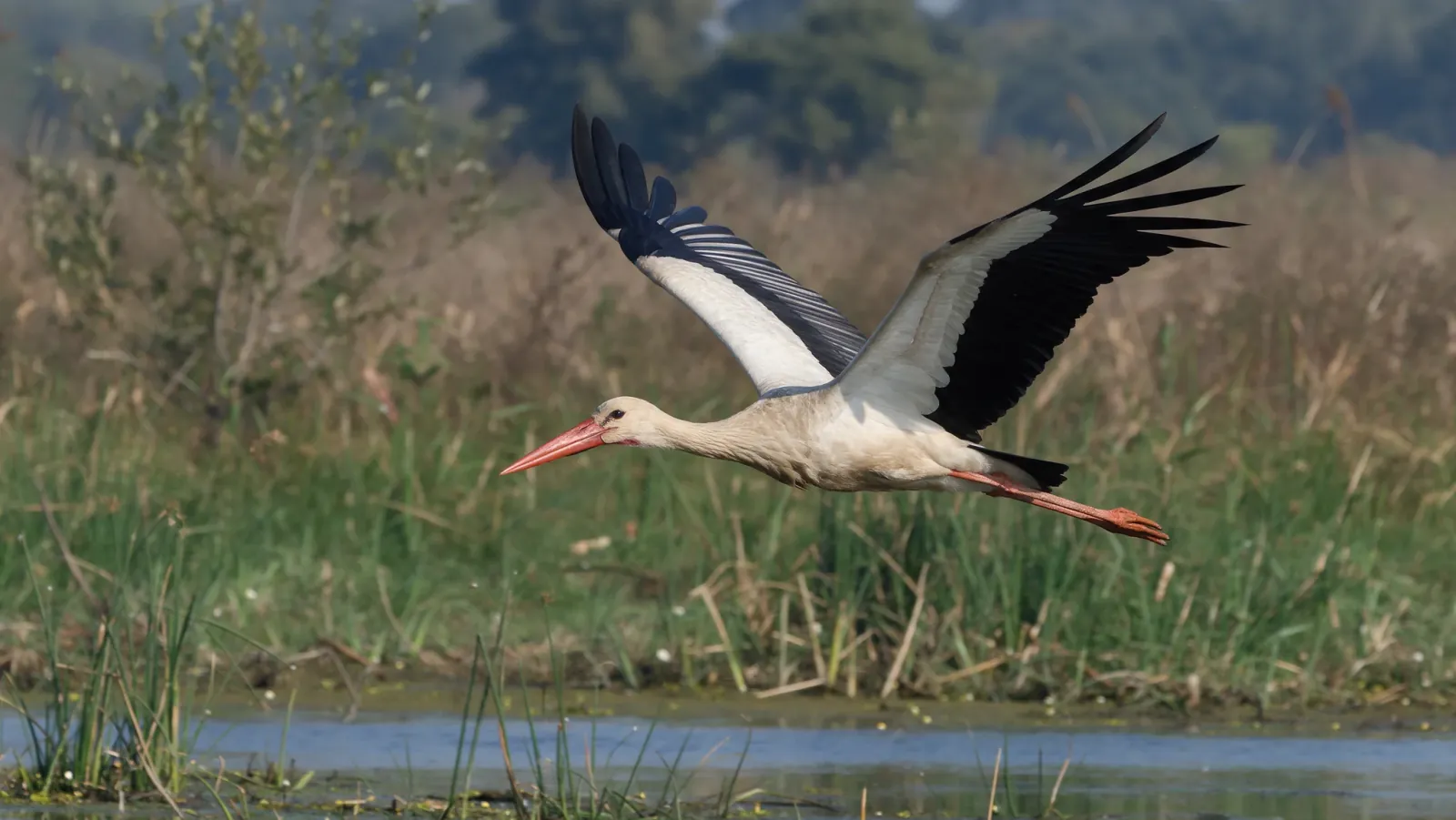
How a stork's heart and air sacs feed a wingbeat
Flight is the hardest work a stork does. A four-chambered heart and one-way air sacs keep the wing muscles supplied through hours of gliding.
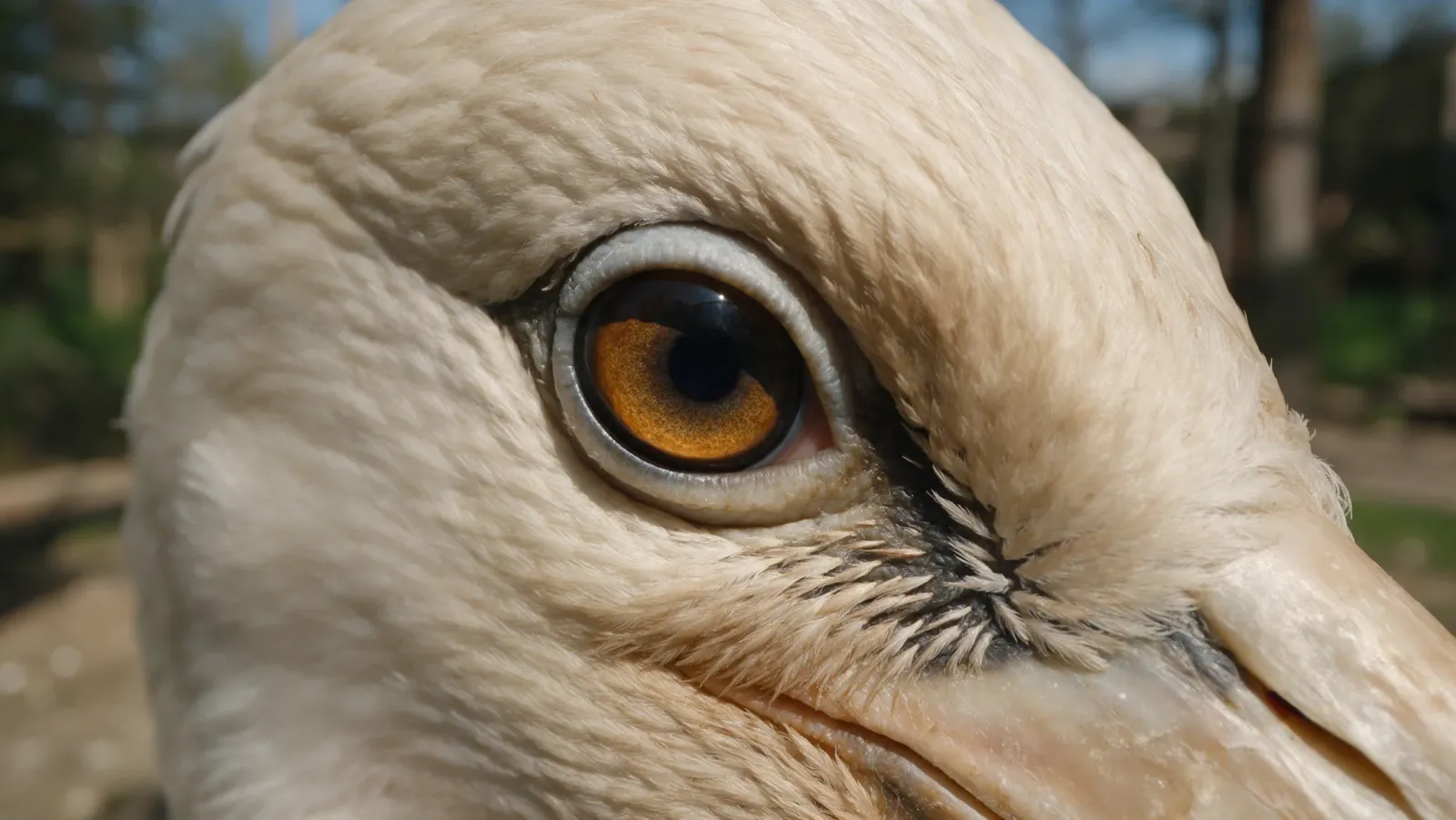
How a stork spots a frog: wide eyes and ultraviolet
A stork feeds by sight, spotting a frog's twitch before the bill moves. Four kinds of colour cell let it read a meadow we cannot see.
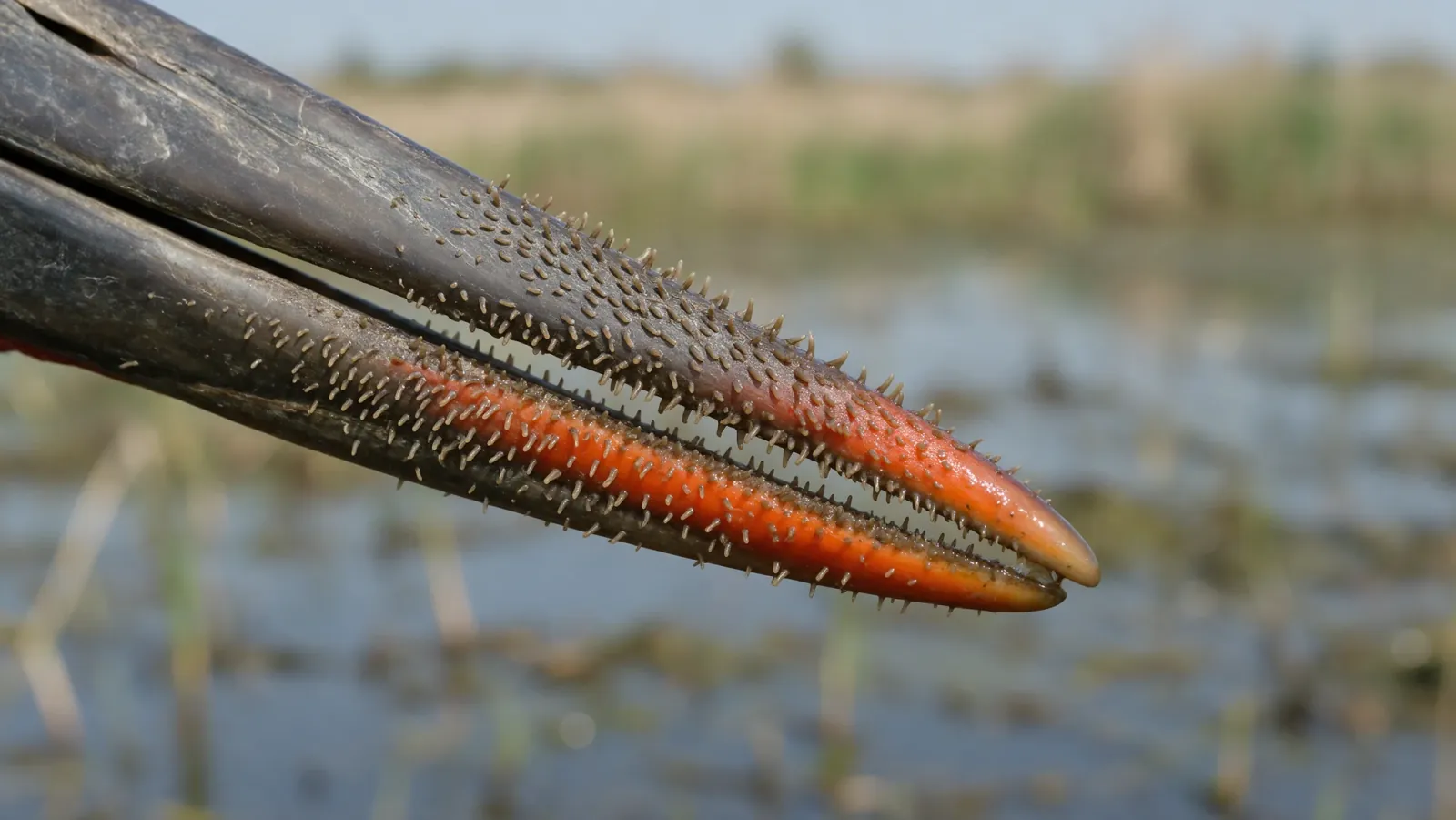
A stork's bill: sensors, oil and a waterproof coat
The long red bill carries touch sensors near the tip, then spreads oil from the tail gland through the feathers that shed rain.
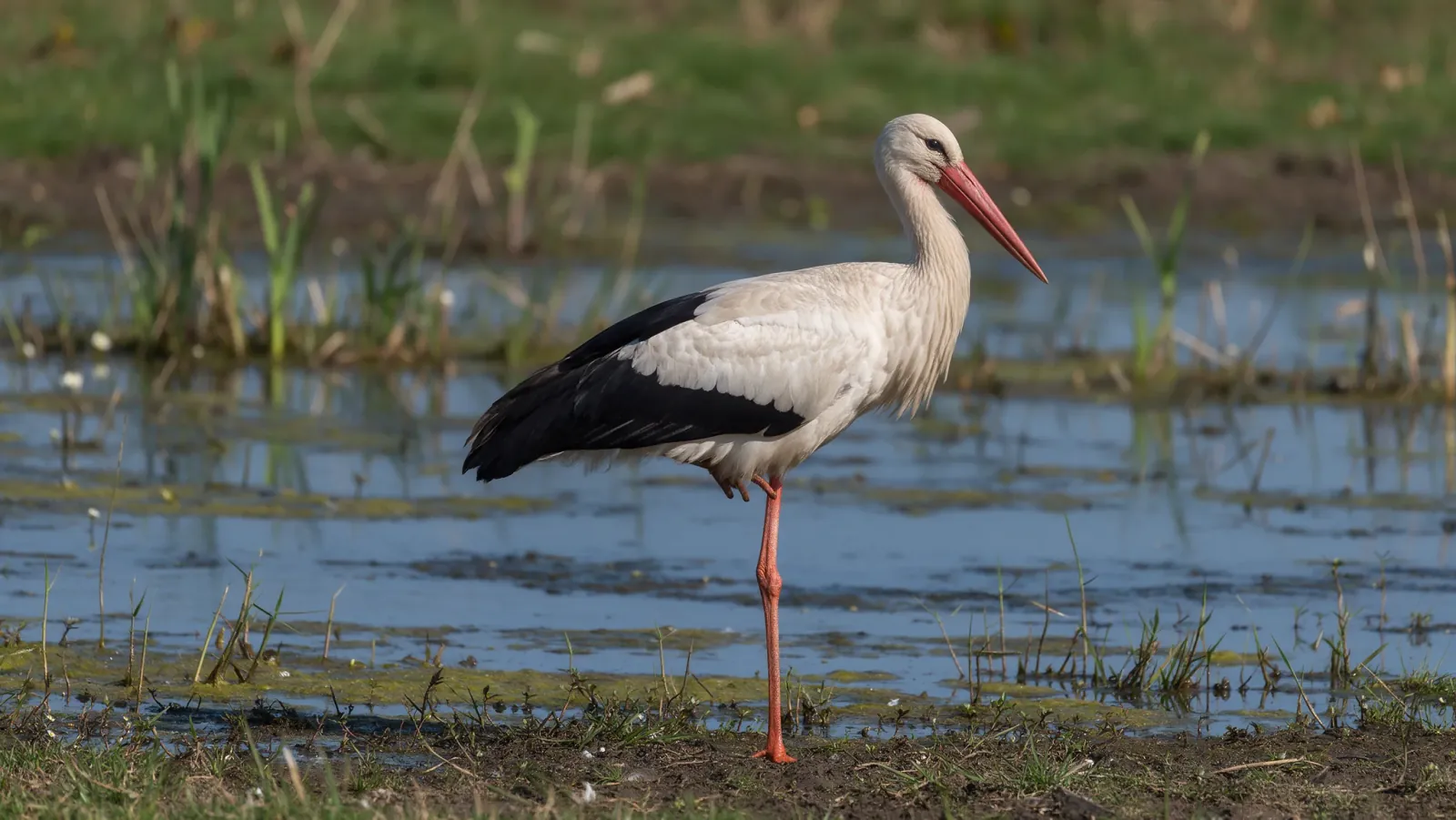
Why a stork's legs lock straight for hours on end
A tendon tightens as the bird settles its weight, so the joint holds straight with almost no muscle work. Standing still costs a stork very little.
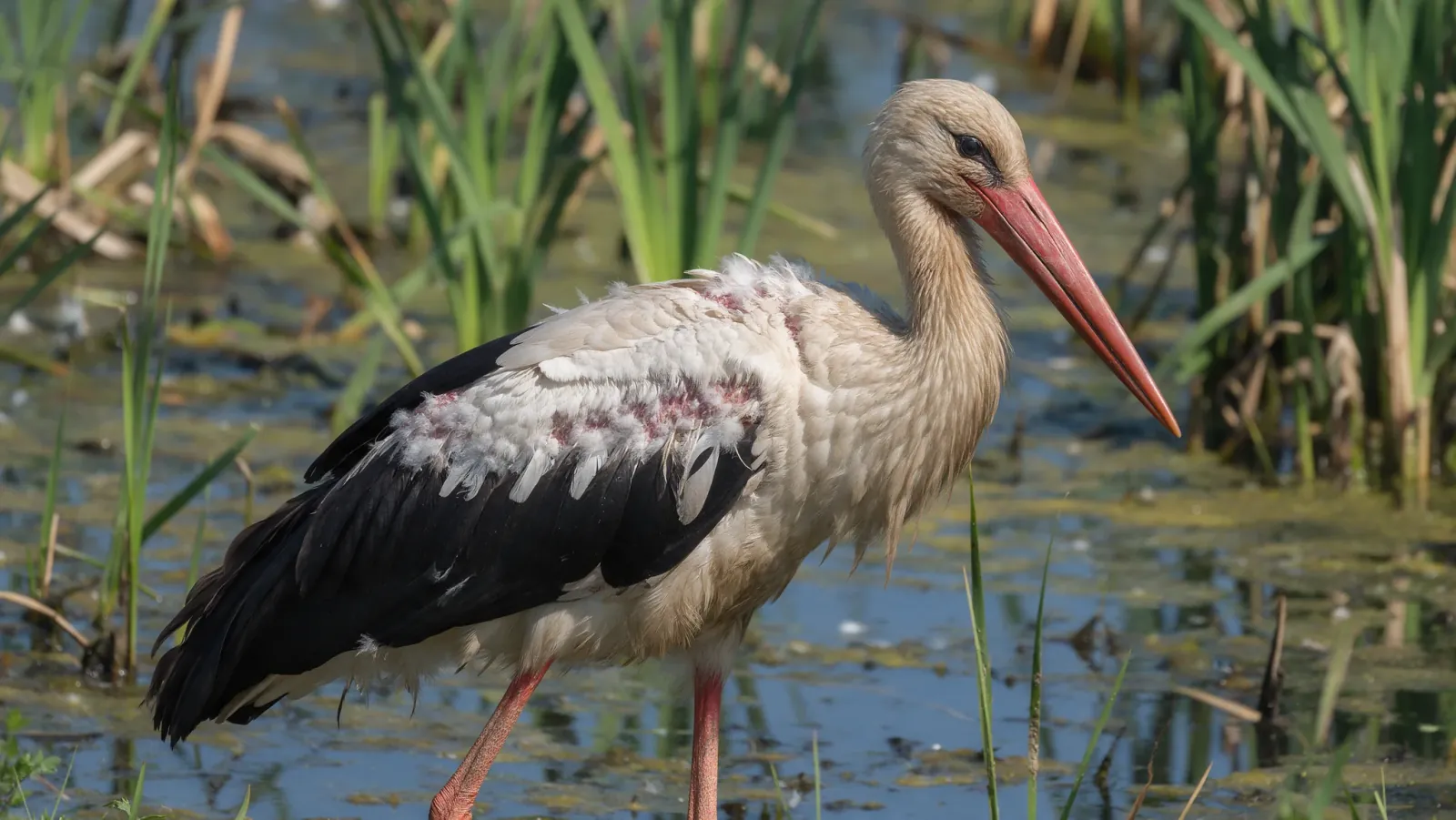
The moult: black flight feathers and a coat rebuilt
Storks drop feathers a few at a time, so the wing always works. The black flight feathers are the strongest, and melanin is why.
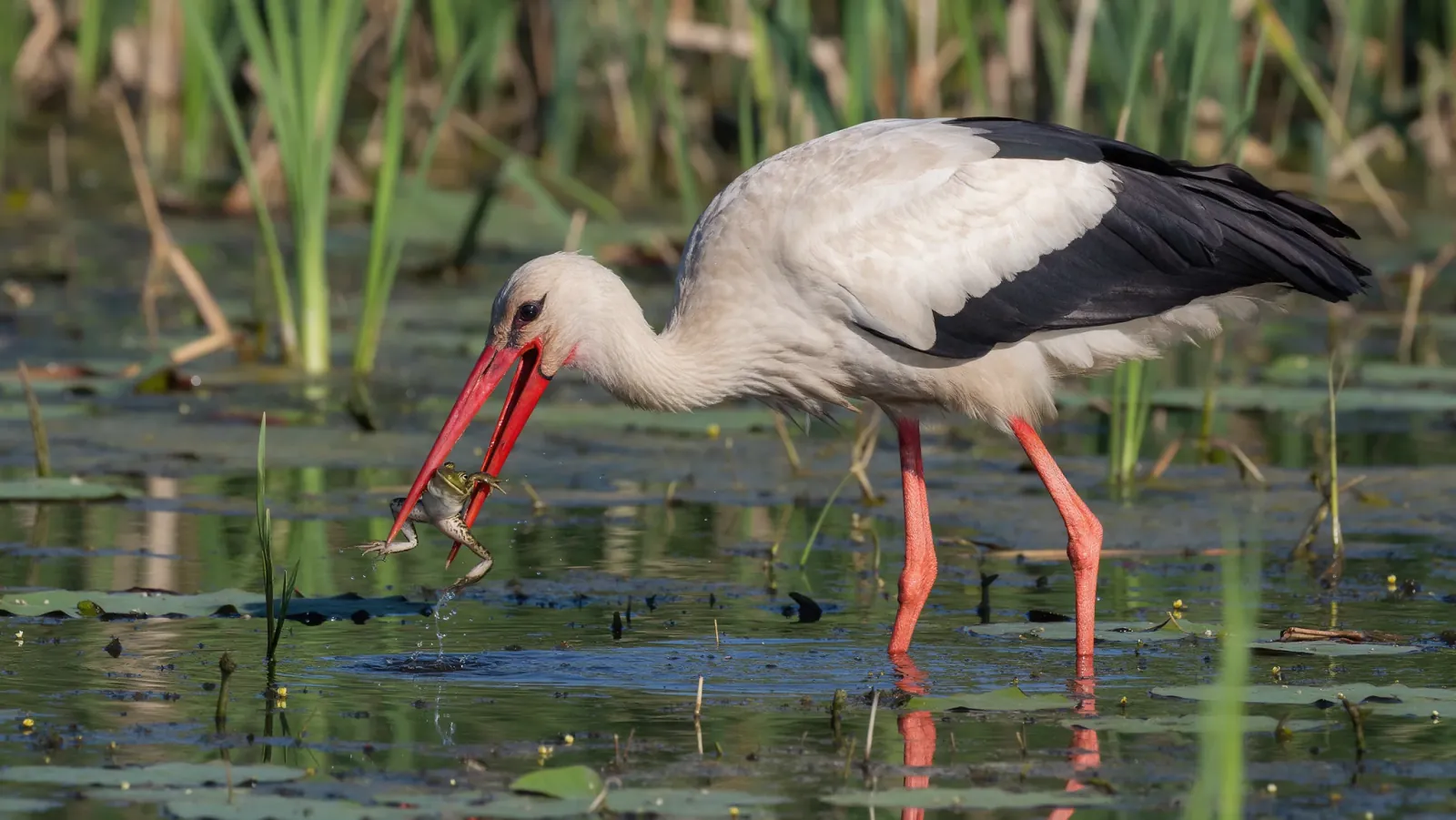
What a stork eats, and how it swallows a frog whole
A white stork swallows frogs, beetles and voles whole. Strong acid and a muscular stomach do the work teeth would do, then a pellet comes back up.

How a stork's wing lifts a body of about a metre into the air
A curved wing, hollow bones and a heart that quickens on takeoff carry a bird of about a metre tall onto rising air.
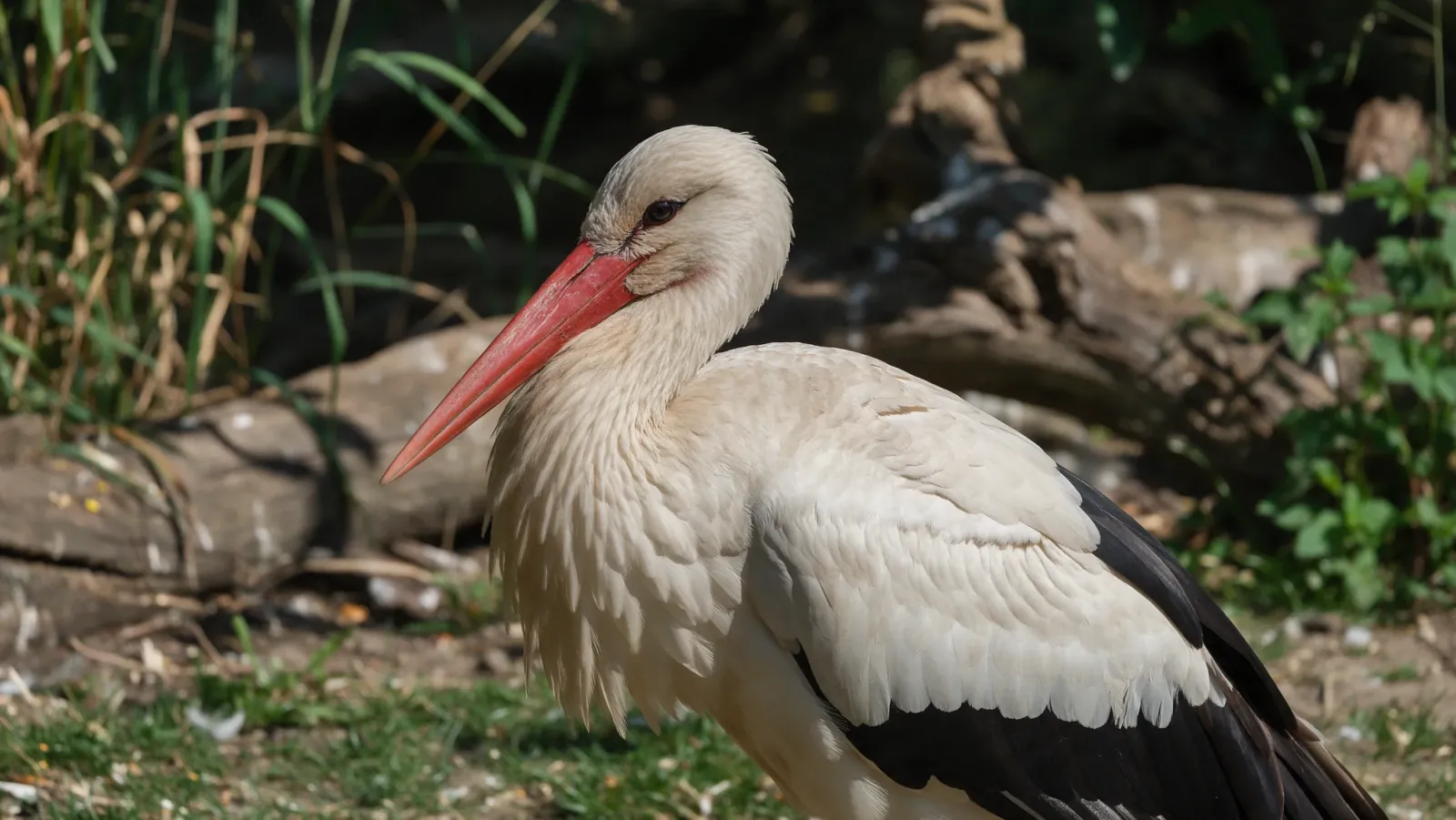
The stork's slow metabolism: crossing a continent on stored fat
Gliding on thermals and resting for long stretches let a stork travel on fat laid down before it left, with water taken at pools.
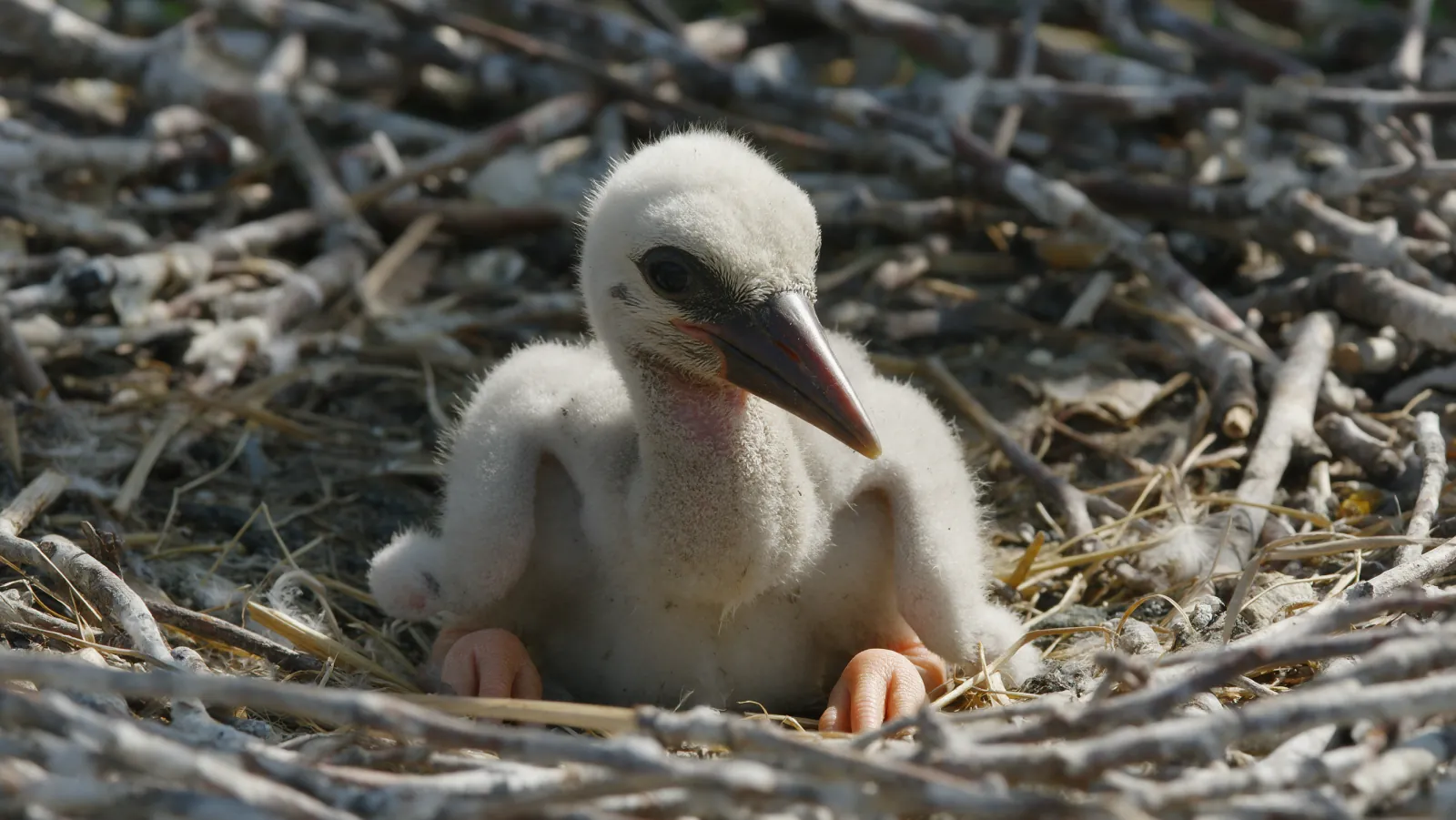
A stork chick's first summer: helpless, hungry and in a hurry
A chick that hatches nearly bare needs two parents and about two months to reach the size of the birds that feed it.
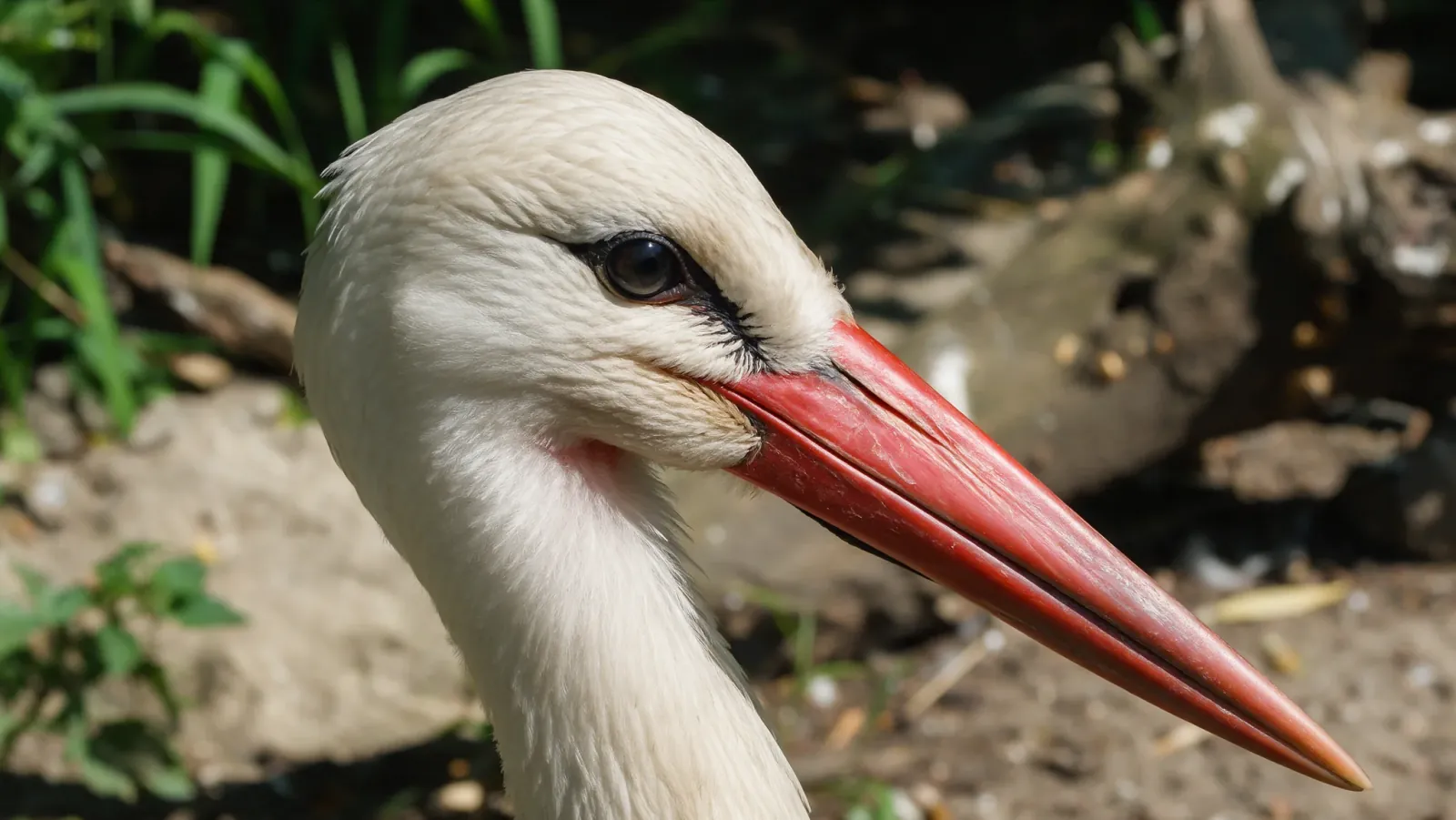
The navigator's brain: sun compass, magnetic field and memory
A young stork can cross a continent it has never seen using an internal clock, the sun's arc and a sense of the earth's field.
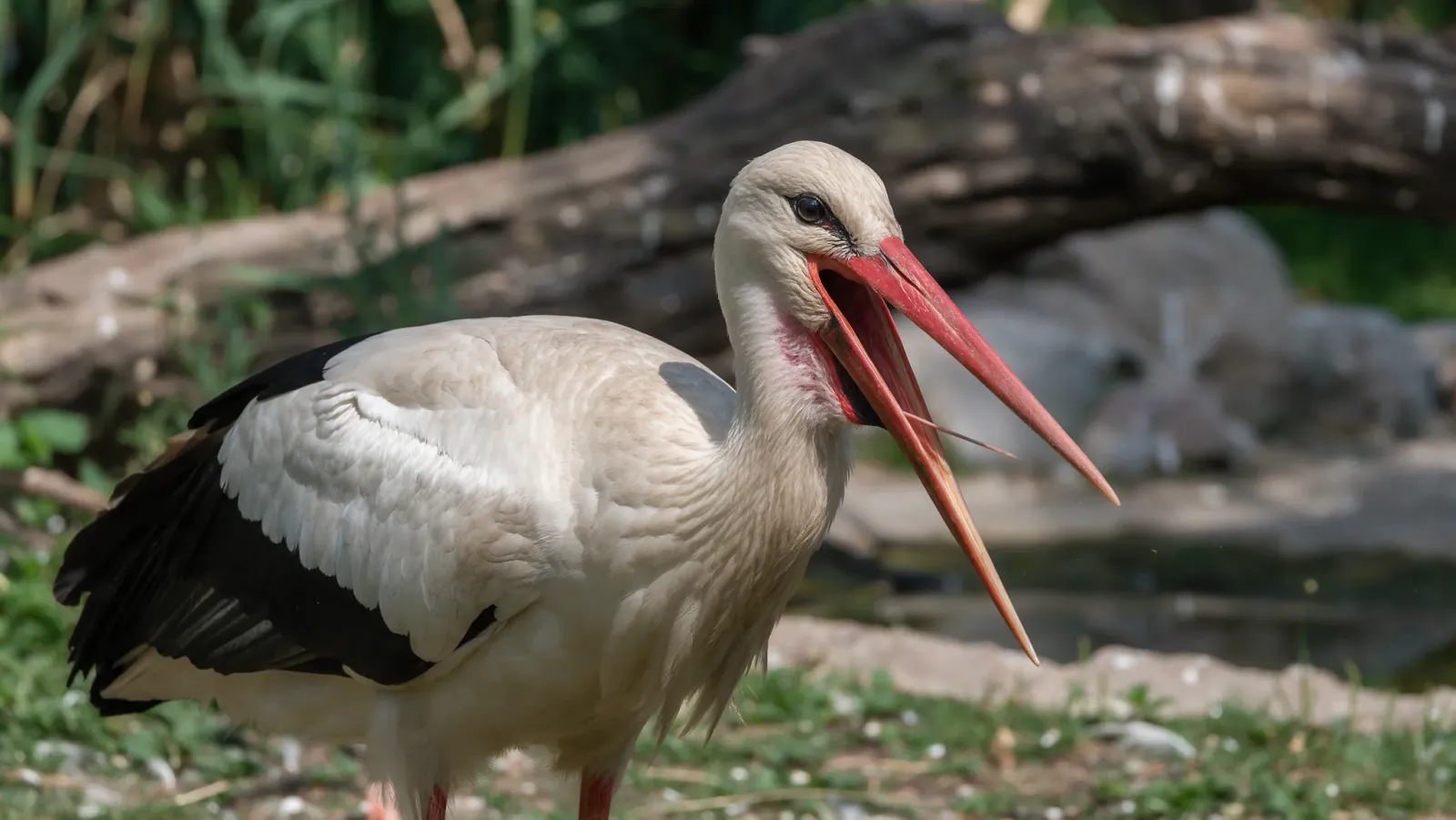
Why storks clatter their bills: a voice made of bone
A stork's syrinx can manage a hiss at best, so the bird drums its two long bills together to greet a mate and warn a rival.
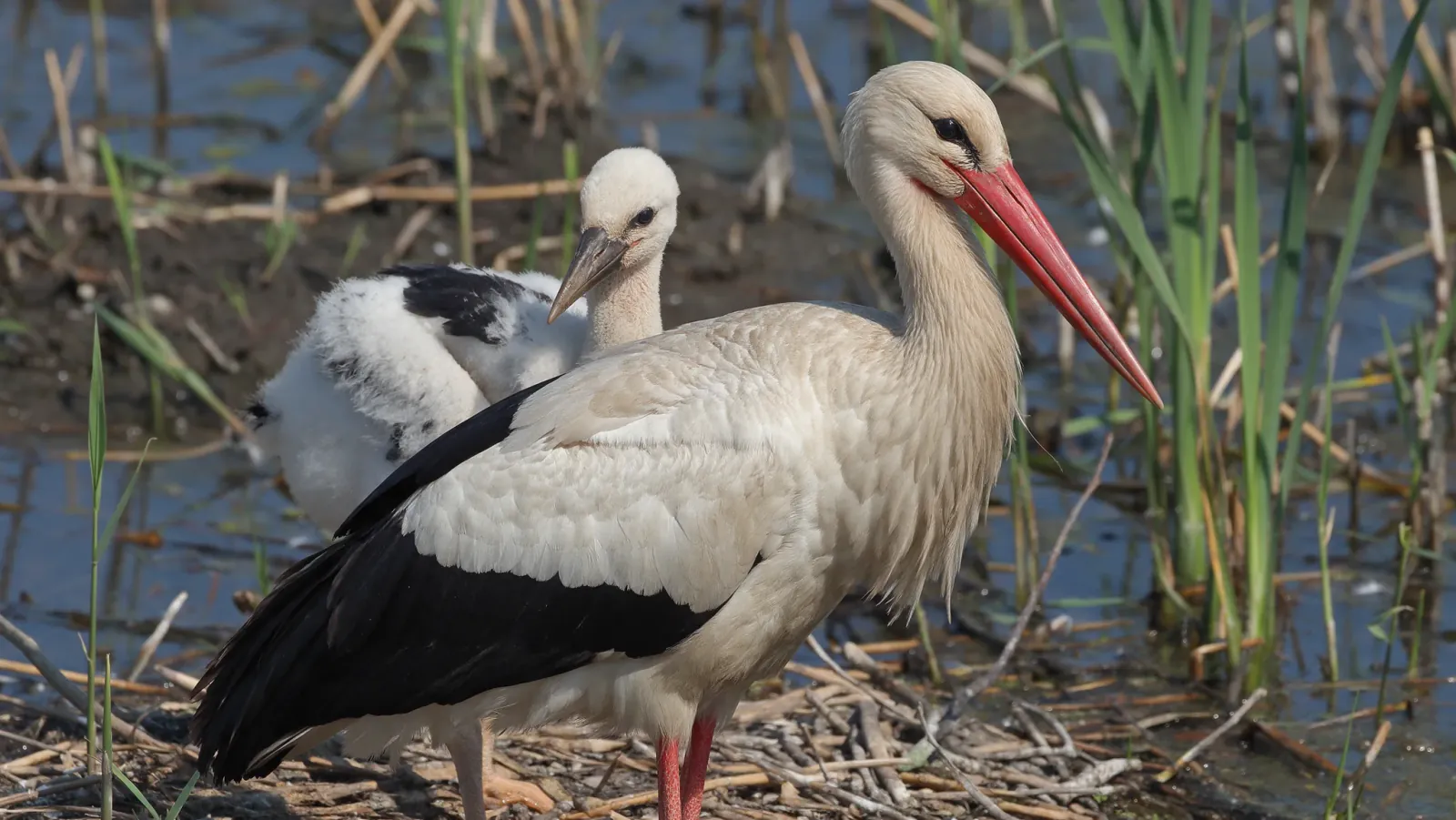
What makes one stork larger than another: genes, food and age
Inheritance sets a ceiling, a wet summer decides how close a chick gets to it, and fresh feathers hide the years underneath.