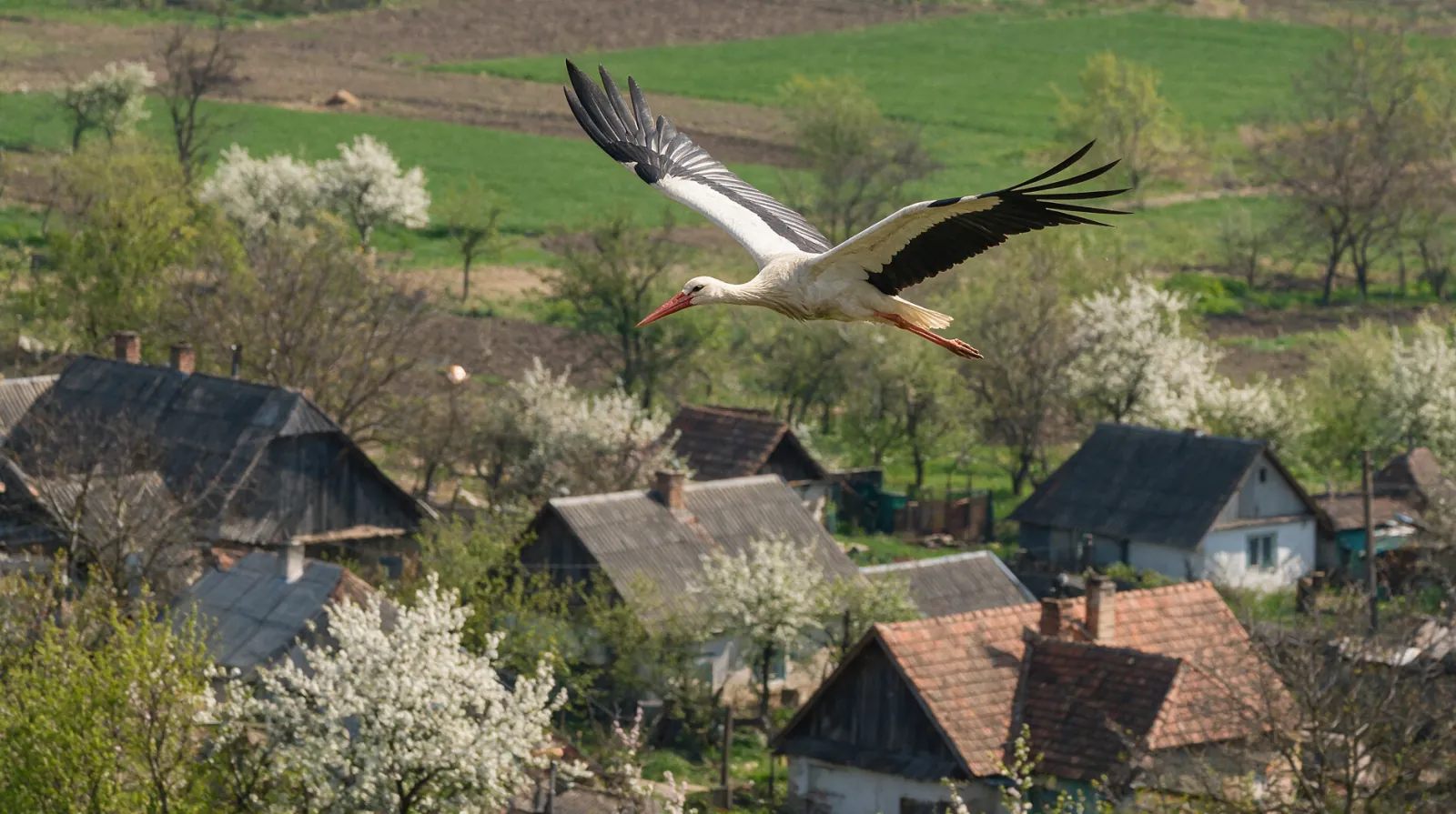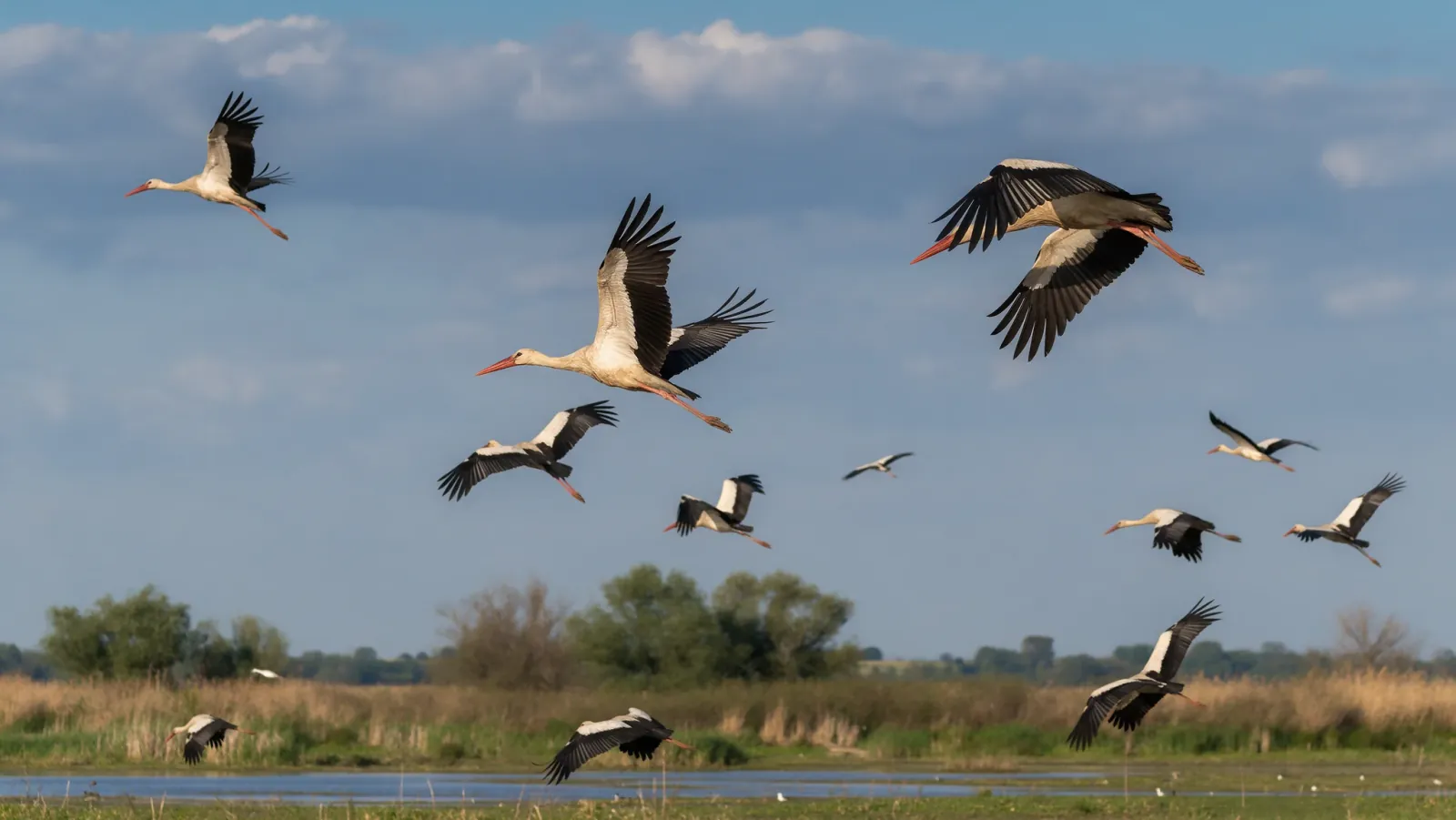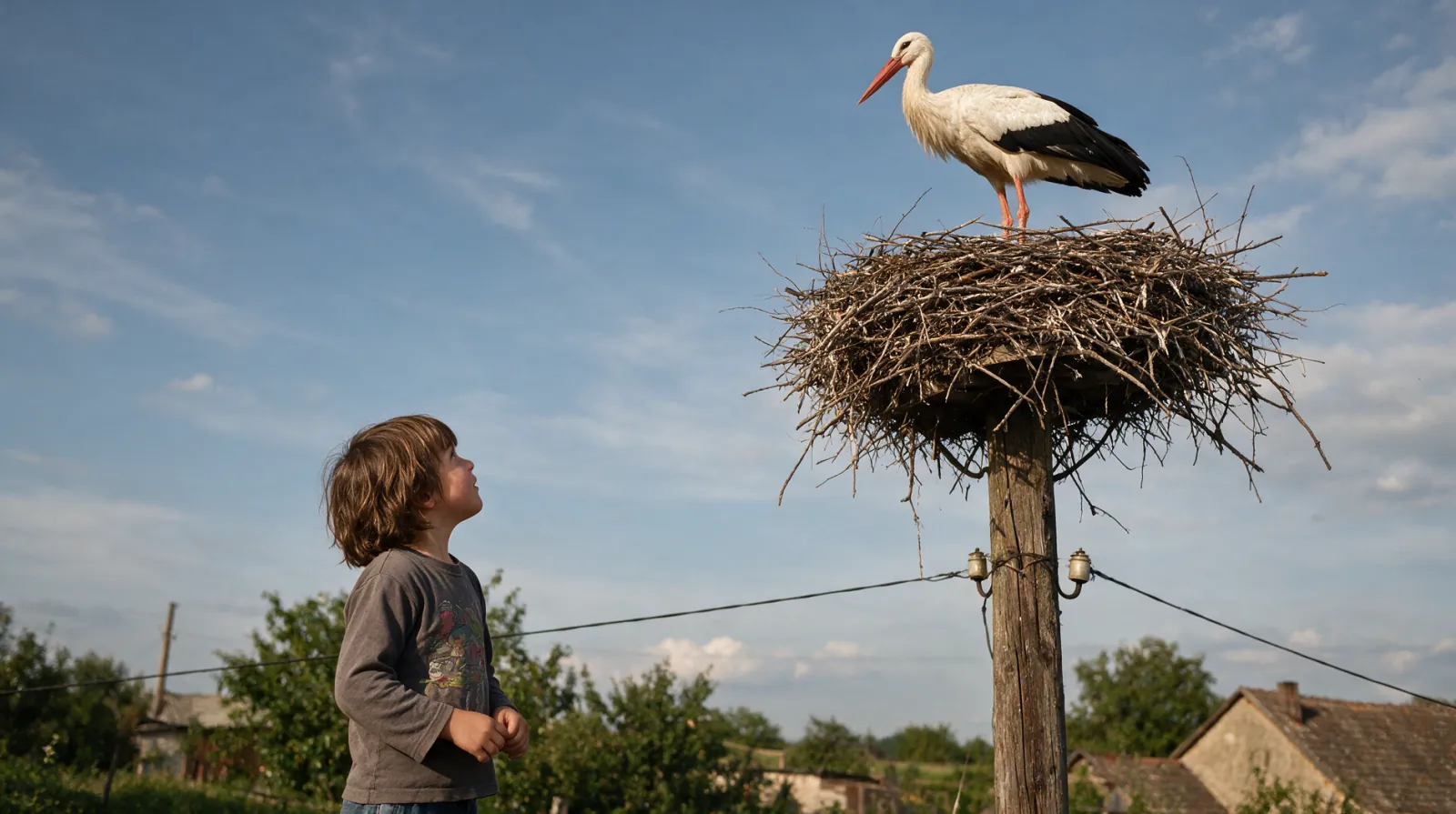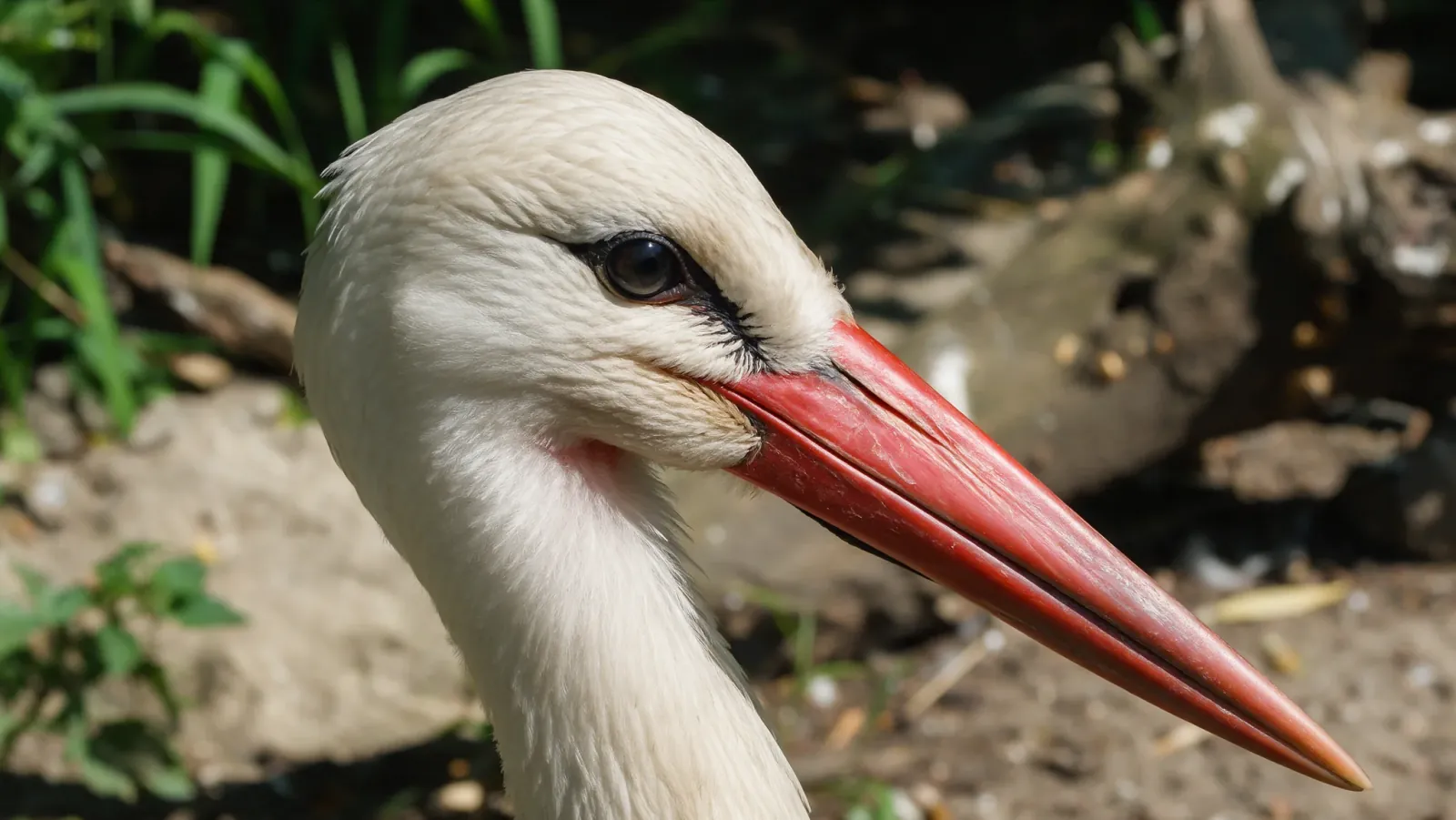
A white stork's brain carries the route between a rooftop in Europe and a wetland in Africa. Each spring and autumn the bird flies thousands of kilometres between the two. The bird holds a sense of the sun, a feel for the earth's magnetic field and a memory of landmarks it has passed before.
A compass of light
The sun rises in the east and sets in the west, and its position at any hour tells a careful observer which direction is which. A stork is that kind of observer. Its body keeps time on an internal clock, and by weighing the sun's position against the hour it works out a heading.
For long stretches there is nothing to aim at, only open sky and open ground. The one thing always present is the sun, moving in a steady arc.
People learned this slowly, with charts and instruments. A stork does it without either. The light reaches the eye, the clock gives the hour, and the direction follows.
Its body keeps time, and the clock adjusts to the lengthening and shortening of the day. The heading is enough to begin. A compass does not show the whole route, and the bird does not need the whole route to set out.
Correcting for the hour
The sun moves, so a fixed angle to it would send the bird in a slowly turning circle. The internal clock corrects for that. At noon the sun stands high and due south in the northern hemisphere. By afternoon it has shifted west, and the bird adjusts its reading to match.
The correction happens continuously, without a pause in the flight. A migrating stork is always doing arithmetic with light.
A bird whose internal clock is shifted reads the sun at the wrong angle and turns the wrong way. The two systems are tied together, and the bird keeps them in step through the changing light of the day.
The sun's arc also shifts with the season, higher in summer and lower in winter. A bird flying south in autumn and north in spring reads the sun at a different angle each time, and it corrects without effort.
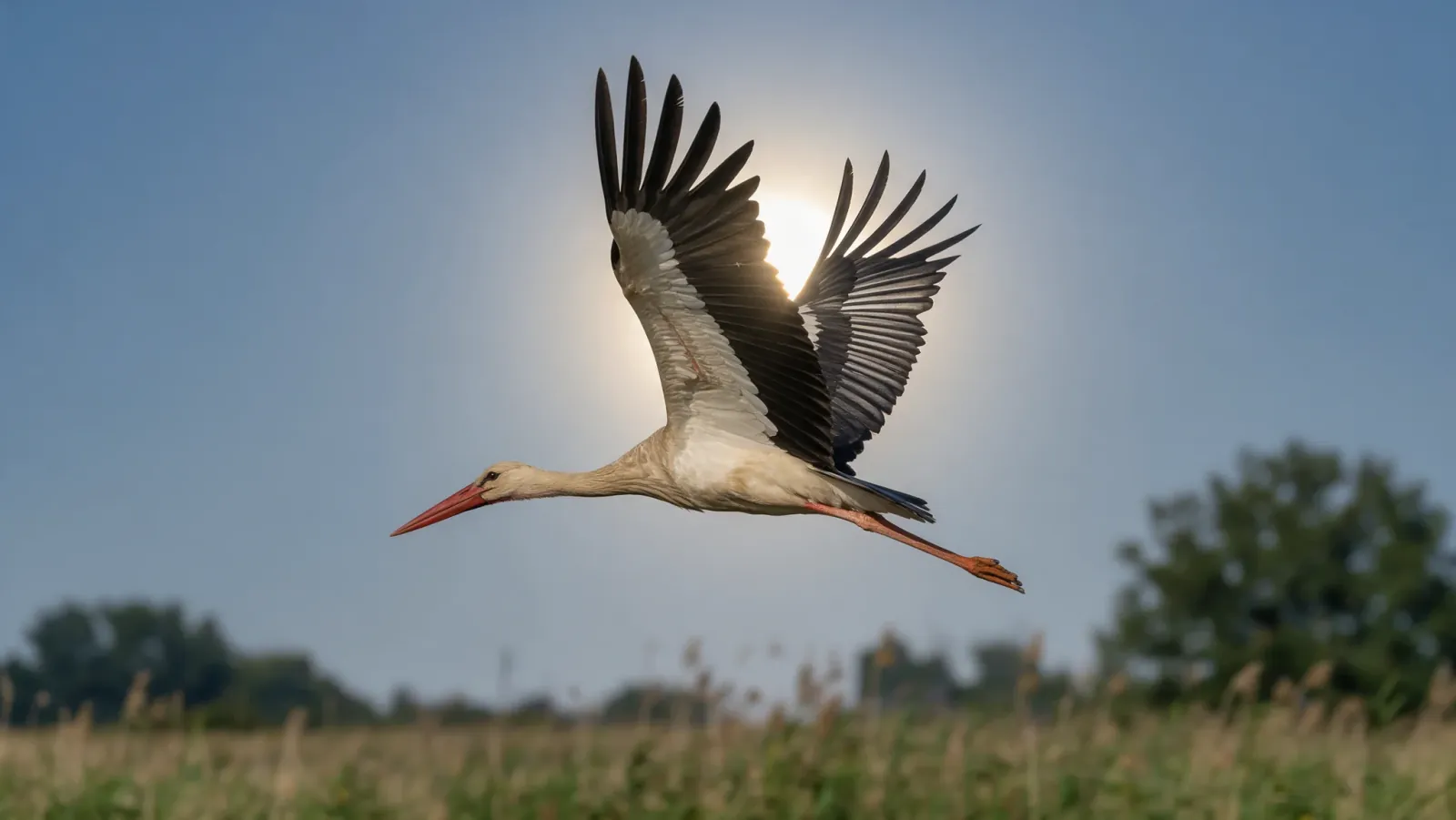
A field around the planet
The earth behaves like a great magnet. Lines of force leave the planet near one pole, curve far out into space, and return near the other. Every point on the surface sits inside that field, and the field has a direction and a strength that vary from place to place.
To a compass needle those lines point north. To a migrating stork they may carry more. The field is a layer of the world that is felt rather than seen.
How a bird feels the field is a question still being worked on. What is clear is that birds hold a magnetic heading in ways that sight and smell alone cannot explain. Some part of the body registers the field and passes the information on.
Cloud, night and open water
On a long sea crossing or a stretch of empty desert, a stork has no landmarks. There are no roofs, no rivers and no familiar hills, and the sun may be hidden behind cloud for days. Through all of that the bird keeps its direction.
The magnetic sense holds it steady when every other guide is gone. It is a patient sense, always on, always beneath the flight, a compass that needs no light. Cloud does not trouble it, and neither does night. A stork can use the field without seeing it, and the sense asks nothing of the weather.
At night the field is still there. A stork that flies late can hold a heading with no light at all. It works in the dark, under cloud, over water and across ground the bird has never seen. That reliability is what makes it useful. The bird can cross a dark stretch and find the coast again at dawn.
The field is not uniform. Its strength and angle change with latitude, and a bird may read those changes as well as direction. Some birds appear to use the field as a map as well as a compass, with a rough sense of how far they have come.
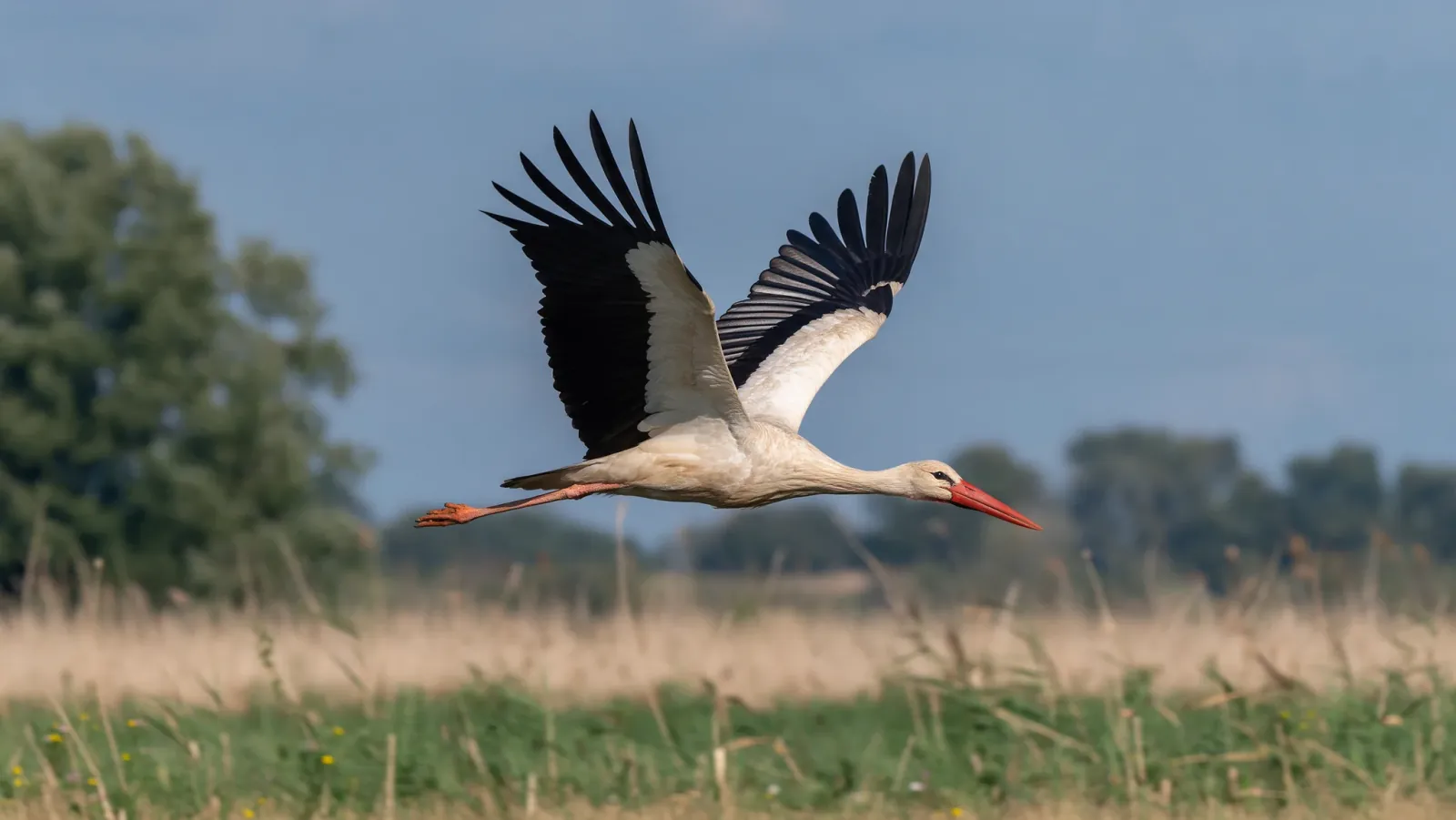
Landmarks learned in flight
Older birds carry more than a heading. They carry the shape of the way: the line of a coast, the gap of a strait, a river that runs the right way, a stretch of desert that must be crossed in one push.
These landmarks are learned by flying them. The next journey is easier because of the memory. A stork that has flown the route before knows where it is going.
A young bird begins with direction and adds detail as it goes. An old bird knows the landmarks and the weather, and its journey is smoother. Experience and inheritance work together, and neither alone would be enough.
Weather and timing
The same brain watches the sky. The stork looks for the warmth that will lift the thermals, and it times its travel to the days when wind and heat line up. A bird that can read the weather chooses when to fly and when to wait.
That choice saves strength for the crossings that demand the most. Finding the way south and knowing when to go are part of the same skill.
A migrating flock can lose days to cloud and rain. The birds feed in the meantime, and when the sun returns the columns rise again. The journey is timed to the weather, and the weather sets the pace. The sun will rise tomorrow where it rose today, and that constancy is what makes it useful to a bird with a long way to go.
None of this needs a large head. The brain is compact, and it fits a bird built for flight. The navigator's tools travel in a space that adds almost nothing to the bird's weight. A heavy head would cost the stork on every climb, so the organ packs a compass, a memory and a sense of weather into a small space.
What a young bird knows
A young stork begins with direction. It knows which way to head, and it knows when the season has turned. A young stork may fly south for the first time on its own, after the adults have gone. It has never seen the route, yet it holds a course for thousands of kilometres. The rest is learned on the way: the coast, the strait, the desert, the places to rest.
Experience adds detail to the map. An old bird knows the landmarks and the weather, and its journey is smoother. The young bird has the compass, and the years give it the rest.
A stork's navigation is a set of tools used together. When one fails, another takes over, and the bird keeps moving. No single tool is enough, and the combination is what works.
The bird does not need to understand the tools. It uses them, and the route works. The route is in the bird, and the brain carries it, year after year. The small brain carries a whole geography, and the stork follows it home.
Explore the gift