A drained field at the edge of town became a school project, and the first spring the frogs came back the class heard what they had done. The project began with a question about what the ground had looked like before.
The field nobody wanted
The land had been drained long before, and it had never quite recovered. Too wet to build on, too poor to farm, it sat between the last houses and the first crops, wanted by nobody. Places like that disappear quietly, one decision at a time.
The class asked the town if they could look after it. The answer was yes, partly because no one else had asked. A field with a caretaker is a field with a future, even if the caretaker is eleven years old.
The first scrape
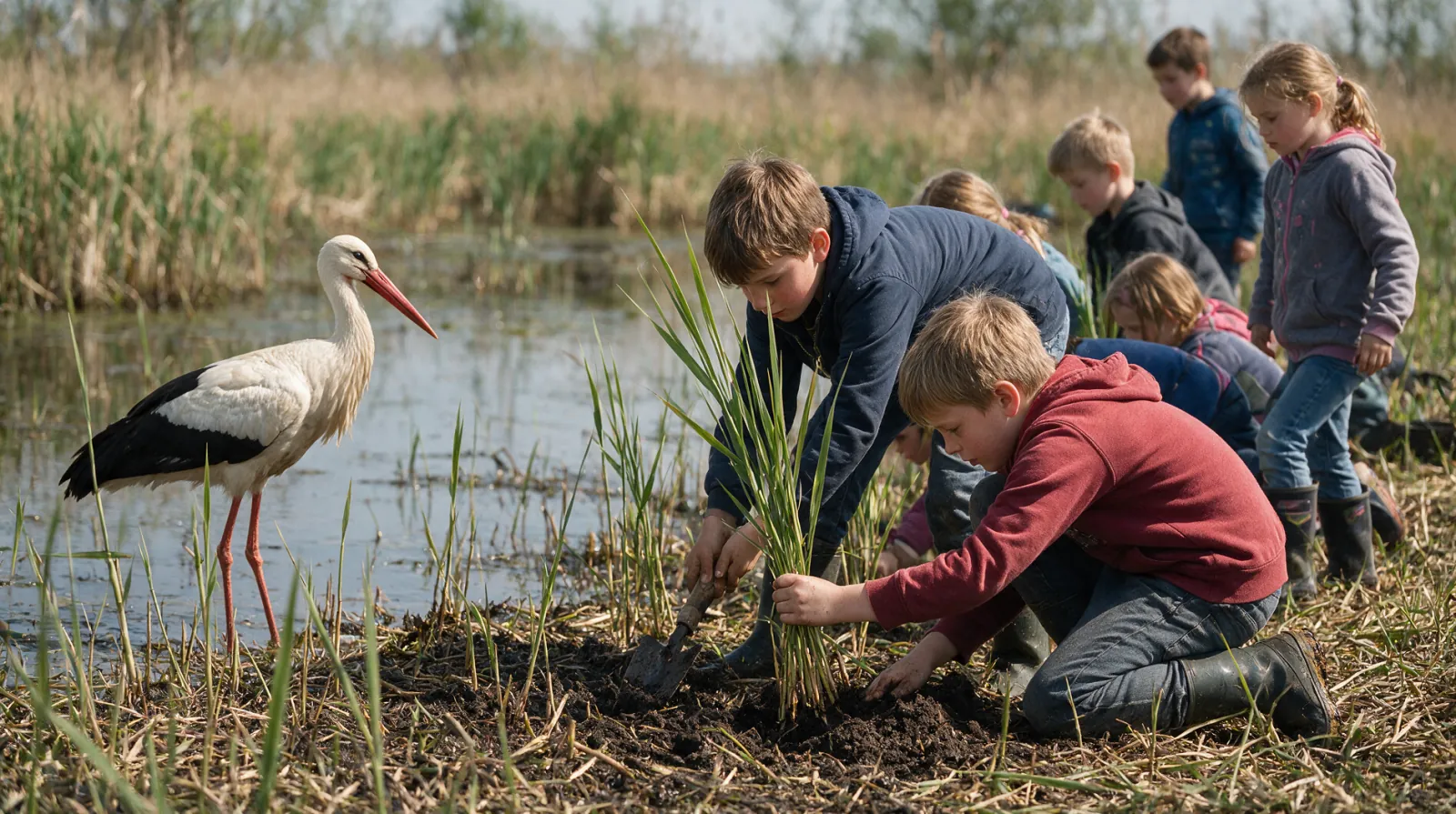
The work was muddy and slow. The children cleared rubbish, dug shallow scrapes where water could gather, and planted reed clumps at the edges, one at a time, boots sinking into the soft ground. A local digger driver gave an afternoon. A parent brought a wheelbarrow.
None of it required expertise. A shallow depression in wet ground fills with water, and water brings life. The first lesson of the project was that habitat is often just a place where water is allowed to stay.
Frogs first, storks later
The frogs arrived before anything else. One evening in the first spring the class heard calling from the scrapes, a sound that had not been heard in that field for years. Insects followed, then dragonflies, then the first waders.
The storks came last. A pair circled the field in the second summer, landed in the wet grass, and stood there long enough for the whole class to see them from the gate. The birds had not been invited. They arrived because the food was there.
Each year added something: a hide built from reclaimed wood, a boardwalk over the wettest ground, a sign naming the plants. The marsh gained a plan and a rota. The school gained an outdoor classroom that no budget had paid for. The project does not stop when the frogs go quiet. The class keeps a log of the water level through the winter, writes to the council about the ditch, and plans the next scrape. A marsh needs someone to remember it from one season to the next, and a school is good at remembering.
The loop that tightens
Litter in a stork's nest is more than an eyesore. A stork builds with whatever is long, soft and bendable, and it cannot tell a stem of grass from a strand of nylon. Twine, netting and plastic bags end up woven into nests, and some of those pieces cost a chick its leg or its life.
A stork gathers nesting material from wet ground, field edges and riverbanks. Grass, moss, roots, the occasional cloth rag. A discarded strap or a strip of sheeting looks the same in the bill, so it is carried home and tucked into the nest bowl with the same care as a bundle of stems. Most of it is harmless. The trouble comes from the pieces that loop.
A chick's leg or wing can catch in a loop of twine or fishing line. The bird grows through the season and the loop does not, so the binding tightens week by week. A chick tethered in the nest cannot reach the food its parents bring, and it may lose the limb or die before it fledges. The damage is done by something a person dropped, months earlier, in a field.
Plastic in the crop
Swallowed plastic is the second hazard. Bright fragments look like food, and a chick will peck at them. The plastic fills the gut without feeding the bird, so it feels full while it starves, and its parents keep bringing food that does not help. Adults are not immune. A stork that picks up plastic while feeding carries it back to the nest, where it becomes part of the lining and part of the next chick's problem.
Almost all of it starts as waste near water. A ball of baling twine left at the edge of a field, netting lost from a fence, a bag blown into a marsh. A stork will find it within days. A clean field edge produces a clean nest, and the difference is decided long before the stork arrives.
Cut the loops before you bin the twine. Take netting home from the allotment. Pick up the line on the riverbank. None of it is conservation in the grand sense, and all of it removes a hazard from ground that storks search every spring. The birds will keep building with what they find, and what they find is ours to decide.
The unglamorous keeping
The storks are the reward, and the point is larger than the birds. The children leave knowing that a damaged place can be repaired, that small repeated acts accumulate, and that a field nobody wanted can become the place a town takes visitors.
Most of the choices are dull. Keep a ditch wet. Plant a hedge. Put up a platform where a stork might come. Repair a sluice. Watch a field through the spring instead of selling it. Together those choices form the horizon a child grows up inside. A village with storks keeps doing small things after the excitement wears off.
The work is shared in ways that are easy to miss. A farmer leaves a wet corner. A council clears a ditch. A school keeps a log through January. A landowner leaves a grove standing. Each decision is local, and none of them looks like much from the road.
What the next generation inherits is chosen one drain and one spray at a time. A marsh drained this winter is a marsh no child will wade near. A field sprayed every spring is a field where no frog will call.
The view from the ground
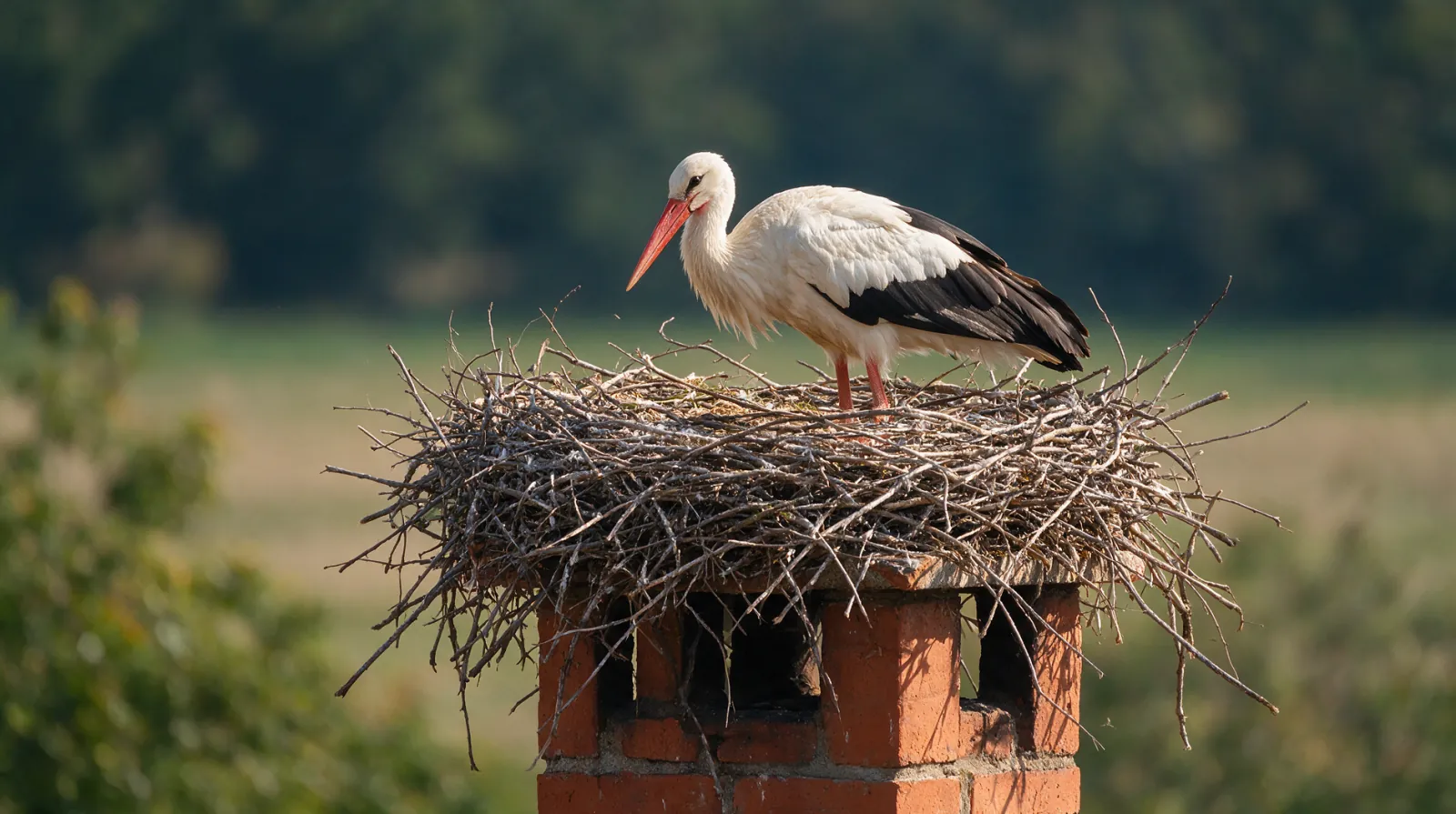
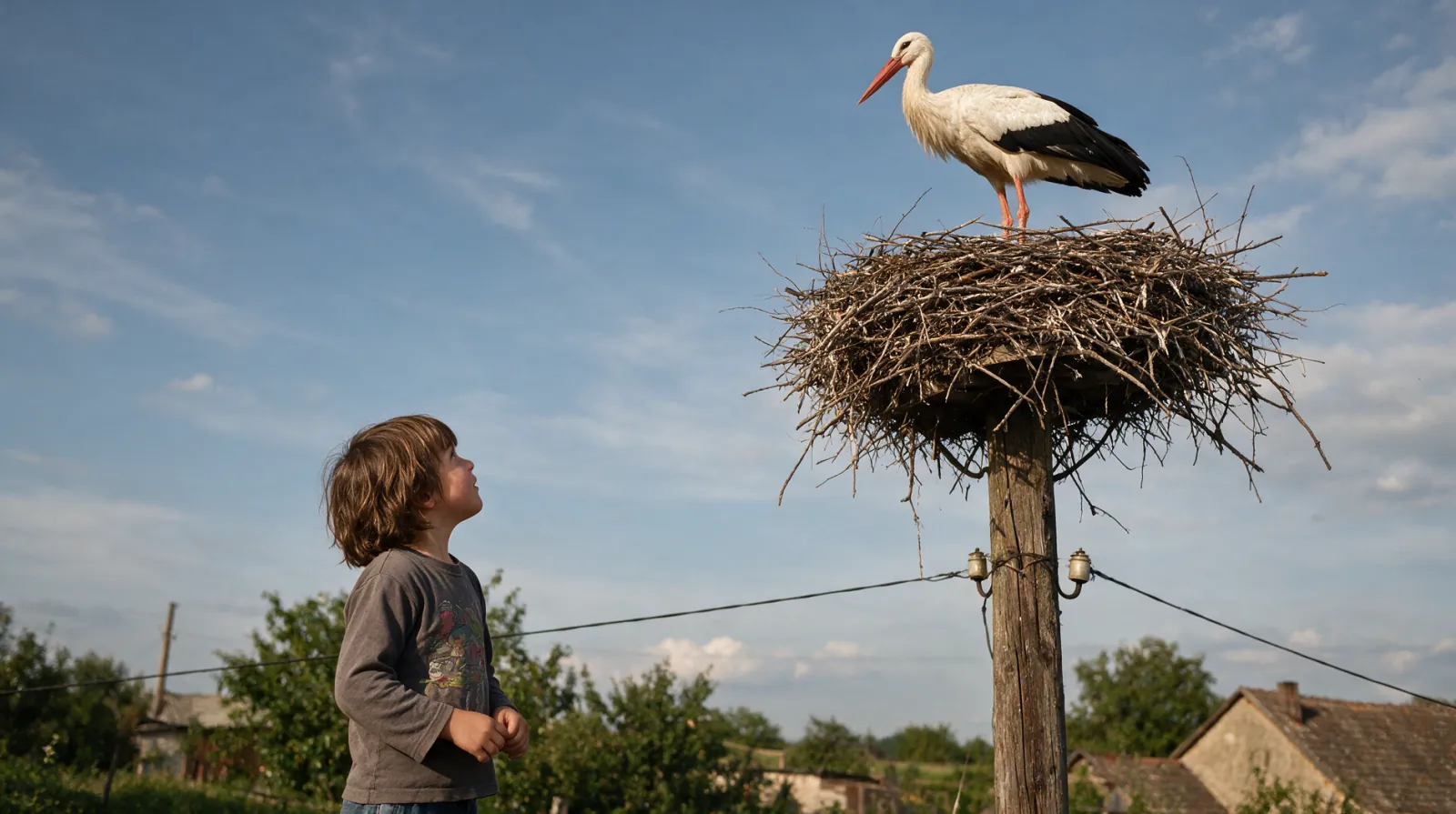
To a child, a stork on a nest is simply there, as fixed as the chimney under it. A bird as tall as the child, balanced on sticks above the street, clattering its bill when its mate arrives. The child does not know the words migration, wetland or flyway. They know that this long-legged white creature belongs to the sky they are growing up under.
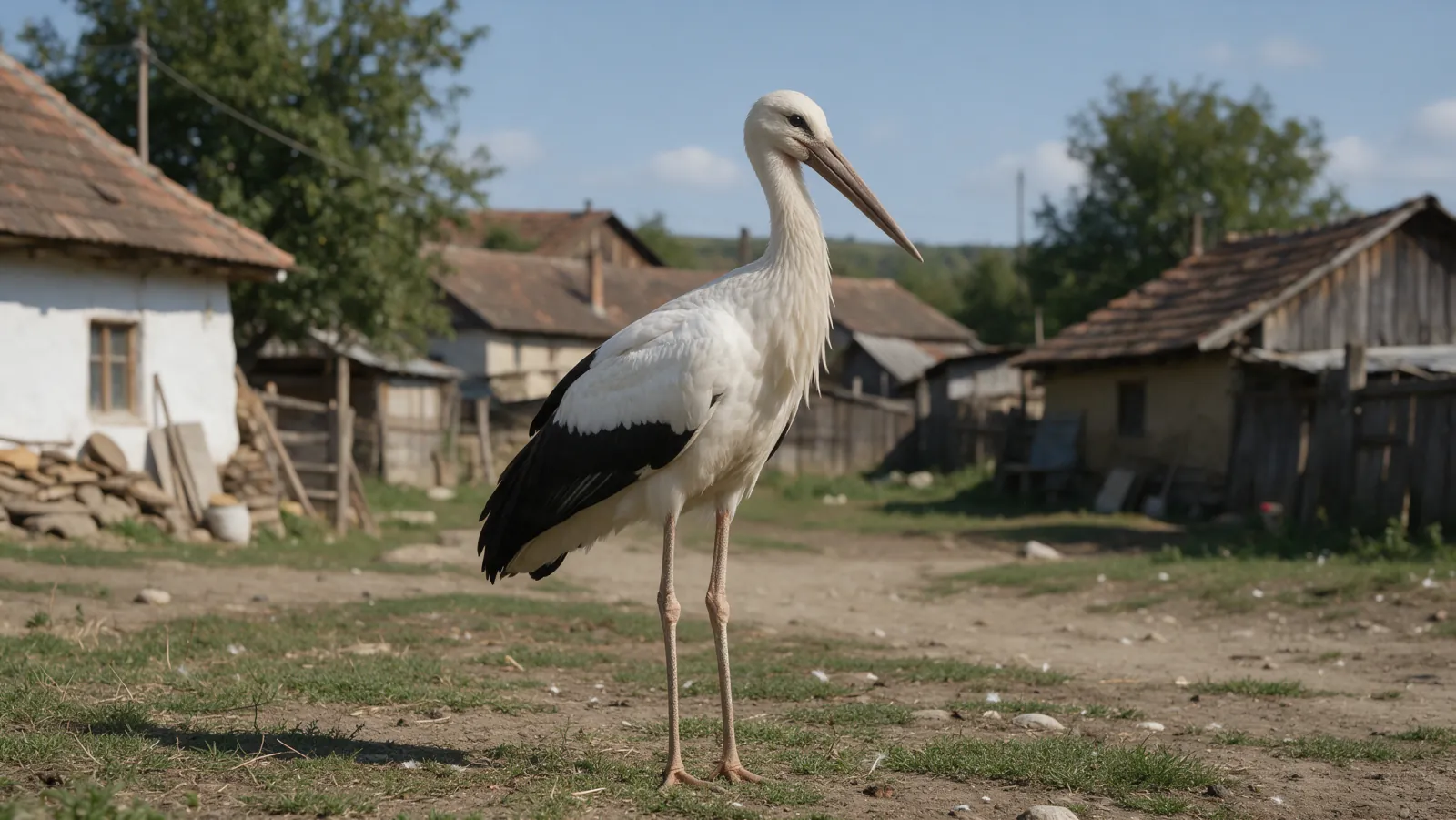
The first idea a child forms of the natural world is often formed by a bird they can see from their own door. The child does not know the bird has flown thousands of kilometres, or that the nest has been repaired every spring for thirty years, or that the field below it was nearly drained the winter before. They know the bird is here and that it is worth looking at.
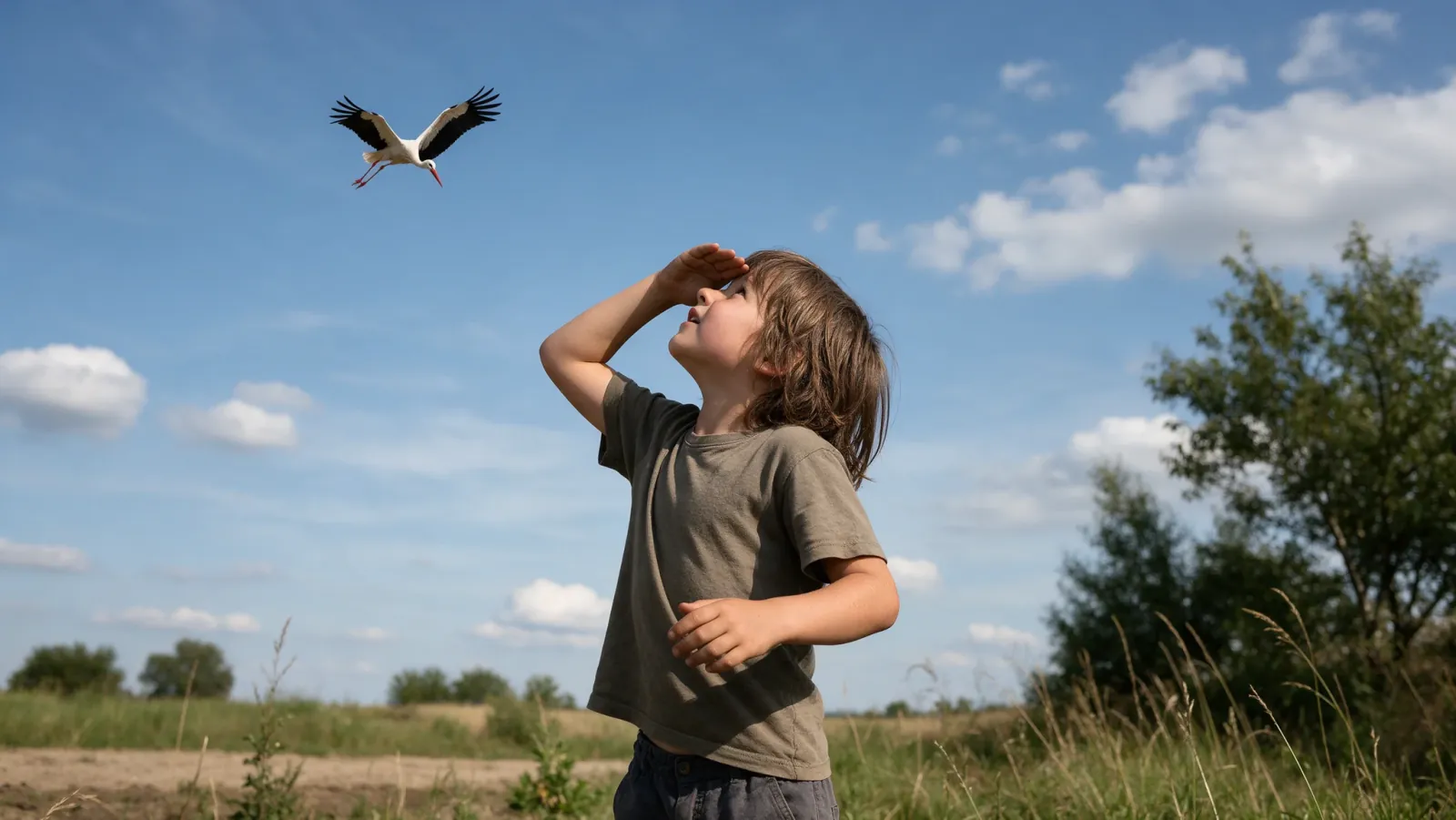
A child on a summer evening, standing still, looking up. A parent looks up too. The stork clatters, spreads its wings, settles again. That moment depends on water, on insects, on a pole someone put up and someone else maintained. A stork on the roof looks like the way the world works, and it is a promise kept. The promise is renewed every spring, by people who may never meet the child looking up, and by a bird that returns to a place it learned as a young one.
If you want to mark a birth with something that outlasts a card, adopting a stork is one small way to keep the promise going.