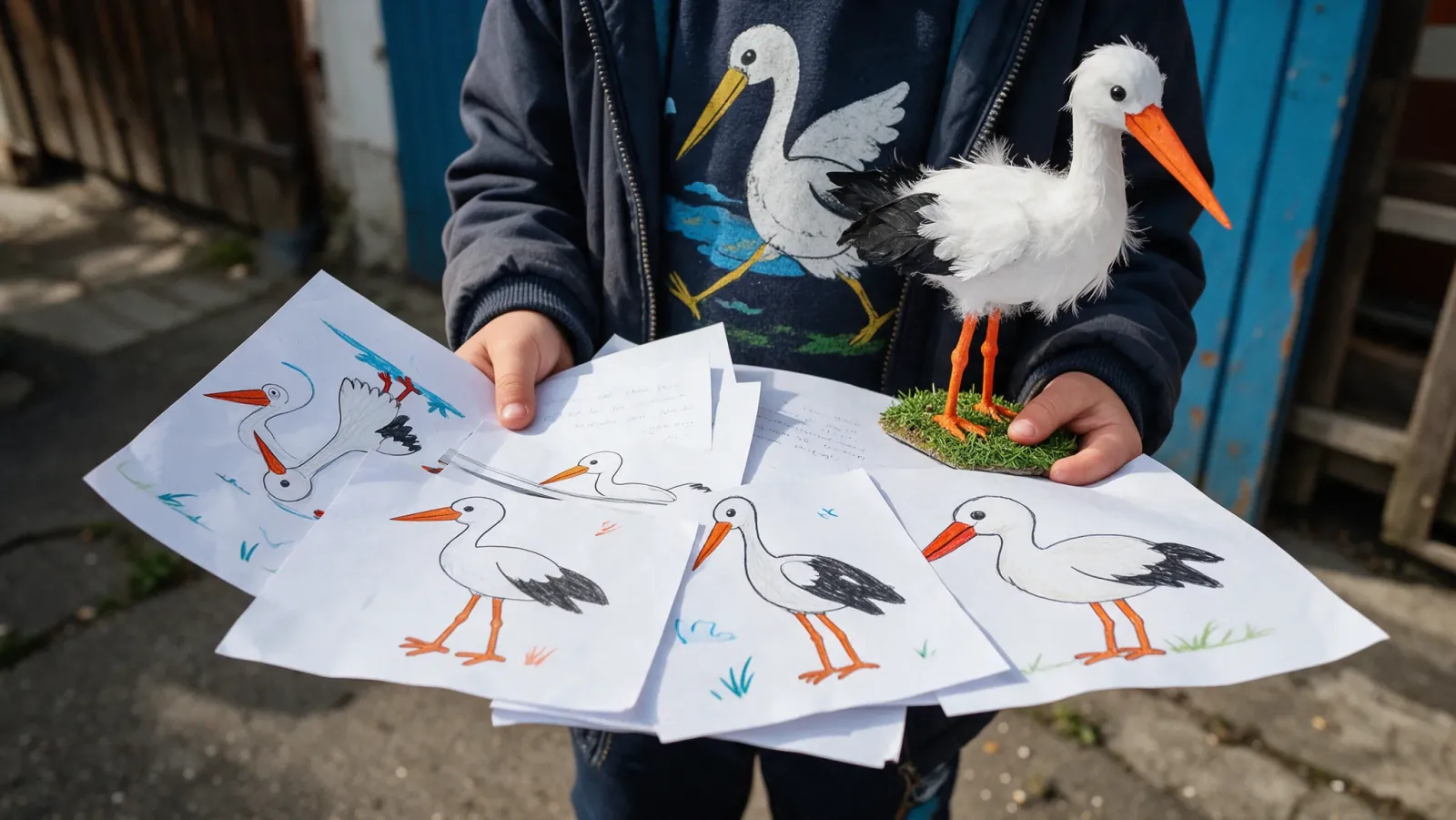
A stork is a real bird with real habits, and the questions children ask about it have real answers. Here are six of the usual ones, short enough for a classroom and honest enough for a curious eight year old.
Do storks bring babies?
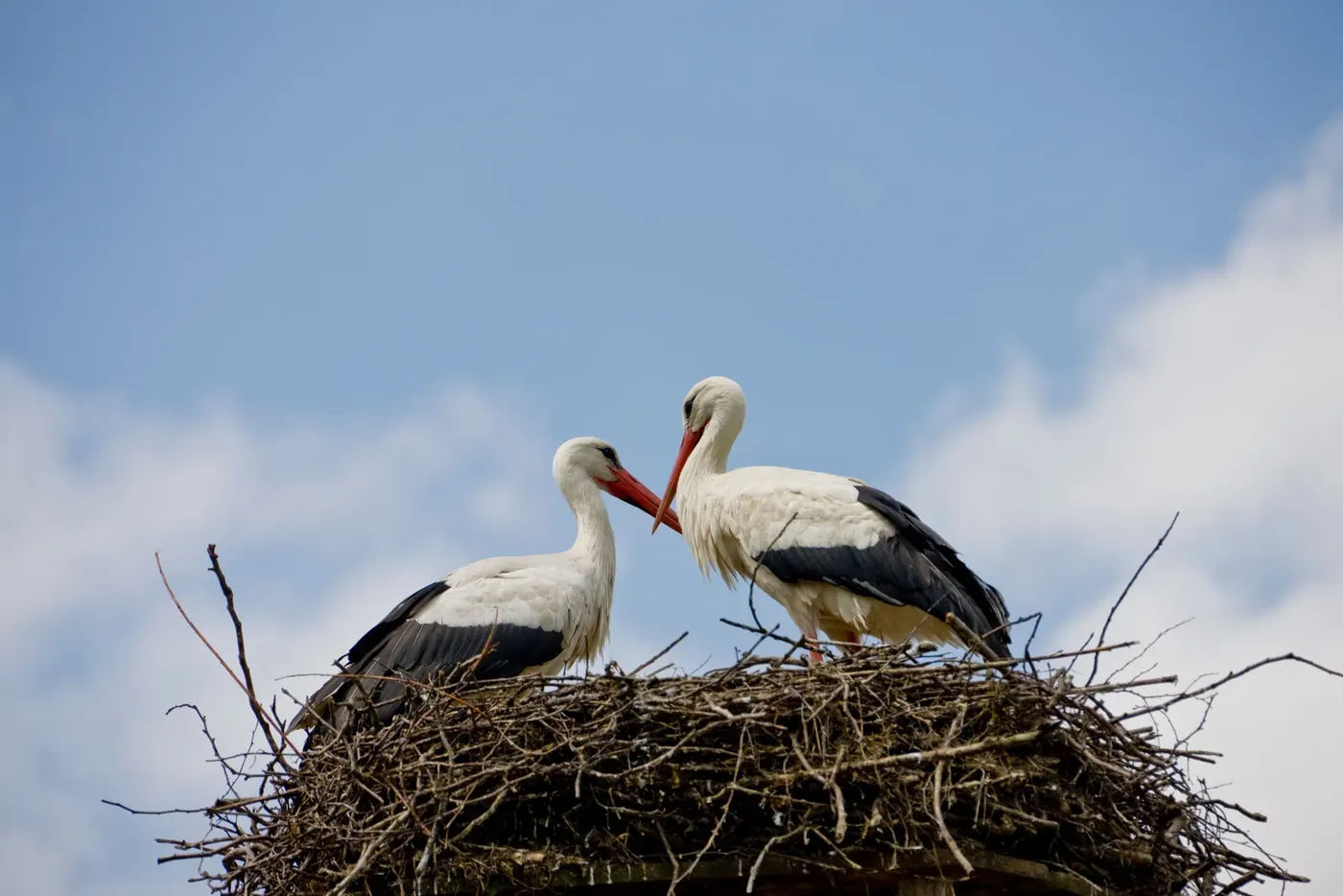
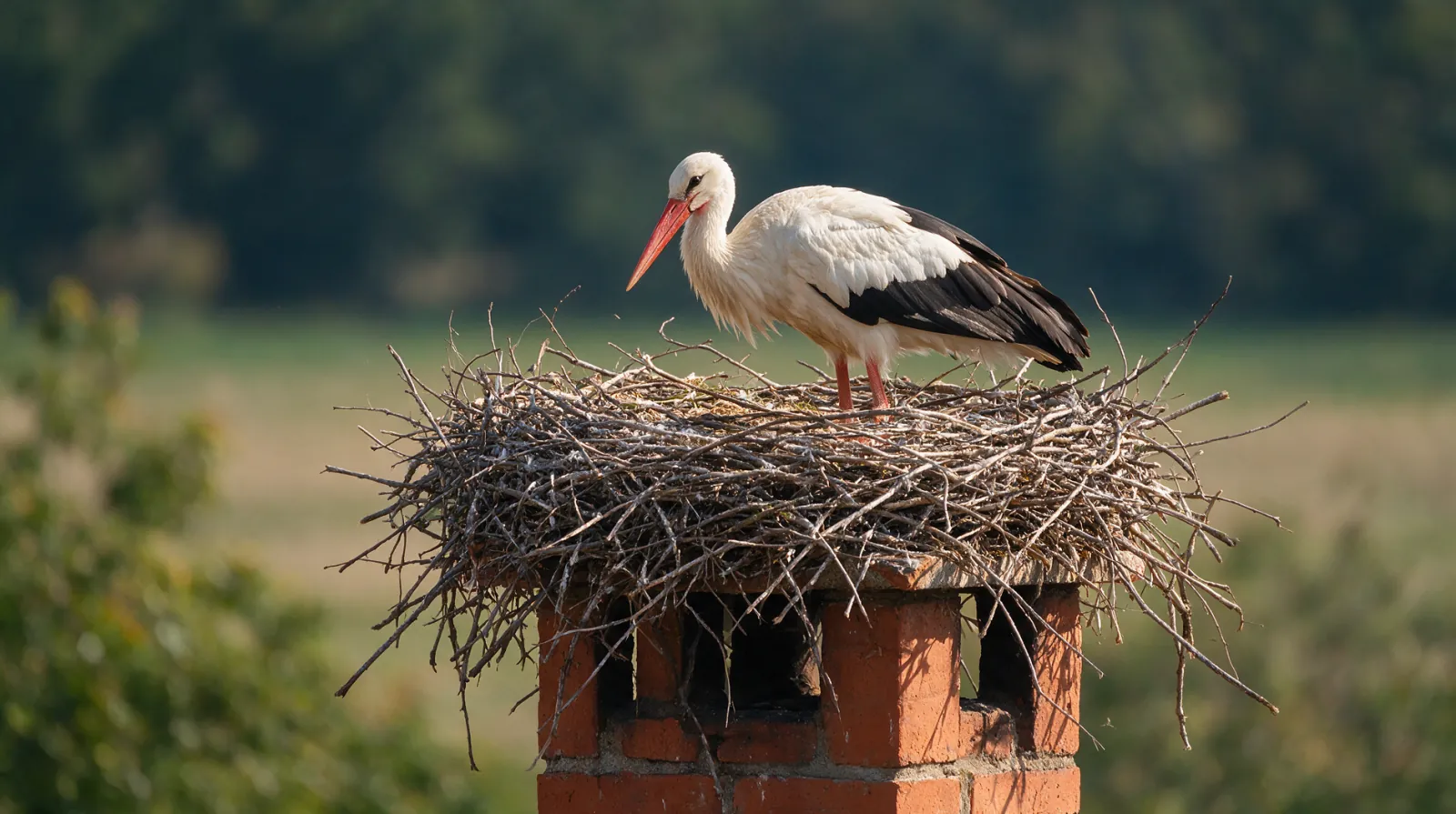
No. The story is old and it comes from Europe, where white storks return in spring, land on roofs, and nest near people. A big white bird arriving at the start of the year looked like a sign of new life, and parents told children that the stork had brought the baby. The story is a folk tale, and the bird in it is real. Storks carry frogs, insects, and sticks. A stork's bill is a tool for catching food and building a nest, and it is a poor shape for carrying a bundle. In some towns the story is still told to children today.
Why does a stork stand on one leg?
Standing on one leg saves heat. A bird's legs are bare and lose warmth fast, so a stork tucks one leg up into the soft feathers of its belly and keeps the other on the ground. Resting this way is comfortable, and the bird can switch legs when it likes. One leg up is a way to stay warm while standing still. Flamingos do the same thing, and many birds sleep with a leg tucked away on a cold night. A stork that is walking or feeding puts both feet down.
Where do storks go in winter?
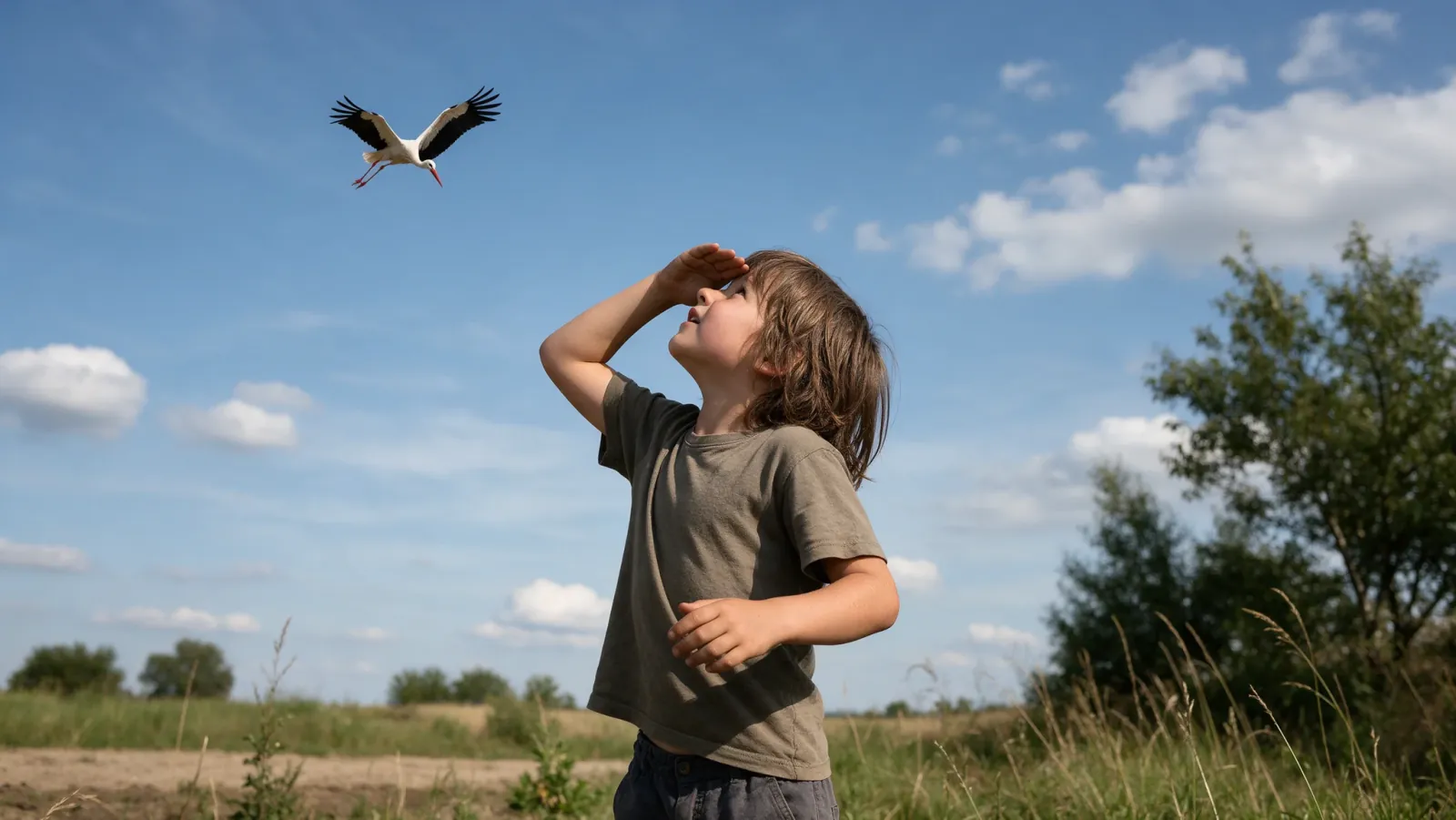
Most white storks from Europe fly to Africa and spend the winter there. The journey crosses the sea at the narrow places, where the birds can see land on the far side. Some storks now stay in Spain, Portugal, or other mild parts of southern Europe, where winters are easier and food can be found. The trip south is about food, because frogs and insects are hard to find in a cold field. The birds that stay are the same species, and they nest in the same towns. In spring the storks come back north.
What do storks eat?
Frogs, insects, grasshoppers, worms, mice, voles, small fish, and sometimes a snake or a lizard. A stork swallows food whole, and a hungry bird can eat a surprising amount in a day. Parents bring prey to the nest and drop it in front of the chicks, and the chicks grab it. A stork eats what it can catch with a quick strike of the bill. The bird hunts in short grass, wet meadows, and the shallow edge of water, where prey is easy to see.
Do storks make a sound?
A stork cannot sing. It has no proper song, and adults are mostly silent. The loud noise people hear is the bill clattering, made when the bird snaps the two halves of its bill together again and again. The sound is dry and fast, like a rattle. A stork speaks with its bill. Chicks make soft begging calls in the nest, and those small sounds are nothing like the rattle of the adults.
How long do chicks stay in the nest?
A chick hatches after about a month of warmth from its parents. It is covered in down and cannot stand at first. Both parents feed it, and it grows fast. After a few weeks it stands and flaps its wings, and by late summer most young storks can fly. The nest is a nursery for about two months. Young birds follow their parents on the first long flight south, and the next spring they start to look for a nest of their own.
Explore the gift