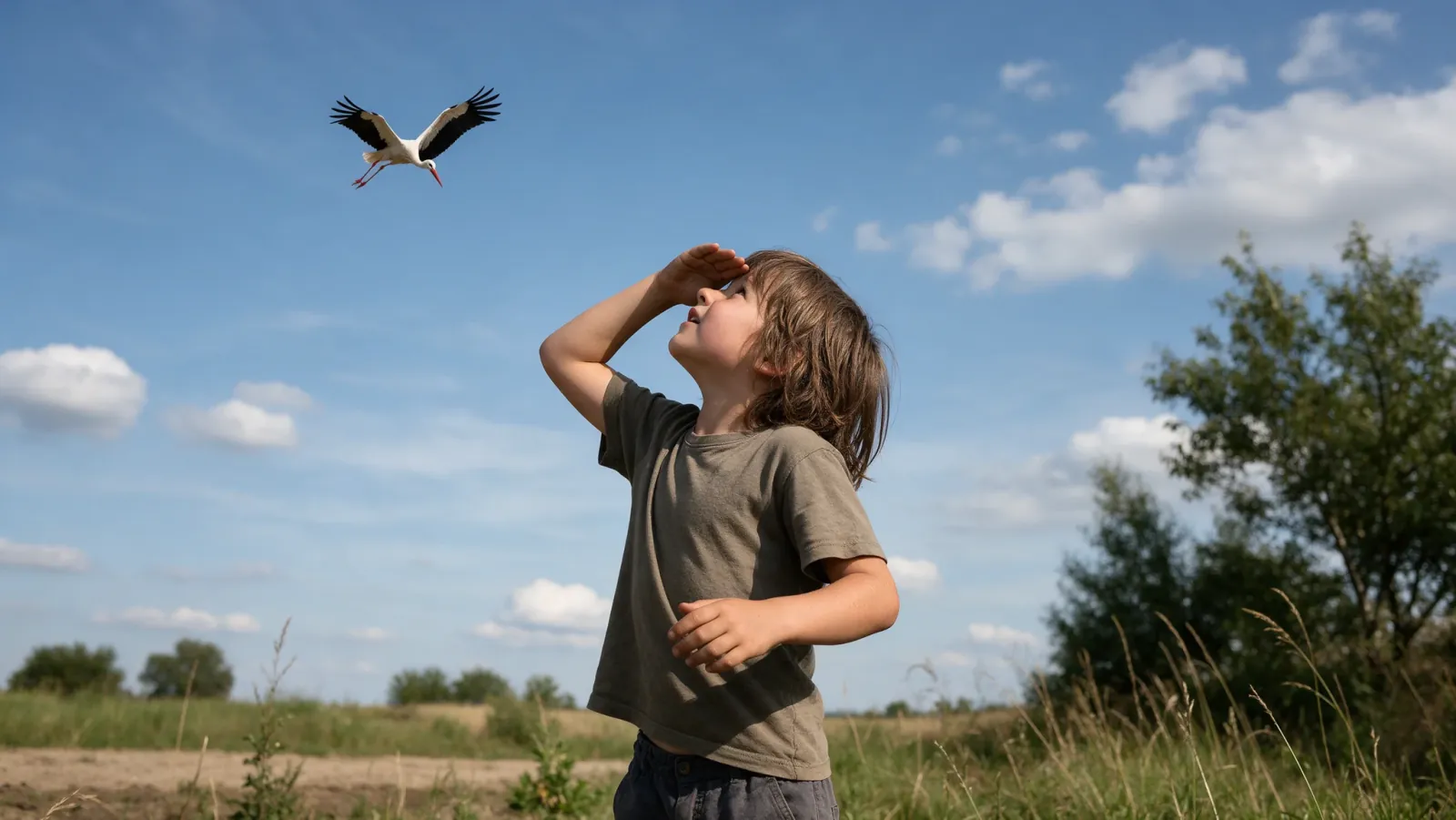
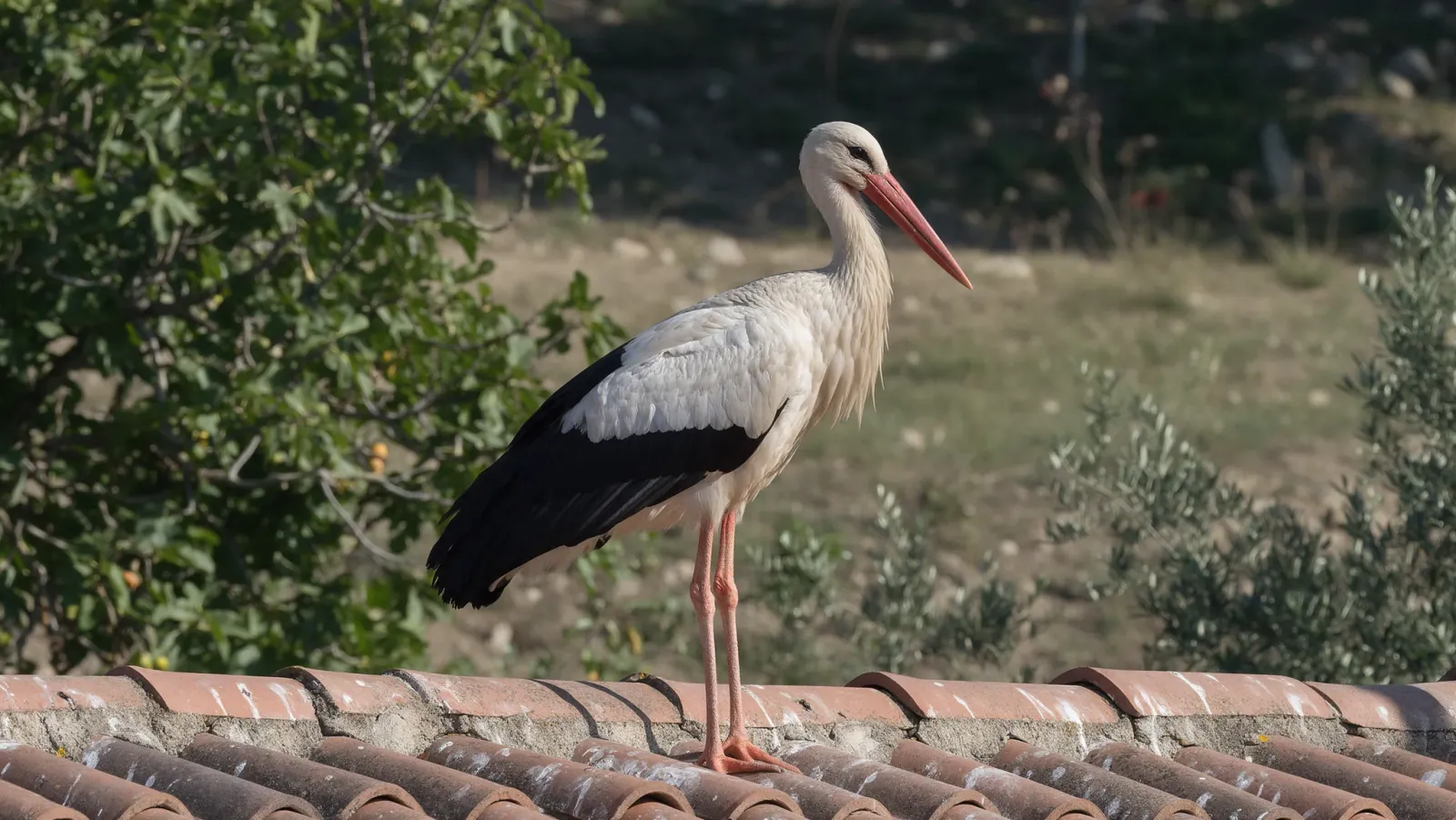
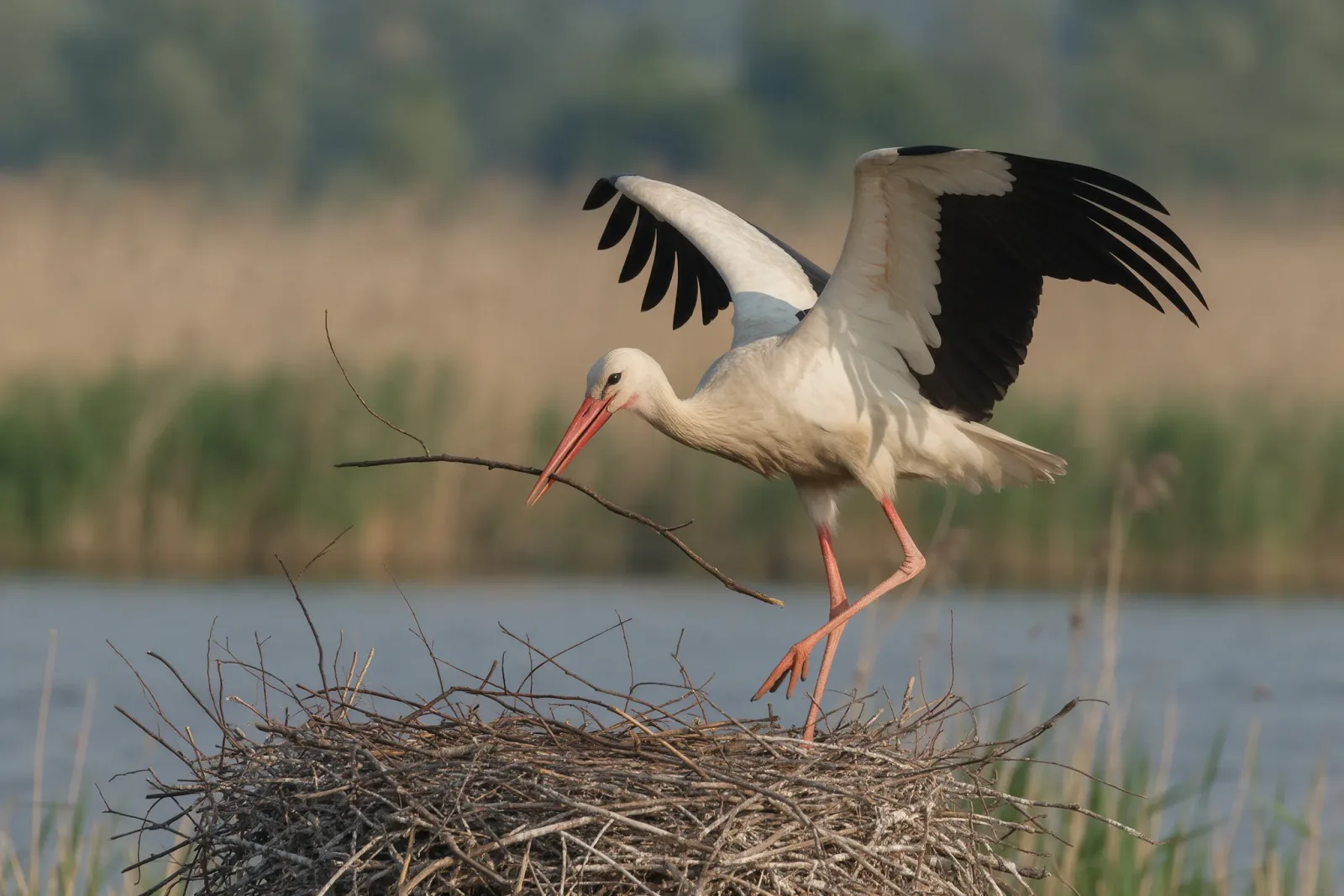
The white stork has been treated as a lucky bird for as long as it has nested on European roofs, and the chimney carried the clearest version of that luck. A nest above the fire joined two things a household could not do without: warmth and children. The bird arrived each spring without being asked, and the family below read the arrival as a verdict on the house.
The roof as a public sign
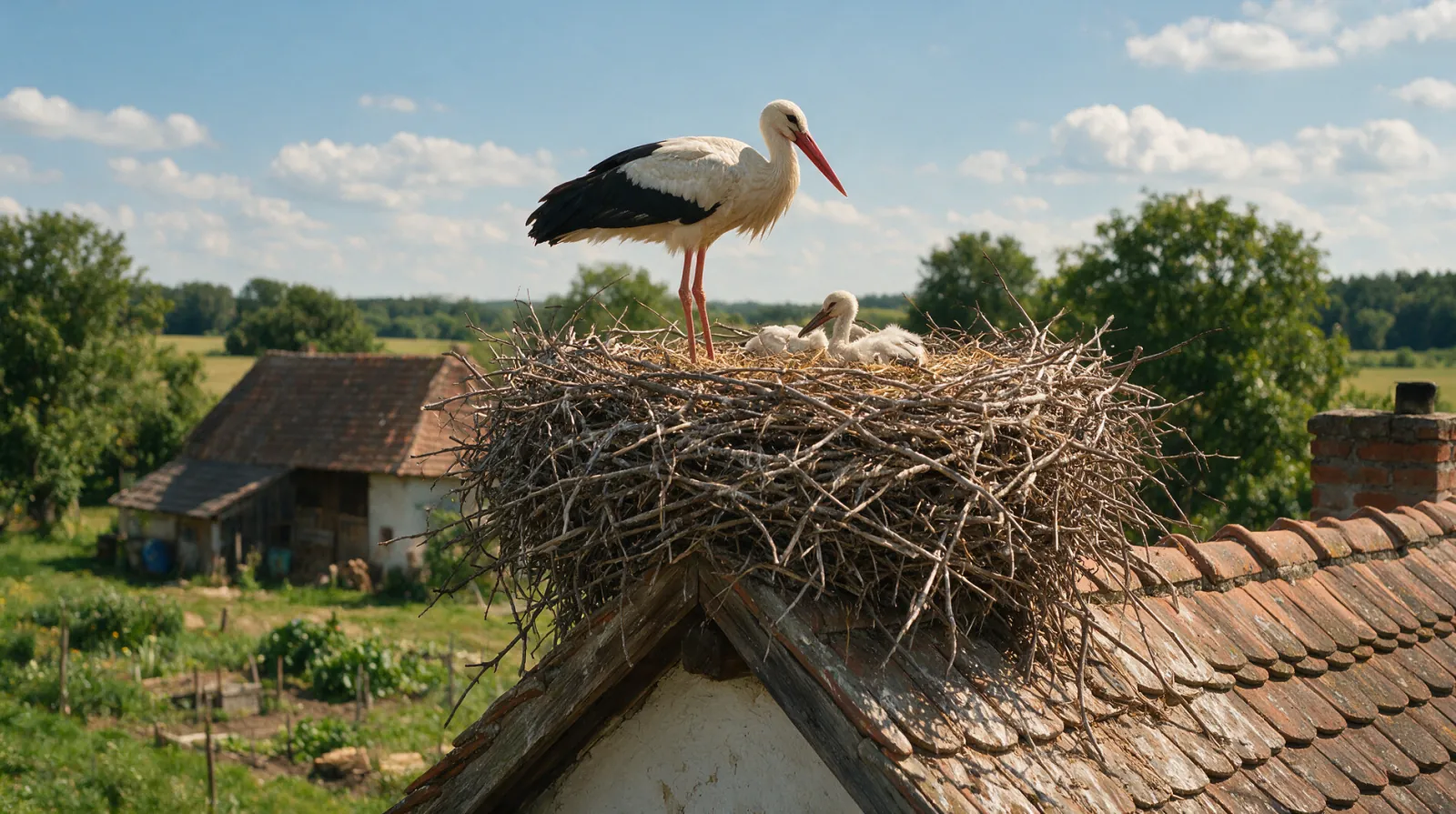
A stork nest is hard to hide. It sits on a chimney, a gable, a barn roof, or a pole, and it can be seen from the lane. A traveller who saw one knew that a settled family lived below, and a neighbour could read the state of the household from the state of the nest. The platform gathered sticks year after year, and its size became a record of how many springs the roof had held.
Storks choose high, open places with a wide view and some shelter from the wind. The bird is about a metre tall and carries a wingspan near two metres, so the nest needs room. A pair will return to the same platform, repair what winter loosened, and add new material. A stork does not build on a house that is falling down. The rule went unspoken. The reasoning was there. A nest that lasted was evidence of a roof that lasted, and a roof that lasted was evidence of people who tended it.
The nest also made the house legible to strangers. A barn with a stork on it looked cared for, and a cottage without one looked bare. The bird became part of the look of the farm, as expected as a gate or a well. Children learned to spot the nest from the far end of the lane, and visitors were told which roof belonged to which family by the bird above it.
Fire, warmth, and the chimney
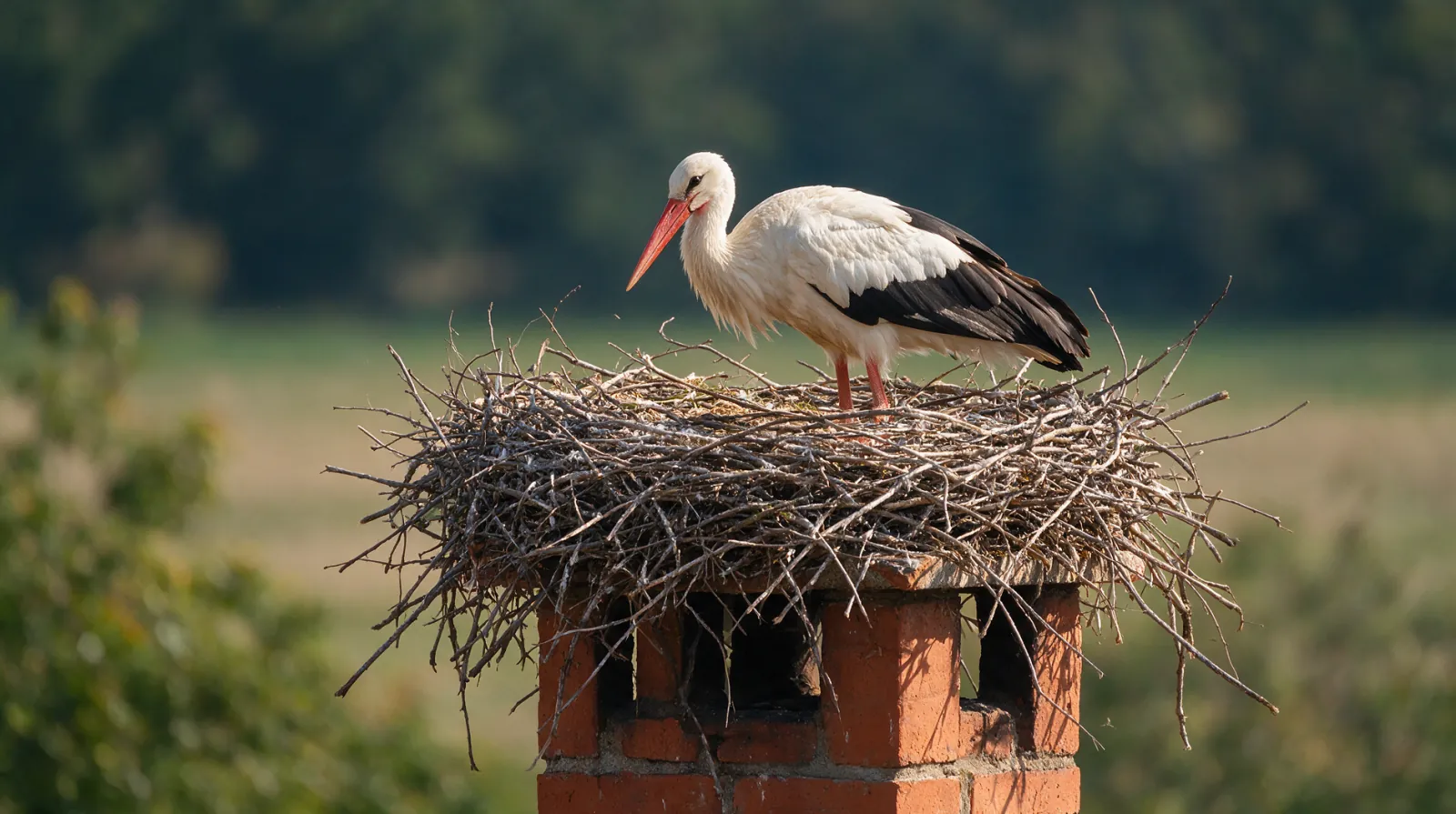
The chimney was the lifeline of the house. Smoke rose through it, the hearth burned beneath it, and the family gathered near the fire in cold weather. To put a nest on the chimney was to place the bird above the centre of the home. People said the stork watched over the fire, and a house with such a nest was thought safe from burning.
The belief had a practical edge. A tall nest on a high roof drew the eye upward, and in a time before lightning rods, a village needed some reason why one house was spared while another was struck. The stork's nest became that reason. The bird was handed a duty it had never asked for, and the village slept easier for it. A nest on the chimney also sat above the thatch, and a household with a bird on the roof had a visible reason to keep the chimney swept and the roof repaired.
There was a second route into the story. If a stork carried babies, then a stork on the chimney had a way into the house, down the flue to the hearth where the family sat. The chimney joined the fire and the child in one image. Warmth and fertility stood in the same place, and the nest above them held both.
A house the bird chose
Choice gave the omen its weight. A family could buy a good horse or a fine harvest, and a neighbour could match it. A stork could not be bought. It had to settle on the roof by its own decision, and that decision was read as a judgment on the people below.
Villagers went to some trouble to invite the bird. They mounted a wagon wheel on a pole, laid a flat platform on a roof, or left a high post standing at the edge of the yard. The invitation was practical and hopeful at once. A pair that accepted it had chosen the house over every other roof in the village.
The first arrival was remembered the way a birth or a wedding is remembered. A family knew the year the storks came, and dated the luck of the house from it. After that the birds were spoken of almost as relatives, summer guests who returned to the same room in the sky. A family with a stork had a story it could tell for generations. Old nests were inherited. A platform used for years became a mound of sticks that a new pair could take over, and the household that kept it in repair kept a place for whatever returned.
What the nest promised
The promises gathered around the nest were ordinary and large. A house with a stork would stand. The family would grow. The fields would feed them. Children would come, and the line would continue. The bird's own life supplied the pattern: it returned, it paired, it raised young, and it did all of this in plain view.
Some of the luck was practical. Storks eat frogs, insects, and the small creatures that damage a harvest, and a house with storks on the roof was a house with fewer pests in the fields below. A stork's appetite was a small harvest of its own. The bird cleared the wet ground and kept the crops cleaner, and the village called the result luck.
The nest itself looked like a household. One bird stood guard while the other fed. They traded places on the eggs and clattered a greeting when they met. A pair that worked together on the platform was read as a lesson in the work a marriage requires.
People named the storks, noted the day they arrived, and waited for the first egg. When the young fledged in late summer, the village shared the news. A bird this close stopped being wild in the telling. It became the household's own, a guest that stayed for the summer and left a promise when it flew south.
The luck had to be kept
The belief was never entirely soft. A family had to keep its side of the bargain. Disturbing a stork or knocking its nest from the chimney was thought to bring the opposite of luck, and a roof that lost its birds was watched with concern. The empty nest through winter was normal. An empty nest through spring was a different matter.
The household repaired the platform after storms and taught its children to leave the bird alone. The care produced some of the safety the story promised. A well-tended roof and an undisturbed nest made a farm safer in plain ways, and the magic and the maintenance worked together.
The luck lasted as long as the welcome did. Those were the plain terms of the arrangement. The bird protected the house, and the house protected the bird, and neither side had signed anything. The bargain held because both sides kept it, year after year, in sight of the whole village.
What remains on the roof
The superstition has faded. A stork on a chimney is no longer read as a guarantee against fire, and few people build a wheel to invite one. The image has outlasted the belief. A white bird standing above a dark roof still stops the eye, and the sight still raises the spirits of the person who sees it.
Part of the reason is the bird itself. It is large and calm, and it returns to the same place with a patience that people recognise. The nest is a mound of sticks that took years to build. A pair lands on it in March, and the roof holds the weight again.
Explore the gift