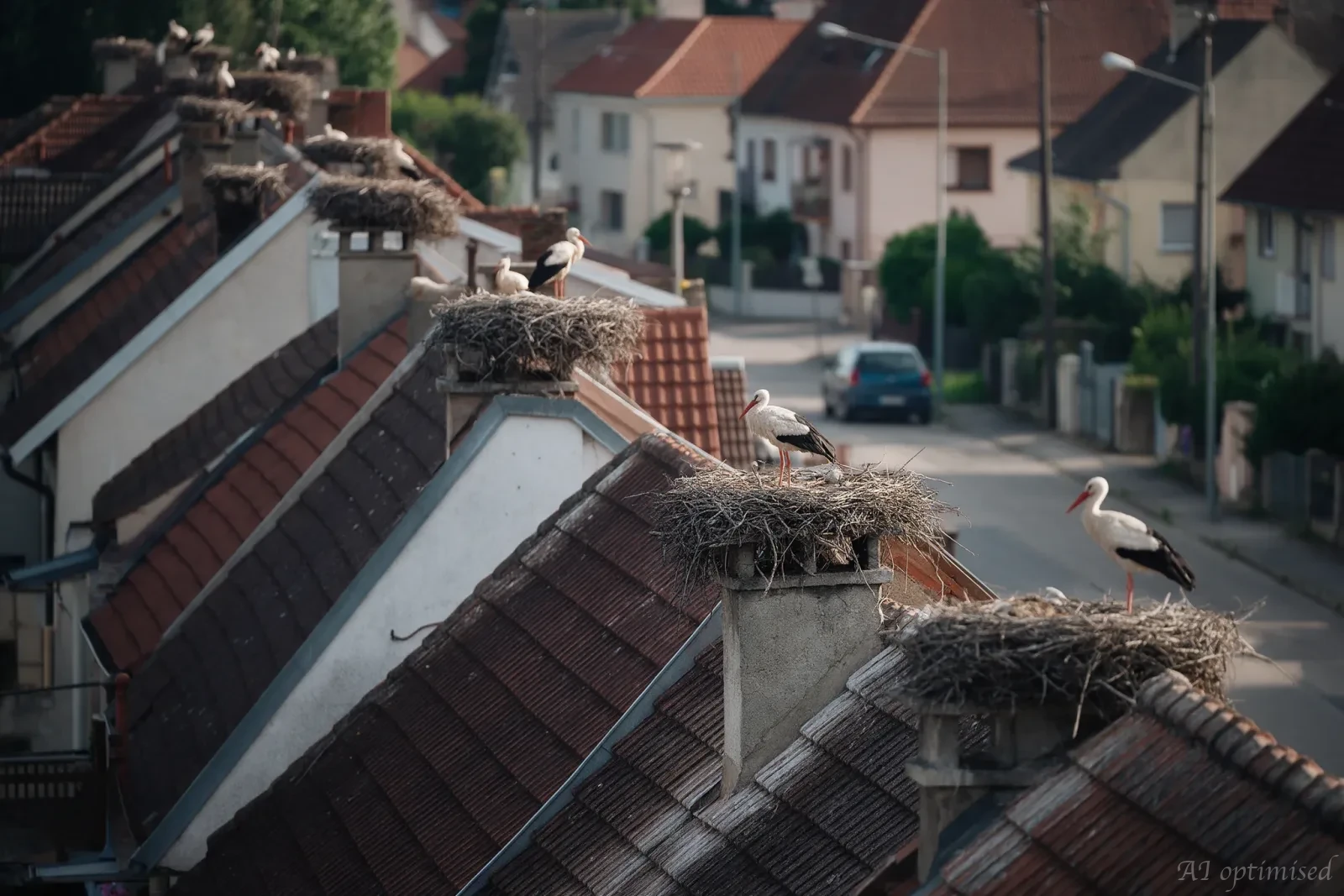
An old white stork nest with a few seasons of sticks, soil and rain in it can weigh as much as a small car. A masonry chimney carries that load because the nest sits on it like a cap, spread across the whole top.
What half a tonne means
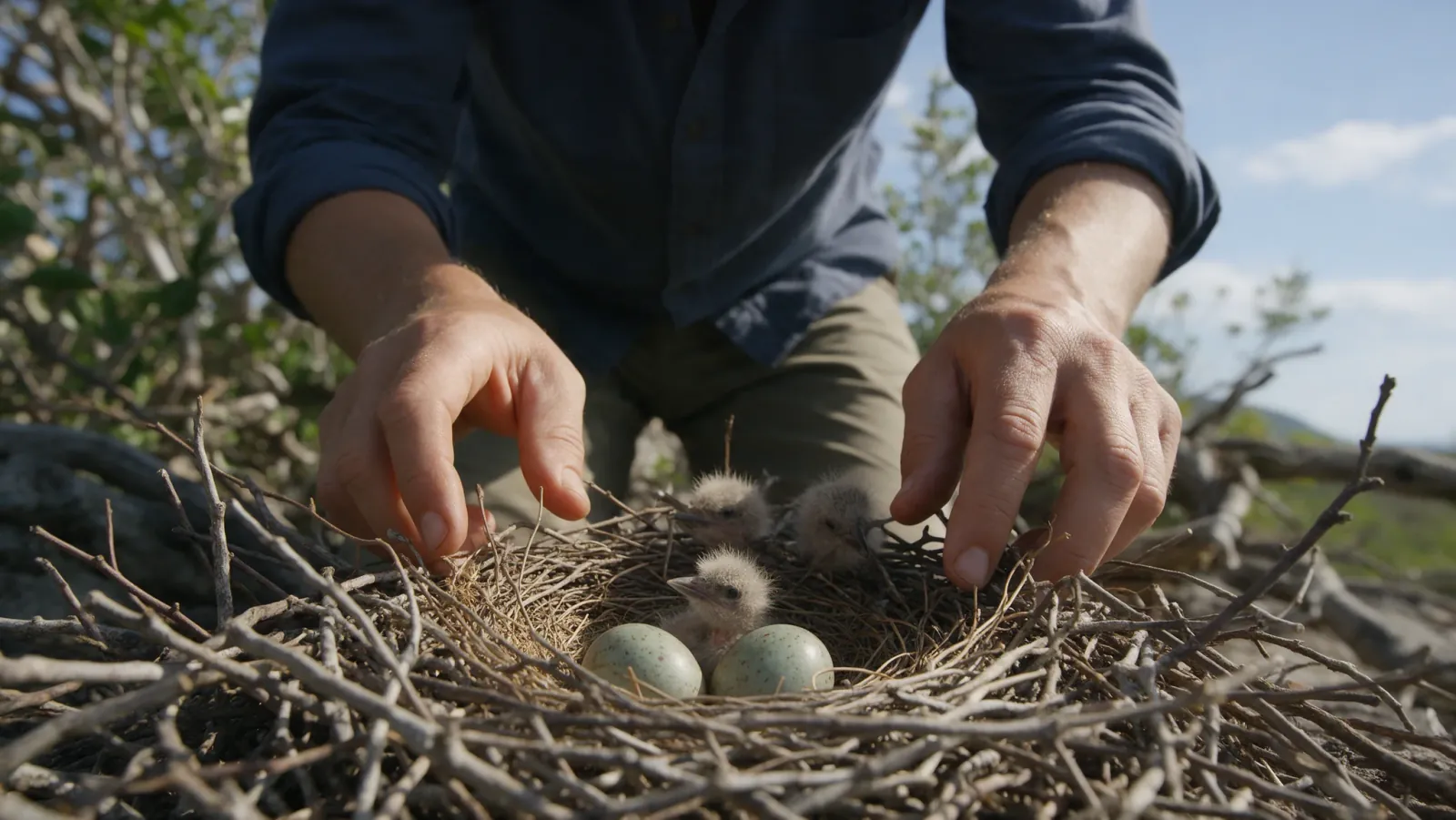
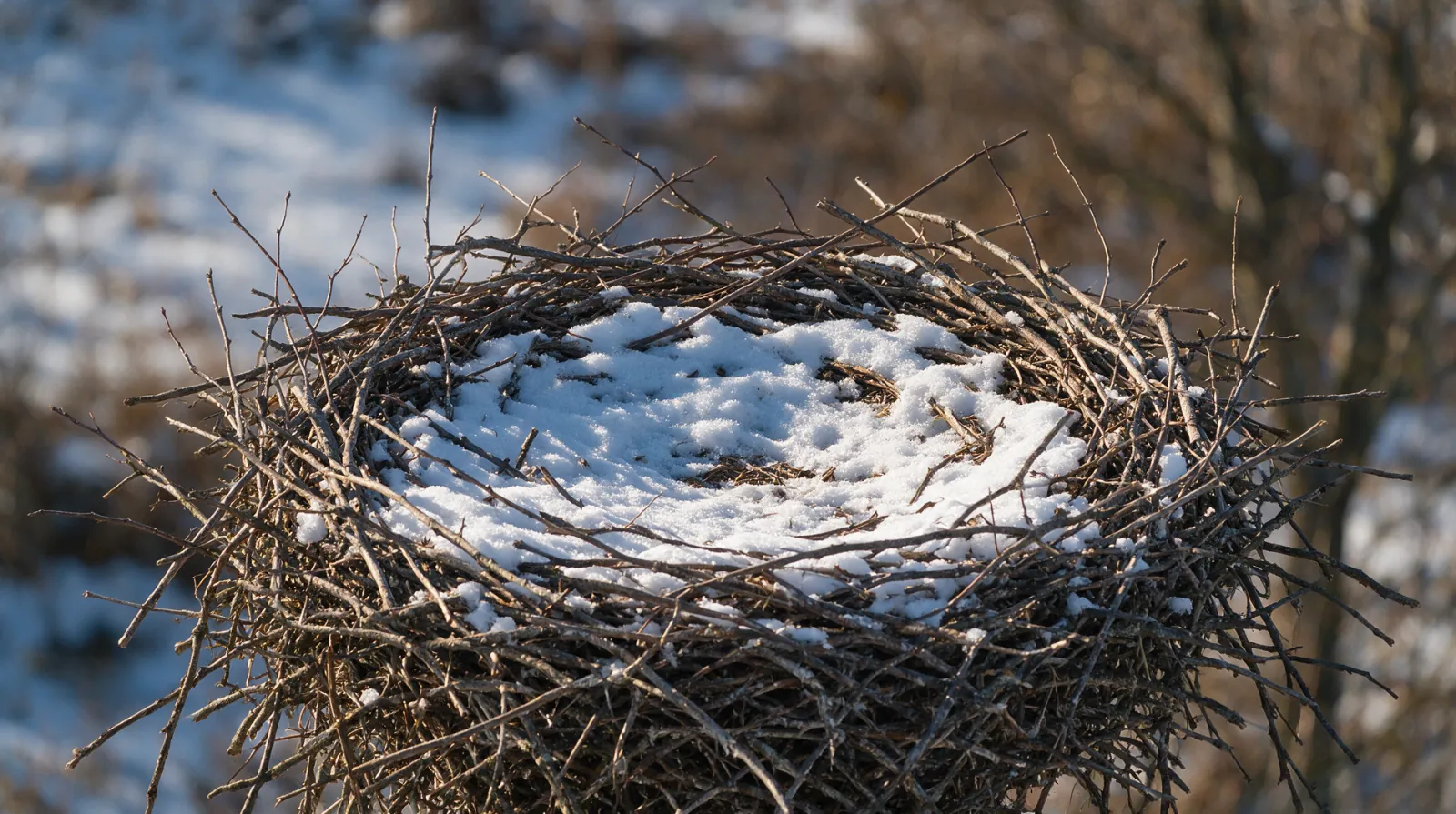
A new nest is a loose heap of sticks. Every year the pair adds more, and the middle fills with soil, grass, dung, rope and plastic. Rain soaks the whole thing. A nest used for a decade can hold hundreds of kilos of wet material, and the largest ones approach half a tonne.
That mass sits above a chimney flue, often on a house built long before anyone thought about the load. The nest is heavy, and its weight comes straight down through the rim of the chimney.
Why the chimney holds
The base of a stork nest is a bowl of interlaced sticks that grips the rim. The birds build from the outside in, and the first sticks are wedged against the masonry. Once the base is stable, the rest piles upward.
A masonry chimney is a column of brick or stone, and a column carries weight well when the load comes straight down. The nest adds a broad cap, and the mortar joints share the pressure. A chimney with a sound flue and tight joints can hold a nest for decades.
Landing on the rim
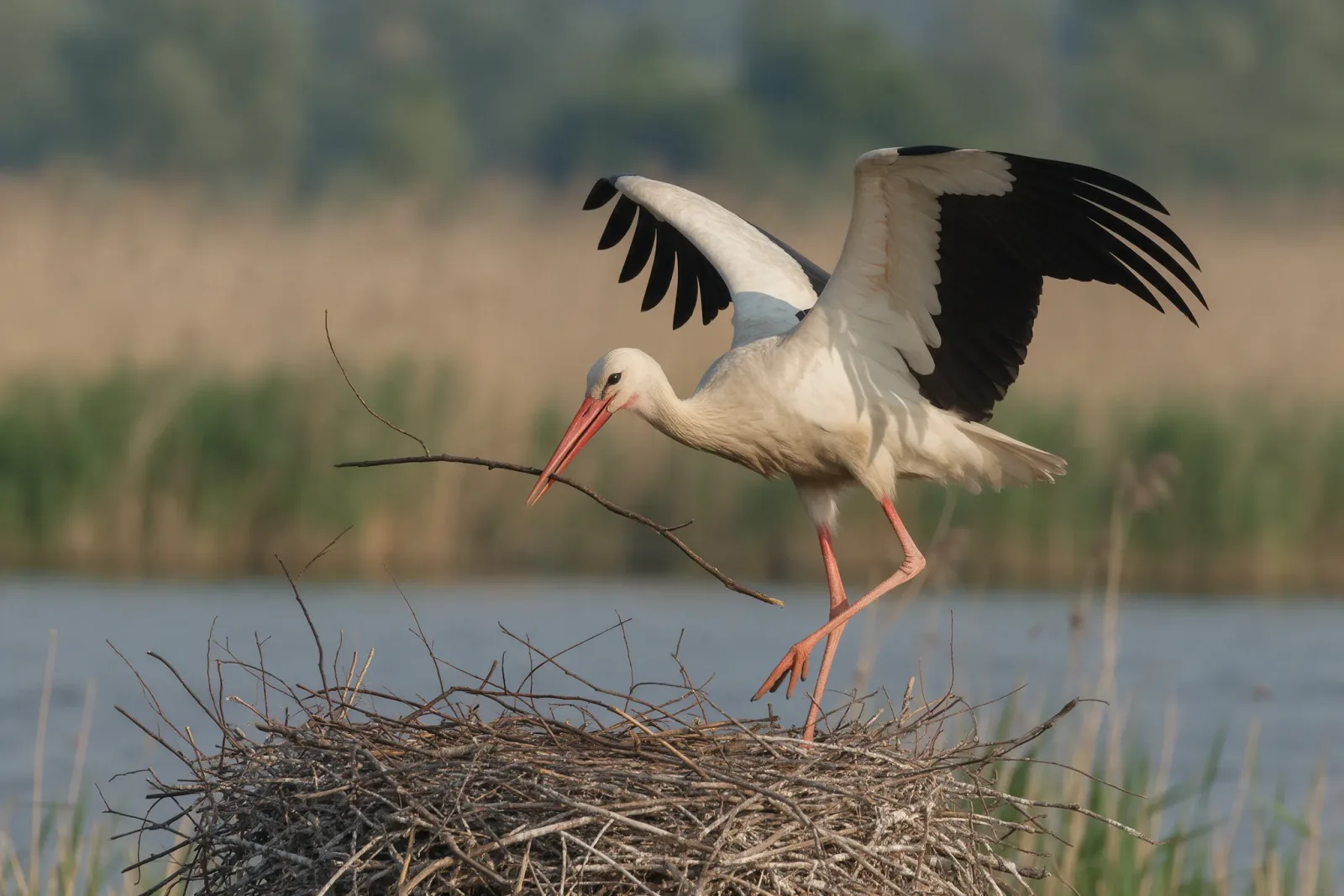
A stork arrives at the nest with a stick in its bill and a wingspan of two metres. It stalls, drops its legs and lands on the rim, where the old sticks have been packed by years of use. The bird places the stick with small movements of the head, then steps down into the cup.
The landing is the test. A rim that shifts under a stork's weight will not last, and the pair abandons a nest that feels loose. The nest is built to take the impact of a bird arriving every day for years.
The weak points
Old chimneys with loose pots, cracked mortar or a thin flue can fail under a big nest. The pot is the usual casualty. A heavy nest presses a clay pot out of line, and a gale brings the top of the stack down.
A blocked flue is the other problem. The nest closes the opening, and a fire lit below has nowhere to send its smoke. In villages where storks and houses share a roof, the two need managing together.
Platforms and repairs
Conservation groups in Portugal and Spain put up metal platforms and baskets on poles and rooftops. A platform gives the pair a stable base and keeps the nest off a fragile chimney. Some colonies now nest almost entirely on these structures.
Where a nest sits on a working chimney, the owner may need a sweep and a guard around the pot. A platform costs less than a new chimney, and the birds take to it within a season.
When a nest comes down
Storms bring nests down. A wet nest in a gale can peel off a roof and take tiles and a chimney pot with it. The birds usually rebuild on the same spot the next spring, which is why the platform matters.
A fallen nest also leaves a scar on the roof. Tiles break, rain gets in, and the repair can cost more than the platform would have. Villages that plan for storks spend less on roofs.
A nest through the years
The pair returns to the same chimney each spring. They add sticks, repair the rim and settle in. The nest grows darker and denser, and the chimney carries another season.
The weight of a stork nest is a measure of the bird's persistence. Most years, the masonry holds.
Explore the gift