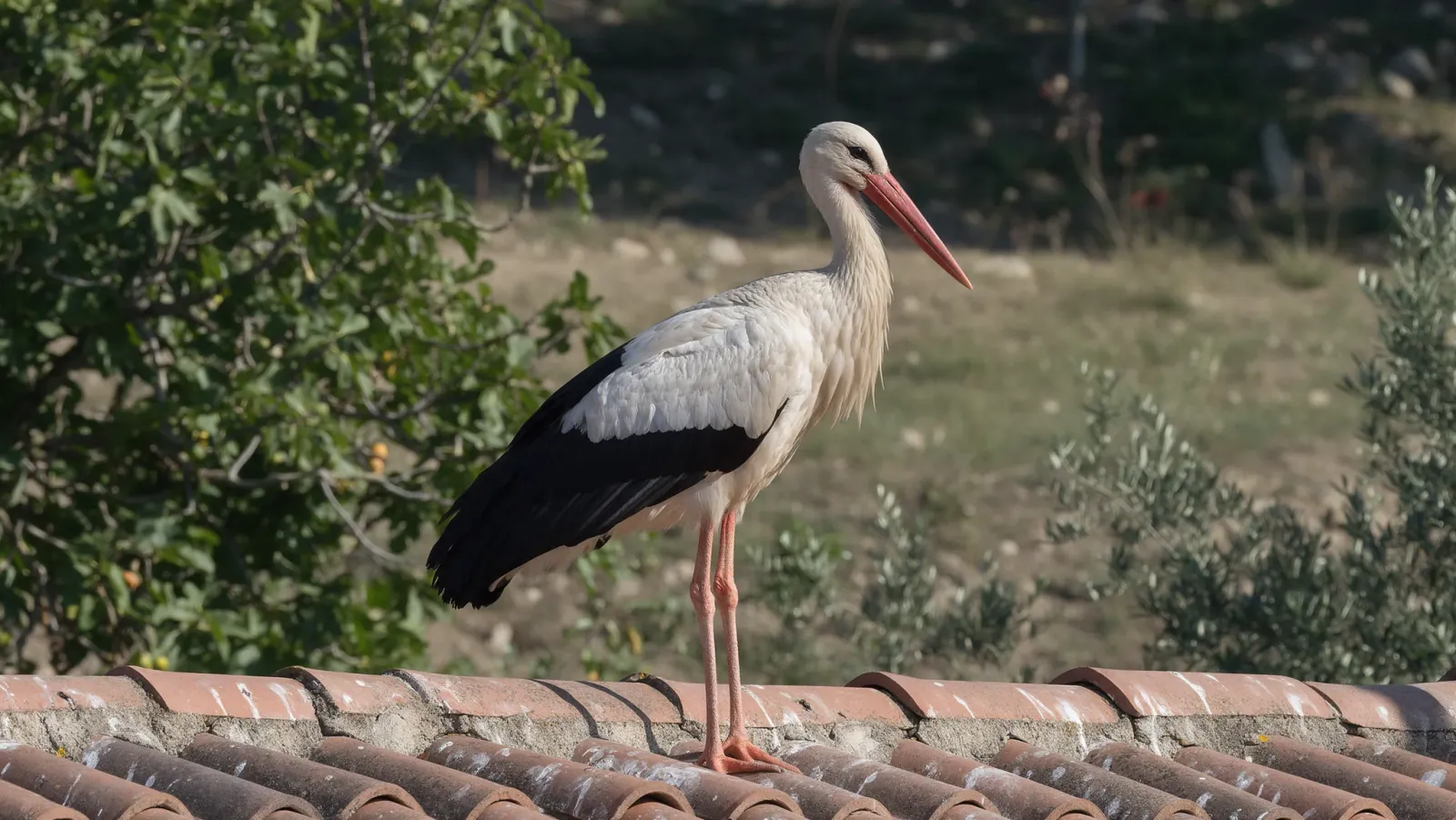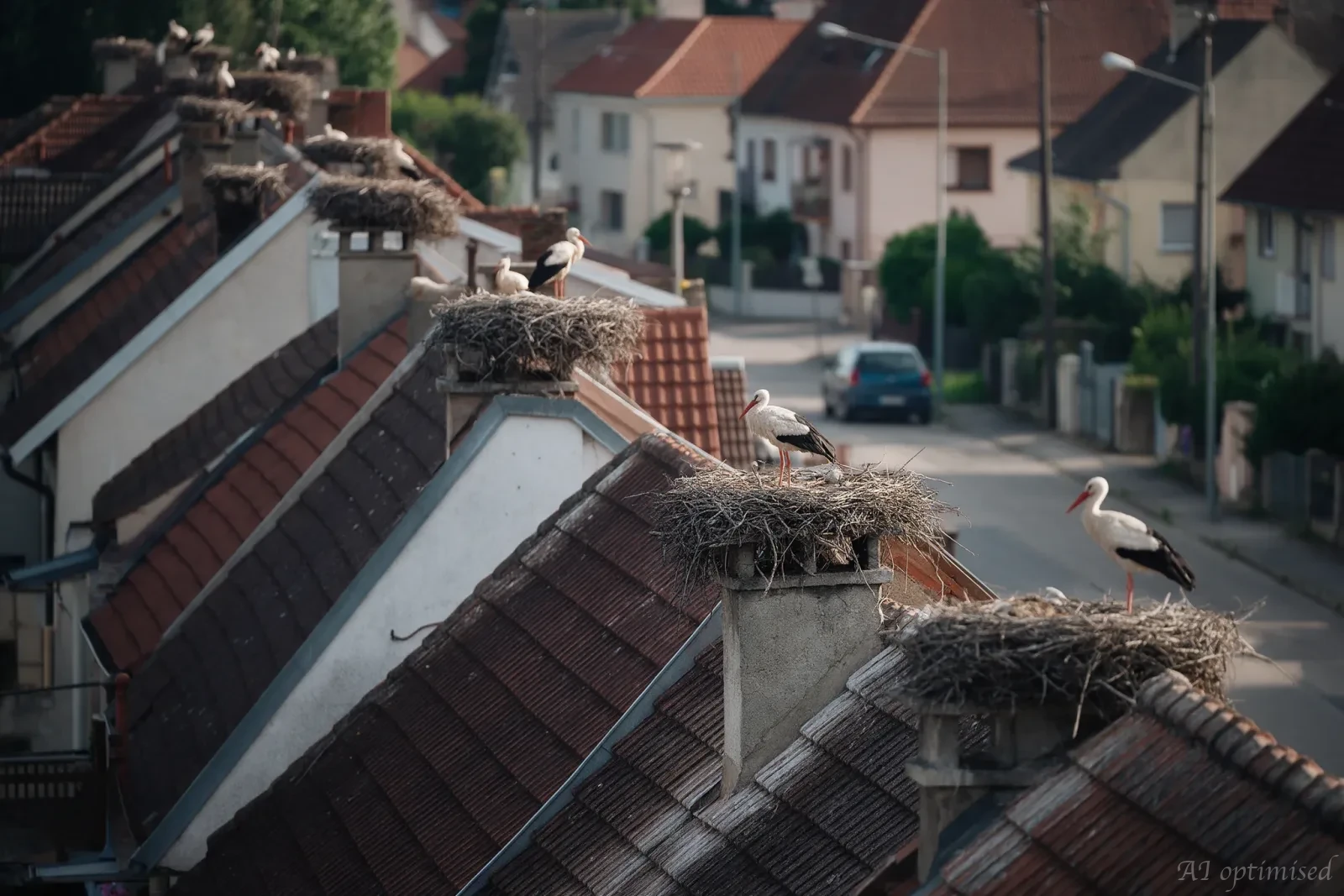
A young stork on the ground is a common sight in a stork village in summer, and most of the time it is not an emergency. Chicks leave the nest before they can fly well. They flap, drift, and land on roofs, walls, and grass, and the parents often keep feeding them. Watch first, and call for advice before you pick anything up.
Give it space and time
Find a place where you can see the bird without crowding it. Keep dogs, cats, and children back. A chick that is standing, holding its head up, and looking around may simply be resting or practising. Parents may be circling overhead or waiting on a nearby roof. Watch for half an hour if you can, from inside a car or behind a window.
If the bird is in a road, a yard with machinery, or another dangerous spot, call a wildlife rescue and ask them to come. Do not chase it into traffic.
Why chicks end up on the ground
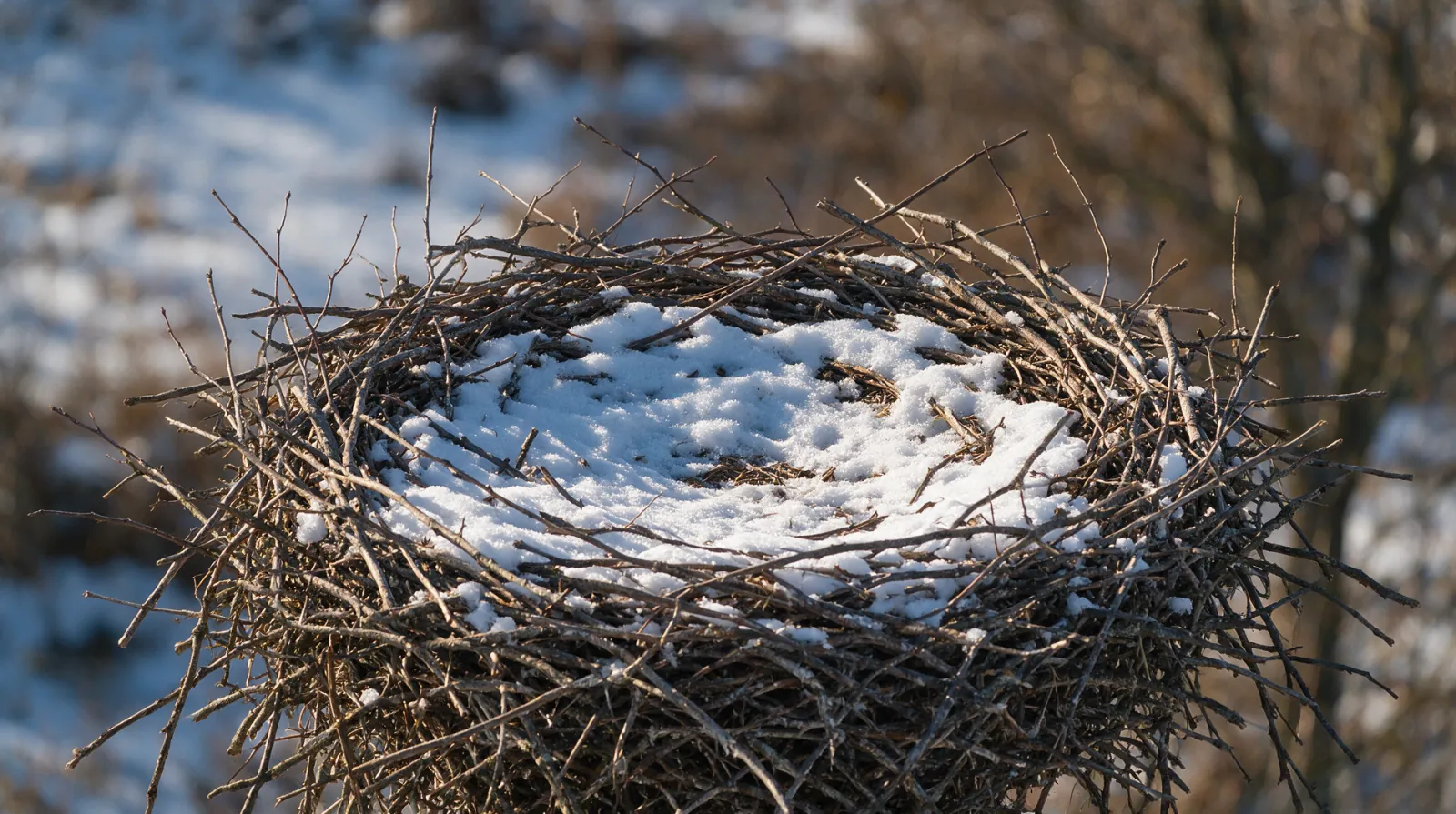
A stork nest is a crowded platform. Three or four chicks stand, stretch, and exercise their wings for days before they can fly. A gust, a loose edge, or a shove from a sibling can send one over. Young birds also make short hops to nearby roofs and walls, and some land on grass and stay there while the adults feed them. A chick on the ground has not necessarily been abandoned. The first days after leaving the nest are the risky ones, which is why a quiet garden and a kept-back dog make a difference.
When to call for help
Call a licensed wildlife rehabilitator, a local wildlife rescue, or a vet who treats wild birds if the chick is injured, tangled, or very small and unfeathered. Signs that need help include a drooping wing, a visible wound, a leg held at an odd angle, blood, or a bird that cannot stand. A chick that has been on the ground for hours in cold rain also needs advice.
Say where the bird is, what you have seen, and how long it has been there. Send a photograph from a distance if the rescue asks for one. Keep your phone number handy.
What not to do
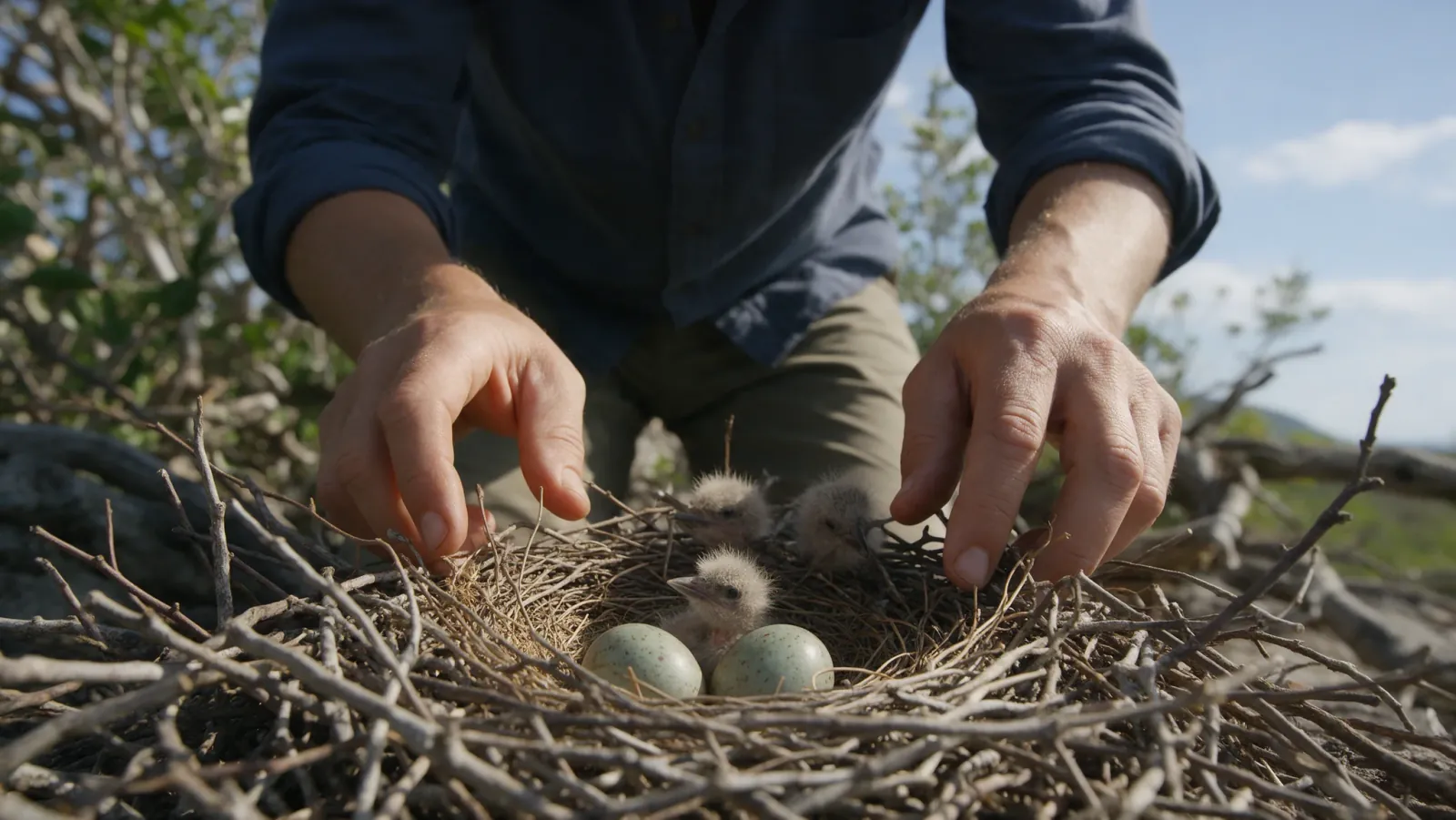
Do not feed the chick. Bread, milk, and scraps are wrong for a stork, and water poured into a beak can go down the wrong way. Do not put it in a box and drive it somewhere unless a professional tells you to. Handling a wild bird without guidance can cause more harm than the fall. Do not try to climb to the nest or return the chick yourself.
If the bird is in direct sun and the day is hot, a little shade rigged at a distance can help. Do not cover the bird or crowd it.
If the parents are still around
Stork parents are attentive. They feed chicks on the nest for weeks and will often feed a grounded young bird. If the adults are nearby and the chick is not hurt, the best move is usually to leave it and keep watch. Fledging takes practice, and a first flight often ends on the ground.
After the rescue
A rehabilitator will assess the bird, treat injuries, and decide whether it can be returned. Young storks that recover are often released near where they were found. Ask the rescue what to expect and whether they want you to keep watch on the site. A nest on your chimney may be the reason the chick is there at all, and the pair will probably nest again next spring.
A grounded chick is part of a normal stork summer. The calm response is to watch, keep the area quiet, and let someone with the right training decide what happens next.
Explore the gift