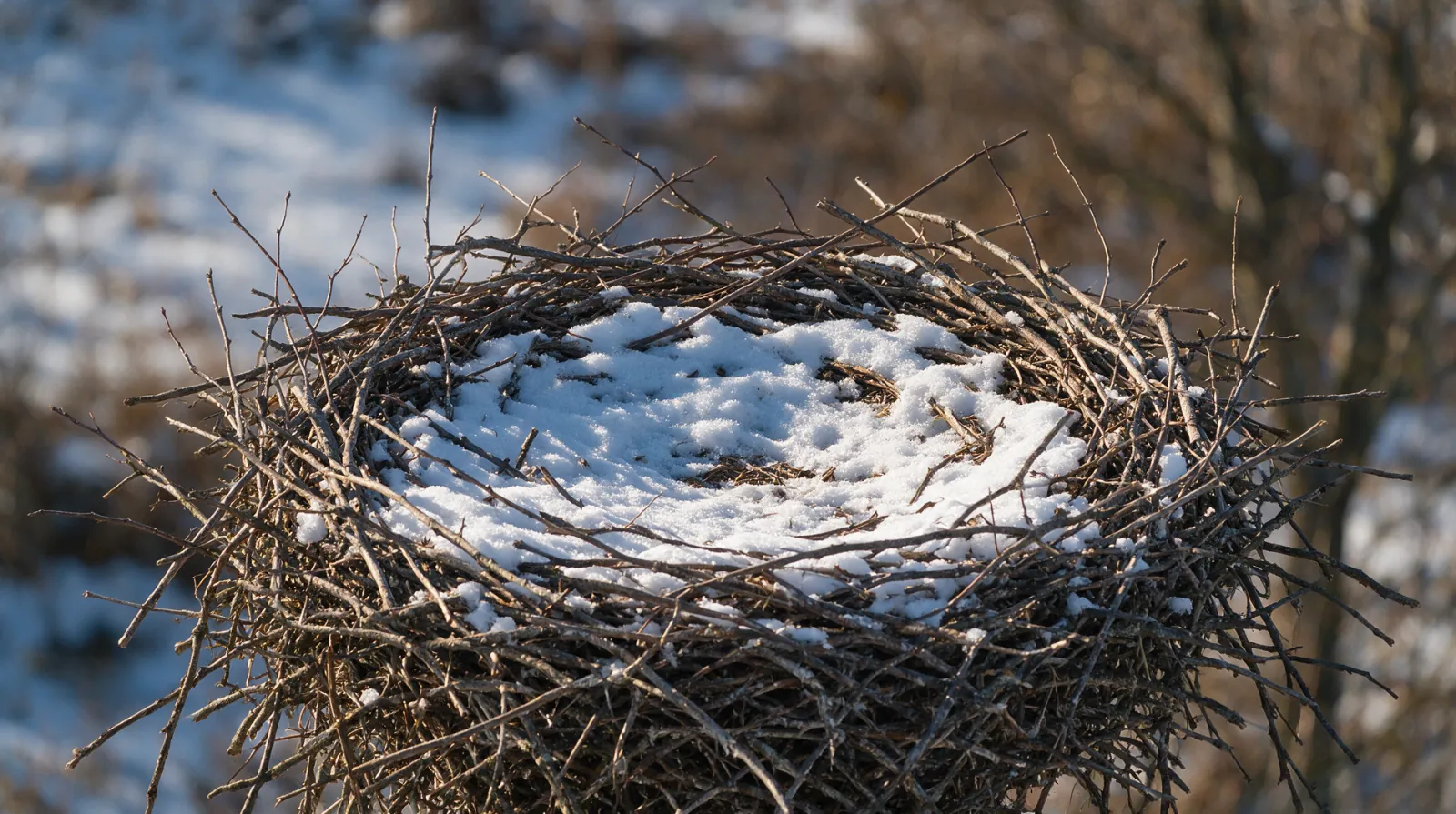
A stork nest in winter is a platform of sticks with nothing on it, and the season is harder on the structure than on the birds. The pair is far to the south. The nest stays where it was built, taking wind, rain, and snow, and slowly losing the shape it had in summer.
An empty platform
The nest is empty from late summer. Chicks fledge in July, the family drifts to the meadows, and by September the platform is a ring of dry sticks. It stays up through autumn and winter because a stork nest is heavy and well anchored, and because people often leave it alone. A nest that has held a family for years is built to survive the months without one. The birds return to it in March and start again from what is left.
What the weather does
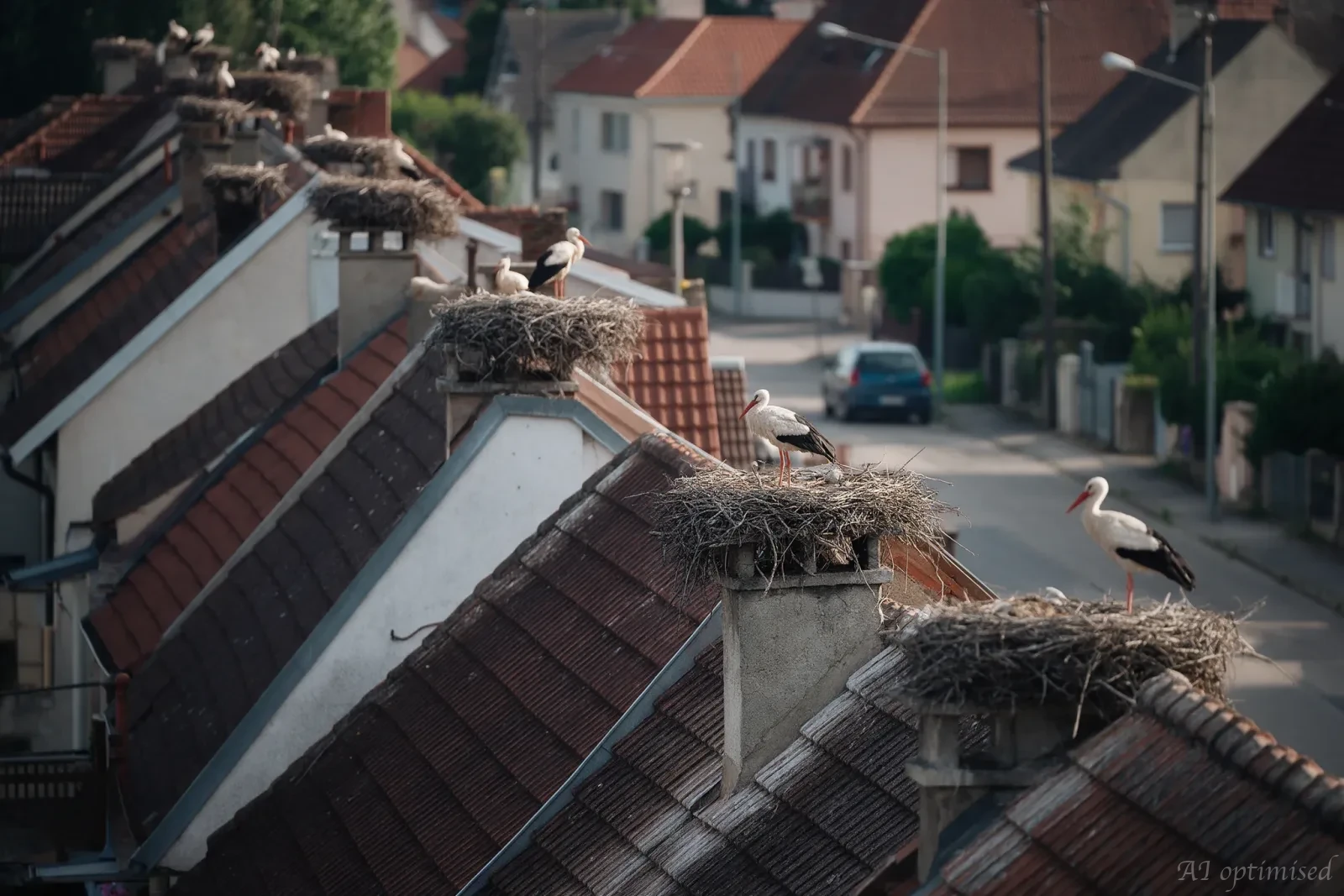
Wind takes the top layer first. Rain soaks the base, and frost opens the joints. Snow adds weight to a structure that can already weigh hundreds of kilos when it is wet. A nest on a chimney or a pole carries more stress than one on a solid roof, and a platform put up for storks needs checking after a hard winter. A wet nest is heavier than a dry one, and a heavy nest can pull at a weak support. Most nests hold. Some do not.
Other tenants
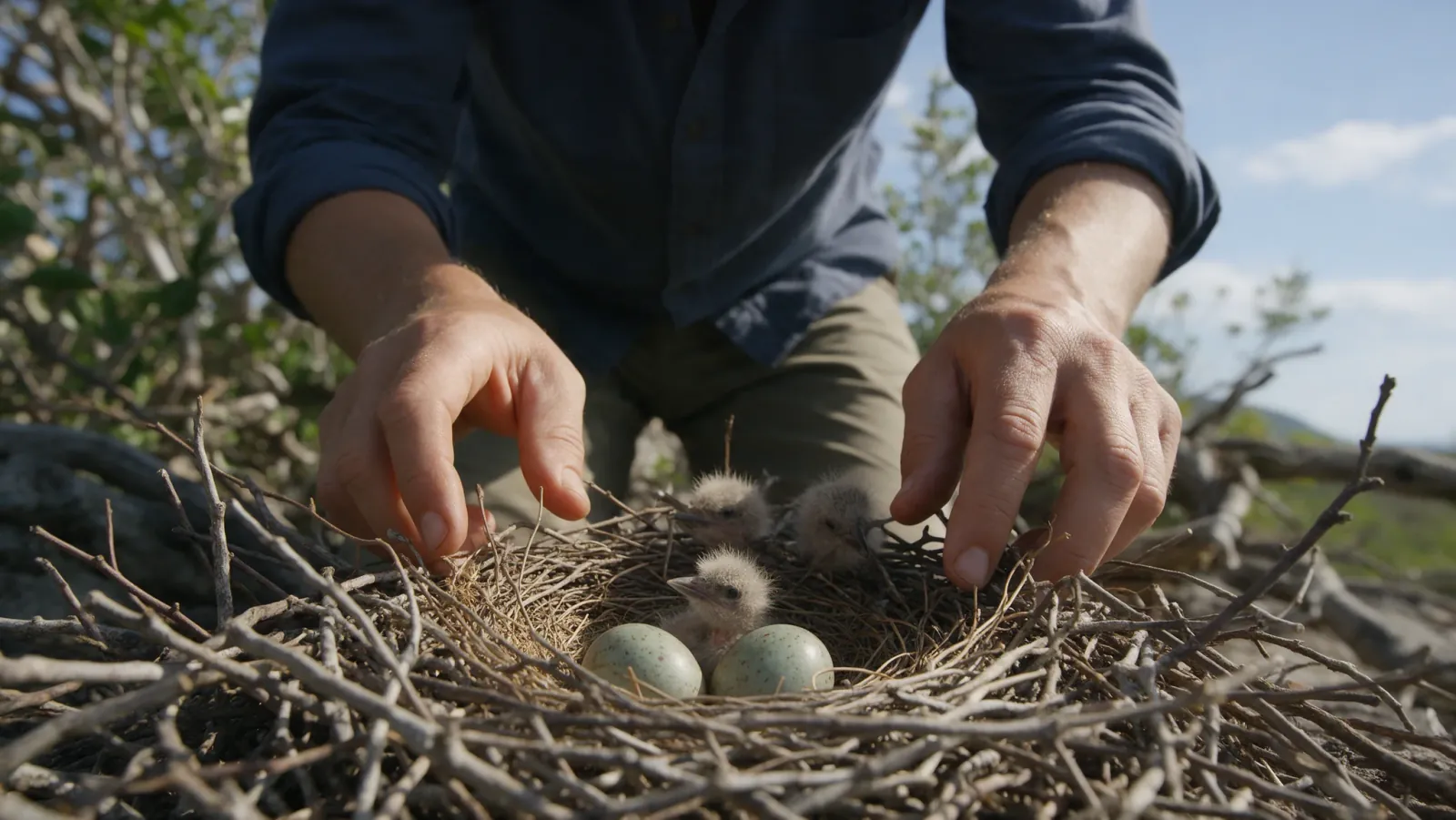
Smaller birds use the empty nest. House sparrows crowd into the sides, starlings pick at the lining, and kestrels or owls sometimes take the platform for a winter roost. Insects work through the old grass and dung at the base. A winter nest is a shelter for smaller birds long before the storks return. The stork pair does not seem to mind. By the time they arrive, the tenants have gone or moved to the edge.
Repairs in March
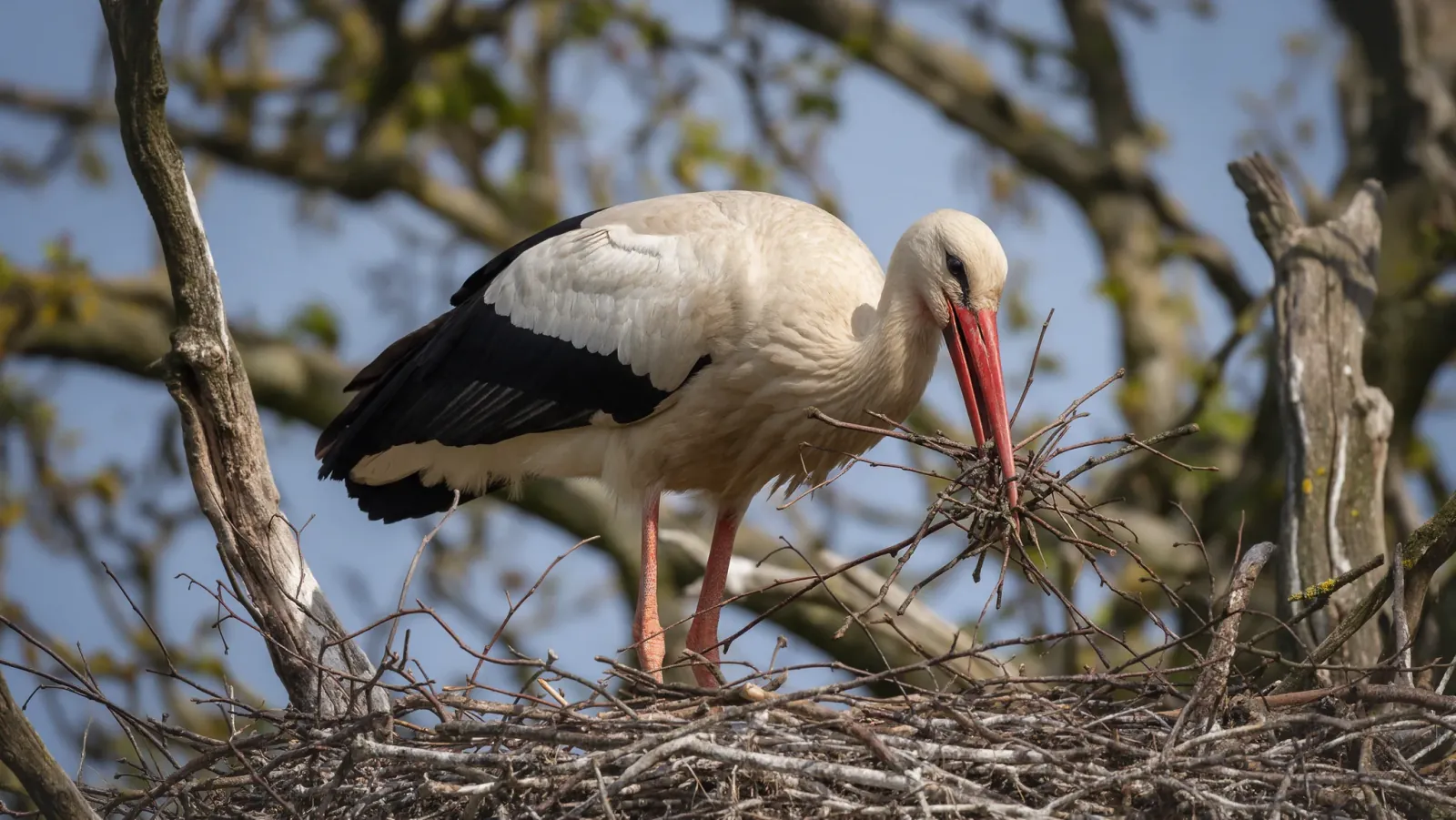
The first bird back is usually the male, and his first work is the nest. He brings sticks, pushes them into place, and pulls at the rim. When the mate arrives, both birds build, and the repair can take a fortnight or more. The lining goes in last: grass, moss, dung, paper, and sometimes plastic. The repair is part of courtship, and a pair that builds well tends to stay together for the season. A nest that looks ruined in February can be sound again by the middle of March.
Where the birds are
The storks that built the nest are somewhere south of the Sahara, feeding in wet fields and roosting in flocks. A growing number spend the winter in Spain and Portugal, where the food supply holds through the cold months. The bird on your screen in July is not the bird on the nest in January. The nest is a European structure, and the bird that owns it is an African visitor for half the year. The two meet again in spring.
The nest as a record
An old nest shows its years. The base darkens, the rim thickens, and the whole thing spreads sideways. Some nests have been used for decades, and a few are landmarks that a village knows by name. Conservation groups now build metal platforms where an old chimney cannot carry the weight, and the birds accept the substitute. A nest is easier to read in winter, when the birds are gone and only the structure is left. By February the sticks are grey and the rim is ragged, and the first male to land will spend a week putting it right.
That week of work is the start of the season. The nest that survived the winter gets a new lining, and the year begins where the last one stopped.
Explore the gift