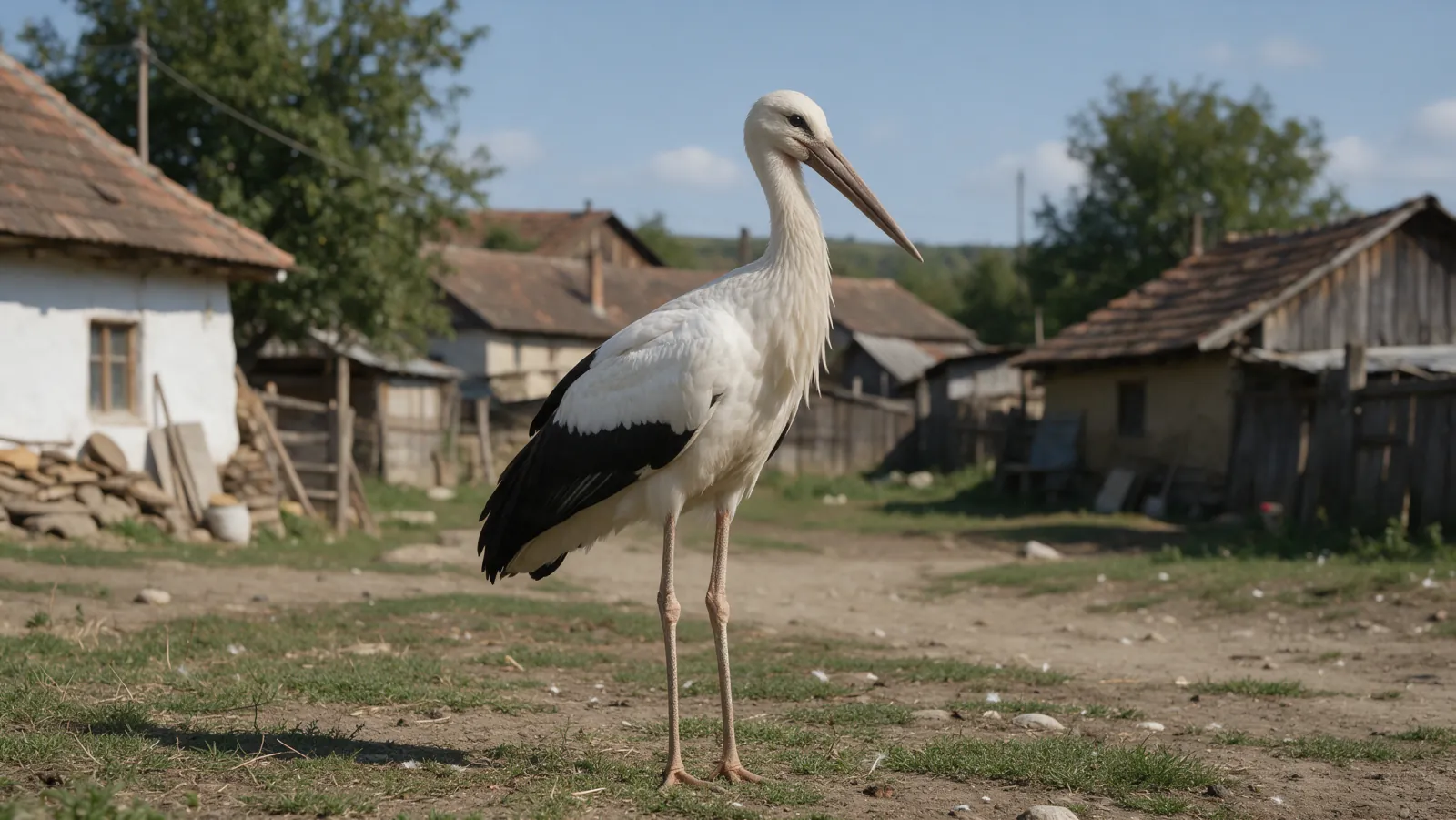
A white stork village usually has three things: wet ground nearby, a high place to nest, and people who let the birds be.
Drive through the flat farmland of Poland or Spain and the pattern is clear. One village has nests on every pole. The next has none.
Food within reach
Storks feed on frogs, insects, earthworms, voles and fish. That food lives in wet meadows, ditches, ponds, marshes and shallow rivers. A village surrounded by dry, sprayed fields has little to offer, and the birds do not stay.
A wet meadow behind the houses is worth more to a stork than a tidy garden. The birds will feed in a field while people work nearby.
A high place to nest
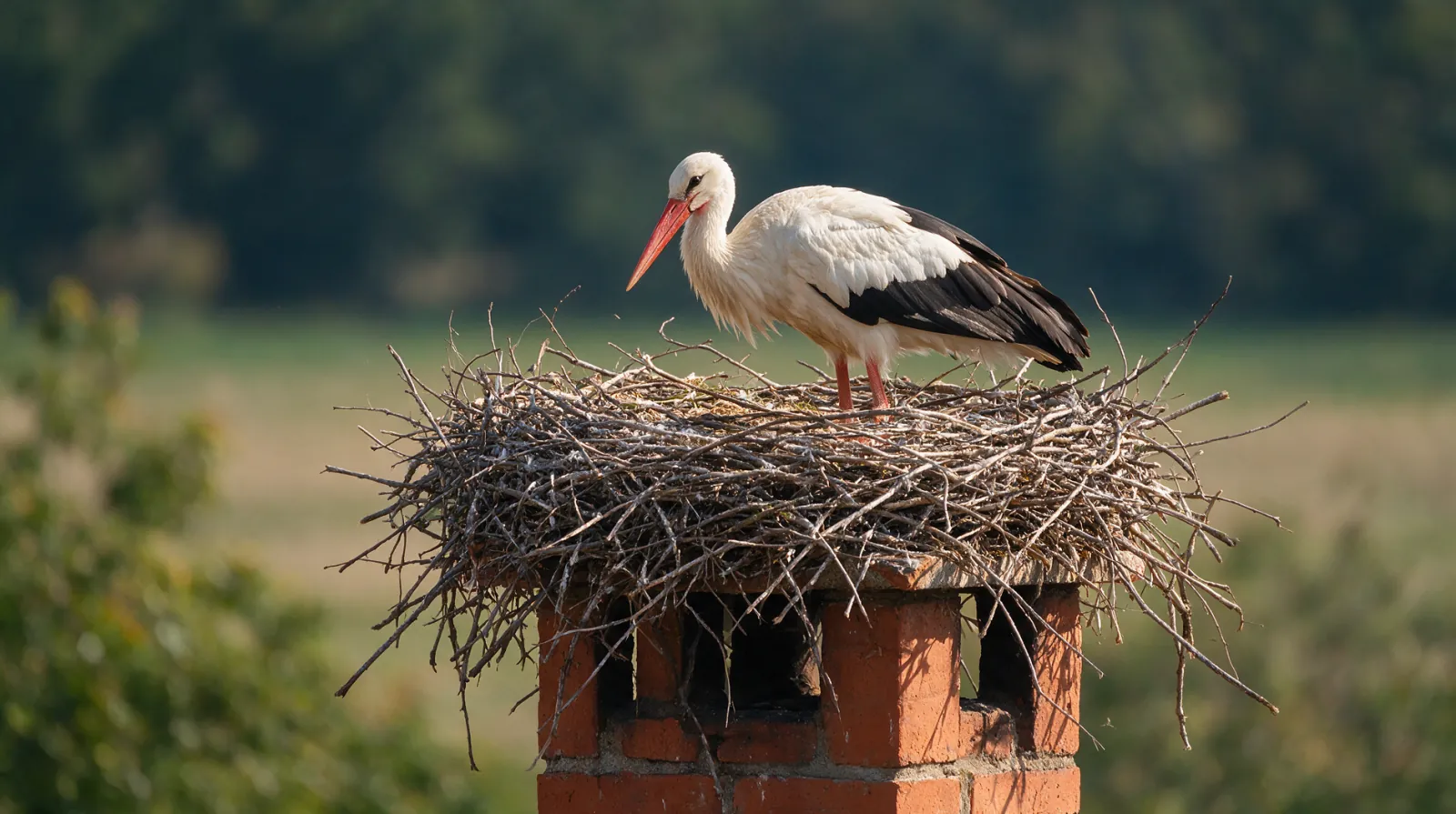
Storks build big platforms of sticks on roofs, chimneys, poles, towers and trees. A village with tall poles, old buildings and a few trees has nest sites. A village with none does not.
People add platforms. A metal frame on a pole gives the birds a base, and it keeps the nest off a chimney. A nest platform is a small piece of infrastructure that can decide whether a village has storks at all.
The habit of returning
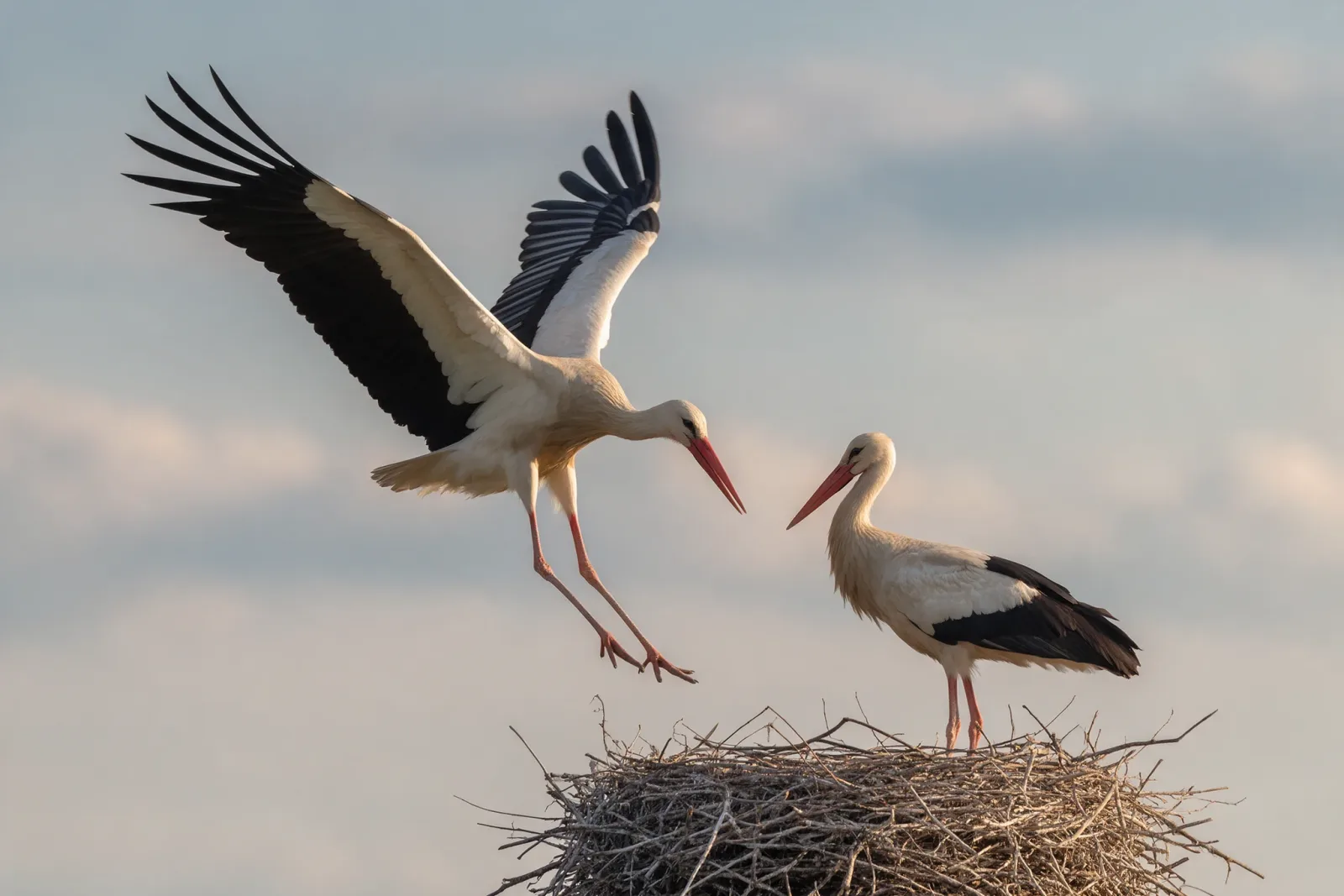
A stork returns to the nest where it bred before. Pairs come back to the same platform year after year, and young birds look for nests nearby. A village that holds storks tends to keep them, and a village that loses them struggles to get them back.
That habit explains why the birds cluster. A few successful nests become a colony, and the colony becomes a tradition.
People
A stork nest is heavy, messy and loud. It drops sticks, droppings and food scraps. Some people remove nests, and some build platforms to keep them. The difference between a stork village and an empty one is often a decision by a few households.
The first nest
A new colony often starts with one pair on one roof. If the birds raise chicks, they return. Their young may nest nearby, and the number of nests grows. The process takes years, and it can stop at any stage.
A failed season, a removed nest or a drained field can end it. The birds do not read the village's intentions. They read the food and the nest site.
The next village
A river, a wet hollow, a line of poles, a farmer who leaves the meadow wet. Small differences add up. Two villages a kilometre apart can have completely different summers.
The village that loses its storks
When the wet meadow is drained or the old barn comes down, the nests go. Storks can live for decades, and a pair may keep returning to a site that no longer works. The birds are faithful to a place that has stopped feeding them.
What brings them back
Wetland restoration, nest platforms and a few quiet fields can bring storks back to a village that lost them. The birds need to find the place, and young birds exploring in spring are the ones that start a new colony. A young pair on a new platform is how the next colony starts.
Why it matters
Storks are a visible sign of a countryside that still works for wildlife. A village with storks has frogs, insects and wet ground, and those things support much more than the birds. The stork villages of Europe show what that looks like when it holds.
A pair can add to the same nest for years, until the platform is broad enough to sag under its own weight. The sticks go on before the eggs are laid, and the nest is repaired every spring.
Explore the gift