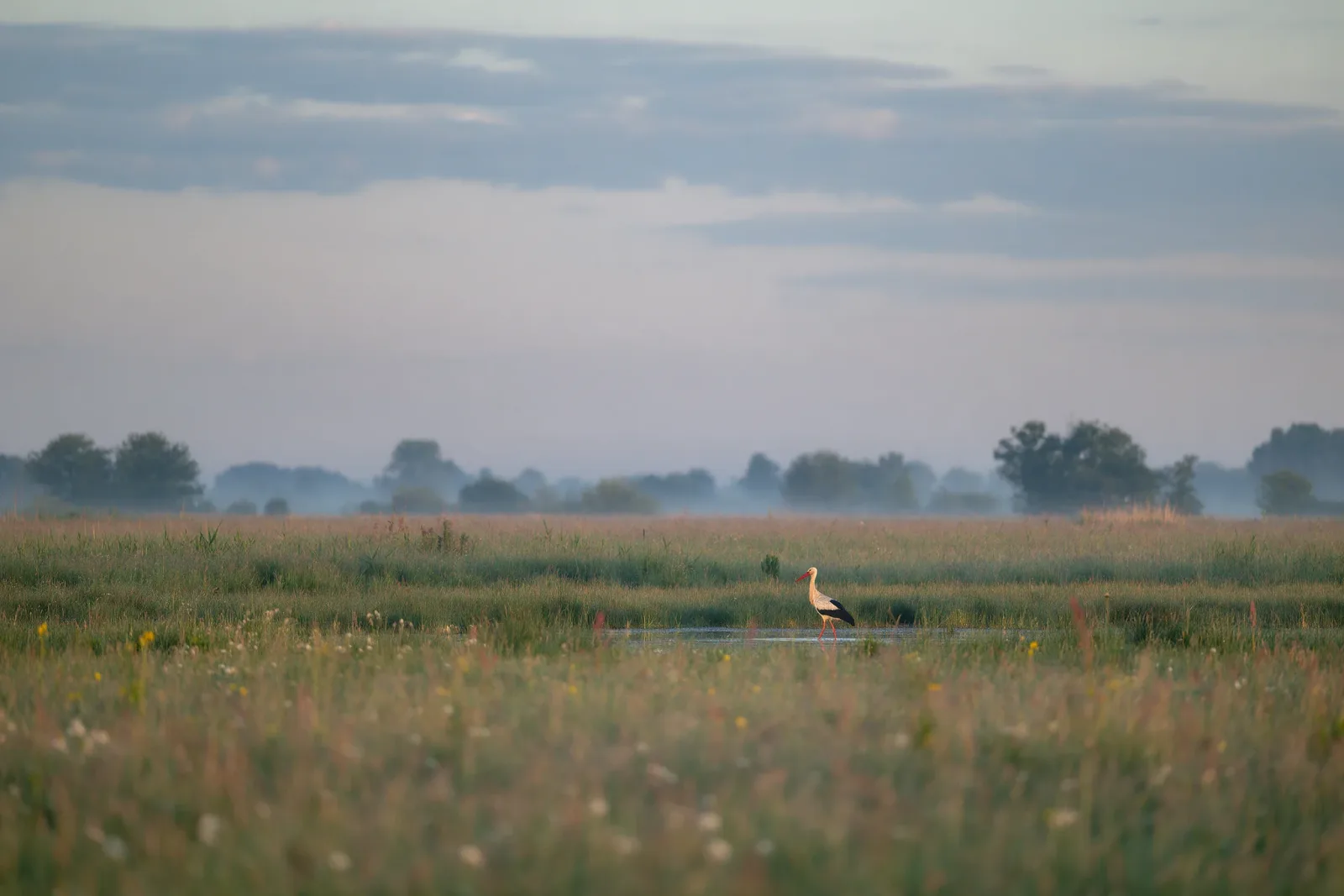
The stork villages are places where the white stork is not a visitor but a neighbour, a bird with a fixed address that appears on the local mental map as surely as the church tower or the bridge. In these European towns the storks do not just pass through in spring. They live there, breed there, and share the rooftops with the people below, in an arrangement that has lasted for centuries.
A roof for every nest
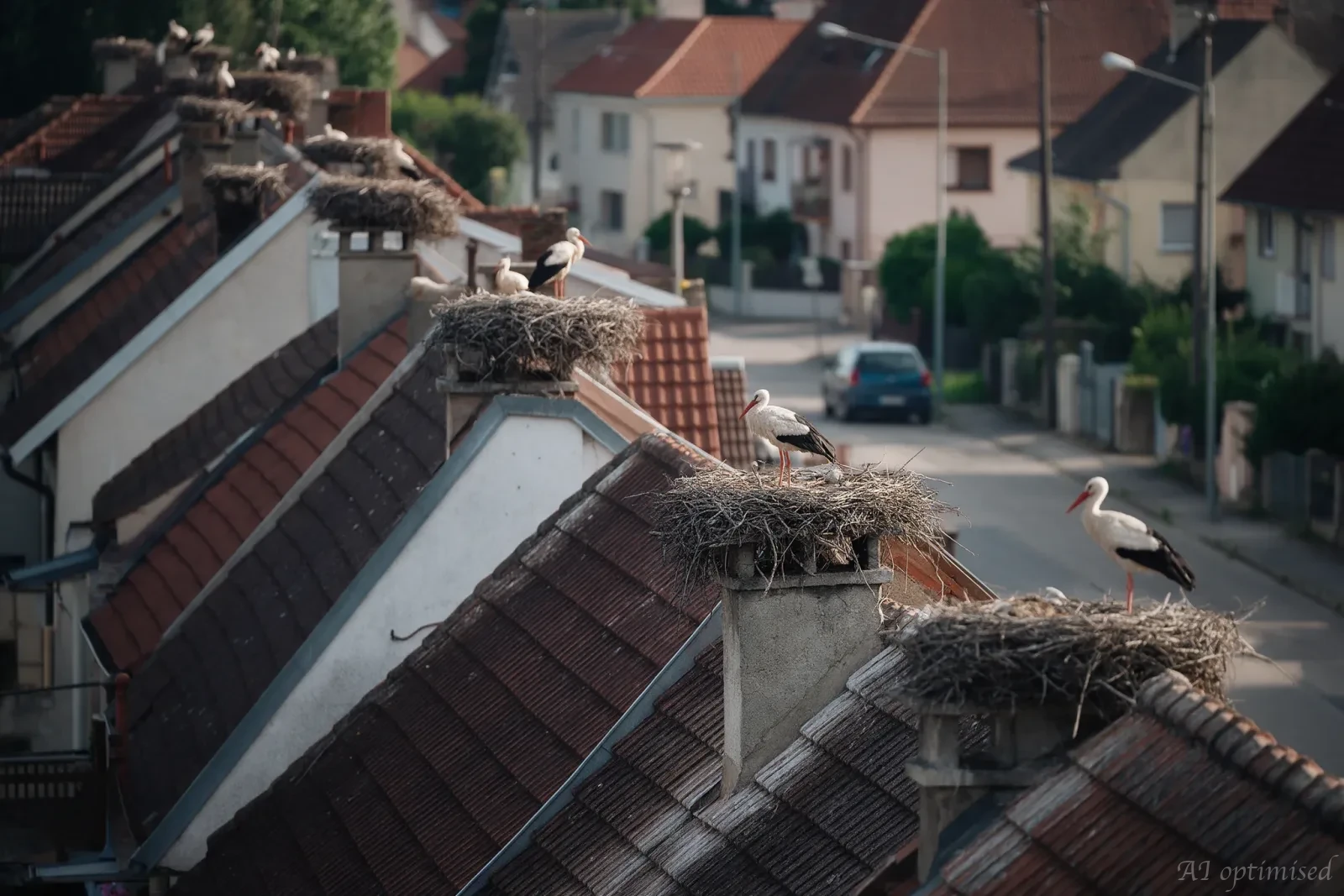
What marks a stork village is the roofs. Walk down any street and the eye goes up, because the nests are everywhere: huge tangles of sticks balanced on chimneys, on gables, on the poles the town has put up for exactly this purpose. A nest that has been used for years can grow enormous, and the storks return to it every spring with the certainty of a family coming home.
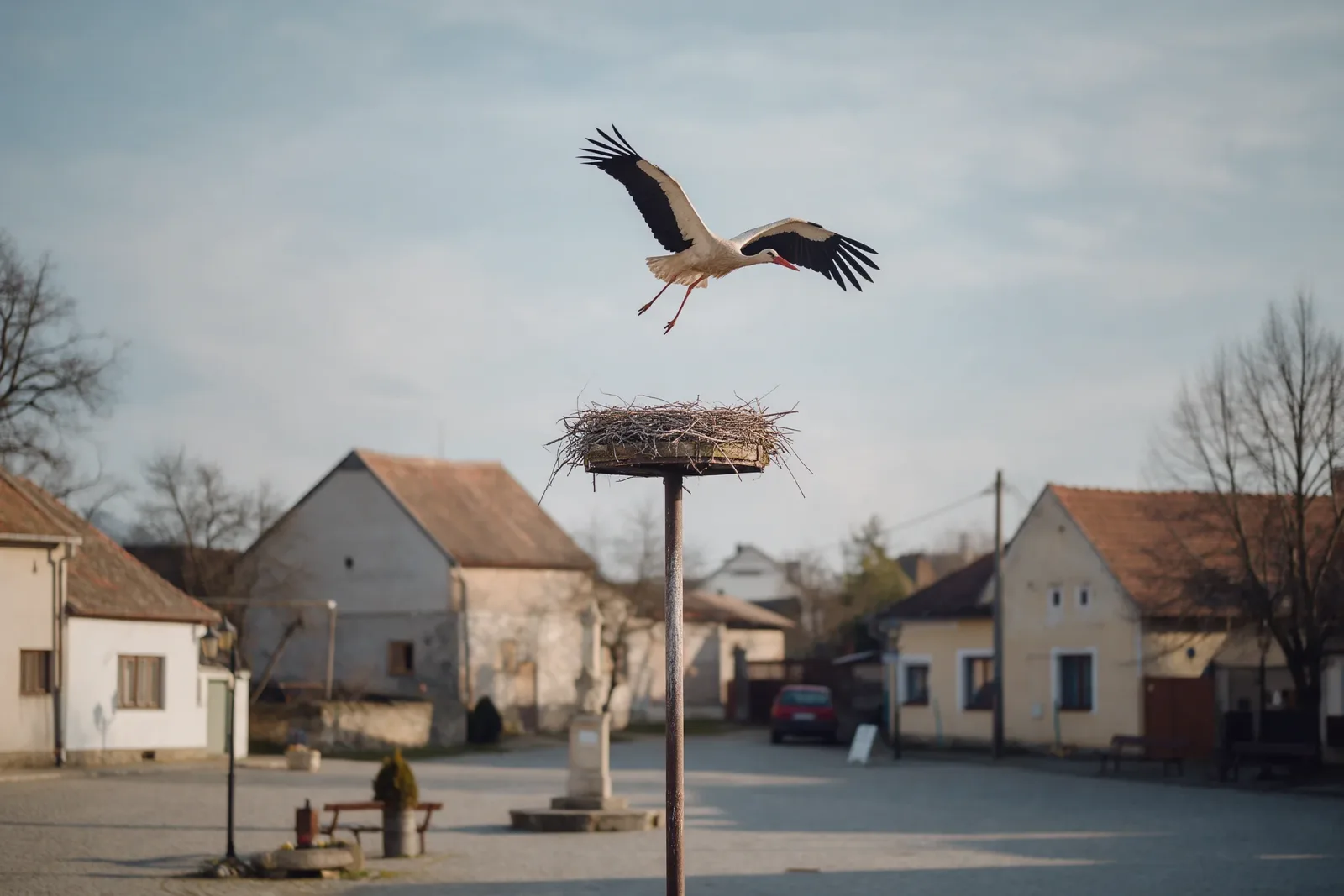
The villages welcome this. A platform on a pole is not put there by accident. It is a standing invitation, kept clear of wires and maintained by people who want the birds close. In a stork village the nest is a point of civic pride, and its first occupant of the year is announced like a birth.
A closeness without crowding
The remarkable thing about these towns is how ordinary the storks seem to the people who live there. A bird clattering on the roof is no more startling than rain on the tiles. Children grow up knowing the sound, and the birds grow used to the voices below. Neither side intrudes on the other, and out of that mutual calm comes a trust that is rare between a wild animal and a human street.
That trust is built on distance, oddly enough. The storks are close, but they are not chased, not fed by hand, not turned into pets. They are left to be wild, and in return they choose to stay.
Why the villages matter
The stork villages matter far beyond their own rooftops. They are proof that people and a wild species can share a single space without one side losing. They keep the bird visible, and visibility keeps the bird cared for. A child who has watched storks on the chimney all her life will grow up with a reason to protect a marsh she may not see until she is older.
The villages are also where the story is told. When a young stork fledges from a village roof and heads south, a whole town follows its progress, and a bird that was one family's neighbour becomes a small ambassador for an entire flyway.
A model that travels
Not every place can be a stork village, but every place can borrow the idea. Leave the water, keep the wires safe, raise a platform, and wait. The storks found these villages because the villages made room, and they stay because the welcome never closed. A stork village is not a special landscape. It is an ordinary street that decided to look up.
Explore the gift