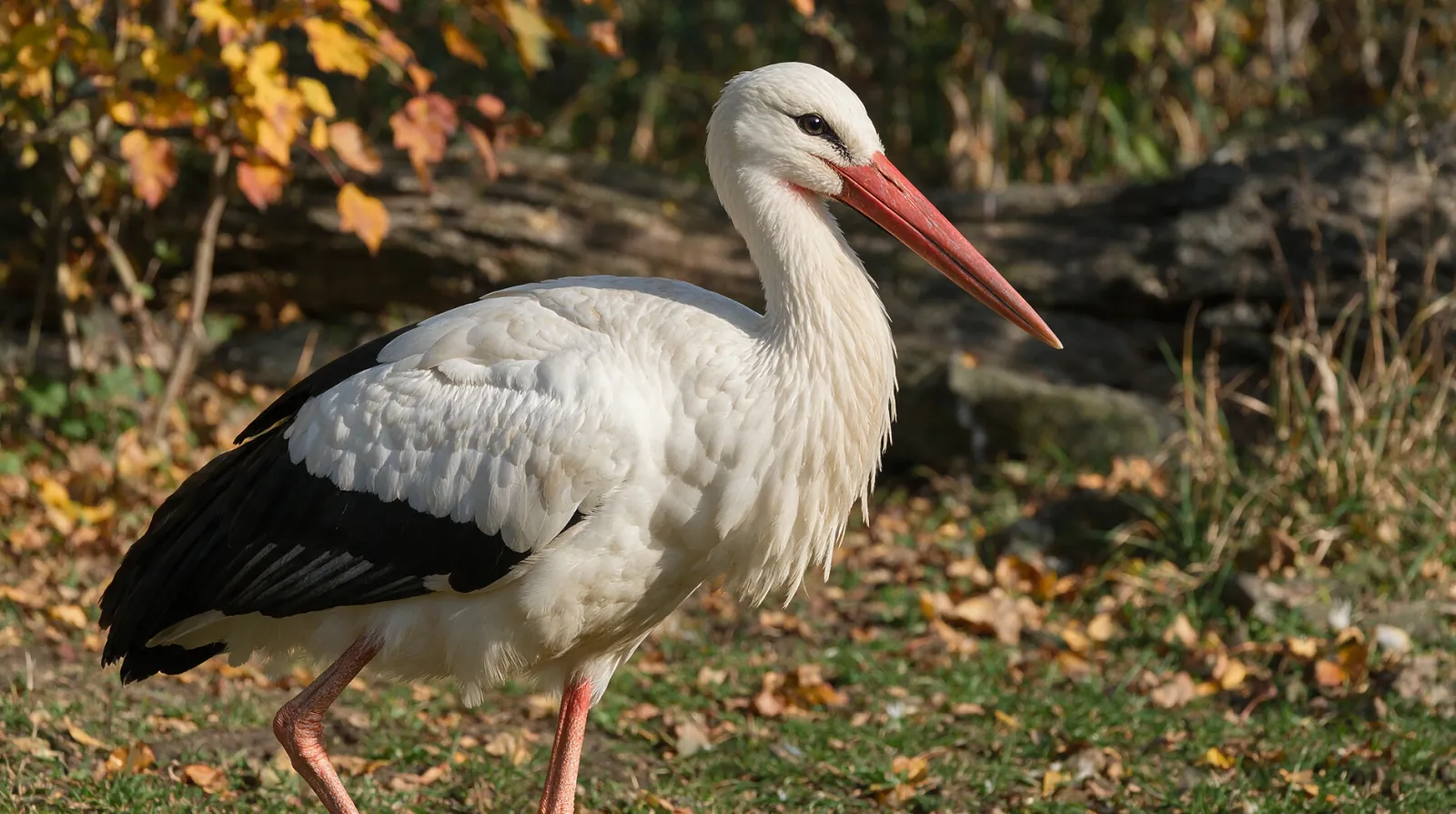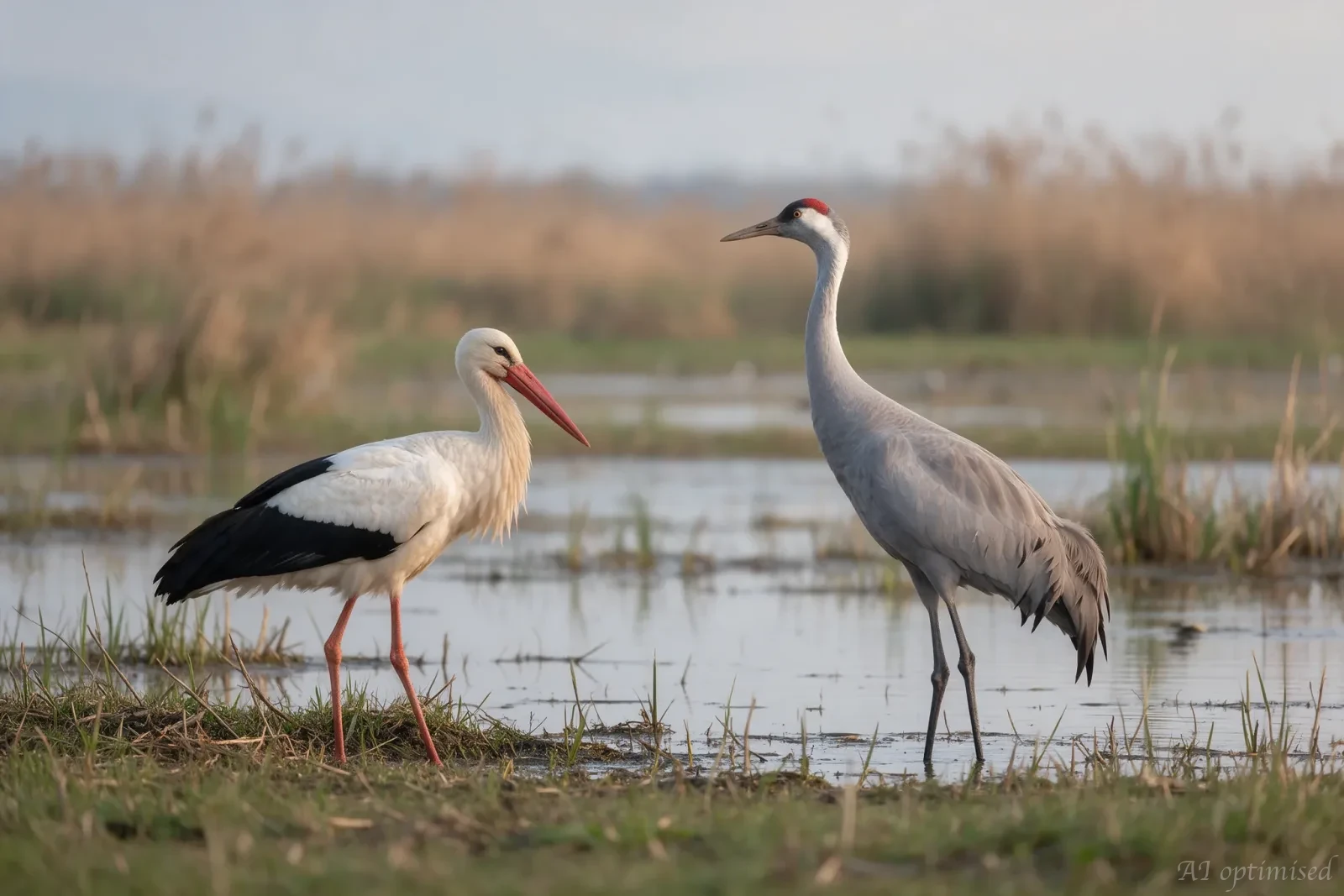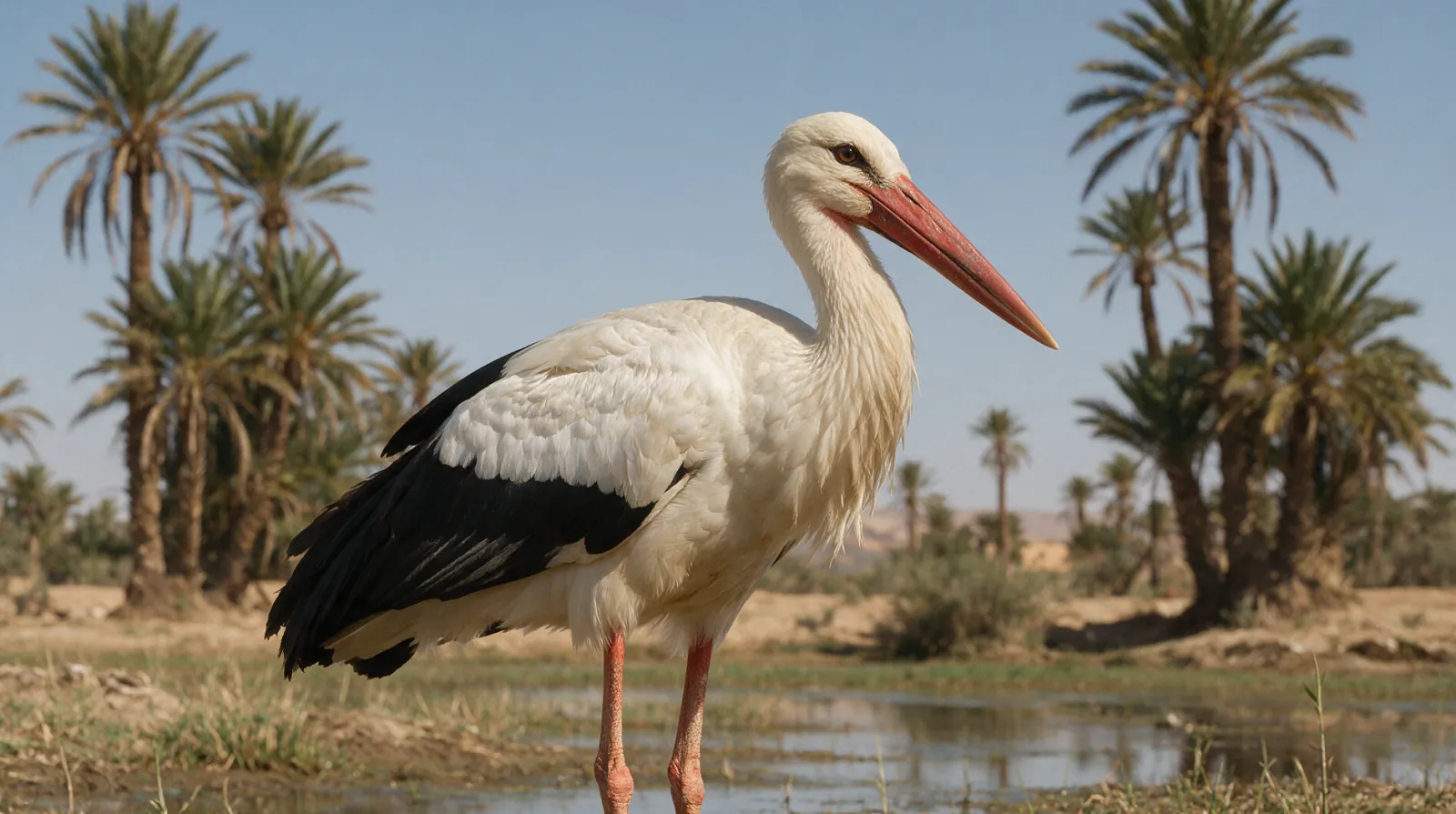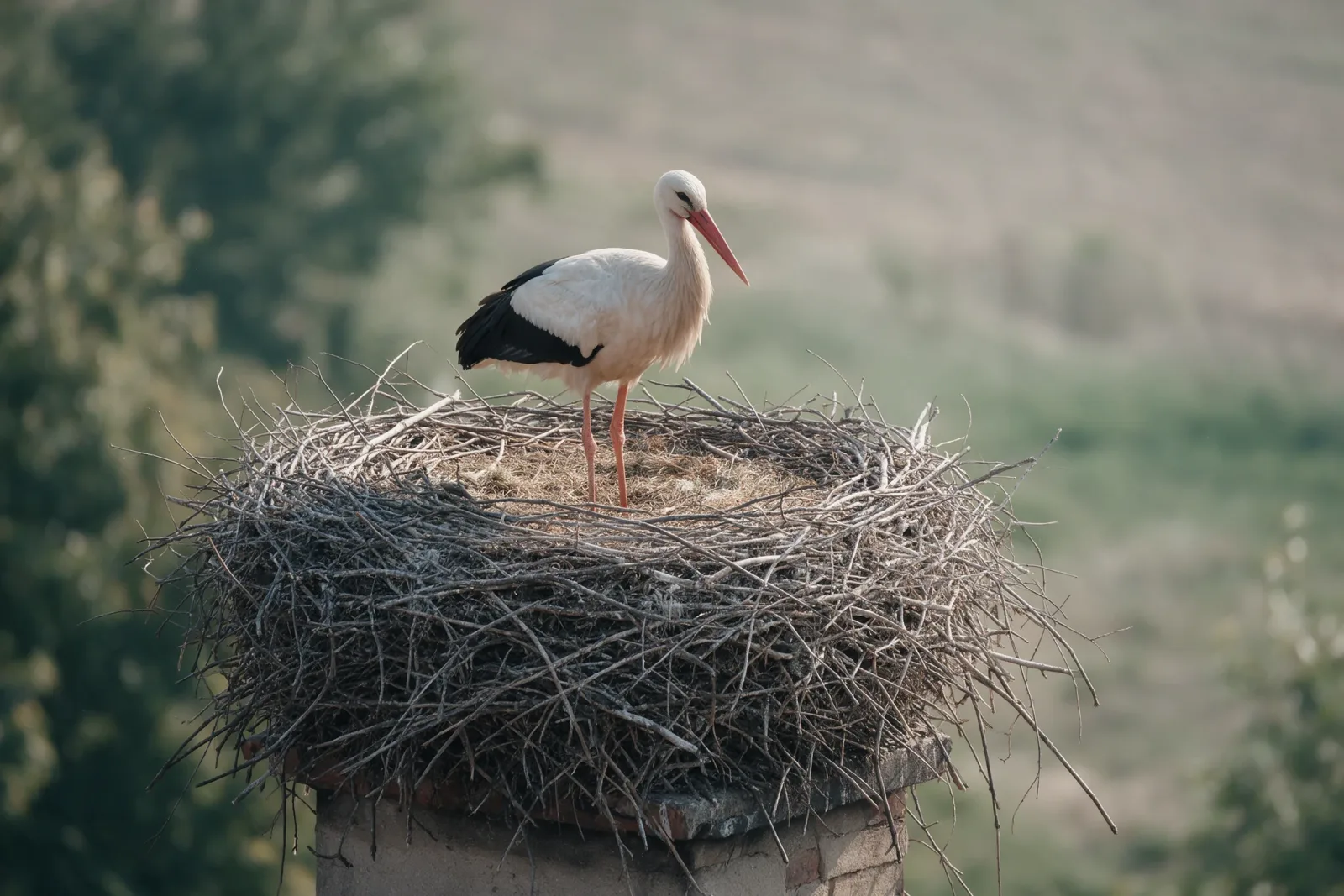
A white stork in the wild often lives around twenty years, and a bird in captivity can pass thirty. Most die in their first year, which makes every adult on a chimney a survivor.
The first year
A chick that leaves the nest in summer faces a long flight south and a winter on unfamiliar ground. Young birds are inexperienced hunters, and many do not come back. The first migration removes more storks than any other part of life.
Weather, hunger and power lines take their share. A bird that finds a good feeding ground learns to stay near it, and that habit carries it through the dangerous months.
Two decades
A stork that survives the first year has a good chance of a long life. Birds in the wild are often recorded in their teens, and a wild lifespan of around twenty years is common where food and nest sites hold up. The bird returns north each spring and raises a brood, and the cycle repeats. A bird that survives to breed may raise a brood every year for two decades, and the same pair often returns to the same nest.
Ringing has shown how long some individuals last. A bird ringed as a chick can turn up at a nest years later, and the record from the ring is the only proof of its age. The ring also tells ringers where the bird has been, which is how the wintering grounds were mapped. Without a ring, an adult stork carries no visible year count.
The long-lived few
Some wild storks reach their twenties and a few go beyond. The oldest birds are usually the ones with a safe nest site and a reliable feeding ground, and both are increasingly rare.
A long life is not automatic. A bird on a nest that is removed, a field that is drained or a migration route crossed by new power lines can lose the conditions that made twenty years possible.
In captivity
Zoos and rescue centres keep storks that cannot be released, and these birds live longer than wild ones. Captive white storks can live into their thirties. The figure is approximate, and it depends on care and on the individual bird.
A captive stork has no migration, no winter hunger and no need to find a mate in a crowded spring. Those advantages add years. A wild bird pays for its freedom with risk.
The seasons of a long life
A stork's year has a rhythm that repeats for as long as the bird lives. Spring brings the return, the repair of the nest and the eggs. Summer brings the chicks and the long feeding days. Late summer brings the gathering flocks, and autumn brings the flight south.
A bird that manages twenty of those cycles has crossed the Sahara twenty times and raised perhaps thirty or forty chicks. Each return to the same chimney is a year survived, and the nest is the record of them.
Reading age
An adult stork is hard to age by sight. The plumage settles into the same white and black, and the red legs do not carry a year count. Bird ringers know the age of a bird because they know when it was ringed.
That is why a ring matters. A numbered ring on a leg turns a stork from an anonymous bird into a known individual with a birthday and a history. The ring is the closest thing a wild stork has to a birth certificate.
Without one, an old stork on a chimney is simply old. The nest may be older, and the bird may have used it for a decade. The only certain fact is that it came back.
Explore the gift