A wading bird is any long-legged bird that feeds in shallow water, and the label covers several families that are not close relatives. The quickest way to sort them is a short list of questions: what the neck does in flight, what shape the bill has, what the feet are for, and how the bird feeds. The answers name the bird before you get close.
The neck in flight
Storks, spoonbills, ibises, and flamingos fly with the neck extended straight ahead. Herons and egrets fold the neck into an S and tuck the head back against the body. Pelicans pull the head back and rest it on the shoulders. Swans extend the neck and tuck the feet. A folded neck in flight means heron or egret; a straight neck means stork, spoonbill, ibis, or flamingo. This one test removes most of the confusion at a distance, and it works even when the bird is a silhouette against a bright sky.
The bill
A stork carries a straight dagger. A spoonbill carries a flat spatula. A pelican carries a scoop with a throat pouch. A flamingo carries a bill bent sharply downward. An ibis carries a long, down-curved bill. A swan carries a broad, flat bill for grazing. A heron or egret carries a spear. Match the bill to the shape and the family follows. Colour is secondary, though it helps: red in the white stork, black and yellow in the spoonbill, pink in the flamingo.
Legs and feet
Waders have long legs and long toes for walking on soft ground. Swans and pelicans have short legs set back and webbed feet for swimming. Flamingos have long legs and webbed feet, and they feed in open water. Storks have long legs and long toes, and they walk wet meadows. Feet tell you what the bird does; legs tell you how far it wades. A bird standing in deep water with webbed feet is not a stork.
The waterline test
A bird floating on open water is a swan or a pelican. A bird standing in shallow water with a long bill is a stork, spoonbill, egret, ibis, or flamingo. A bird walking through wet grass away from open water is usually a stork or an ibis. The waterline is the fastest habitat clue there is. On a lake, expect swans. On a lagoon, expect flamingos and spoonbills. On a wet field, expect storks. An egret in a field after rain may look like a stork until it folds its neck or shows its black legs. A heron in a ditch is easy to place once you see the folded neck and the spear.
Feeding style
Storks stab. Spoonbills sweep. Pelicans scoop. Flamingos filter. Ibises probe. Swans graze. Herons and egrets spear. The action in the water is a field mark in motion. Watch for ten seconds and the bird will usually show you its method. A bird that feeds by touch often has its bill in the water and its eyes elsewhere. A bird that feeds by sight holds its head up and moves in short, deliberate steps.
Size is the last clue
Size helps once the shape is clear, and it misleads when the shape is not. A white stork stands about a metre tall. A swan can be larger and heavier. A pelican can be heavier still. A spoonbill and an egret are slimmer and lighter than a stork. Use size to confirm the family, never to name the bird on its own. Distance and posture bend it too easily.
Colour and the last shortcut
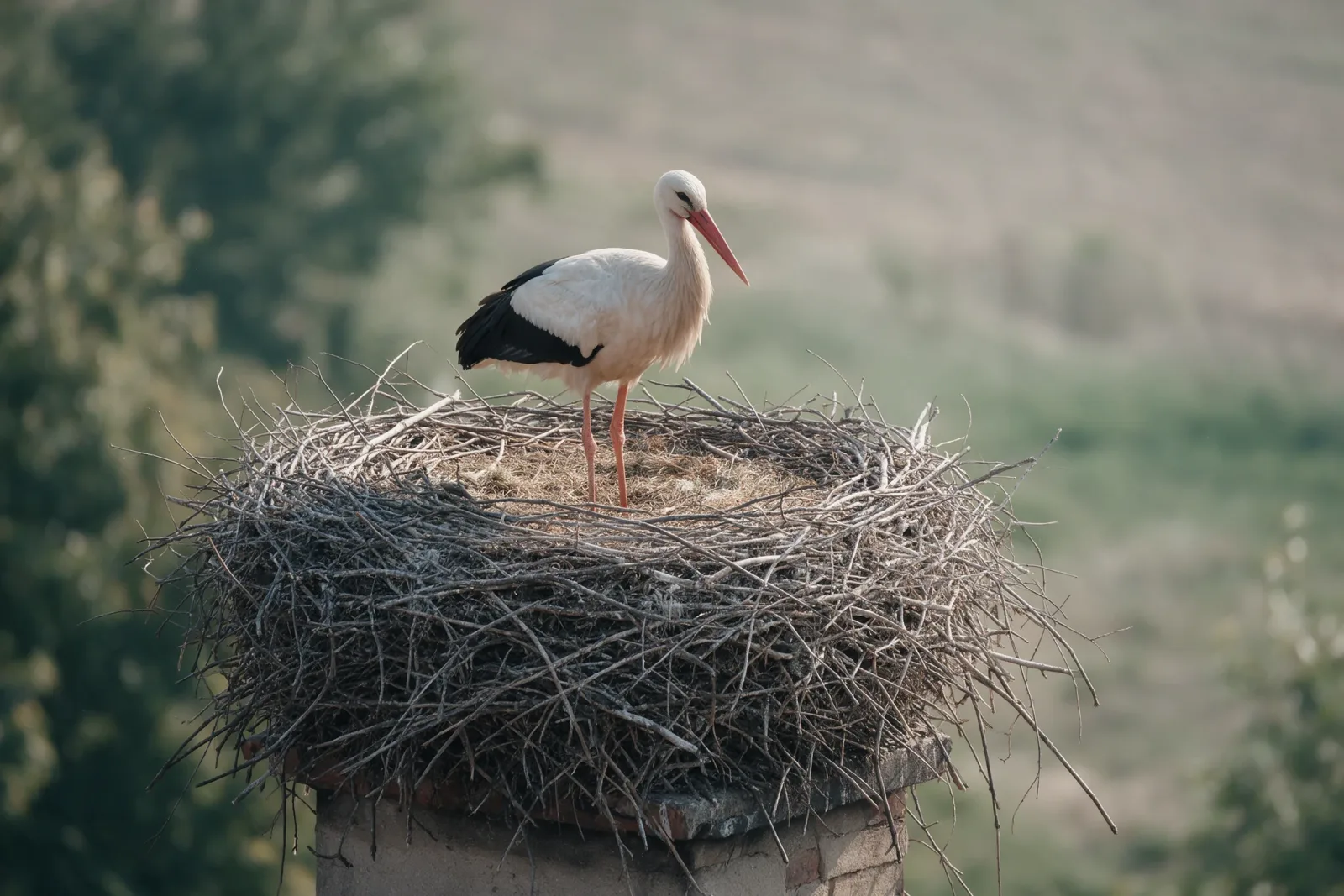
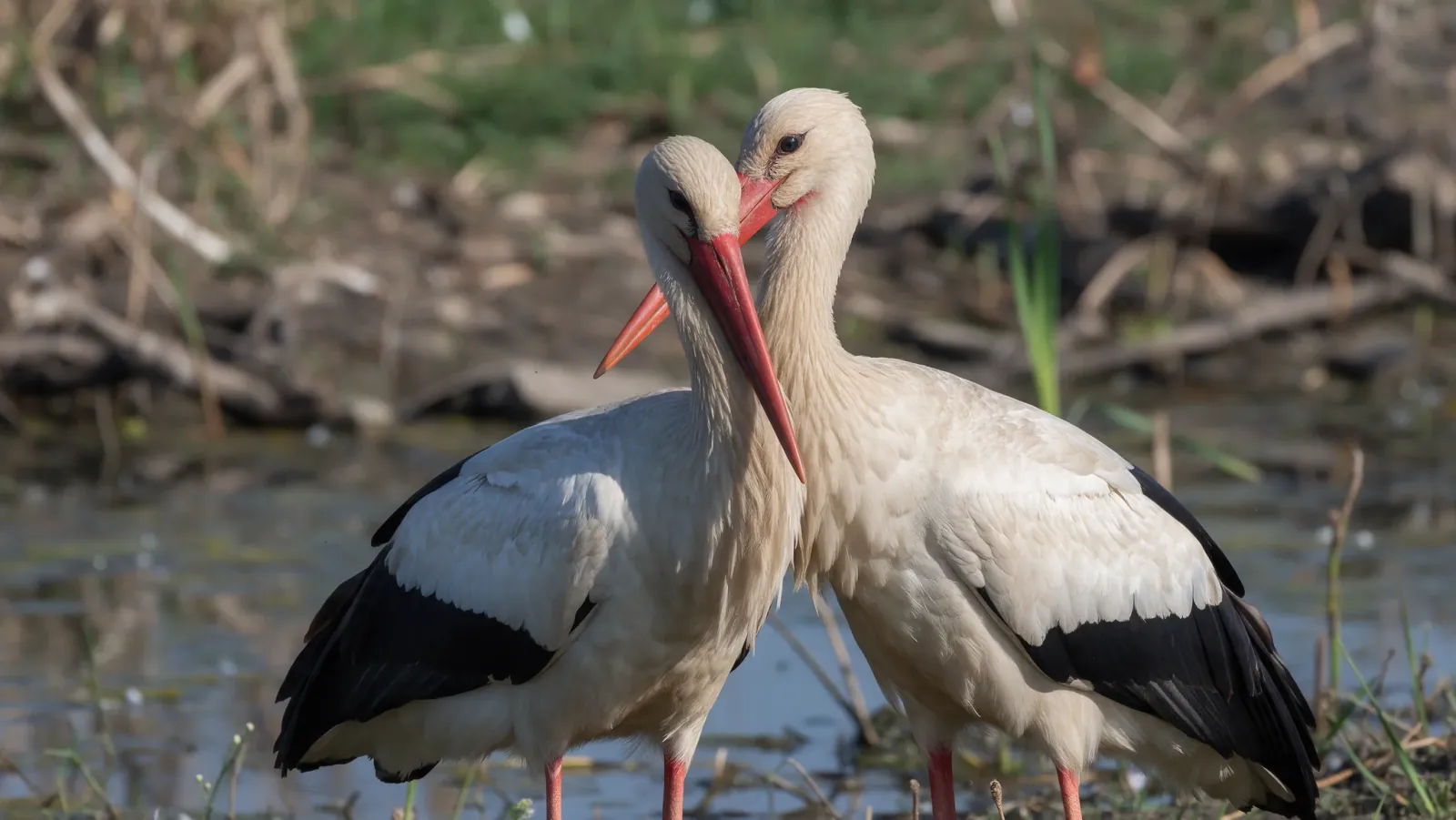
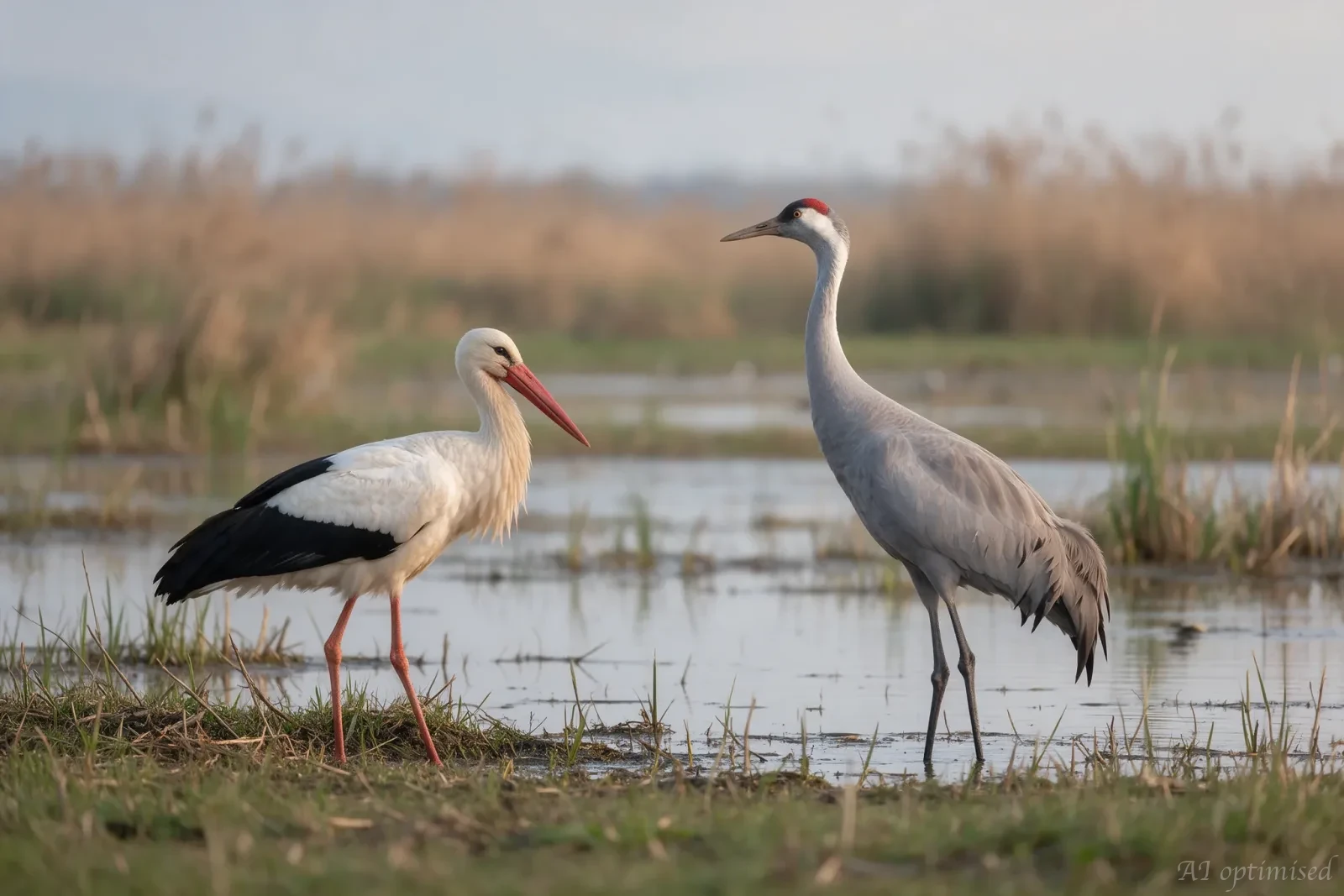
The white stork is white with black flight feathers and red legs. The flamingo is pink. The glossy ibis is dark with a sheen. The spoonbill is white with a black spatula. The swan is white with a broad bill. The egret is white with black legs and a yellow spear. Learn the exceptions and the chart collapses into a few quick looks. The white stork is the wading bird most people picture, and it is the one that comes closest to home. If you want to welcome a baby with that bird on the roof, you can adopt a stork. For the two comparisons that cover the most ground, read storks versus cranes and the difference between storks and herons.
Explore the gift