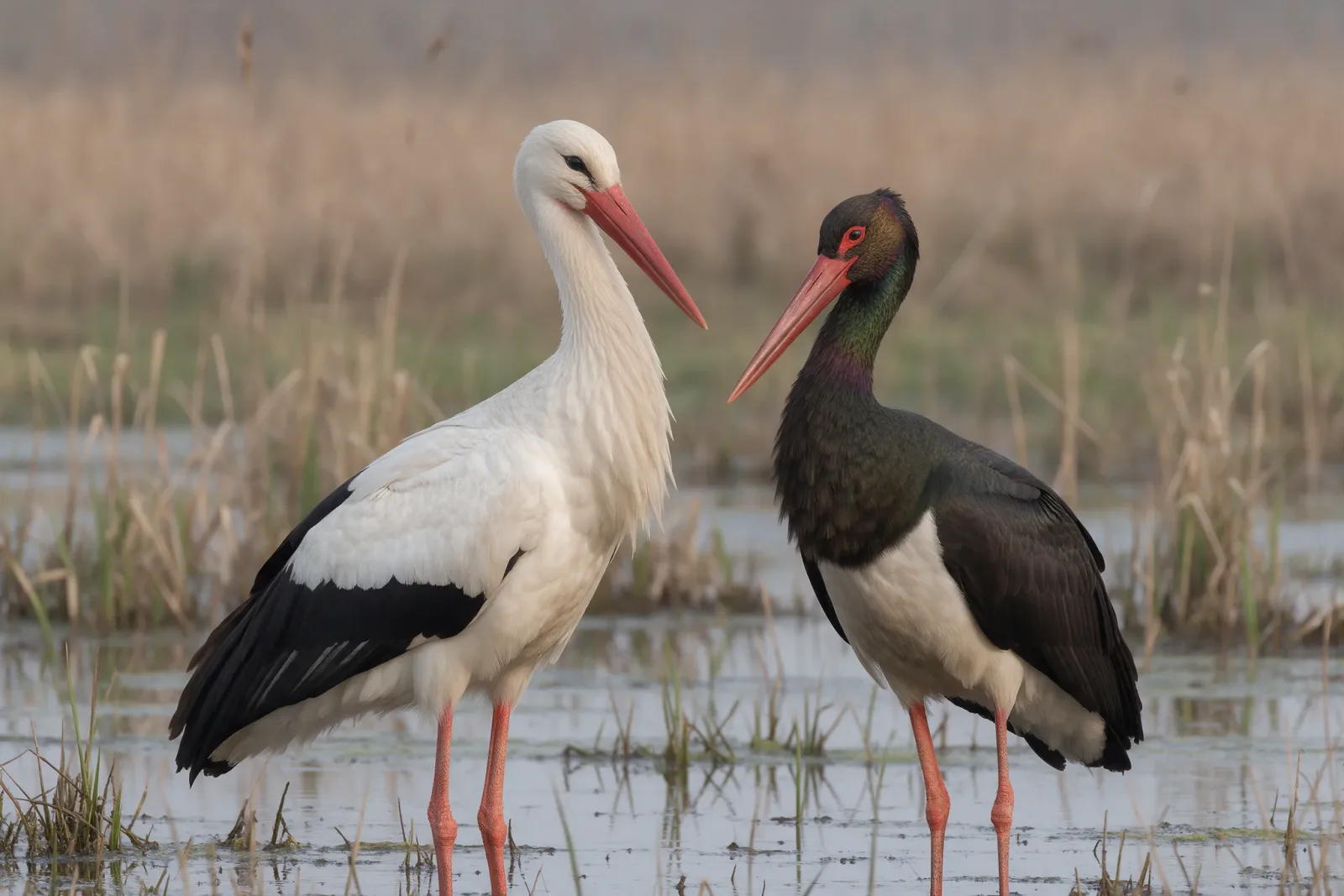
A tall bird with long legs and a long neck stands at the edge of a marsh, and half the people watching call it a crane while the other half call it a stork. The confusion is fair. Storks and cranes are both large, long-legged wading birds, and at a distance they can look nearly the same. But the two are not close relatives, and a careful eye can tell them apart in a moment. Once you learn the signs, the two birds separate as cleanly as day from night, and you will wonder how you ever mixed them up. The two birds share a silhouette, but they do not share a way of life, and the differences between them are a small course in how to look at birds. Learning to tell a stork from a crane is not really about names. It is about learning to see the small things that mark one creature from another.
Different families
The first thing to know is that storks and cranes belong to different bird families, and they are not especially close in the tree of life. Storks are in the family Ciconiidae. Cranes are in the family Gruidae. They have come to look alike because they do a similar kind of work, walking through shallow water on long legs, but the likeness is a matter of habit rather than kinship. Two animals can share a shape without sharing an ancestor, and storks and cranes are a perfect example of that.
How they hold their necks
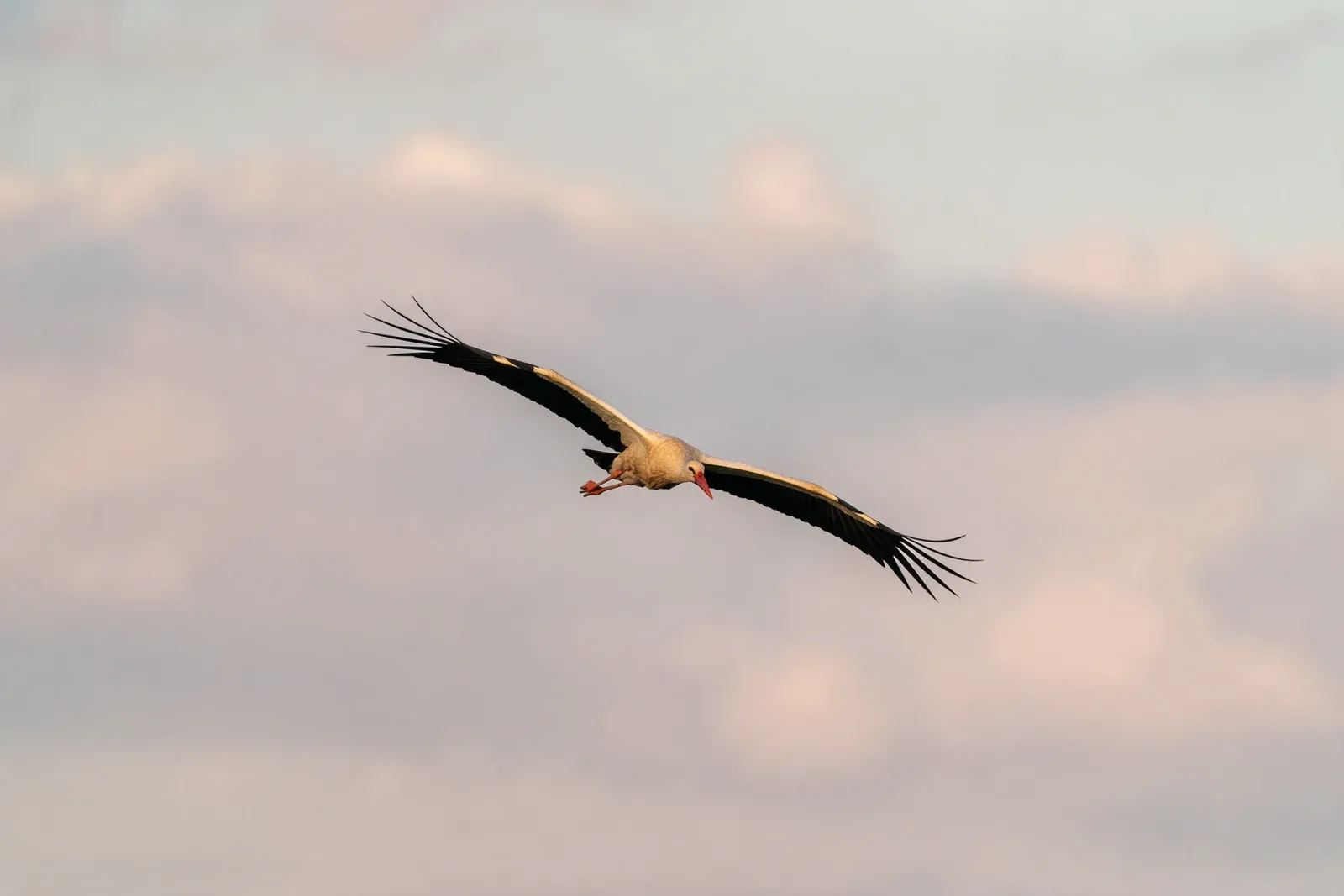
The easiest way to separate a stork from a crane is in the air. A stork flies with its neck stretched straight out in front of it, a long line from body to bill. A crane flies with its neck extended too, but a heron flies with its neck pulled back into an S. So if you remember that herons fold and storks stretch, you are most of the way there. On the ground, a stork tends to hold its neck fairly straight, while a crane carries itself with a more upright, alert posture, neck raised and eyes bright.
Bills, calls, and colour
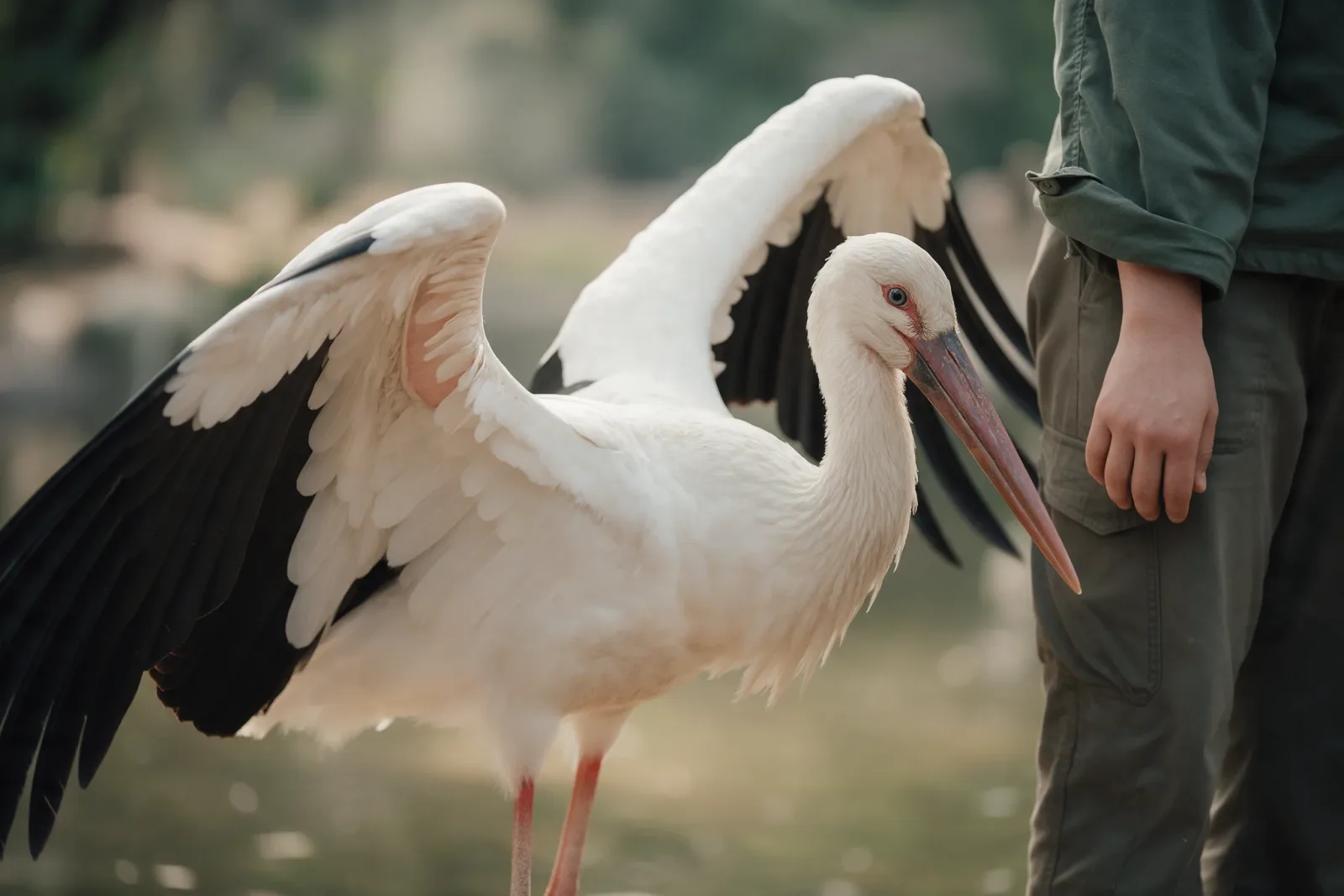
The bill is another clue. A stork's bill is long, straight, and heavy, often red in the white stork. A crane's bill is shorter and more pointed, and cranes have a voice, a far-carrying trumpeting call, while storks are mostly silent and clatter their bills instead. The colours differ too. The white stork is white and black with red legs, while the common crane of Europe is grey with a red patch on its crown. A quick look at the head, and the question answers itself.
What they eat
The two birds also eat differently. Storks are generalists, catching frogs, insects, small mammals, and anything small they can snap up. Cranes are more omnivorous, taking grain, roots, insects, and small animals, and many cranes feed heavily in fields and wetlands. Both are patient feeders, but the crane is more likely to be seen probing with a pointed bill, while the stork waits with its heavy straight one. The way each bird gathers its living is written in the shape of its bill.
Why it matters to tell them apart
Being able to separate a stork from a crane is more than a parlour trick. It is the beginning of really seeing birds, of noticing the small details that mark one life from another. The difference between the two birds is more than a matter of names. It lives in the way they fly, the way they feed, and the families they belong to, and learning those differences turns a vague grey shape on a marsh into a known creature with a name and a story. That is what birdwatching is at its heart: a practice of naming, and of learning to see the differences that make each bird itself.
So the next time a tall grey or white bird crosses the marsh, do not guess. Look at the neck in flight, listen for a call, and check the bill. With a little practice, the difference between a stork and a crane becomes as clear as the difference between a sparrow and a swallow.
Explore the gift