A spoonbill and a white stork are both tall, white, and at home in shallow water. The bill is the first thing to check and the last thing you will forget. A spoonbill carries a flat spatula. A stork carries a straight dagger. One sweeps, the other stabs.
The bill is the map
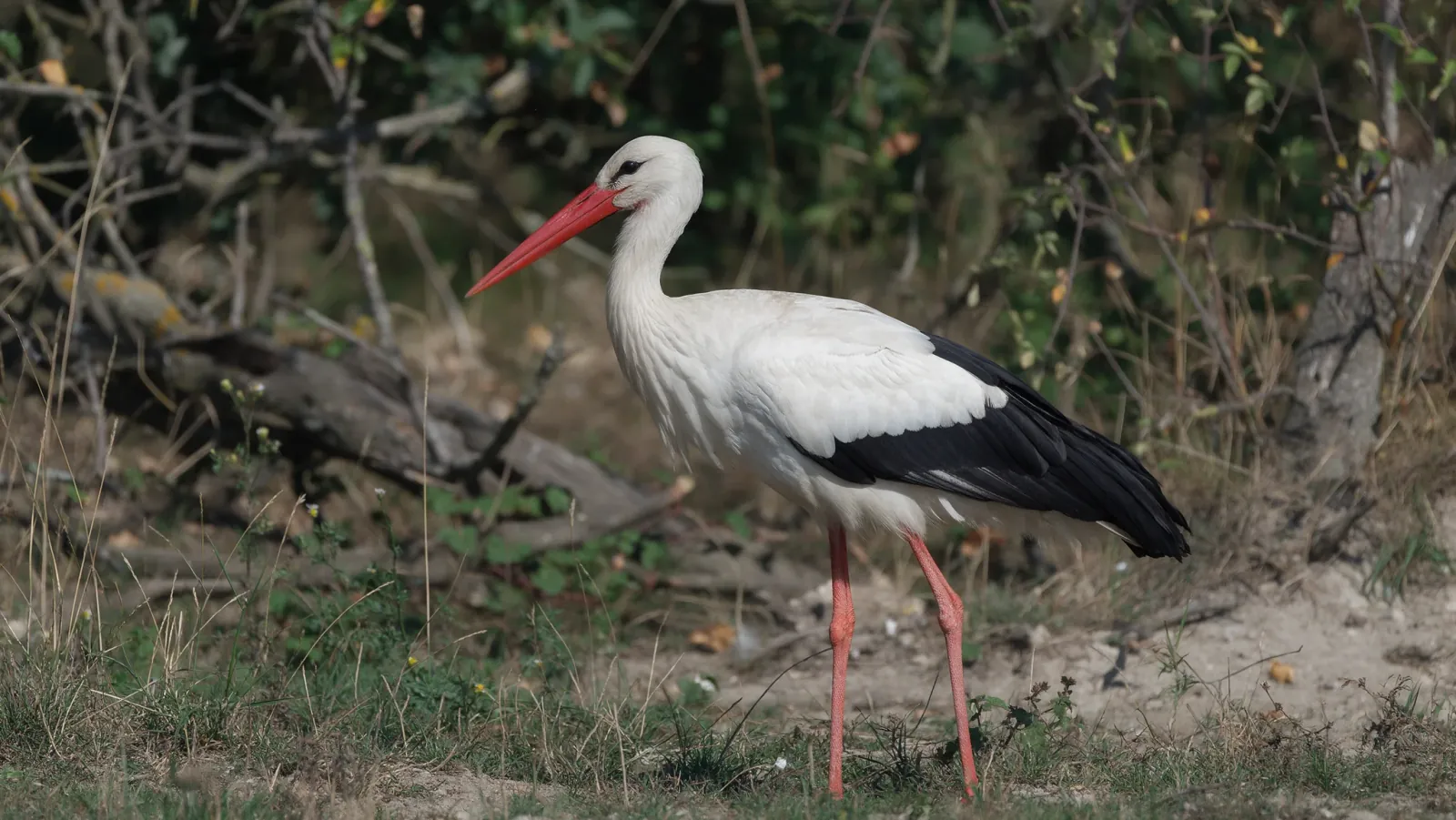
The Eurasian spoonbill has a long, flat bill that widens at the tip into a rounded spatula. It is black, often with a yellow tip, and the legs are black. The white stork has a red dagger bill and red legs. A spoonbill's bill looks like a kitchen tool; a stork's looks like a blade. The shape is not a small detail. It decides how the bird feeds, where it feeds, and how it moves through the water.
How each one feeds
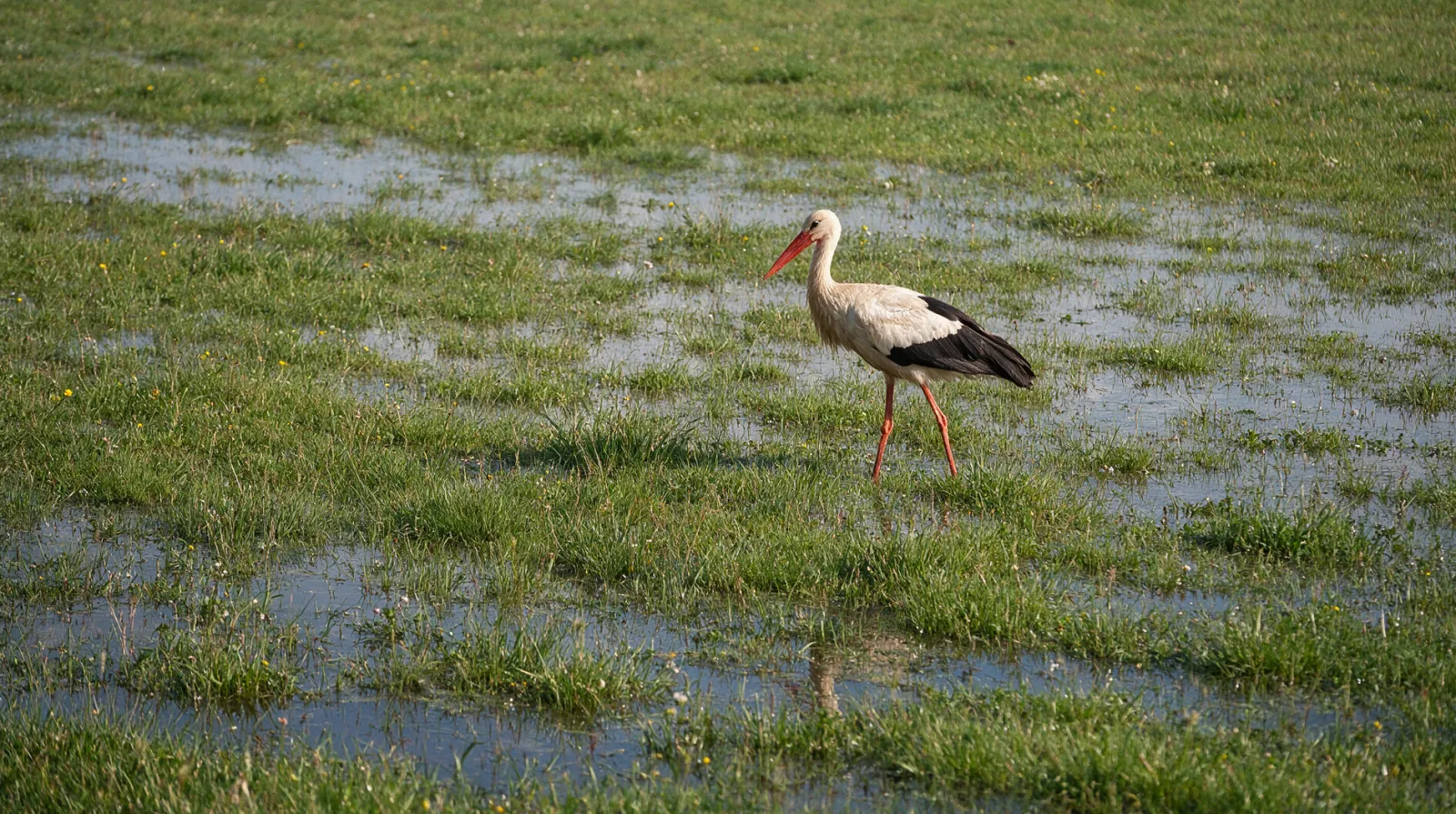
A spoonbill wades in shallow water and sweeps its open bill from side to side, snapping it shut when it touches a small fish, shrimp, or insect. The bill has sensitive nerves and comb-like edges that help it hold slippery prey. A stork walks through wet grass and shallow margins, watching for movement, then strikes downward with its dagger. The spoonbill feels for food; the stork looks for it. Spoonbills often feed in a line, several birds sweeping together, while storks spread out and feed alone. The side-to-side motion of a feeding spoonbill looks like someone sweeping a beach with a metal detector. The broad tip of the bill carries nerves that detect prey by touch, so a spoonbill can feed in cloudy water where a stork would see nothing. That is why spoonbills work the open lagoon while storks work the grassy edges.
White on white
Both birds are white, and both fly with the neck extended and the legs trailing. The stork's black flight feathers show as a dark trailing edge on the wing, and its red legs are visible even at a distance. The spoonbill is white all over, with a shaggy crest in breeding plumage, and its black bill and black legs stand out against the body. The stork carries red; the spoonbill carries black. In flight, a spoonbill's neck looks slightly thicker and its bill droops a little, while a stork's bill points straight ahead. At rest, a spoonbill often tucks its bill into the feathers of its back, which hides the spatula. A stork at rest keeps its long red bill visible against the white body.
Flight and company
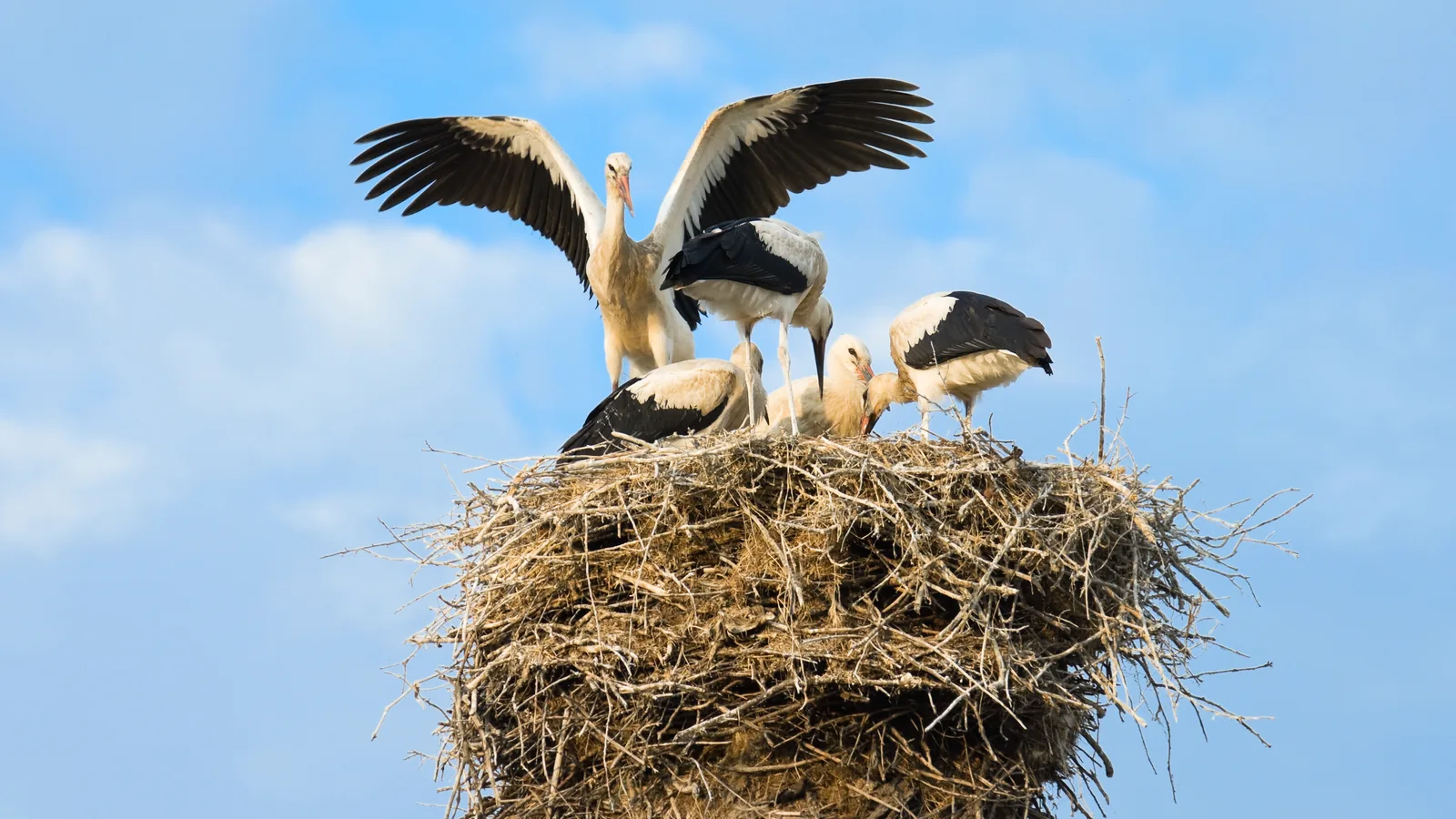
Spoonbills are sociable and often fly in loose flocks, with birds bunched more tightly than storks usually are. They nest in colonies, sometimes with herons and other waterbirds. Storks nest in loose colonies too, but on roofs, poles, and chimneys, often in villages. Spoonbills keep to the marsh; storks move between the marsh and the roof. That difference in nesting habit is a useful clue when you are trying to work out which white bird you are looking at. On the nest, spoonbills are colonial and noisy, with young birds clattering their bills in greeting. Storks clatter too, but their nests are usually higher and more scattered.
Which one is on your marsh
If the bird is sweeping its bill through the water in wide arcs, it is a spoonbill. If it is walking through wet grass and stabbing at the ground, it is a stork. If it is standing on a chimney, it is a stork. If it is standing in a lagoon with a group of other white birds, it is probably a spoonbill. The bill tells you first, the legs confirm it, and the address finishes the job. A spoonbill is a bird of the open shallows. A stork is a bird of the wet field, and often of the village beside it.
Explore the gift