A white stork can raise a family on a chimney above a busy street, and another pair can nest in a tall tree in a river valley with no house in sight. The bird is the same in both places. The setting changes what the day looks like.
A metre of white, black and red
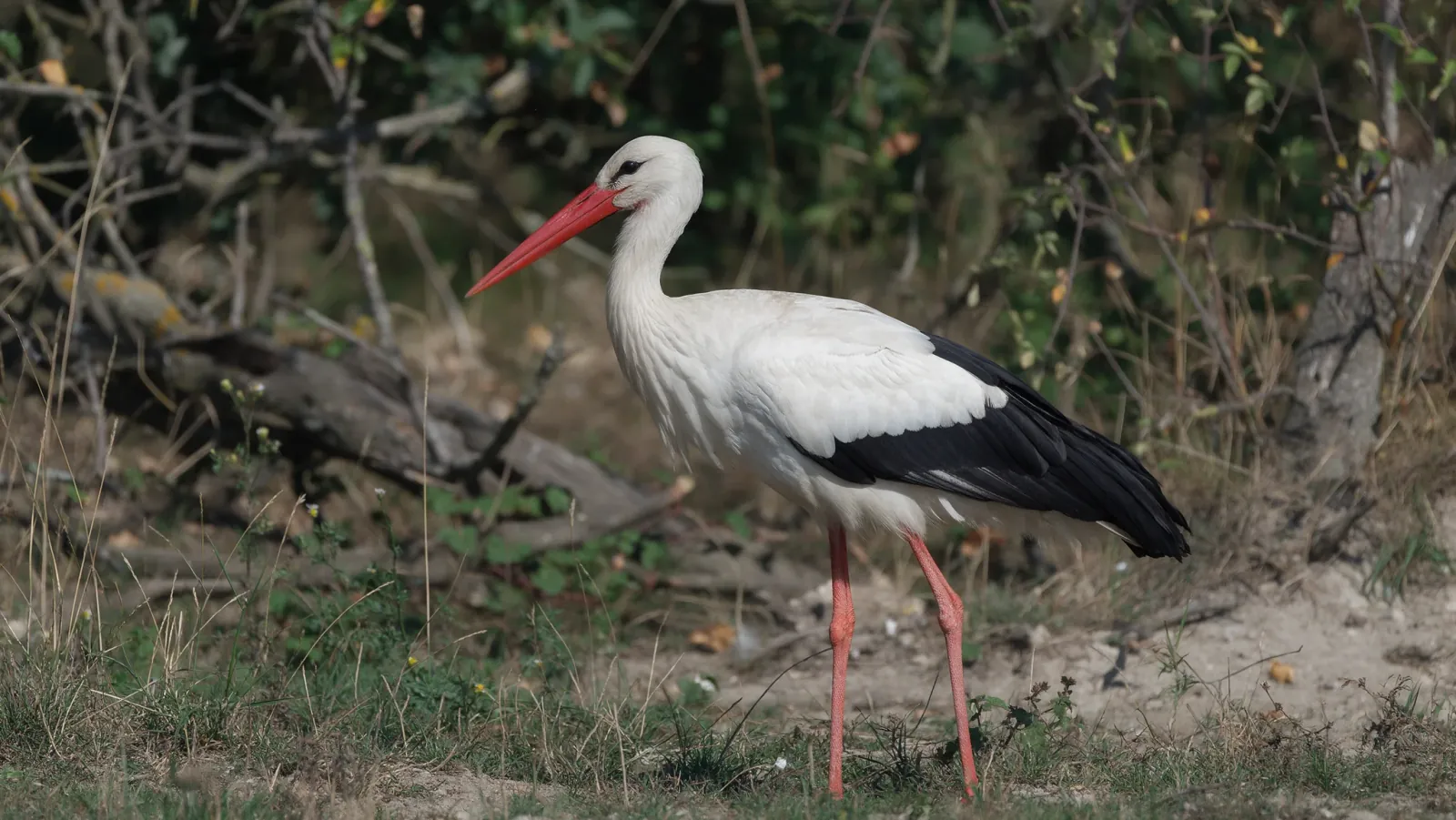
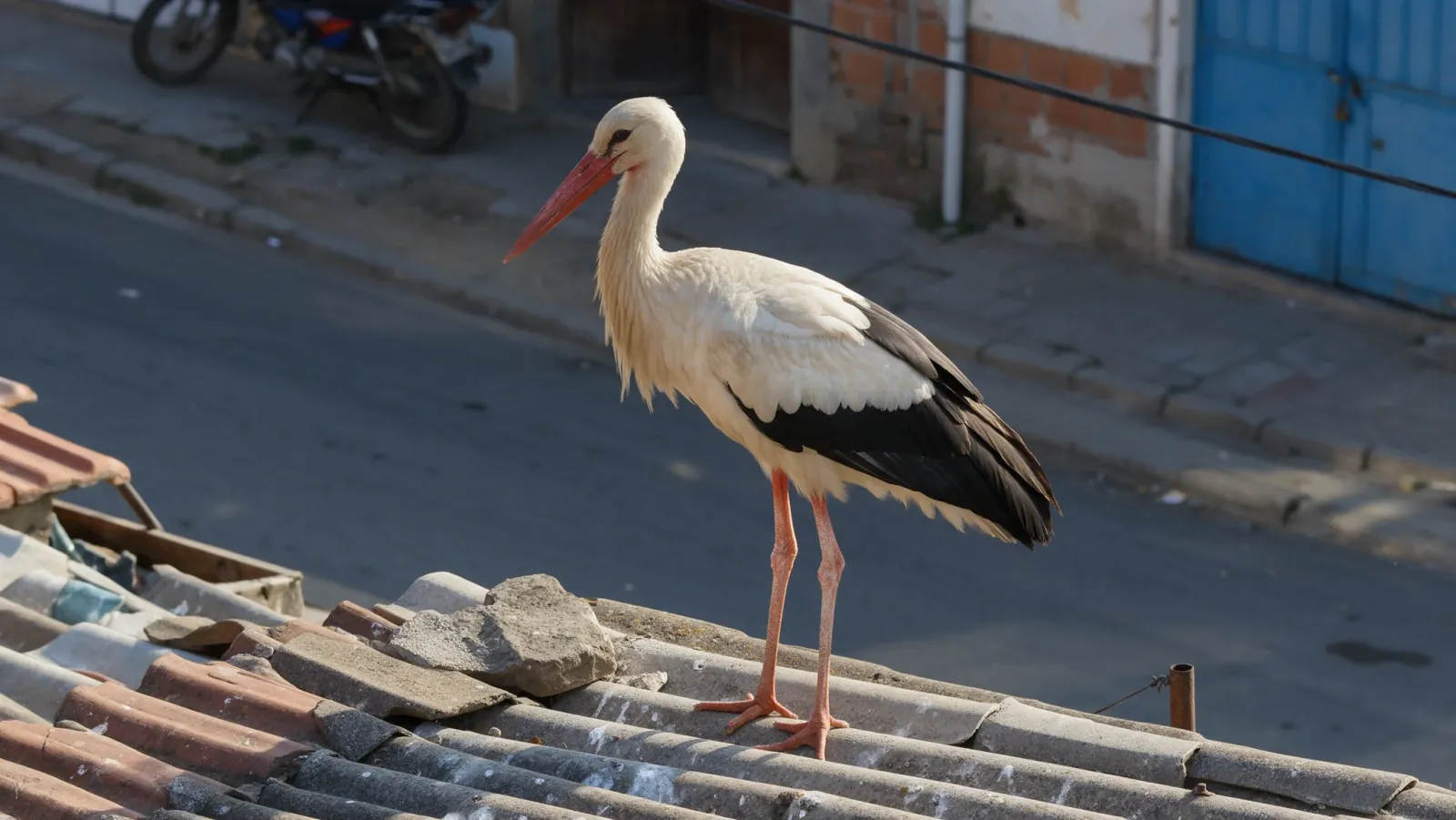
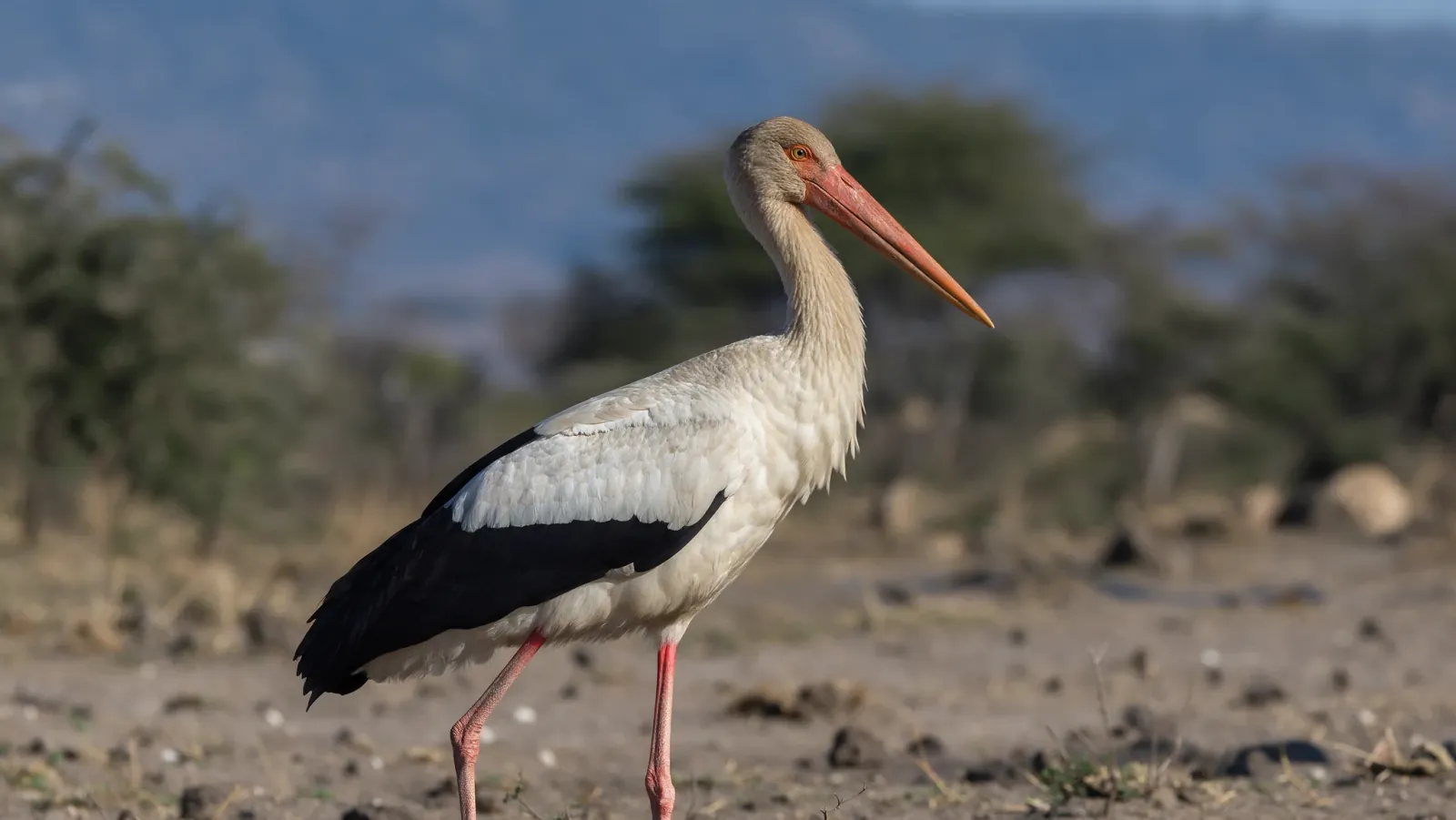
On the ground the white stork reads as a pale, upright bird on red legs, with a long red bill and a dark eye. It stands with a stillness that makes it look larger than its measurements. The long red bill and the red legs are the only warm colours on a bird that is otherwise white and black. The black is folded away along the back edge of each wing, in the flight feathers, and it appears when the bird opens them: a clean band against the white. An adult stands about a metre tall and opens nearly two metres of wing. Young birds of the year have duller, brownish-red bills and legs, and their black feathers look brown at the edges. A stork has no song. The bird has no true call, and the clatter is the closest it comes to a voice. It clatters its bill, and the sound carries across a square on a quiet morning.
The nest that grows every spring
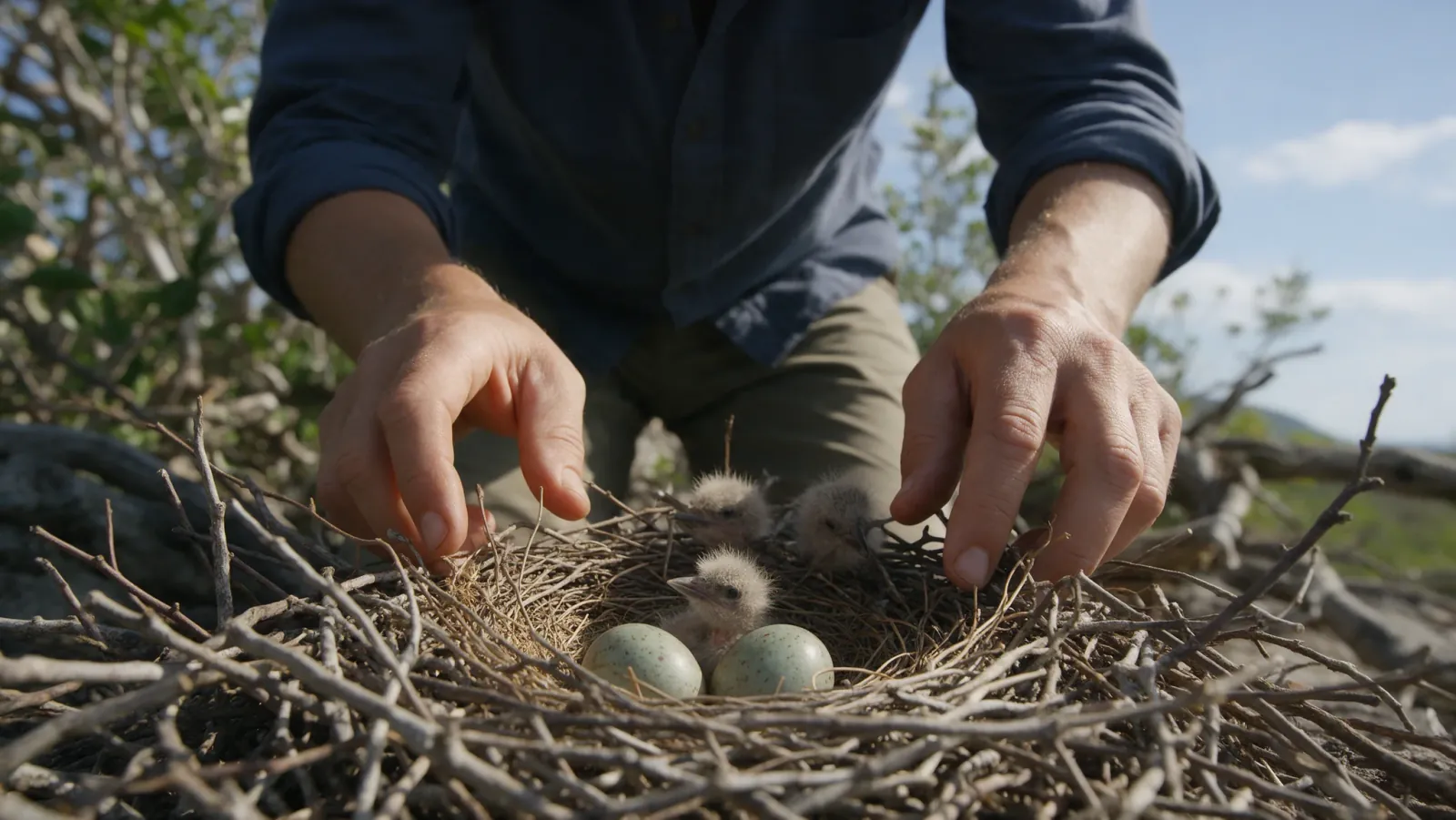
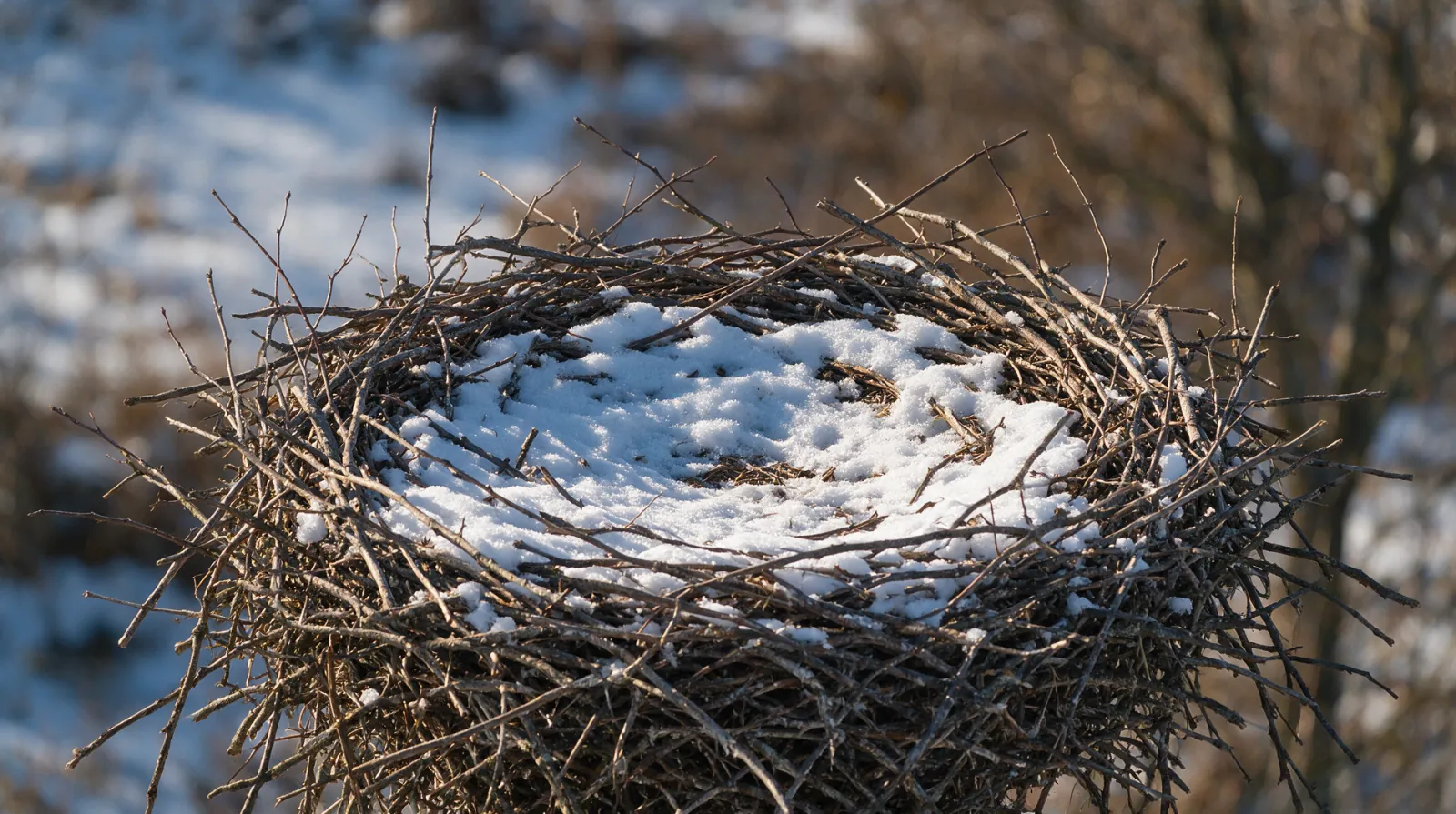
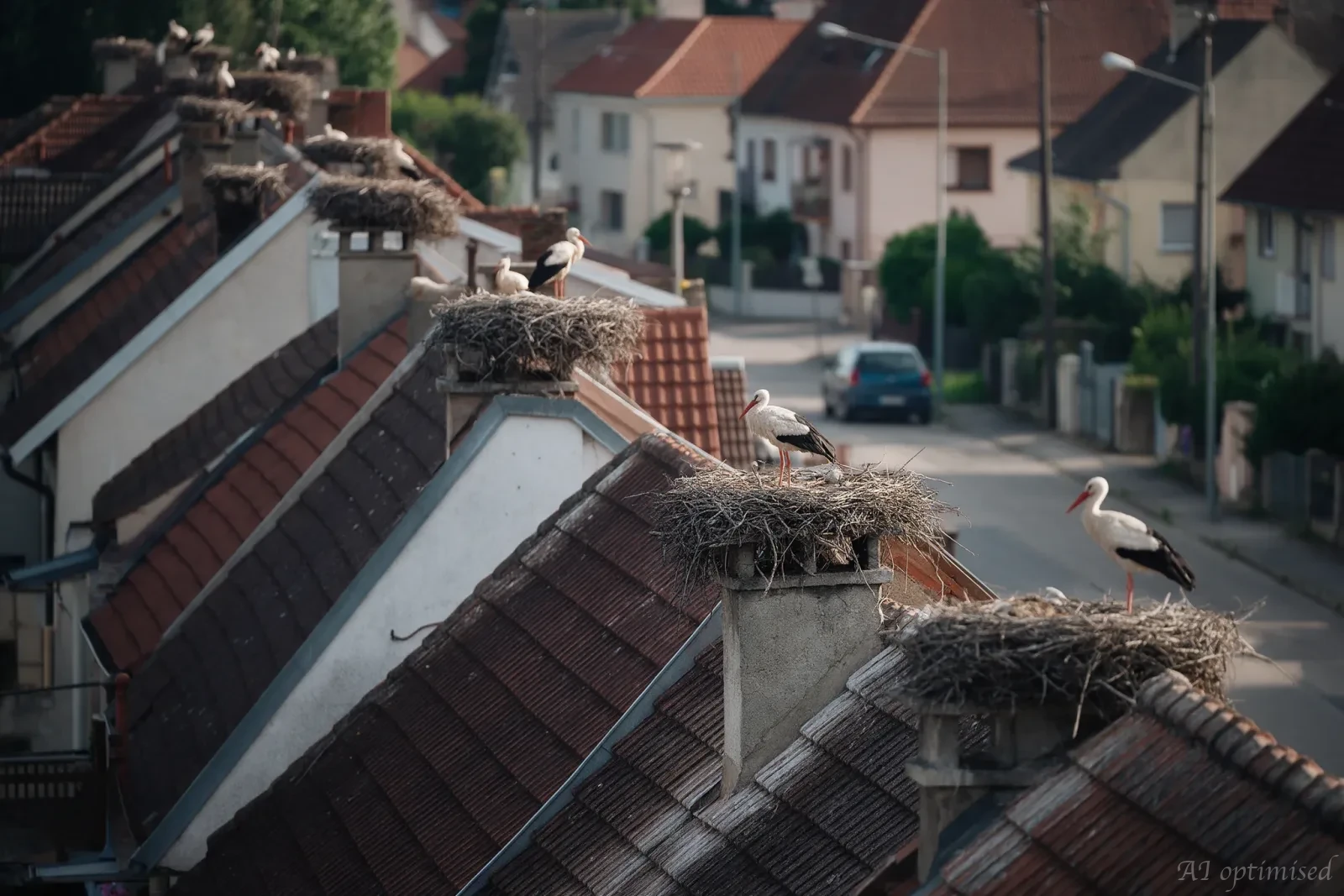
Both birds build a broad platform of sticks, lined with grass and earth, on a chimney, a roof ridge, a church tower or a pole put up for the purpose. The nest sits in full view of the street, and the people below go about their days underneath it. The same nest is used year after year, and both birds add material each spring, so an old one can be a metre deep and heavy enough to need a metal support underneath. Some platforms in Europe have been occupied for decades, repaired by the people below as much as by the birds. The nest is often the oldest thing a pair owns, older than either bird. Chicks hatch in April or May, and the parents feed them on frogs, insects and worms brought back to the nest. The nest is repaired before the eggs are laid, and the pair often arrives within days of each other.
A village of food and safety
Settlements sit near water and fields, so a village offers food within reach. Buildings and poles give the bird a high, safe nest site, well above foxes and other ground predators. The birds stay wild, and they tolerate the noise and movement around them. They also learn. A bird that nests on a roof for years becomes calmer, and it will let people pass close below. The arrangement is practical as well as sentimental. People put up platforms and old cartwheels to invite the birds, and the birds accept the invitation. The children of the house often name the pair, and the arrival of the stork is a small event, a sign that the warm weather has come back. A stork on the roof hunts the surrounding fields all summer and does the household no harm, and the family gets a season of company. Some households keep a note of the day their stork arrives, and compare it with the year before. A stork on the nest can look almost as tall as a person standing below the roof.
The wilder nest sites
Away from villages, in wide wet meadows, river valleys, marshes and floodplains, the white stork nests in trees and on cliffs and raised ground. Far from houses it has no chimney, so it uses a strong fork in a tall tree, a ledge on a cliff, sometimes a broken old tree standing alone in a marsh. The nest is the same loose platform of sticks, but it sits in a crown of leaves or on bare rock. A wild nest is harder to find, and that is part of its value. Researchers find these nests by searching likely trees, and many are never found at all. The feeding grounds are quiet: shallow water that stands after rain, wet grass full of frogs, reed beds, slow streams and soft ground where worms and insects rise. A wild stork may fly several kilometres from the nest to find a good patch, and the only sounds around it are water and wind. The sites are often reused for years, and a pair can be watched from a distance without disturbance. The bird is not tame, and it watches a visitor from a long way off.
Hunting on foot
Much of the white stork's food comes from ground that has been cut, grazed or ploughed. The bird walks slowly through a meadow or a stubble field, head down, and stabs at movement: frogs, grasshoppers, beetles, earthworms, voles, and now and then a small snake. It hunts by sight, and it needs the grass short enough to see into. Each small creature has its own signal, a shine, a shadow, a sudden stillness. Haymaking draws storks for that reason, and a field being mown can collect a small crowd of them behind the machine. In wet weather the bird works the ditches and the flooded corners, where worms come up. The bird walks until something moves, then the neck dips and the bill strikes. A strike takes a fraction of a second, and the bird is walking again before the water settles. It drinks by dipping its bill and tipping its head back, and it bathes in the shallows with its wings half open.
The long flight south
From August, white storks gather and drift south. Before they go, many move to big river valleys and coastal marshes, where the feeding is good and the thermals are strong. European birds use two routes: western birds cross at the Strait of Gibraltar, eastern birds pass the Bosphorus and down through the Levant. They travel by soaring, climbing on thermals and gliding to the next, and they avoid long stretches of open water, where no thermals rise. A stork can cross from Europe to sub-Saharan Africa with barely a flap on the way. Most winter on African savanna and wetland. A growing number in Spain and Portugal stay north all year, feeding on rice fields and rubbish dumps. The birds that do cross come back to their old nests in March or April, often to the same mate. Chicks fledge at around two months, standing on the rim and working their wings before a first flight that usually carries them only as far as a neighbouring roof.
A wild bird in a human place
The storks that live near people are still wild. They migrate, hunt, raise their chicks by their own rules and leave again in autumn. What is remarkable is how little the two worlds need to disturb each other. The stork lives on the roof and the family lives under it, and both keep their own season. In spring the bird comes back, and the house below takes its return as a small piece of luck. When the young fledge, the roof is quiet again, and the family waits out the winter.
Explore the gift