Restoring a floodplain meadow begins with letting water back onto ground that was drained for generations. A ditch is blocked, a bank is lowered, a sluice is opened a little. The river, which has wanted its old bed for years, takes the invitation.
The field that was drained
For generations, water on a field meant bad management, and a straight ditch was a mark of good farming. The field below the village was cut with drains, the wet corners were smoothed out, and the ground that once held spring floods was sent straight to the river.
The result was tidy and less alive. A field sprayed several times a year becomes a very clean place, and the cleanliness has a cost. The insects go, and the creatures that feed on them go with them. A field can look healthy and hold almost nothing, and the silence is the first sign.
Nothing has to be planted
The seed bank is already there. Decades of drainage do not erase the seeds of rushes, sedges and meadow flowers, and when the ground stays wet again they come up on their own. The field greens over in the first season, and the wet-loving plants return in the second and third.
The most expensive part is usually undoing the drainage, and the planting is done by the soil. The frogs and insects arrive before the flowers are established. Water in shallow scrapes warms quickly, and a warm pool in April is a nursery. By the second or third spring the meadow sounds different. A wet field in spring has a chorus, and a drained one has silence. The noise is the quickest way to know whether the restoration has worked.
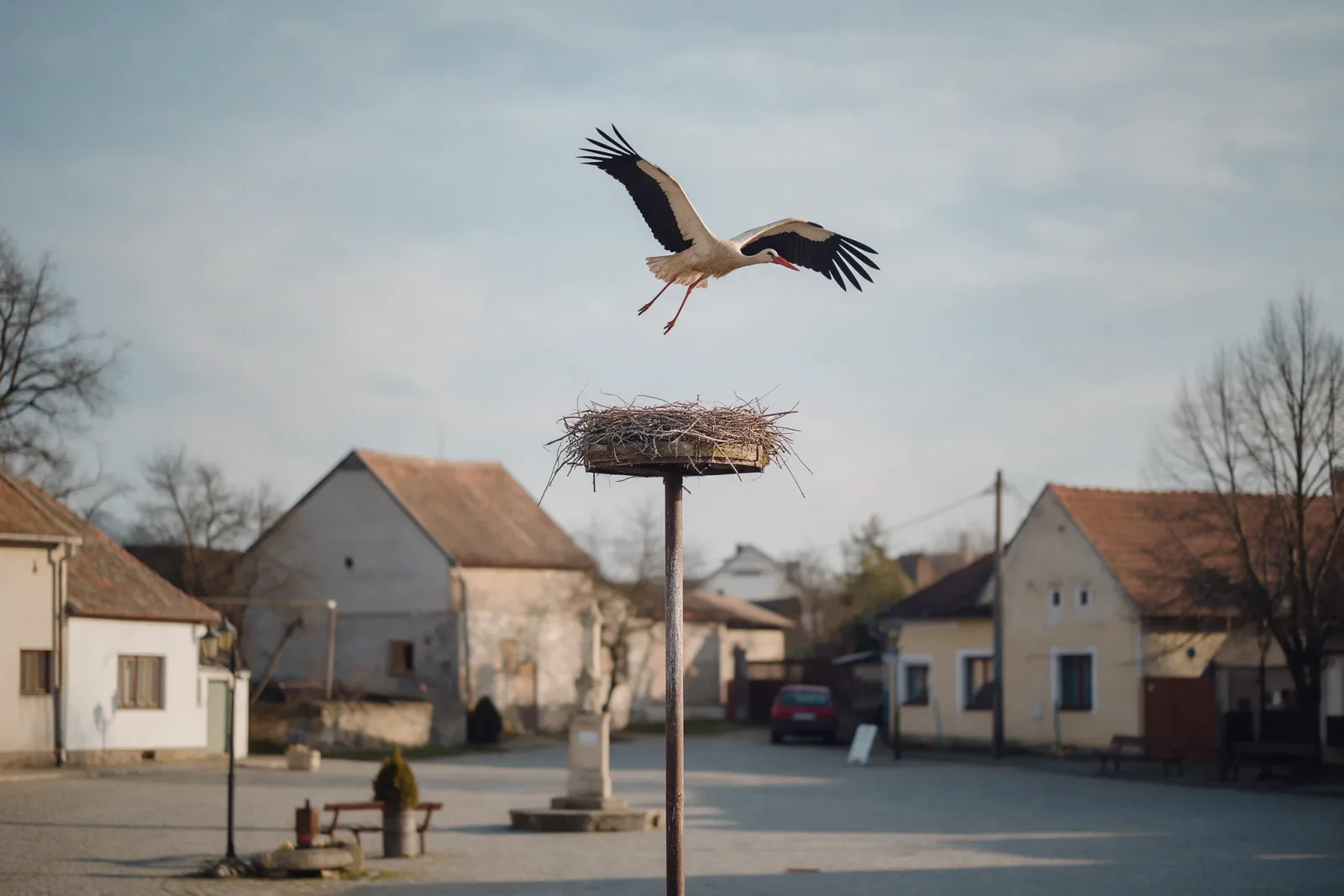
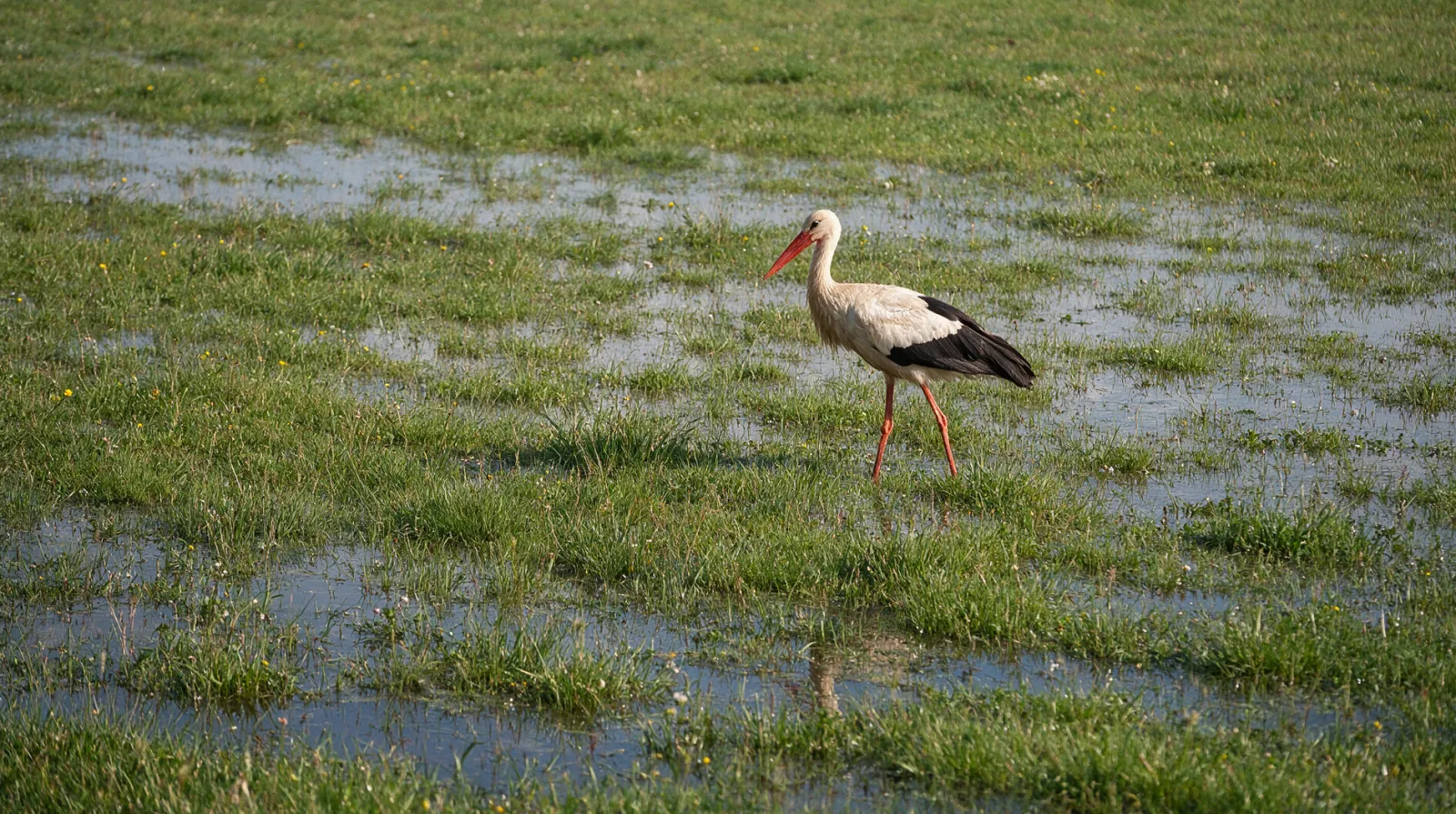
A white stork needs shallow standing water, soft margins and a lot of small prey. A restored meadow with pools and wet grass is a full larder, and a bird that was a rare visitor becomes a regular one. A stork standing in a wet field is a measurement of the place.
The ladder in the river
A weir is built to hold water, turn a mill or keep a channel deep enough for boats. It does its job and it cuts the river in two. Fish that once swam upstream to spawn stop at the wall, and the water below scours a channel too deep and fast for most waders.
A fish ladder is a staircase of small pools built to let fish past the obstruction. Stepped pools, each a little higher than the last, give the fish a climbable route around the wall. The pools slow the drop and spread it out. Water spills from one step to the next, and the foot of the ladder stays turbulent, cool and full of movement.
That is exactly what a stork needs. It cannot hunt in fast deep water, and it cannot hunt in still deep water either. It needs shallow, broken water with prey packed into it, and the foot of a ladder is that place by design. A structure built for salmon becomes a feeding station for a bird the size of a child. A white stork wades where the water is slow enough to stand in and the bottom is soft. It stands, waits, and strikes at what passes.
The beaver pond
A beaver dam is a wall of sticks and mud across a stream, and the pond behind it is exactly the kind of shallow water a white stork hunts. A dam slows a stream until it pools. The pond that forms is shallow at the edges, still enough for reeds, and slow enough to drop its silt. Water seeps into the ground around it and raises the water table, so the soil stays wet well beyond the pond itself.
The beaver is after deep water for its lodge, and the shallow water at the edges comes free. Insects lay eggs in still water, frogs breed in the warm margins, and small fish move in from downstream. Wading birds follow the fish, and herons and storks follow the frogs.
Beavers were hunted out across much of Europe, and the ponds went with them. Streams ran straighter and faster, and the wet ground beside them dried. Now beavers are being reintroduced and allowed to spread, and water is returning to places that had been dry for a century. Not everyone welcomes a beaver. A dam can flood a field or a track, and the animals can fell valuable trees. The practical answer is often a pipe through the dam to keep the water at an agreed level.
Work the water does for free
A healthy marsh holds floodwater and lets it go gradually, so the fields and houses below see a lower peak. It traps silt, keeps soil out of the river, and slows the runoff that would otherwise arrive all at once. Water moving through a marsh slows and drops its load. Silt settles, nutrients are taken up by plants, and the stream below runs clearer than it would have.
Replacing that with engineering is possible, and it comes with a bill that never stops. A flood wall has to be designed, built and maintained. A marsh that is left alone does the same job for the price of leaving it alone. A marsh is a waterworks that nobody has to switch on.
Money that stays local
A wetland with a boardwalk and a hide draws people: families on a Sunday, birdwatchers with telescopes, school groups on a weekday. Those visitors buy lunch, fill a car with fuel, and sometimes stay the night. Storks are part of the draw. A bird standing on a nest above a village street, a line of white birds coming in to roost at dusk: people travel to see that.
The income spreads widely and stays close. A guide hired for a morning, a cake sold at the till, a spare room let for a night. None of it is large, and all of it gives the people who live beside the marsh a direct reason to keep it healthy. A wet field that earns its keep is defended differently from a wet field that is only described as wild. A place with an income and a constituency is harder to erase than a place with neither, and the stork standing in the shallows gets the benefit of both.
The cost of draining it
The arithmetic only works one way. Drain the marsh and the village inherits the flood, the treatment bill and the lost visitors at once, and it inherits them permanently. A pump needs power and a replacement every generation. A wall needs inspecting. A marsh is cheap to keep and expensive to replace, which is the plainest argument it has.
The difficult part is the habit of mind, more than the engineering. For generations, water on a field meant bad management. Now the work is to let water rise and fall on its own rhythm and trust the field to recover. That trust takes a few seasons to earn. Once the frogs are calling and the storks are back, the argument tends to end.
A beaver family can turn a dry ditch into a wetland in a season. The water spreads, the frogs arrive, the storks find it, and the land holds water through the summer that would otherwise have run straight off. That is a kind of restoration people are still learning to accept: a project without a budget, an animal doing its own work, and a countryside that makes room for it.
Explore the gift