More white storks nest in Poland than in any other country in Europe.
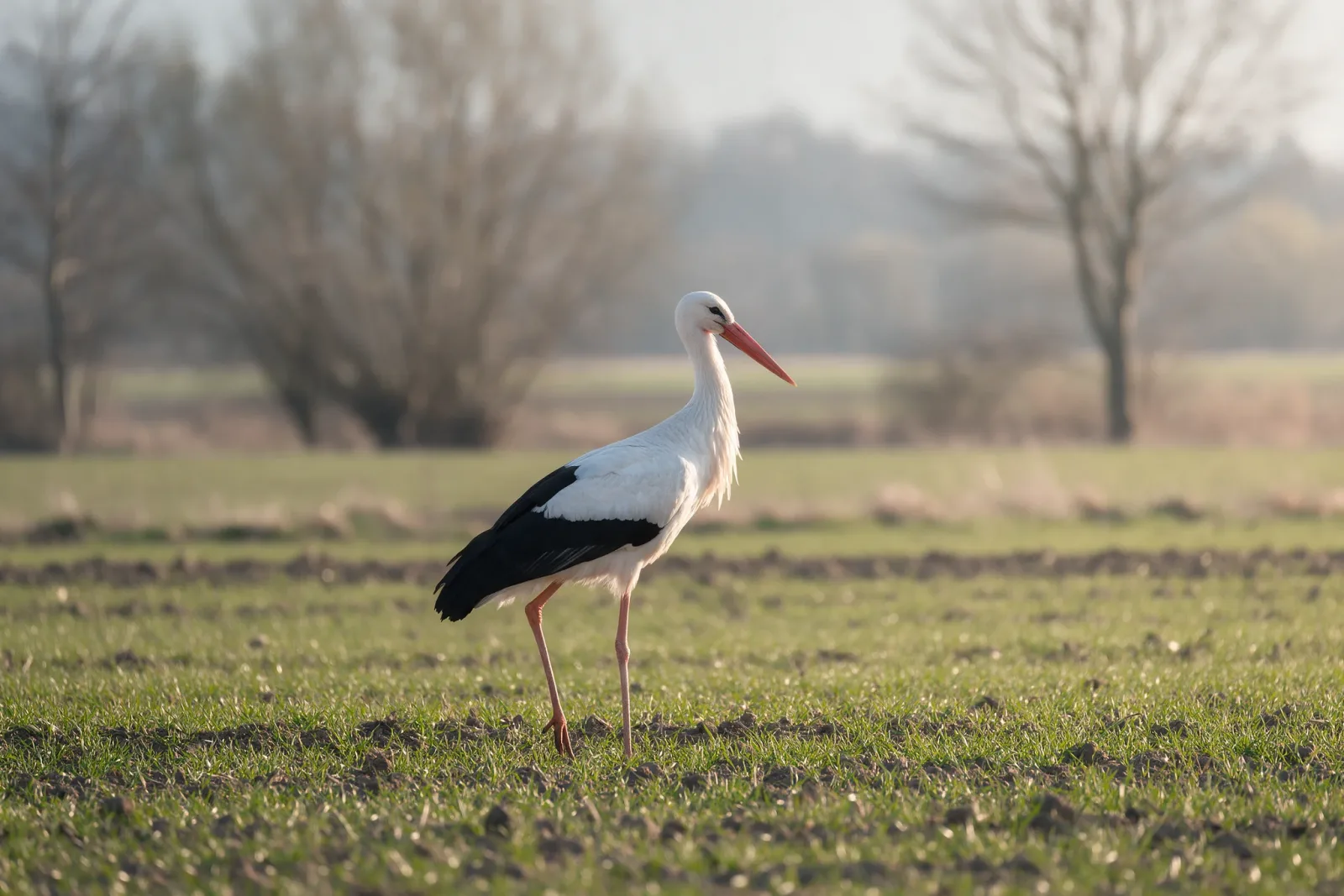
The bird is part of the Polish countryside in a way that is hard to miss in summer. Nests sit on barn roofs, chimneys, poles and trees, and the fields around them are wet and full of insects.
Why Poland
Poland kept more of the habitat that storks need. Small farms, wet meadows, ponds, river valleys and old buildings survived where western Europe drained and reorganised its land. The result is a countryside with food and nest sites close together.
The strongholds are in the east and north: Masuria with its lakes, Podlasie with its marshes, and the wide farmlands of Wielkopolska. In June a Polish village can have nests on every roof and pole in sight.
The stork village
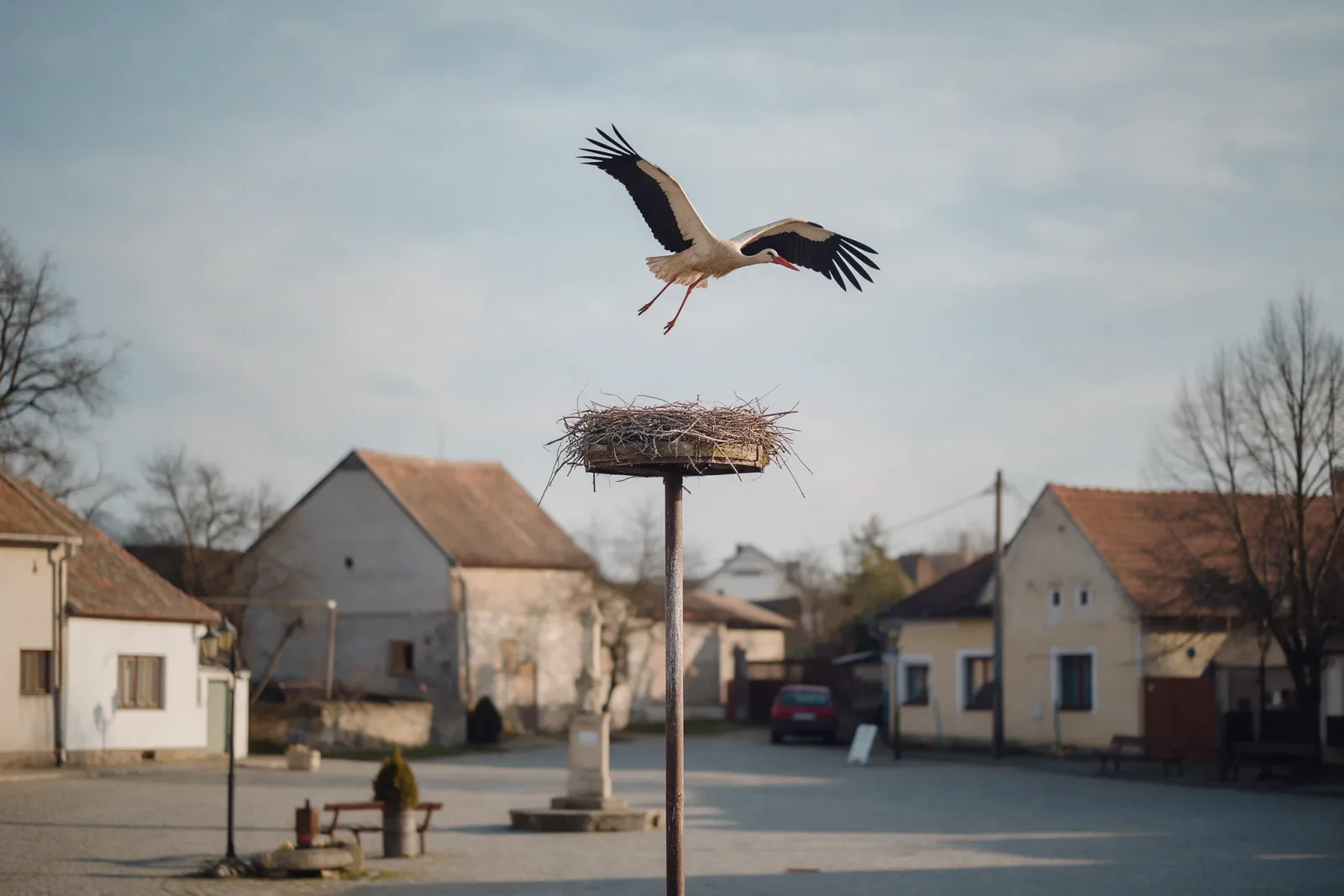
Żywkowo in Masuria is the best known. Nests cover the roofs and poles, and the village has become a destination for birders. Pentowo in Podlasie is another. In these places the birds are watched, counted and protected, and the village earns from visitors.
A stork village is a working village with birds on the roofs. The birds fly out to feed and return to the nests. People live in the houses below, and the whole arrangement depends on tolerance and a wet countryside.
The nest
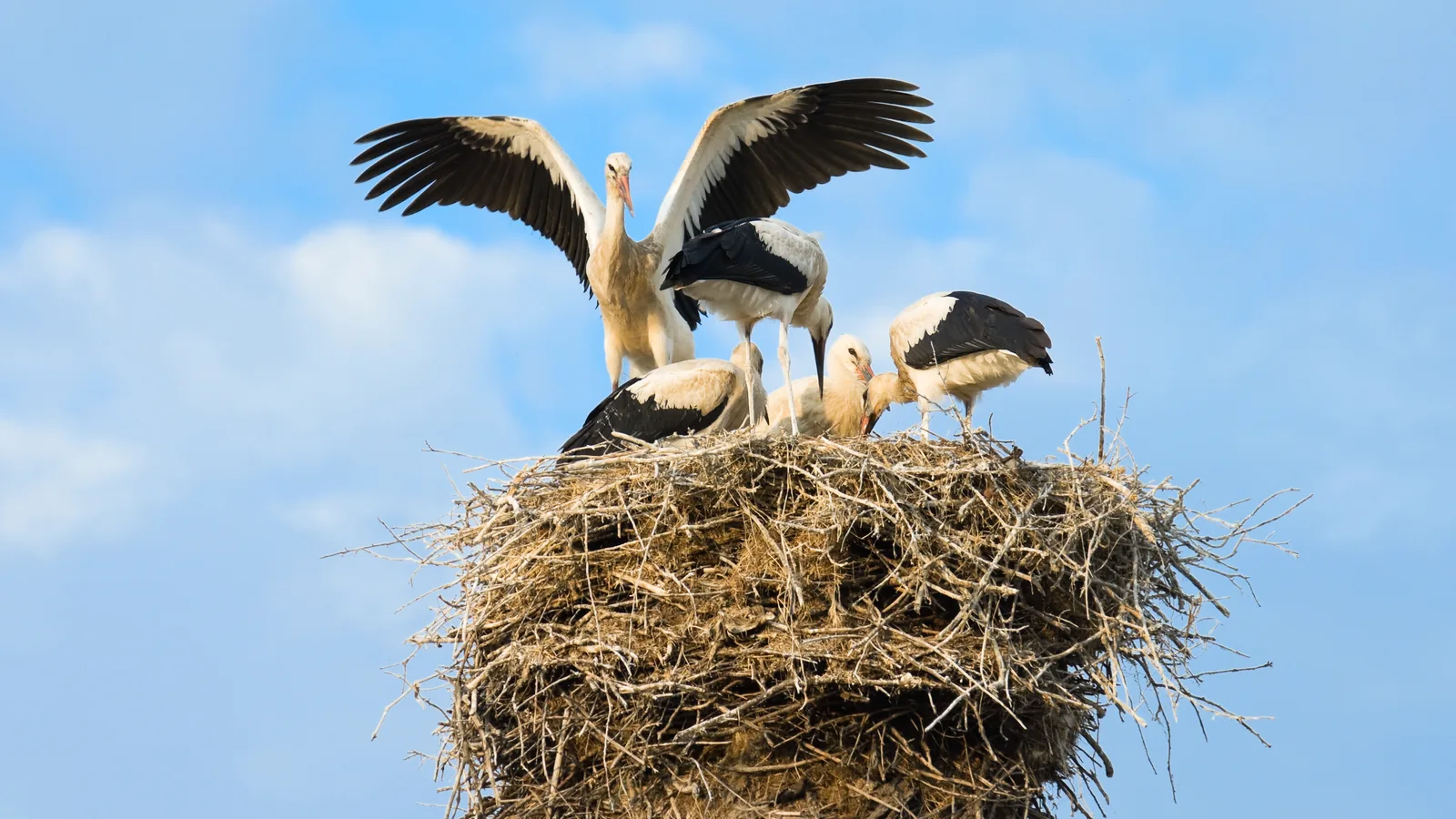
A pair builds a platform of sticks, grass, earth and rags. The same nest is used year after year, and it grows. Old nests on chimneys and poles can be huge, and people build platforms to keep them secure.
Storks return in late March and April. They clatter their bills, greet each other and repair the nest. Chicks hatch in May and June, and the adults bring food all day.
Food and farming
Frogs, insects, earthworms, voles and grasshoppers. Wet meadows and shallow water hold most of it. Drainage, early mowing and the loss of small ponds are the pressures. A field that dries in May is a field with nothing to feed a chick.
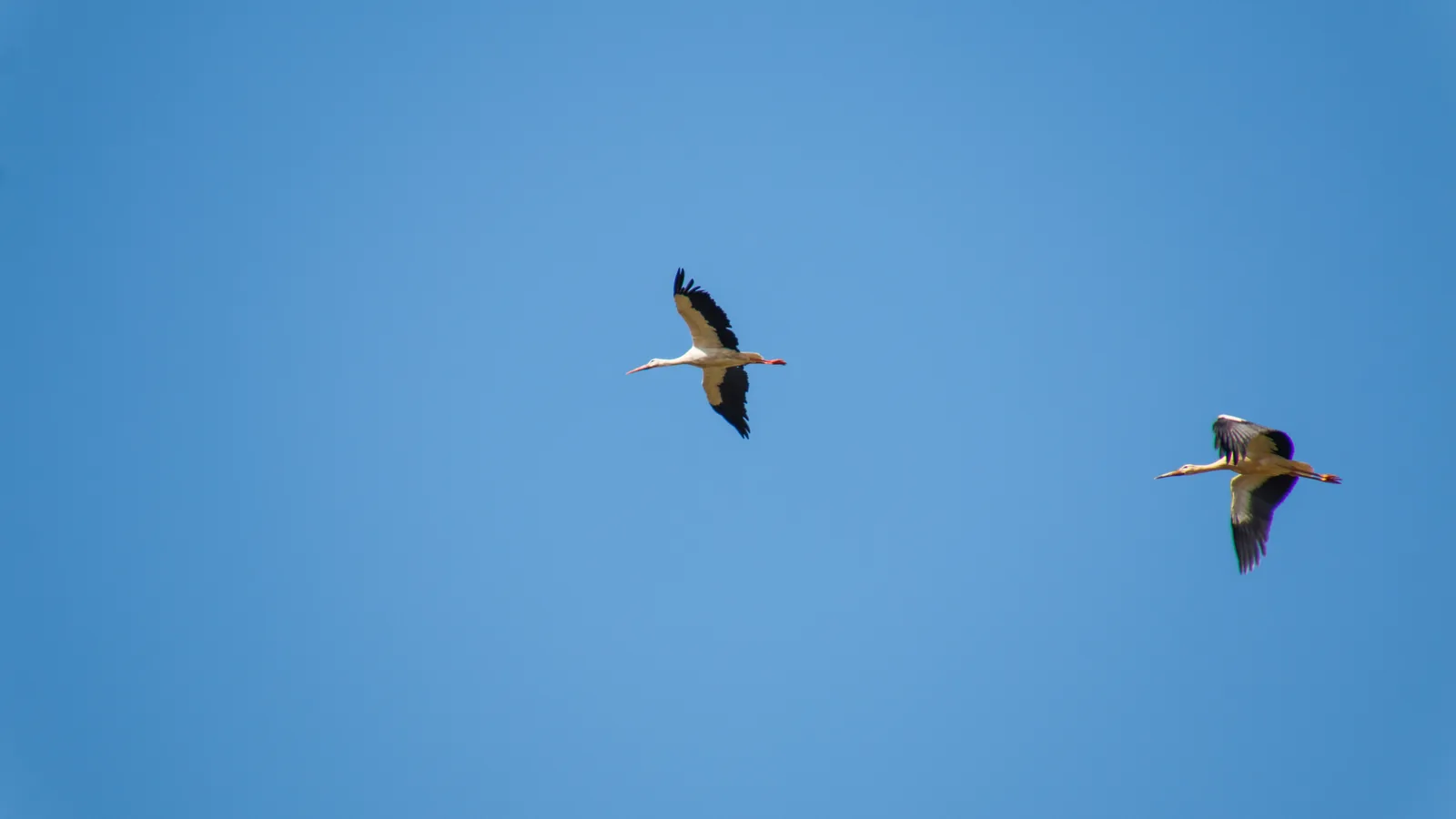
Poland's storks still migrate. Most leave in August and September along the eastern route, through the Balkans and the Middle East, to Africa. Some go through the Bosporus. The birds return to the same nest the next spring.
A year at the nest
Spring brings the pair back and the nest is repaired. Eggs are laid in April or May, and the chicks hatch after about a month. For the first days the adults brood them, and then the real work begins: hunting from dawn to dusk to feed a growing brood.
By July the young birds stand at the edge of the nest and flap. Fledging is gradual, and the family stays together in the fields for a while before the long flight south.
Why the nests are on the farms
A Polish farmyard offers what a stork needs: a high roof, a pole, a wet meadow behind the barn and a pond at the end of the lane. The birds nest where the food is, and the food is where the farming stays small and wet.
A large open field with a single crop holds far less than a patchwork of meadow, pond and hedge. That patchwork is the reason the Polish population is large. A village can hold a dozen nests within sight of one street.
Watching them
Late spring and early summer. Use binoculars, stay on roads and paths, and respect private yards. A nest on a house is someone's roof.
The picture is a barn with a nest on the ridge, a stork standing on it, and a wet meadow behind. The nest goes up before the eggs are laid, and the meadow behind it stays wet through spring.
Explore the gift