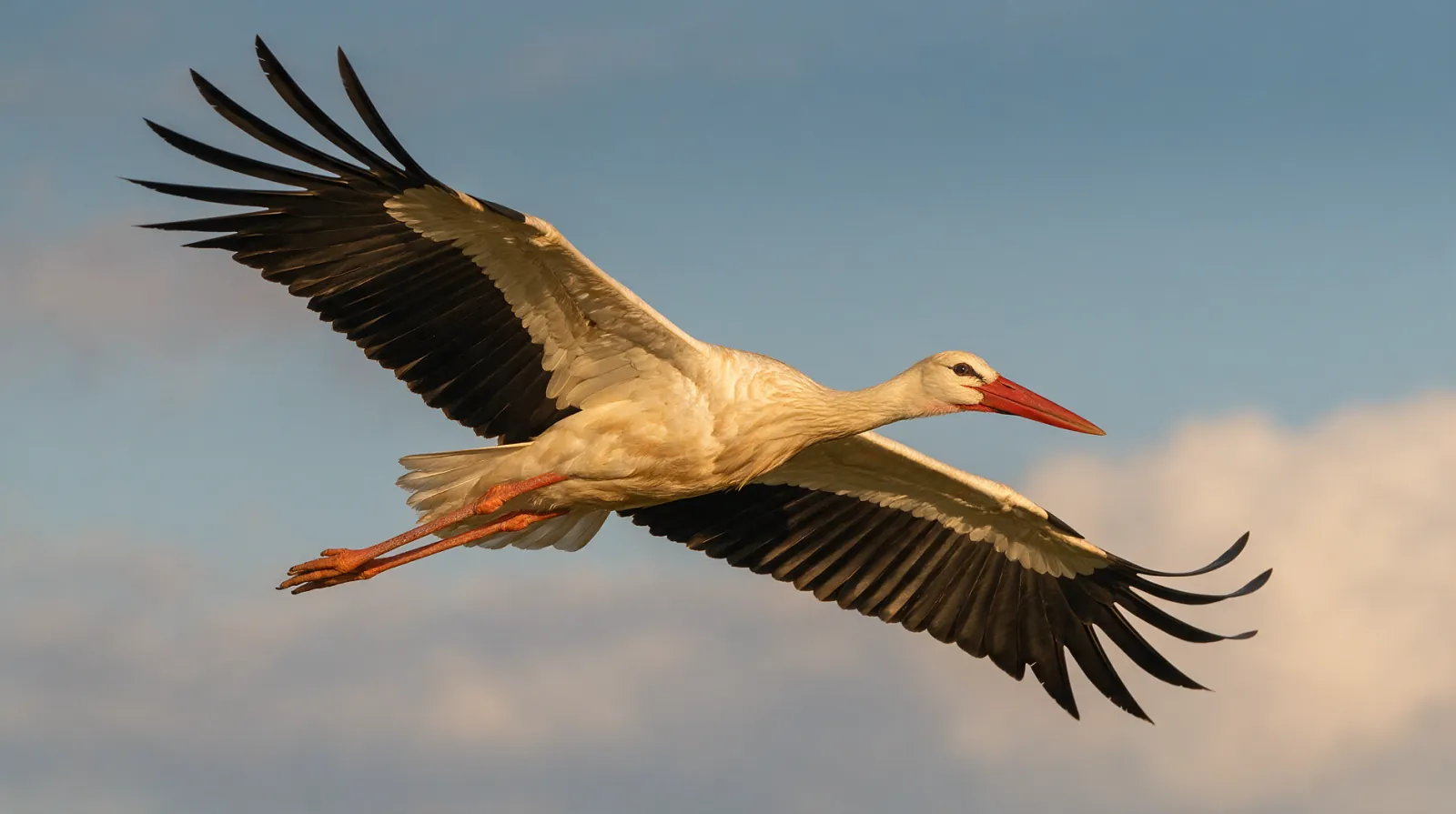
When storks arrive in Europe depends on where you stand: the first birds cross in March, the main passage runs through April, and the last pairs settle by late May. After that the season runs on its own clock, through eggs, chicks, first flights, and a slow drift south that starts before summer is over.
March: the first birds
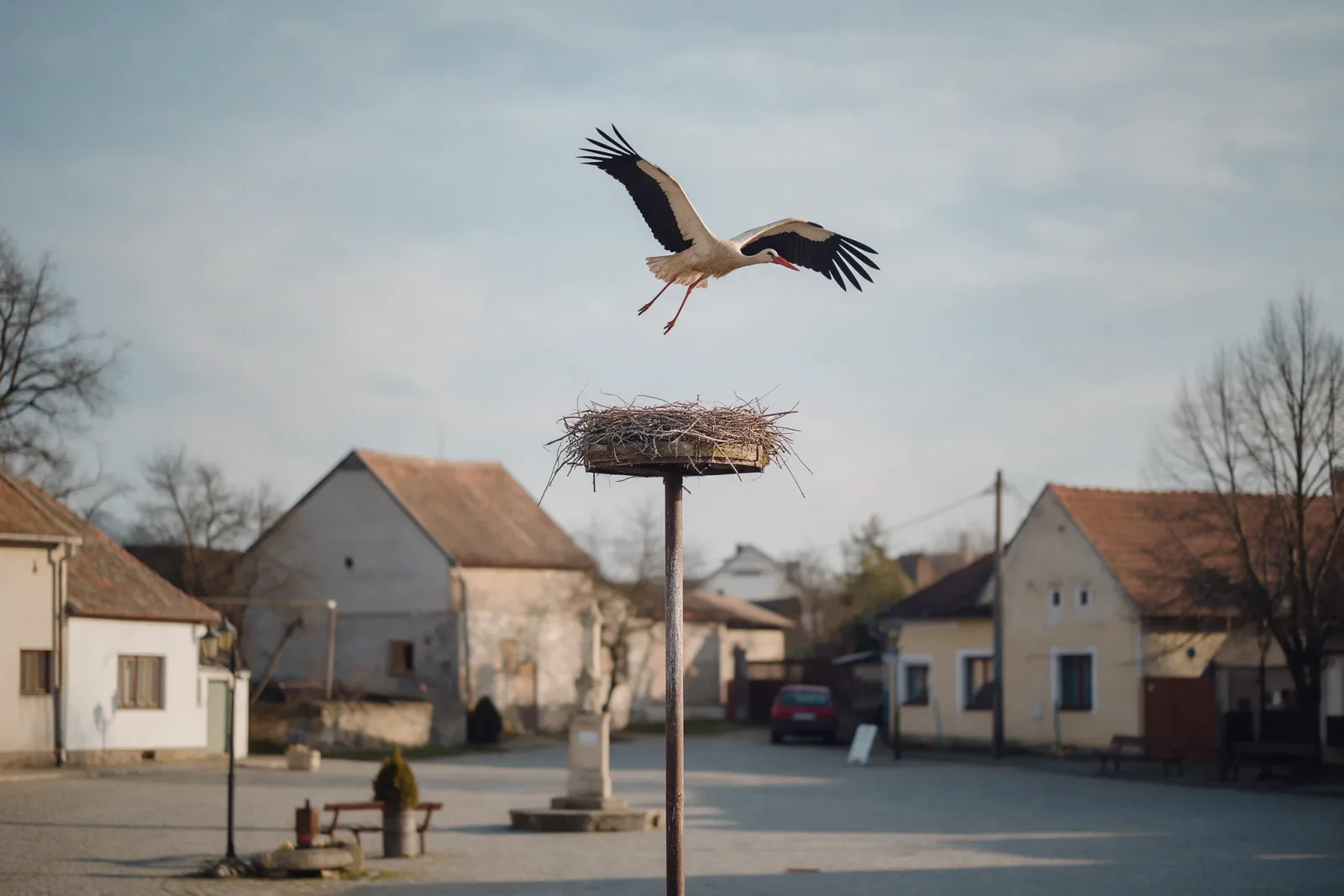
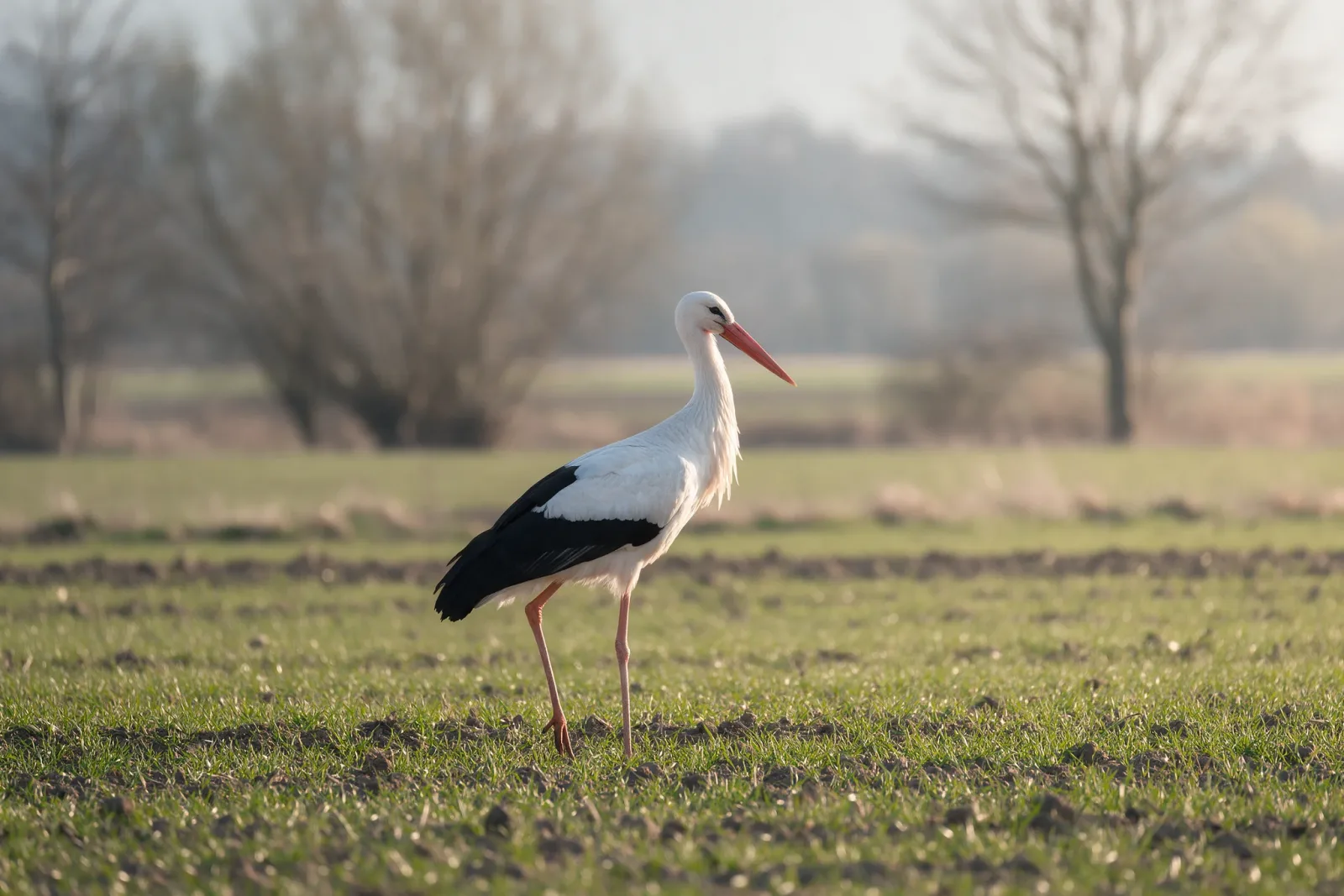
The earliest arrivals show up in the second half of March across central and northern Europe. In the south-west the timing is looser. Some storks now spend the winter in Spain and Portugal, so a January bird on a nest is possible there, and a few pairs have stopped migrating altogether. The first bird on a nest is usually the male, back to claim the site before his mate arrives. He repairs the rim, stands about, and waits. A cold snap in March can stall the whole passage, and a bird that lands in frozen fields has a hard fortnight ahead.
April: the peak
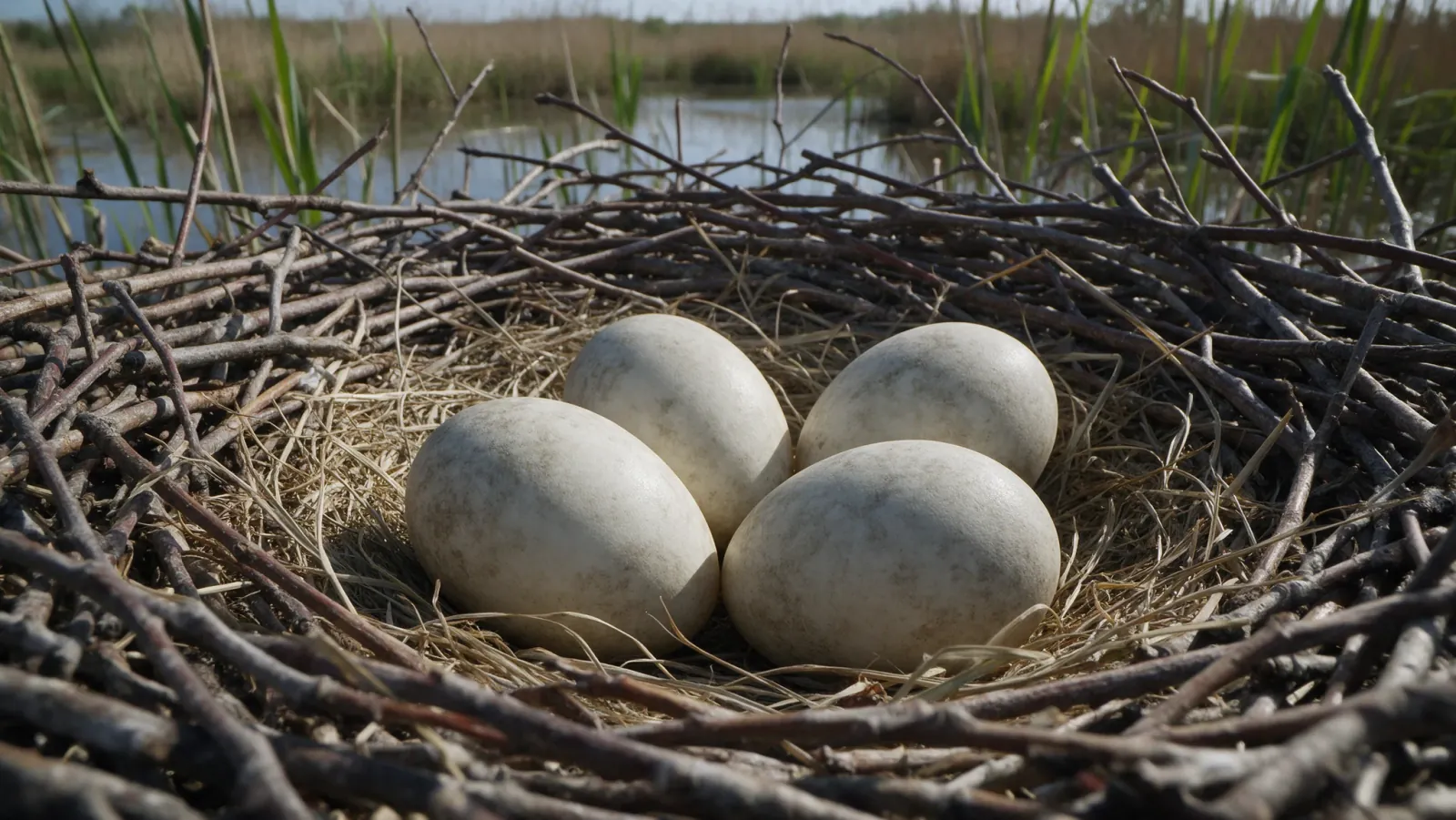
By the first days of April the return is hard to miss. Flocks work north on warm air, and the birds that crossed at Gibraltar or the Bosporus spread out across the continent. April and early May carry the great majority of the return. A pair that reaches its nest in early April will usually have eggs within a week or two. The clutch is three to five white eggs, laid a day or two apart, and both parents take turns sitting. Incubation runs about 33 days.
May: the last birds and the first chicks
Late arrivals tend to be young birds nesting for the first time, or birds that wintered far south and took the long route. They are still finding mates and building when the earliest pairs already have small chicks. A pair that started in mid-April has chicks by the middle of May. The young are helpless at first, and one adult stands over them while the other feeds.
June and July: the nest at full stretch
This is the busiest stretch. Two or three chicks grow fast on frogs, insects, mice, and whatever the parents can carry in. Feeding happens by regurgitation, with the chicks reaching up and clattering. Ringers often visit nests in June, when the chicks are large enough to carry a ring and too young to fly. A chick leaves the nest at about eight or nine weeks old, and the first flights are short and clumsy. By July the platform is splashed white and the adults are hunting from first light.
August and September: the gathering
Fledged young follow their parents to meadows and stubble, learning to find food on their own. Non-breeders and failed breeders move first, drifting toward roosts and the old gathering places. The birds that leave earliest are often the ones that did not raise chicks. Through September the flocks grow, feeding hard before the crossing. Some birds will be over the Sahara before October.
October to February: the quiet half
Most white storks are in Africa by late October, spread from the Sahel down through eastern and southern Africa. A growing number stay in southern Europe through the winter, especially where food is reliable. The nest stands empty, losing sticks to wind and gaining a little moss. The platform that held a family in June is a bare ring of twigs in January. Then March comes again, and a male lands on it, usually the same one, and the calendar starts over.
The nest stays up through the winter. Whatever is left of it in February is what the next pair will start from.
Explore the gift