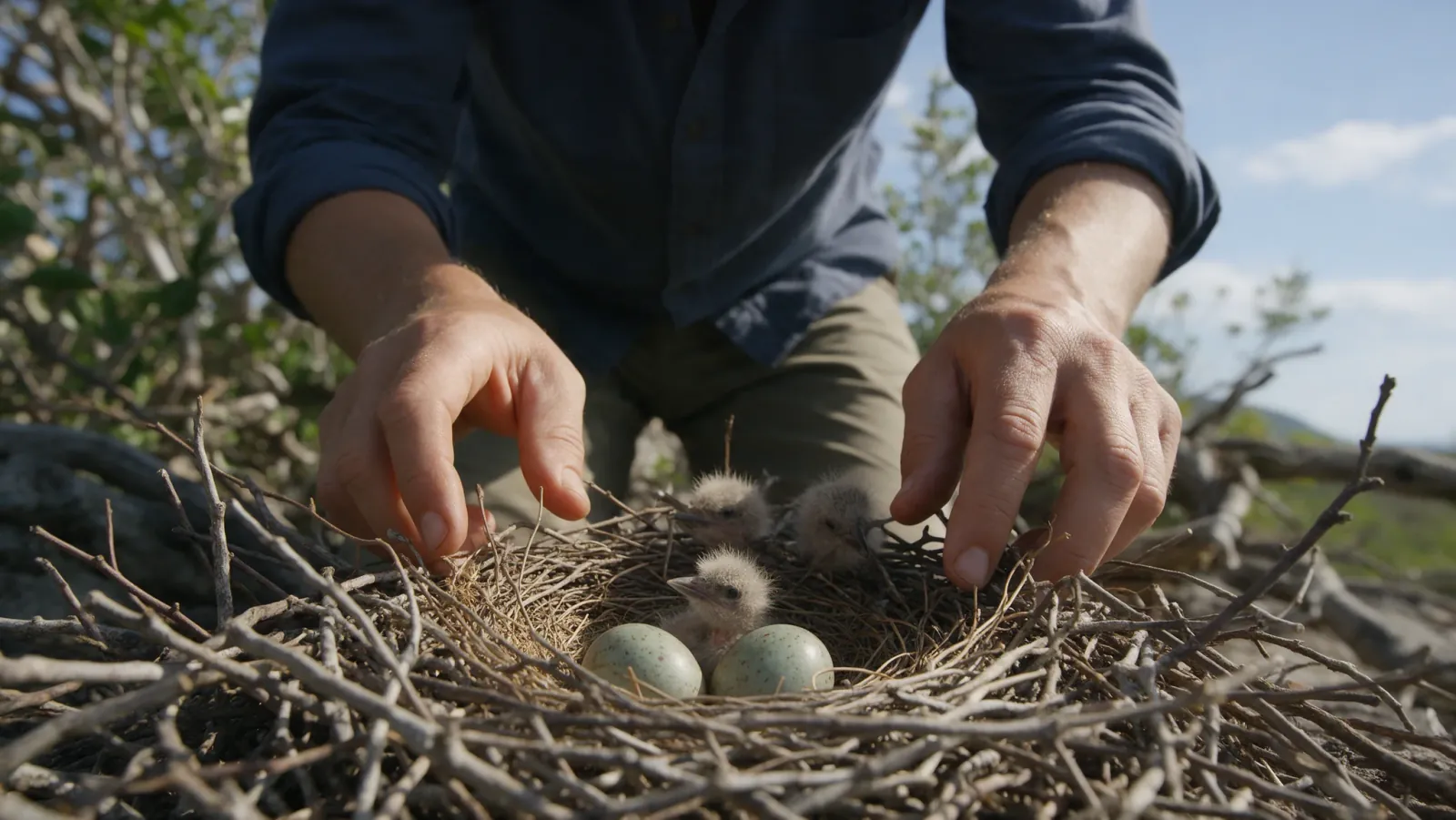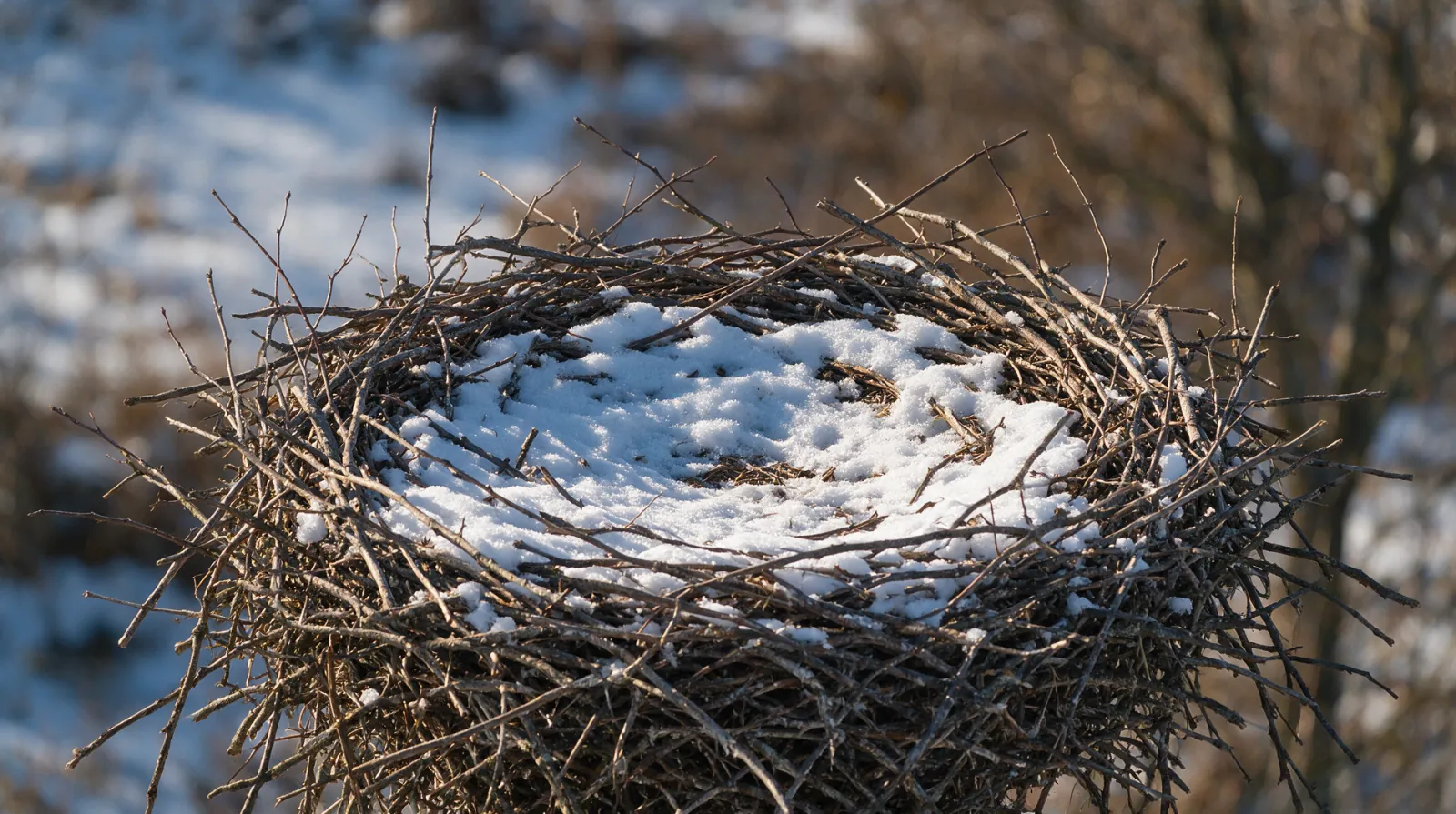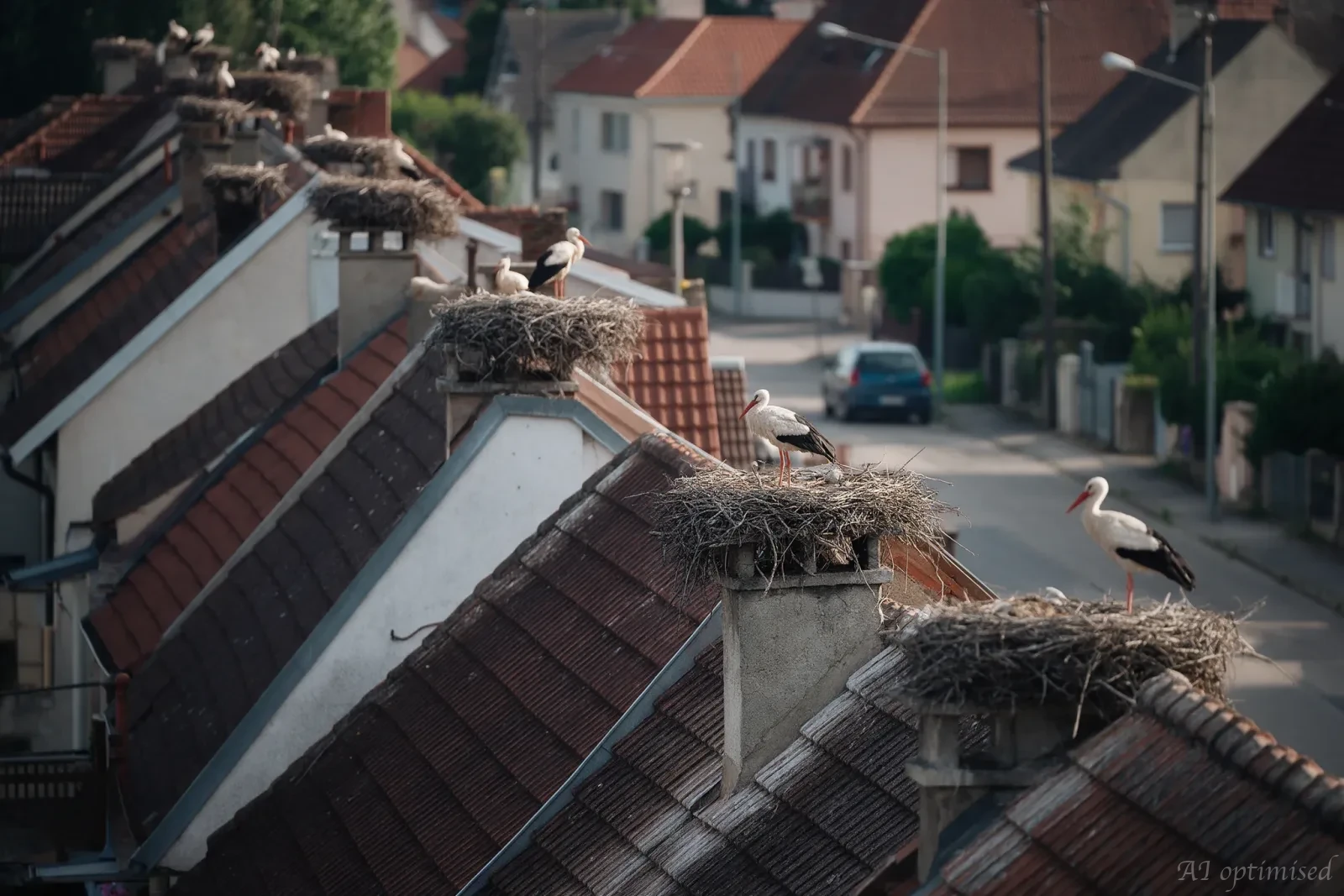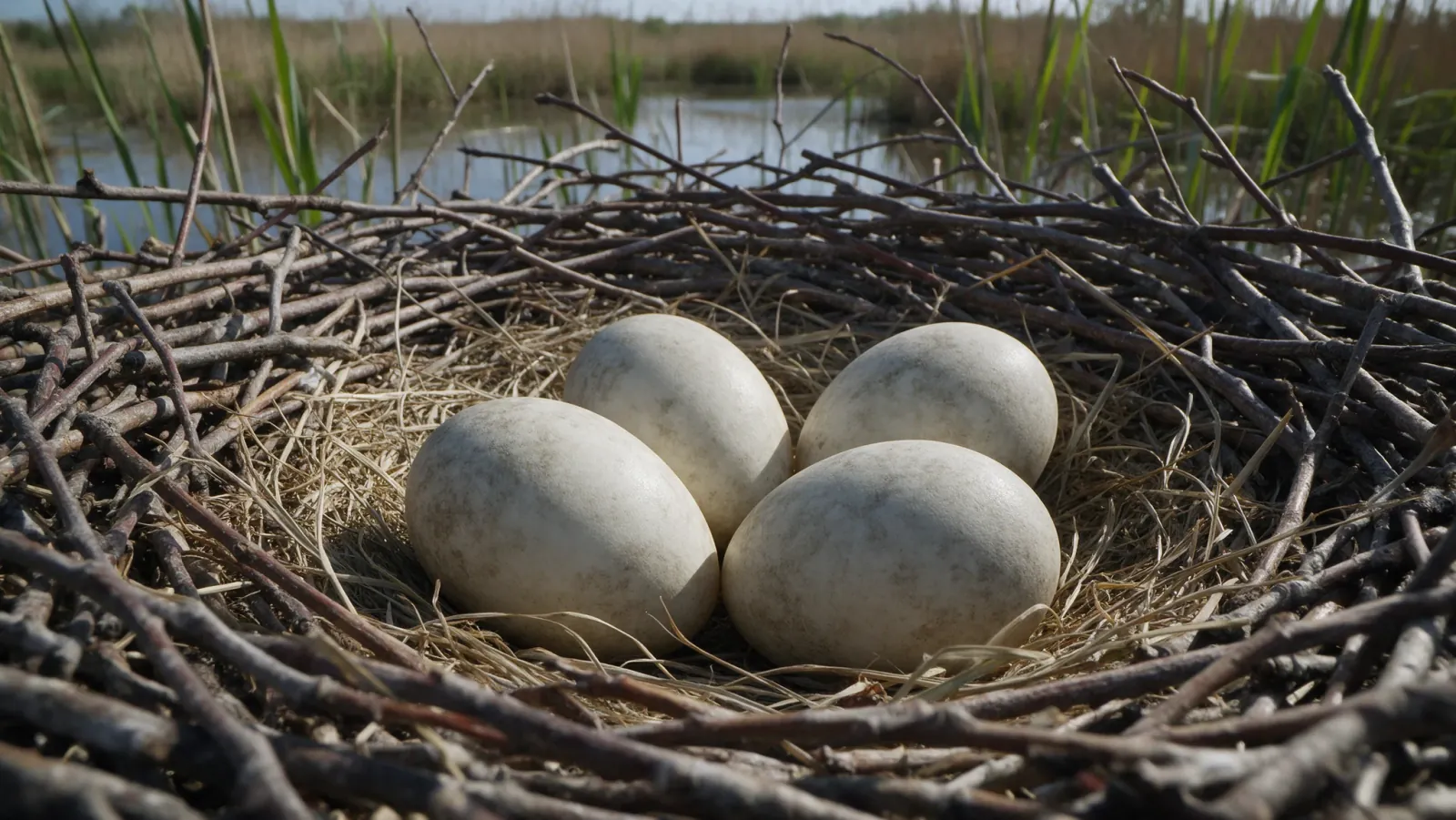
A white stork egg is laid in a nest that has already been repaired, defended, and lined. The female begins in April or May, usually with three or four eggs and sometimes five. She does not lay them all at once. One egg arrives, a day or two passes, another follows. By the time the clutch is complete, the first egg has been warm for days.
A clutch laid one at a time
The eggs are chalk white and dull, without spots or gloss. They sit in the shallow cup the parents have pressed into the lining, and from the moment each one is laid it is rarely uncovered. The female settles over it, and the count begins.
A stork egg needs roughly 33 days of steady warmth before the chick inside is ready. The number shifts a little with weather and with the pair, and it is close enough that a watcher who notes the first egg can guess when the first chick will come. The gap between the first egg and the first chick is about a month of nearly constant cover.
The first egg has a head start, and the chick from it is bigger and stronger than the last. The difference comes from the order of laying and from the female's reserves. A young female in her first season may lay a smaller clutch, and a late start can produce two eggs instead of the usual three or four.
Watching a clutch means visiting at the same time each day. The count can rise by one between visits, and the cup looks different with each egg in it. A nest that seems to hold two eggs on Monday may hold four by the end of the week. The final count is not known until the female stops laying.
Why the eggs are spaced
The spacing works like a plan, even though no bird made it. Because the eggs are laid days apart, the chicks hatch days apart. The first is bigger and stronger than the last, and in a good year that difference does not matter much. In a hard year it decides which chicks survive.
A stork pair cannot guarantee food. Cold rain, flooded meadows, and late frost can shut down the hunting grounds for days. When that happens, the older chicks take the food and the younger ones fall behind. The gap that opens at laying becomes the gap that opens at the rim of the nest. A clutch laid over a week produces a brood ranked by age before the first shell breaks.
The ranking is not a judgement on the smallest bird. It is a consequence of the calendar. A chick that hatches three days after its oldest sibling has three days less growth, and at the first feed that difference is visible in the length of its neck and the reach of its beak. In a mild season the gap closes. In a cold one it holds.
Four eggs ask more of the parents than three. More chicks mean more trips to the meadow, and the youngest has more siblings ahead of it at every feed. The common clutch of three or four is the number the season can usually carry. Two is a smaller bet, often from a young bird or a late start, and it can still raise two strong chicks.
The shift at the rim
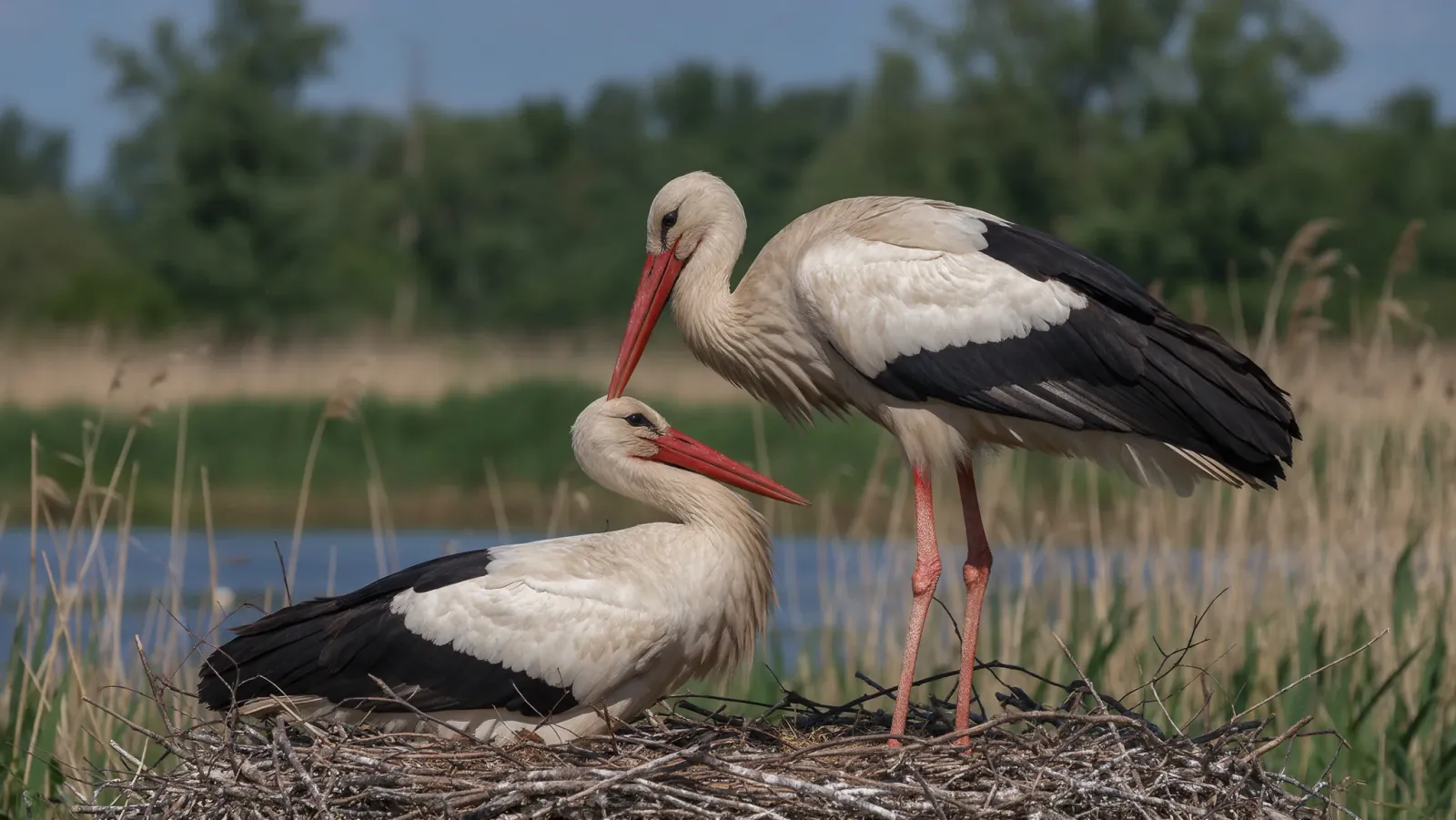
Both parents incubate. Each develops a brood patch, a bare patch of skin on the belly that carries heat straight to the shell. The patch is why an egg can be left for a few minutes while one bird feeds and still be warmed properly when the other returns.
The sitting bird turns the eggs with its bill and with careful shifts of its body. Turning keeps the embryo from sticking to the shell membrane and spreads the warmth evenly. It looks like fidgeting. It is maintenance, repeated through the day and through the night.
A changeover is quick. The bird that has been feeding lands on the rim, and the sitting bird rises to meet it. They clatter softly, bills barely apart, and the returning bird steps down onto the eggs. The other lifts off and is gone. The eggs are exposed for seconds, and the incoming bird often settles before the outgoing one has cleared the rim. On a cold, wet day the birds move faster.
Night on the nest
In many pairs the female takes the night and the male takes a long stretch by day. That pattern is common, and it is not fixed. Some pairs swap more often. Some males sit through the night while the female feeds at dusk. The birds work out a rhythm that suits them and the weather, and the rhythm can change from one week to the next.
Night is the harder shift. The bird cannot see much, the air is cold, and there is nothing to do but wait. The compensation is quiet. No neighbours landing, no chicks to feed, no need to watch the sky for intruders. A stork on eggs at night is about as still as a stork ever gets.
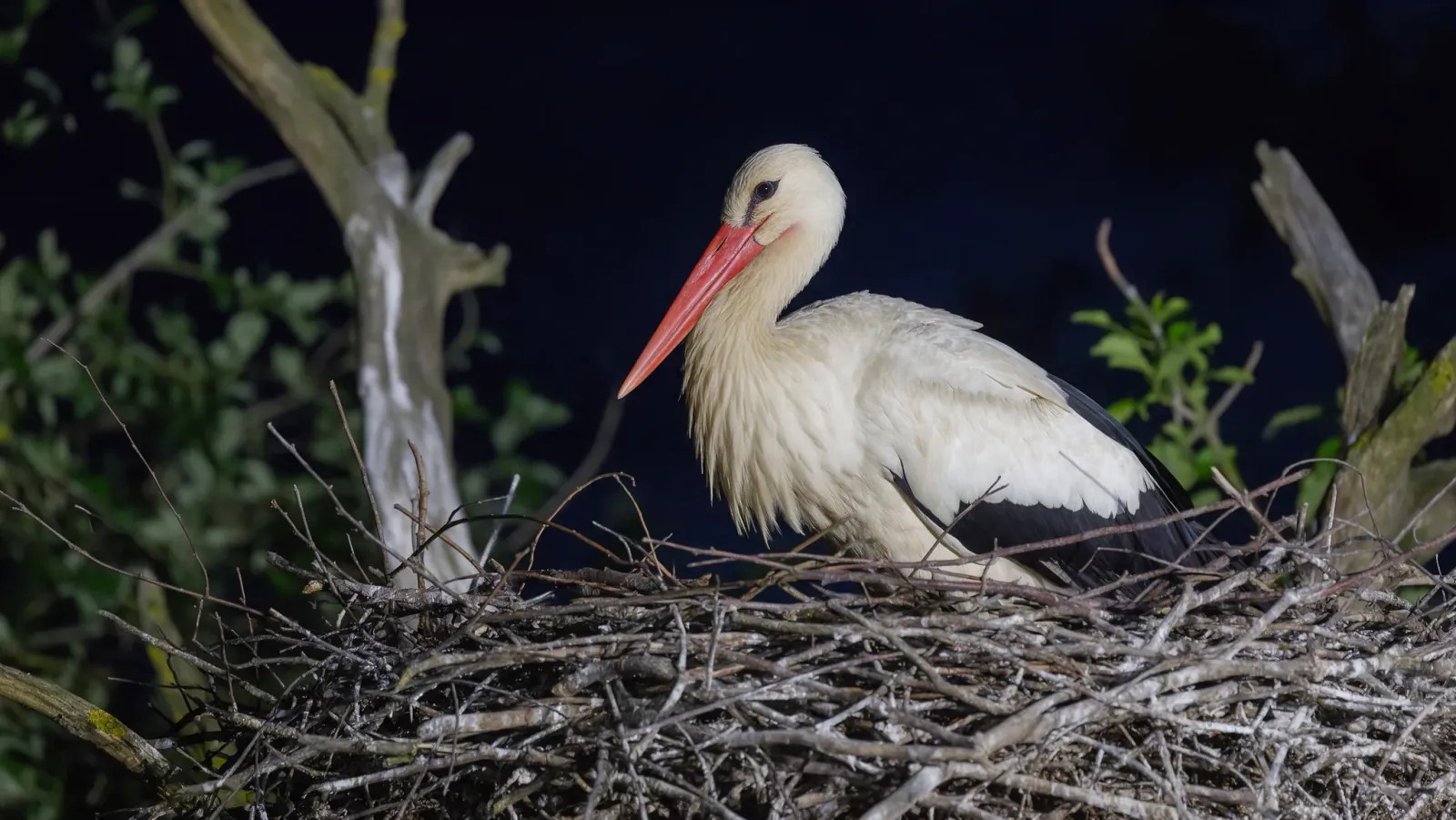
An uncovered egg loses heat quickly. A single cold night can damage a clutch, and a cold snap in April or May can kill one in a short time. This is when the handovers tighten. The sitting bird may refuse to rise until its mate is close enough to touch. Rain is its own problem: a wet egg cools faster than a dry one, and a soaked nest pulls heat from the sitting bird's body. The pair sits tighter and accepts the weather.
By dawn the sitting bird has been still for hours. It rises, stretches its wings, and flies out to feed. The returning bird settles over the eggs, and the two greet each other with the same soft clatter they use at the start of the season. The change at first light is the quietest ceremony of the stork year.
The last quiet days
Inside the shell, a chick assembles itself. Bones harden, feathers begin as tiny follicles, the bill takes shape, and the eyes close over. Near the end the chick fills most of the shell and has little room left to move. It begins to call, a faint sound that carries through the egg and through the sitting bird's feathers.
The parents hear it before they see anything. The sitting bird grows restless. The changeovers become more frequent. A person standing below the nest can hear the thin call, and the parents hear it sooner. The clutch announces its ending with sound before the shell shows a crack.
Then one morning there is a small hole in a white shell, and a downy head behind it, and the month of sitting changes shape. The remaining eggs still need warmth while the first chick needs feeding, so the pair begins to do two jobs at once. The shift at the rim continues, with eggs under one bird and a chick under the other.
The first chick is wet and weak, and the parents cover it while the other eggs wait underneath. For a day or two the nest holds a chick and a clutch together, and the birds move between the two with care. A brood does not arrive all at once; the clutch turns into a family one shell at a time.
Explore the gift