The stork cycle
Courtship, eggs, chicks and fledging: the breeding season from the first return to the empty nest.
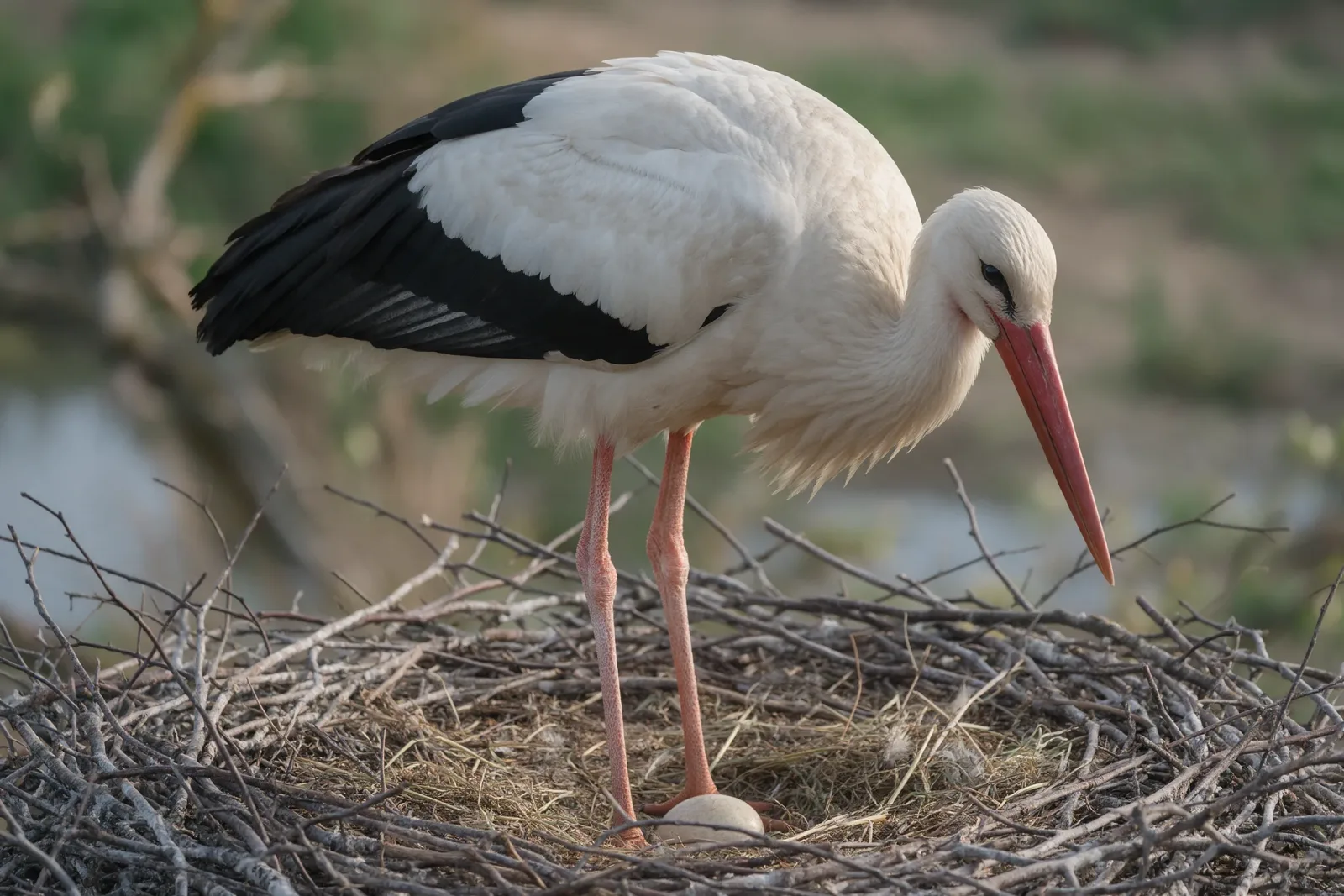
When storks lay eggs, and why the first chick gets a head start
A white stork lays three to five eggs over several days, so the brood hatches in order and the oldest chick usually feeds first.
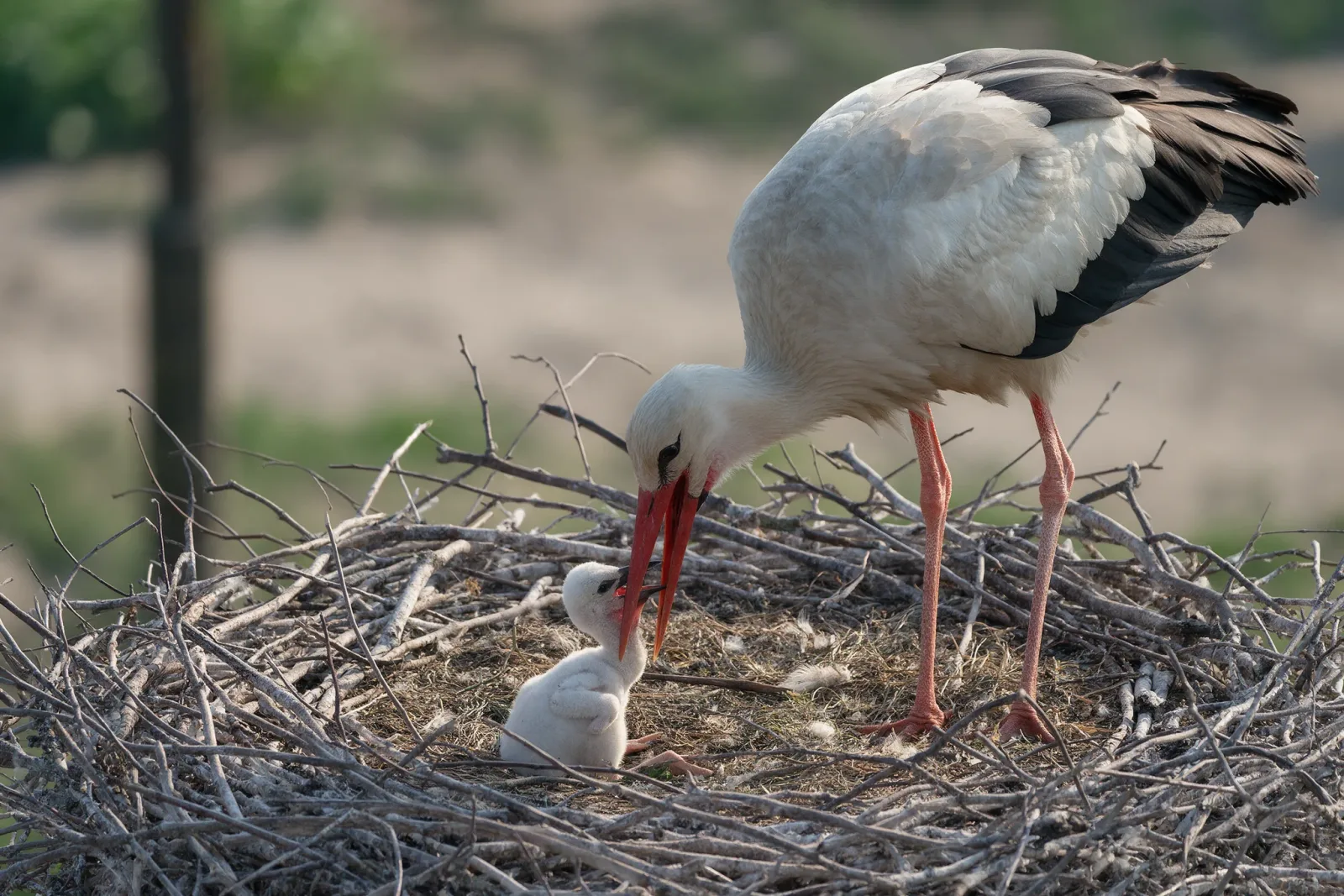
The first days of a chick: blind, brooded, and fed from a pouch
A newly hatched white stork cannot see, cannot control its heat, and cannot lift its head. Its parents brood it and bring food back in the crop.
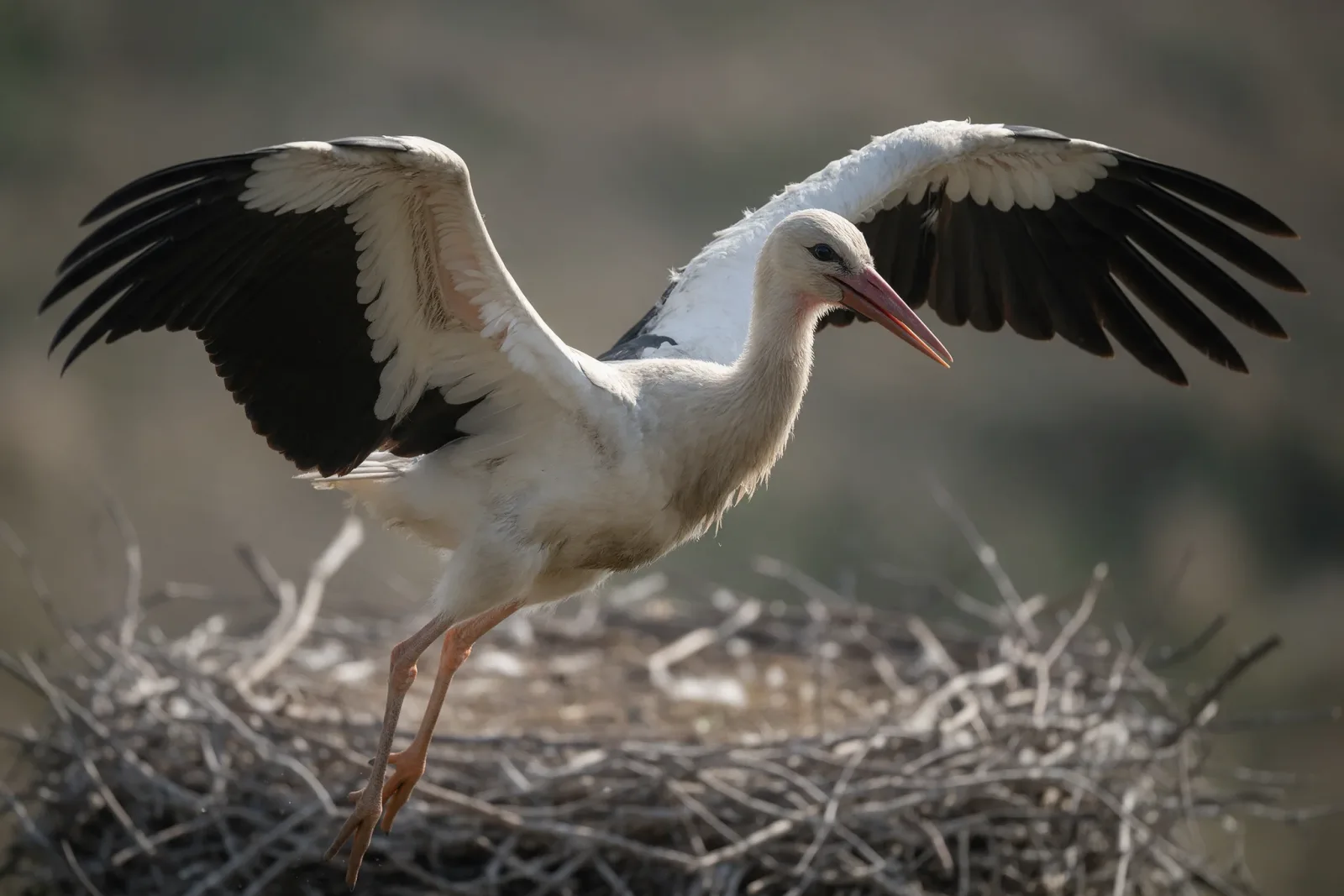
Fledging day: the first bad landing of a young stork
At about eight weeks a young white stork leaves the nest in a short, lurching flight, then spends weeks begging in fields while its parents hunt.
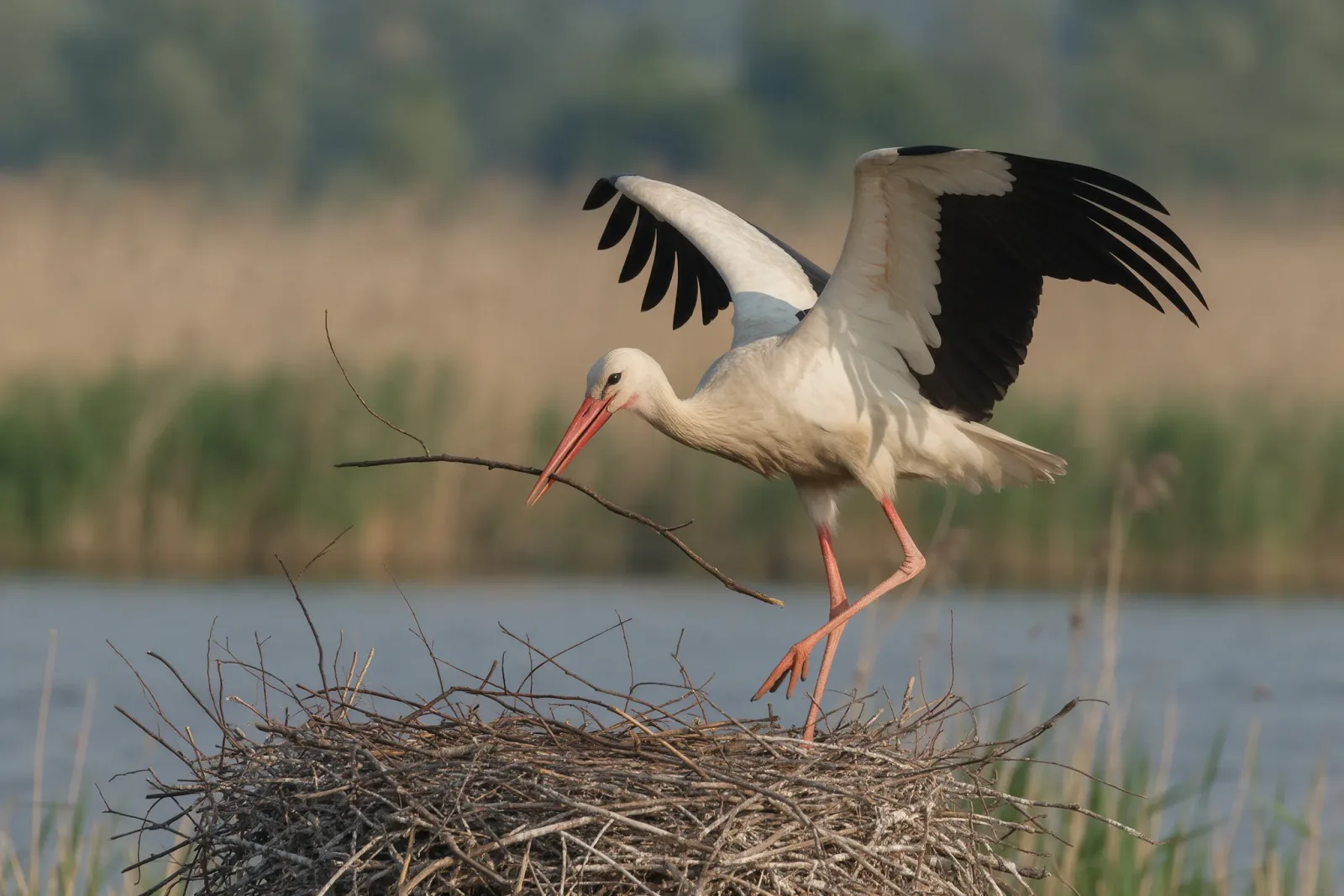
How a stork nest is built: one stick, then decades of adding
A white stork carries sticks one at a time. After ten springs, the platform can weigh hundreds of kilograms and outlast the pair that started it.
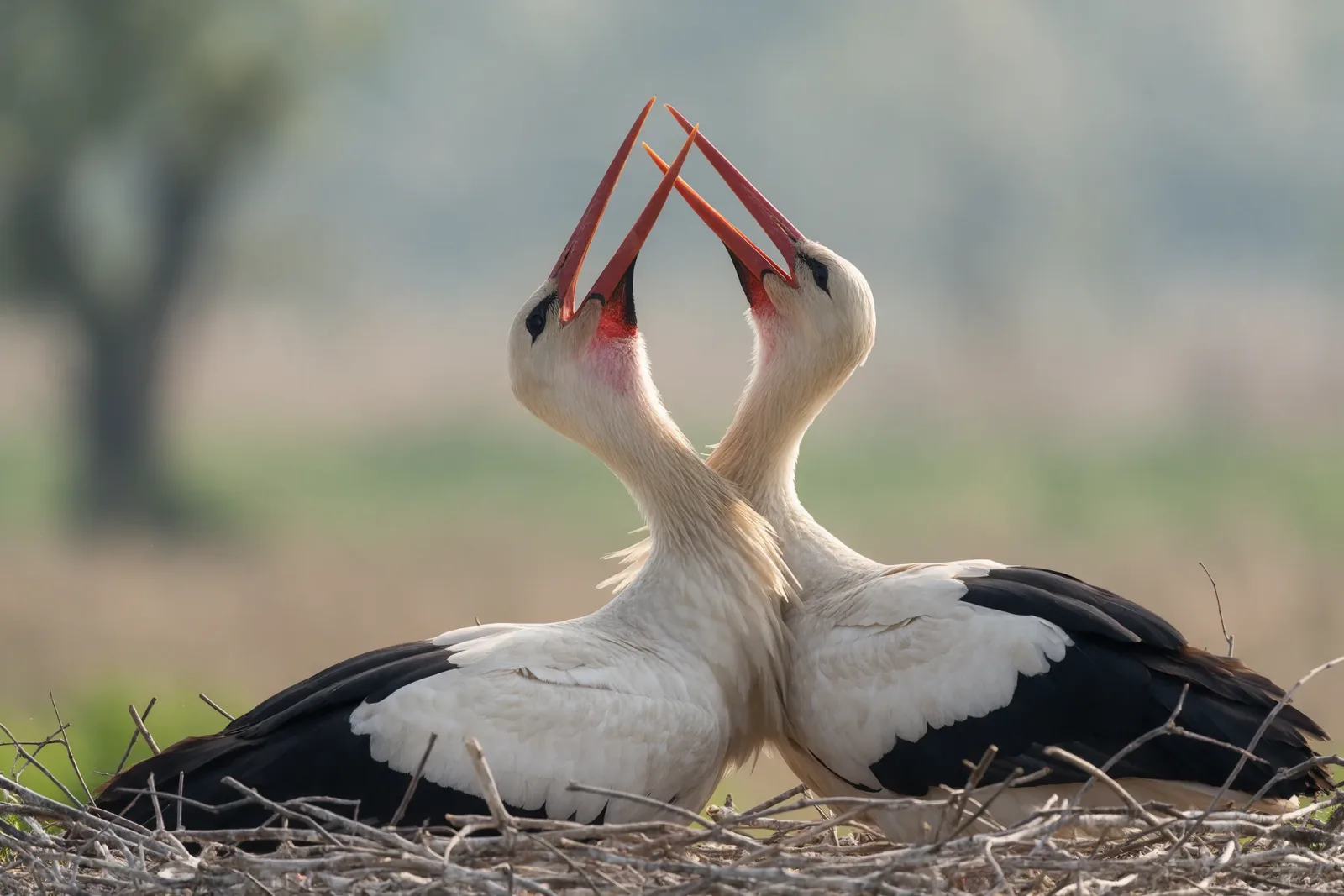
The stork dance: a bill rattle that carries across a village
White storks have almost no voice, so they clatter their bills to greet a mate, claim a nest, and answer a neighbour across the roofs.
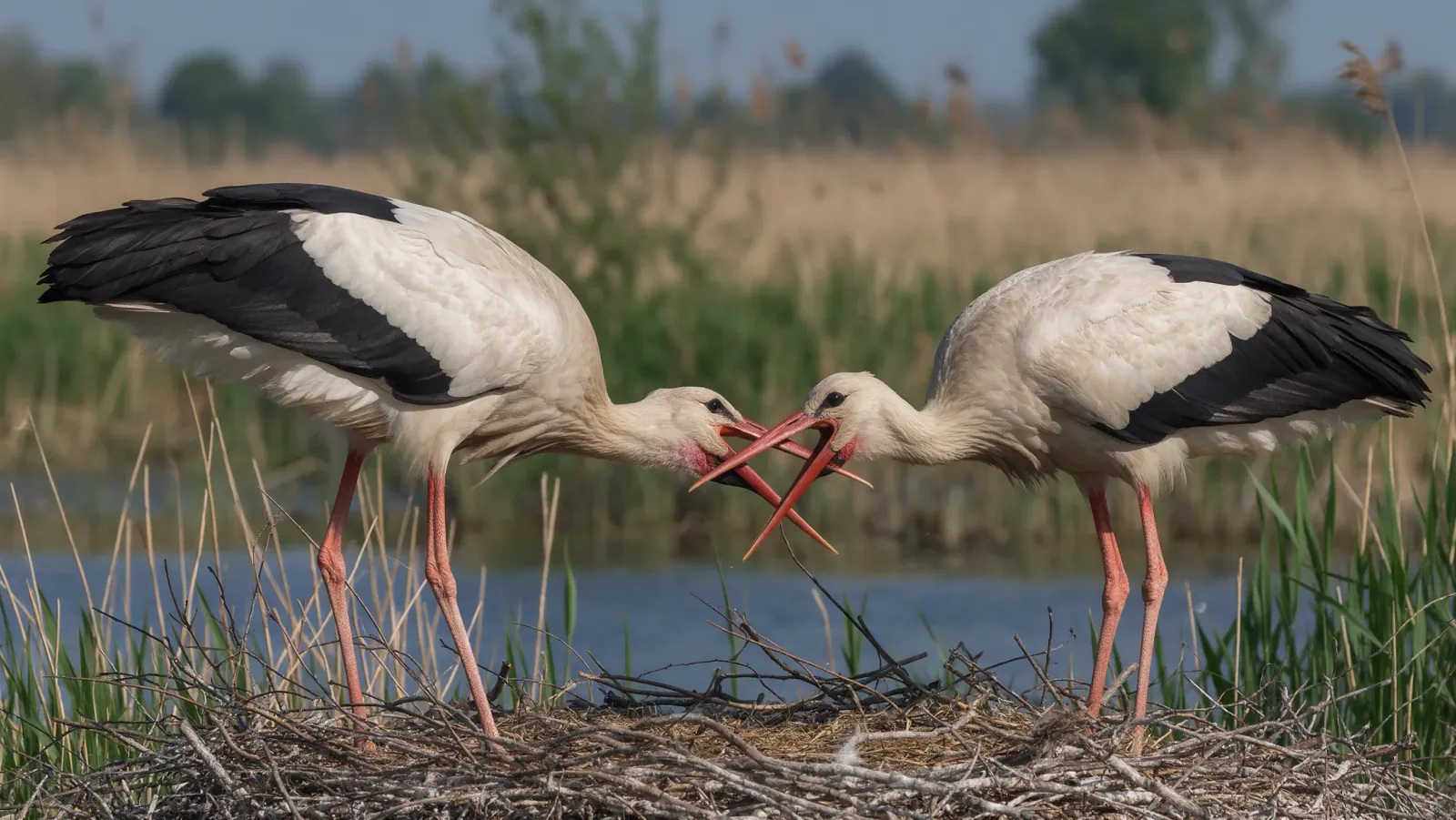
The spring reunion: bill clatter on the same old nest
A male white stork reaches the nest days before his mate, then greets her with a bill-clatter that carries across the village.
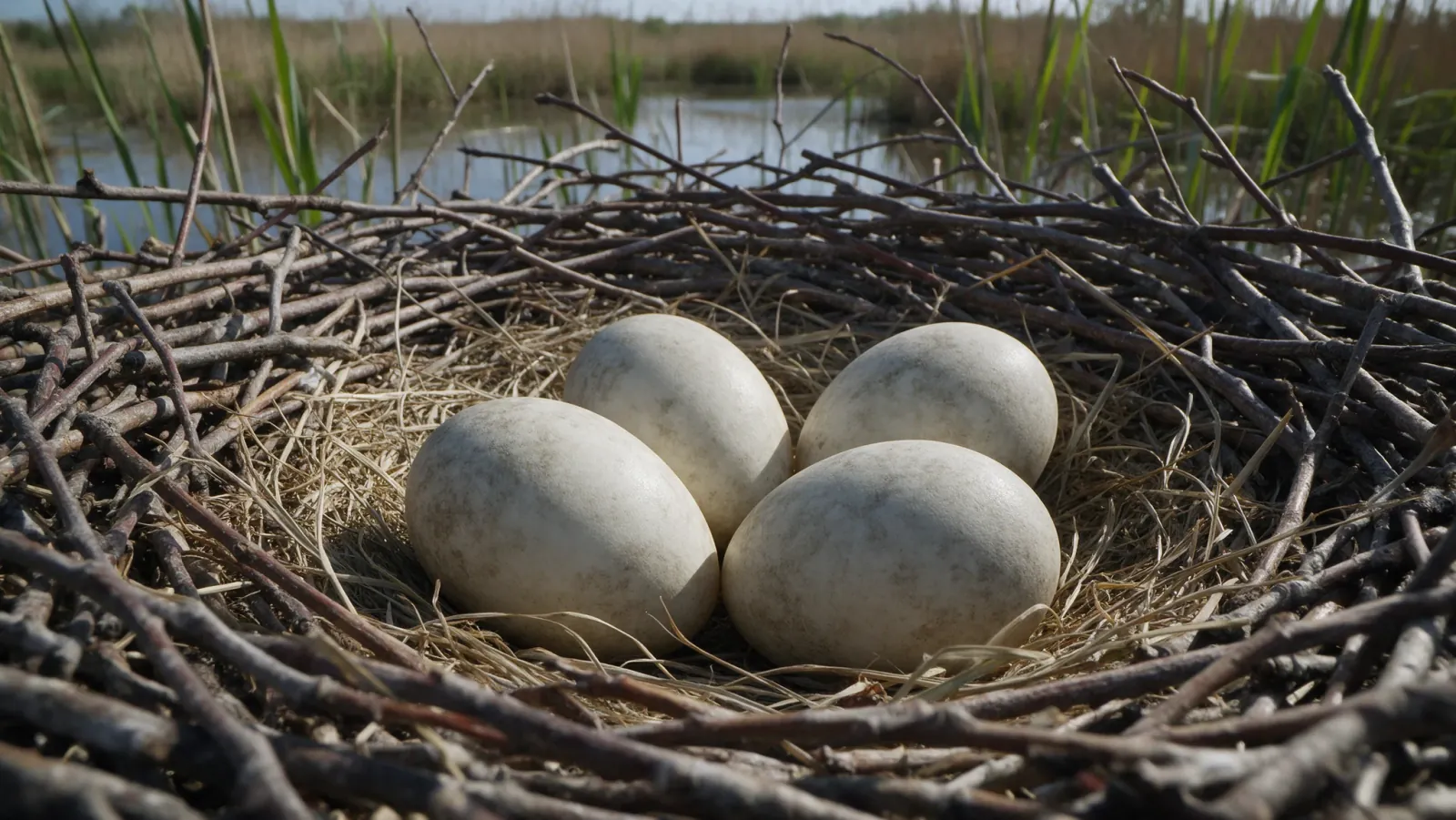
The clutch under a warm belly: 33 days in a stork nest
A white stork lays three or four chalk-white eggs a day or two apart, then shares about 33 days of turning and waiting.
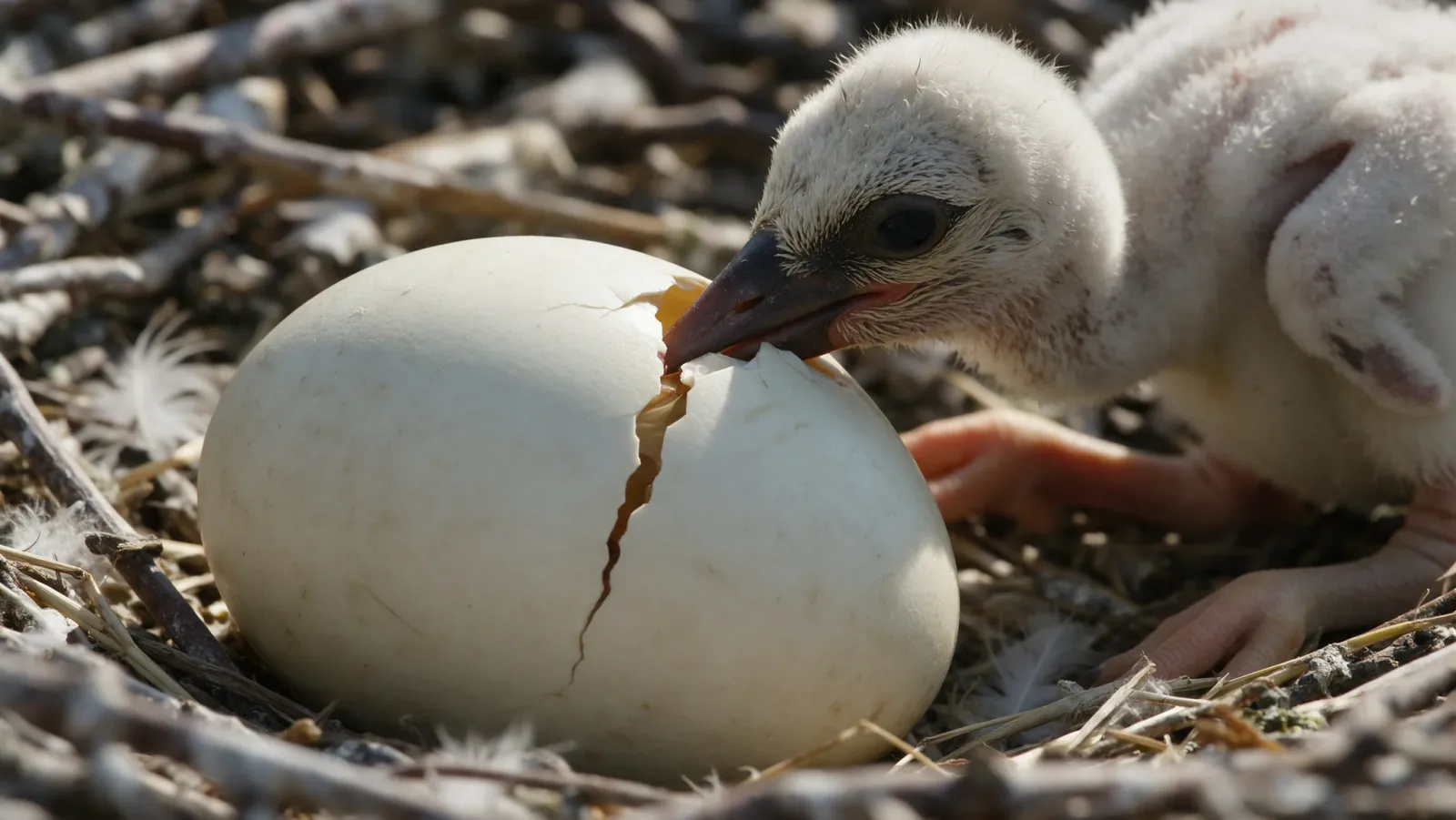
The first pip: a chick's slow day out of the shell
A stork chick taps into the air cell, then through the shell, and can take a full day to leave the egg.
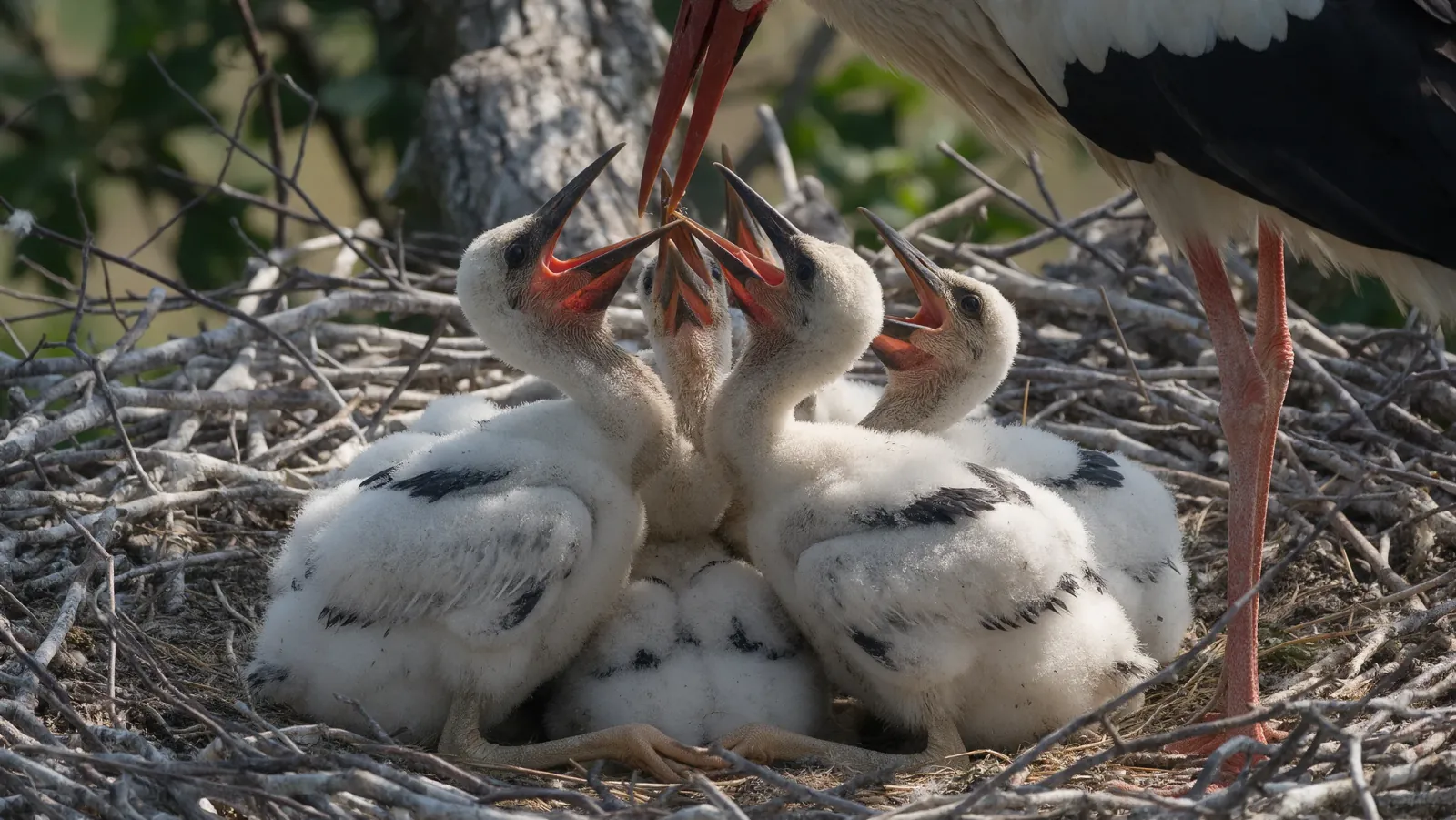
The begging gap: how a stork brood divides every meal
Four chicks open pale mouths at once, and the oldest usually eats first; in a wet spring that order decides who fledges.
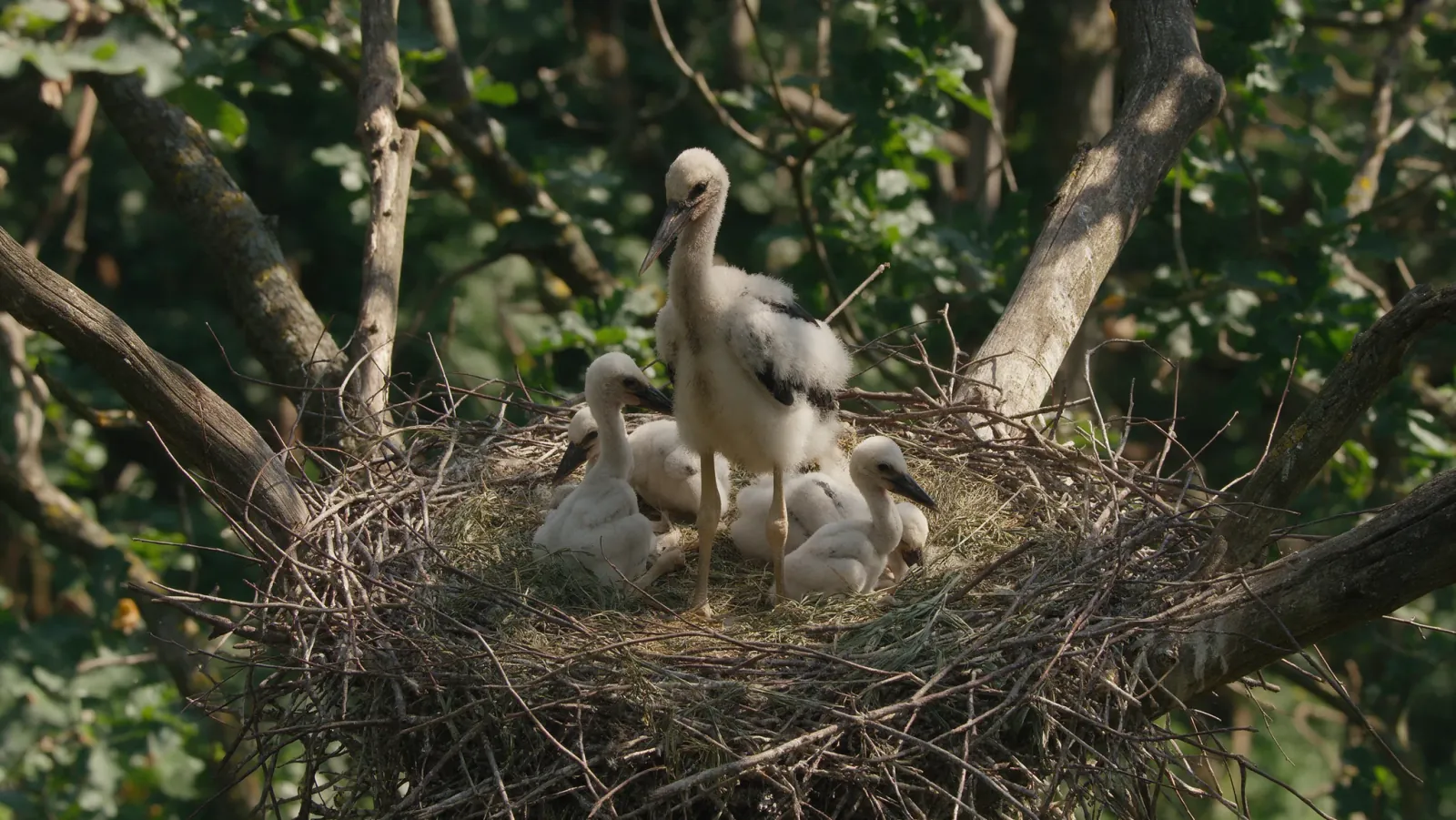
The growth spurt: from down to flight quills in eight weeks
A white stork chick grows from about 70 grams to more than 3 kilograms in eight weeks, and its last feathers are the black flight quills.
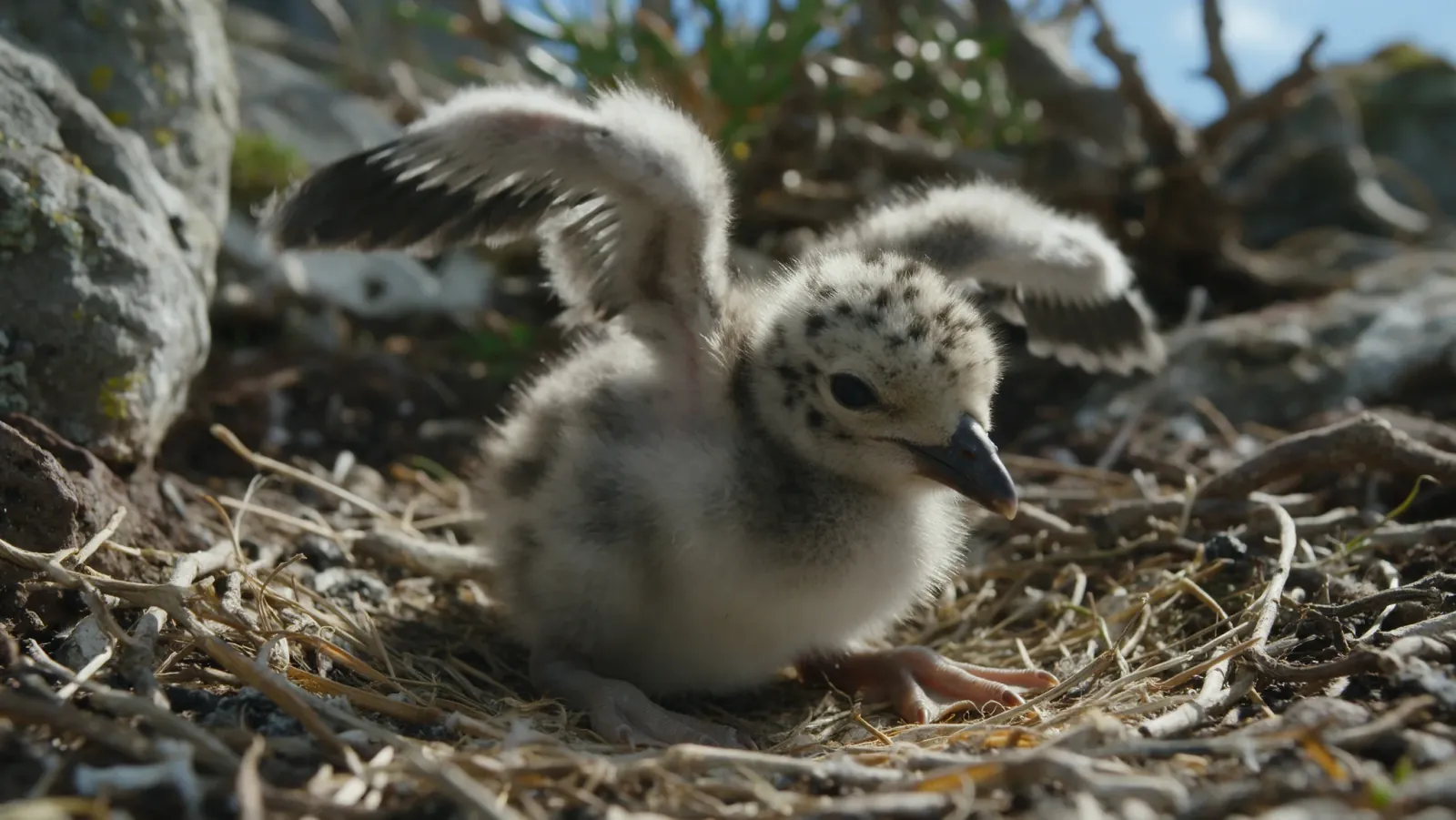
First stand, first flap, first catch: a young stork learns
A stork chick stands before it walks, flaps for weeks before it flies, and learns to strike at frogs by missing again and again.
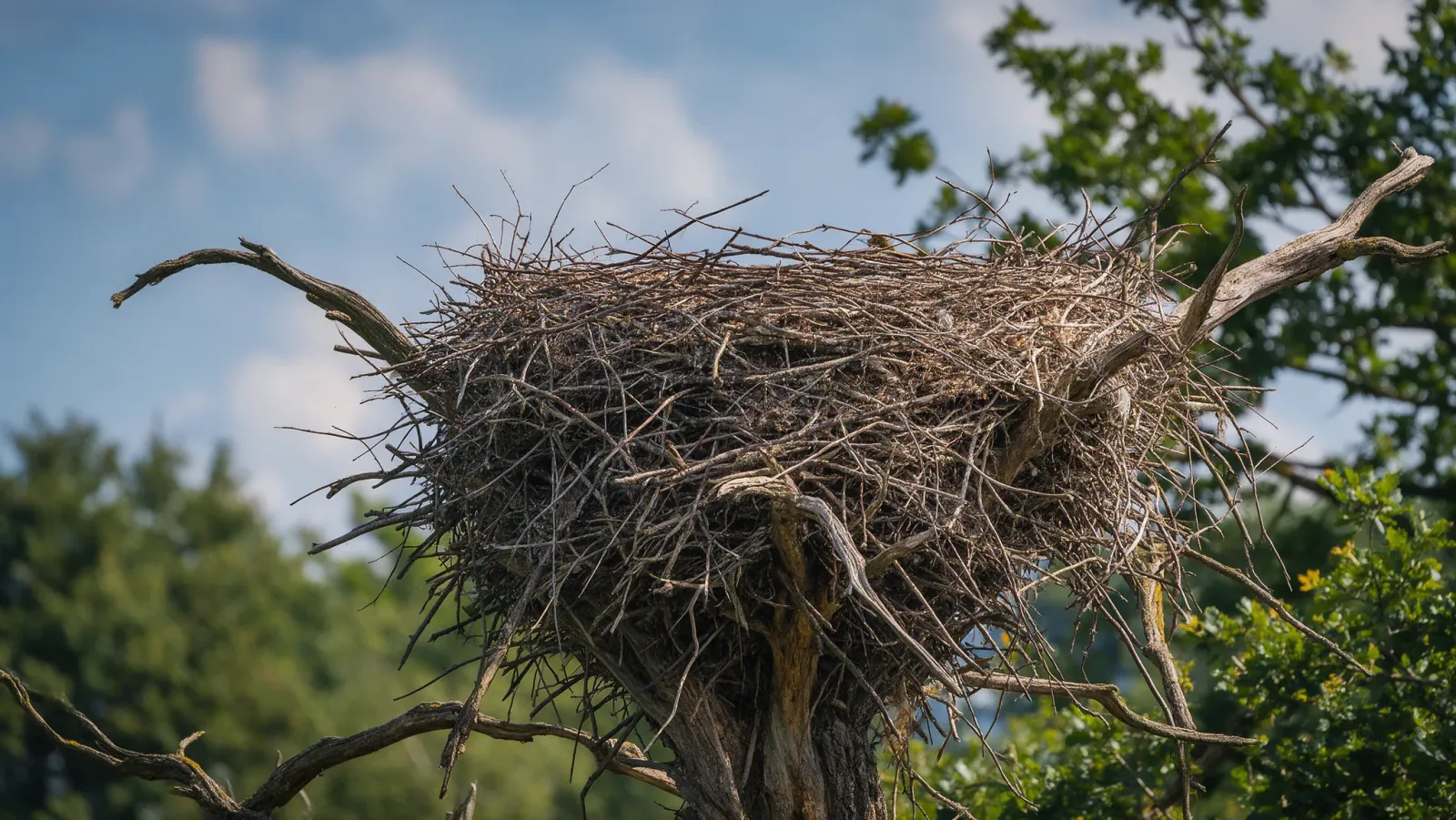
One nest, many seasons: from first flight to the next spring
A young stork leaves the nest at about eight weeks, and the same platform may raise broods for decades before winter empties it.
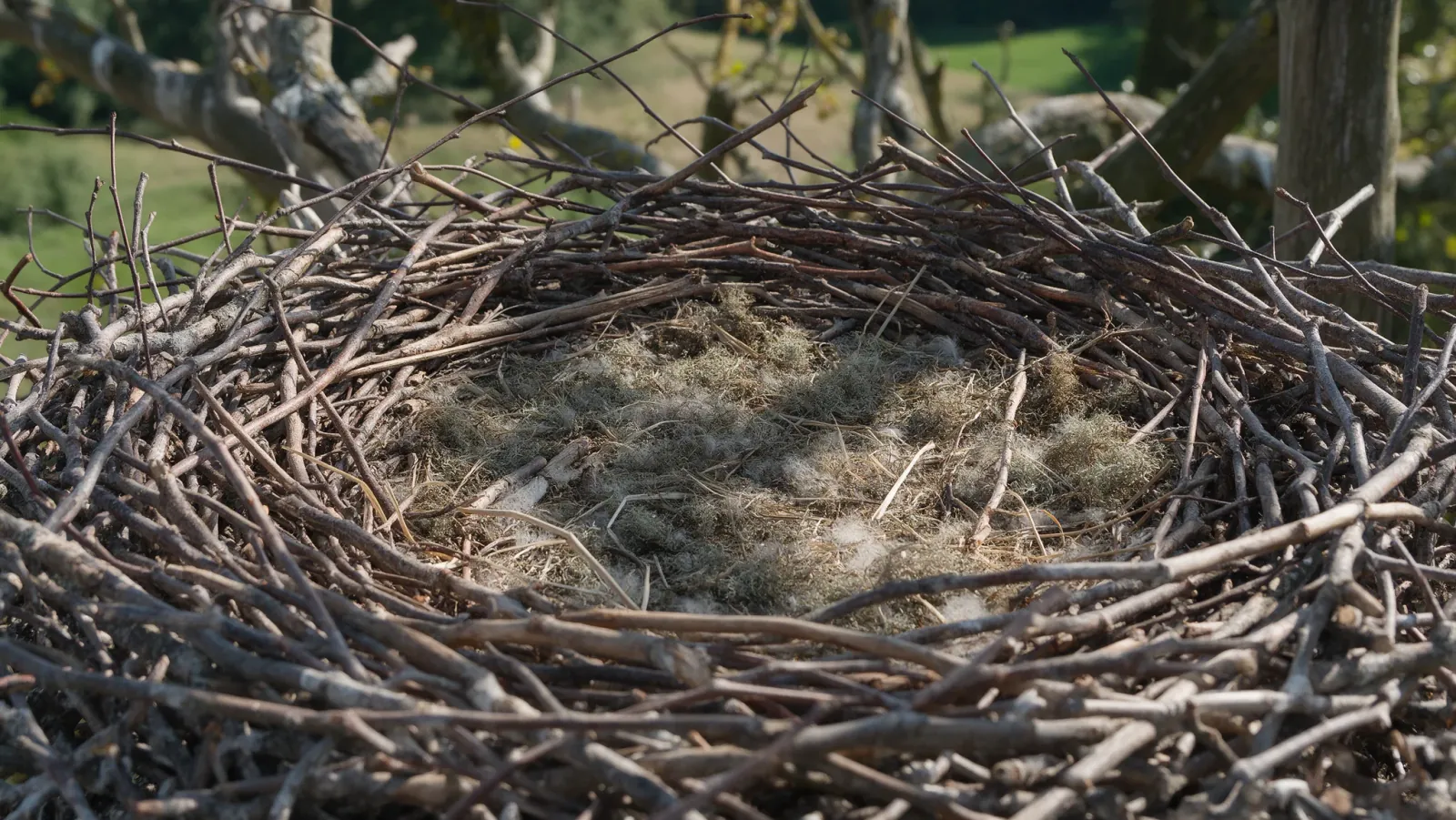
Sticks, soil, and a soft cup: what a stork nest holds
A white stork nest is a heap of sticks bound with earth, lined with grass and rags, and rebuilt at the start of every spring.
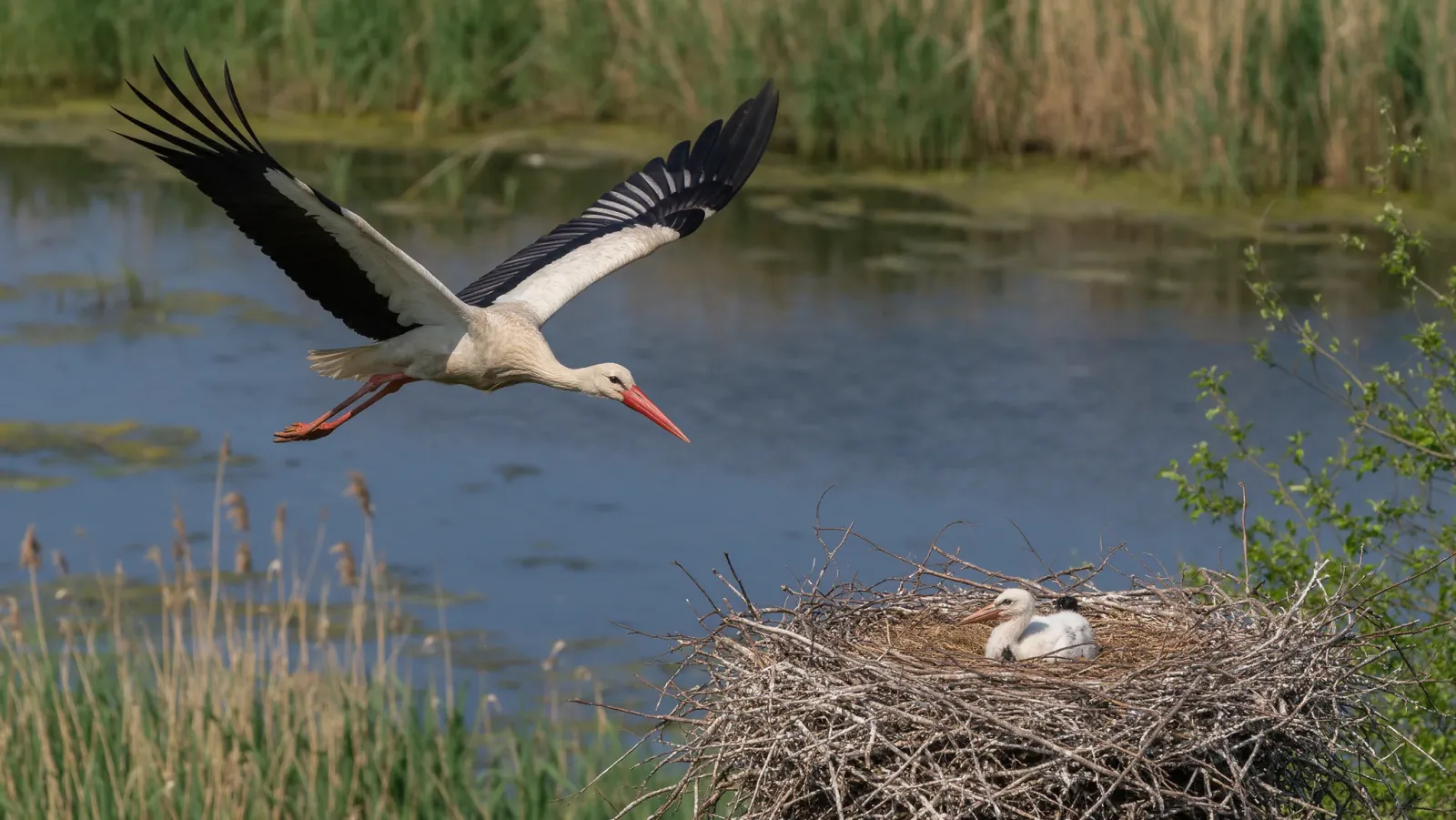
Why storks return to the colony where they hatched
A young white stork crosses the Sahara and the sea, then settles within sight of the nest where it hatched. The colony is the anchor.
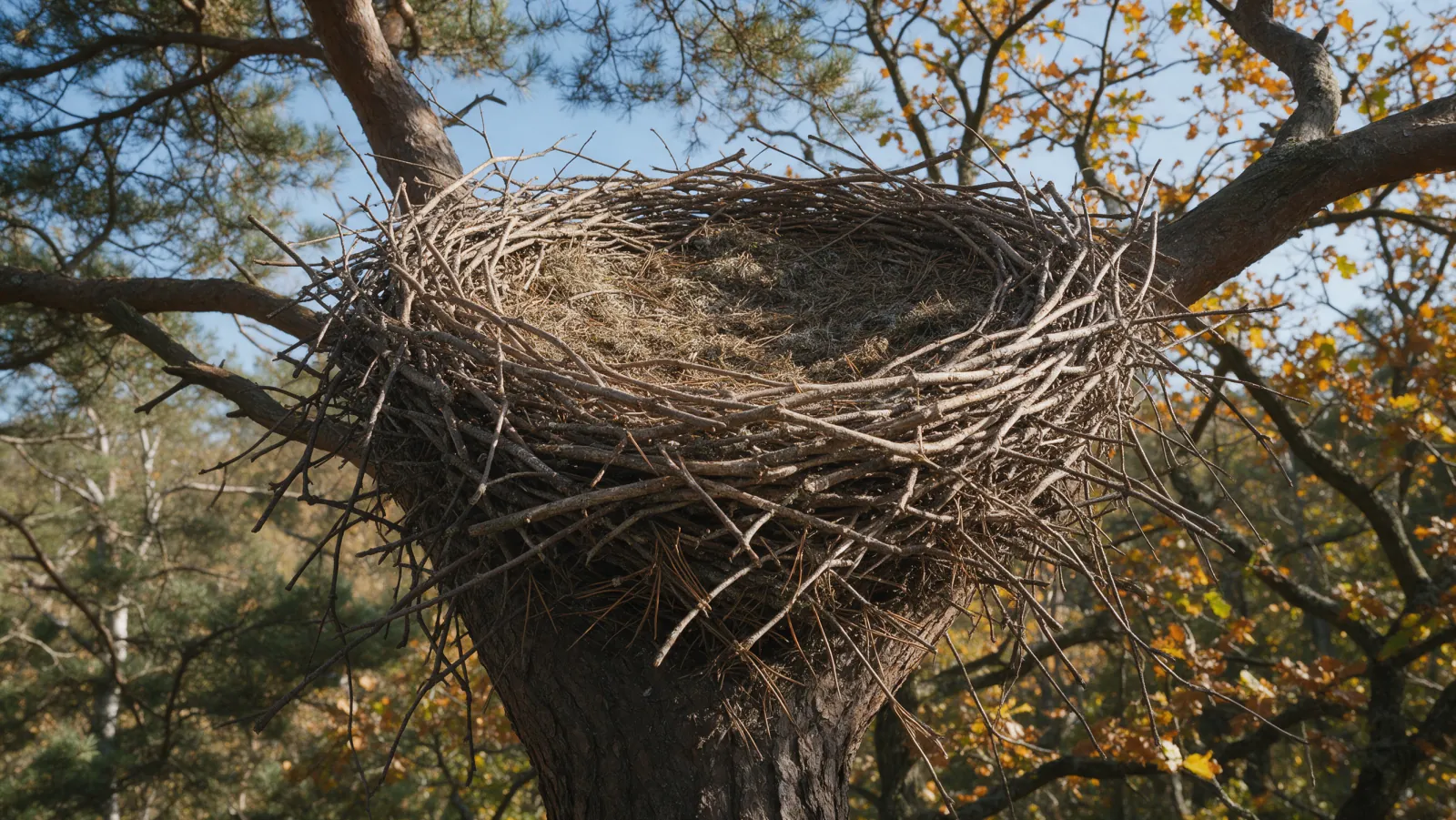
What an empty stork nest does between September and March
Through winter the platform holds sparrows, frost, and loose sticks. In spring a stork lands, clatters, and repair begins before a mate arrives.
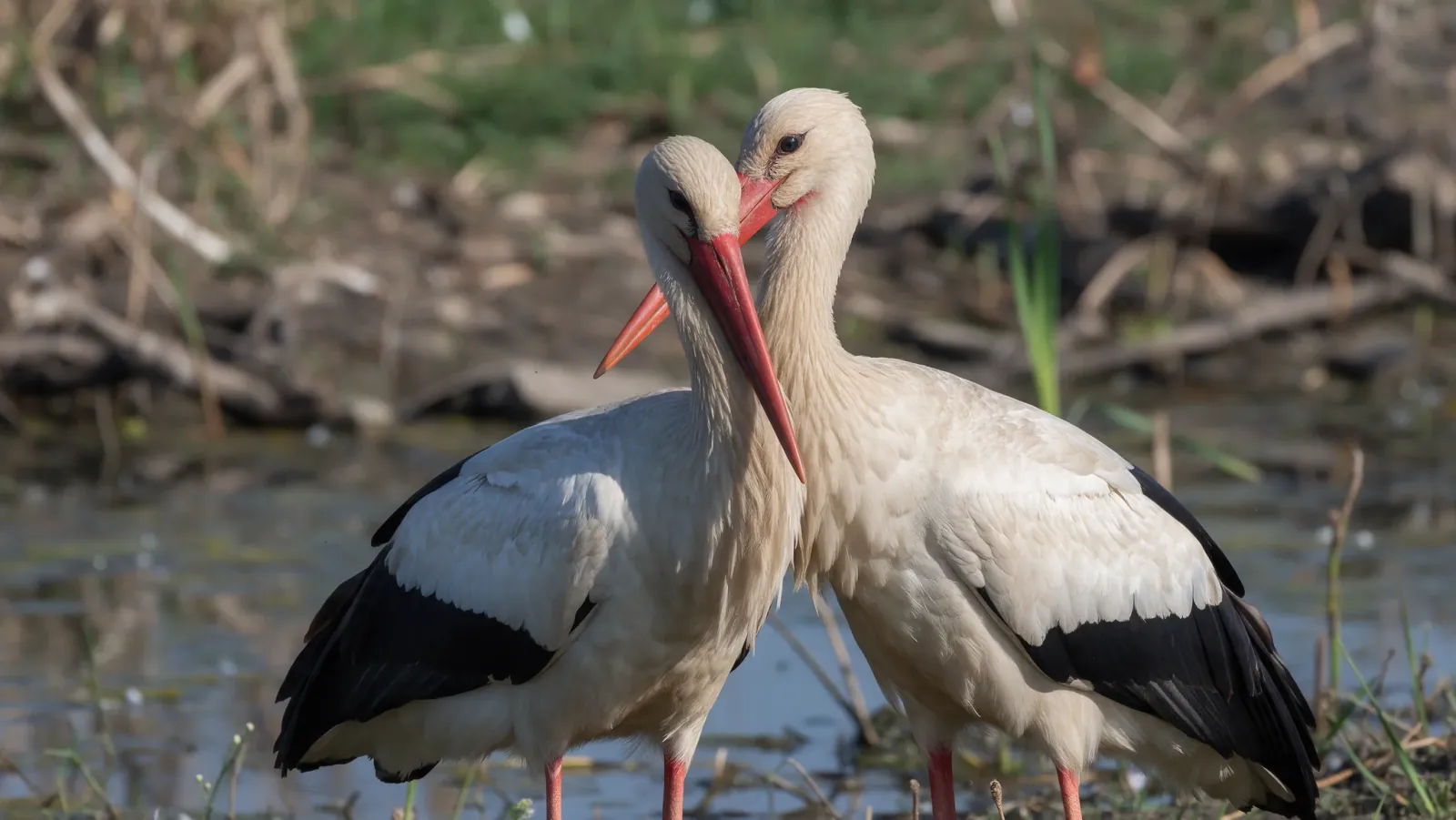
Do storks mate for life? The bond that restarts every March
White storks often meet the same partner at the same nest each spring, after months apart and a winter on different continents.