A young white stork learns to use its body in a fixed order. It stands before it walks, walks before it flaps with purpose, and flaps for weeks before it leaves the nest. The last skill, catching its own food, begins after the first flight and takes the rest of the summer.
Up on trembling legs
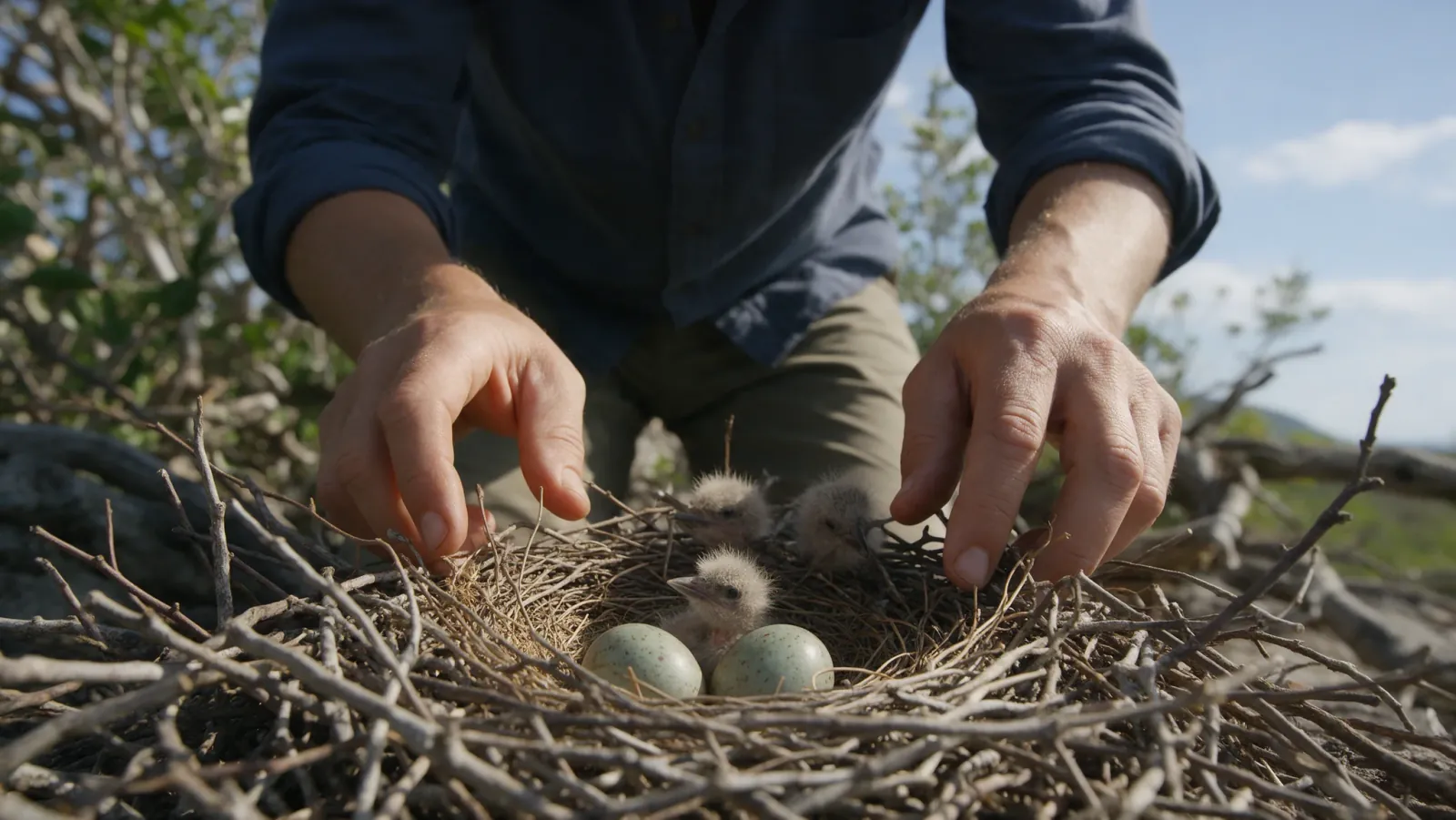
For the first couple of weeks a chick has no use for its legs. It lies in the nest with its body pressed against the lining and its legs folded underneath. The bones are soft, the muscles are weak, and the joints are not ready to carry weight.
When the legs are strong enough, the chick begins to push. It plants its feet, lifts its body, and immediately loses balance. The first stands last a second or two. The chick tips sideways, catches itself with a wing, and settles back into the nest. One leg pushes harder than the other, and the long neck pulls the chick forward.
A chick stands before it can walk, and it walks before it can fly. The order matters, because each skill is built on the one before. Balance comes before strength. A chick that can hold itself upright for a minute can shift its weight from leg to leg, turn in place, and take a step.
The tail helps. A young stork has a short tail, and it uses it as a counterweight, tipping it one way and then the other. The wings help too, held out slightly for balance even though they cannot yet lift the bird. By the end of the third or fourth week, most chicks can stand steadily.
They still sit to rest and to sleep, but they spend more of the day upright. The nest has changed from a bed into a platform, and the chicks are getting ready to use it as one. Standing is no longer the event it was. It becomes the ordinary position from which everything else is tried.
A wider view
Standing changes what the chick can see. From the nest floor, the world is a wall of sticks and the undersides of adults. From a standing position, the chick can see over the rim. It can see the roof, the neighbouring nests, the fields beyond, and the sky.
That view is the beginning of restlessness. A standing chick watches the adults leave and return. It watches other chicks flap. It begins to stretch its own wings to feel what they do. The nest that was the whole world begins to feel small.
The first stands are full of falls. A chick overbalances, lands on its chest, and lies there for a moment before trying again. Nothing in the nest is high enough to hurt a chick that topples, and the lining is soft. Nothing in the nest is high enough to hurt a chick that topples, and the lining is soft.
Flapping against the wind
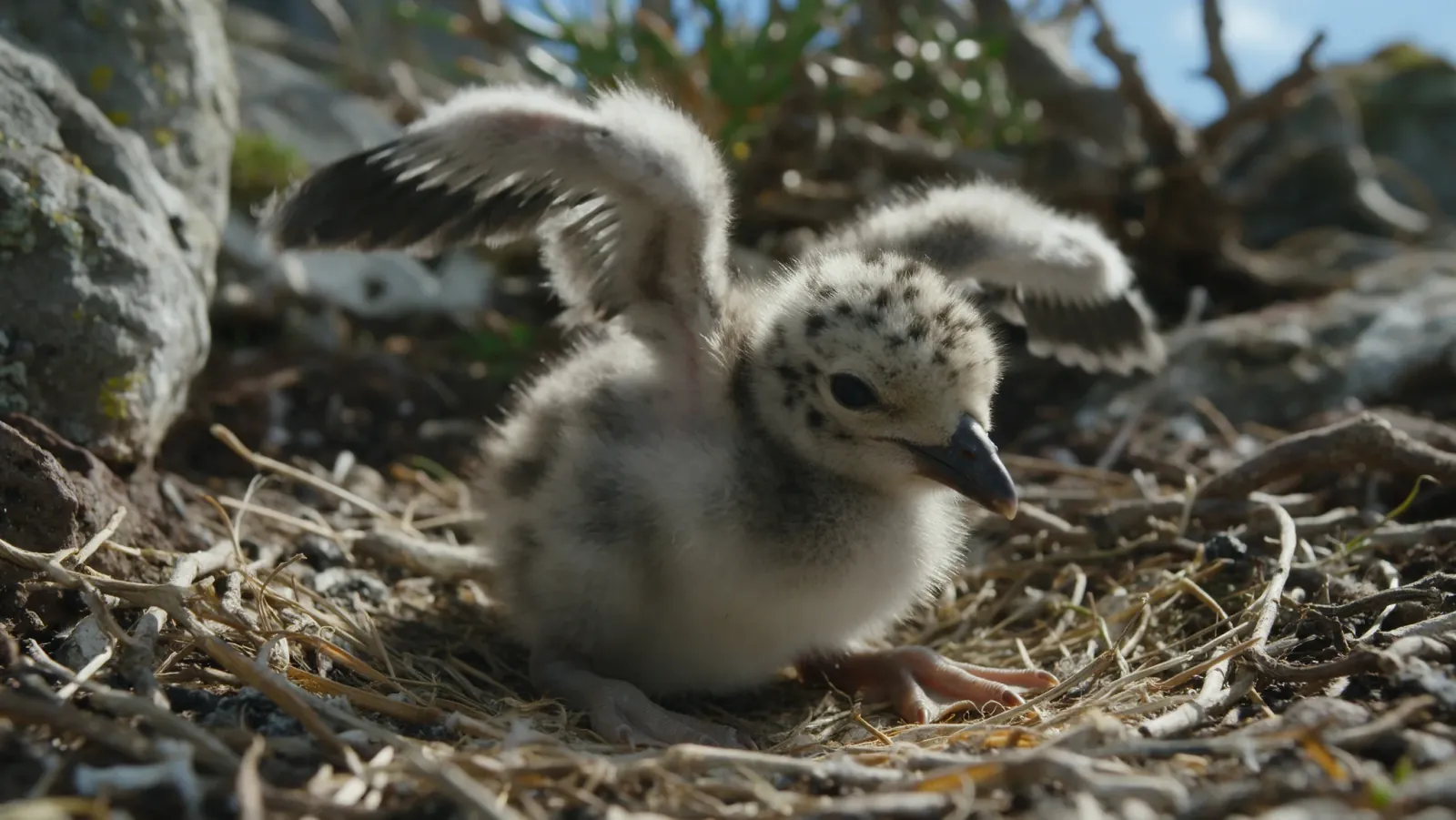
The first flaps are uneven. One wing opens wider than the other. The beats are slow and shallow, and the chick loses its balance with the effort. The wings are still growing, and the flight feathers are not fully open. At this stage the flapping is exercise, and the chick is training muscles and learning the rhythm of the stroke.
Flight muscles sit on the breast and attach to the wings. They need work before they can lift a bird that will soon weigh several kilograms. Every beat strains the muscle, and every rest lets it recover and grow. The sessions get longer as the days pass, and the wings open fully.
The bird still cannot leave the nest, but it can feel the lift beginning at the top of each stroke. That feeling is the point of the exercise. A chick that has never beaten its wings against moving air has no way to judge what the air will do when it finally steps off the rim.
The nest is a rough training ground. Wind comes across the roof at different angles. A chick that flaps into the wind feels more lift than one that flaps with the wind behind it, and over time it learns to turn its body into the breeze. No parent demonstrates the stroke; the chick experiments, and the air answers.
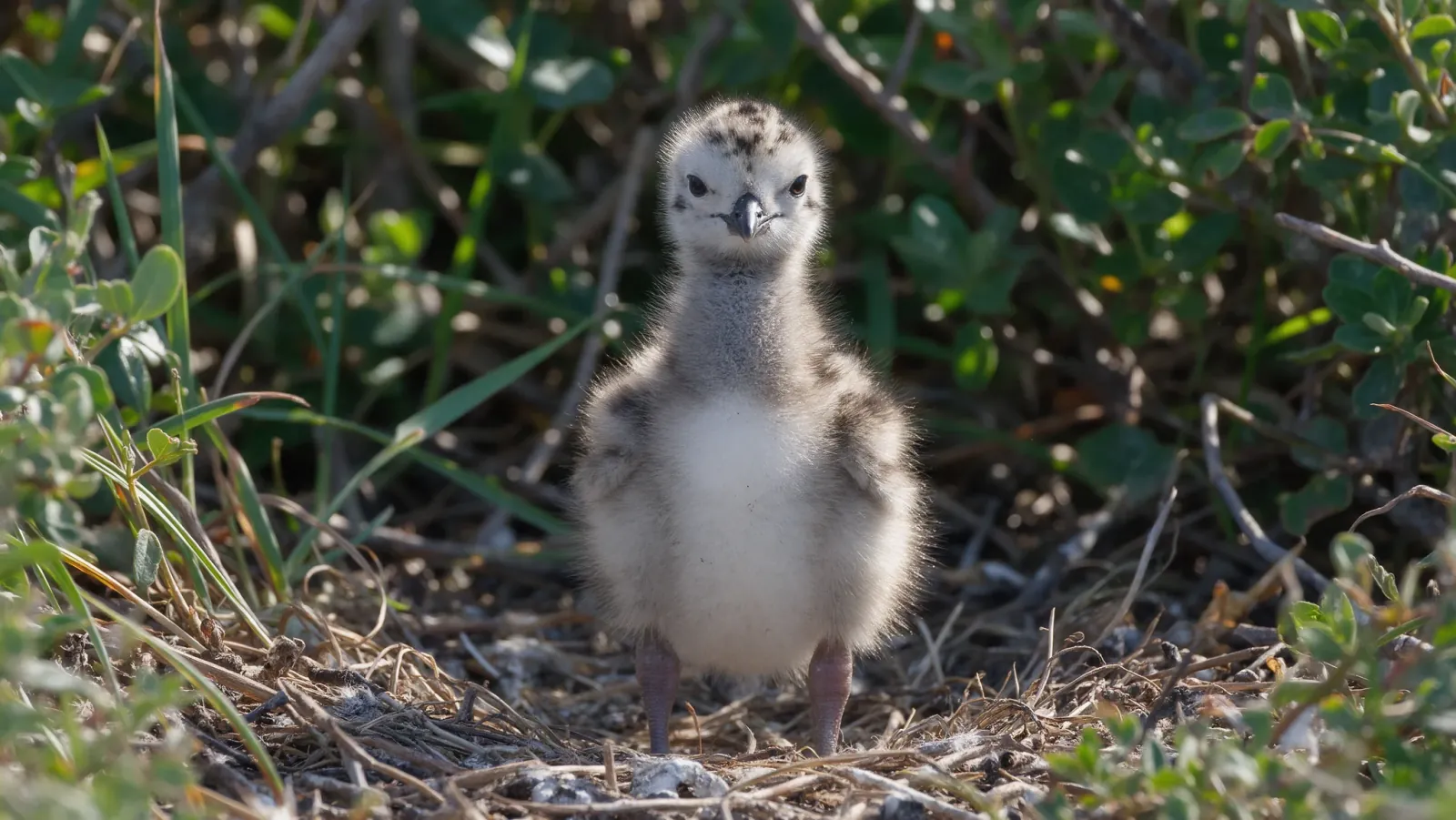
The first lift
At some point the flapping produces more than exercise. A chick beats its wings hard enough to rise a few centimetres above the nest, hangs there for a moment, and comes back down. It may do this again and again, hopping upward on its own wingbeat.
These short lifts are the beginning of flight. The chick is not steering yet. It is learning how much power it takes to leave the sticks and how to land without falling. The nest is a safe place to make those mistakes, and the chick makes many of them.
The first true flight is longer than a hop. The chick leaves the nest, flies a short distance, and lands on a roof or a pole nearby. It may be clumsy. It may overshoot or undershoot, and it may end up on the ground, where it is vulnerable. The first flight is usually a short crossing to the nearest roof, and the bird often returns to the nest to be fed.
Following the adults
The first trips to the meadow happen once the bird can fly. It follows its parents to the fields and stands at the edge of the grass. The adult moves slowly, head down, bill pointed at the ground. Then the bill strikes.
The young bird does not join in at first. It watches, and it begs. The parent may feed it, or it may not. The young bird is learning that food comes from the meadow, and that the meadow is where the adult goes. The parents stay close during these first days and still bring food to the roof.
A fledgling that lands badly can end up on the ground, where it is vulnerable until it finds a way up. The parents watch where it goes, and the nest remains a safe place to return to. The first flights are short for a reason: the bird is learning to land as much as it is learning to fly.
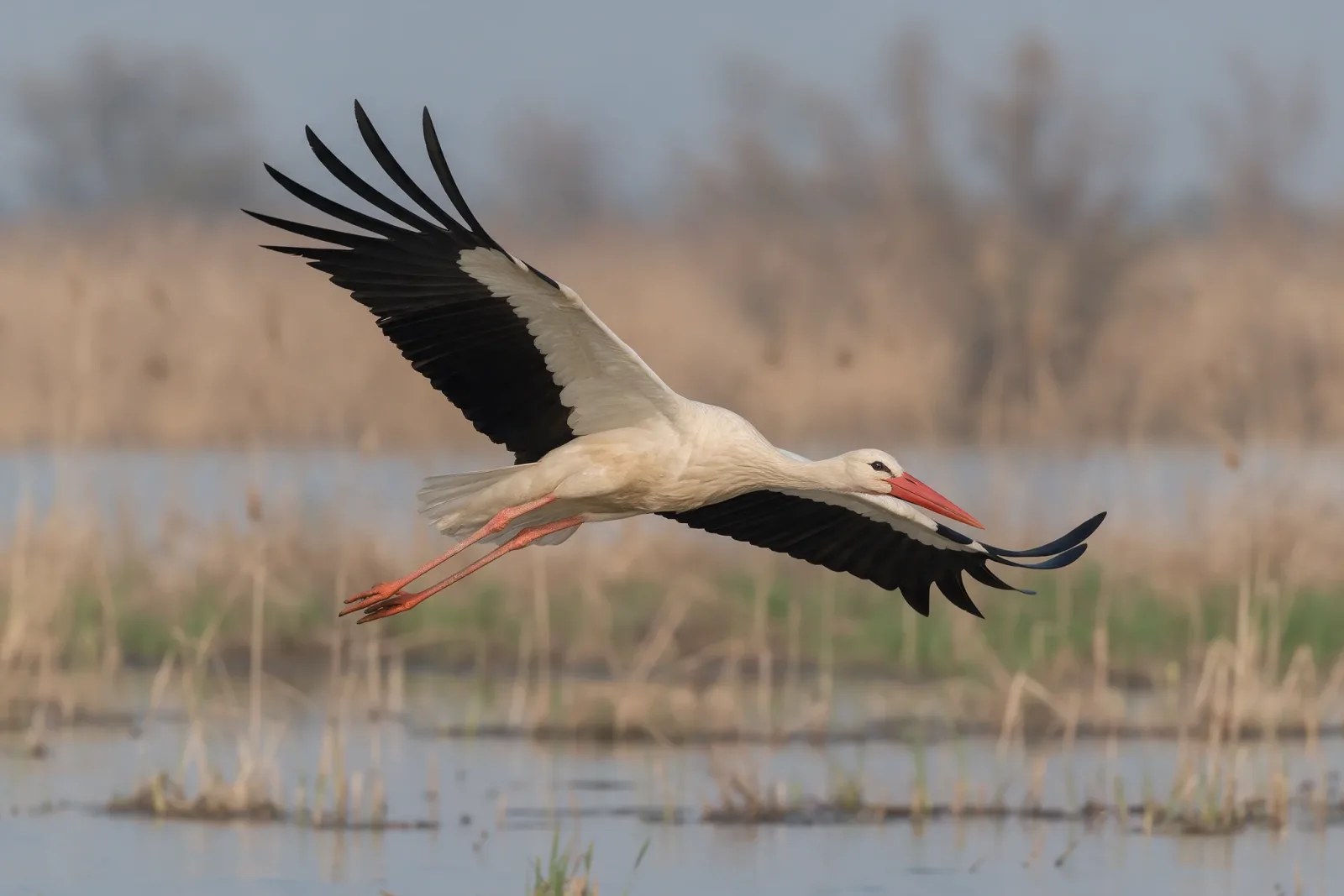
A white stork hunts by walking through shallow water or wet grass and striking with its bill. The bill is long, straight, and sharp, and it closes fast. The bird catches frogs, insects, small fish, and rodents. The strike is quick and the young bird is slow, so the first attempts fail more often than they succeed.
The misses that teach
A missed strike is part of the lesson. A missed strike teaches the bird where the frog was, and the next strike is a little better. The young bird learns how far the bill reached, and how the frog moved. The parents do not correct the young bird. They continue to hunt, and the young bird continues to follow.
The parent does not teach the strike. The young bird copies the posture, the slow walk, and the pause before the strike. It learns where the frogs sit and how far the bill can reach.
Over weeks the misses become fewer, and the bird begins to catch enough to feed itself. It still begs when a parent is near, and it still returns to the nest to rest. The dependence fades by degrees, and the meadow takes over the work the nest began.
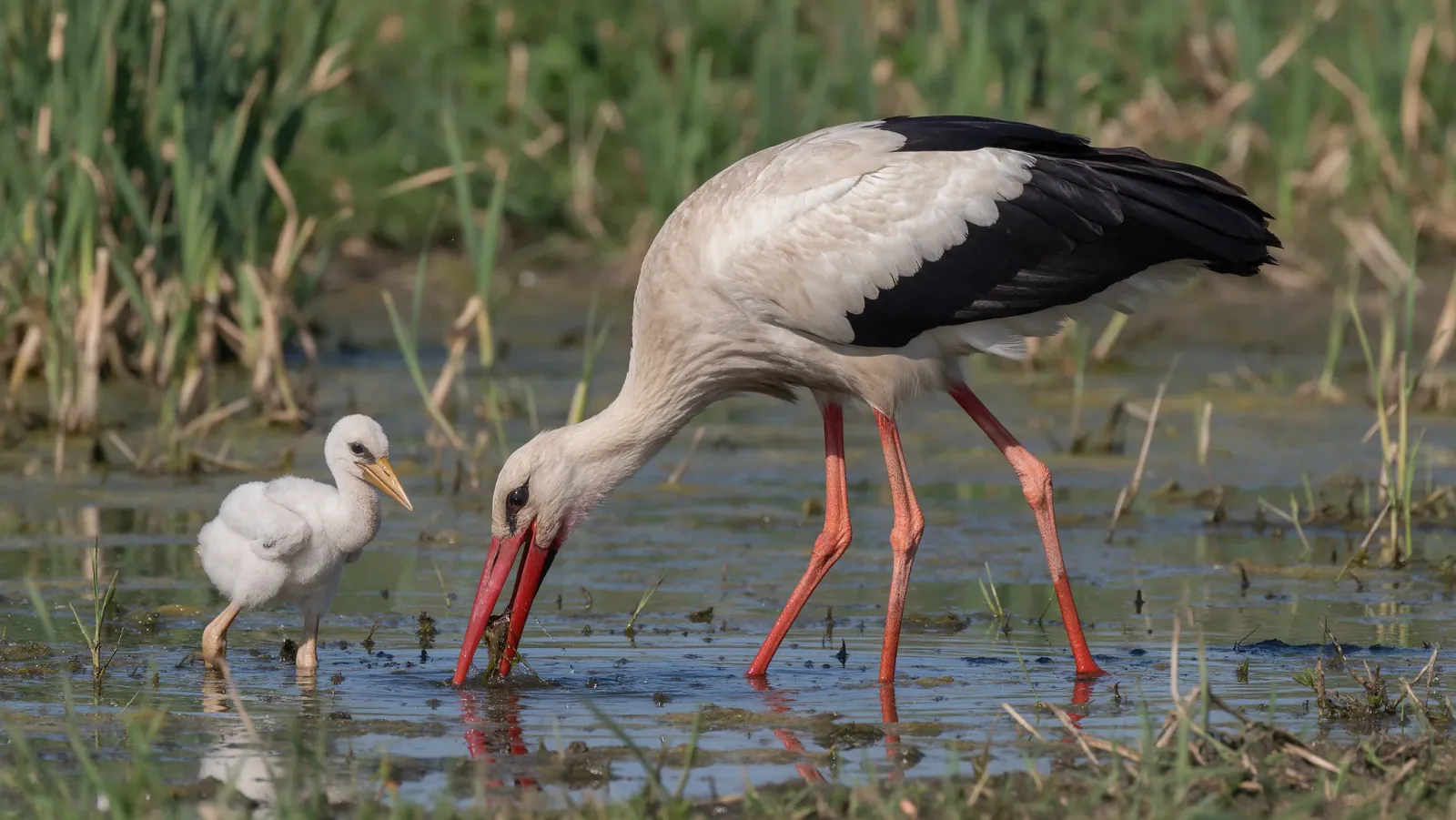
By the end of summer the young stork can feed itself. The first stand, the first flap, and the first catch belong to the same long lesson, and the bird has learned it by doing. The nest it leaves behind is trampled flat at the rim, and the platform will be repaired again next spring for another brood.
Explore the gift