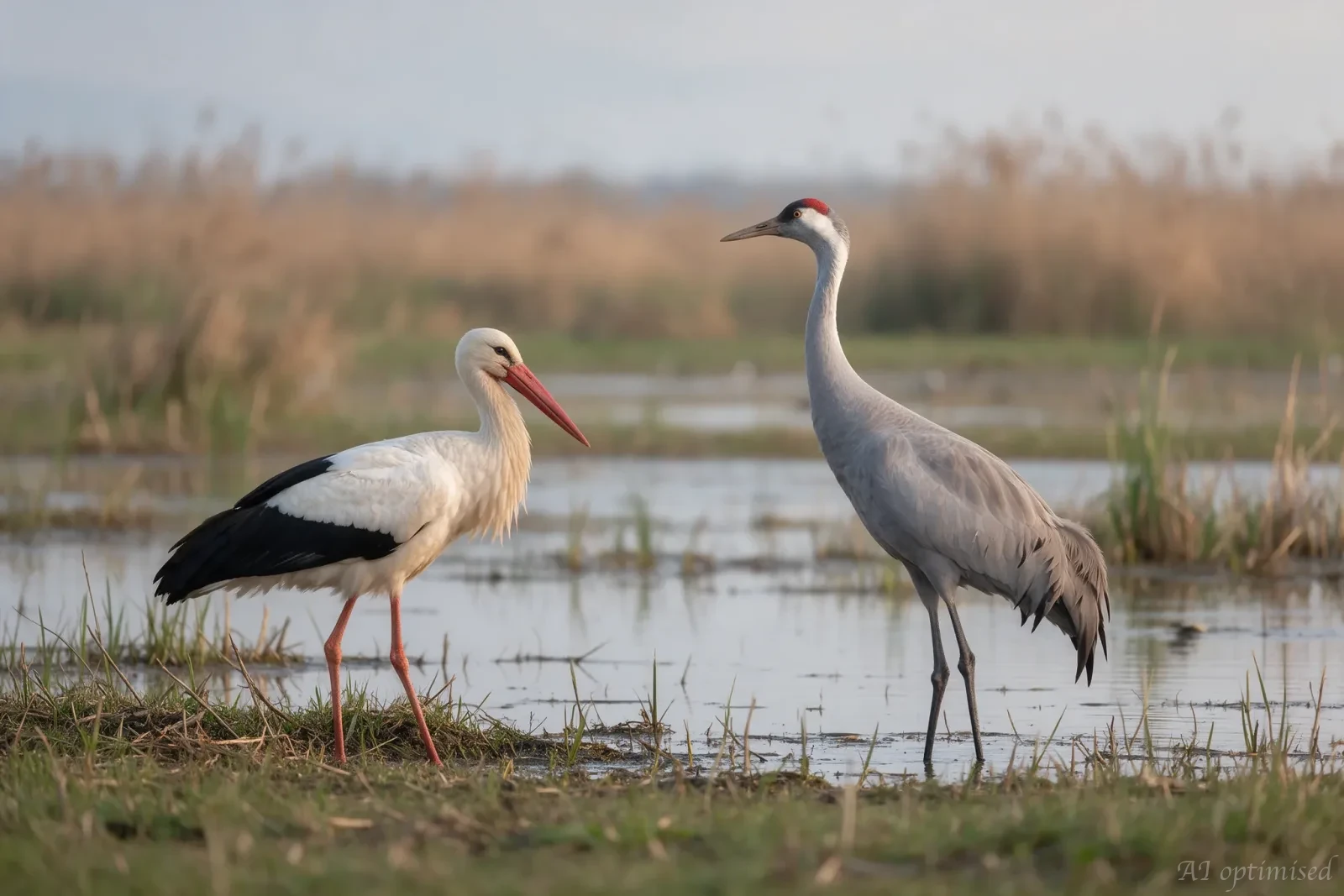
A stork means different things in different countries, and the differences are the interesting part. The white stork is the same bird from the Netherlands to Morocco: about a metre tall, white with black flight feathers, a red bill and red legs, a summer visitor that builds a stick nest on a roof, a pole, or a chimney. What people make of it changes with the roof below.
The rooftop bird of central Europe
In Poland the bird is bocian, and a nest on the house is read as luck that has settled there. People leave the nest alone, repair the platform under it, and take the first spring sighting as news worth telling. In Ukraine the leleka carries the same weight, and a stork on the roof is treated as a guest that has chosen the family. A bird that returns to one roof year after year looks like a promise kept. In Germany the old name Adebar survives in dialect and in children's rhymes, and the bird keeps its office as the bringer of good fortune. In the Netherlands the ooievaar stands on gables and shop signs, a bird of the low wet country and its drained meadows.
Spring, luck, and the farming year
In Denmark the stork is storken, and the word still turns up in the baby story told to children. In Sweden the bird is rare, and its folklore belongs mostly to Skåne, where the spring arrival was watched like a date on the farming calendar. In Spain storks nest on church towers and old walls, and their return is read as the start of the working year in villages across Extremadura and Castile. The bird arrives when the ground softens, so it has always been a calendar as much as a creature. A farmer who saw the first stork could begin to plan, and the plan began with the thaw.
The sacred bird of the Mediterranean
In Greece the stork was associated with Hera, and the bird's care for its young made it a model of family duty. Roman writers gave it to Juno and praised it for feeding its aged parents, a habit that later became proverbial. In Turkey the leylek is the messenger of spring, and a saying holds that summer does not begin until the stork has come. In Armenia the arakhil is greeted as a herald of the season, and its nest is left undisturbed. The same bird carries a household meaning and a sacred one, often in the same village.
The protected guest of North Africa
Across Morocco, Algeria, and Tunisia the stork is a familiar summer bird, nesting on minarets, ruined walls, and the tops of old towers. In many places the nest is left alone, and children are told not to trouble the bird. The protection is practical as much as symbolic, since a stork that is not disturbed comes back. The bird is treated as a guest with a claim on the house, and the claim is honoured by leaving it in peace.
What the twelve readings share
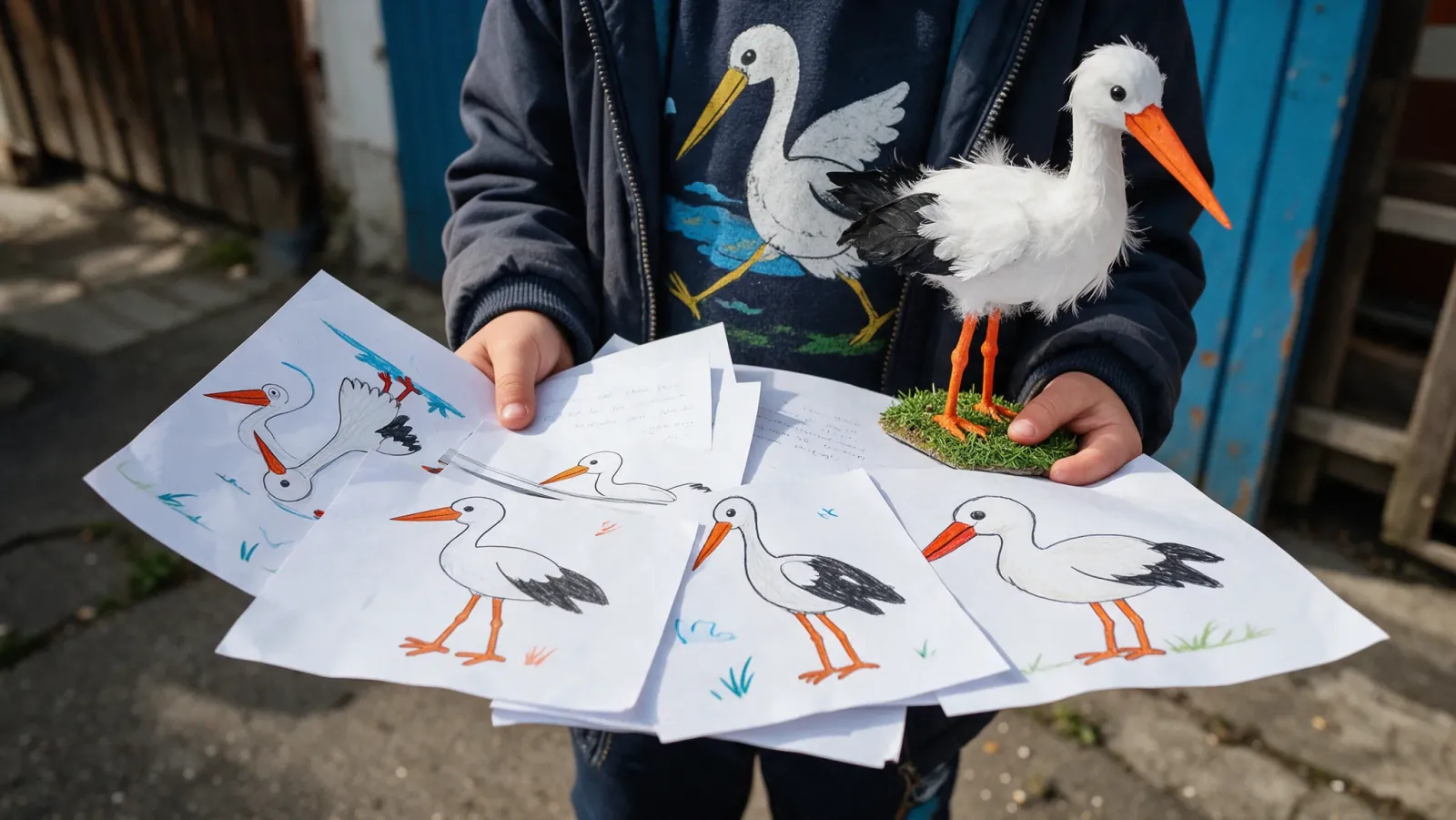
Put the traditions side by side and four things repeat: the bird lives close to people, it is mostly white, it arrives with the warm season, and it returns to the same place. Each culture takes one of those facts and builds a meaning on it. Whiteness becomes purity or blessing. The spring arrival becomes a promise of food and children. The return becomes loyalty. The nearness to the house becomes a kind of protection, and the nest becomes a sign that the household is in good order. The stork does not carry these meanings in its body. People place them there, and the placing is what makes the bird a neighbour rather than a specimen. A nest on a chimney still stops a passerby in spring, and the stop is the oldest part of the story. The modern version of that welcome is a stork sent to a house where a child has arrived.
Explore the gift