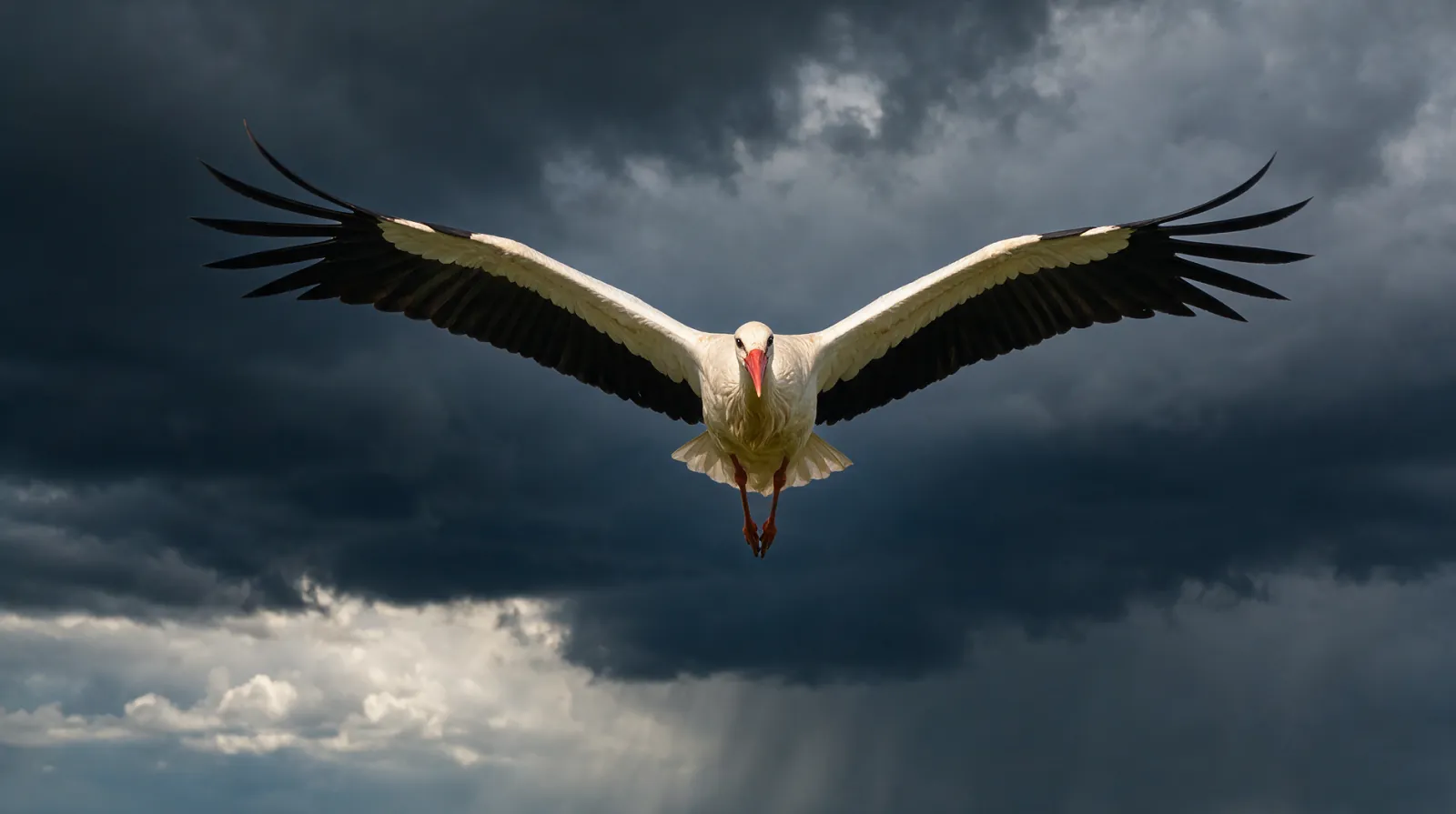
A stork on migration crosses water and desert on wings that need rising air. Two narrow straits and one long dry stretch decide how the western and eastern journeys are made. At each one the birds gather, wait, and go when the sky allows.
A sea with no lift
Storks will not cross a wide sea, because there are no thermals over water and no place to land. The Mediterranean is wide and offers little lift, so the birds funnel toward the places where Europe and Africa almost touch. The Black Sea is wide for the same reason, and the eastern birds slide around its western edge until they reach a narrow channel.
A stork crosses water on stored height. A long flight without lift leaves it nowhere to climb. The narrow crossings work because the flight is short and the land on both sides gives lift. The birds treat the water as a gate, and they wait for the gate to open.
The waiting is part of the crossing. A strong headwind or a grey sky will keep a flock on the shore for days, and the fields behind the coast fill with birds. When the air turns fair, the whole gathering lifts in stages, circling up on the land thermals before setting out over the water.
A stork on migration flies on thermals, and thermals need warm land. Open sea gives none. So the birds avoid long water and cross at the narrowest points they can find.
Gibraltar: the western gate
At the Strait of Gibraltar the map pinches to a few kilometres of water, and every autumn the western storks pour through it. Spain reaches down toward Morocco, and a bird that has followed the land for a thousand kilometres finds the sea almost close enough to step over.
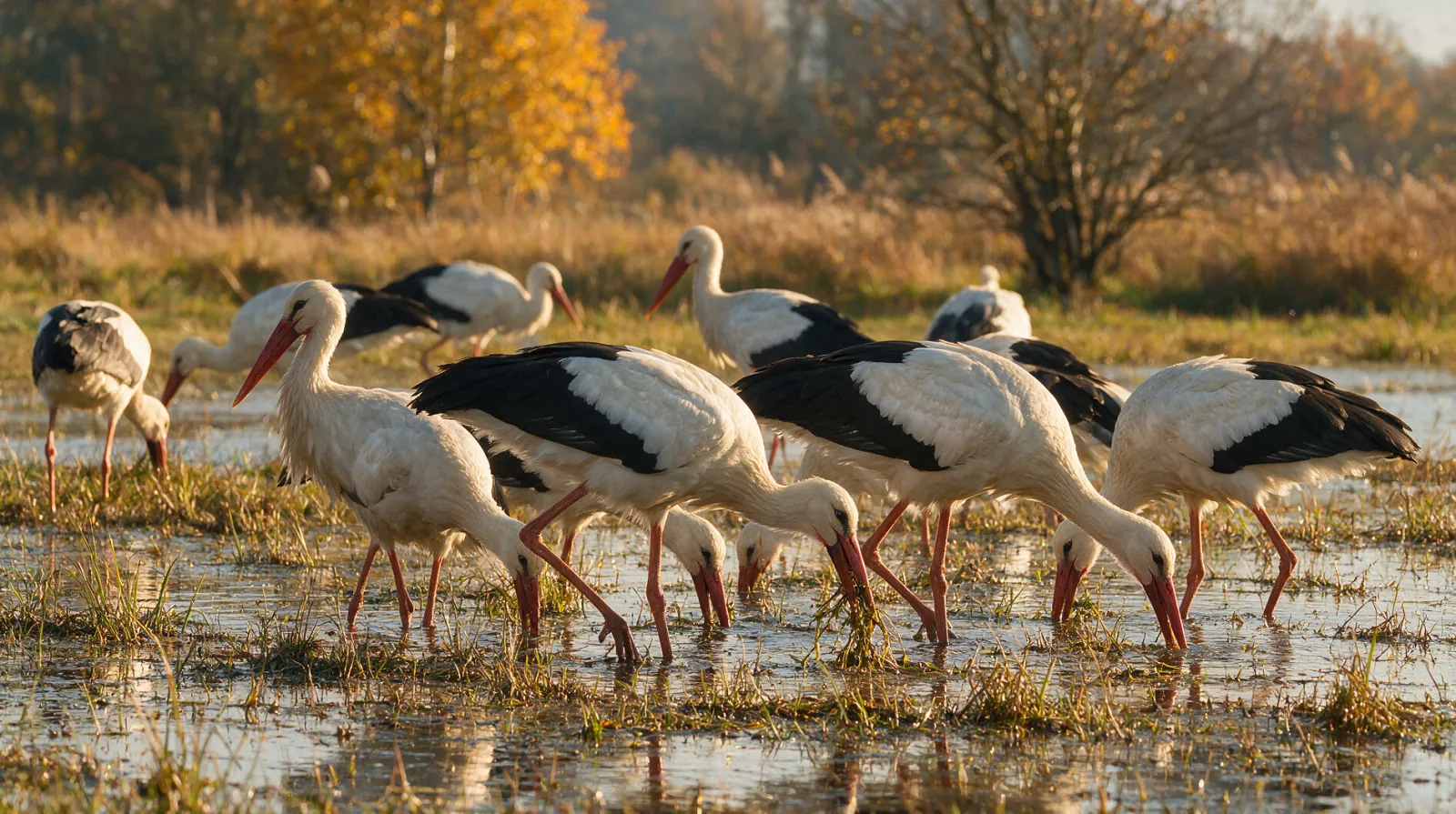
The wait can last days. Storks stand in fields and on hillsides, feed when they can, and watch the wind. A change of wind can empty the fields in an hour, and the shore that was full at dawn is quiet by noon.
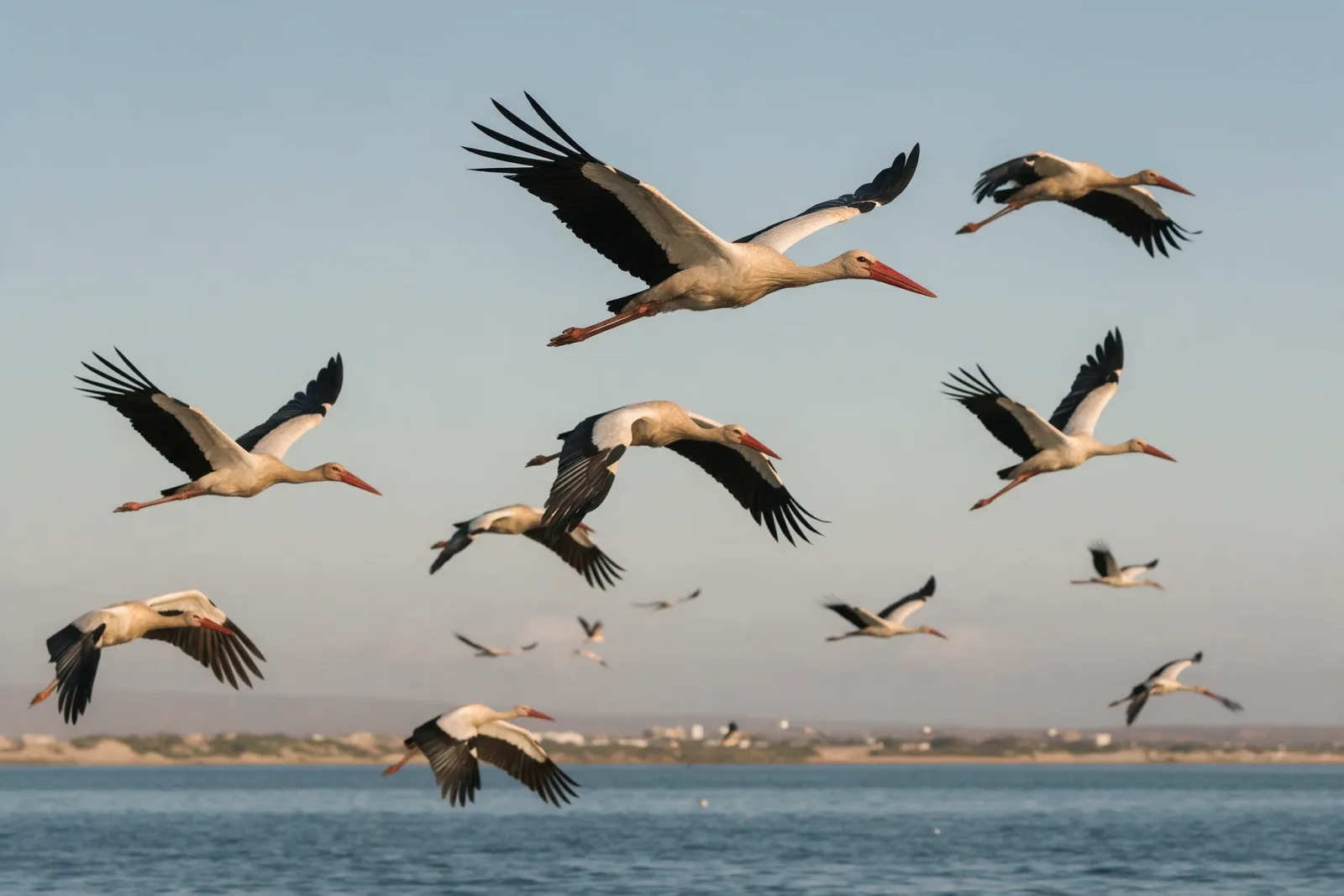
Some birds climb high before they leave and glide much of the crossing, losing height slowly above the waves. Others cross lower, with steady wingbeats, the sea moving underneath. There is no lift and no rest between the shores. Mornings are favoured, when the land is heating and the first thermals are reliable. By afternoon the wind often changes, and the window closes.
The strait is famous for strong winds, and the birds treat them as a gate. An easterly can pile up at the entrance, holding flocks on the Spanish side for days. A westerly or a calm morning can open the crossing and let the birds through. On the African shore the birds find land, food, and a place to rest, though the desert still lies ahead.
Young birds often wait longer than the adults, following the timing of the flock rather than any clock of their own. The crossing rewards patience.
The Bosphorus: the eastern gate
The Bosphorus separates Europe from Asia and runs through the middle of a city of millions. For a bird that has followed the land for weeks, it is the one place where the sea is thin enough to cross. Birds from Poland, Ukraine, the Balkans and beyond converge on the same corridor, and by the time they reach the strait they are gathered in loose flocks, sometimes thousands of birds in the air at once.
The birds gather on the European side, on the hills and in the fields, and wait for a day with helpful air. A headwind or low cloud will hold them for hours or days. When the conditions turn, the whole gathering lifts, and the strait is crossed in a stream that can run from morning into the afternoon.
The crossing happens over rooftops, minarets, ships and bridges. The storks climb on the thermals that rise from the sunlit hills, then glide out over the water. For the birds, the city is only terrain. They read the lift off the hills and the heat off the buildings, and they take the shortest line across the water.
Storks are not the only travellers at the Bosphorus. Raptors, pelicans and cranes use the same narrow water, often on different schedules and at different heights.
The Sahara: a crossing in stages
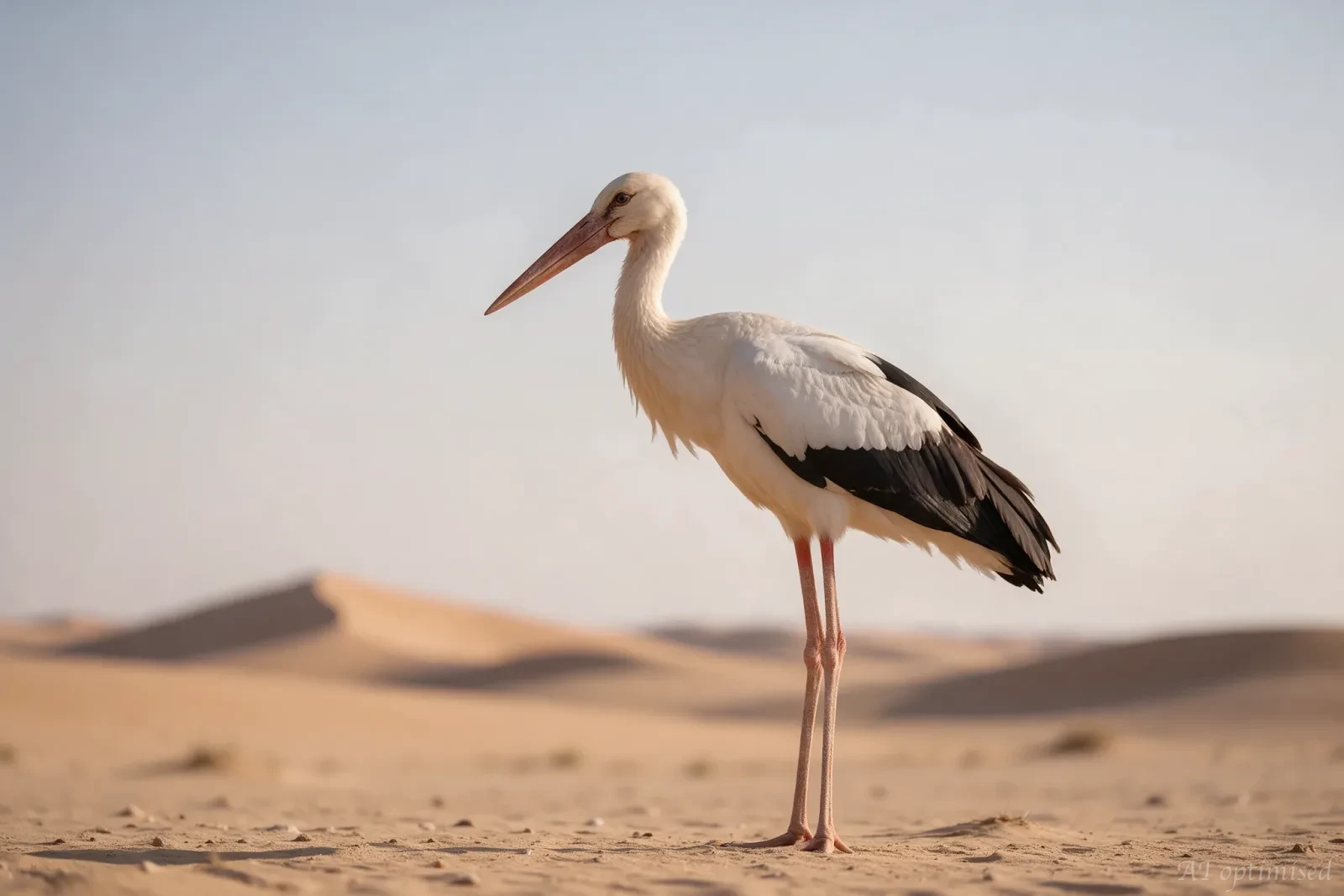
South of Morocco the green thins, the villages spread out, and then there is rock and sand for a distance that takes a bird days. Water is rare, shade is rarer, and the ground is too hot to stand on through the middle of the day. The air rises in powerful thermals, which helps a bird climb, but the same heat can make the lower air turbulent, and dust can close visibility.
Many western storks follow the Atlantic edge through Morocco and Western Sahara, where the air is cooler and coastal fog can soften the heat. The sea is nearby, which means a bird always has a direction to steer by and a chance of finding water at the mouths of rivers. Others cut inland, taking a straighter line and a harder one.
The crossing is built around water. A river, an oasis, a well, a town with irrigation: any of these can be the difference between a resting bird and an exhausted one. Storks will gather at such places, sometimes in numbers, and then move on when the day allows. The route across the desert is a chain of small, green exceptions.
Birds often travel in the early morning, when the air is cooler and the wind is softer. They climb high, where the air is smoother, and glide for as long as they can. A tailwind can carry a bird a long way in a morning. A headwind can stop the journey entirely. Sandstorms can close the air and force birds down.
The desert has weather, and some of it is dangerous. Dust reduces visibility. Hot winds can make the afternoon unusable. A stork crossing the Sahara reads the same signs it reads everywhere: pressure, temperature, the behaviour of other birds.
The eastern way around
Not every stork crosses the Sahara at all. Birds on the eastern flyway come down through the Levant and the Nile, following water and avoiding the desert's centre. The Sahara is a barrier that the species solves in more than one way, and the route a bird takes depends on where it started.
The eastern route bends around the desert instead of crossing its heart, and it uses the same narrow water at the Bosphorus to leave Europe. The two ways south are different answers to the same problem.
What the far side offers
When the sand ends, the land softens. The Sahel begins with dry grass and scattered trees, then wet ground and insects after rain. The bird that comes out of the desert is often thin and dusty, and it lands where the food is and stays for a while.
Some will stop in Morocco for weeks. Others will push on toward the Sahel before the winter ends.
Not every crossing succeeds. A young bird, a bad wind, a long stretch without water, and the desert becomes a place of ending. The route is ancient, and it is also a filter. The birds that survive it are the ones whose timing and condition were good enough.
The strait and the desert are one afternoon and a few hard days in a long journey, and the birds cross them as if they were ordinary, which for them they are. The hardest water of the western route is behind them. The bird that comes out of the desert lands where the food is, and the winter can begin.
Explore the gift