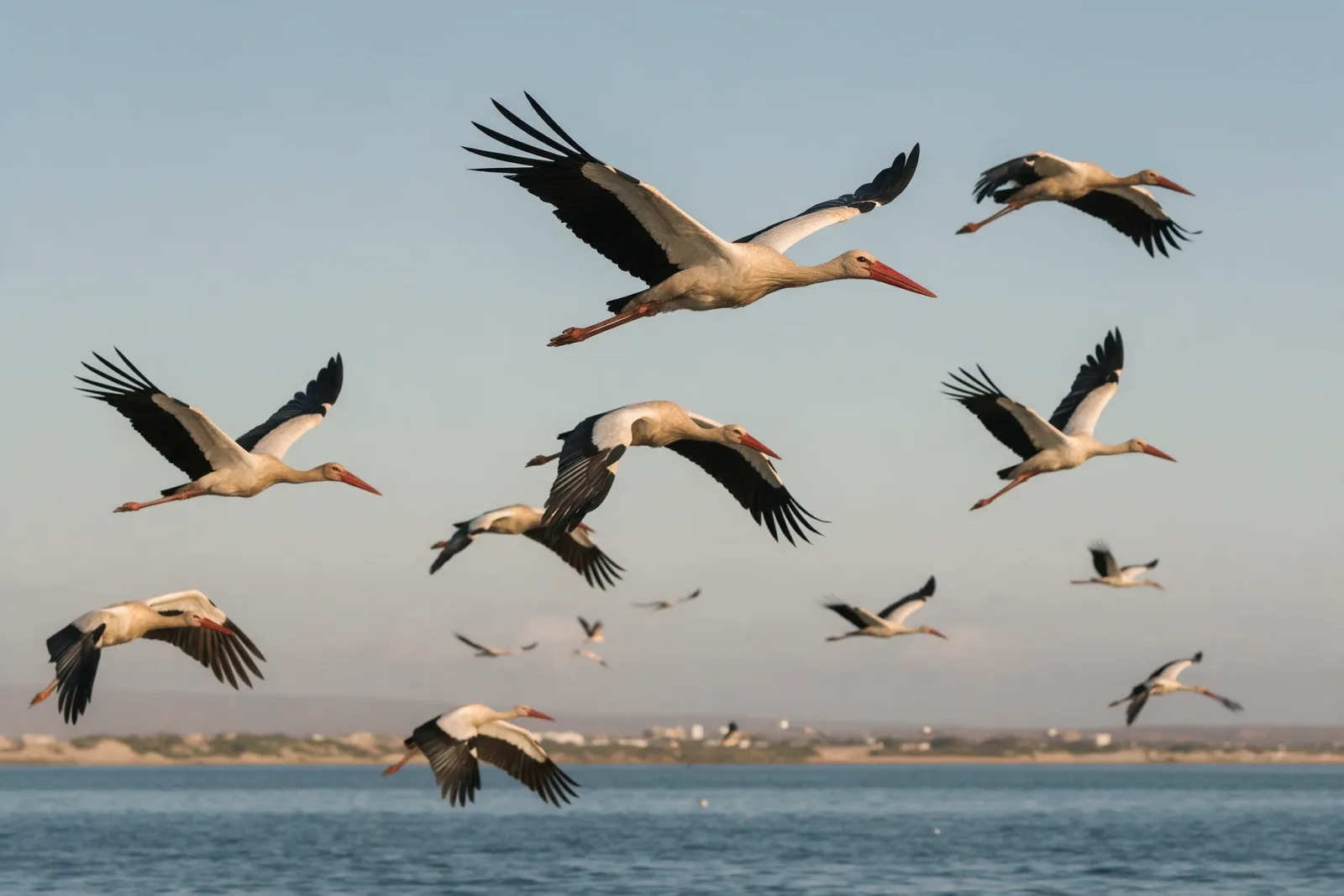
The golden weeks of October are a trick of angle and distance, and the white storks leave inside them. The sun rides lower now, so its light travels through more of the atmosphere before it reaches the field. The blue end of the spectrum scatters away, the red and yellow arrive, and the stubble turns the colour of honey.
The angle does it
In June the sun is high and its light comes almost straight down. In October it comes in low and slanting, and that changes everything it touches. Shadows stretch across the lane, the side of a barn catches fire at four in the afternoon, and a white bird standing in the field is lit from below as much as above.
The light is also weaker. The same sun that made the summer bright now arrives with less force, and the air cools quickly once it is gone. October looks warm and carries little heat. The gold is real, and the heat in it is mostly memory.
The effect lasts an hour or so at each end of the day. At noon the light is still high enough to look ordinary, and the gold arrives in the late afternoon when the sun drops toward the hedge. That is when people stop on the lane and take photographs, and when the storks are most visible against the pale sky.
The last warm day
Warmth often returns after a cold night. The frost whitens the grass, puts a skin of ice on the puddles, and then the sun comes back soft and generous, and the afternoon feels like something given back. Everyone outside walks a little slower to keep it. Coats come off, faces turn to the light, and gardens get one more hour of attention before the year closes.
For weeks the mornings have been cooler and the evenings shorter while the afternoons held on to August. Then a day comes when the warmth lasts until noon and no further. The ground keeps some heat after the sun drops, and the stork feeds through the afternoon, unhurried. What is different today is the edge underneath the warmth. The heat arrives at an angle now, and it lasts only as long as the sun is up.
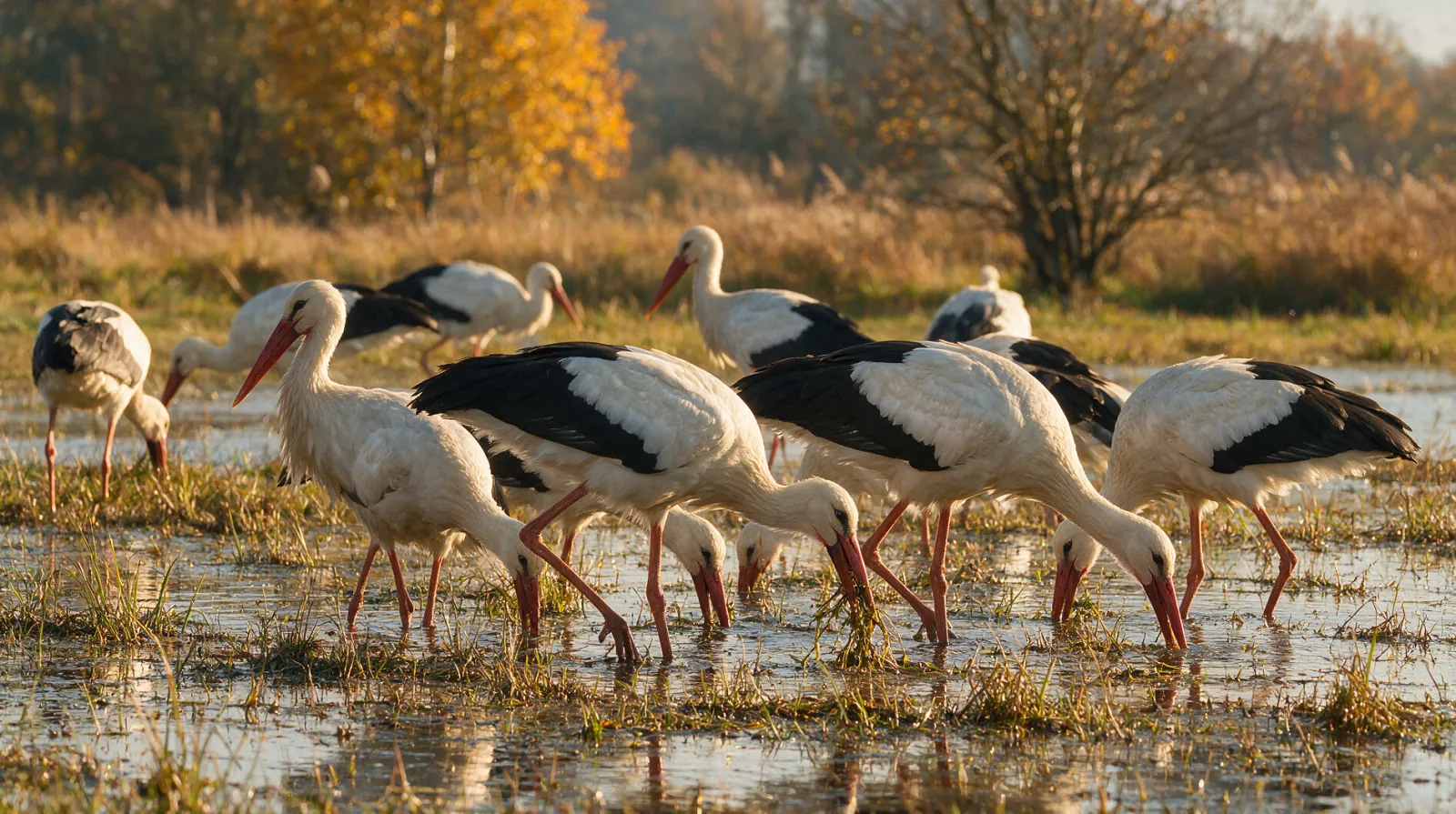
The meal a stork takes on a mild October afternoon is fuel for a flight to Africa. Flocks gather in the stubble through October, and a mild afternoon lets them feed without the wind cutting in.
The frost arrives from the ground up
Grass and bare soil lose heat faster than the air above them, so the first white appears at ground level. A morning can feel mild at shoulder height and still be freezing at the surface, which matters to a bird that stands on long bare legs. The first frost tells a stork what the soil has done. Insects have gone down into the litter, frogs have buried themselves out of reach of a bill, and the shallow edges of the ditch have stiffened.
A stork in October is not in trouble yet. It has eaten well through the harvest and carries fat under the white feathers. One cold night costs it little. A week of them changes the arithmetic, because every frozen morning leaves less food and takes more energy to find.
The cold morning usually comes with mist. It rises off the water and the wet grass, softens the hedge line, and makes a stork at the far end of the field look half drawn. The sun burns it off by mid-morning and the sky turns a flat, pale blue that carries no heat.
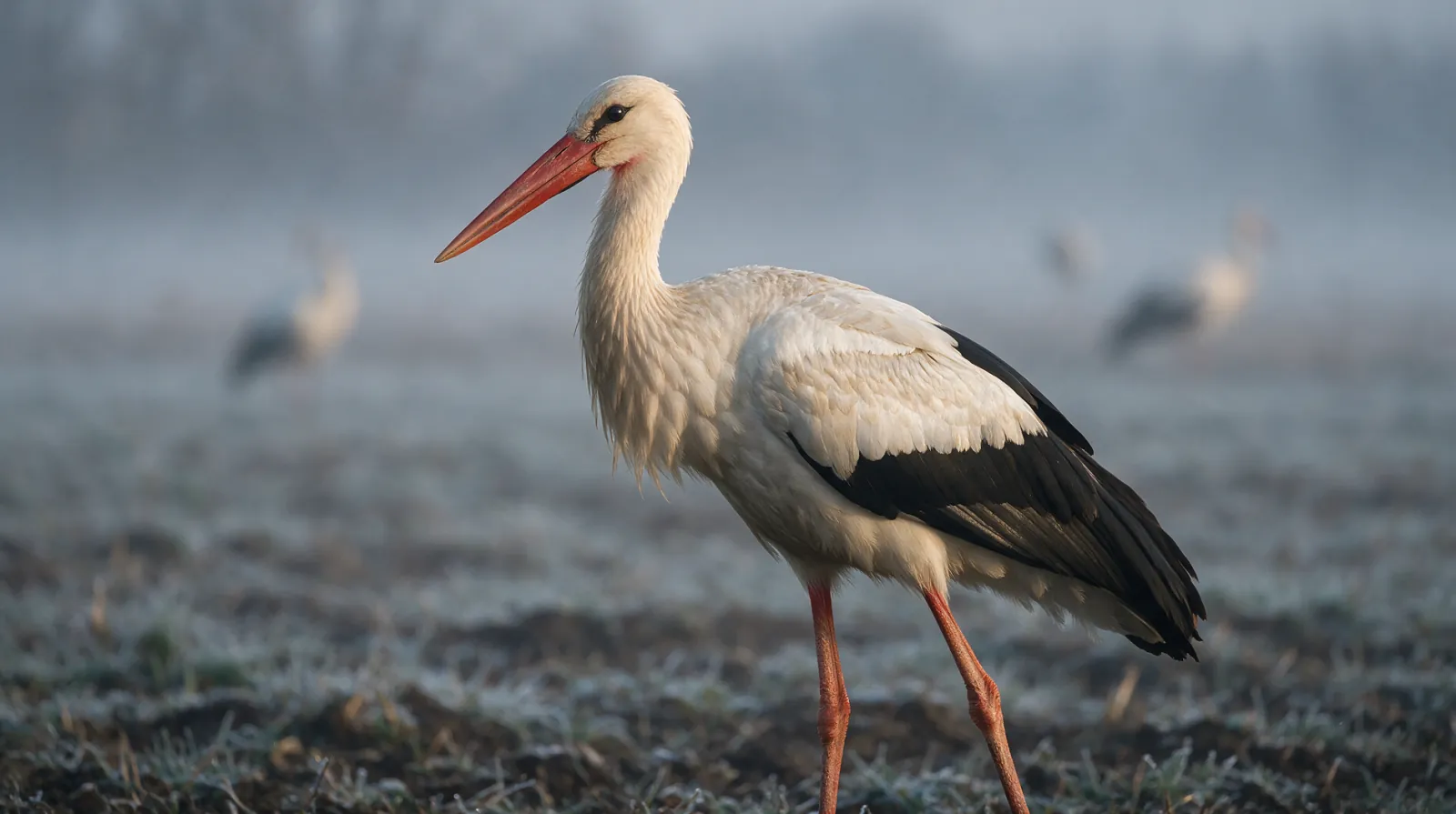
The day moves to midday
Feeding shifts toward the warmest hours. The bird waits out the first cold light in the lee of a hedge or a wall, then walks out when the sun has softened the ground. Ditches that still move are the best ground, and so are the wet corners where cattle have trampled the grass. Frogs come up into the warmer shallows, insects stir on the surface, and the stork works the edge with slow, deliberate steps.
The middle of the day becomes the whole working day. By three the light is going thin, and the bird returns to standing. A late stork depends on warm afternoons the way a traveler depends on fuel. It does not need much, but it needs it often.
Cold mornings push the storks together. Birds that fed alone in September begin to gather on the stubble, and the loose flocks grow as the week goes on. They feed hard between frosts, then lift on a mild afternoon and drift south. The older birds go first, and the young follow in smaller, looser groups.
The last of the insects
A warm afternoon brings out one more hatch of flies over the ditch, and the stork works the edge of it with its bill. Grasshoppers are slower in the cool, and easy to take. By evening the insects will be gone again. The bird takes what the day offers, and the day is offering less each week.
A stork has one advantage over the frogs it eats: it can move. It fluffs the feathers to trap air, tucks the bill into the shoulder, and stands with its back to the sun. On a cold morning the white plumage looks rounder than usual, and the bird's outline goes soft. It also stands on one leg and draws the other up into the feathers, then swaps.
Children feel the last warm day without naming it. It is the afternoon the jumper comes off and the coat hangs over an arm, the last chance to sit on grass that is still dry. A small child lies in the short grass and watches a white stork at the far edge of the field, and for a while nothing needs to happen.
Three seasons in one day: the morning has spring in it, the noon has summer, and by late afternoon there is a cold edge that belongs to winter.
The turn that follows
After a last warm day the weather usually turns and stays turned. The wind swings north, the rain comes in cold, and the mornings start with frost on the roofs. The nests are empty by now, or nearly, and the fields are quieter than they were in September.
The trees let go through the same weeks. Leaves come down in still weather and blow in rows along the ditches, and the hedges thin out until the nests on the roofs are visible from much further away. A nest that was hidden in June is a dark ring against the sky by the end of the month.
The golden weeks do not last. A gale strips the leaves in a day, and rain turns the stubble grey. The light that made the fields glow is gone by November, and the village goes back to its winter colours. The stork will not see this field again until spring.
People walk out in the golden weeks to stand in the light. Coats come out, hands go into pockets, and the low sun lands full in the face. It is a season for standing still, and it ends with the year going quiet.
Explore the gift