Seasons & the year
The stork year, month by month, from the first spring arrival to the quiet of winter.
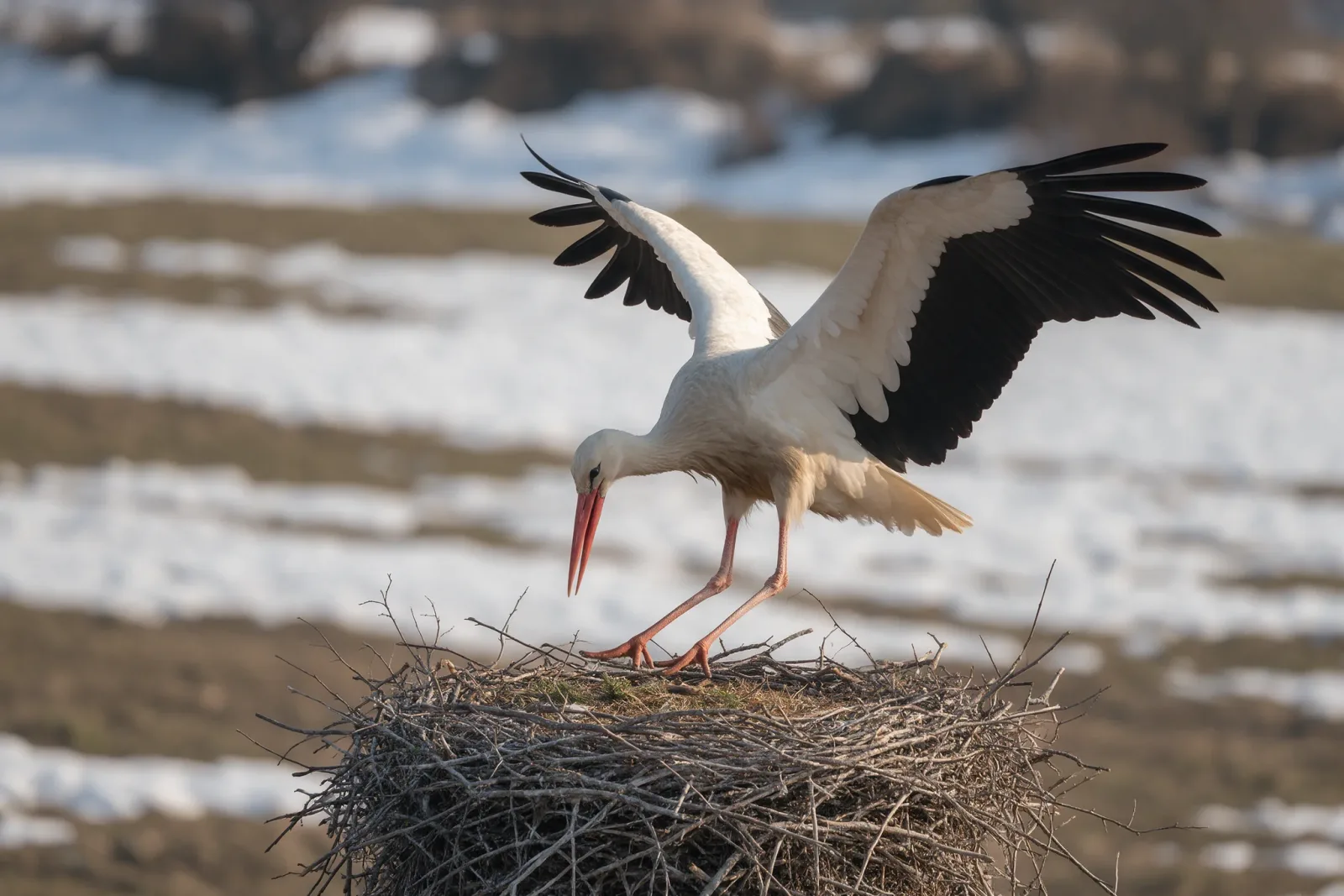
When do storks come back? A homecoming from February to April
Most white storks enter Europe between February and April, and the first bird can arrive while snow still sits in the ditches.
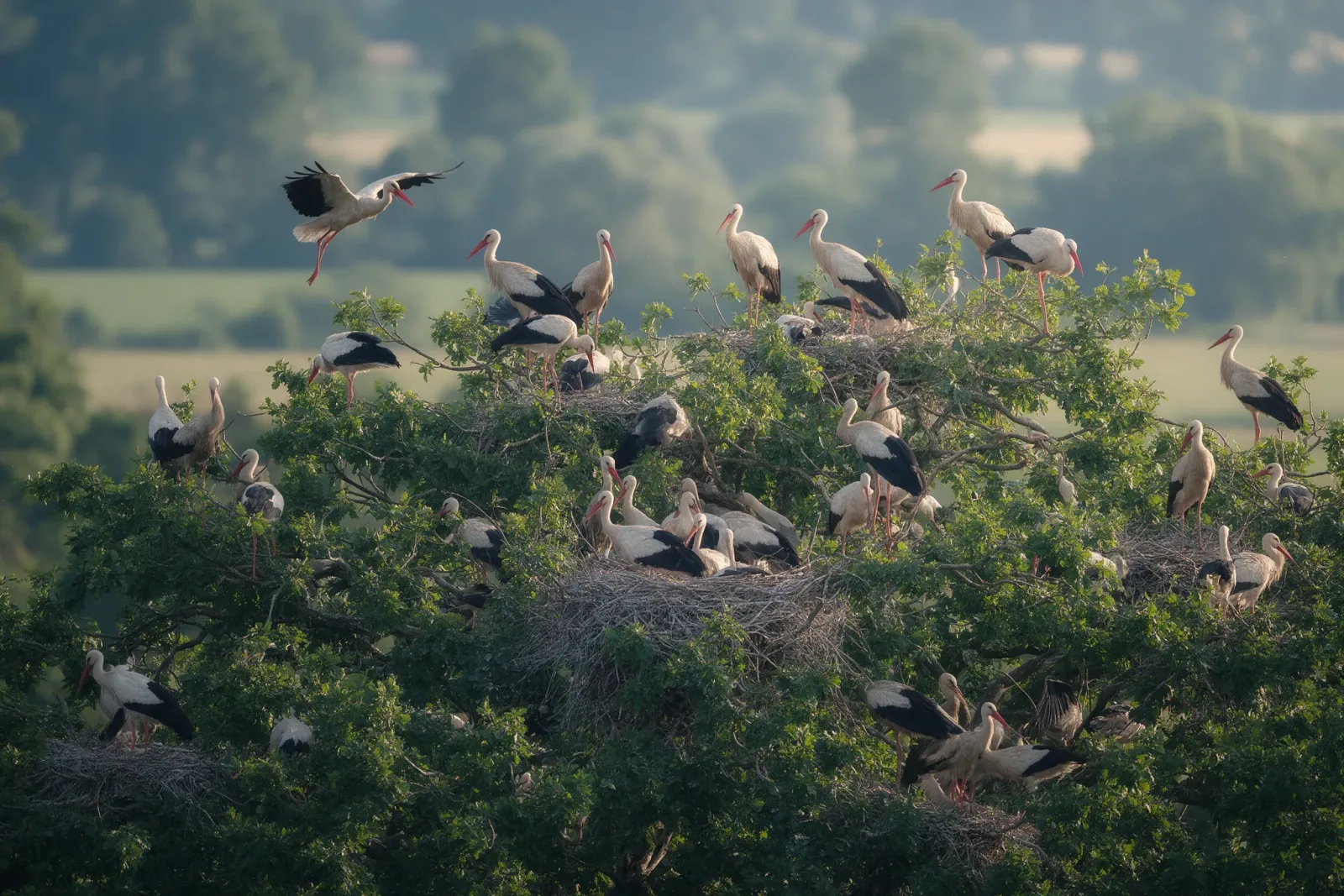
Summer in the colony: a rooftop town that runs on frogs
By late May a stork colony works from first light to dusk, with two parents shuttling frogs to chicks that will fly in about two months.
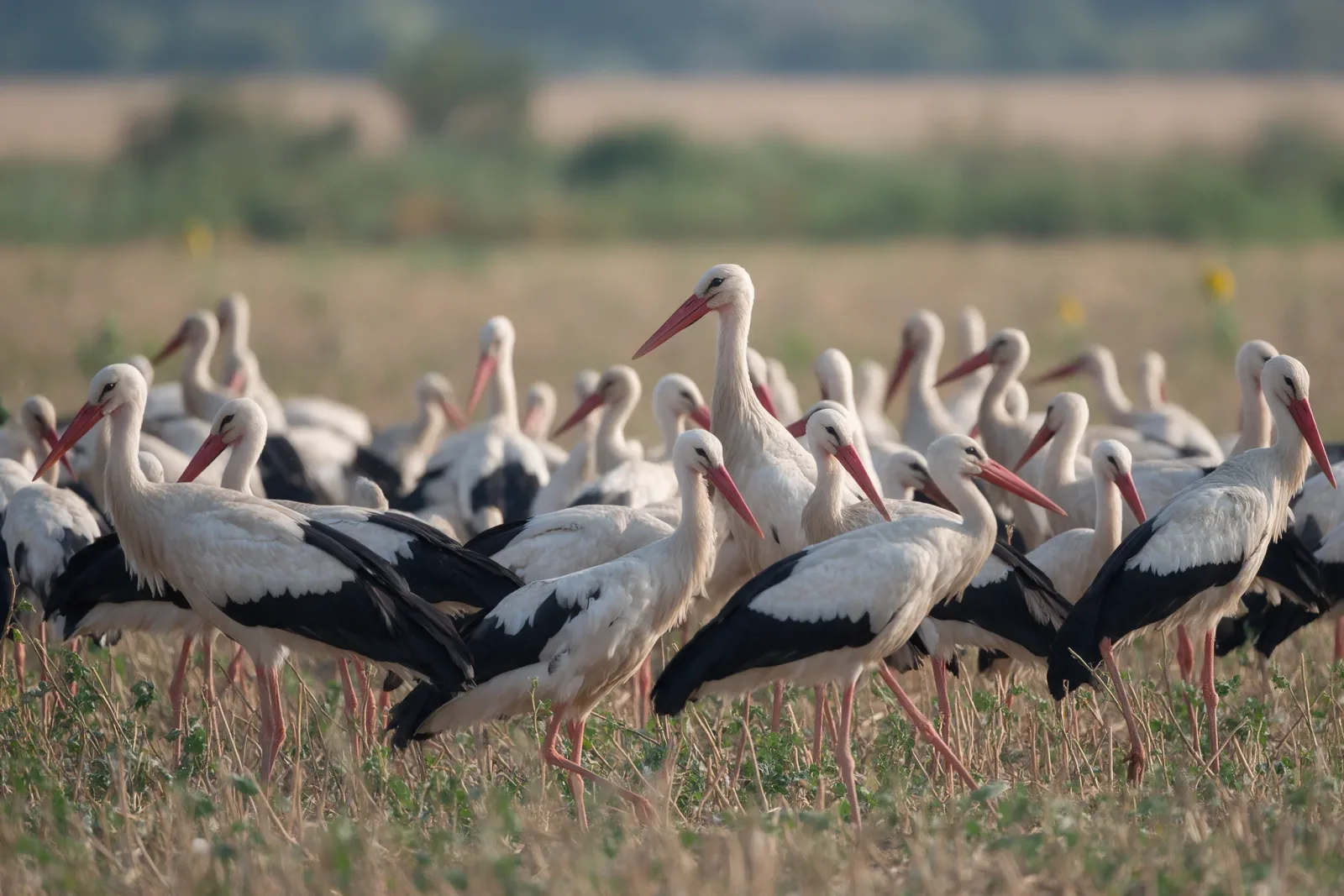
The gathering autumn: harvest, stubble, and the flock before flight
A cut field can draw storks within hours, and birds that fought over nests in June will feed shoulder to shoulder by September.
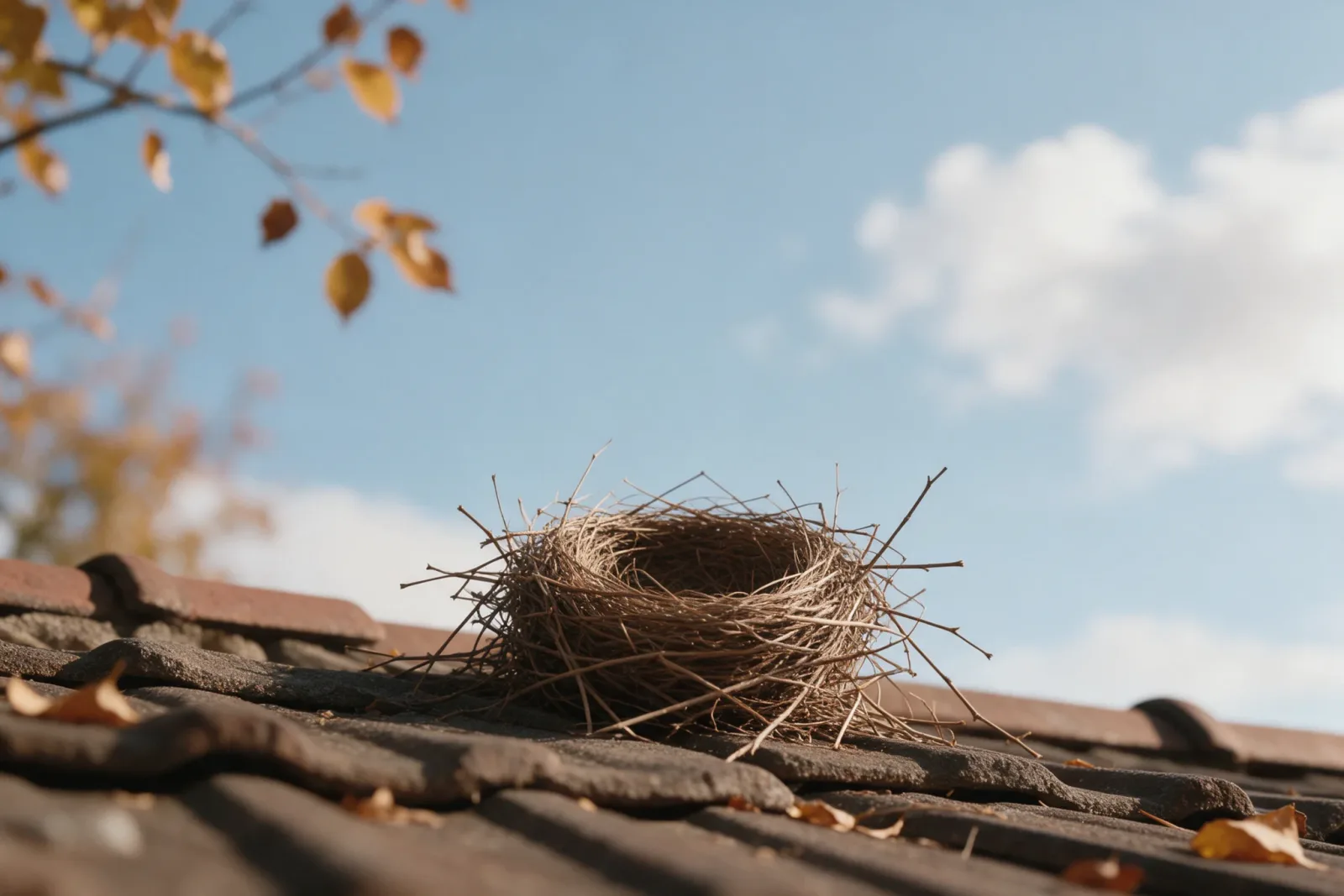
The day they leave: how a stork colony empties in a morning
A shift in the wind can empty a district of storks before lunch, while a village twenty miles away keeps its birds for another week.
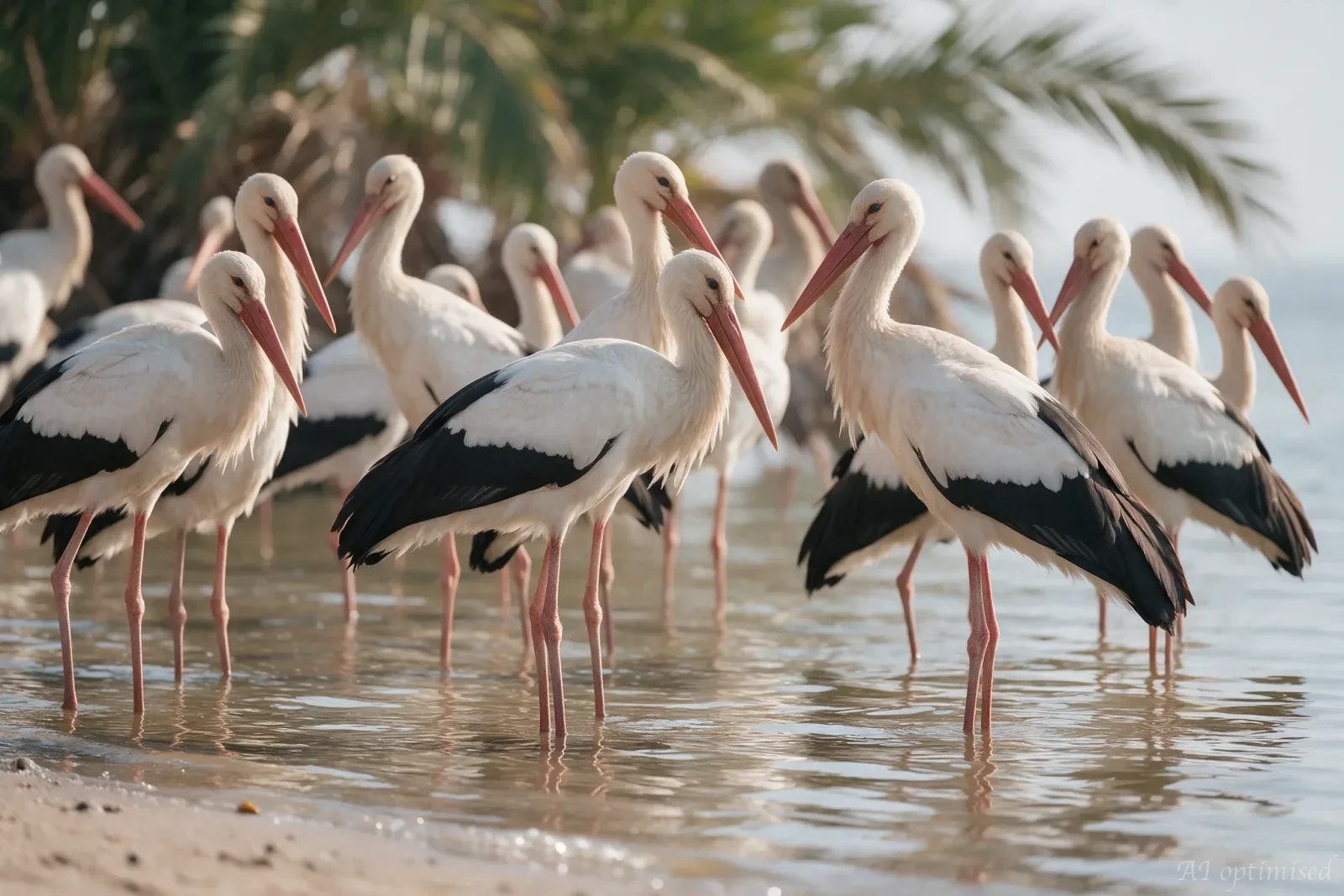
Where do storks go in winter? South of the Sahara, and some stay
Most white storks winter south of the Sahara, but a growing number stay in western Europe, where a sudden freeze tests the bet.
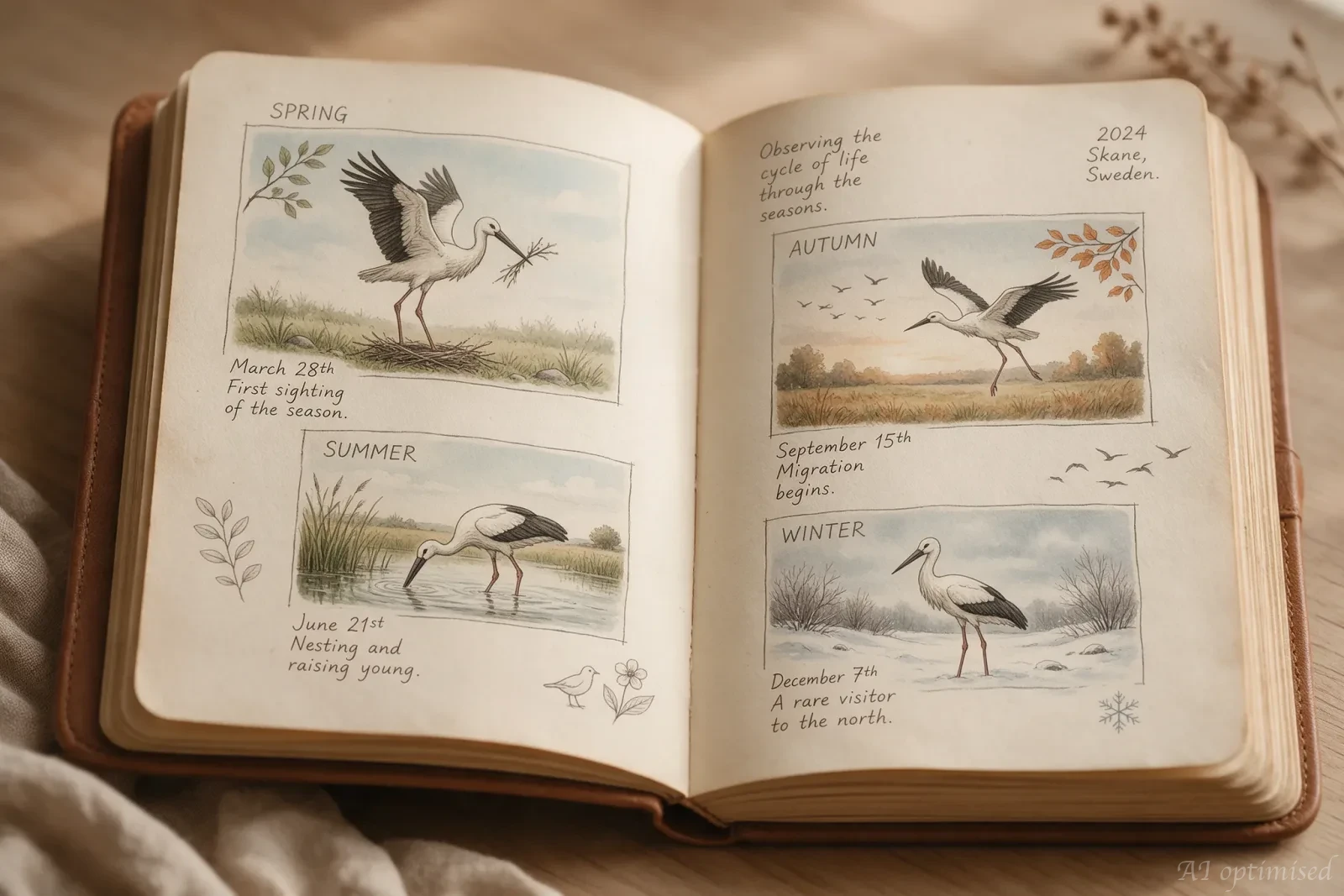
A year remembered by birds: four seasons, one nest, one gift
A stork year runs from the first landing to the last departure, and a child can follow the whole circle through one adopted bird.
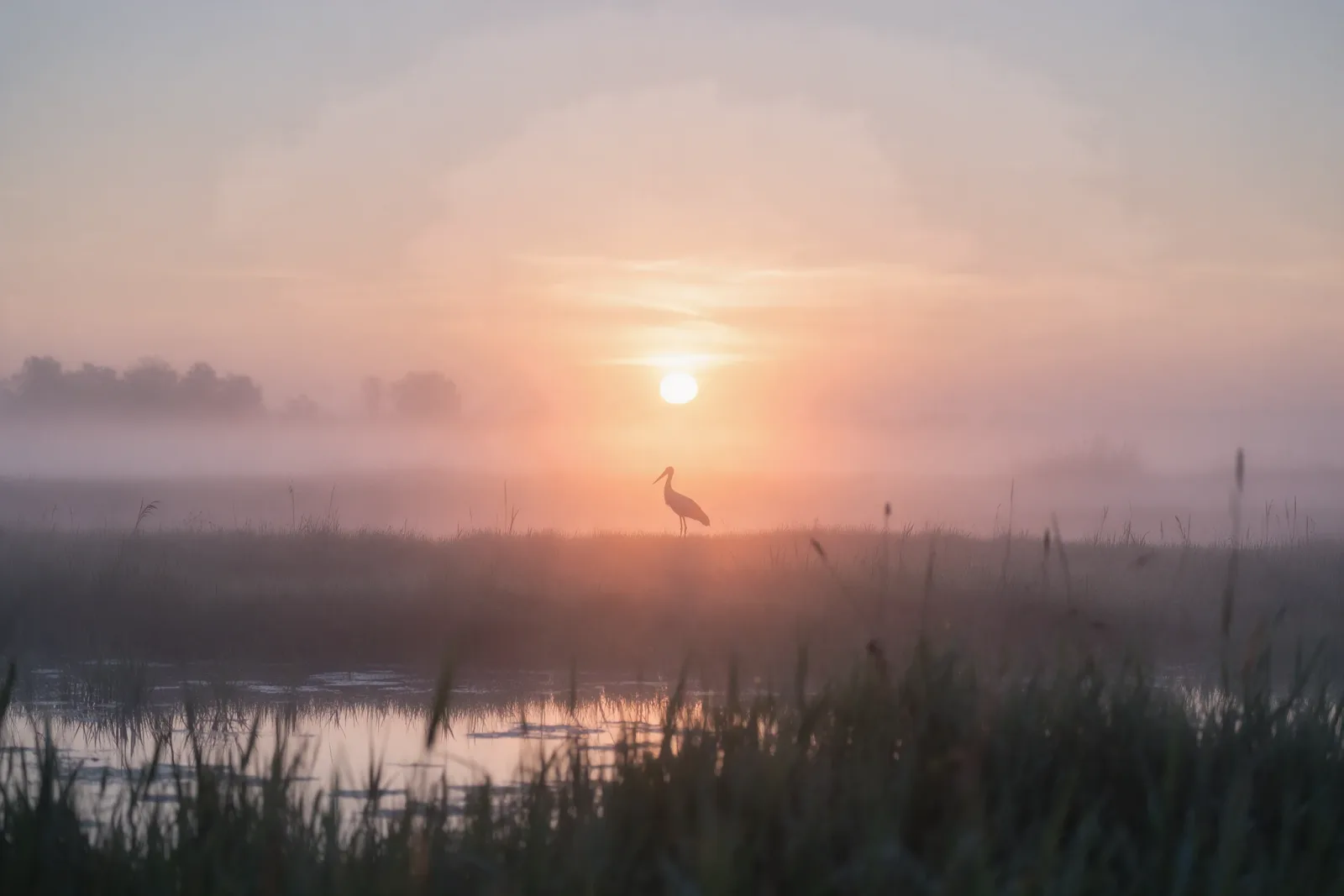
The return of the light: from the solstice to the first stork
The year turns in minutes, long before the thaw. December's shortest days begin the clock that brings white storks back from Africa.
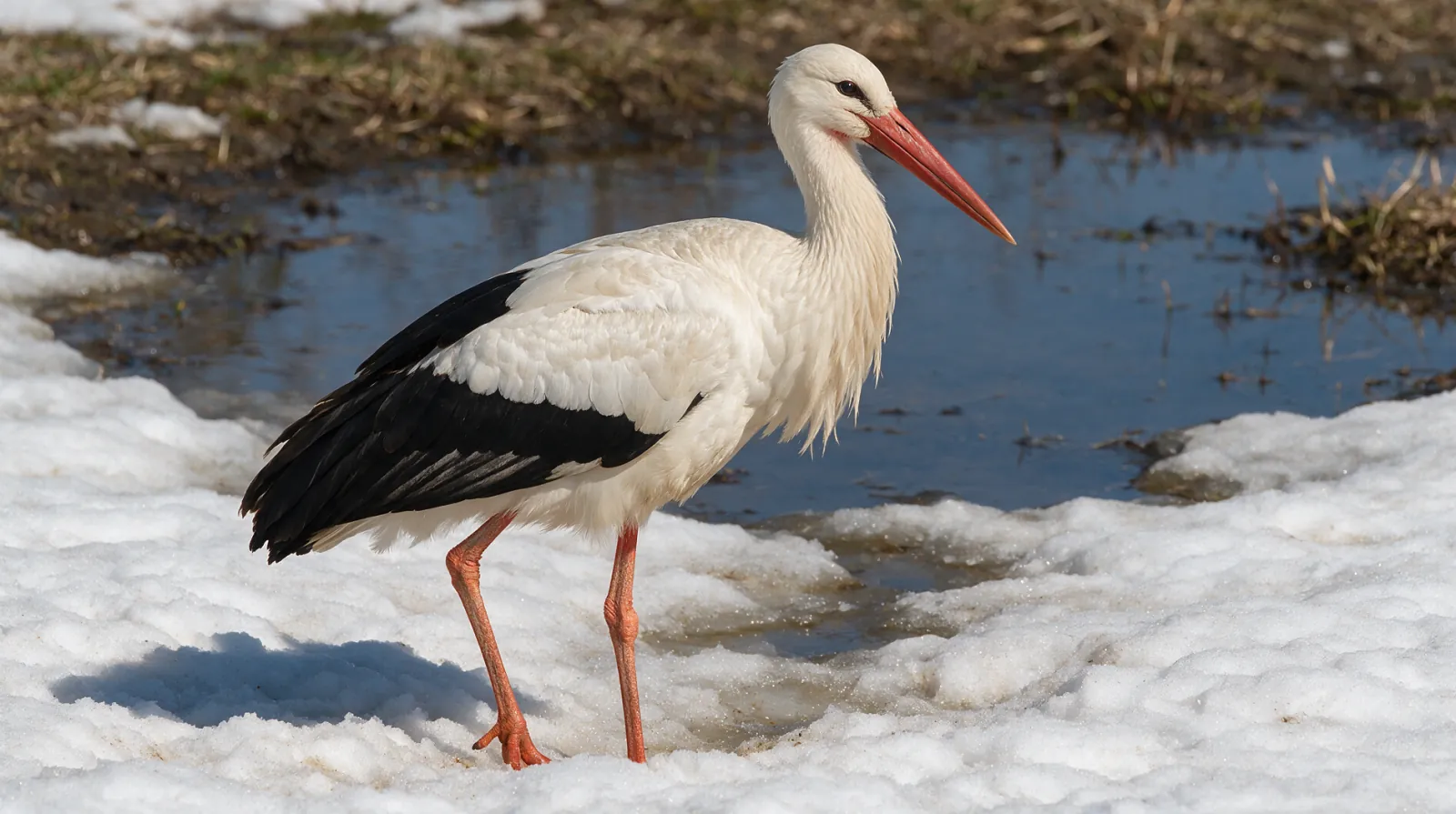
The spring return: why the first stork bets on the thaw
February light, a March thaw and a roof held from last year: how a white stork times its return to the first open water.
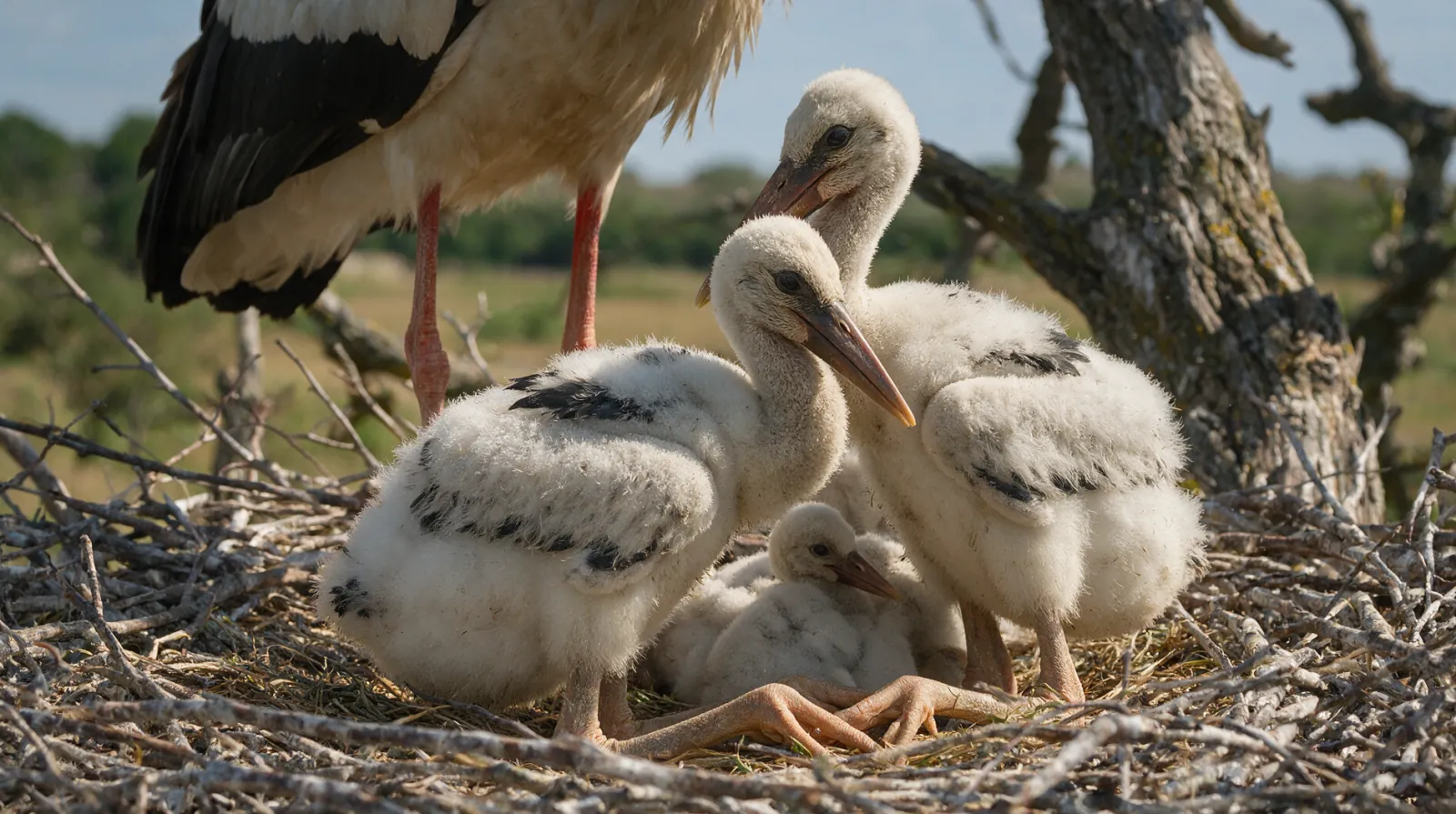
The hungry nest: feeding chicks through May rain and June heat
Two parents, a nest of gaping bills and a rainstorm with no roof: what May light and June hunger ask of a stork pair.
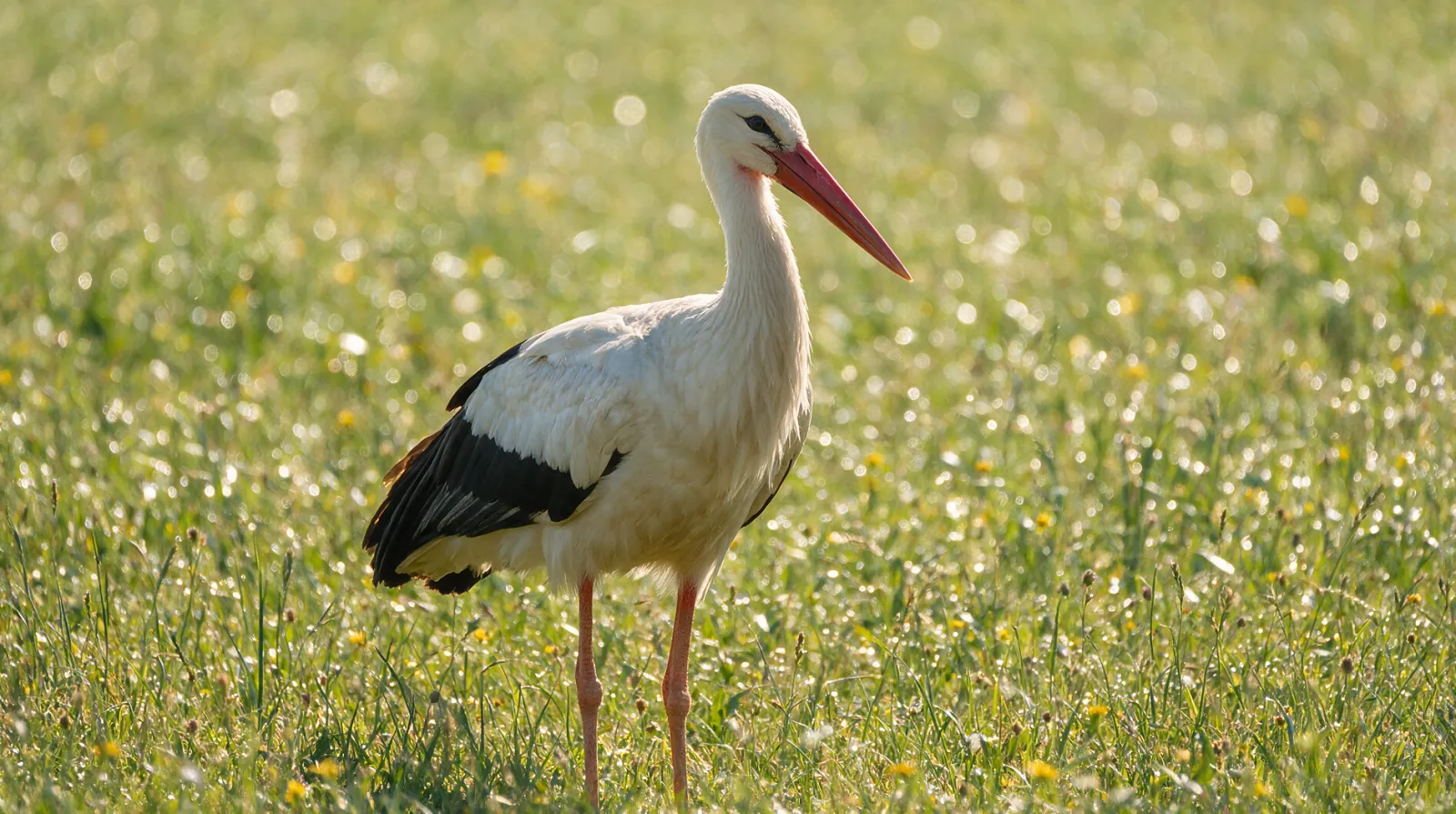
Heat and drought: how a stork finds the last wet corner
White feathers, long bare legs and a shrinking pool: how a stork survives the driest weeks of the year.
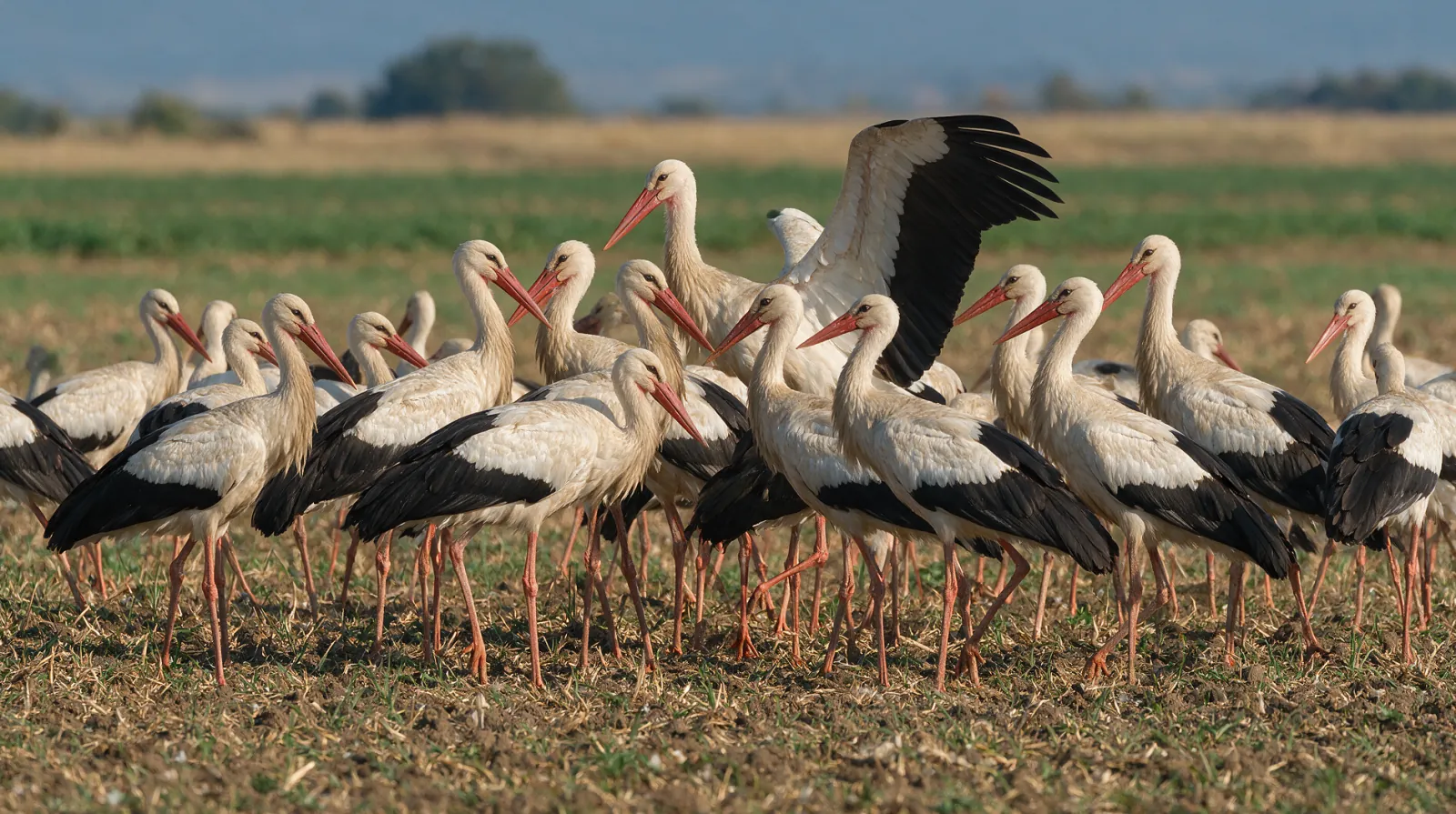
The leaving: how a stork flock gathers, feeds and goes
Stubble, fat and a shortening day: how a summer of scattered storks becomes one restless flock bound for Africa.
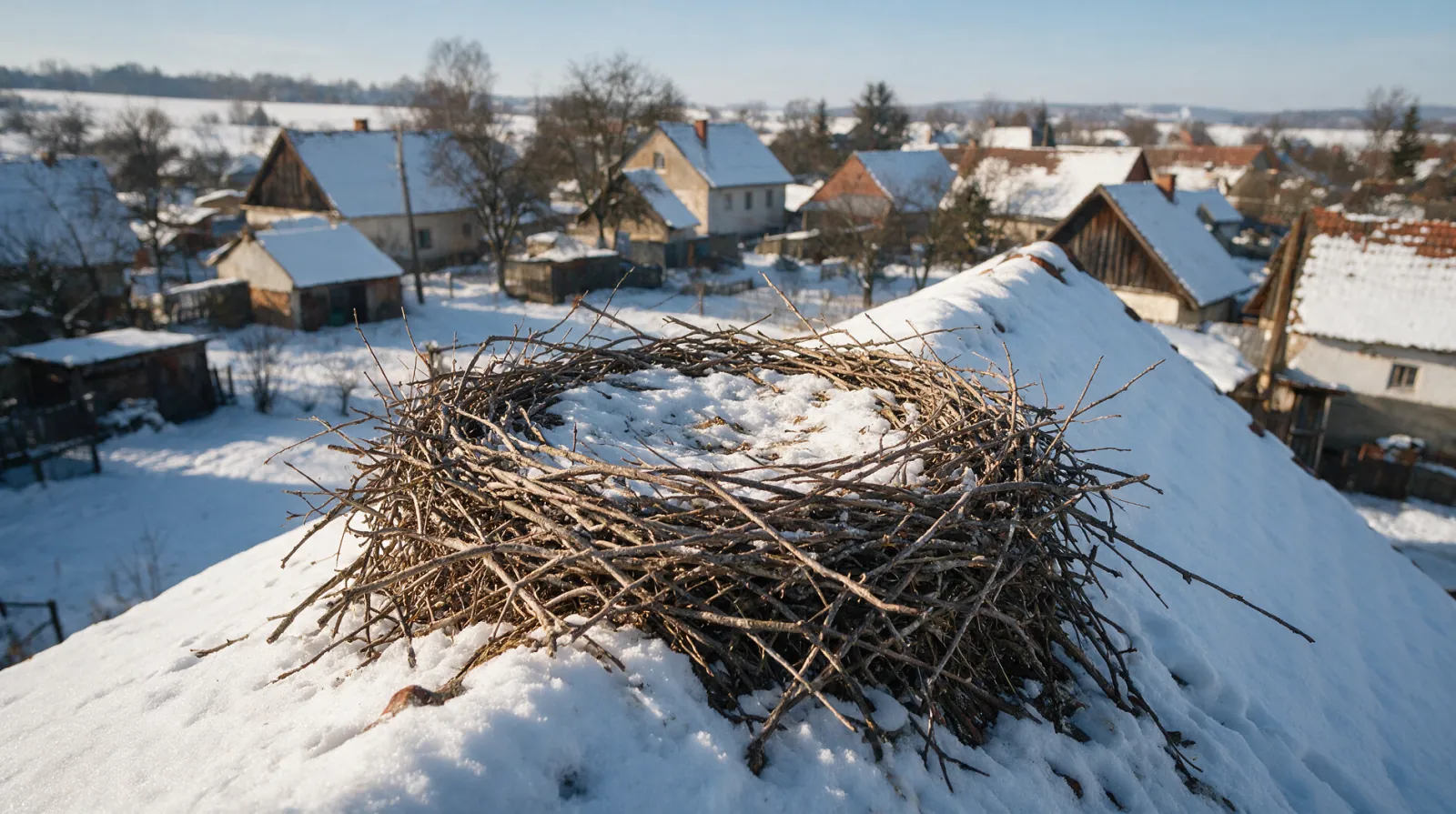
Deep winter: snow, frost and the empty nest
Snow muffles a village, fills the empty nest and hides the marsh, while the storks feed under a warmer sky.
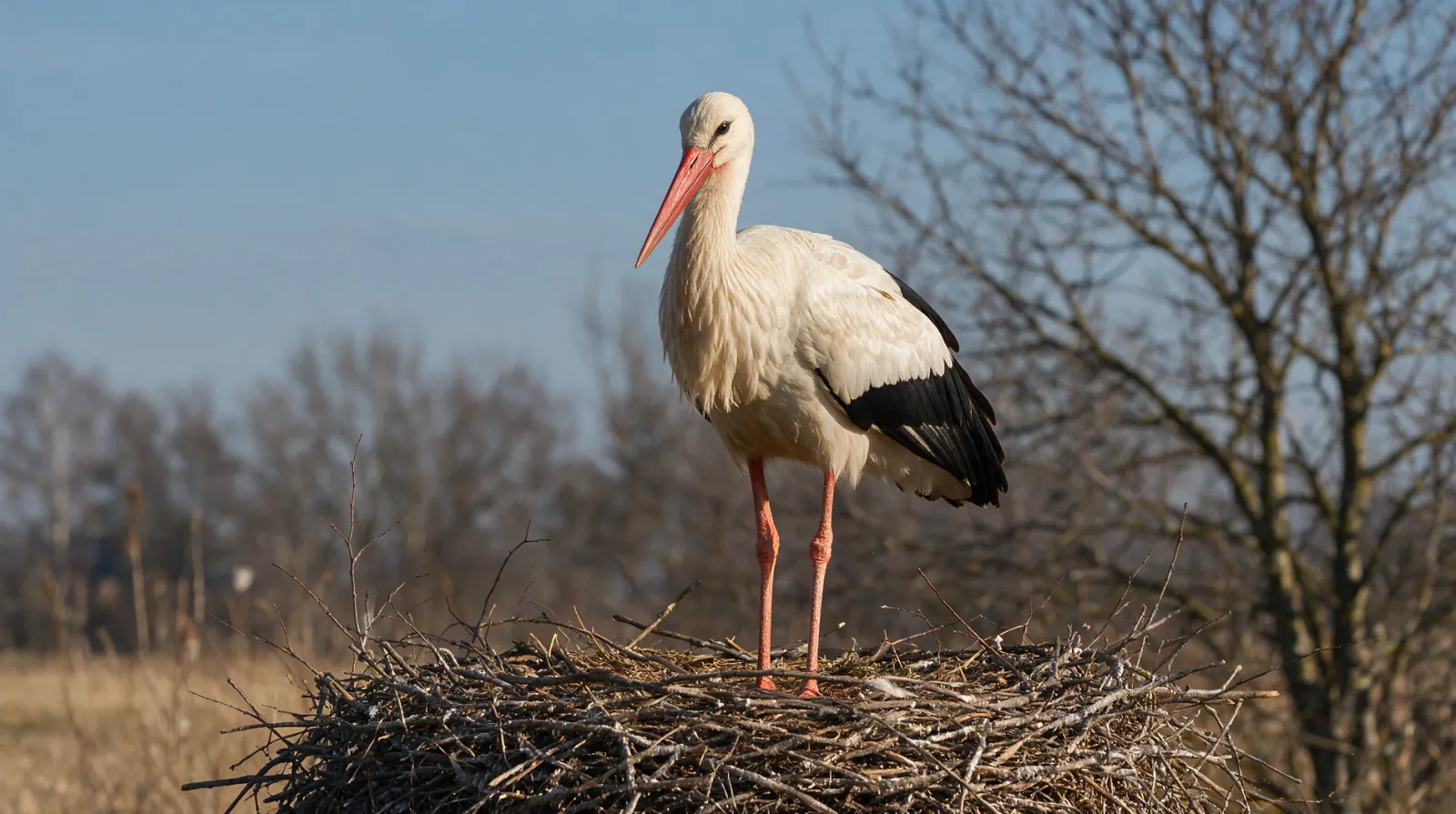
The year turns: Christmas, January and the first repair
The nest holds snow through Christmas and January, then a white shape lands on the chimney and the year starts again.
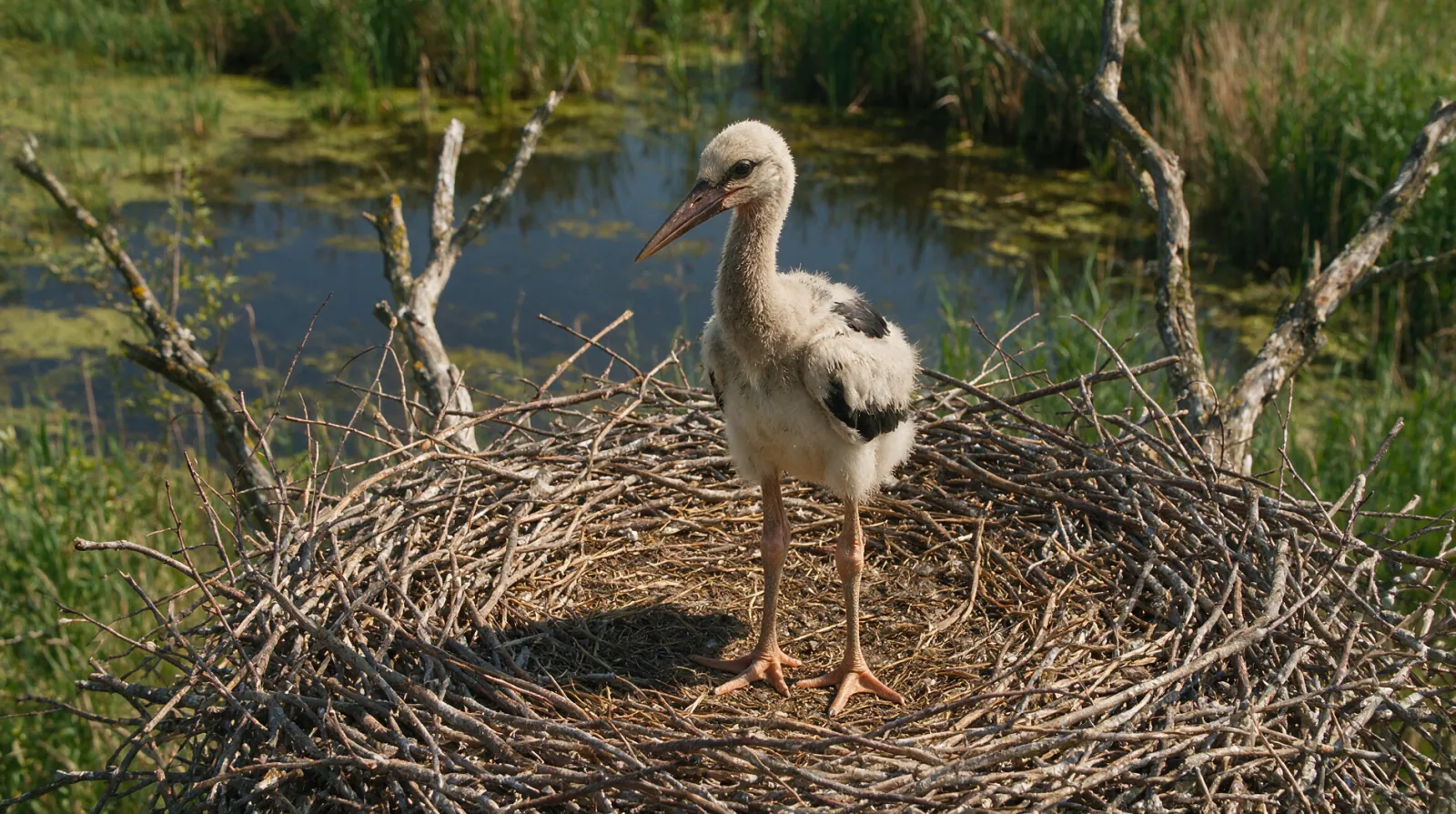
A chick's first summer: from the shell to the first flight
A chick breaks out of the shell, begs for its first meal and learns to fly while a whole colony calls around it.
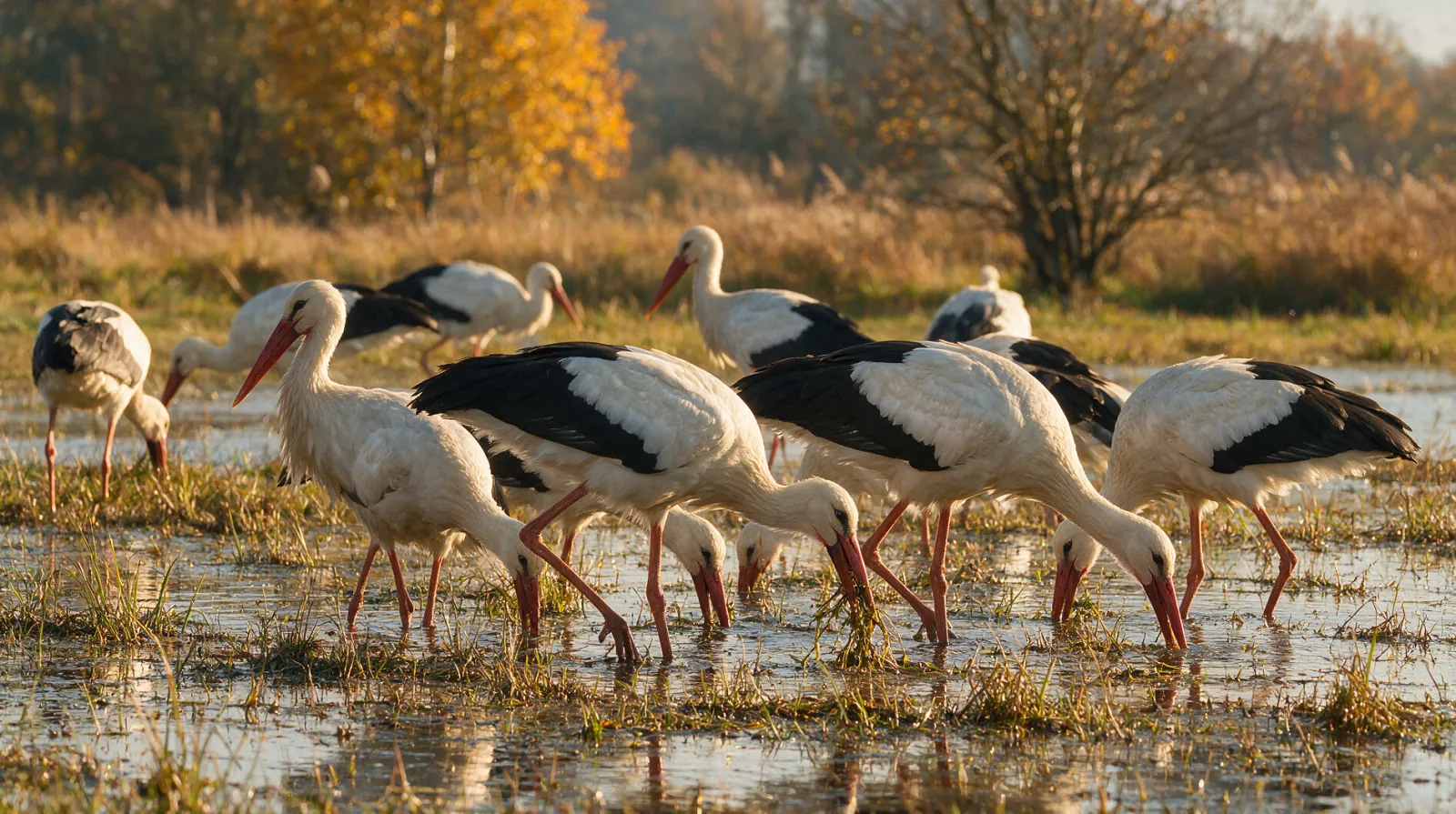
October light: the last warm day and the first hard frost
Low sun turns the stubble to honey, then the first hard frost ends the easy feeding and pushes the last flocks south.
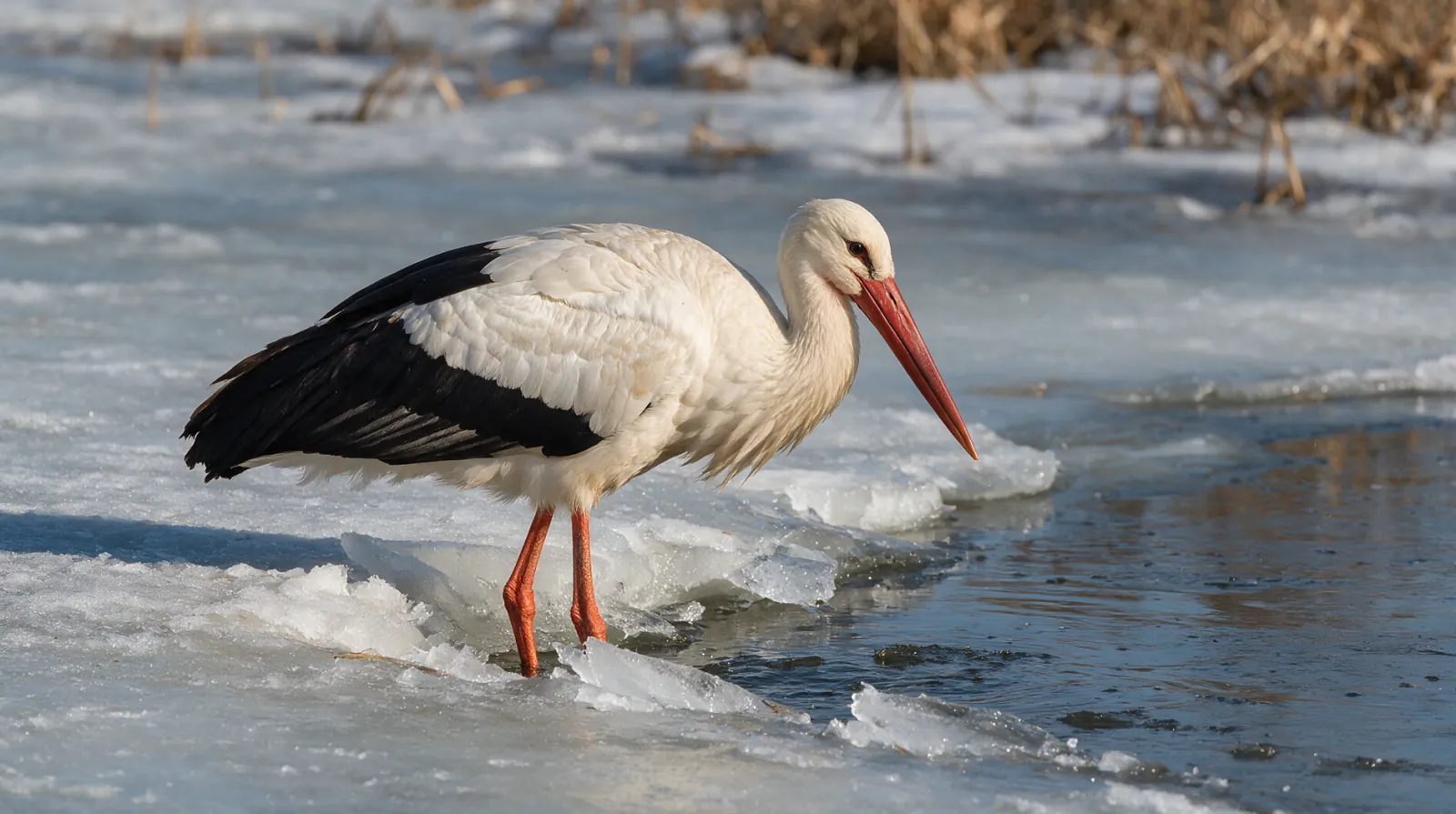
When the ice breaks: the thaw that decides the stork year
A single open ditch edge can hold the first stork of spring, and a late frost can take the season back within a night.