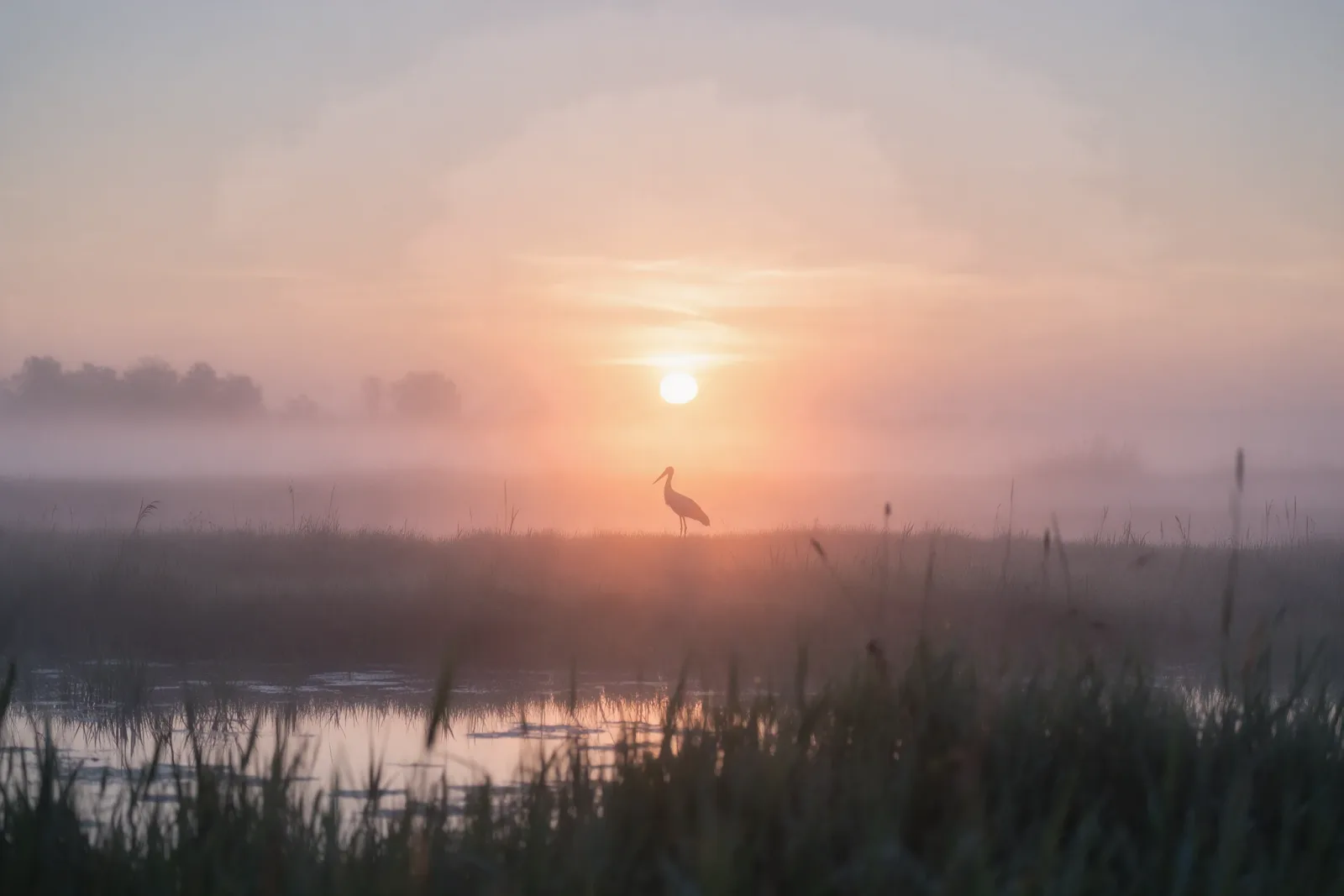
The year turns in the dark. Around 21 December the northern half of the world leans furthest from the sun, the afternoon ends early, and the storks are several thousand kilometres south. Nothing in the marsh suggests a beginning. Then the planet begins to tilt back, and the first extra minute of light arrives without ceremony.
The longest night
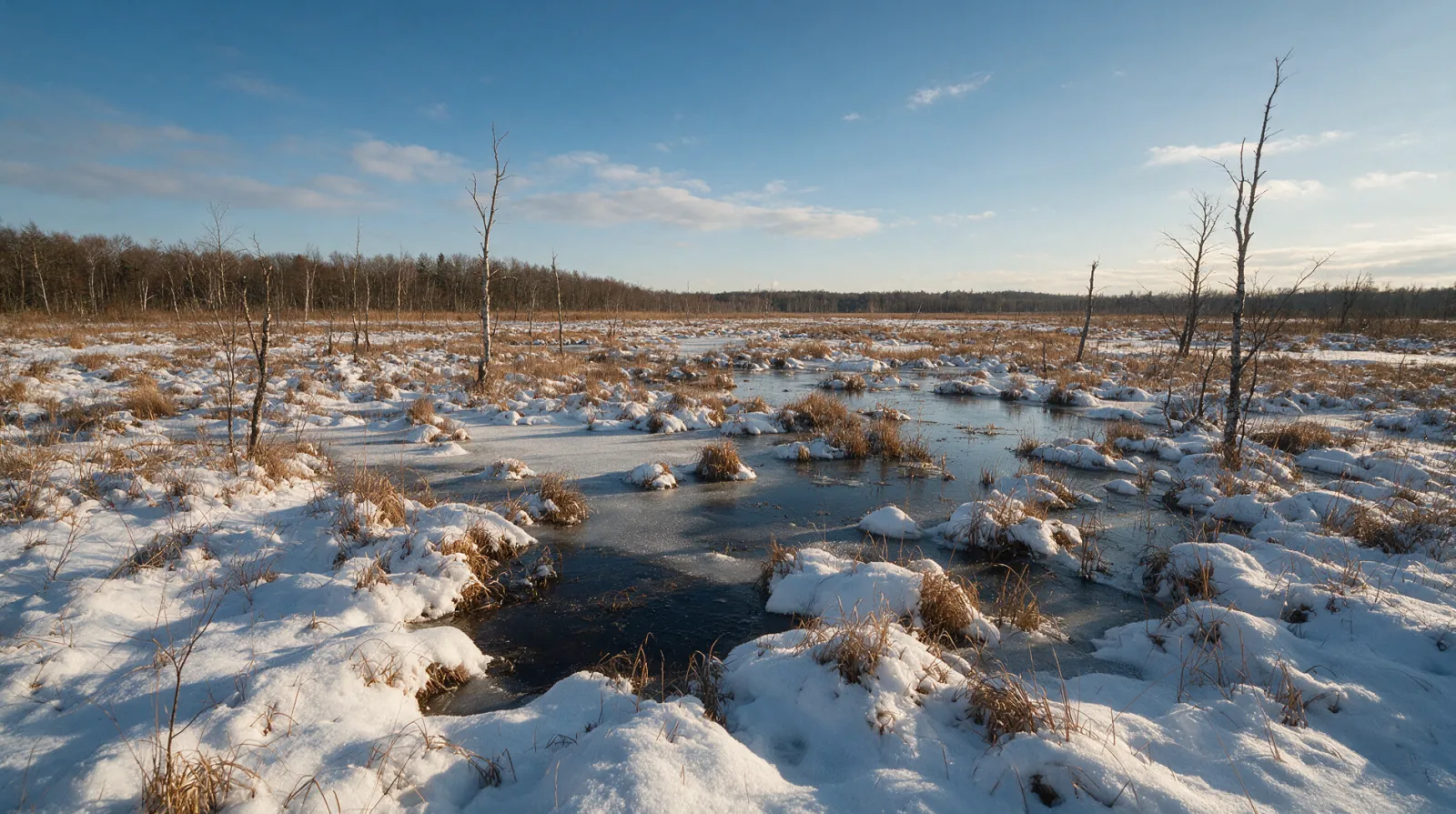
The stars are sharp, frost forms early, and the village lights stay on longer. The marsh has been closing for weeks: shallow water freezes first, then the ditches, then the wet ground itself. Frogs are down in the mud below the frost line, insects sit in the litter or under bark, and the food a stork needs is sealed under a hard surface.
The birds are far to the south, where the same date falls in a different season and the days are not shrinking as they are in the north. The solstice is a northern event, and the storks have left it behind. People who wait for the birds learn to watch the light rather than the sky. They notice the extra minute at the end of the afternoon before they notice anything else.
That minute is small enough to argue about. A cloudy evening hides it. A week of grey weather can make the whole change seem imaginary. Then a clear afternoon arrives, the sun sits a little higher, and the direction of the year is plain.
The longest night is usually clear and hard. The stars are sharp, the frost forms early, and the village lights stay on longer. It is a good night for looking at the sky and a poor one for anything that lives on the ground and needs to eat. The birds are absent from it, and their absence is part of the quiet.
A minute at a time
January stays cold, and February can be colder still. The days lengthen anyway. The sun climbs higher at noon, the shadows shorten, and the first signs arrive in the wrong order: a mild week, then hard frost, then a soft morning that smells of soil.
None of it is spring. The marsh can freeze again after a false start, and the lanes can hold ice into March. The change accumulates before anyone can feel it. By the end of January the difference is visible at a kitchen window, and by the middle of February the light lasts long enough to change the shape of an afternoon.
The birds read that change from half a world away. A stork does not need a calendar. The lengthening day reaches the bird in its wintering grounds, and something in the animal begins to turn north. The light arrives everywhere at once, from the equator to the far north, and it sets the machinery of migration in motion whether the weather is kind or not.
Light as a summons
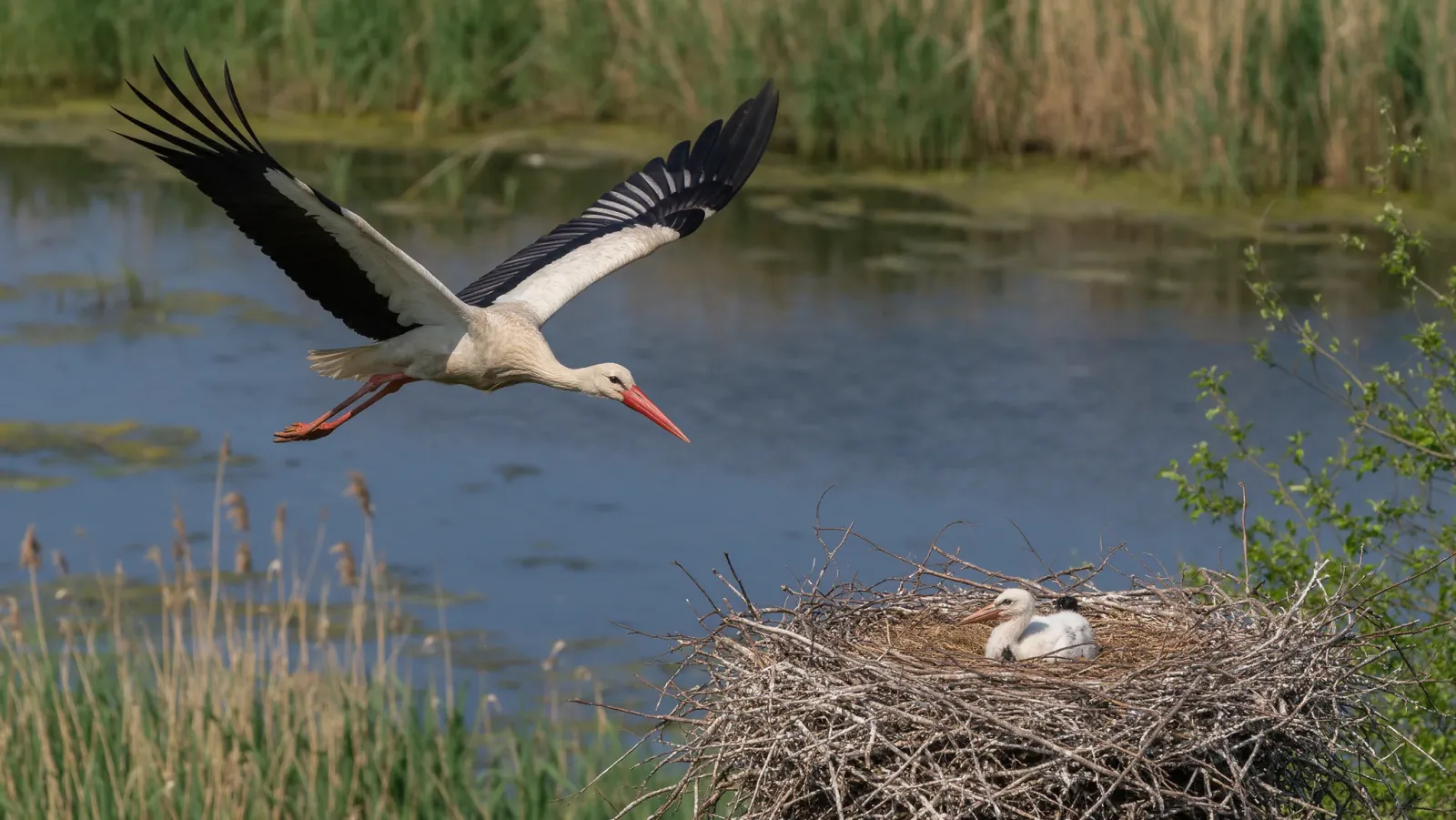
A stork coming home has a long way to travel. It feeds through the winter on open ground in Africa, often on savanna and farmland, and it starts north as the days grow longer. It travels by day on rising warm air and rests at night. The route is old and worn into the species, and each bird still flies it alone, choosing its own pace and its own stopping places.
The bird leaves on the length of the day, and it arrives to whatever weather waits. That arrangement has worked for a long time. A warm spell can pull the first birds forward by a week or more. A hard frost can hold the whole movement back. The light starts the journey, and the air decides how the last part of it goes.
A stork reads light the way other creatures read a calendar. The change arrives everywhere at once, from the equator to the far north, and the bird responds to it in a wintering field thousands of kilometres away. The warmth and the green come later. The light comes first, and the bird trusts it.
Long before the fields thaw, the light is at work. A person watching the evening sky in January can see the year turning before anything else confirms it. The warmth, the greening, and the birds all follow the same signal.
The second signal
Snow pulls back from the fields, ice lets go of the ditches, and the ground softens. The first bare patches appear on south-facing slopes, and water begins to move again. Insects appear on the warm banks within days of the first bare ground.
For a stork this is the second signal. A bird will not fly north into frozen country. It waits until the thaw has opened the land, then comes north behind the sun. Light and open ground together make the journey possible. One without the other is a gamble, and the birds that gamble early can lose a week of feeding.
The two signals rarely arrive together. A mild February can open a field while the ditches stay sealed. A cold March can lock ground that was soft the week before. The stork reads both, and the wait is part of the journey.
The freeze is not uniform. A moving ditch can stay open in the middle while its edges are solid, and a spring-fed pool can keep a patch of dark water all winter. Those small openings are why a bird can sometimes stop earlier than the calendar suggests. They are also why the return is spread over weeks rather than days.
December on a map
The darkest month makes the absence feel complete. The days are short, the sky spends most of its time closed over, and the nests on the roofs are black shapes against grey. It is hard, in such a month, to believe in spring.
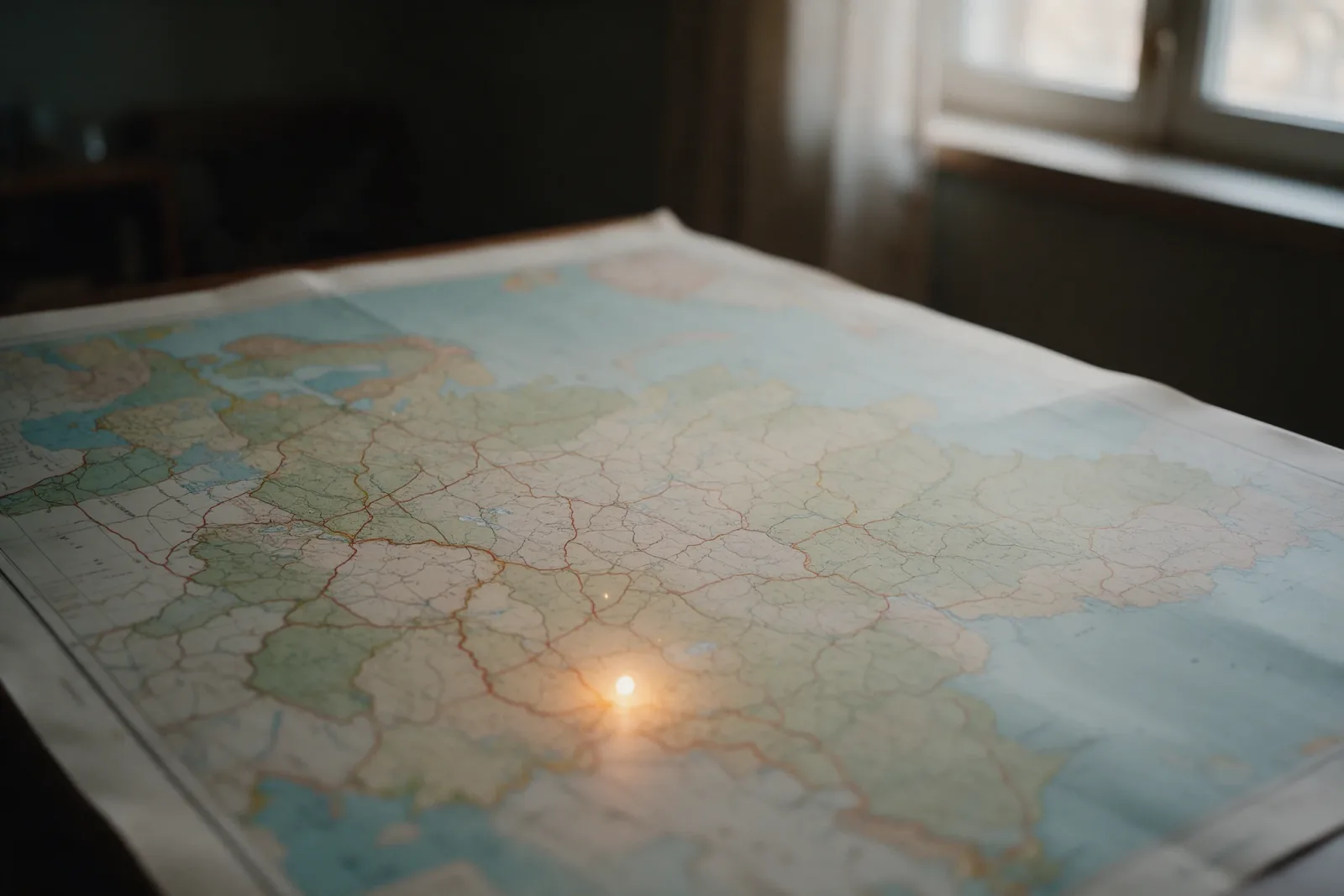
For anyone following a tagged stork, the winter has a map. A small dot moves across a warm country, a little each day, and each movement is news. A family can gather around a screen in a dim room and see the bird standing in a field half a world away. A bird that is where it should be will come back. The dot gives a fact, and the fact is enough to build a small daily ritual around.
The map is not a window. It shows where the bird is, not what it is doing. A dot in a field could be a bird feeding, resting, or standing in the rain. The family supplies the rest, and the story grows in the telling. That is part of the comfort.
December is the hinge of the waiting. The year reaches its darkest point and begins to turn, and the map is a small light in the room. The bird is alive. The bird is feeding. The bird is moving through its winter the way it has through every winter.
The first bird of the light
A stork tends to arrive on the first run of mild, bright days. The light has been coming back for weeks by then, and the bird makes the return visible. People who have been watching the evenings suddenly have something to point at, and the whole village looks up at once.
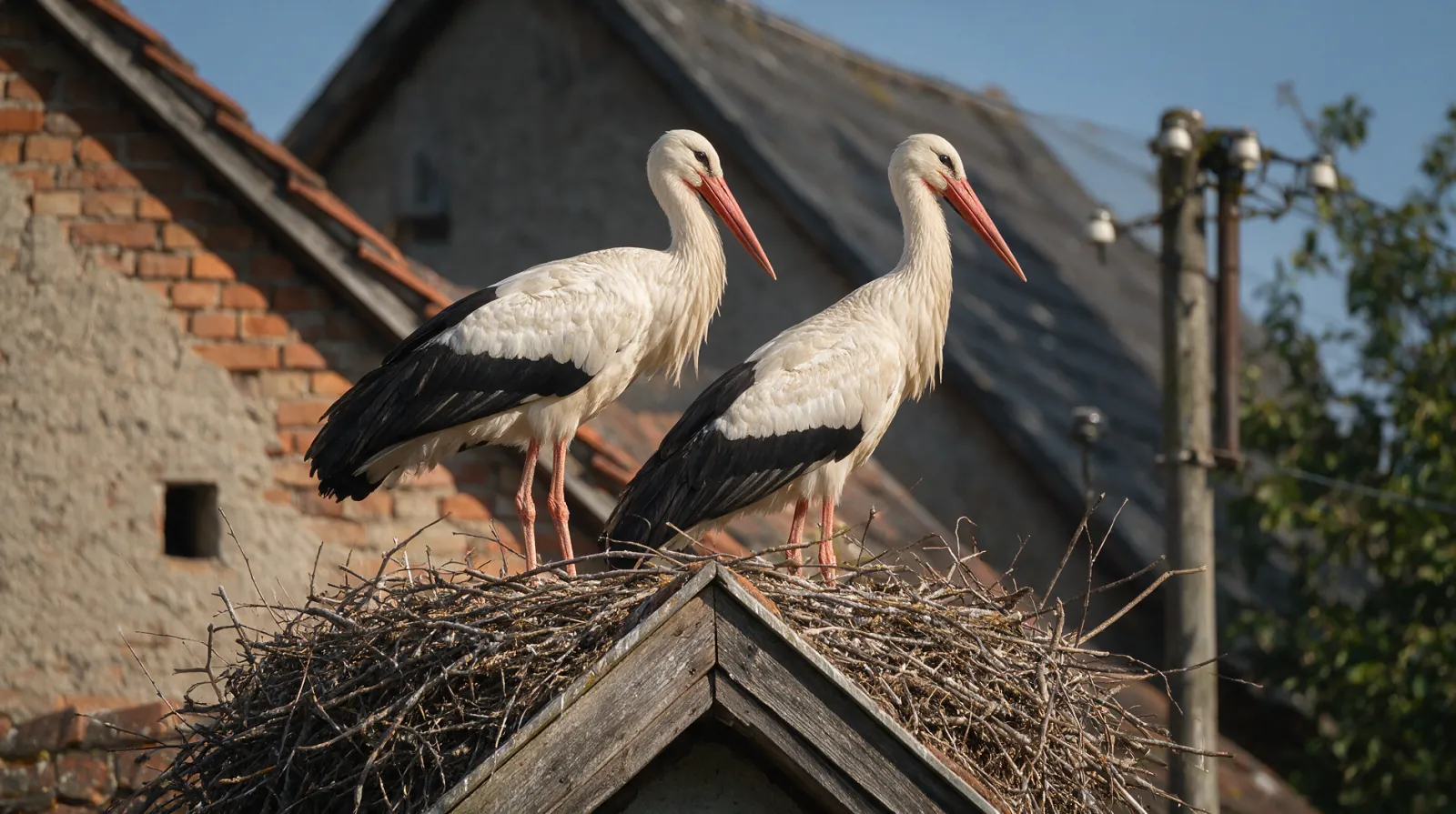
A returning stork goes to the nest before it feeds. It lands on the old platform, looks it over, and starts to work. Sticks are carried in, pressed down, adjusted. If both birds have arrived, they greet each other with bowed heads and a burst of bill-clattering. The noise is brief and surprisingly loud.
Then one bird leaves to feed, and the other stays. The nest is occupied. The bird carries in another stick and presses it into place.
Explore the gift