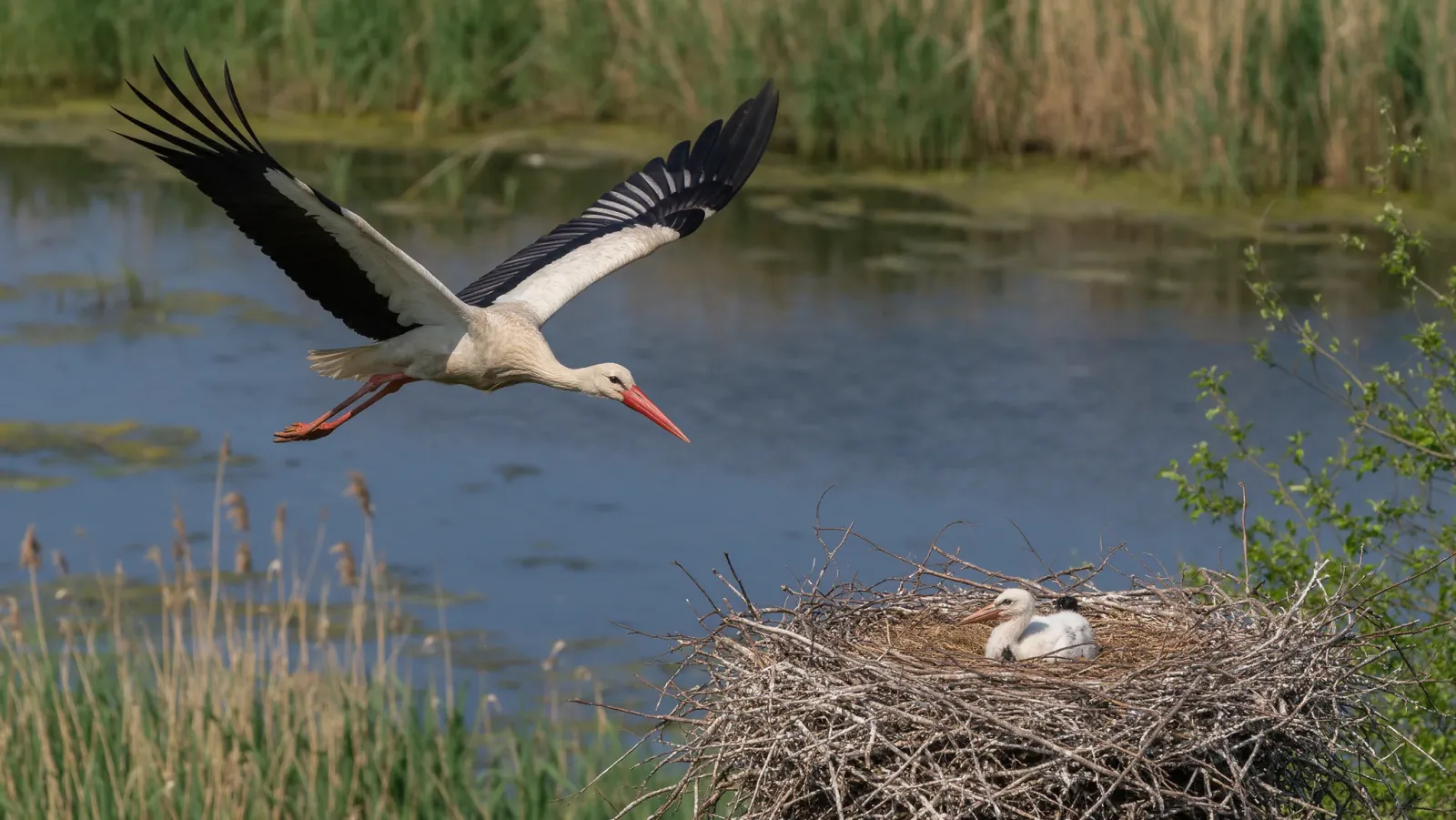
White storks often arrive in spring at the villages where they hatched, and the habit is older than any single nest. A bird that crossed the Sahara and the Mediterranean lands on a roof it has not seen for months, often within a few streets of the platform that held it as a chick. That return is the fixed point of the stork year.
The colony is the memory
A young stork learns the shape of a place before it learns the route south. The bird carries the location of its birth through its first migration and its first winter, and when it comes back it returns to that area. The habit is called natal philopatry, and it is common among long-lived birds. The place where a bird hatched is the place it knows best, and settling there is safer than prospecting somewhere new.
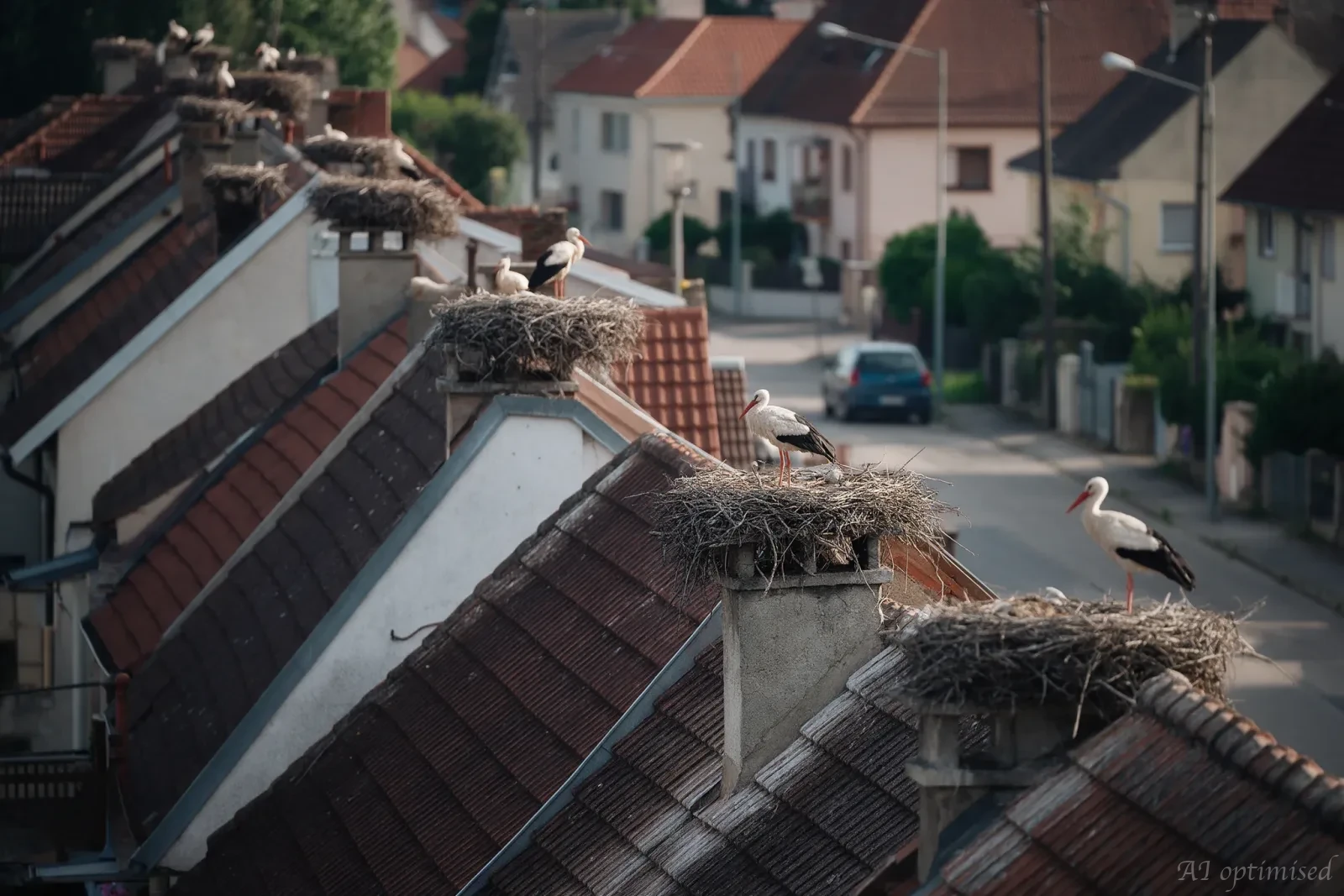
Often the return is to a colony rather than to one nest. The old platform may be occupied by the parents or by another pair, so the young bird joins the group and looks for a site of its own. Some birds do land on the exact nest, especially when it is empty. Others settle two roofs away. The colony is the anchor, and the nest is a detail inside it.
A bird that has crossed a desert and a sea does not arrive at a random village. It arrives at the place it knows, and the place has room for another pair. The memory is precise enough to find a region and loose enough to accept a different chimney.
The journey back bends with the coast and the weather. A stork follows coastlines, thermals, and river valleys, and it stops to feed in wet fields along the way. A bird that returns to the same village has solved a route across a continent and then narrowed it to one roof among hundreds. The last few kilometres may be the most precise part of the whole journey.
The male lands first
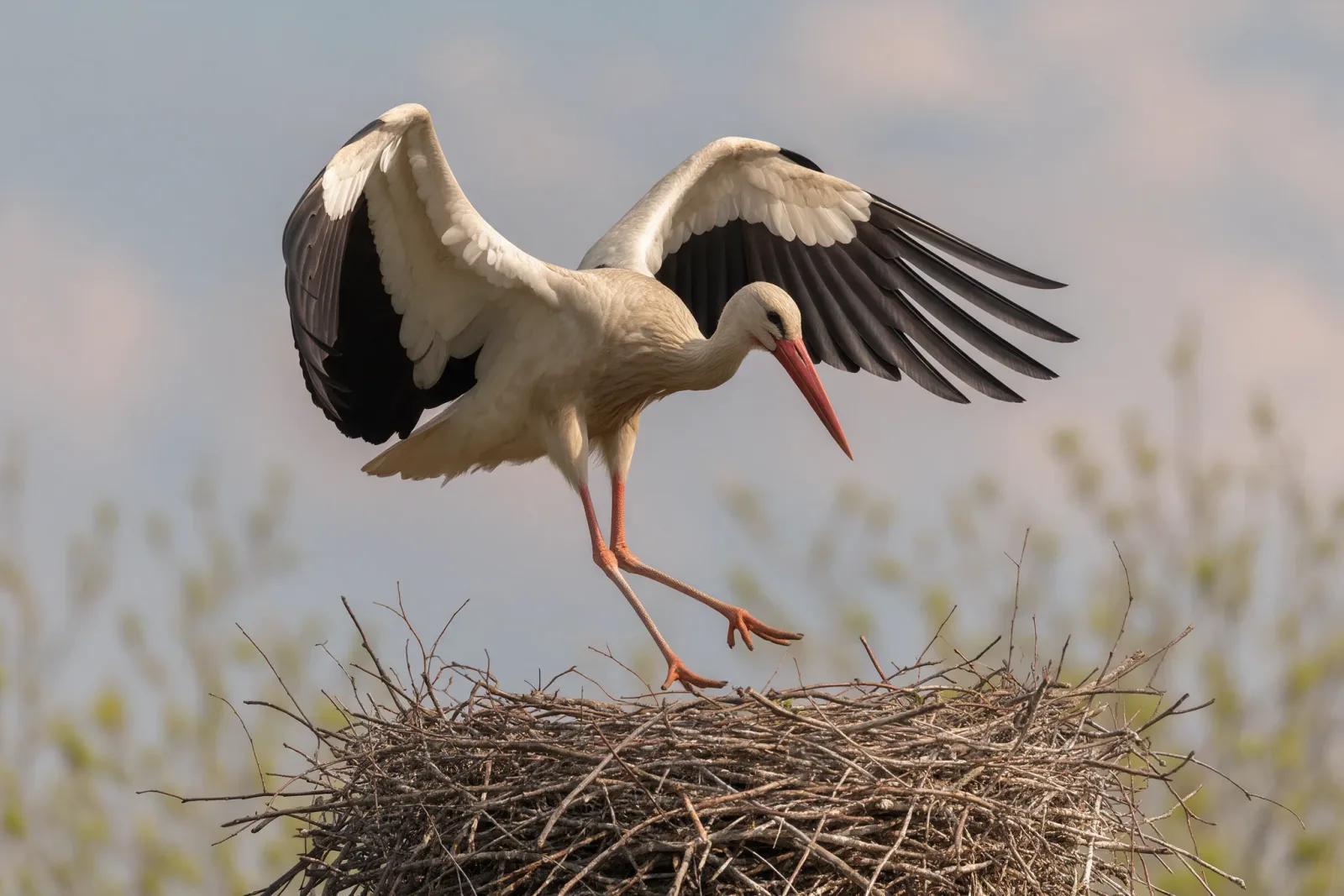
Spring arrivals begin with a bird standing alone on last year's sticks. The male usually reaches the platform days before his mate, sometimes while frost still sits in the shadow of the roof. He clatters, walks the rim, and watches the sky. His presence is the claim.
A male that holds the platform early has the first claim on the season. Other males may try to land, and the owner meets them with the same lowered head and snapped bill he uses on a rival. The nest is worth defending because it is already high, already proven, and already carries the bulk that takes weeks to build. When the female arrives, the pair greet with a long rattle, heads thrown back. The sound carries down the street, and the pair is back on the nest.
A male that arrives to a damaged nest spends his first days carrying sticks before a mate appears. The work and the waiting belong together. The platform is the thing he can offer, and the repair is how he offers it.
The first days are spent in short flights between the roof and the nearest field. The bird feeds, returns, clatters, and stands on the rim. A cold snap can empty the sky again for a week, and the stork waits it out on the nest. The date shifts from year to year, and the bird holds the platform through it.
A village fills in waves
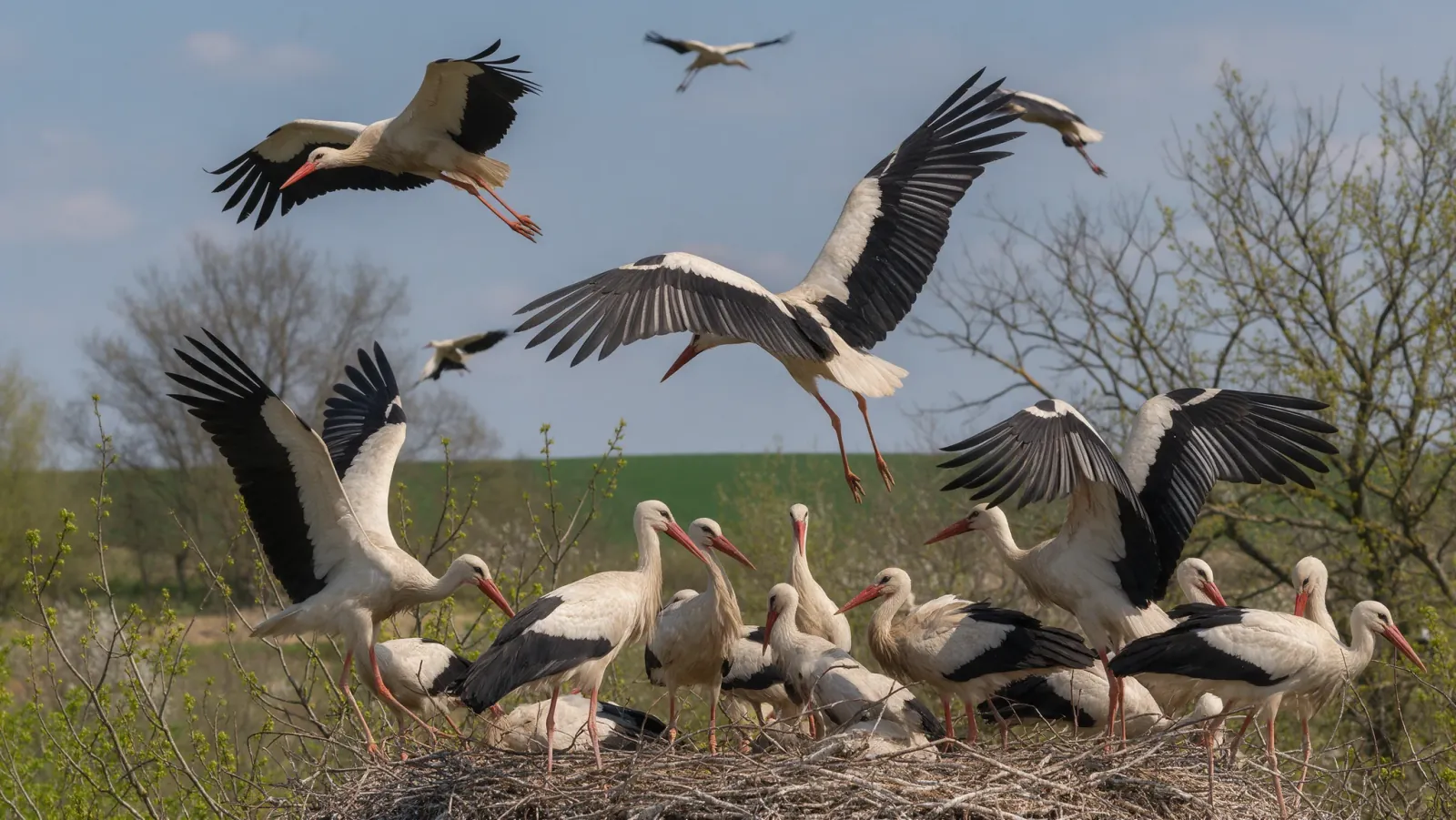
The first stork is a sign, and the next dozen are a sound. Arrivals are staggered through February, March, and April. Older birds tend to come first, and a bird that has bred on the roof before goes straight to it. Young birds drift in later, or stay south for another year.
A colony is loose. Nests sit on separate buildings or on different parts of one roof, spaced so that a bird with a two-metre wingspan can land and leave without clipping a chimney. In parts of Spain and Poland a village can hold dozens of pairs, and still each pair defends only the rim it can reach. The nests stay within sight of each other, and the air between them belongs to nobody.
Company has uses. A predator near one nest is seen by birds on the next roof, and the alarm passes across the village. A field being mown draws storks from several nests, because one bird's success is visible to the rest. The colony works as a crowd of watchers.
Repair begins before courtship
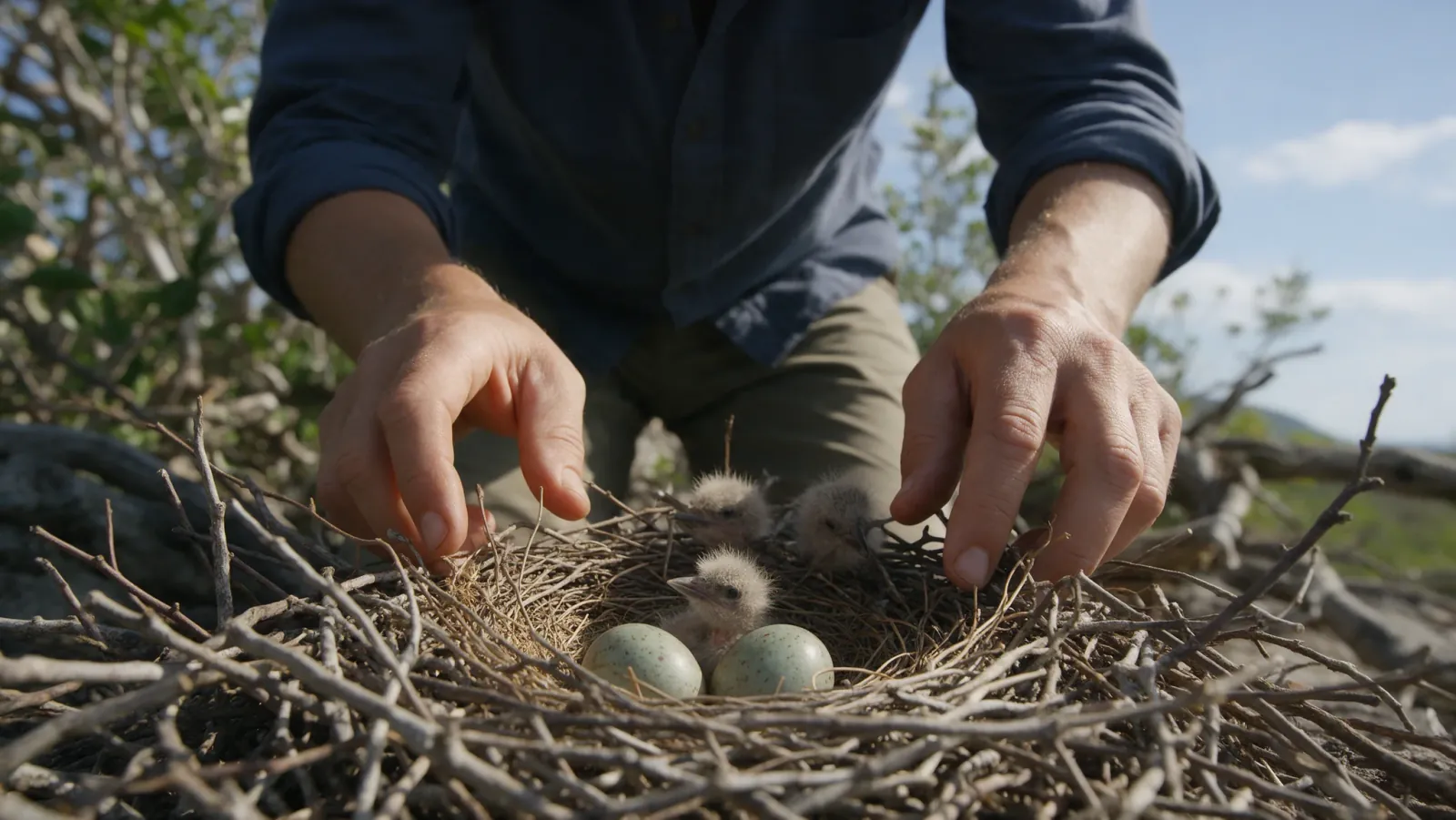
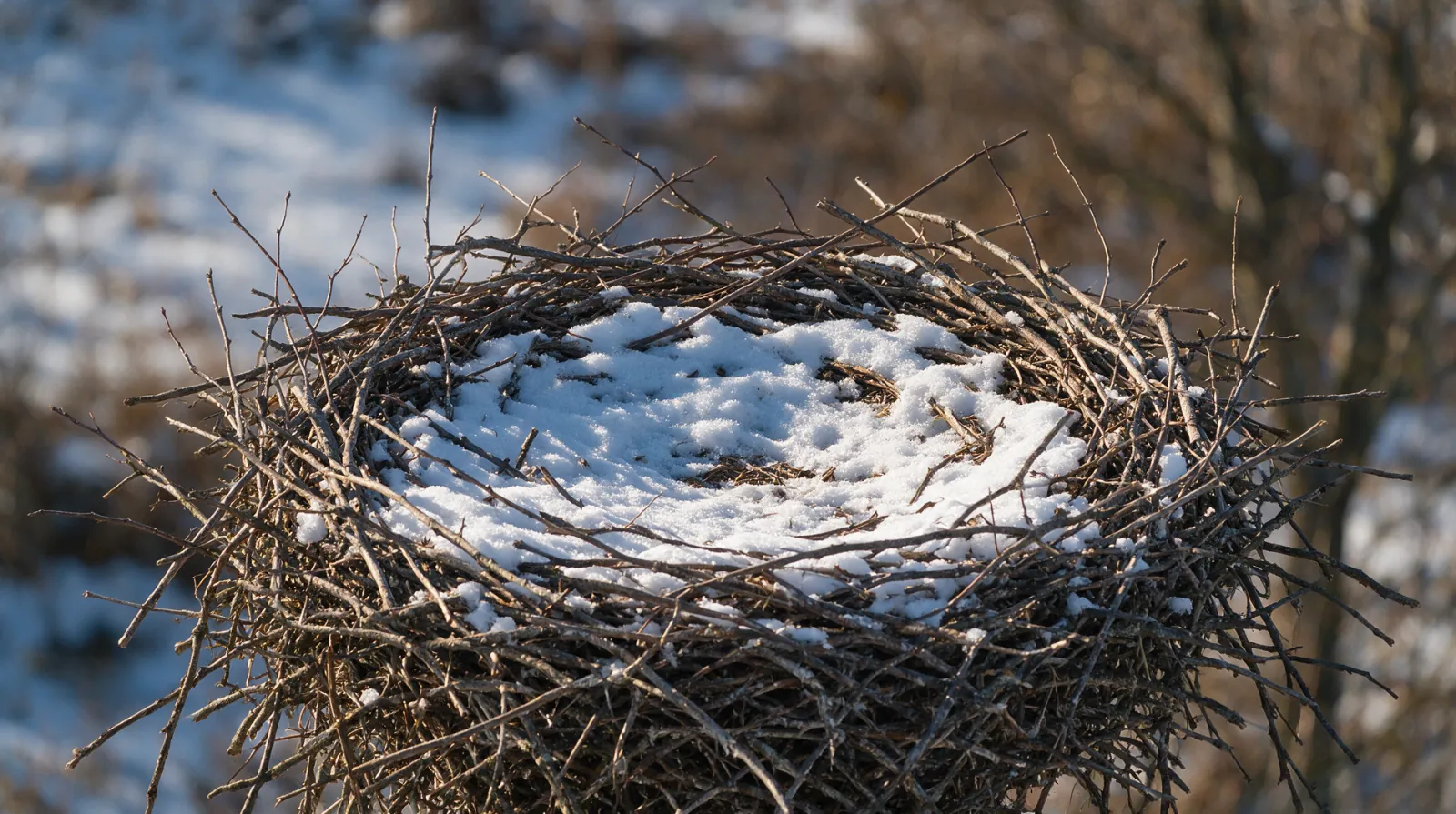
The platform that greets the birds is a wreck of last season. Wind has loosened the outer sticks, rain has flattened the rim, and snow has pressed the cup into a shallow bowl. A returning stork walks over the mess slowly, nudging the weave with its bill and testing the places that have come apart.
Then the carrying starts. Sticks go into the gaps, one at a time, followed by grass, turf, and whatever cloth or paper the bird finds. The male often gathers more, and the female places more, though both work. A returning pair adds to a structure that may already be decades old, and every spring leaves another layer bound by soil and droppings.
The repair belongs to the same settling as courtship. The greeting, the work on the platform, and the first eggs all follow from the pair's arrival. A pair with a sound nest can lay sooner. A pair on a broken platform spends its first days rebuilding instead.
The nest is never rebuilt from nothing. The old base stays, and the new work goes on top. A bird that has returned for several years knows where the weak places are, and it tests them with its bill before adding more weight. The platform grows by repair, and the repair is a record of the winter.
When the nest changes hands
Site fidelity is strong, and it has limits. A bird may fail to return from migration. A pair may lose a clutch and separate. A storm may take the platform down. Any of these leaves a site open, and another pair will claim it.
Ownership follows occupation. A young pair that finds an empty nest repairs it and breeds there, and the previous owners are simply gone. The bottom layers were built by birds long dead. The top layer is this year's work. One platform can hold the history of many pairs, and none of them needs to be related.
The colony persists because birds keep returning. Its size is a record of local conditions. A wet spring with plenty of frogs raises more chicks, and more of those chicks come back two or three years later. A drained marsh or a lost roof does the opposite, and the village thins without any single cause being visible from the ground.
The first return takes years
Young storks do not join the breeding crowd at once. Many spend their first summer in Africa, or arrive after the adults have settled. They gather in loose flocks of non-breeders and watch the colony from a distance. A white stork usually breeds for the first time at three or four years old.
By then the bird has seen several springs from the edge. It knows where the nests are and how the colony sounds. The first return is a homecoming and a search, and the two are hard to separate. The bird may land near its birth nest and find it occupied, then wait or move along the roof.
Some birds return to the exact platform they left. Others settle in the same village, or in the next one. The nest may have been repaired by two or three pairs in the meantime. The bird still lands within sight of it.
Explore the gift