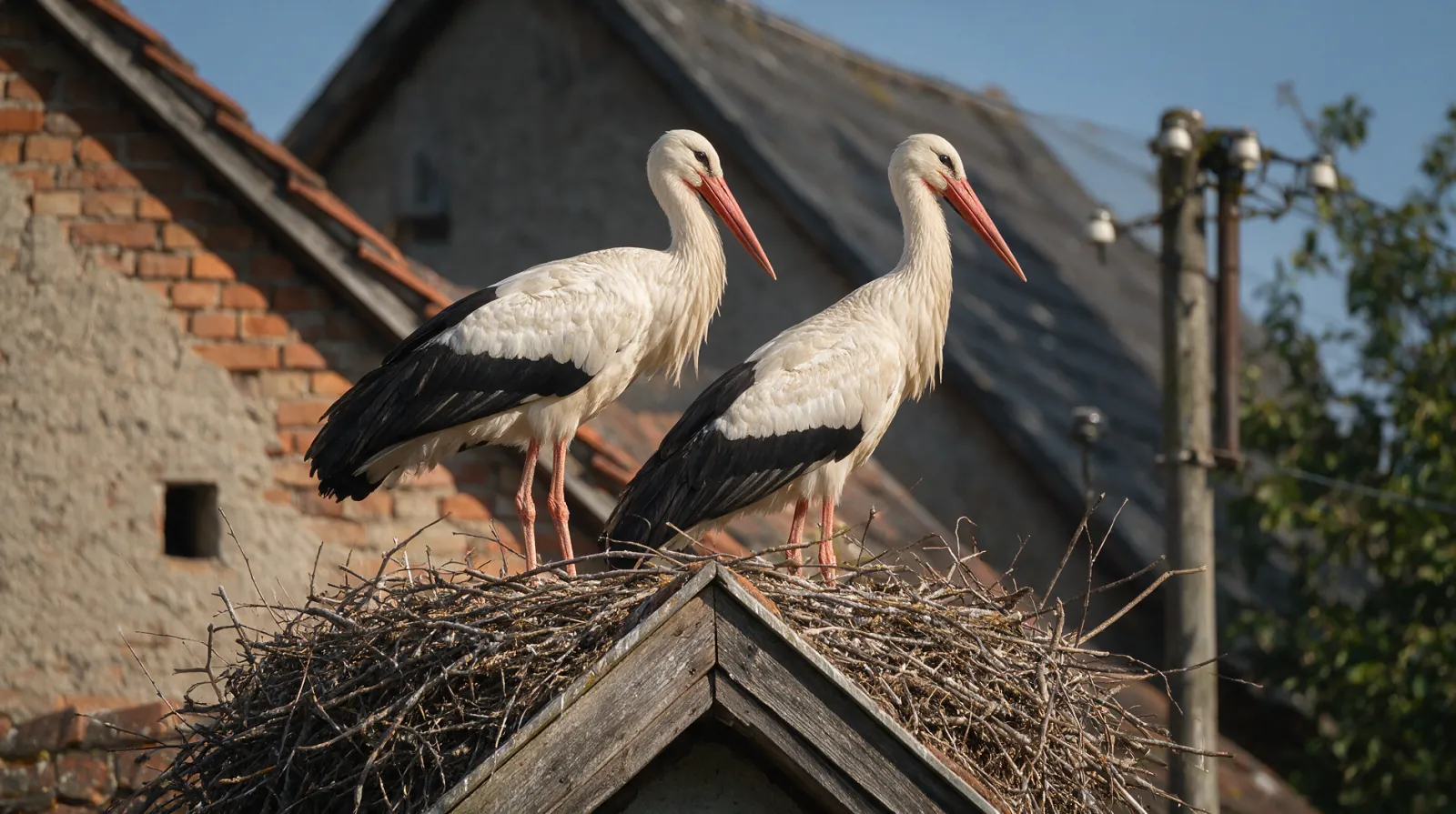
The pair on the gable came back on the same day they always came back, in the last week of March, when the wind had turned and the first warm rain had softened the fields. The village knew to look for them, and every year they were there. Their story is one of return. Some storks in the valley now stay for the winter.
The first warm rain
They had flown from Africa, north over the sea and the mountains, and they arrived tired and thin. The last stretch was the hardest. The air over the high ground was cold, the thermals were weak, and they flew low through the valleys with the snow still on the peaks above them. They stopped for two days in a flooded meadow and fed until they could fly again.
A pair that has flown together for years arrives together, and the timing is part of the bond. The village watched for the first bird on the ridge and then for the second. A pair that has nested successfully tends to return to the same platform and to each other.
Their arrival happens in two parts. One bird lands, stands on the rim, and clatters. The other comes in from the west and lands beside it. The sound carries down the street and brings people to their windows, and the season has a beginning that everyone can hear.
Claiming the old nest
They landed on the nest in the afternoon and stood together, clattering, and the sound brought people to their windows. Then the work began. They repaired the rim, turned the lining, and chased off a pair of jackdaws that had taken an interest in the gap beneath. Within a week the nest was theirs again.
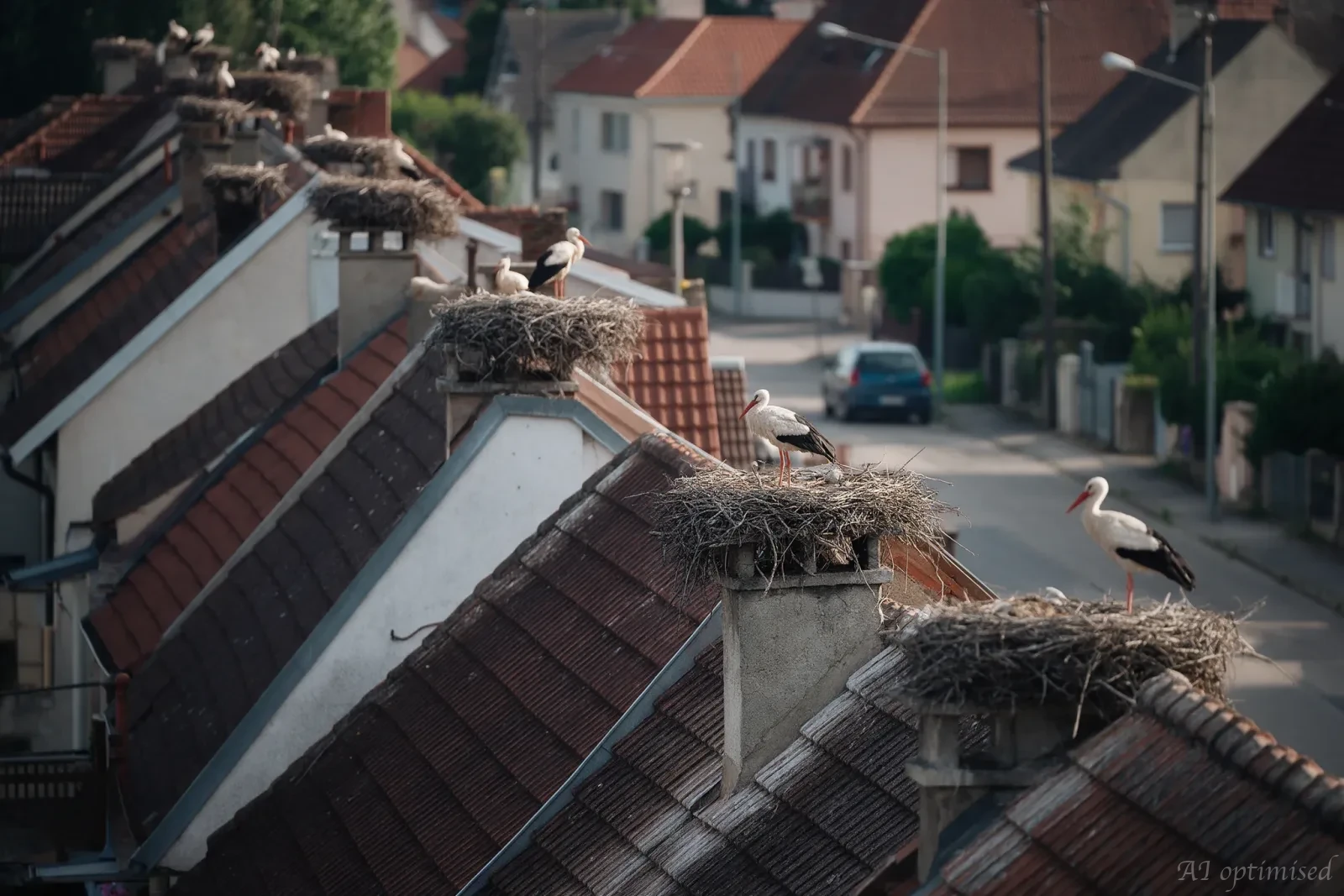
A nest that has survived a winter is still a nest, and the first task is repair. Sticks are pulled, pushed and rearranged. The platform sits on the ridge like a crown, and the people below have learned to live with the mess. They put a board under the nest to catch what falls, and they clean the path every week.
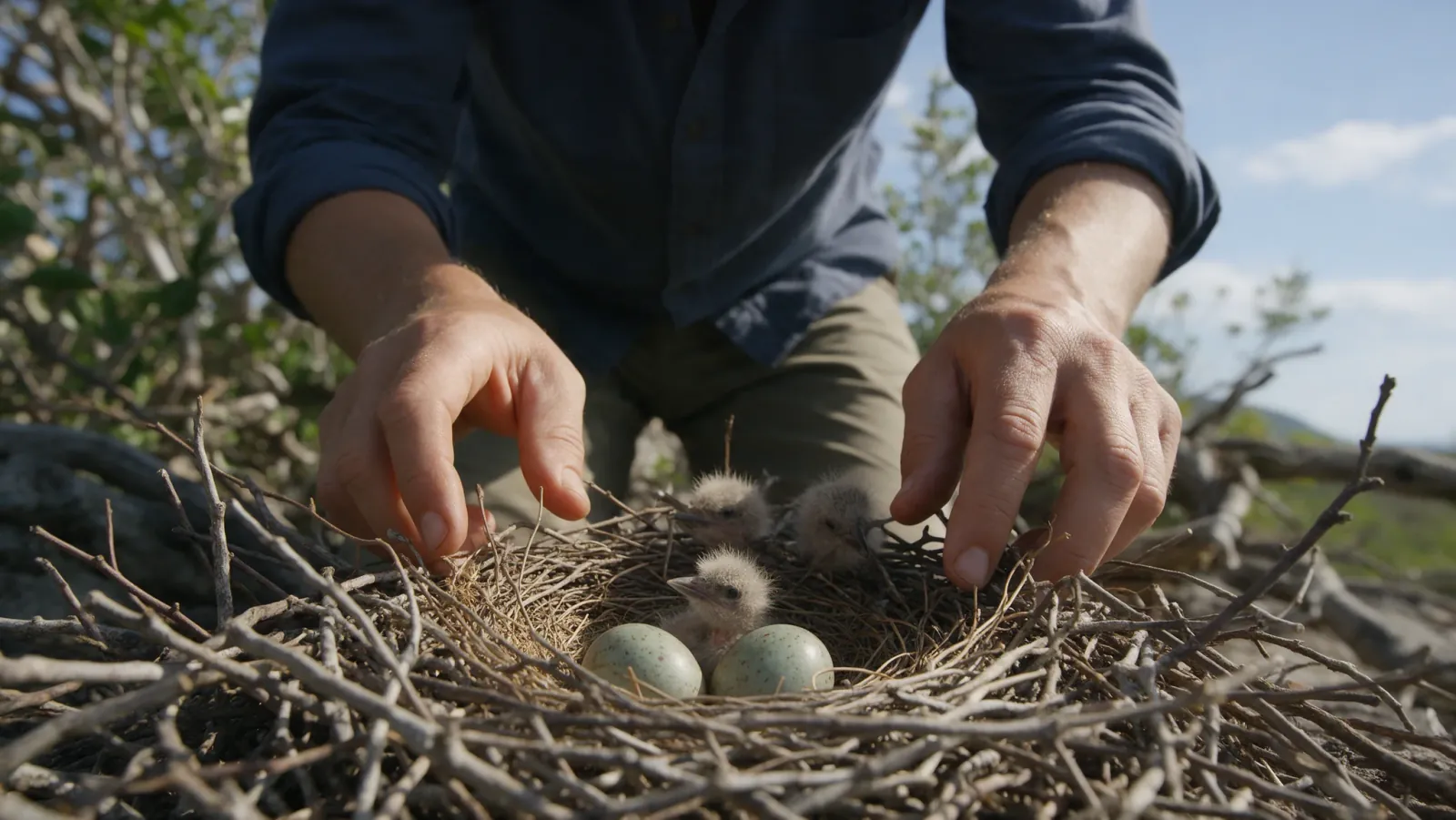
The first egg came in April. The second followed two days later, and the pair took turns sitting from the moment the first was laid. One stood over the nest while the other fed, and they swapped with a quiet ceremony the village had watched for a decade.
A village keeping count
The baker liked the birds because they arrived with the warm weather. The man who washed his car did not. The children watched the nest through binoculars and kept a list of the dates, and someone added a line to it every spring.
The chicks would hatch in May, and the summer would be full of carrying food. The gable would be loud, and the street below would be white with droppings, and the people would complain and then stop complaining. The baker would put the dates on his wall. The children would add three more names to their list.
The village measures its year by the nest, and the nest keeps the same address. A record kept by children is still a record. It holds the arrival, the eggs, the hatching and the leaving, and it makes the ordinary sequence visible.
The stork that stayed
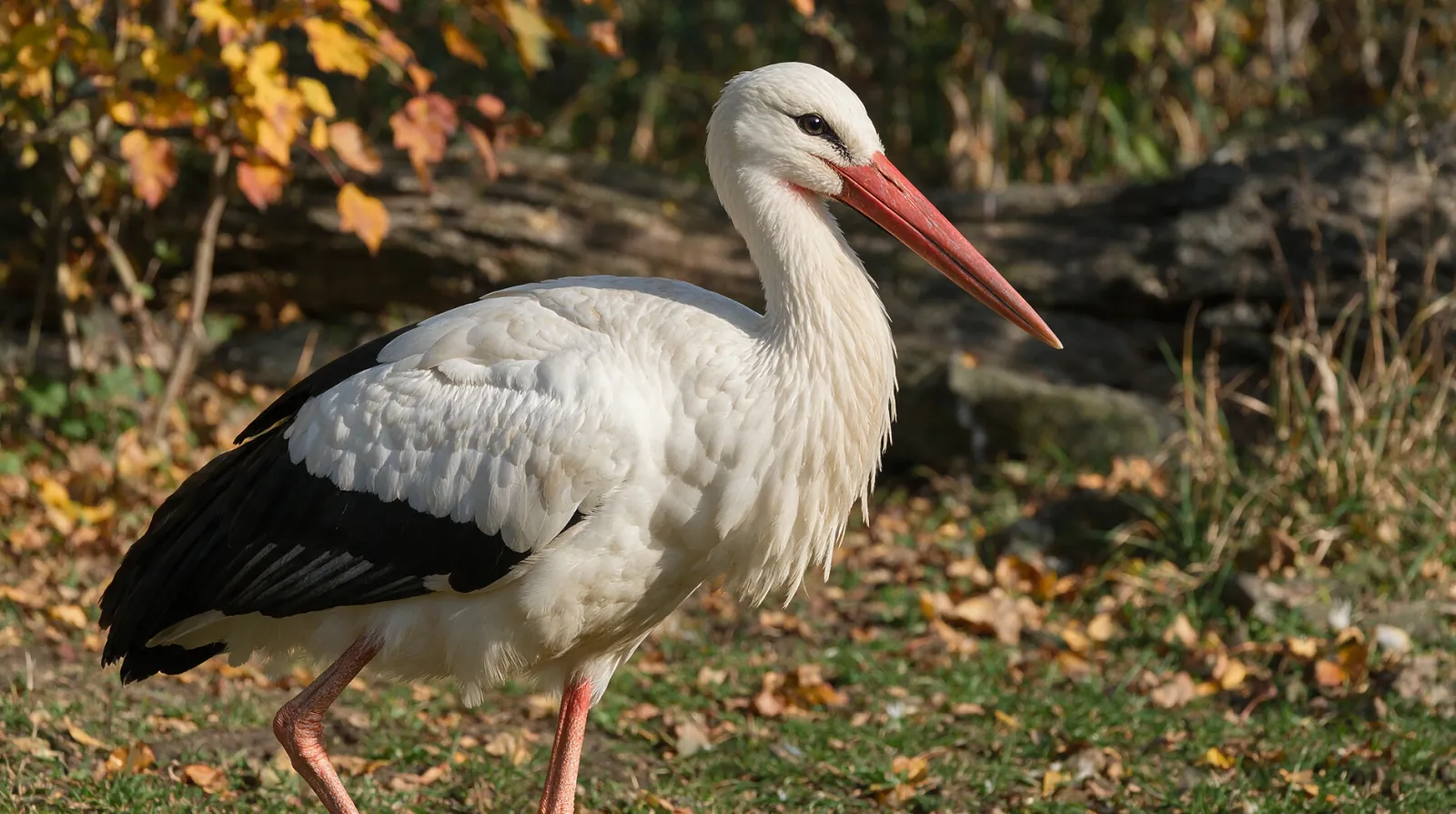
Most white storks leave. The journey is long and the winter in the north is hard, and a bird that stays risks hunger and cold. A few stay anyway. Mild winters and easy food have made it possible for some storks to spend the whole year in the north, and Anouk was one of them.
The first frosts were not hard. The ground froze at night and thawed by noon, and the ditches kept a little open water. Anouk walked the fields in the middle of the day and found worms and insects in the soft ground. A stork can survive a mild frost as long as the ground gives it something to eat.
As the weeks passed the frosts got harder. The ditches sealed over, and the fields stayed white all day. Anouk moved closer to the village, where the walls held warmth and the gutters ran, and she fed in the garden plots and along the road. People left scraps out, though she took little of them. She kept her distance. She was simply late.
One week in January the cold came down hard. The ground was iron, the water was gone, and Anouk stood on one leg in the lee of a barn for three days. On the fourth morning she was gone. She had flown to the coast, where the estuaries stay open, and she spent the rest of the winter there among gulls and shelducks. She came back in February, before the others.
A winter that works
A stork that skips migration has found food close to home, and the cost of staying has fallen. Mild winters and predictable food from human waste have made the north survivable in a way it was not a century ago. White storks now winter in Spain, Portugal and parts of southern Europe, feeding at open rubbish tips, rice fields and wet meadows that no longer freeze.
The habit spreads slowly. A bird that winters successfully is more likely to do it again, and its chicks learn the pattern from the adults around them. The shift is not universal. In some regions the old migration continues exactly as before, and the residents are a minority that grows by a few birds each year.
A resident stork still flies, but the distances shrink. Its winter movements are local: from a roost to a tip, from a tip to a wet field, and back. The birds gather at roosts, sometimes in numbers that surprise people who thought storks had left for the winter. The map shows a scribble instead of a line, and the scribble repeats in the same places week after week. Staying also changes the timing of breeding. A bird that does not migrate can start earlier, and earlier chicks have more time to grow before the next winter.
When residents and migrants meet
Nests are scarce in spring, and a bird that has held a roof all winter has an advantage over one that has just flown in from Africa. The residents are already there, already paired, already repairing. The meeting happens at the nest, and it is not always friendly.
The strategy has an edge. A cold snap can kill birds that have lost the habit of leaving, and a rubbish tip can close. A resident bird also misses the flush of insects that follows the rains in the south. The choice works while the food holds and the winters stay mild.
The behaviour is learned, and it moves through a population the way a habit moves through a family. One bird stays, survives, and the birds around it see a nest that is occupied in January. The next winter, another stays.
The empty months
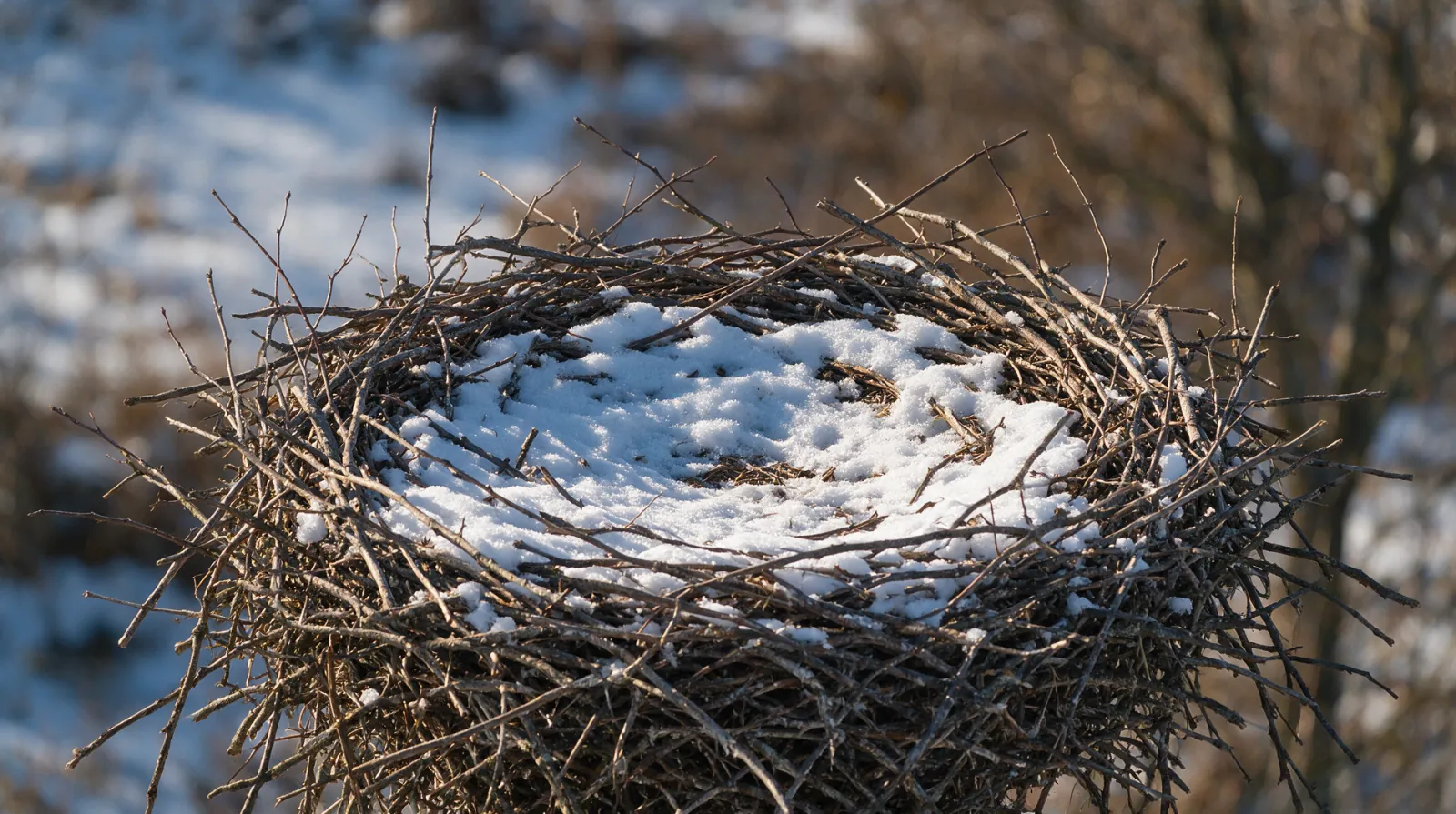
By September the gable was bare. The young had gone, and the pair followed them, and the nest stood through the winter taking snow and wind. A few sticks came loose and fell into the street. The board underneath catches them, and the empty nest stays on the gable through the winter. In February a pair of jackdaws looked at the gap beneath the nest, and at the board, and decided against it.
The returning pair on the gable always comes back, and the village counts on it the way it counts on the light coming back after winter. This year the line will turn again, and someone will open the map before breakfast.
Explore the gift