May arrives with light that outlasts the working day, and June arrives with the noise. A white stork pair on a roof uses both. The meadow fills with frogs and insects, the chicks hatch, and the nest becomes a place that is never quiet for long.
A month that works overtime
May is when the meadow produces at full speed. Grass lengthens, insects hatch in numbers, and the frogs get loud after dark. A single wet field can feed a pair all day and still have more to give. The long daylight drives the chain from grass to insects to frogs to stork, and every link runs on the same extra hours.
The change is quick. Rain falls, the grass answers, and within a week a field that was pale in April is thick and loud with small lives. A pair that arrives to a May meadow finds the year's richest larder already open.
Hay cutting begins in these weeks, and a mown field is easier ground for a stork: short grass, fewer places for a frog to hide, and insects left exposed along the rows. The birds follow the mowers without any encouragement.
The second shift
Most storks feed in the morning, rest through the hot middle of the day, and go out again in the evening. That evening feed is what May makes possible. Insects are slower as the air cools, the light lasts long enough to see them, and a bird that has hunted since dawn still has hours left in the day.
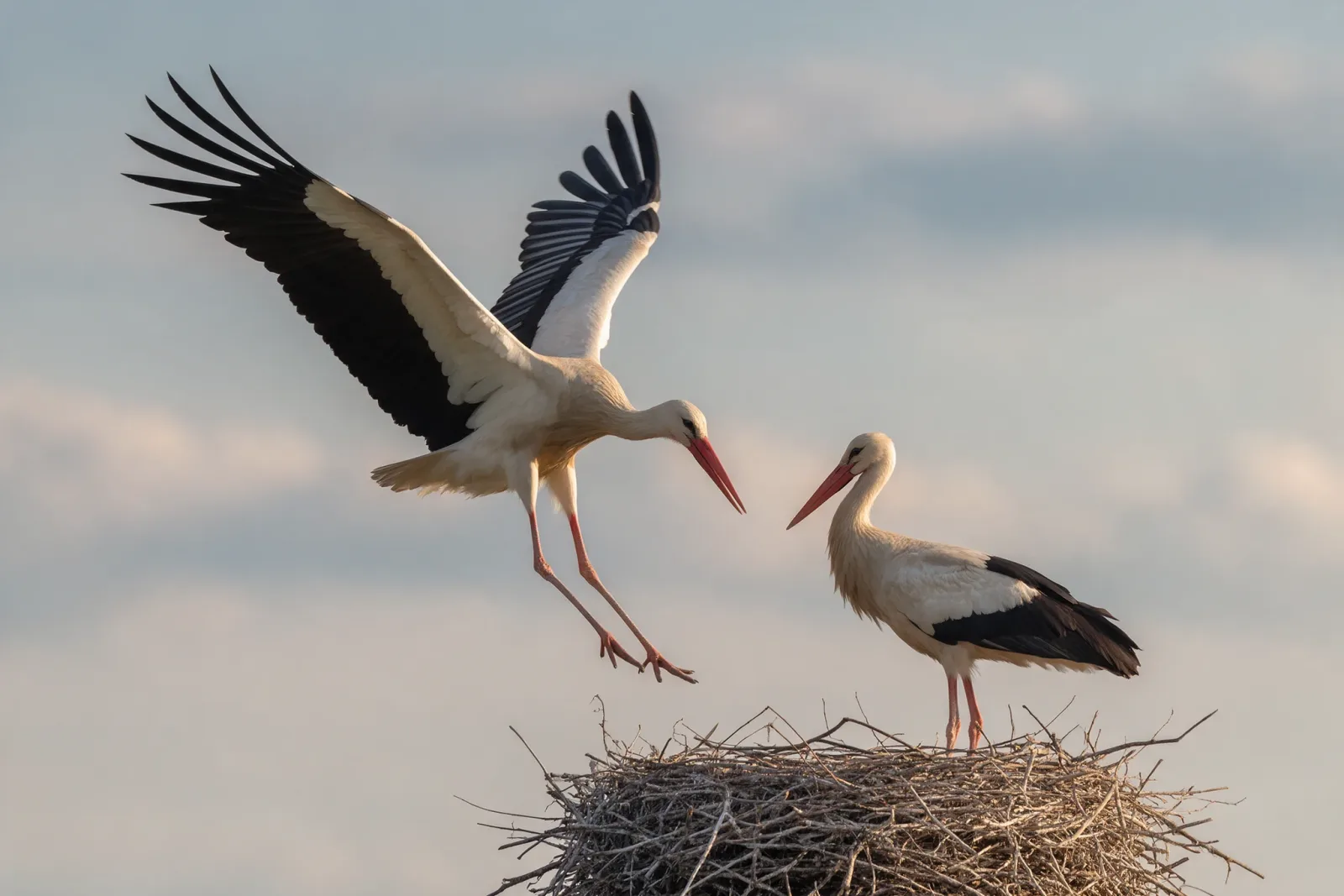
The pair take turns. While one bird is out over the meadow, the other stands on the nest over the eggs, and they swap with a clatter and a change of guard. Neither bird gets a full night, and neither seems to want one.
A chick needs food again and again, for weeks. Two shifts a day is what a growing family takes, and May supplies the hours.
An open nest in bad weather
A platform on a roof has no shelter above it, and the bird standing there is the only cover the chicks will get. Spring weather turns quickly. A warm morning can be a cold, driving afternoon before the parent has finished its next trip to the meadow.
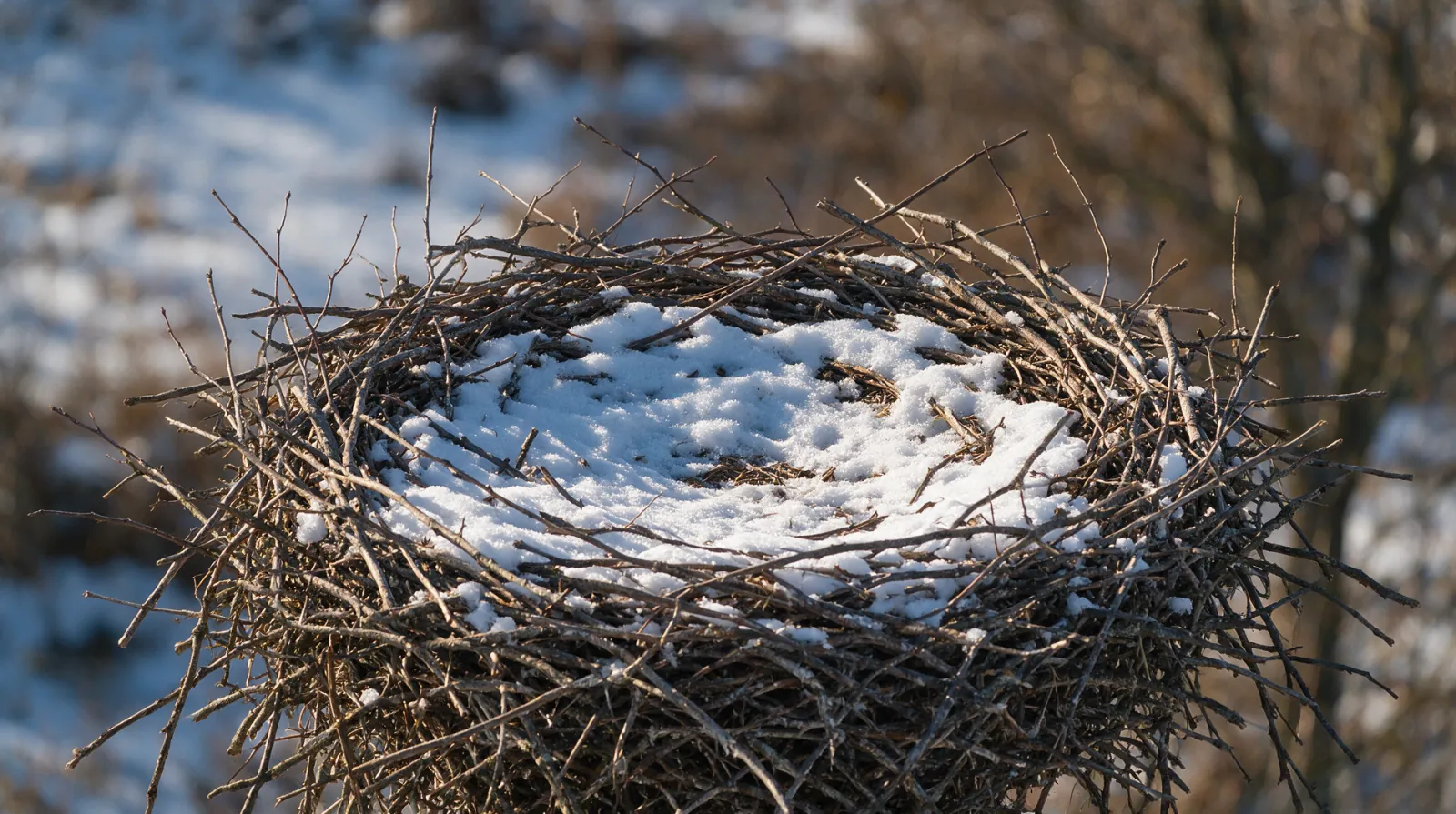
The nest sits on a roof or a pole, fully exposed. There is no wall to break the wind and no branch overhead, so every shower lands on the family. An adult white stork sheds water well; its feathers are dense and kept in condition, and it can sit through a wet night without much harm. A chick in down has almost none of that protection.
Down holds a little warmth when it is dry and almost none when it is soaked. Until the first real feathers come through, a young bird depends on the parent's body heat, and a cold rain pulls that heat away fast. The adults respond long before the chicks are in real danger, which is why the nest looks so still in bad weather.
The wing as a roof
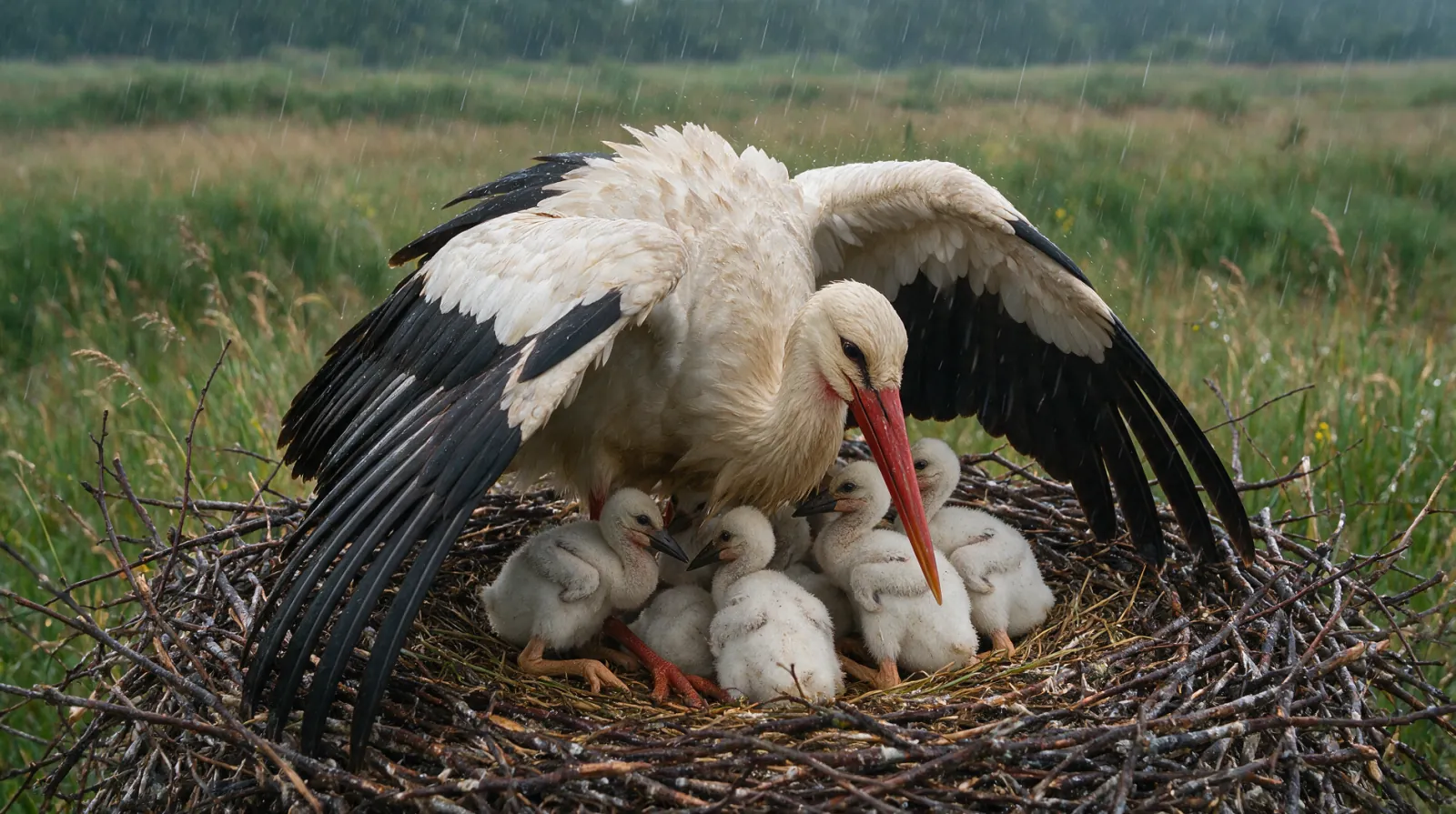
When the rain starts, the stork on the nest lowers itself over the chicks and spreads its wings slightly. The chicks push underneath, and the nest that was a bowl of open bills becomes a single white shape with a few tails sticking out.
The parent does not leave the nest until the weather does. It takes the rain across its own back, and the chicks wait in the dry pocket beneath. The pose looks uncomfortable and is held for a long time. The bird's head stays low, its bill pointed into the wind, and the water runs off the slope of its feathers instead of through them.
A second adult often stands nearby, hunched on the ridge or the chimney pot. It cannot help with the brooding, and it does not try. When the rain eases, the two swap, and the bird that has been wet walks out to feed and dry off.
The chicks do very little, which is the point. They huddle, press against each other, and keep their heads down. The smallest birds end up in the middle of the pile, and the older ones take the outer edge. On a long wet day the whole nest goes quiet, and the begging stops until the weather breaks. A passer-by sees a nest that looks empty and assumes the birds have gone.
A nest that never fills
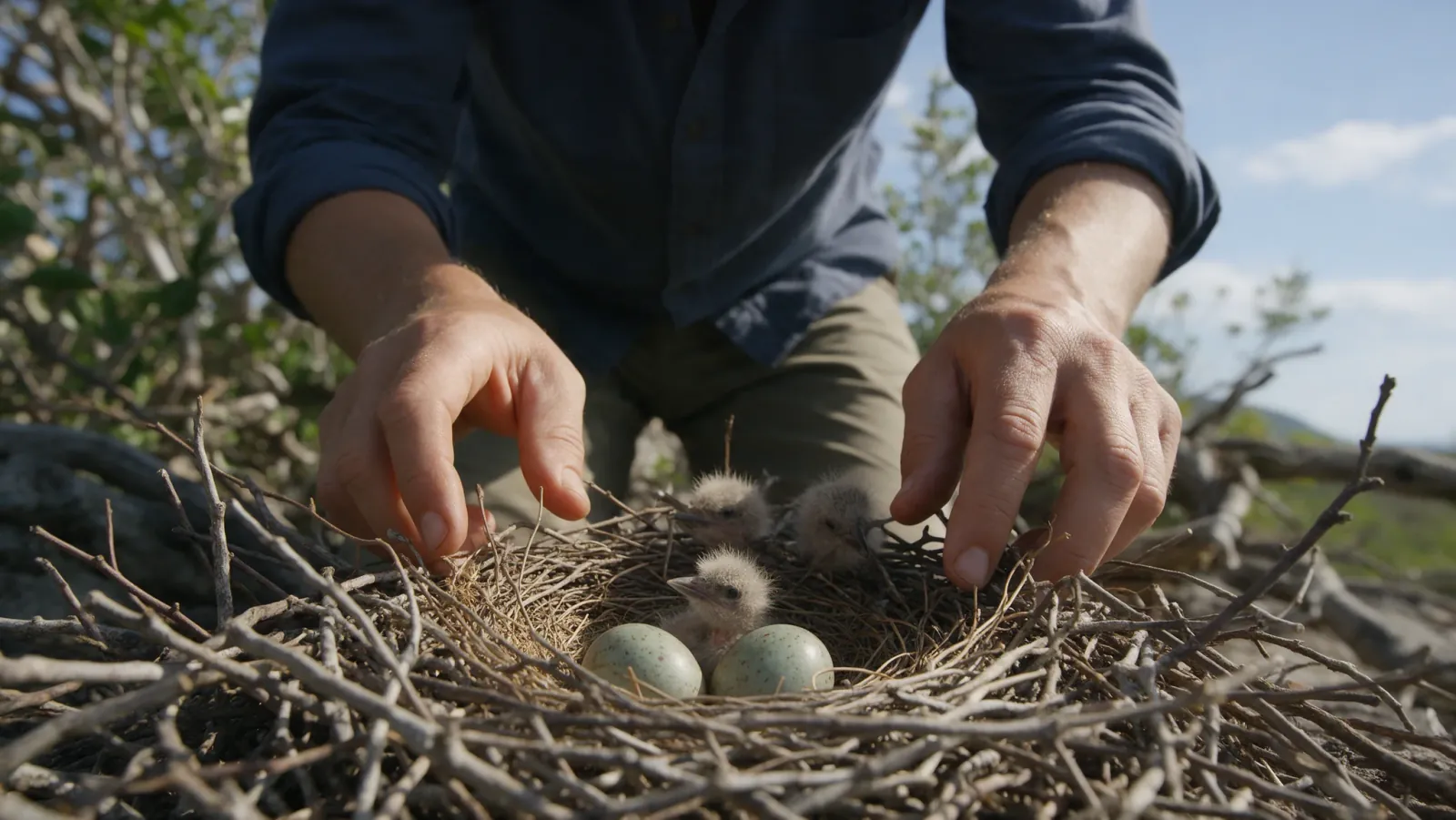
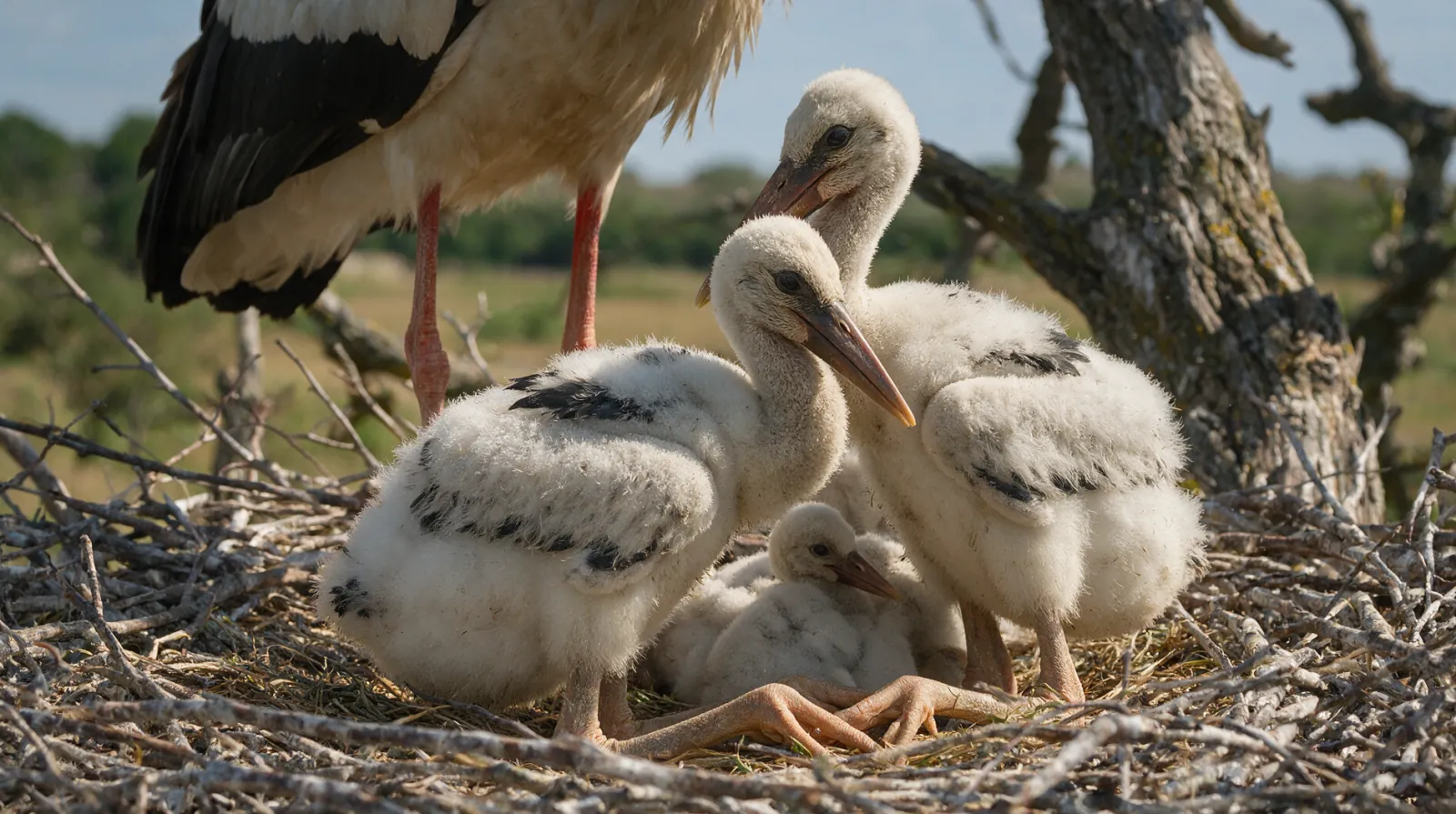
June arrives and the chicks are putting on weight fast. A young stork hatches small and downy, and within weeks it is standing, stretching, and demanding food with its bill wide open and its head thrown back. The parents work in shifts: one guards the nest while the other hunts, then they swap.
The chicks jostle for the front. The strongest push forward whenever an adult lands, and the nest that was roomy in May starts to feel cramped. By late June the young are close to the size of their parents, and they still beg like hatchlings.
Feeding is not gentle. A parent grips the chick's bill, the young bird seizes the food, and the whole exchange lasts seconds.
What the parents carry
The food comes from the fields and wet meadows around the village. Frogs, insects, small fish, and whatever else lives in the shallows are gathered in the parent's throat and carried back. A stork feeds its young by tipping its bill and letting them take the food, and the meal disappears as soon as it lands.
A nest of chicks eats a great deal every day. The trips are short and constant, and each one ends in a burst of noise before the adult turns and leaves again.
June also brings the first real heat, and a nest on a roof takes the full sun. The adults stand over the chicks and open their wings a little to make shade. The young pant with their bills open and settle low into the sticks. Water matters as much as food in this weather. The chicks cannot fly down to a pond, so what they get comes from what the parents carry, and a frog is mostly water.
Neighbours on nearby roofs sometimes try their luck. The sitting bird has to stand up and clatter to remind them whose nest this is, and the message rarely needs repeating.
A pair running on empty
By the end of June the adults are thin and the chicks are fat. That is how the season is meant to go. Every good meal goes up the nest, and the parents take what is left over, which is often nothing. A pair can lose weight steadily through the nesting season, and they recover it in the weeks before migration, feeding on harvest stubble and drying pools.
The work is unglamorous. There is no long flight to Africa here, no drama on the thermals, only a bird leaving a roof, catching something in a wet field, and bringing it back. Repeated for weeks, that is what raises a family.
The begging changes before the chicks leave. They begin to stand at the edge of the nest and flap, and the nest that was the centre of their world starts to look small. June ends with a roof full of nearly grown birds, all of them hungry, all of them a week or two from the air.
Explore the gift