In late March and early April, white storks come back to villages across Ukraine, and people watch the sky for them.
The return is a calendar event. Nests that stood empty through winter fill again, and the birds repair them before the trees are fully in leaf.
The arrival
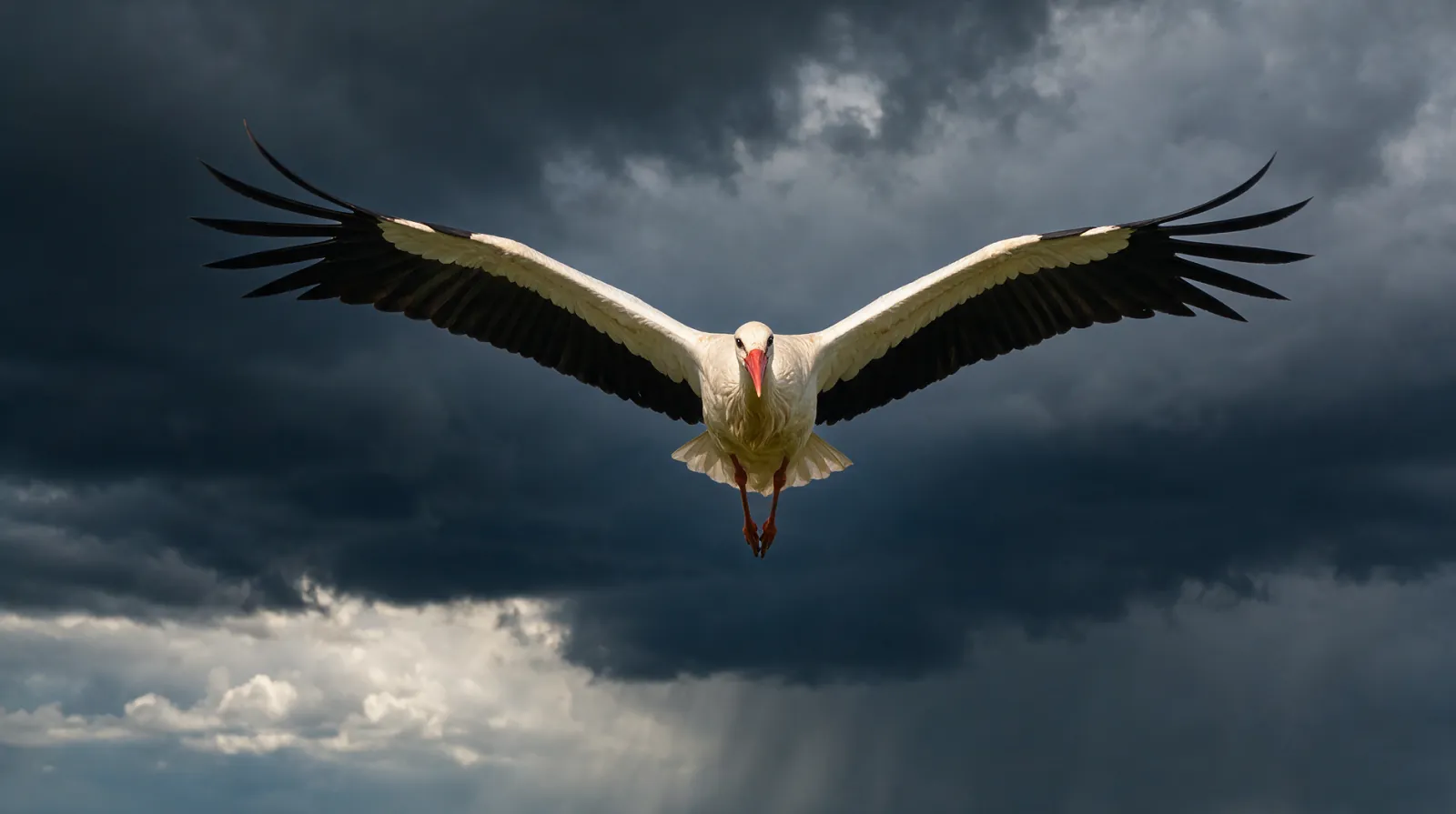
Ukrainian storks winter in Africa and return along the eastern flyway, through the Balkans, Turkey and the Levant. The first birds appear in the south and west, then the wave moves north and east. A stork on a pole in early April is a sign that the season has turned.
People notice. In villages, a stork on the roof is talked about, and an empty nest is noticed too.
The village bird
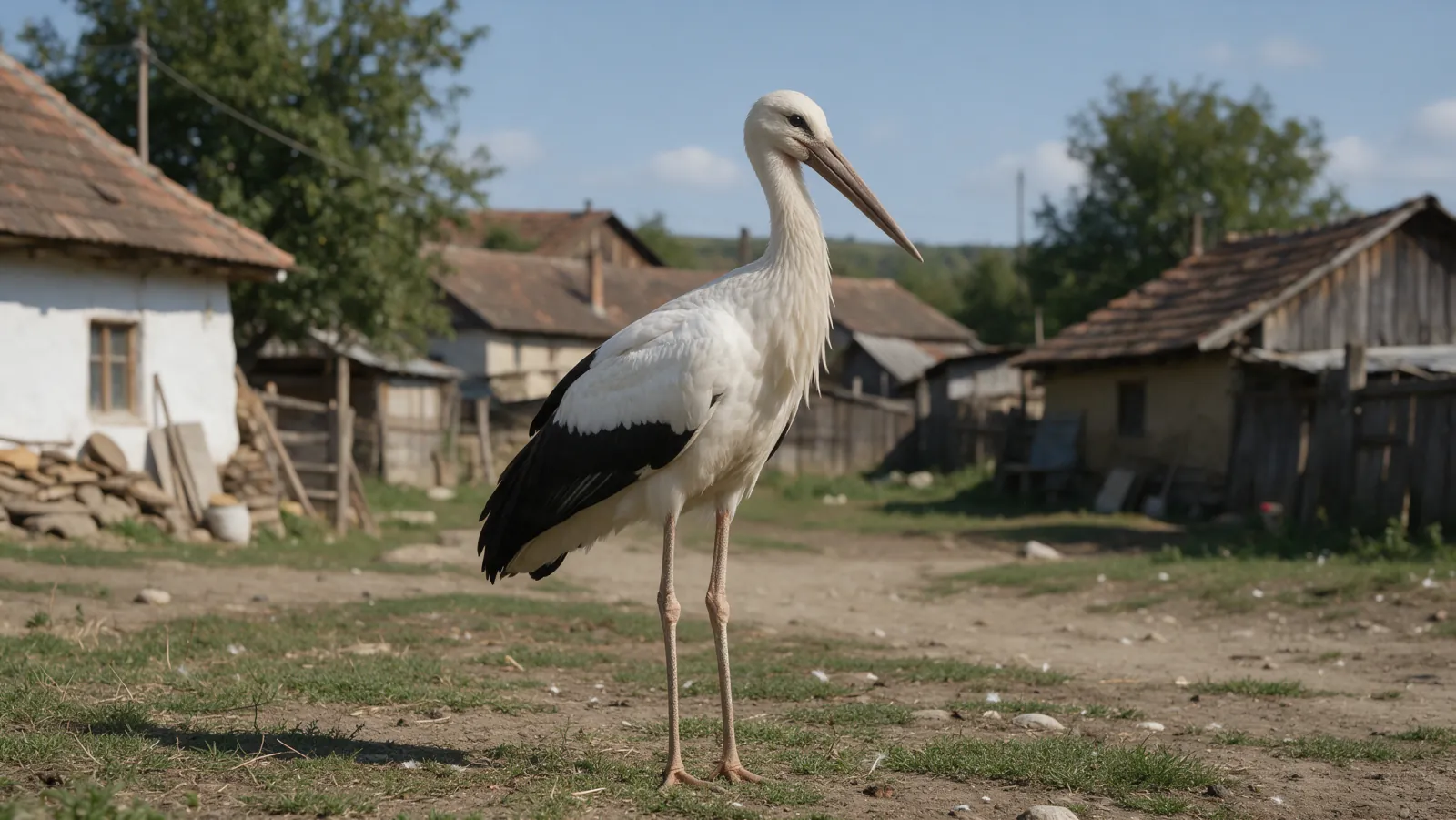
White storks nest close to people. Roofs, chimneys, poles, water towers and trees all carry nests. The Ukrainian word for the bird, leleka, appears in songs and stories, and a stork on a house is still read as good fortune.
The birds tolerate people at a distance, and the villages have learned to leave the nests alone.
Where they are
Storks are widespread across central, northern and western Ukraine. The marshes of Polissia, the river valleys and the farmland of the west hold many. The population is large, and the bird is a familiar part of the summer countryside.
The nest
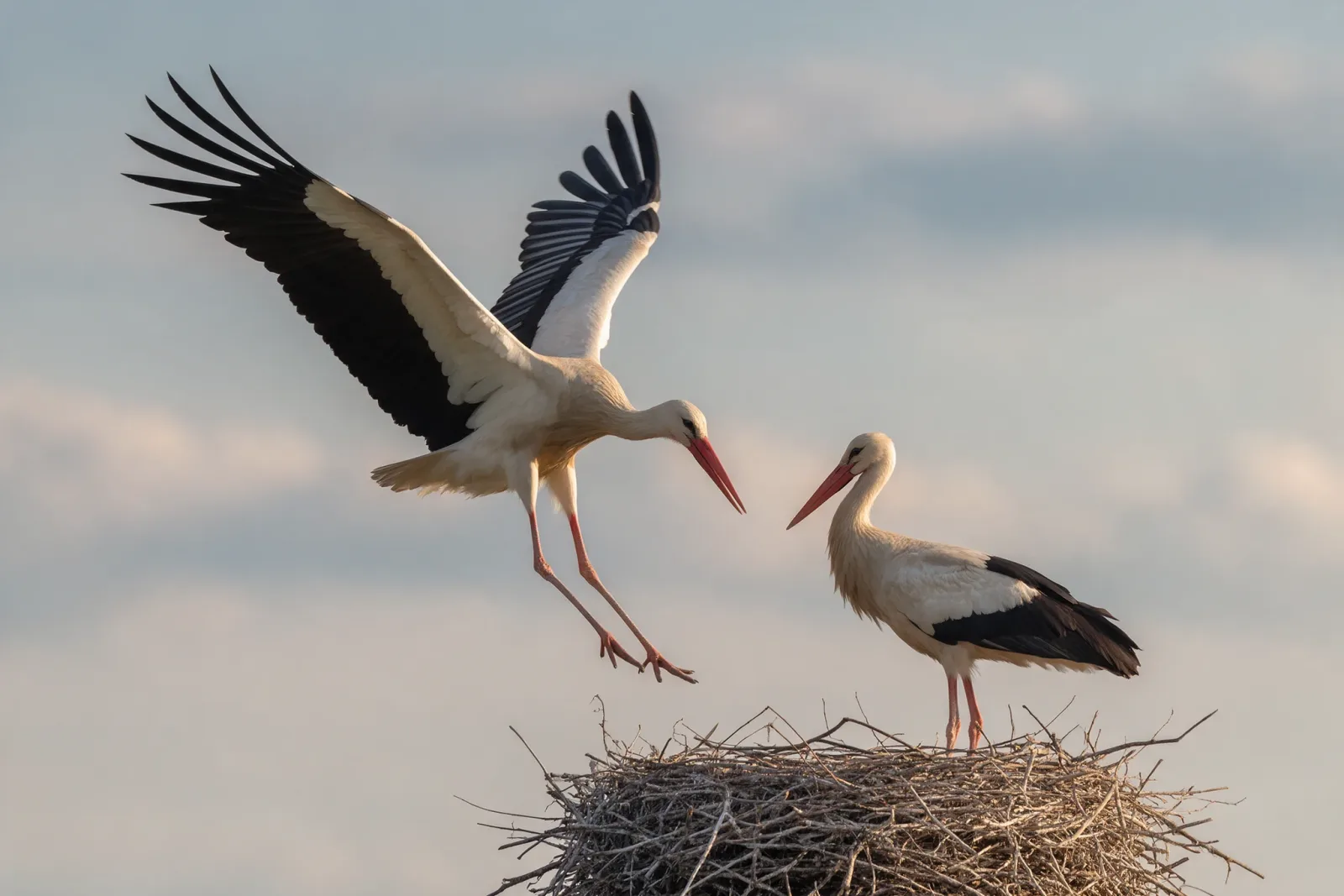
A platform of sticks, grass and rags, built on anything high. Pairs return to the same nest and add to it. Bill clattering is the sound of spring around a Ukrainian village, and pairs greet each other at the nest with heads thrown back.
A nest on a water tower can be seen from the edge of the village. It grows year by year, and in a bad storm it can come down. People often rebuild the platform rather than lose the birds.
Food and farming
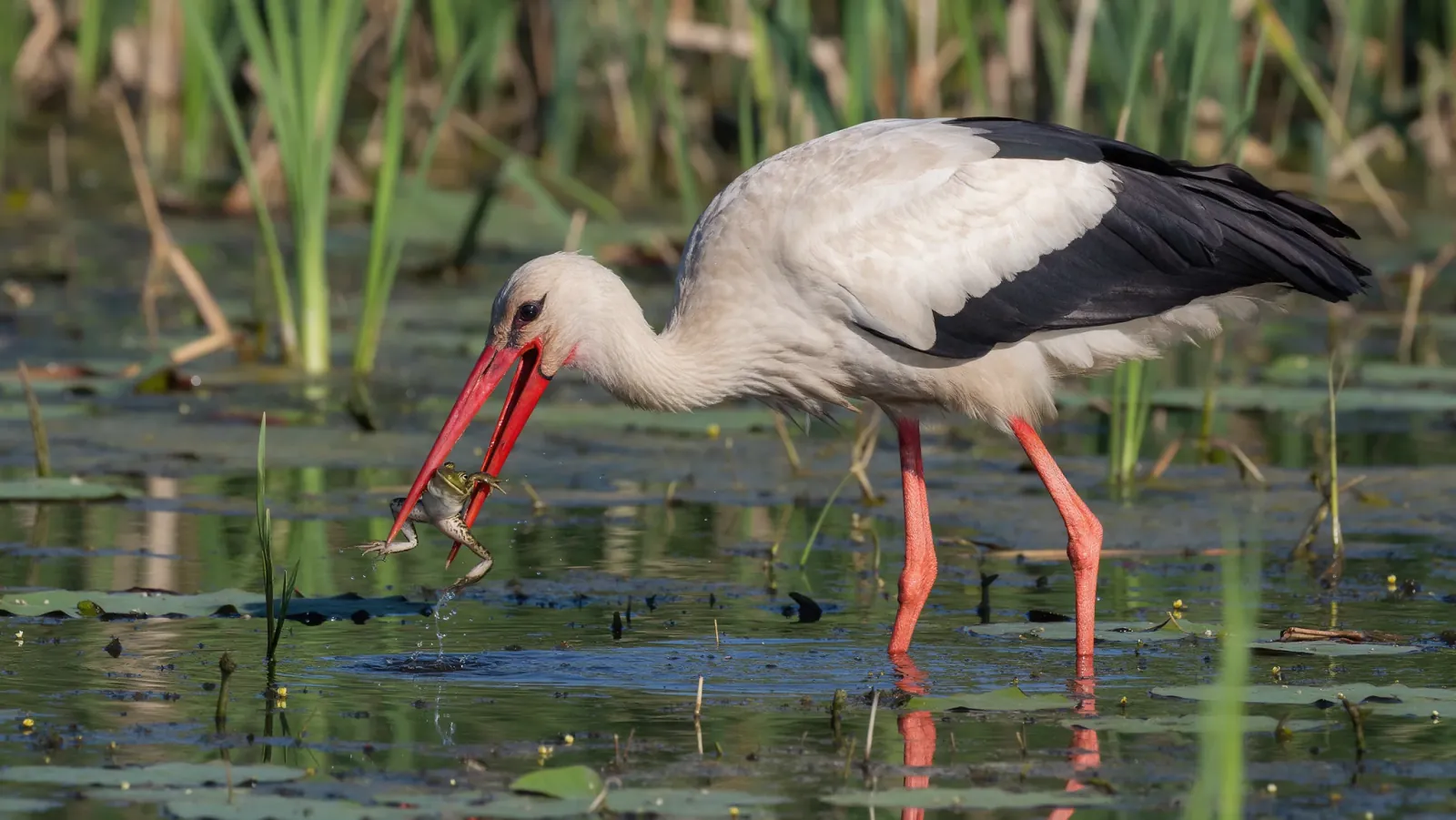
Frogs, insects, earthworms, voles and fish. Wet meadows, ponds, ditches and shallow rivers. Drainage and intensive farming are the pressures, and a dry spring makes feeding chicks hard.
Storks also follow the plough, taking worms and insects from turned soil. That habit has kept them close to farming for centuries. The first birds arrive while the nights are still cold, and they feed in the warm shallows.
The departure
In late summer the birds gather. Flocks form in fields, and the birds leave through August and September, heading south along the eastern route. A field full of storks in August is a sign that the season is ending.
The war
The war has changed daily life across Ukraine, and field work has been affected in the regions closest to the fighting. Storks still return to villages, and people still notice. The bird carries on with its season while the country carries on with its own.
The nest through the year
A stork nest is used for years, and it changes with the seasons. In spring it is repaired and lined. In summer it holds growing chicks and the remains of meals. In autumn it empties. In winter snow sits on the sticks, and the platform waits.
A nest that falls is often rebuilt on the same pole. People treat the site as fixed, and the birds seem to as well.
Watching them
Spring and early summer. Use binoculars, stay away from nests on private buildings, and ask before entering a yard. The birds are used to people, and a nest is still someone's home.
A nest on a water tower, a bird standing guard, and the village going quiet at dusk: by dark the chicks are fed, and the adult on the nest stands with its bill tucked.
Explore the gift