Weather decides much of a stork's year. A gale, a late frost and a shrinking pool ask different things of a bird, and the answer is often the same: stand, wait, and spend as little as possible until the ground changes.
The wind before the rain
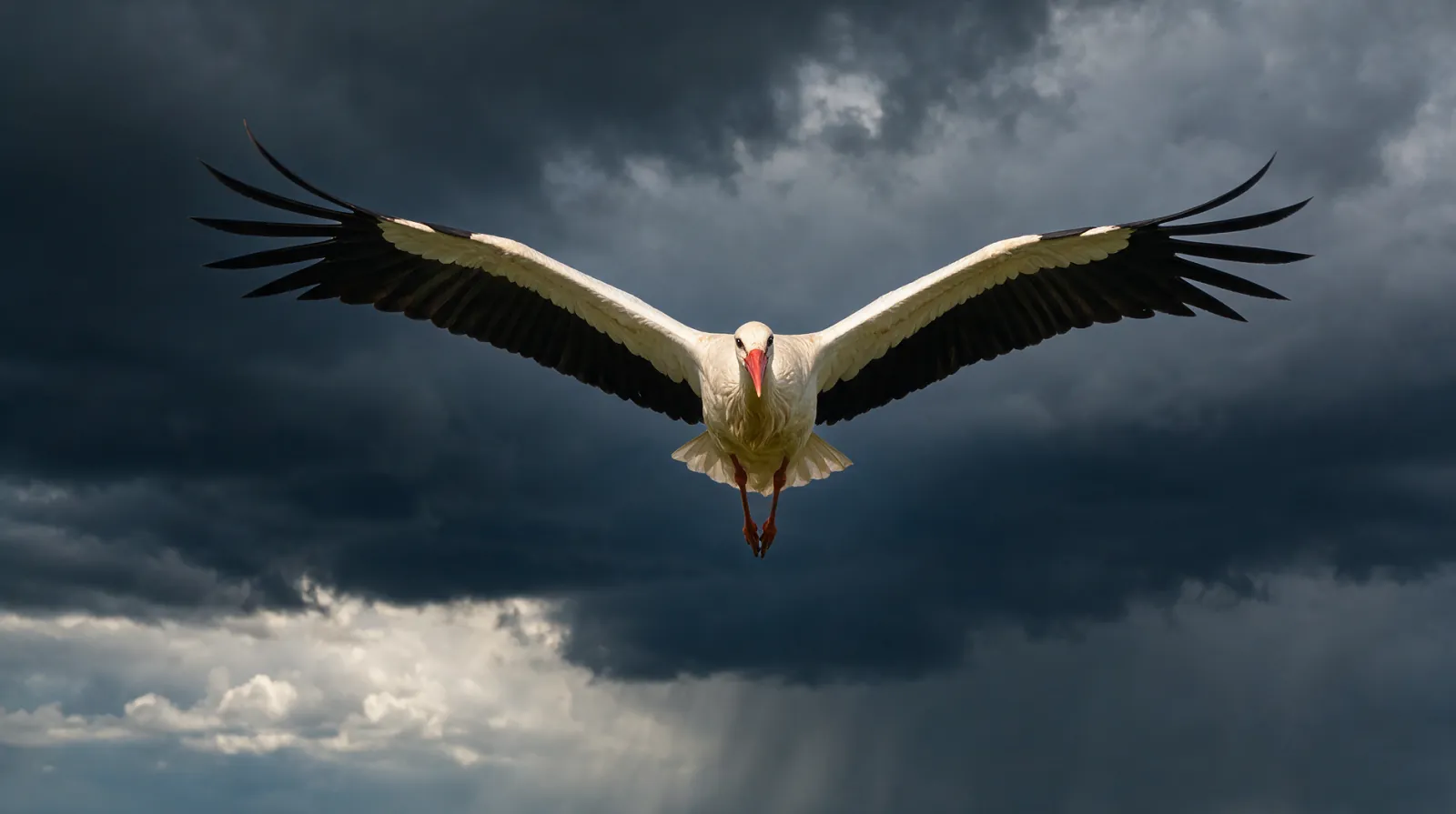
Tyr felt the storm before it arrived. The air turned heavy, the light went a flat yellow, and all across the field the other birds grew quiet. He had been feeding in the grass, and now he stopped and lifted his head to watch the dark clouds gather over the hills. His crop was full.
A storm is wind first, then rain. A stork meets both by facing them. There is nothing to fight and nowhere to run, so the bird stands low and square to the wind and lets it pass over. The wind arrives first and does the damage, and the rain is only water after it. Tyr had learned that as a young bird, and it had served him since.
The first gust tore across the field and flattened the grass. Tyr turned to face it and let it press against his chest. A stork's wings are wide and its legs are long, and both are built to hold against moving air. He kept his head low and his feet planted. He closed his eyes against the dust and opened them when the gust passed. Some storks fly ahead of a storm, and some hide in trees. Tyr preferred the open field. In the open there is nothing to be struck by and nothing to fall on him, and he could see the weather coming and answer it.
Then the rain came, hard and sudden, and the field vanished into grey. Tyr lowered his head and let the water run off his back. His feathers kept him dry, the drops beading and rolling away, and he waited through the worst of it without moving. The thunder rolled across the sky from the hills to the sea, and lightning struck somewhere beyond the ridge, and the field lit white for a heartbeat. He did not flinch.
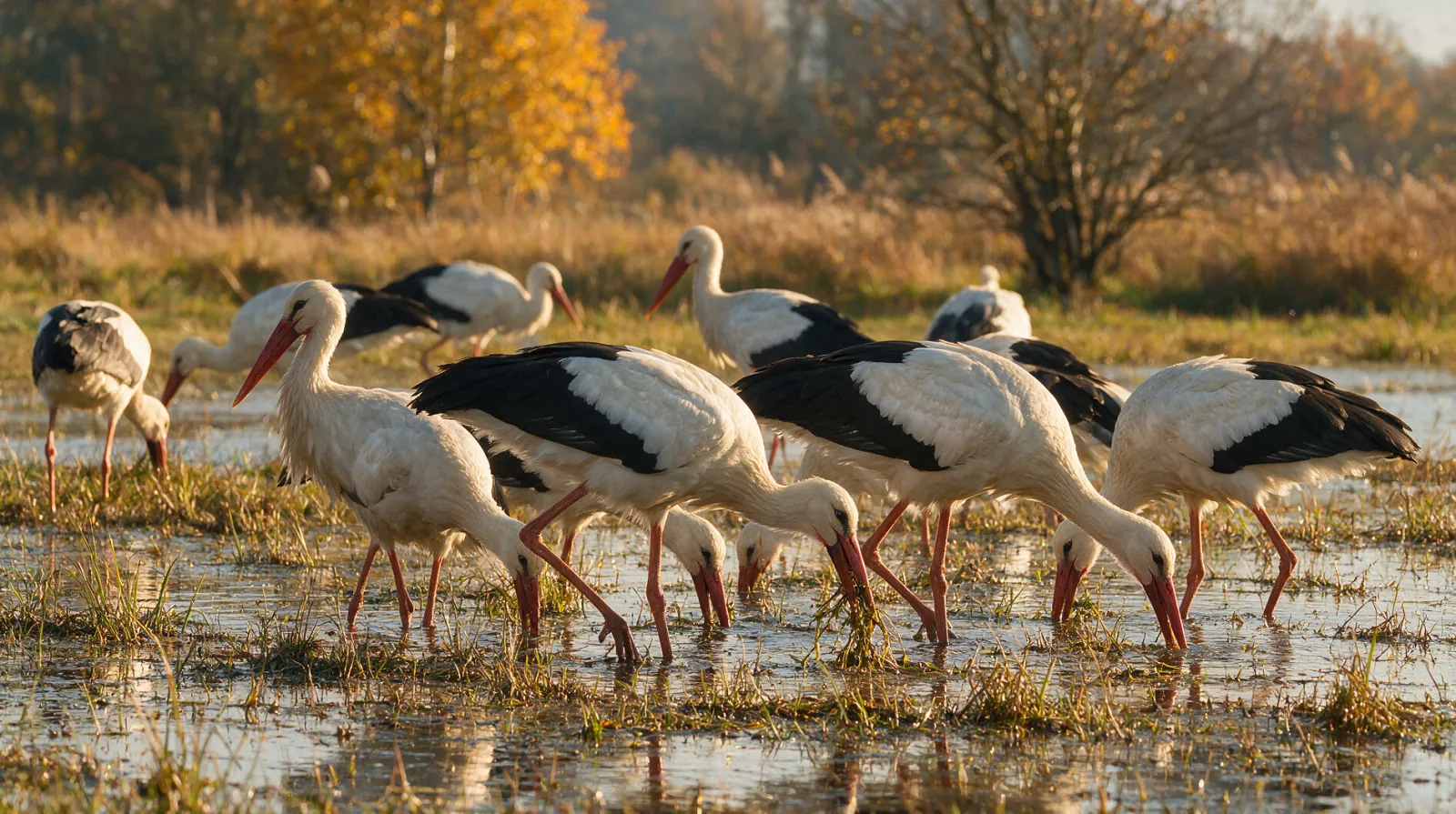
When the rain stopped, the clouds broke apart and let the light back in. Tyr shook the water from his wings and stepped forward into the wet grass. The air smelled of earth, and the insects were already moving again. The swallows came out first and hunted low over the wet grass. He fed, slow and calm, as though nothing had happened.
The open field
Other storks came out from the trees and the roofs, and the field grew loud with feeding. Tyr stood among them, unbothered. A storm comes and goes, and the bird that faces it is still standing when it ends. By evening the field was dry enough to walk, and he walked it until the light failed. The storm had washed the dust off him, and his feathers were clean.
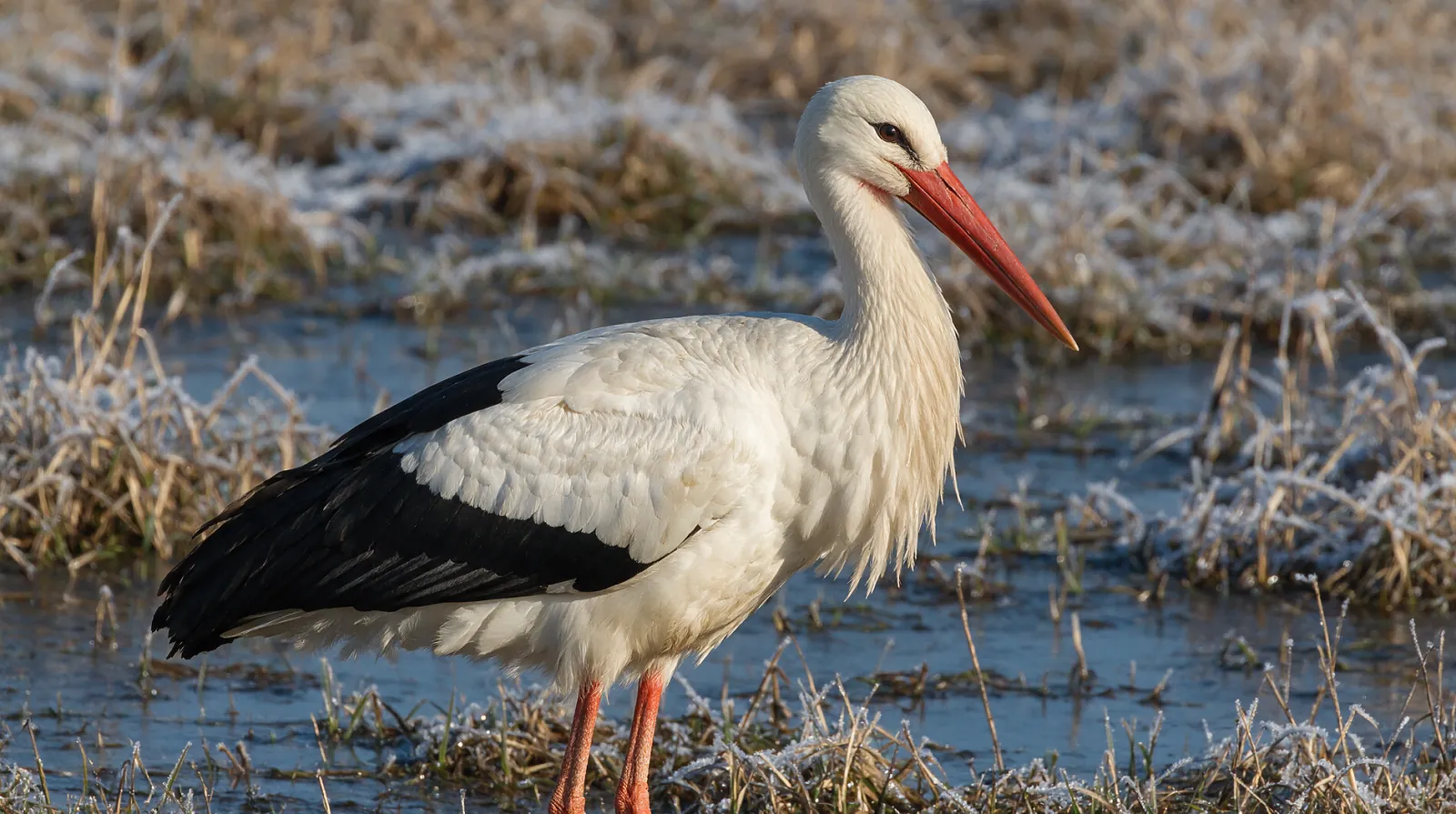
Storms are loud and quick. A late frost is quieter, and it lasts longer. Celyn came north early into a meadow that was green and loud with frogs, and then the cold came back. She is a white stork, ringed as a chick, and the people who watch the meadow had followed her arrival with pleasure. The pleasure did not last the week.
She had good reasons to be early. The days had been warm for a fortnight, the ground was soft, and the frogs were already moving. A stork that arrives early gets the best feeding and the first claim on a good nest. For a few days the decision looked wise. She fed heavily in the wet grass and stood in the sun with her wings open. Then the wind turned north in the night.
The cold snap
A white stork eats what lives in shallow water and damp soil. When the water freezes, the food is sealed away. Frogs stop moving, insects vanish, and the soft ground goes hard. A stork caught in a late frost is a hunter with nothing to hunt.
A stork can take a cold night. A week without food is what kills it. Storks are large birds and can take a cold night. No bird can take a week without food. In a bad spring, some early arrivals do not survive, and the ones that do come out of it thin.
Celyn held steady. She stood on one leg through the coldest hours with her bill tucked into her breast, burning as little of herself as she could. She found the lee side of a hedge and stayed there. When the sun came, she walked the ditches looking for a thread of open water. The meadow stayed white for three days. She ate almost nothing. On the second morning a grey heron landed at the same ditch and stood with her, both of them waiting for the same thaw.
It was the coldest of the three nights. Celyn stood in the lee of the hedge with her head down and her feathers fluffed until she looked twice her size. Fluffing traps air, and trapped air keeps a bird warm. She did not sleep well. In the morning her legs were stiff, and she walked them loose along the hedge before she tried to fly.
The shrinking pool
The cold locks food away. Drought takes the water with it. Niamh met the drought the day she reached her winter wetland. The water that usually spread across the grass had pulled back into a few shallow pools, the mud between them was cracked, and the frogs had gone down into the earth.
A wetland in the dry season is a different place. The channels that had been waist deep were a chain of puddles, and the reeds stood in dust. Niamh walked the old edges and found little. Herons, egrets and ibises crowded around the last pools. The first rule of a drought is that the water you find today may be gone tomorrow.
She ate what was left. Insects in the damp mud, small fish trapped in shrinking pools, the occasional frog that came up for air. She walked further each day and rested in the shade at noon. She lost weight, and her feathers looked dull, and she kept her distance from the bigger birds. A stork can go a long time on little, and the body spends itself slowly when there is nothing to spare.
There was nowhere to go. A stork that leaves a wintering ground before the rains has no better place to be, and the nearest water might be a week's flight away. So she stayed. She learned the pools that lasted, and she visited them in a circuit, and she drank at dawn when the air was cool. Other birds left. She watched a group of pelicans rise one morning and go, and she did not follow.
The middle of the day was the worst of it. The sun pressed down, and the mud dried in plates, and the air smelled of dust. Niamh stood in the deepest pool she could find with the water at her knees and her bill open, and she waited for the afternoon. The pools drew everything. A herd of cattle came to drink and stood in the water until it was mud. A fish eagle took a fish from the last deep hole and ate it on a dead tree. Niamh kept to the shallows and waited for the cattle to leave each afternoon, then fed in the churned margin they left behind.
What waiting costs
A week of frozen ground costs a stork weight. A week of wind at a crossing can cost it the company of the flock. Weather delays everything, and the delay is paid in fat and in places at the best pools. The birds that arrive first get the first frogs and the best nest sites, and the birds that wait take what is left.
The thaw
The ice went grey at the edges first, and a trickle of melt ran through the grass. Celyn was at the water's edge within the hour. The first frog she caught was half asleep and easy, and she ate it standing in the cold water. Within a week the meadow was green again and the frogs were loud. She fed from first light to last, and the hollow look went out of her. By the time the other storks arrived she was strong and had a nest.
Niamh waited weeks for rain. A bank of cloud built in the west one afternoon, and the air smelled different, and the frogs began to call before a drop had fallen. The storm passed to the north that night, and the pools did not rise. A week passed before the clouds came back. Then one evening the air changed for good. The rain arrived at night, hard and warm, and by morning the ground was shining. The pools had joined into a sheet of water, and the frogs were already calling. She stood in the returning water and fed until her sides were full. Within a week the wetland was green again, and the frogs were loud at night.
Explore the gift