A white stork leaves the ground first and works out the reason from the air. That order of business runs through most of its encounters with danger, from a fox in the yard to a person on the track. The nest is the one place where the bird stays.
Up and away
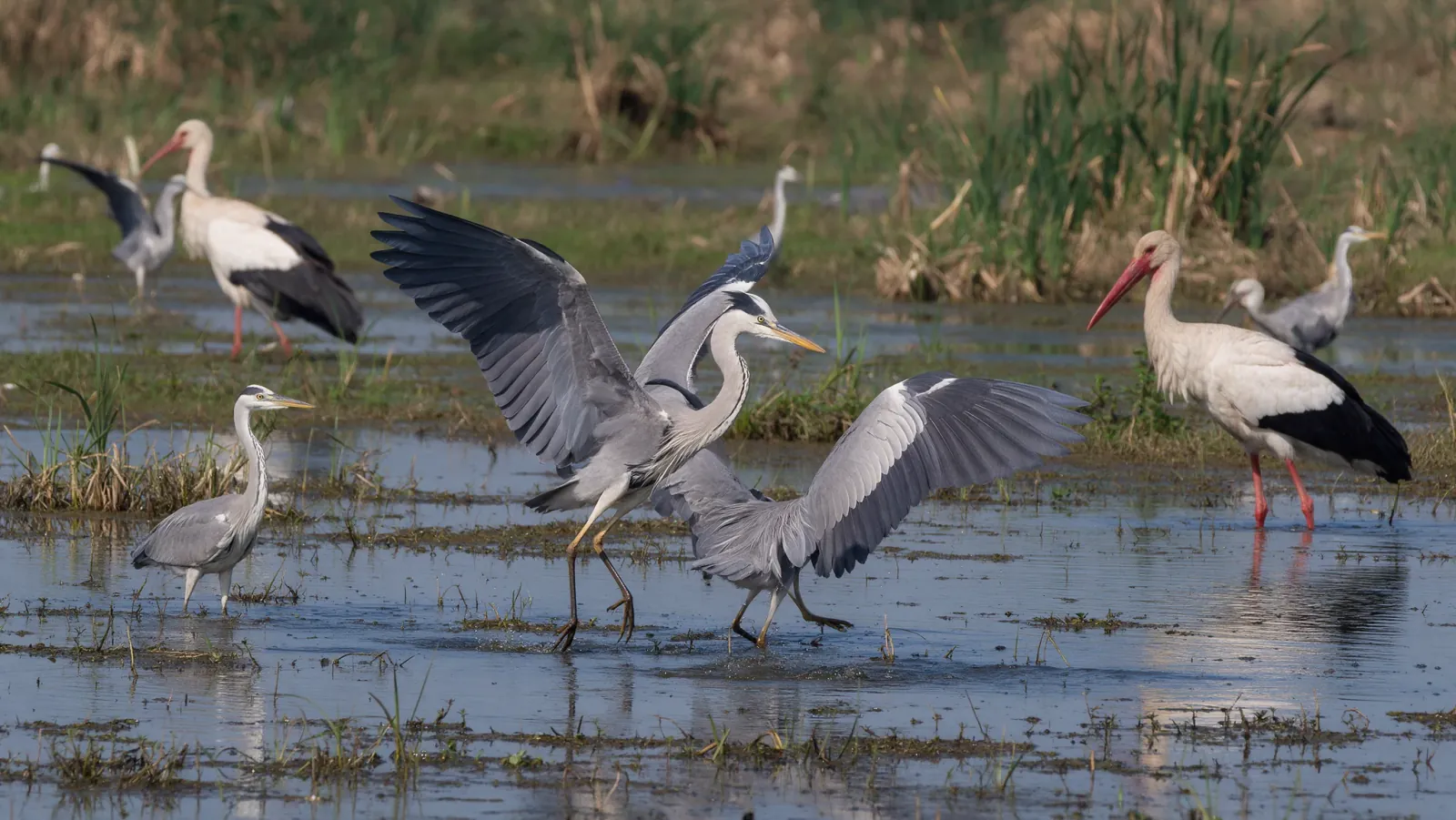
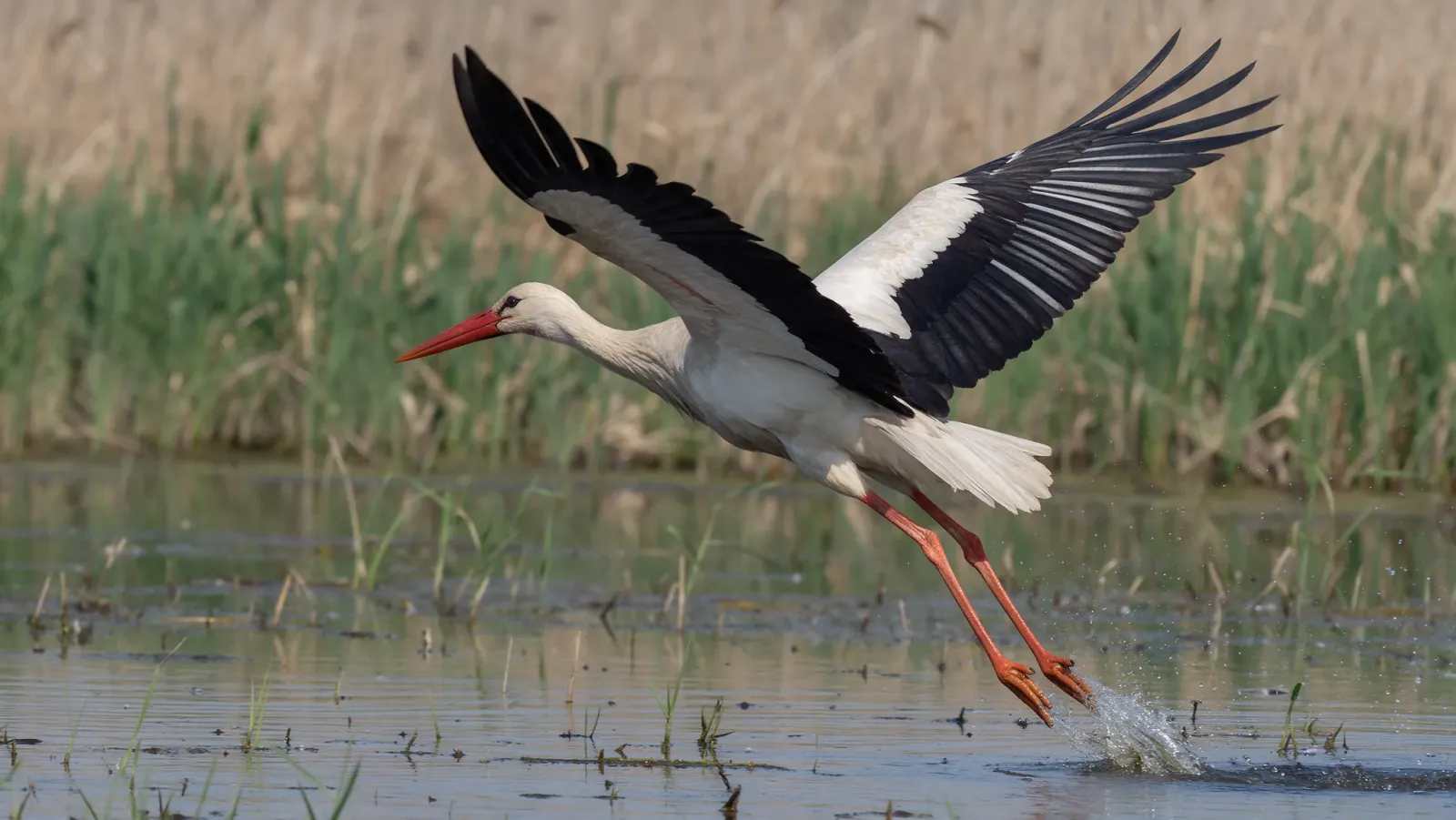
The takeoff needs no run. The stork pushes off with both legs, opens its wings in one movement, and is climbing within a beat or two. A bird standing in a field can be two metres up before a person has taken a second step toward it. From there it climbs hard and banks away, and the threat is left below with nothing to chase. The sky is open in every direction, and the bird uses it before it uses anything else. The decision looks instant from the ground, and it is usually the end of a long look. A stork on a roof or in an open field keeps its head up between spells of feeding, and it reads movement from a long way off. By the time a fox is in the yard, the bird has been watching it cross the previous field. Good eyes and a high perch buy time, and time turns a dangerous moment into a simple one. The bird rarely bolts; it leaves in good time, and that is why it looks calm.
The nest that keeps it grounded
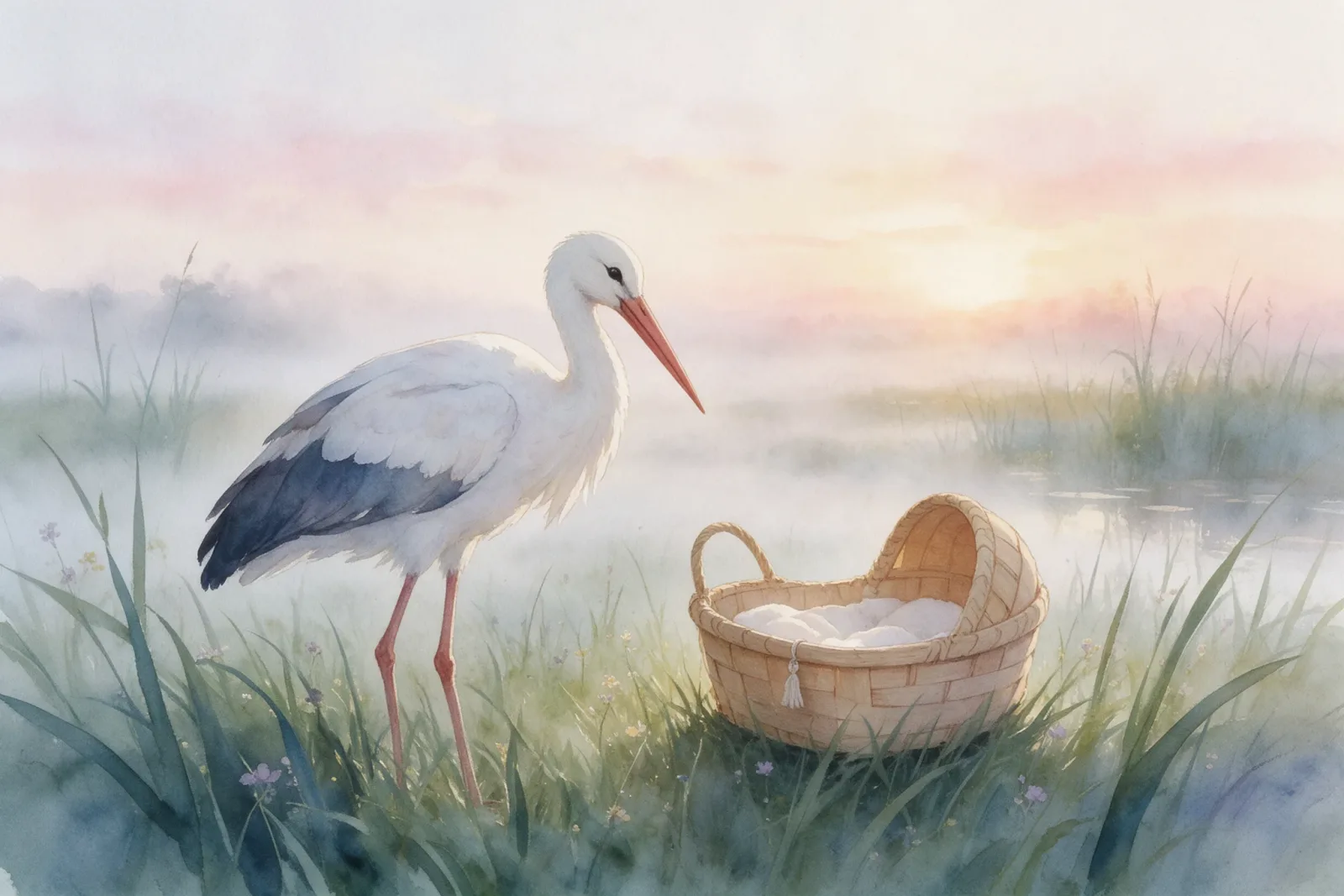
There is one place where a stork does not fly, and that is a nest with eggs or chicks in it. A parent will stand over the cup, spread its wings, and clatter, and it will strike with the bill at anything that comes within reach. The change is complete. The bird that would not let a person within fifty metres in a field will hold its ground on a roof while someone climbs to the nest. Only the nest keeps a stork in place, and only while there are young in it. The bird has nowhere to take the chicks. The calculation is made in seconds: distance, the type of threat, the age of the chicks, whether the bird is on eggs or standing beside half-grown young. A stork with eggs usually stays. A stork with chicks that can crouch and freeze may stand, clatter, and then leave if the threat keeps coming. Afterwards it circles, lands on a nearby roof, and watches the nest before it returns.
One rattle, then the street
A hard, fast clatter cuts across a village and puts every bird in a colony on its feet. White storks have no song, so the bill does the work. The sound is made by the two halves of the bill knocking together, opened and closed very quickly. It carries a long way, further than the bird's weak voice. At a reunion the rattle is slow and even, delivered with a lowered head. In danger it is faster, harsher, and shorter. The bill is the instrument, and the body around it sets the meaning. Anything that looks wrong near the nest can start it: a buzzard passing low, a fox on a roof, a person climbing a ladder, another stork landing too close. A shape moving at the edge of vision is enough, and the rattle often begins before the bird has turned its head. One bird's alarm rarely stays one bird's. A neighbour picks it up, then the next roof, and within seconds the whole colony is clattering. A colony in full alarm is loud enough to change the behaviour of whatever caused it, and a hawk or a fox usually moves on rather than press the point. Most alarms turn out to be nothing.
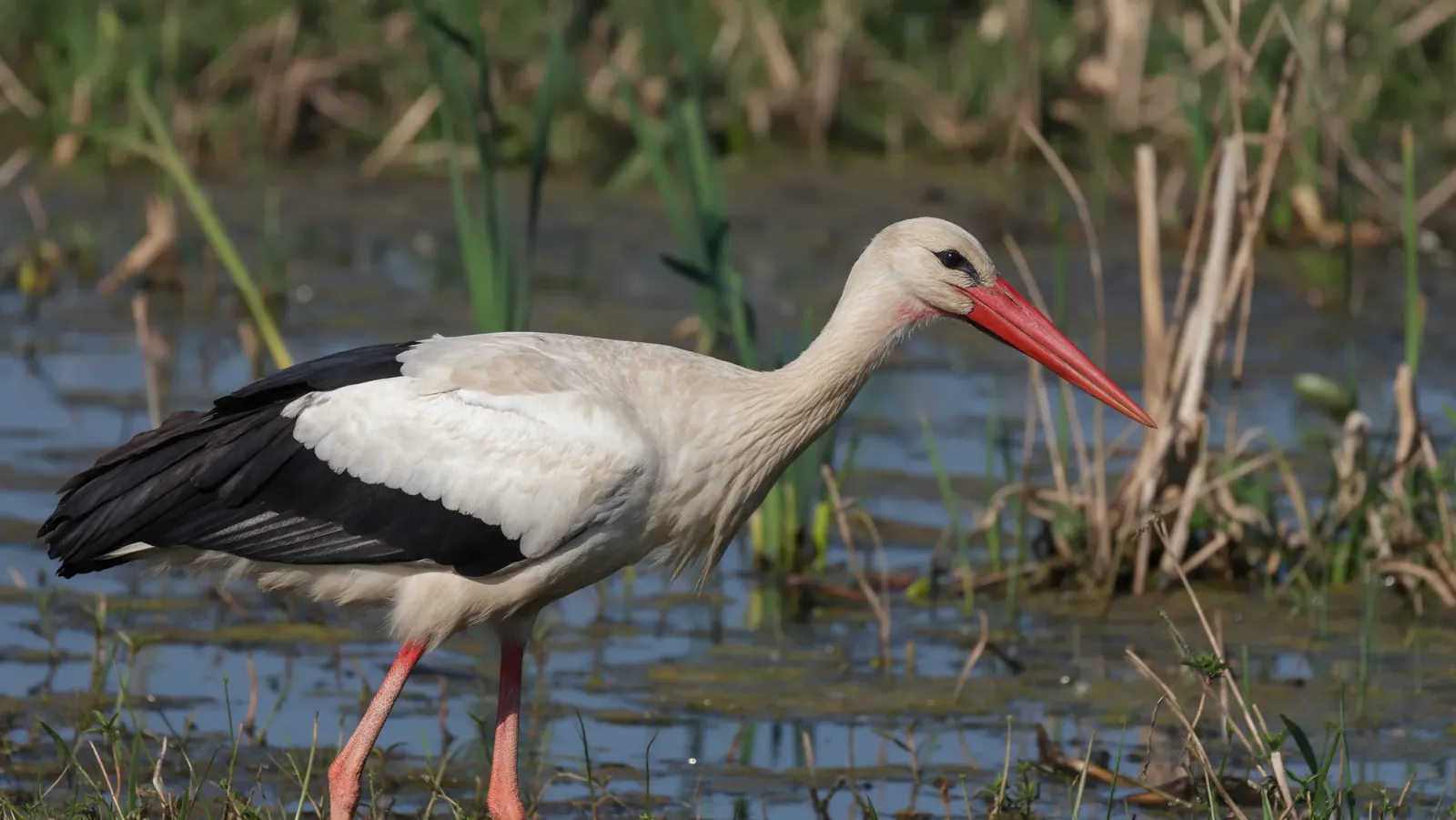
Facing the front
Storms arrive with no shelter to run for. A stork on a rooftop pole turns its head and breast into the wind and drops low over the platform. Facing it keeps the gusts from catching the bird side-on, and a bird taken broadside on a high nest can be pushed off its feet. The legs stand wide and the tail points down. A stork in a storm looks becalmed, and that stillness is the method. The plumage is dense and well kept, and the bird spends long hours preening oil along the feathers. Water beads on a well-groomed coat and runs off. A long downpour still soaks the edges and makes the flight feathers heavy, and the bird will not fly far until it has dried. On a nest with young, the adult stands over the cup, wings held a little away from the body, and takes the rain on its own back. Small chicks fit underneath. The adult's body buys the small ones the weeks they need. Older chicks are too big to cover, and they stand in the nest facing the weather alongside the parent. Hail is harder to sit through than rain. The bird lowers its head, turns its back to the wind, and takes the stones on the shoulders and the folded wings, and a nest with small chicks can lose them in a bad storm. Lightning is another risk on the highest pole in a village, and a strike there is rare.
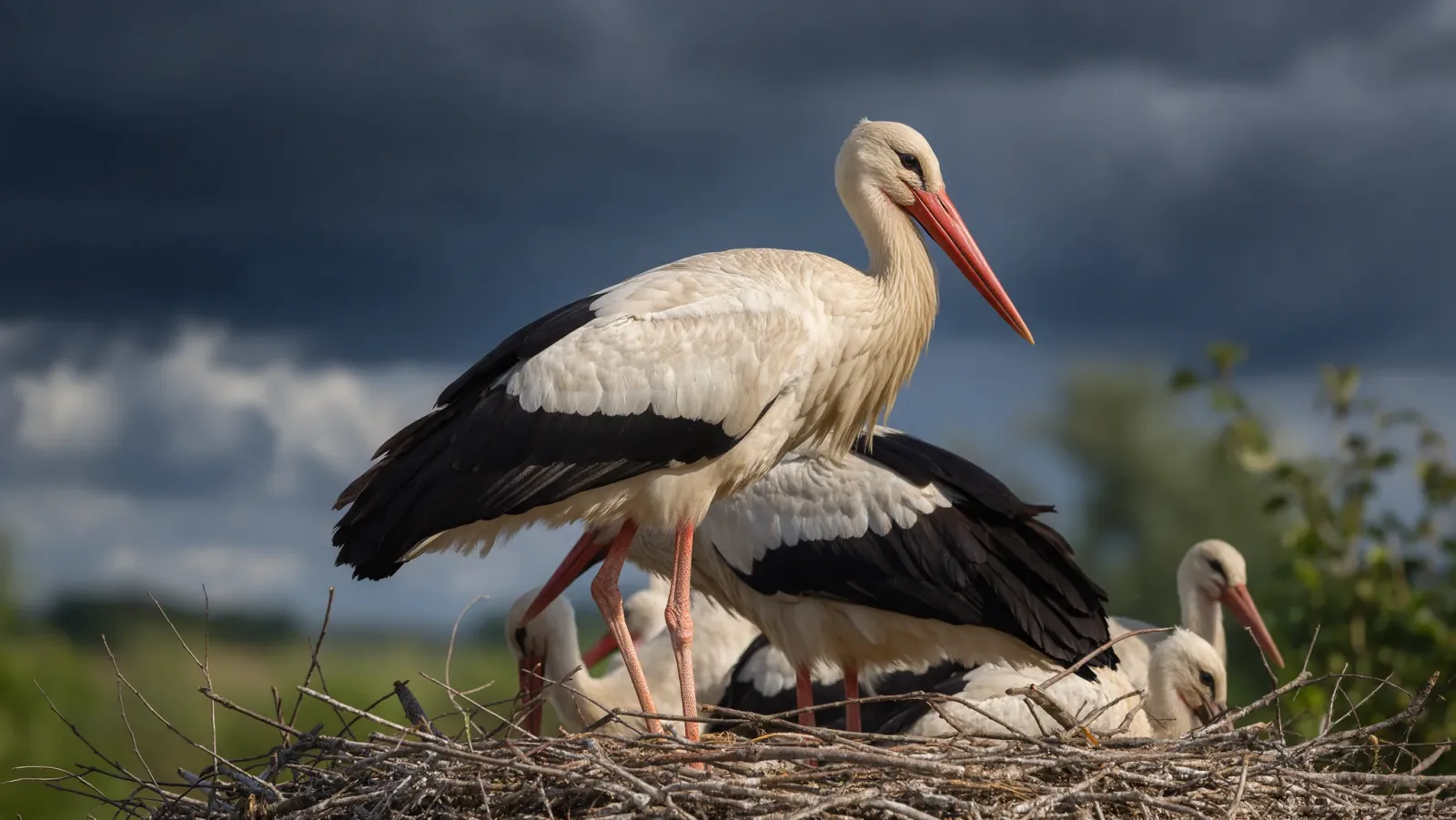
Why people are not a threat
A chick in a village nest sees people from its first week. It watches them cross the yard below, hears doors and voices and machinery, and grows up with all of it as the ordinary background of the nest. A stork that hatched above a doorway has been watching people since before it could stand. By the time it flies, a person below is part of the view. The calm has been encouraged from the other side too. In much of Europe a stork on the roof was taken as good fortune, and the nests were left standing through the winter. People built platforms on poles and laid cartwheels on chimneys to give the birds somewhere to settle. Nothing about that arrangement required the stork to be tame. It required only that people did not harm it, year after year, in the same places. The bird's calm is the result of a long habit of being left alone, kept up across many generations. Size helps. A white stork stands about a metre tall, with a bill that can deliver a hard snap, and few animals around a farmyard want to test it. A cat that approaches a nesting stork usually leaves quickly, and a dog gets the same warning.
The limits of calm
Behaviour shifts with local history. Storks in places where they have been hunted, or where nests are pulled down, keep much more distance. The same species that stands on a church roof in one country will lift off a field in another at the sight of a person on the track. A stork learns the habits of the people around its nest, and it learns them from the birds that raised it. Birds nesting on a quiet farm and birds nesting beside a busy road can behave quite differently. None of this makes a stork a pet. It feeds itself, migrates thousands of kilometres, and keeps its distance from people it does not know. The calm applies to people who keep their distance. A bird cornered or grabbed will clatter and strike, and a nest approached too closely will bring the parent down in a rush of wings.
Explore the gift