Nesting & behaviour
How storks choose a nest, defend it, greet each other, raise chicks and share a colony.
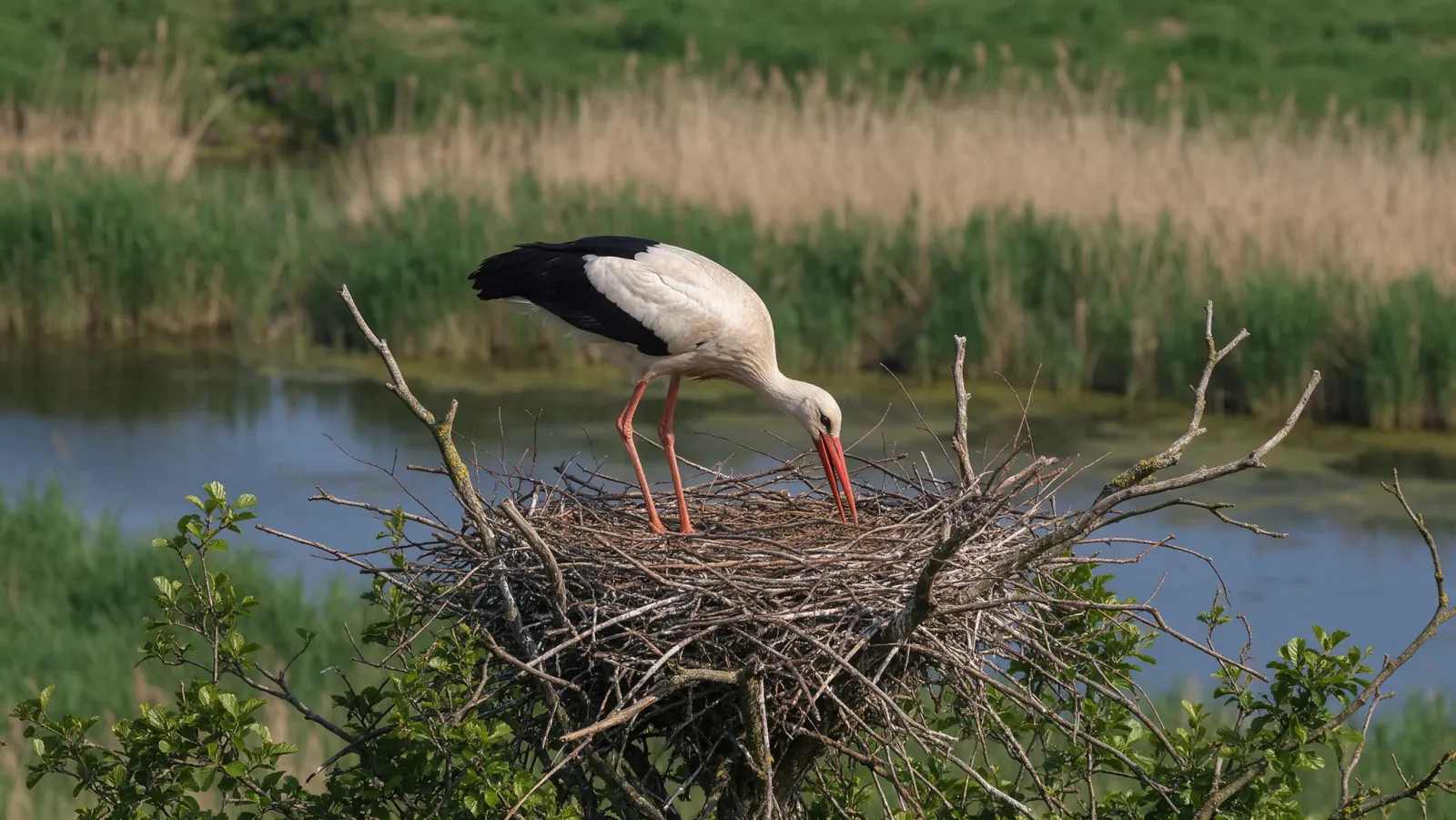
Where storks nest: rooftops, height, and a clear way in
A white stork weighs height, open air, and food within gliding distance, then lands on a platform barely wider than a table.
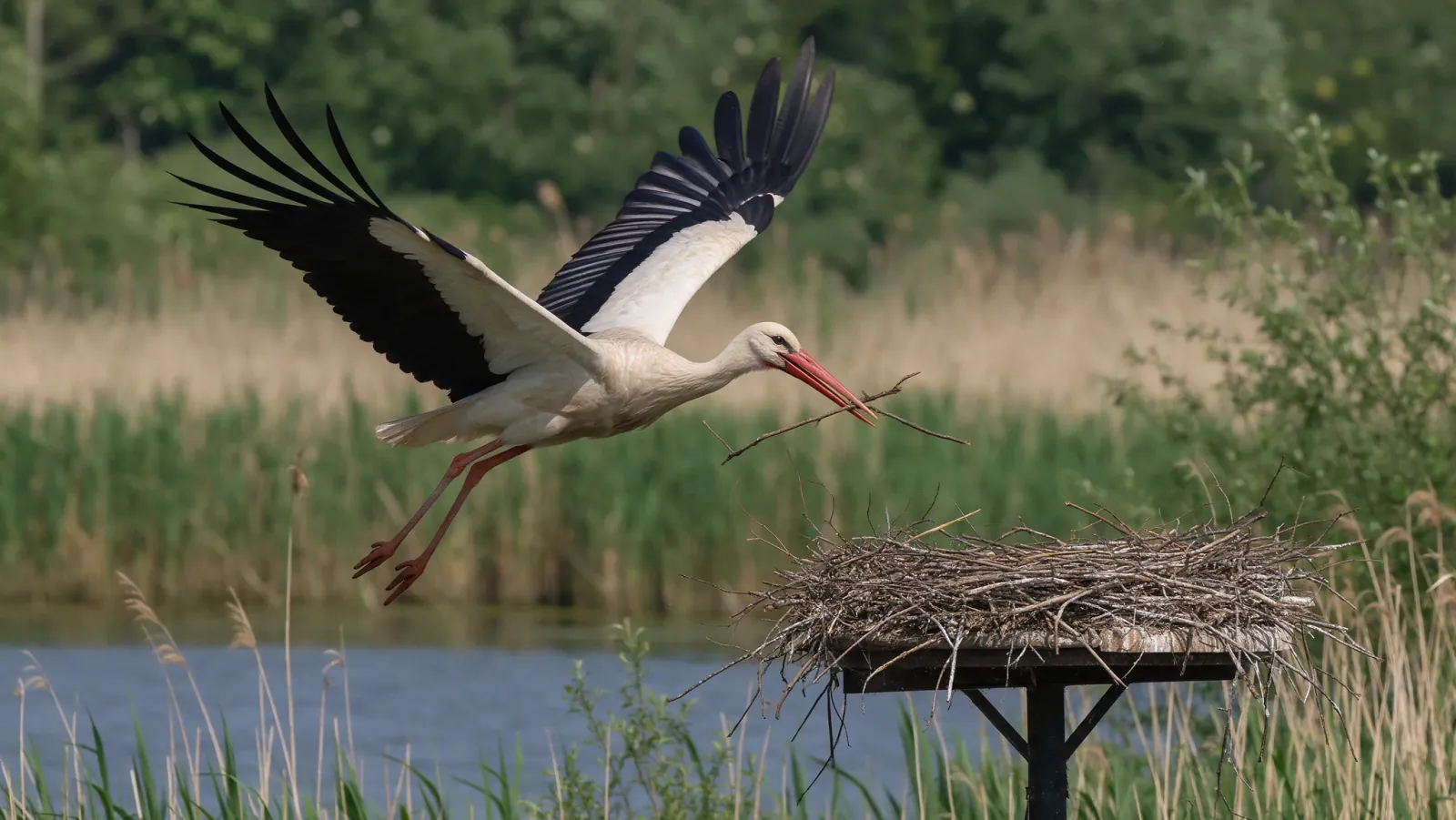
Inside a stork nest: sticks, a soft cup, and decades of growth
Each spring the pair adds fresh twigs to the same platform, so the nest deepens into a crown that can top a metre across.
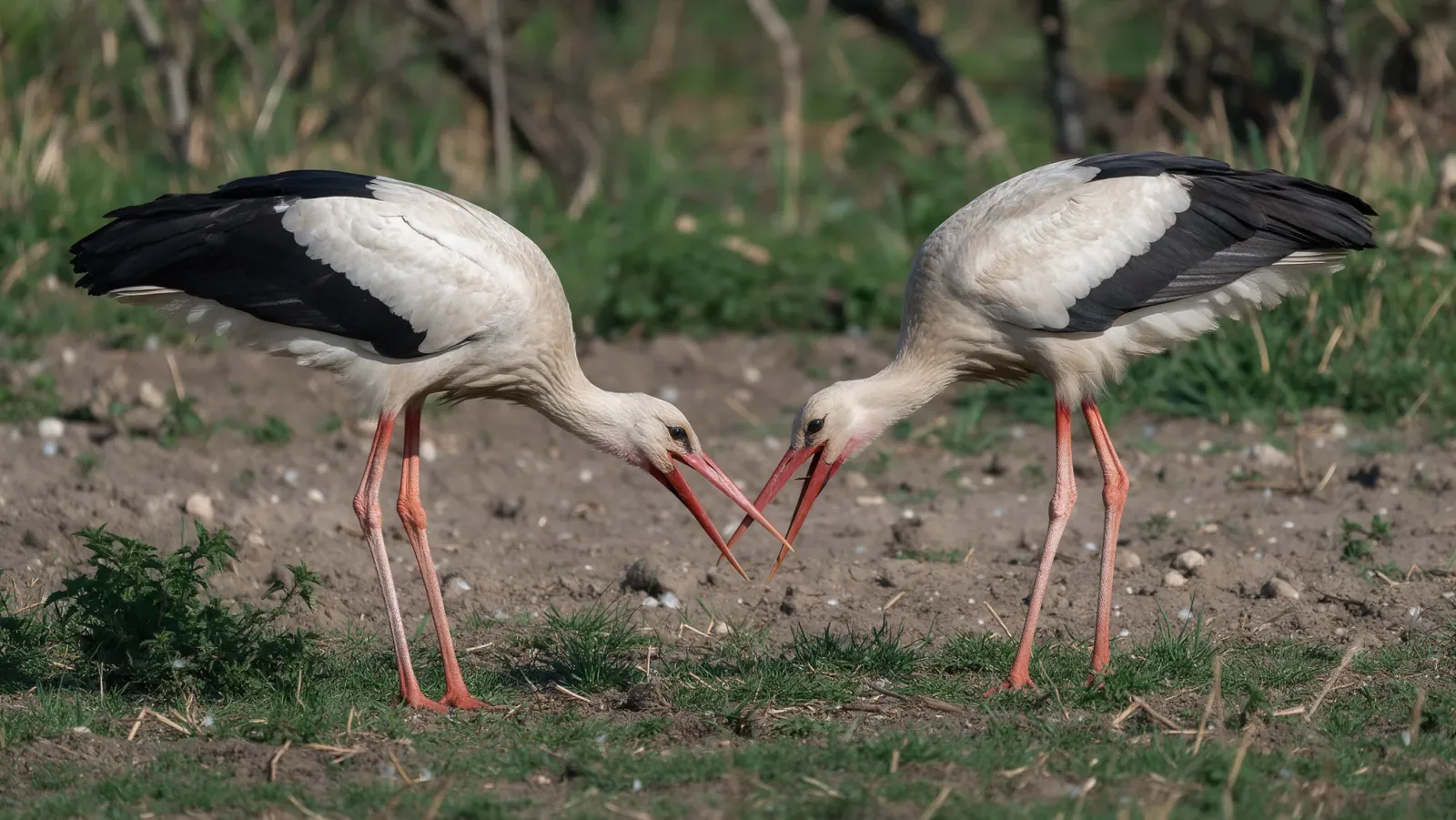
How storks greet: the bow, the bill clatter, and the head toss
White storks have no song, so a reunion at the nest runs on a lowered head, a rattling bill, and a neck thrown back.
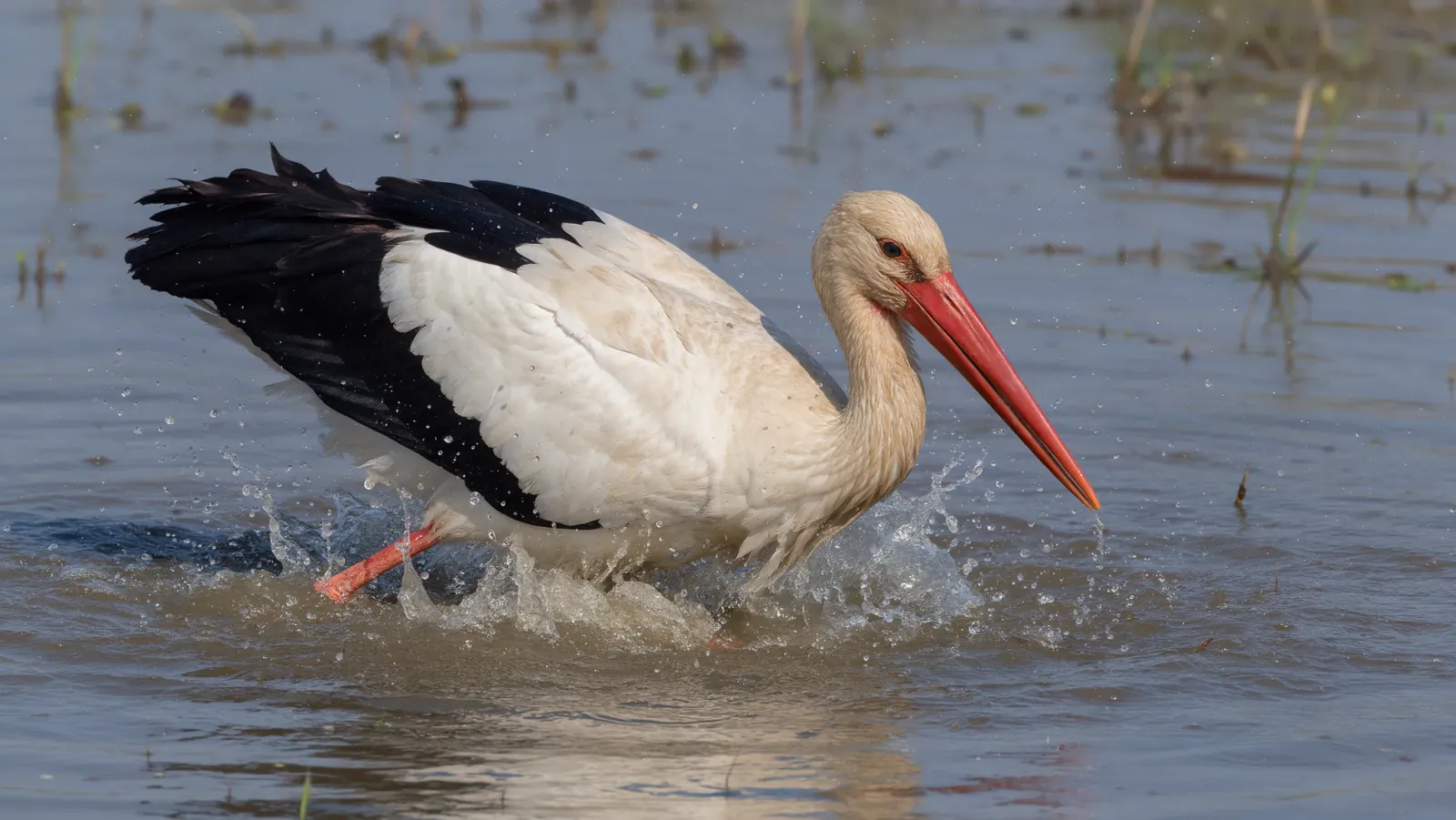
Bathing and drying: how a stork keeps its plumage fit to fly
A white stork wades in, throws water over its back, then stands with both wings wide until the air has dried every feather.
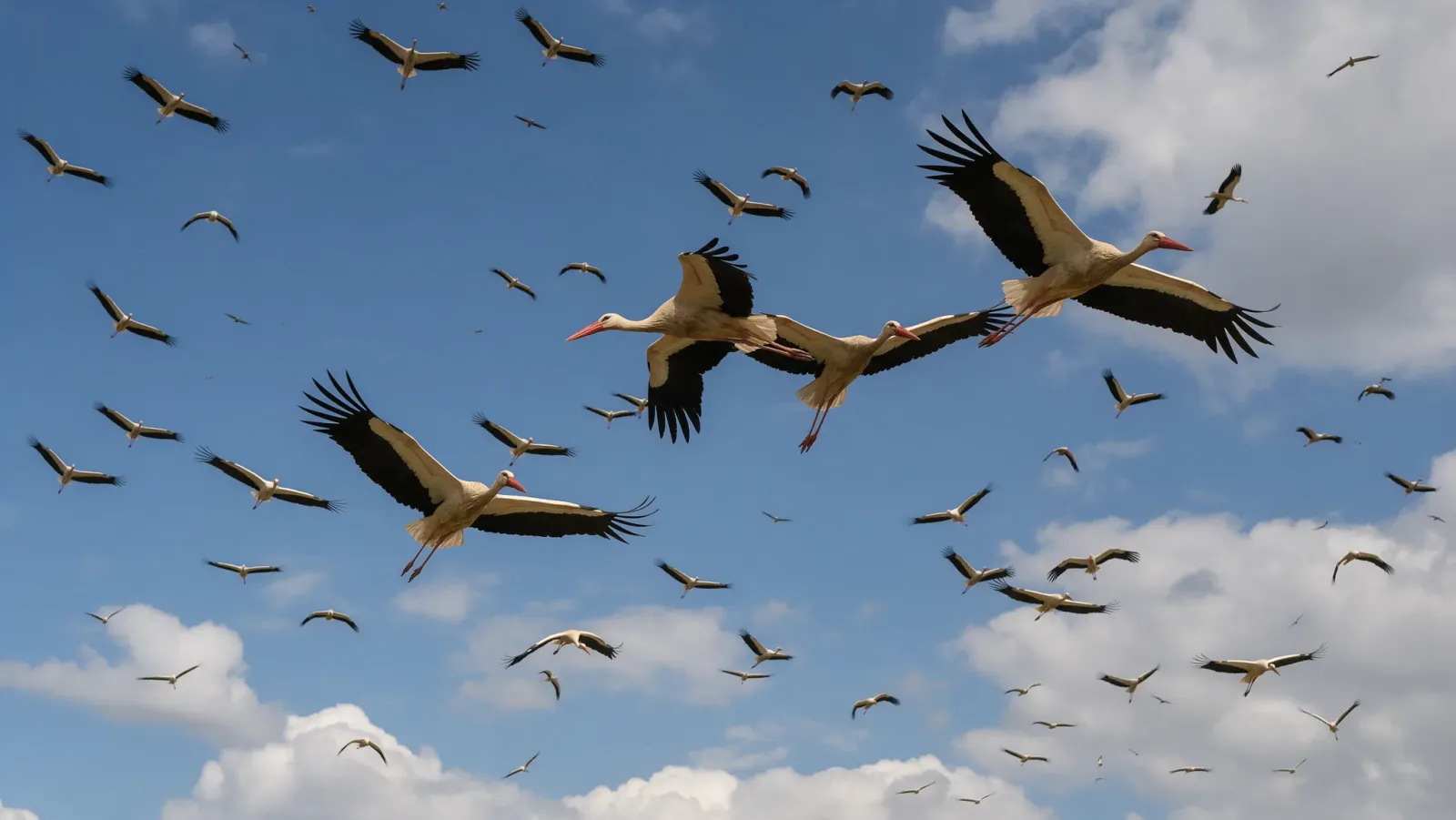
Thermals and kettles: how storks climb without a wingbeat
Warm ground makes rising columns of air, and a flock of white storks can climb one in a slow spiral and glide south for hours.
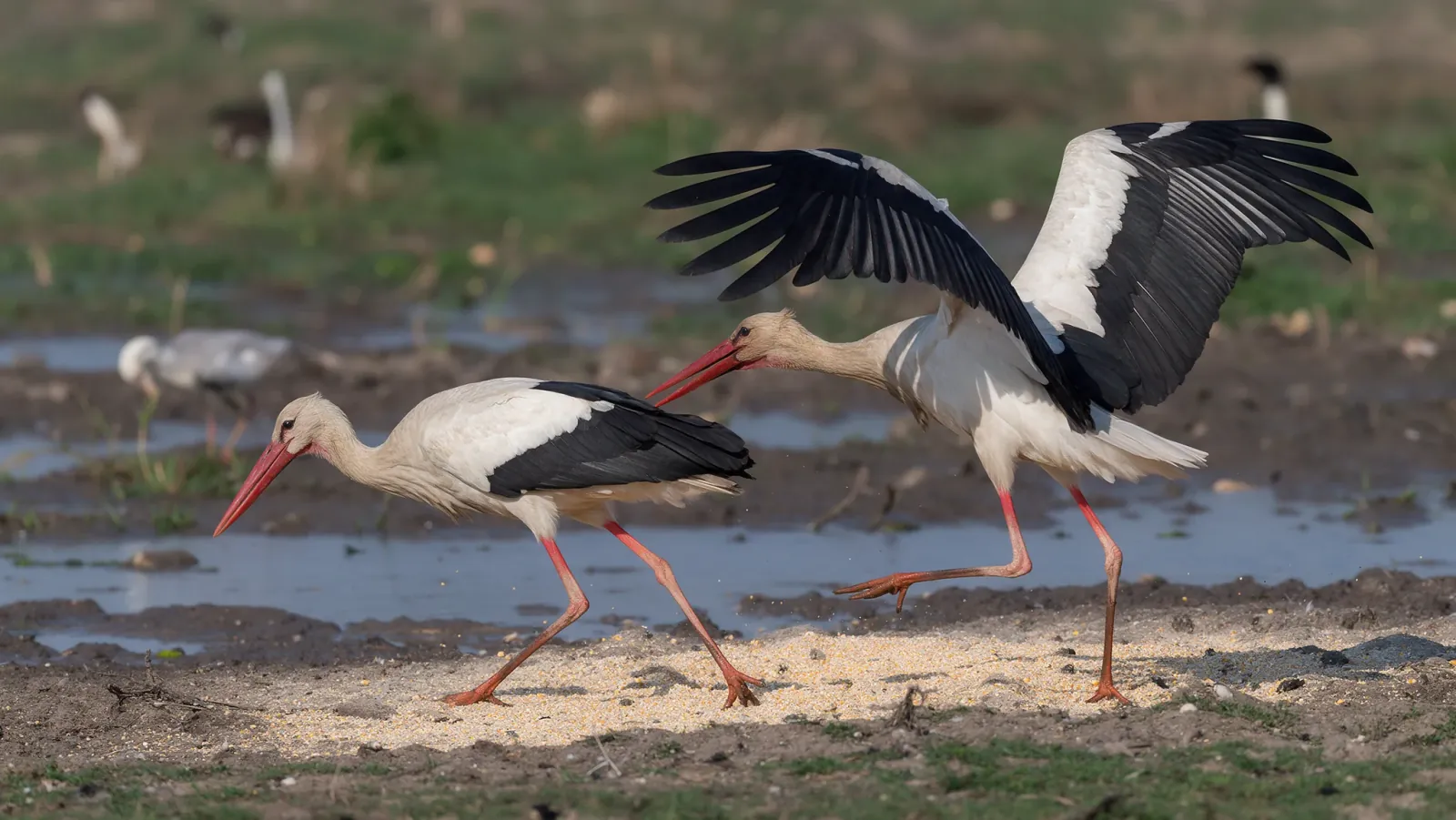
Feeding grounds: territory, the lone bird, and the midday pause
A good patch of shallow water is worth a stare and a short chase, while one bird often feeds apart from the flock at the edge.
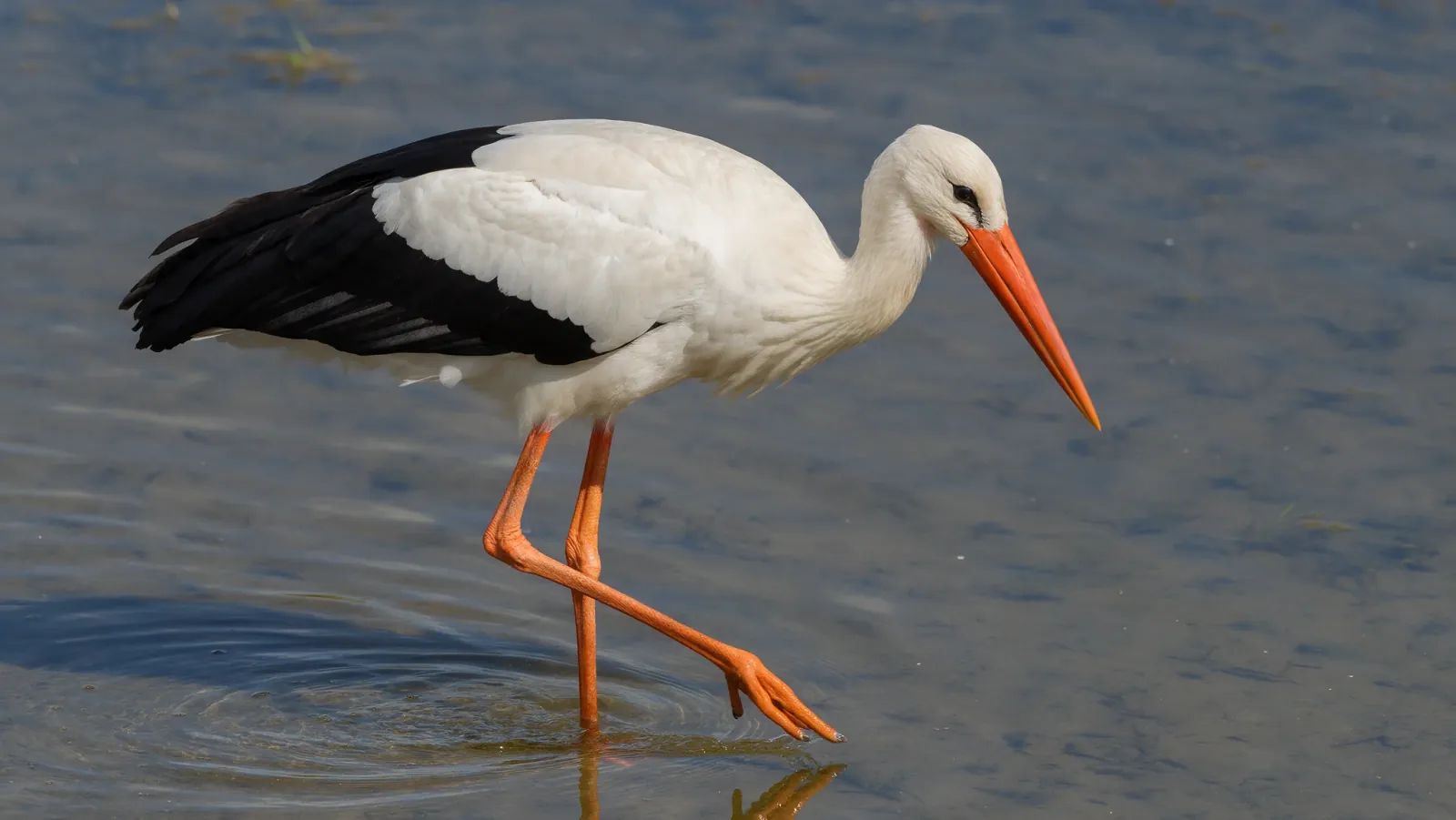
The walk of a stork: a slow hunt across wet grass
A white stork lifts each leg high and sets it down without a ripple, then waits for a frog to move.
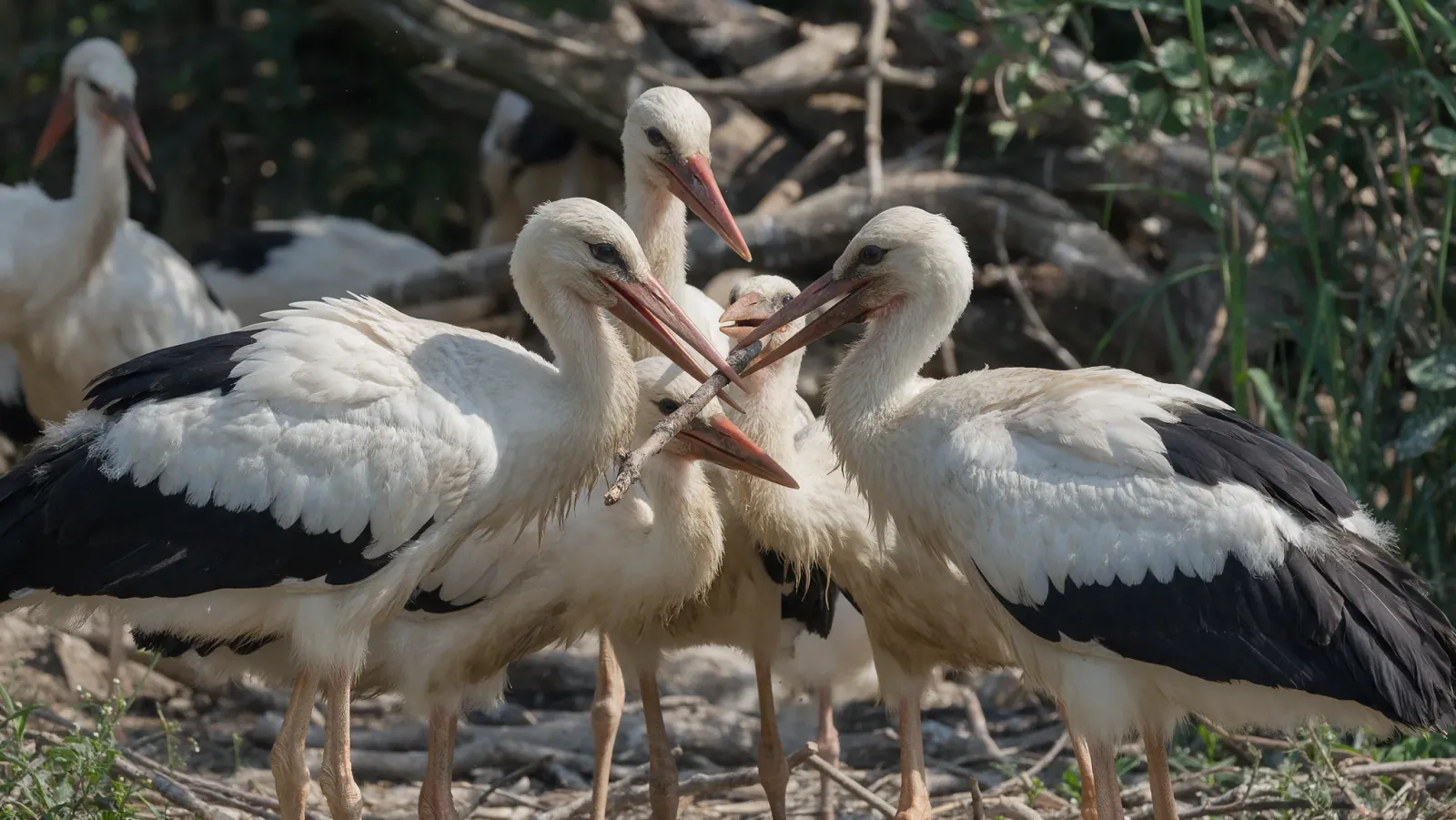
Young storks: the stick game, the long preen, and the locked leg
Young white storks carry sticks they do not need, leap for no reason, and learn to keep their feathers in order.
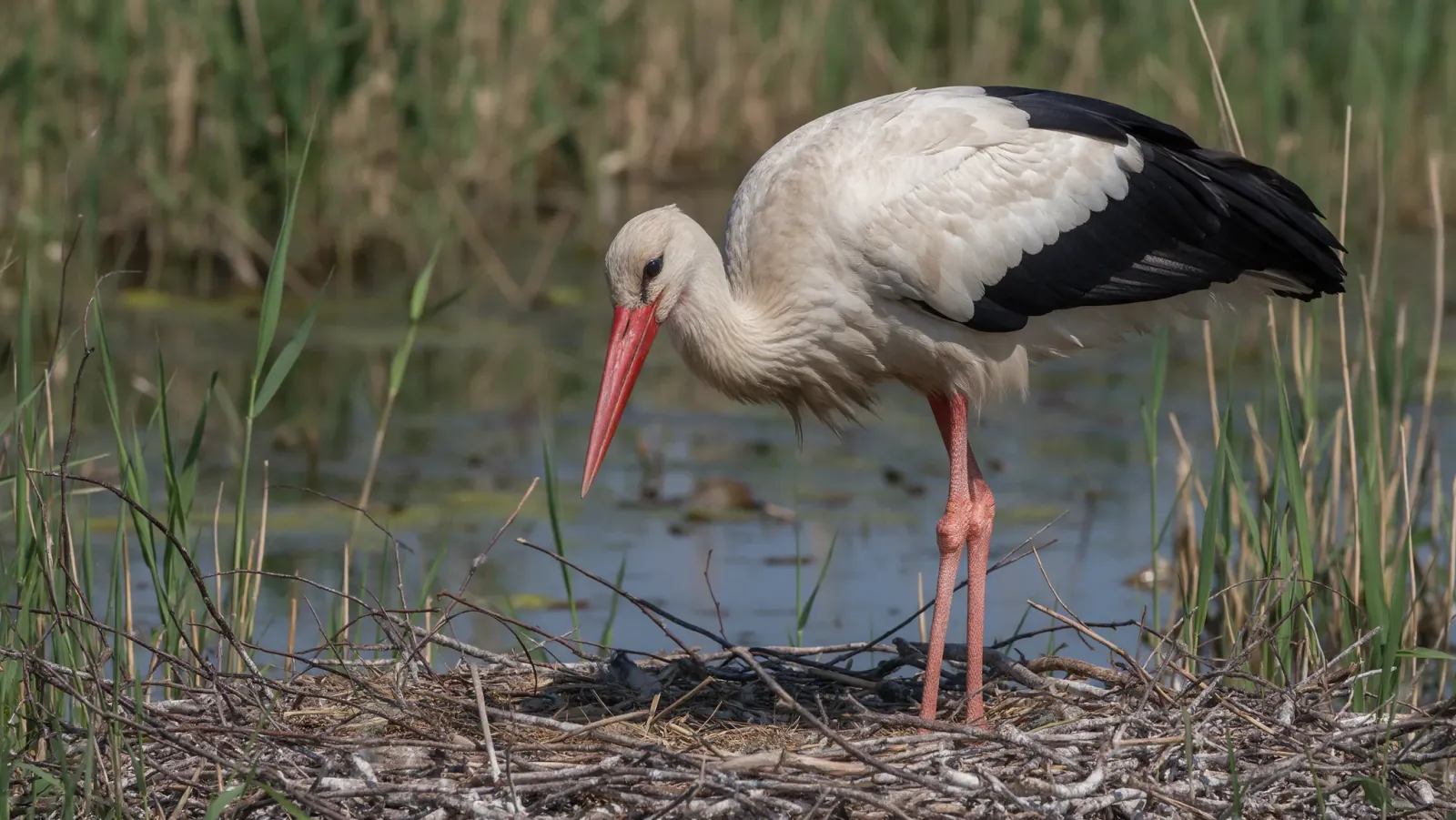
Nest, territory, and the way home: how storks hold a place
A stork defends a few metres of air, keeps the best roof by seniority, and finds its way back to the same nest.
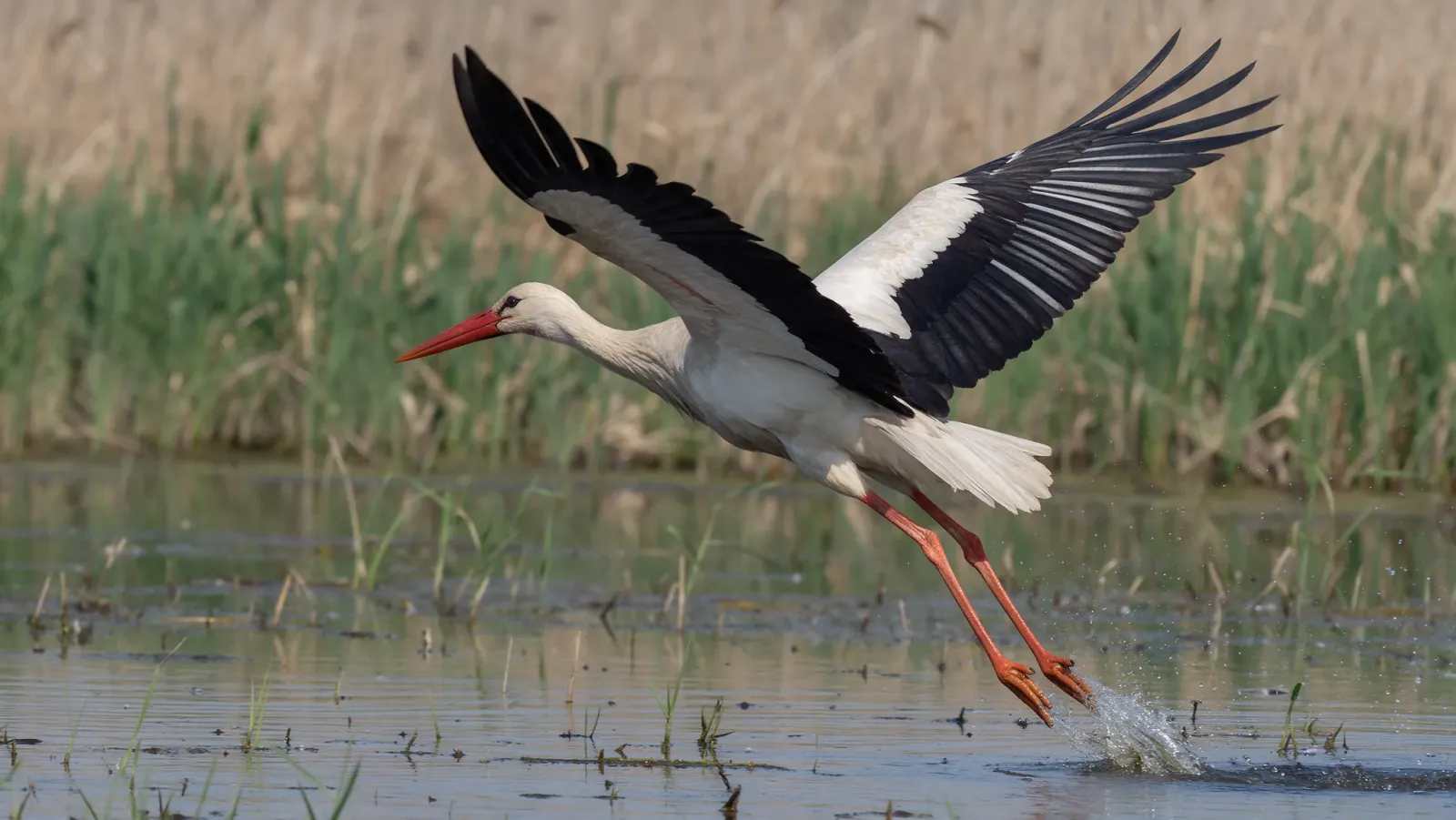
How a stork meets danger: alarm, storm, and the people below
A hard bill rattle, a body turned into the wind, and a long habit of calm around people keep a stork safe.
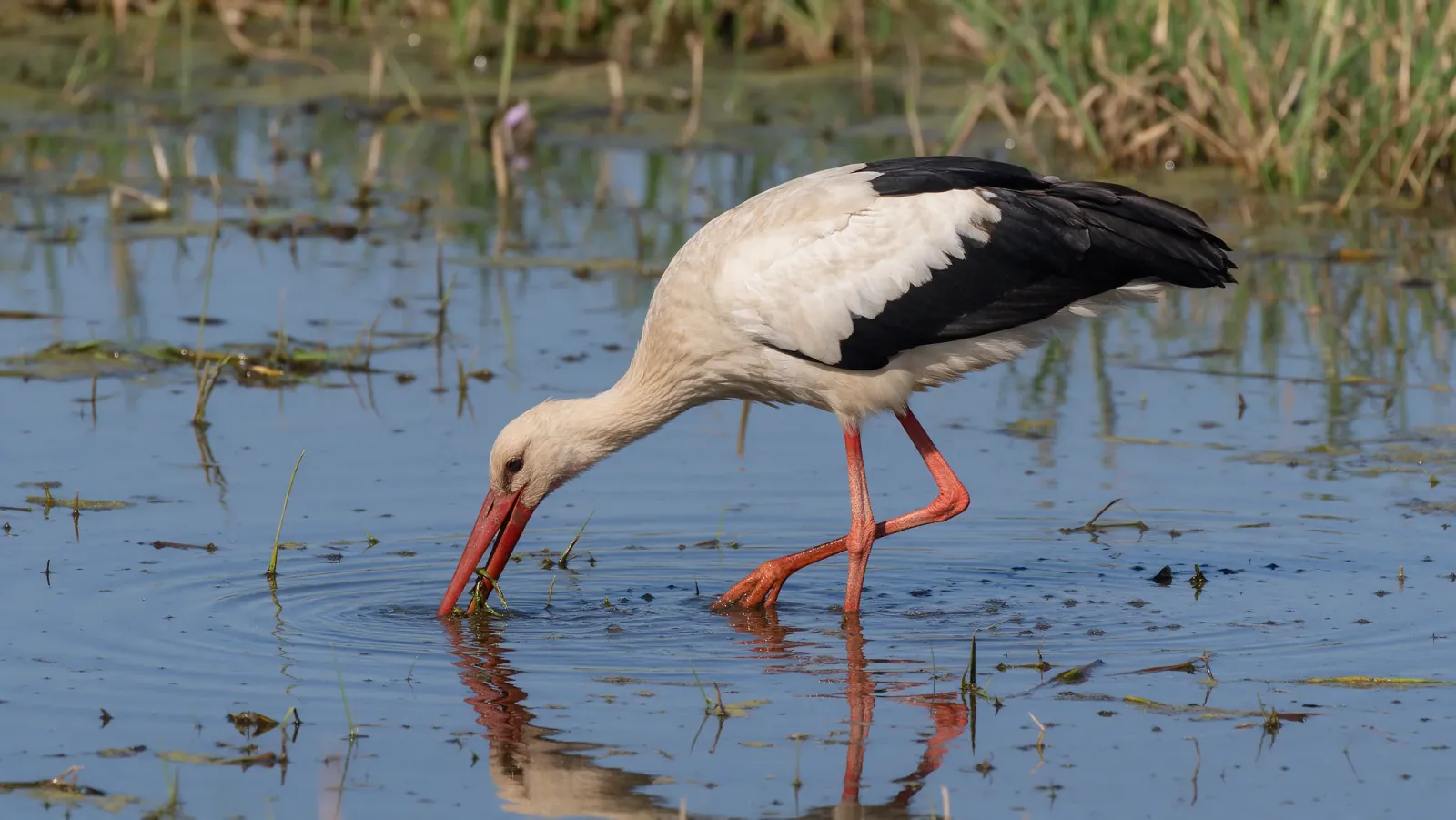
A stork's day: from the dark nest to the last glide home
A white stork wakes before light, stands over the eggs, hunts the wet grass, and returns at dusk.