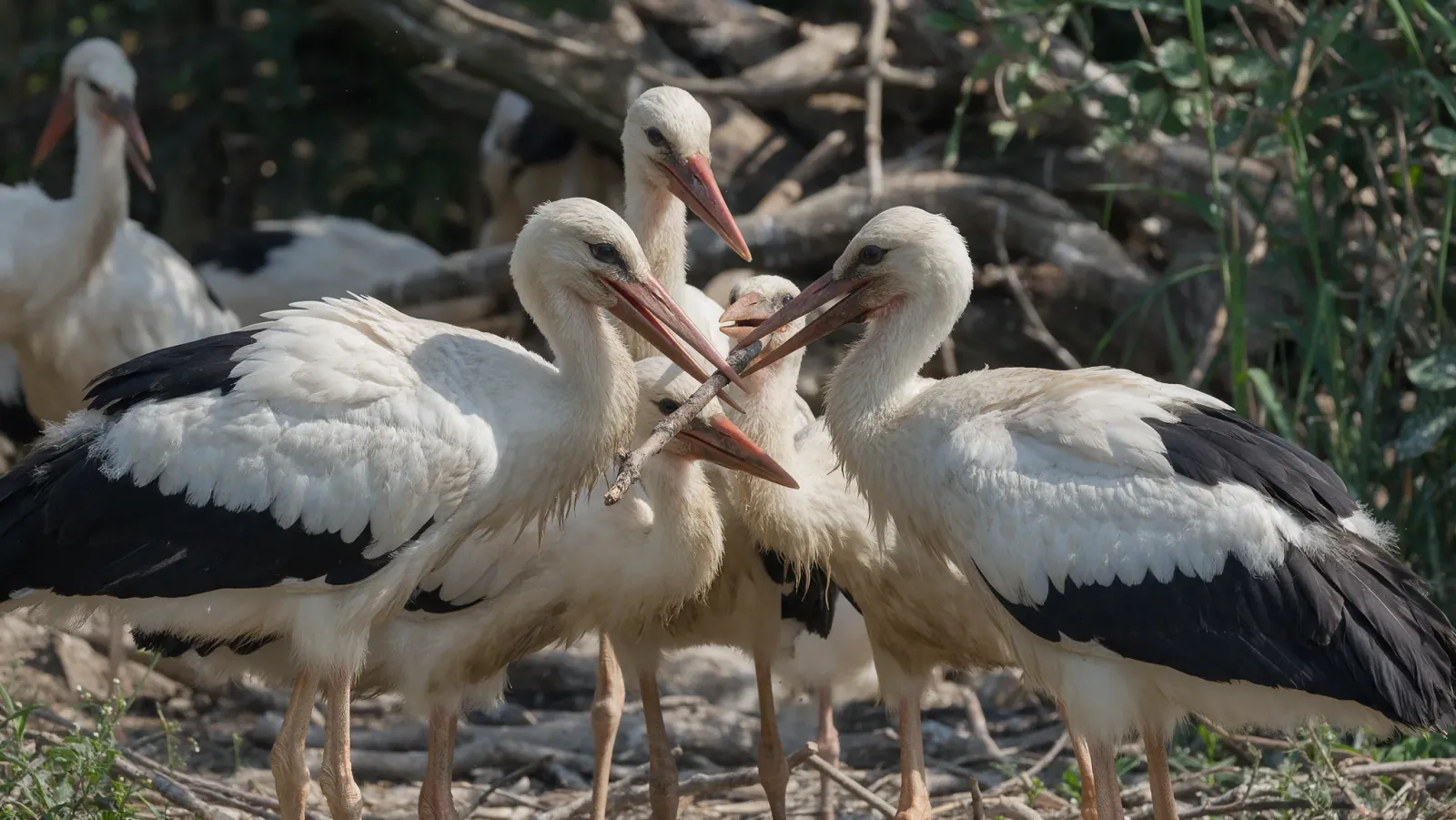
Young white storks play with sticks, leap at nothing, and spend long hours putting their feathers in order. The games look like high spirits, and the preening looks like vanity. Both are a young body learning what it can do.
Games on the nest
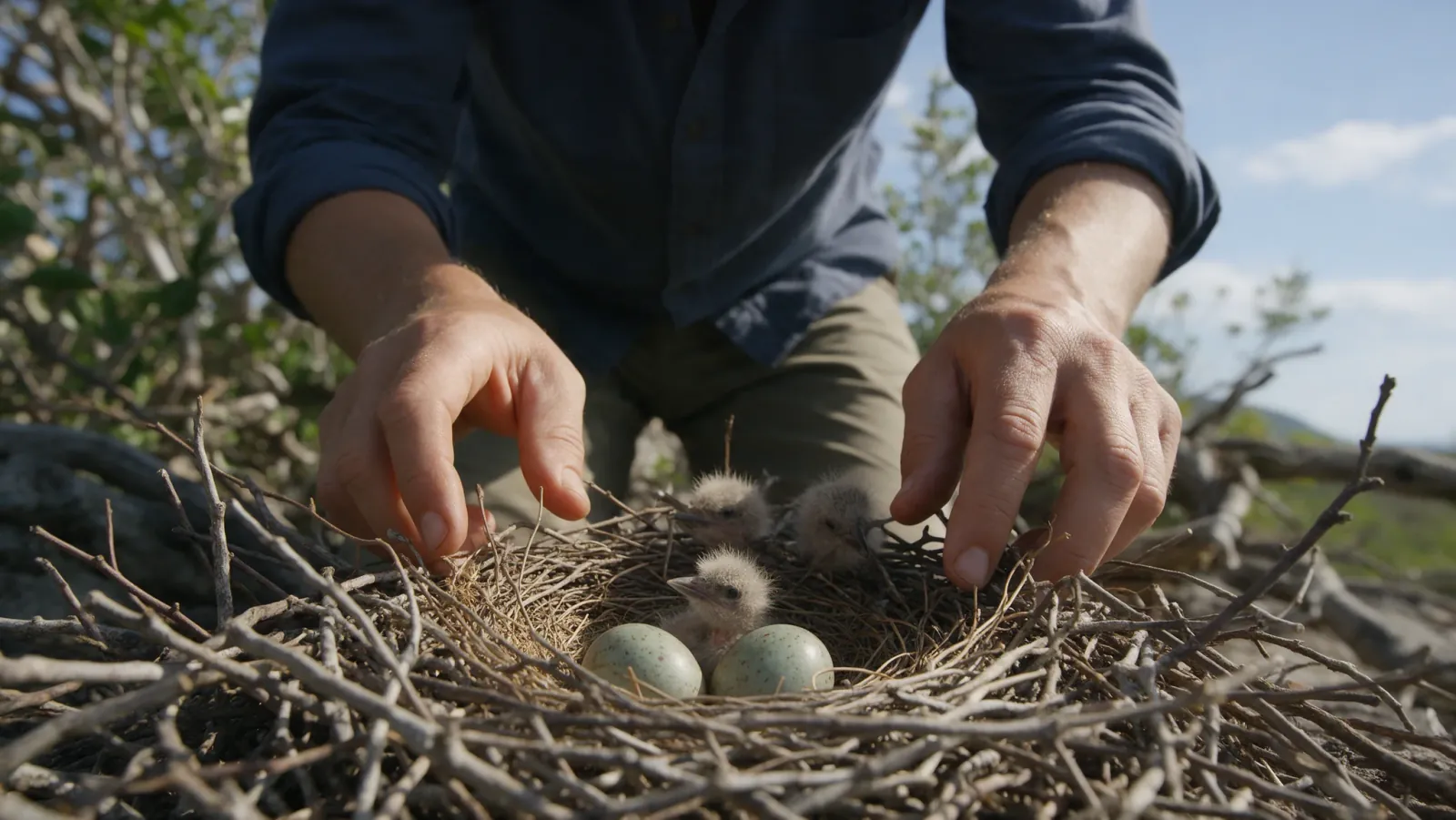
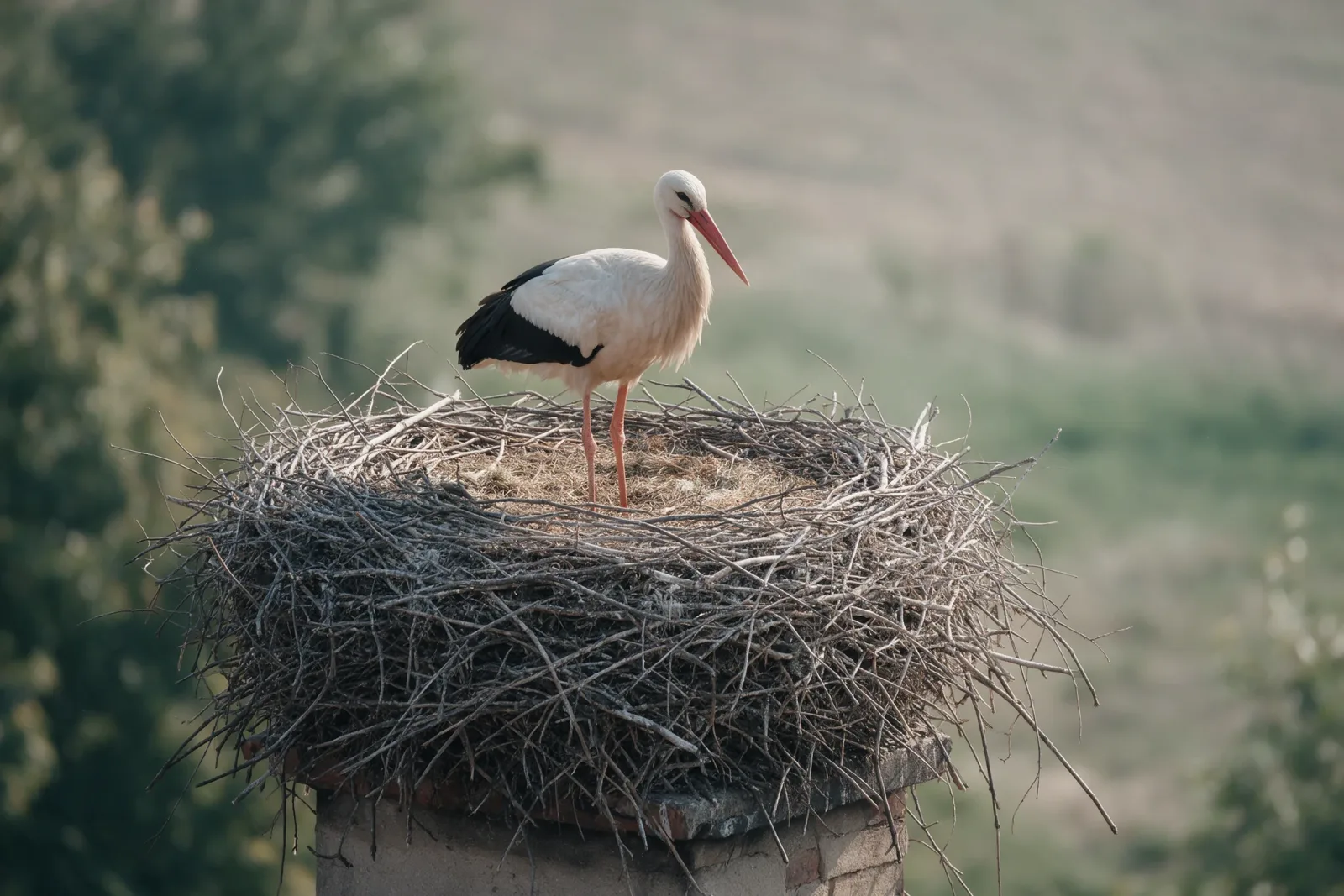
Chicks start with a twig on the nest platform. One bird picks it up, lifts it, and lets it fall. Another takes the same twig and does the same thing. A third grabs at a sibling's bill and gets a half-hearted peck back. None of this is building and none of it is feeding. It is a young body running through movements it already has, in an order that serves no purpose. The nest is a safe place to do that, with a rim to stop the players falling and parents arriving at intervals with food. The games also teach the birds about each other. Two siblings will tug at one stick for a minute at a time, and the contest looks closer to cooperation than to competition. Play is how a young stork learns to read another bird at close range, which matters in a colony where space on the roof is short.
The stick that gets dropped
On the ground the game gets clearer. One young stork picks up a stick and carries it a few steps, then drops it. Another takes it up and walks away with it, and the first follows. The chase that follows is short and never serious. Two or three young birds may trail the one with the stick, and when the stick is dropped the group breaks up and starts again with whatever is nearest. The game is the carrying and the dropping and the walking after, and the stick is only an excuse. A clump of grass or a bit of string works just as well. The game gets looser as the group grows, with birds chasing whoever is nearest and dropping the stick as soon as another takes an interest. A few birds start most of it, and the rest join for a while and drift away to feed. The ones that start it are usually the ones that have eaten well that morning.
Chasing and leaping
The most energetic play comes from the legs. A young stork runs a few steps with its wings half open, springs off both feet, and comes down again, then turns and does it again from a different angle. Two birds may run at each other and both jump, wings spread, before landing and starting over. This looks like pure high spirits, and it is also practice. The jumps strengthen the legs, the open wings catch air and teach balance, and a bird that has jumped a hundred times on soft ground is better prepared for a first takeoff. Play and practice are the same set of movements, and the young bird does not need to know the difference. The play is uneven. A few birds start it, and the rest join for a while. By the first autumn the chasing and leaping have thinned out, and the young bird's hours go into feeding and, soon, into the long flight south. The change is gradual. In late summer a young stork on a roof edge may still pick up a twig and drop it, then stand looking at nothing in particular.
Wash first
The bath comes before everything else. A stork wades into shallow water until it reaches the belly, lowers its chest, and beats its half-open wings to throw spray over its back and neck. It turns, dips its head, and repeats until the white feathers are dark with water. The bath loosens what preening alone cannot shift. Dust, grit, and the mess of the nest lift out of the plumage. A bird that went straight to preening after a day in the mud would be working grit deeper into the barbs. Out of the water, the first move is a full-body shake. The feathers fluff away from the body and the bird shudders from head to tail, and water flies off in a fine spray. Then the wings go open. The stork stands with both wings held away from the body, sometimes for a long while, and lets the air and the sun finish the drying. The pose has one job: to get a wet bird dry as fast as possible. A stork also preens in the middle of the day, well away from any bath. Feathers get displaced by wind and by the crowd on the nest, and a bird standing on one leg will work through its breast and flanks for ten minutes and then stop.
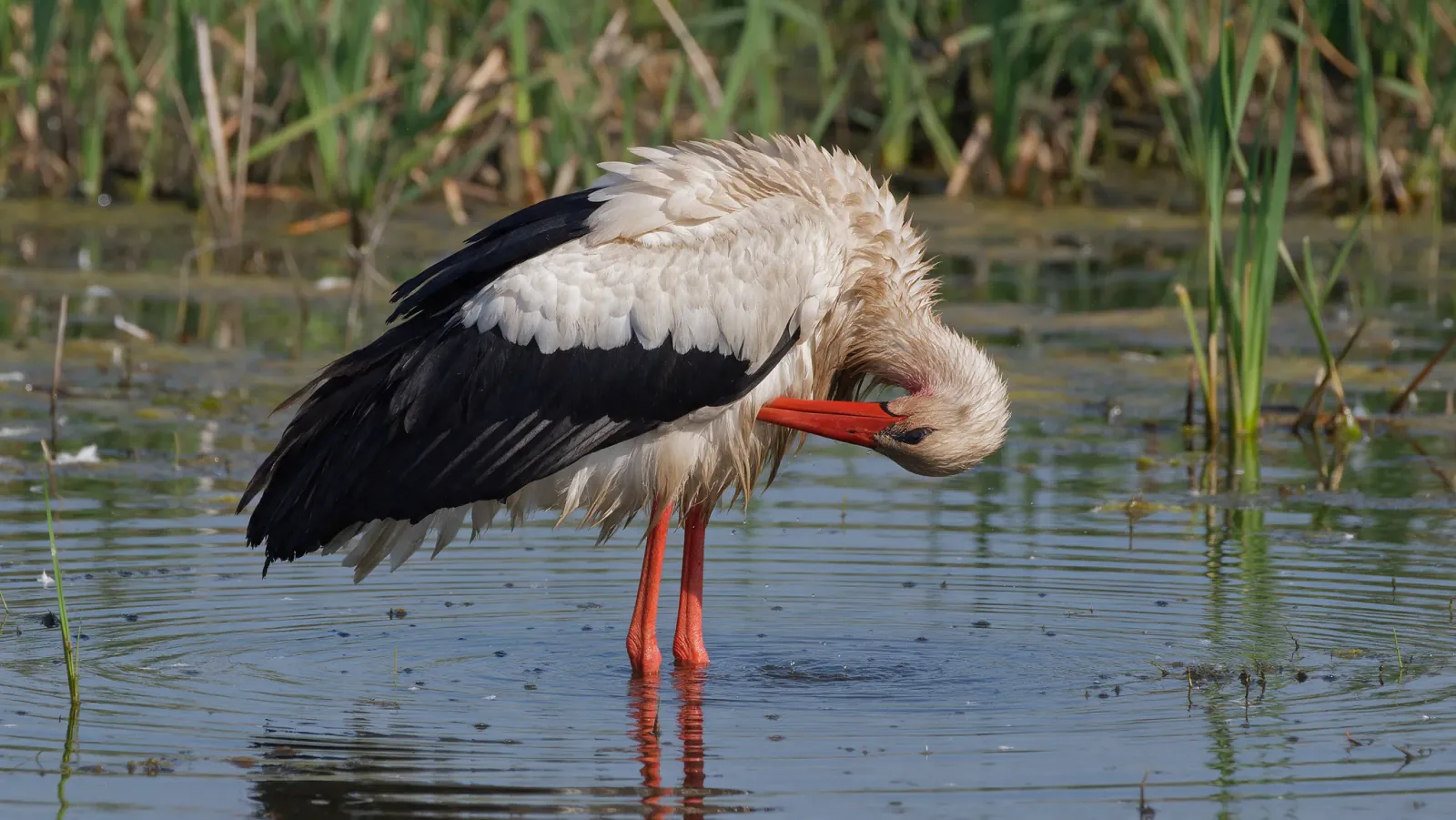
The bill as a comb
Preening begins when the plumage is nearly dry. The stork takes a feather near the breast, runs it through the bill from the base to the tip, and presses the barbs back together. Then the next one, and the next. The bill works like a comb and a pair of fingers at once. Split feathers are zipped closed, bent ones are straightened, and anything caught in the plumage is pulled out. Preening is a repair job done one feather at a time, and it can take an hour. Above the base of the tail sits a small gland that produces an oil. The bird presses its bill against it, collects some, and works it into the feathers. The oil keeps the plumage supple and helps it shed water, which is why a stork preens hardest before rain and before a long flight. A well-oiled coat is the difference between a bird that shrugs off a shower and one that sits soaked and cold. The long session after a bath is the thorough one, and the short sessions through the day keep it from being undone. The order never changes. Wet feathers cannot be zipped back together, and oil will not spread on a soaking coat.
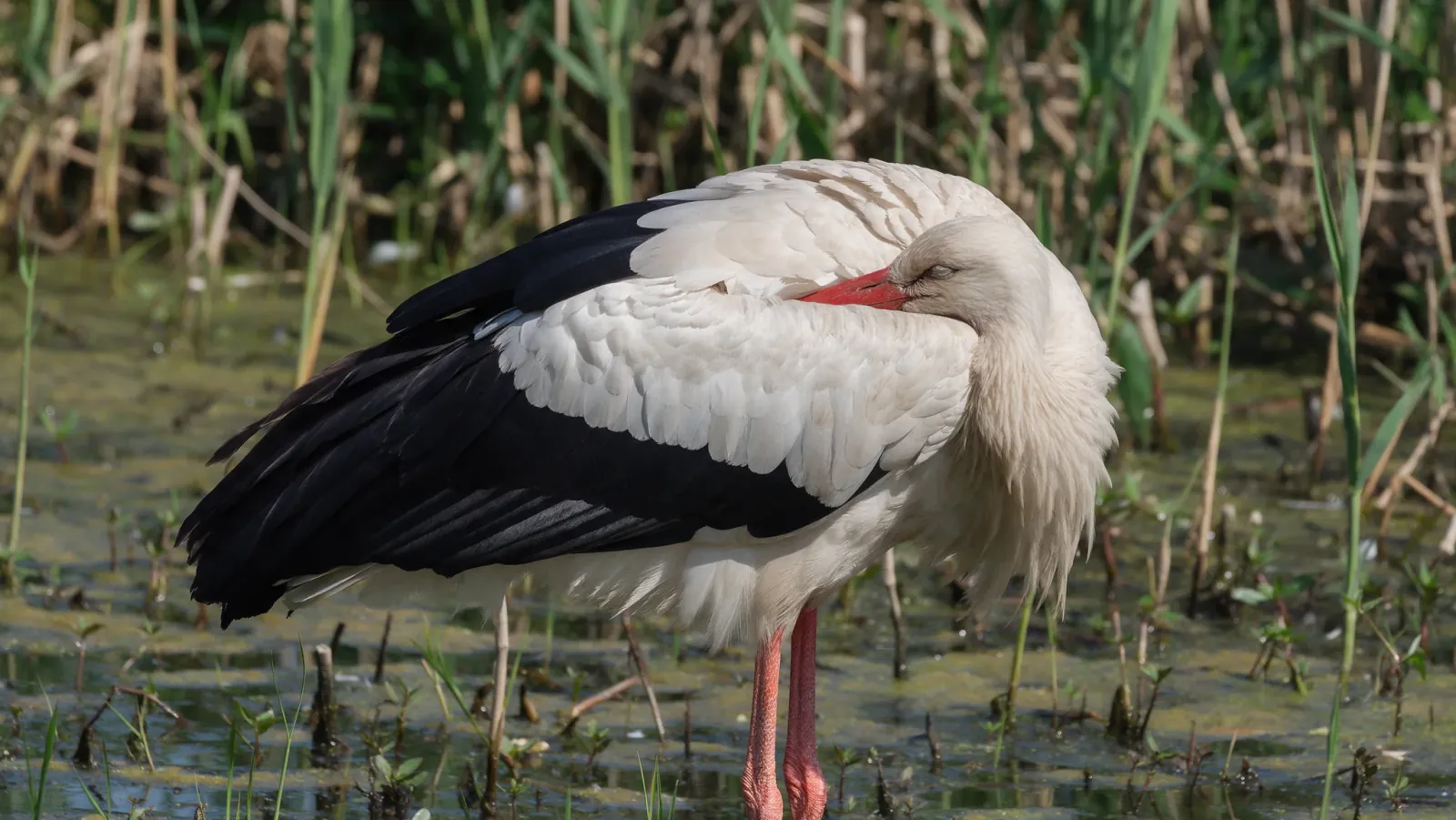
The lock in the leg
Sleep comes standing, and a tendon does most of the work. A long tendon runs down the back of the leg, and when the bird settles its weight the joint straightens, the tendon pulls tight, and the toes curl closed around the nest sticks. The grip needs no muscle to maintain. Weight alone keeps the foot closed, so the stork can sleep without holding on. Most sleeping storks use one leg and draw the other up into the feathers of the belly. The tucked foot stays warm, and the bird has a spare leg ready without needing to shift its whole body. When the standing leg tires, the bird swaps them with a small hop and a shuffle. As sleep comes, the long neck folds back and the head rests among the feathers of the back and shoulders. A stork can spend a whole night on one leg without straining a single muscle. Sleep on a nest is broken and shallow. The bird comes awake at a clatter from a neighbouring roof, at a chick moving under it, at a car on the lane below, and it checks the yard before it settles again.
Explore the gift