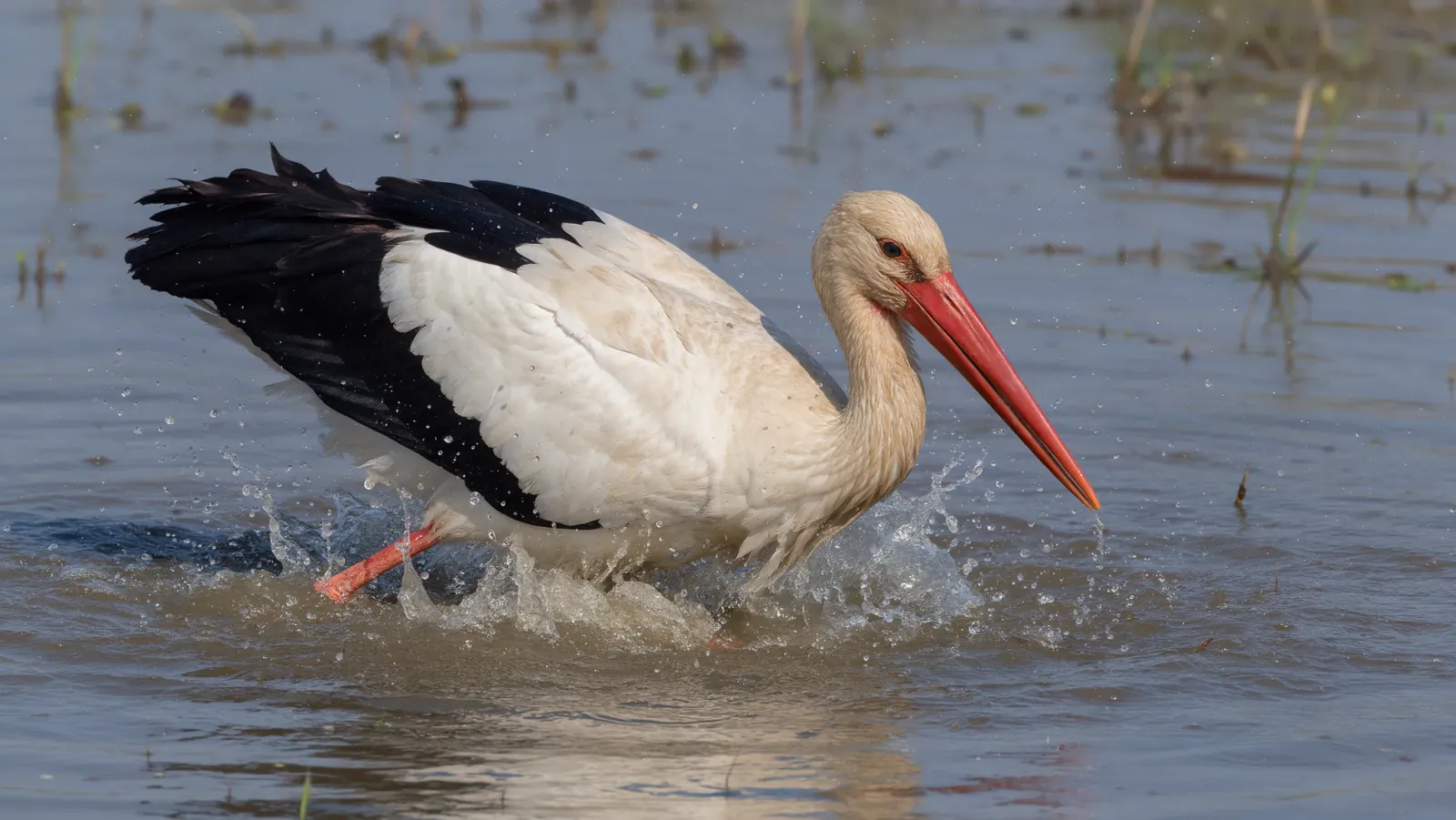
A stork bathes by wading into shallow water, ducking its body under, and throwing water over its back with quick beats of its wings. The bird walks out into a pond or the flooded corner of a field, lowers its chest, works its wings, and stays until the coat is wet through. Then it climbs out and stands in the open to put every feather back in place.
Into the shallows
A stork chooses water it can stand in. It needs to touch the bottom, because it bathes on its feet rather than swimming, and a ditch, a puddle in a rutted track, or the shallow edge of a river all work. It steps in slowly and lowers the front of its body until the water reaches its belly. Then the wings start. The bath is mostly a wing-beat: the bird half opens its wings and drives them down, throwing spray over its own back and neck. It turns, dips its head, and repeats until the white feathers are dark with water. In hot weather it will lie down in the shallows and rock from side to side, letting the water run through the feathers on its breast while its long legs trail behind.
Why bother
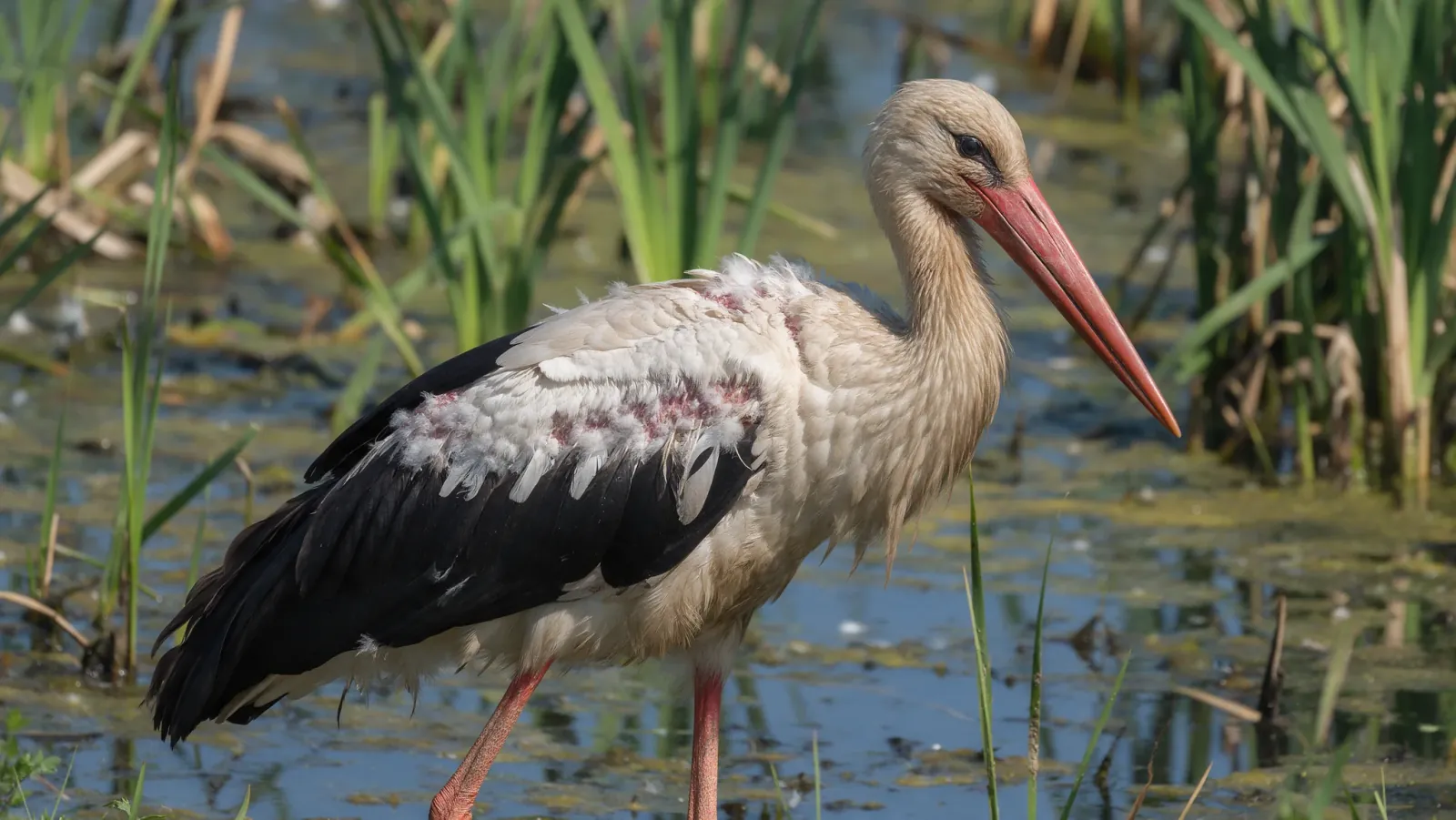
A stork lives outdoors in mud, dust, and the droppings of its own nest. Grime builds up in the plumage and spoils the smooth surface a wing needs to catch the air. Small pests that live among feathers settle in and multiply. Water loosens the dirt and rinses it out, and the beating wings shake loose what clings. A clean coat sheds rain and holds warmth better than a clogged one, and a bird that flies long distances cannot afford a coat that drags. The bath also matters before migration, when the birds need every feather in working order for weeks of flying.
The shake
When the bath is finished, the stork wades out and shakes. It fluffs the feathers away from the body and shudders from head to tail, and the water flies off in a fine spray. Then it spreads both wings and holds them open to the air, sometimes for a long time.
The bird often chooses a high, open place for this, a roof ridge or a bare post, where the wind can reach every feather. If the sun is out it turns its back to the warmth as well, and the drying and the warming happen together. A bird that has just bathed is easy to approach, because its attention is on the feathers and its wings are busy.
Wings wide to the air
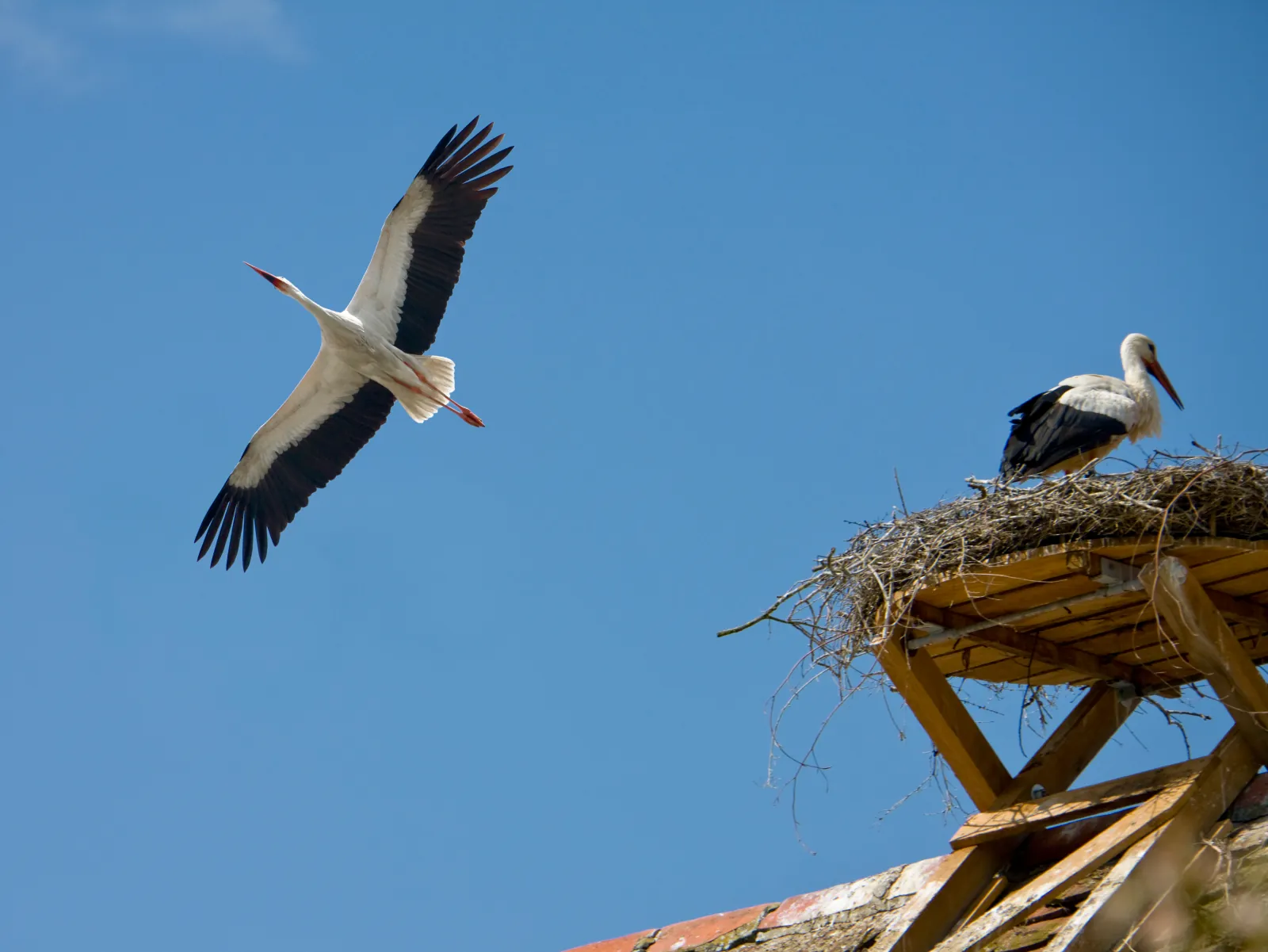
The wings go out to their full reach, the long black flight feathers fanned, the white upper wing catching the light. The bird holds them slightly forward and up, so the wind can pass along the whole surface. The tail often spreads a little too, and the whole bird turns into a shape with the most possible surface facing the air. The neck is often stretched, and the stork turns a little now and then to face the breeze. On the ground a white stork looks almost entirely white, and the spread wings are when the black tips finally show. The pose reveals the shape of the bird as flight does, a broad wing with a dark trailing edge and fingers at the tip.
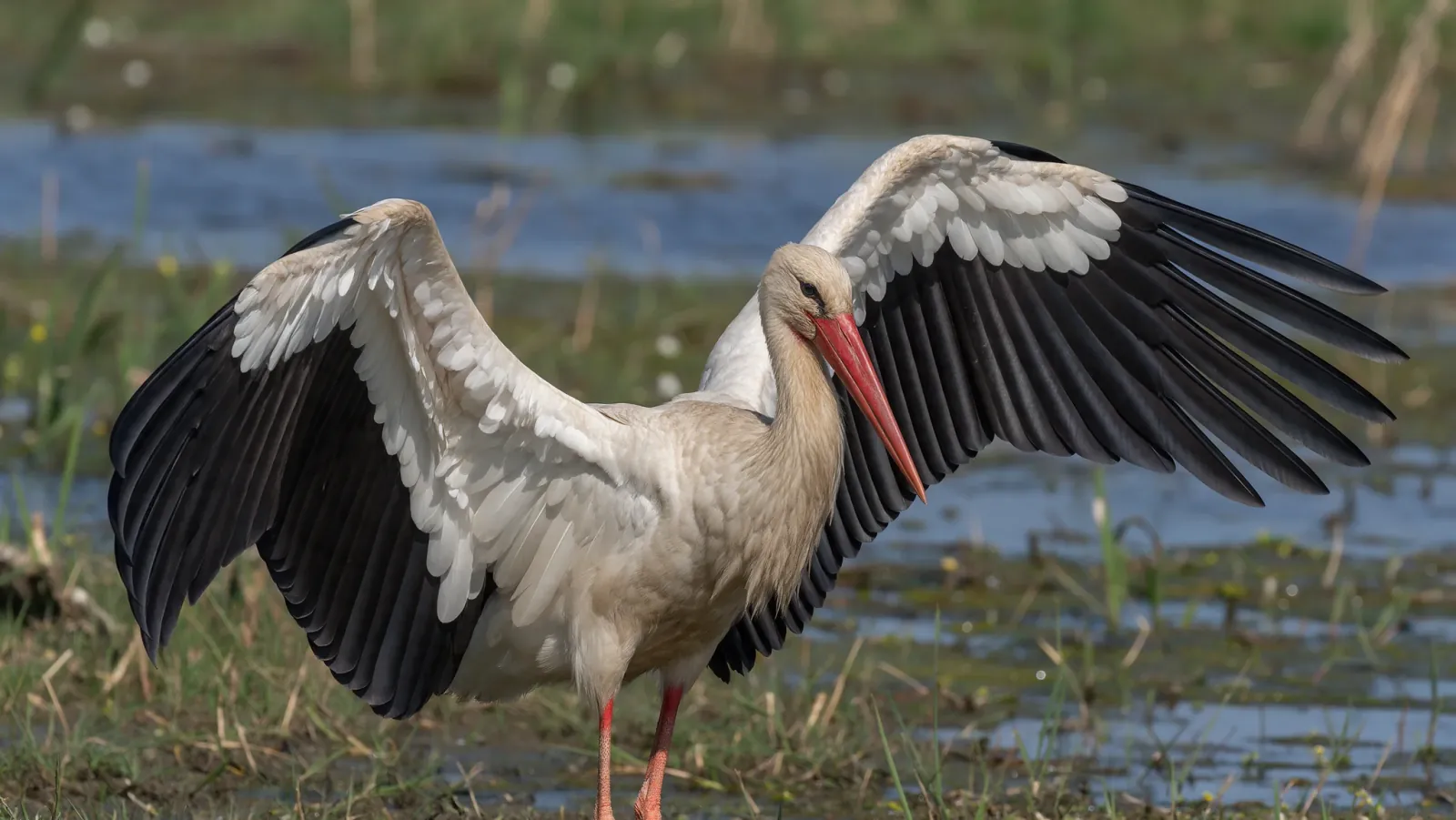
A wet coat is heavy and cold. Water trapped among the feathers adds weight, chills the skin, and breaks the smooth surface that keeps a bird warm. A stork that tried to fly with soaked flight feathers would labour against all that water. Opened out, the wing dries quickly, because every feather is exposed to moving air at once. Folded, the inner feathers stay damp for a long time. The pose is a way of using the wind as a towel, and the bird holds it until the job is done.
Storks use the pose in both kinds of wet. After a bath it follows the shake. After a night of rain it starts the morning: the bird stands on the nest or a ridge with its wings out, waiting for the shower to pass and the feathers to lift. In steady rain the pose does not work, and the stork closes its wings and faces the weather instead. The drying pose belongs to the moment after, when the clouds break and the air starts to move again. On a wet day a stork may repeat the pose several times, opening up whenever the rain eases and folding again when it returns.
The long preen
Preening is the slow half of the routine. The stork draws each feather through the bill, nibbling along the shaft and pressing the barbs back into a smooth sheet. It works from the breast to the wing tips, then reaches the difficult places with a foot or a twist of the neck.
While it preens, the bird spreads oil from a gland near the base of its tail, working the oil along the feathers with the bill. That oil is what makes water bead and run off. The care a stork takes over its feathers is the same care that keeps it dry in a storm. In warm weather a stork may bathe several times in a day, and the routine is always the same: the splash, the shake, the wings held open, the patient preen. Nothing about it looks urgent.
Sun as heat and light
A stork sunbathes by standing in the light with its wings held open. The sun dries the feathers, warms the skin, and settles the bird after a cold night. To sunbathe, a stork spreads its wings wide and turns its back or its flank to the light. The wings are held open so the sun reaches the body and the inner feathers at once. The long neck may stretch up or lie back along the shoulders, and the head turns slowly as the bird settles into position. The pose can last a long time. Sometimes the bird lies down instead, settling onto its breast with its legs folded underneath and its wings spread on the ground.
A bird holds its body at a steady temperature, and on a cold morning that costs energy. Food pays the bill, and sunlight is free heat that reduces it. Standing in the sun for twenty minutes can mean the difference between hunting well and hunting cold. That matters most in spring, when the birds arrive from Africa into weather that can still turn raw. The first warm days of March are when this matters most, and the returning birds spend long hours on the sunlit side of a roof.
Sun does a second job that water cannot. The ultraviolet in daylight helps birds keep their plumage in condition, and the heat drives out damp that has settled near the skin. Feather mites and other small pests do poorly in strong, dry light. On a windy day the bird finds a corner out of the wind, where the warmth is not carried away before it can be used. If the weather turns, the bird gives up and goes back to standing with its feathers closed, waiting for the next clear spell.
A daily shape
Where storks nest in numbers, sunbathing becomes a group habit. A row of birds may stand along the same roof with their wings half open, all facing the same way, like washing hung out on a line. The birds space themselves a wing apart and ignore each other completely. There is no greeting and no dispute, just a shared hour of warmth. When one folds its wings, the others usually follow within a few minutes, and the roof empties. Young birds join in more readily than adults, and a group of them will hold the pose long after the older birds have moved off to feed.
On a warm day the routine repeats: bathe, shake, spread, preen. A colony can look oddly still at midday, with several birds standing like weather vanes on the roofs, wings out and heads turned into the same breeze. A stork that can afford to stand with its wings spread in public has nothing nearby to fear, and the calm is part of what makes the pose easy to watch. Then one folds its wings, the moment passes, and the bird goes back to the ordinary work of the afternoon.
Explore the gift