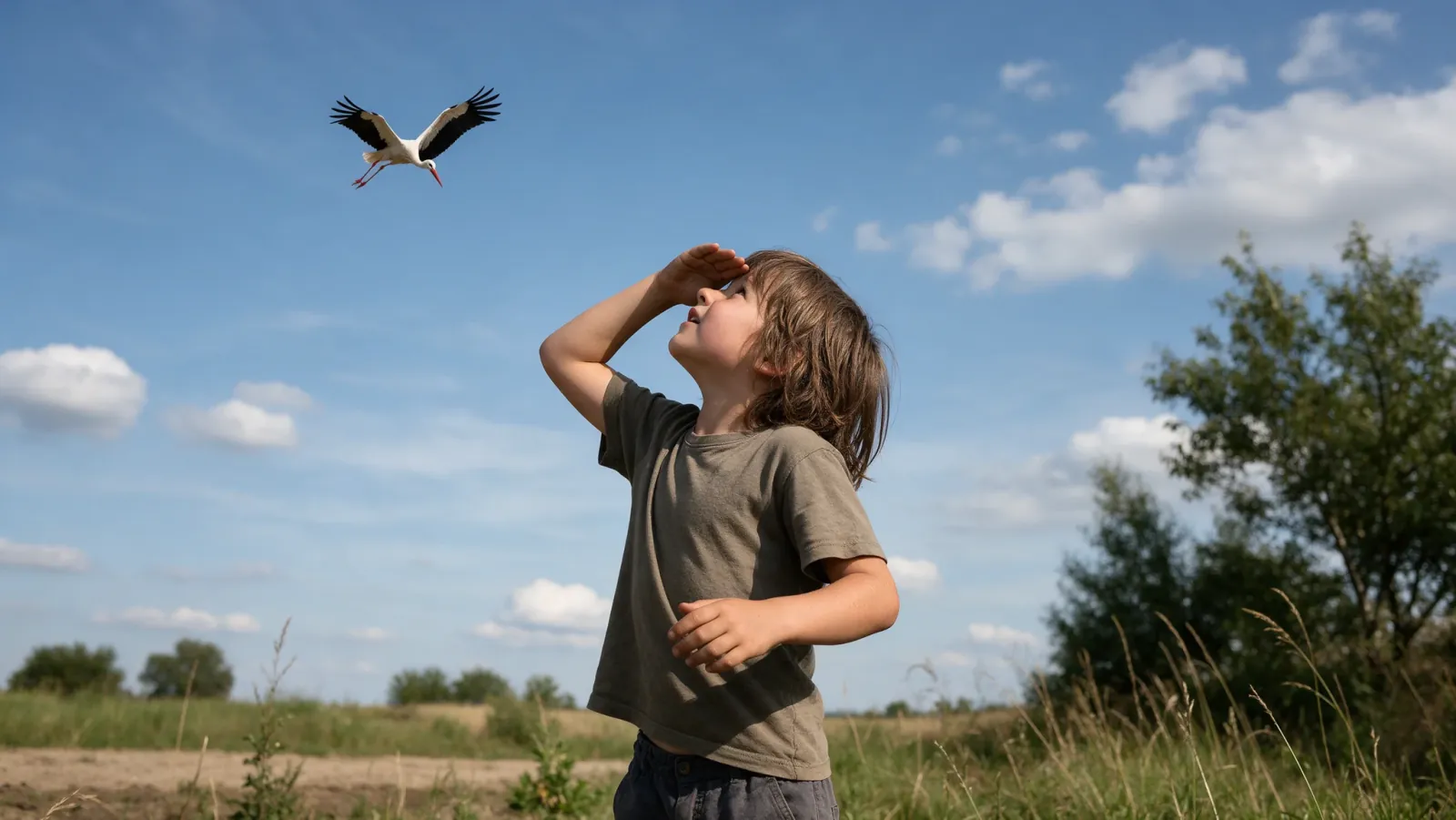
Yes. The white stork is a real bird, Ciconia ciconia, and it nests on chimneys and roofs across Portugal and Spain every spring. Binoculars will settle the matter faster than any argument.
A bird with a ring and a file
Young storks are fitted with numbered rings before they fly, and the number goes into a register. Ringers record where the bird was born, where it was found and how old it was. A bird recovered in a rice field outside Lisbon can be traced back to a nest on a church tower in the Alentejo.
That paper trail exists because the bird exists. Naturalists have described it for centuries, museums hold skins, and photographers fill entire mornings with it. The white stork appears in field guides, in ringing databases and in the daily life of Iberian villages.
Where the doubt comes from
The baby story is the reason people ask. For generations children have been told that a stork brings the newborn, and the image has gone into cards, cartoons and nursery walls. A bird that delivers babies sounds like a character from a fable.
Cartoons make it worse. The stork in a cartoon often walks upright, carries a cloth bundle in its bill and speaks. Real storks do none of that. They stand on one leg in a wet field, clatter their bills and eat frogs.
There is also plain unfamiliarity. In cities where the bird no longer nests, a stork can look like something from a nature film: too tall, too white, too still. The shape reads as invented until a real one lands on a roof across the street.
What the bird does all day
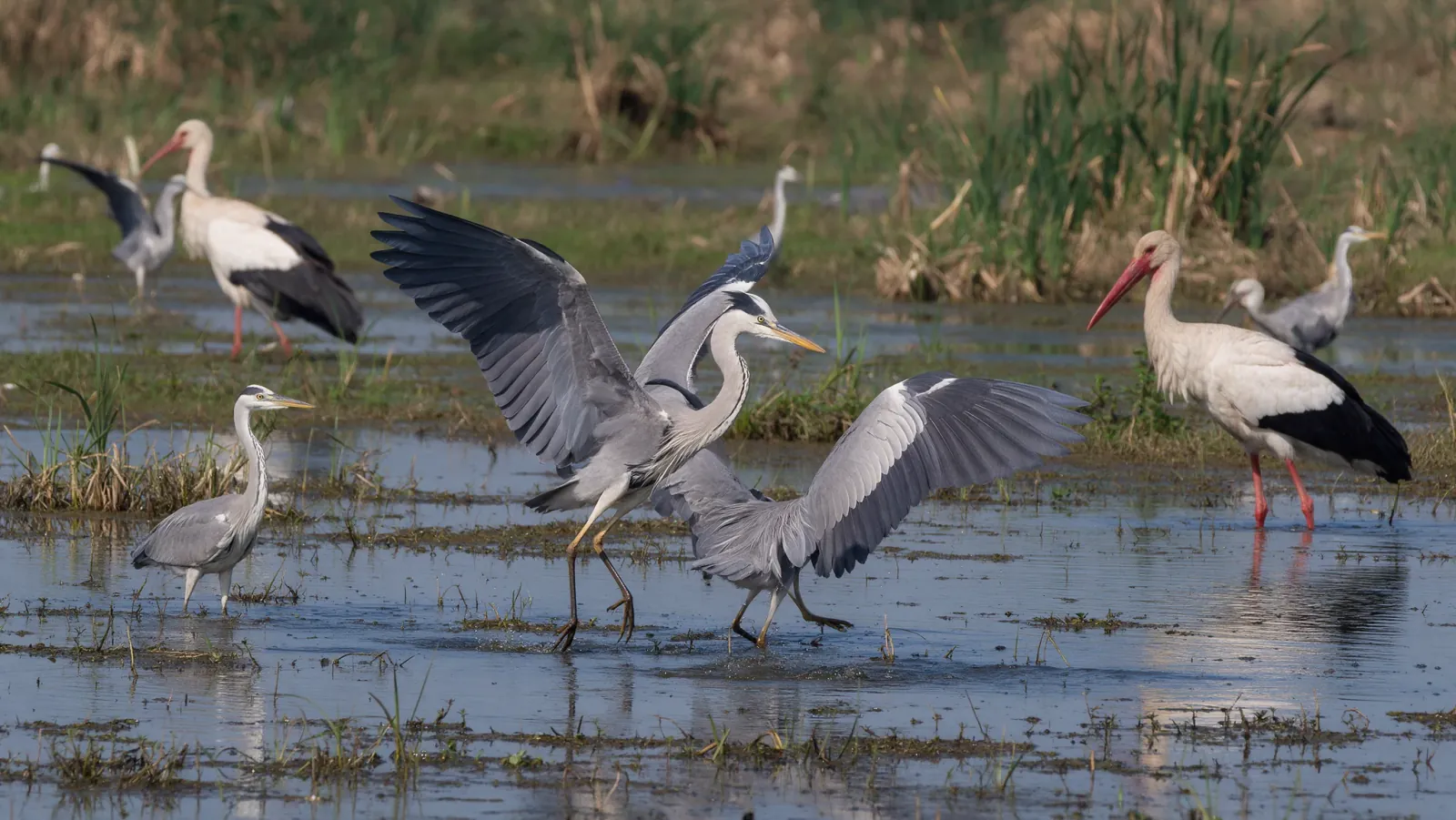
A white stork spends the morning hunting in shallow water or on a mown field. It walks slowly, stops, tilts its head and strikes. The bill takes a frog, a large insect or a small mammal, and the bird tips its head back to swallow.
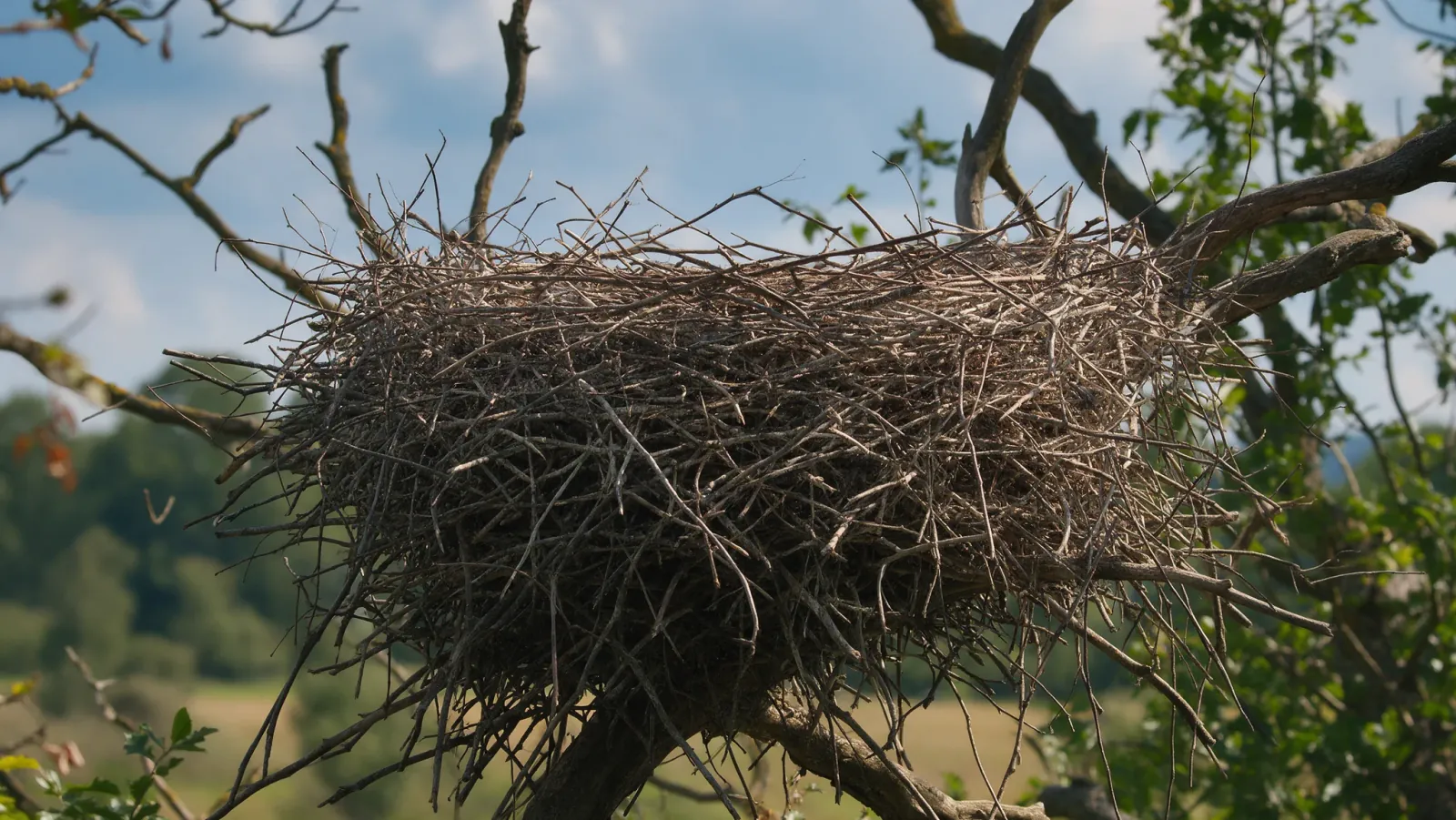
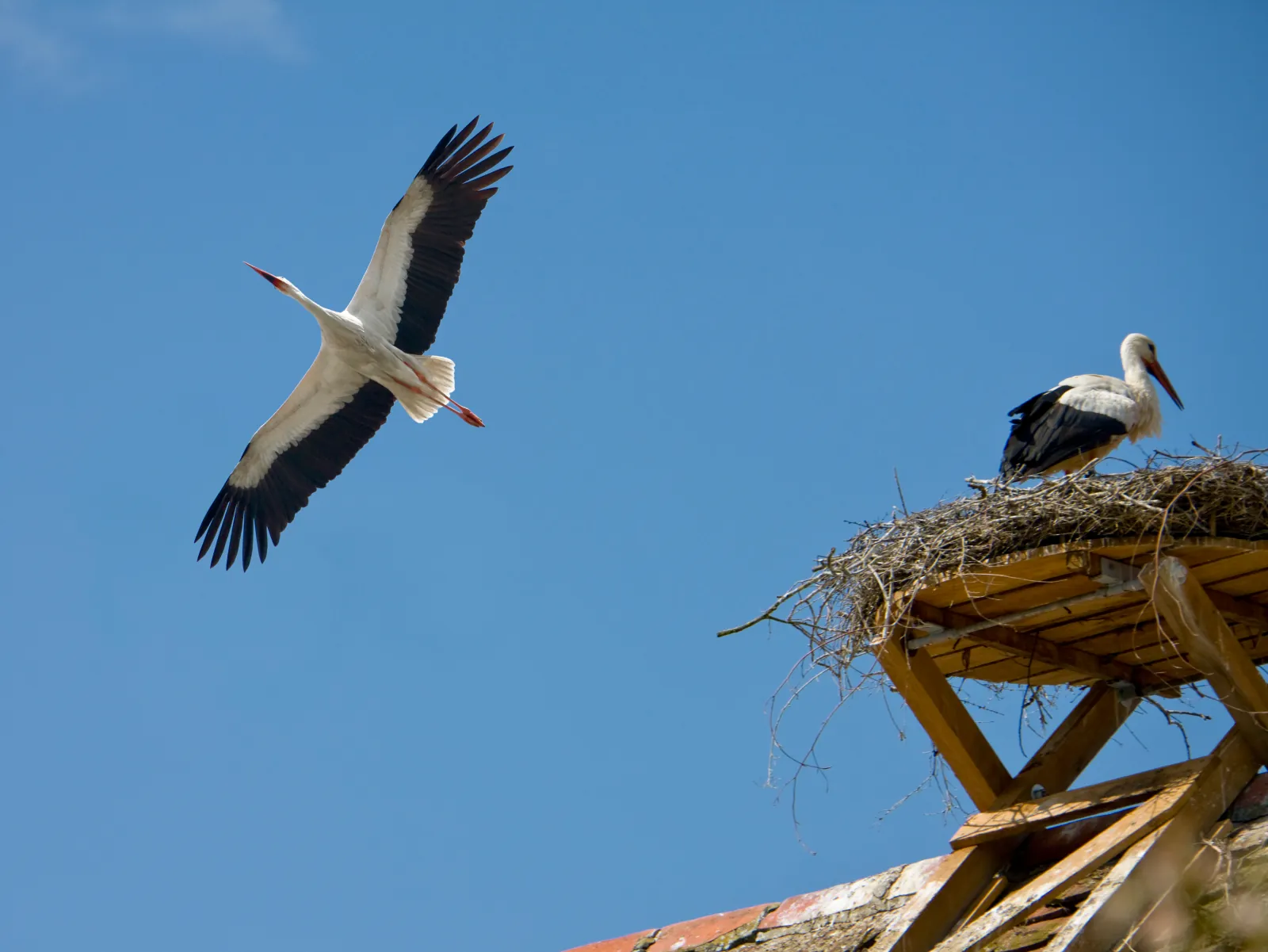
In the afternoon a pair stands at the nest. They greet each other by throwing their heads back and clattering, a sound like quick wooden applause. The nest itself is a heap of sticks on a chimney, a pole or a roof, and it may be older than the person watching it.
The shape that gives it away
A stork in flight holds its neck straight out and trails its legs behind. Herons fly with the neck folded into an S. Cranes fly in lines and call. That straight neck, with the long bill leading, is the plainest field mark a stork has.
On the ground the bird stands about a metre tall, with a wingspan near two metres. The body is white, the flight feathers black, the legs long and red in adults. A young bird has duller legs and a bill that looks almost brown. A stork often stands on one leg with the other drawn up into the feathers. The habit saves heat, and it gives the bird a stillness that people read as patience.
See one this week
In Portugal, the Tagus estuary and the rice fields around it hold birds through the year. In Spain, the rooftops of Extremadura and Castile are crowded with nests in March. A pair on a village church can be watched from the square without disturbing it. Early morning is the best time, when the birds feed and the light is low.
The question about whether storks are real tends to fade at that point. The bird is on the roof, the ring is on its leg, and the nest has been there since before the question was asked.
Explore the gift