A white stork nest is a stack of sticks that can measure more than a metre across and a metre deep, and old ones grow larger every year. The size is the work of two birds returning to the same roof.
The measurements
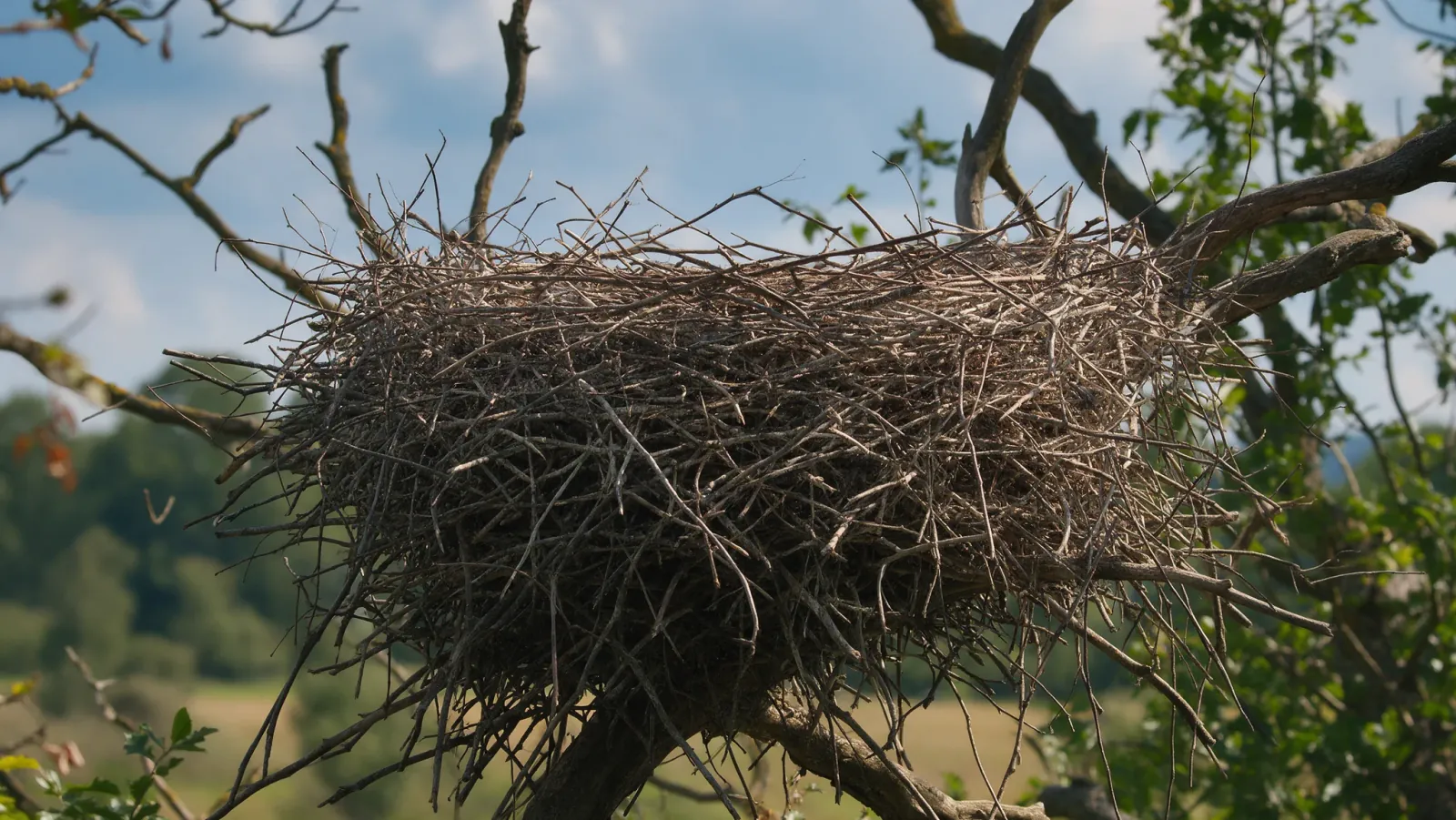
A new nest is often about a metre wide. A big old one can span a metre and a half or more, close to the width of a double bed, and stand a metre tall. The largest nests are heaps that have been added to for many seasons.
The height matters as much as the width. A nest is a shallow bowl on top of a deep mound, and the bowl holds the birds while the mound carries the weight.
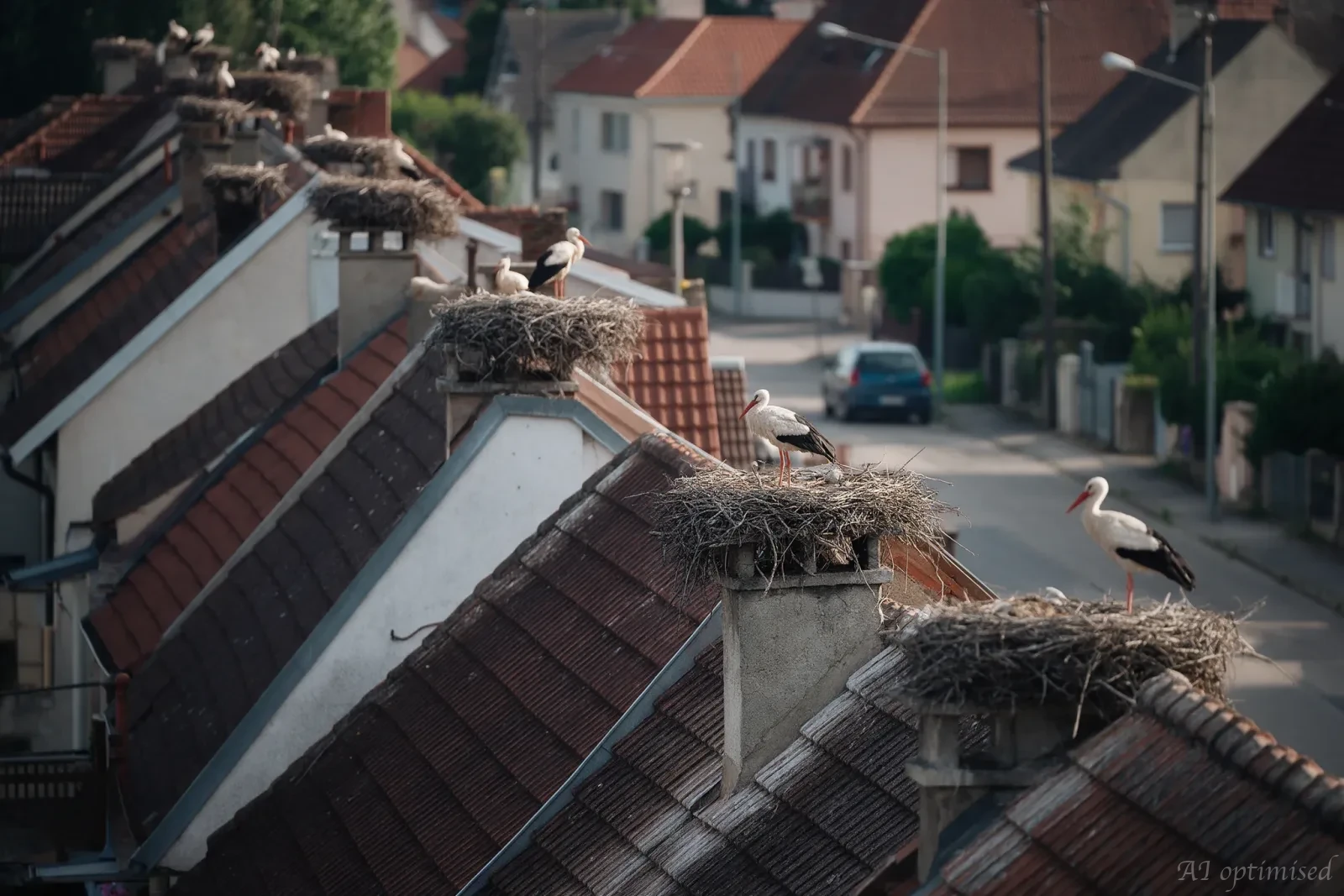
A pair on a chimney can look small beside their own nest. The birds stand about a metre tall, and the heap under them can reach their chest.
Built from the rim inward
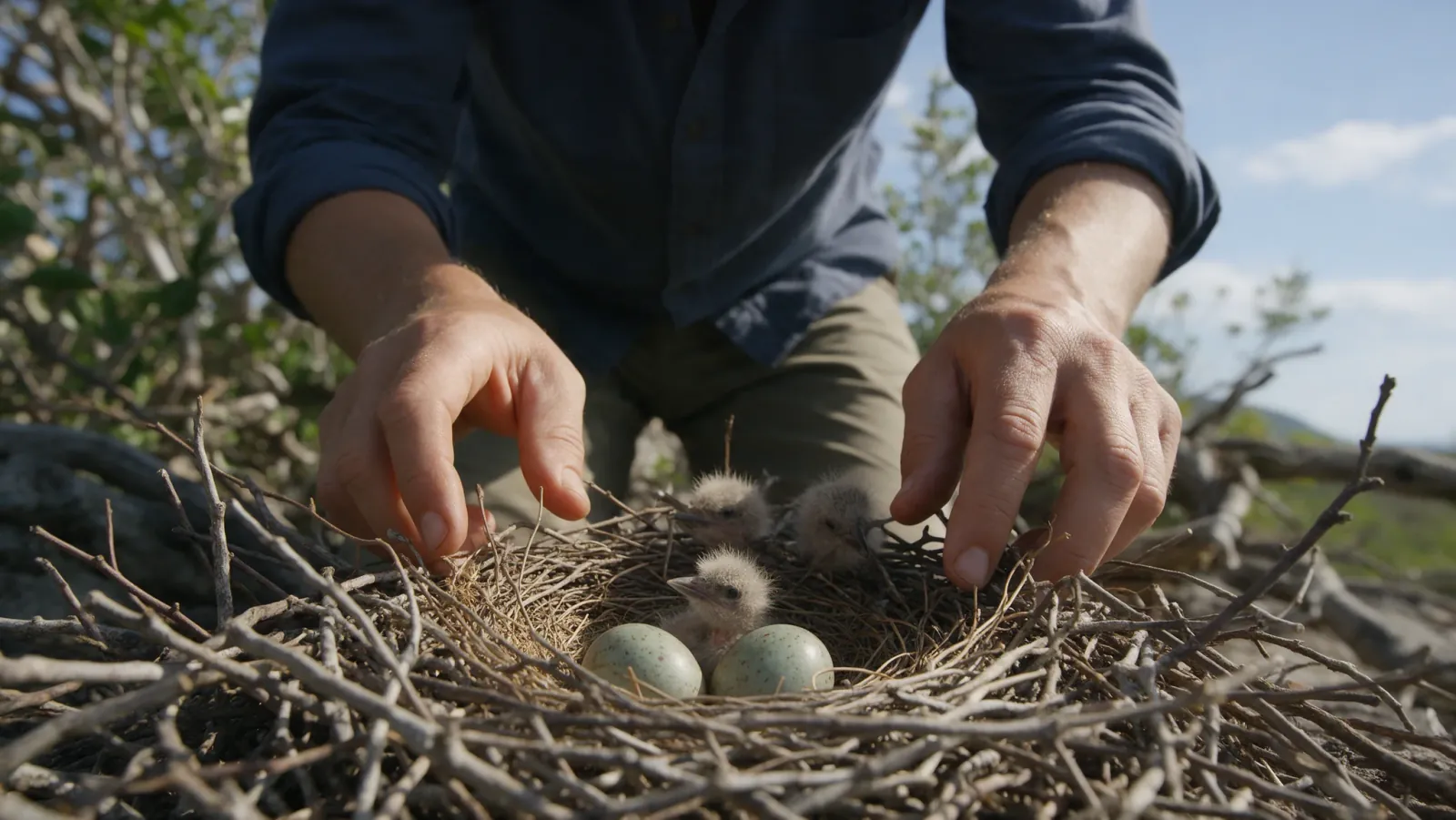
The pair starts with sticks laid across the base. Each bird arrives, lands, and places a stick with its bill, wedging it into the growing heap. Grass, straw, dung and rags go into the lining. Plastic bags and rope turn up in modern nests.
The work goes on through the season. A nest is never finished. Chicks trample the lining, storms pull pieces out, and the pair repairs the damage.
The birds build with whatever the neighbourhood provides, and a nest in a modern village can contain a surprising amount of packaging.
Why old nests are bigger
A pair that returns to the same nest adds material every spring. The old sticks settle and rot, and new ones go on top. Over ten years the heap can double in size.
Reuse is common in Iberia, where nests on churches, chimneys and poles pass between pairs. A nest can outlast the birds that built it, and the next pair inherits the work.
Inside the cup
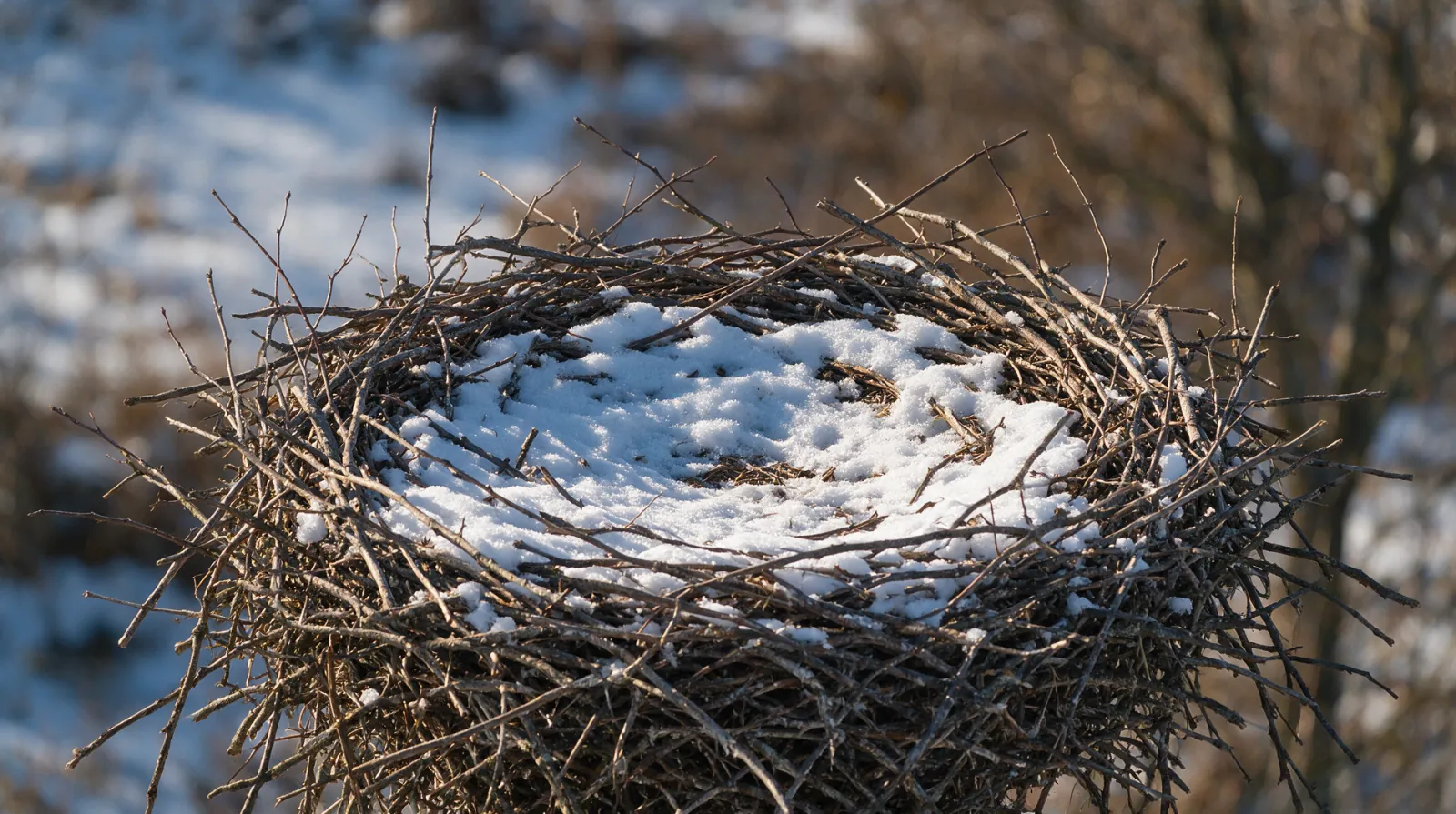
The chicks live in a hollow in the top of the heap. The rim is high enough to stop a small chick from tumbling out, and the lining of grass and dung keeps the cup warm and dry. From above, the nest looks like a shallow crater in a pile of timber. The pile underneath drains slowly, and a nest that has stood through years of rain holds a dry cup above wet timber.
A parent stands on the rim and feeds the brood. The chicks crowd the centre. On a hot day the cup can be shaded by a parent's body, and on a wet day the same body keeps the rain off.
A nest on a pole
Many Iberian nests now sit on metal platforms fixed to poles, pylons and church towers. The platform sets a limit on the base, and the nest grows upward from there. A pole nest can look like a barrel balanced on a stick.
These nests are often easier to see than roof nests, and they show the size plainly. From the ground, a big one looks like a small haystack with birds on top. The birds add to it each spring, and the platform eventually disappears under the heap.
Size and the bird
A nest this large costs energy. The pair must find and carry hundreds of sticks, and the work continues for weeks. The reward is a platform that holds the brood above predators and gives the chicks room to grow.
A stork on a big nest is a bird on a landmark. The heap of sticks is visible from the far end of the village, and the pair on top of it is the reason people look up.
Explore the gift