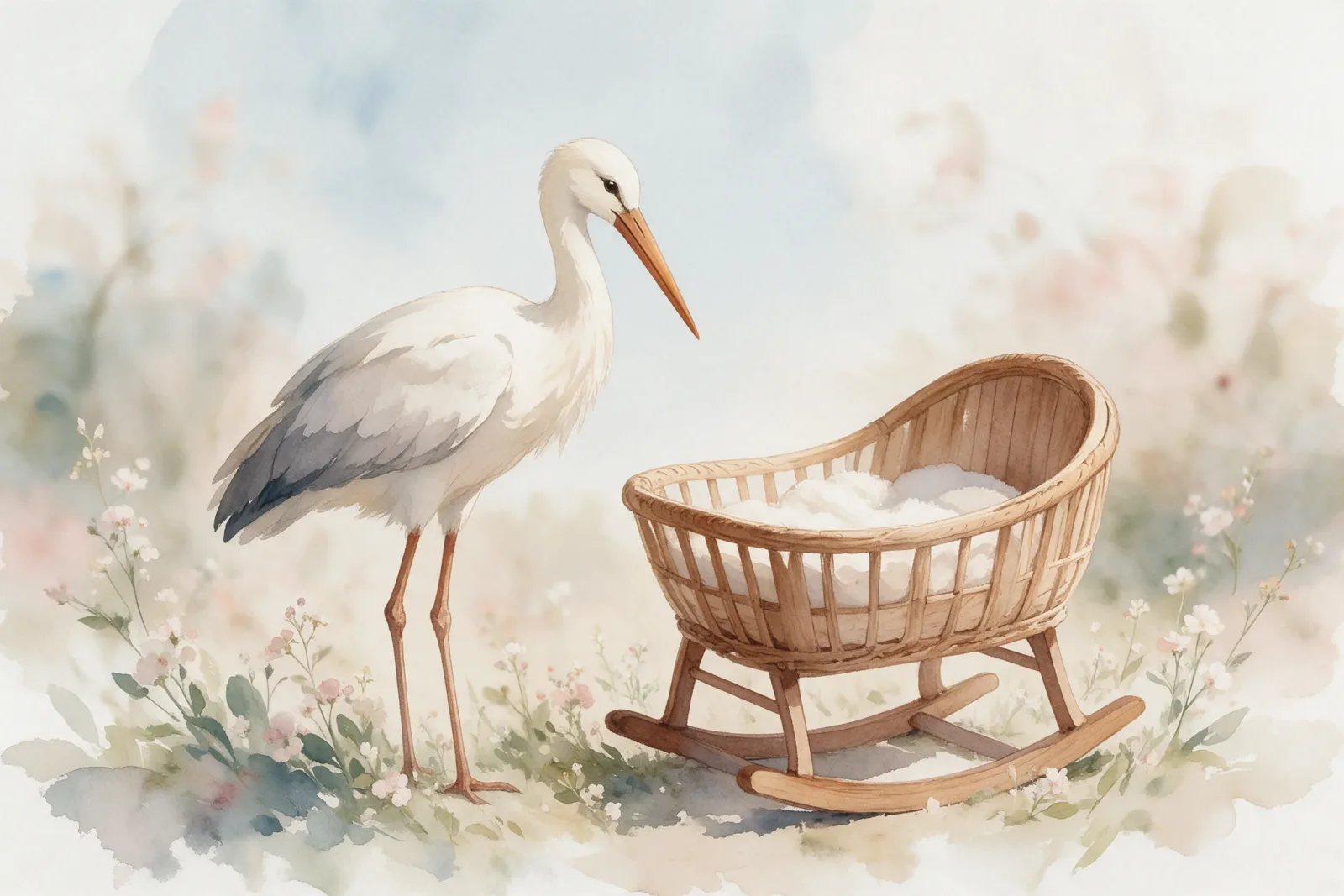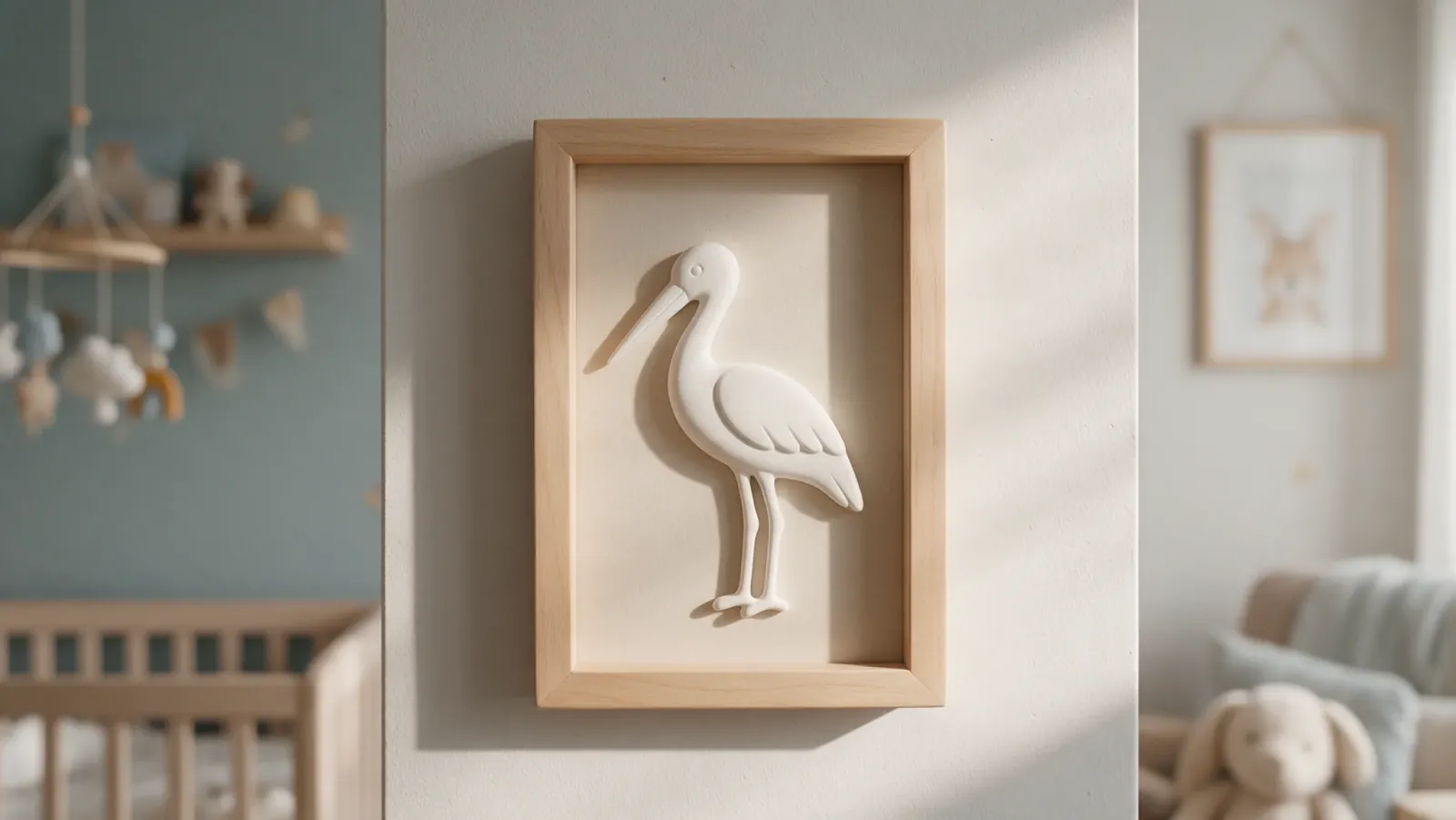
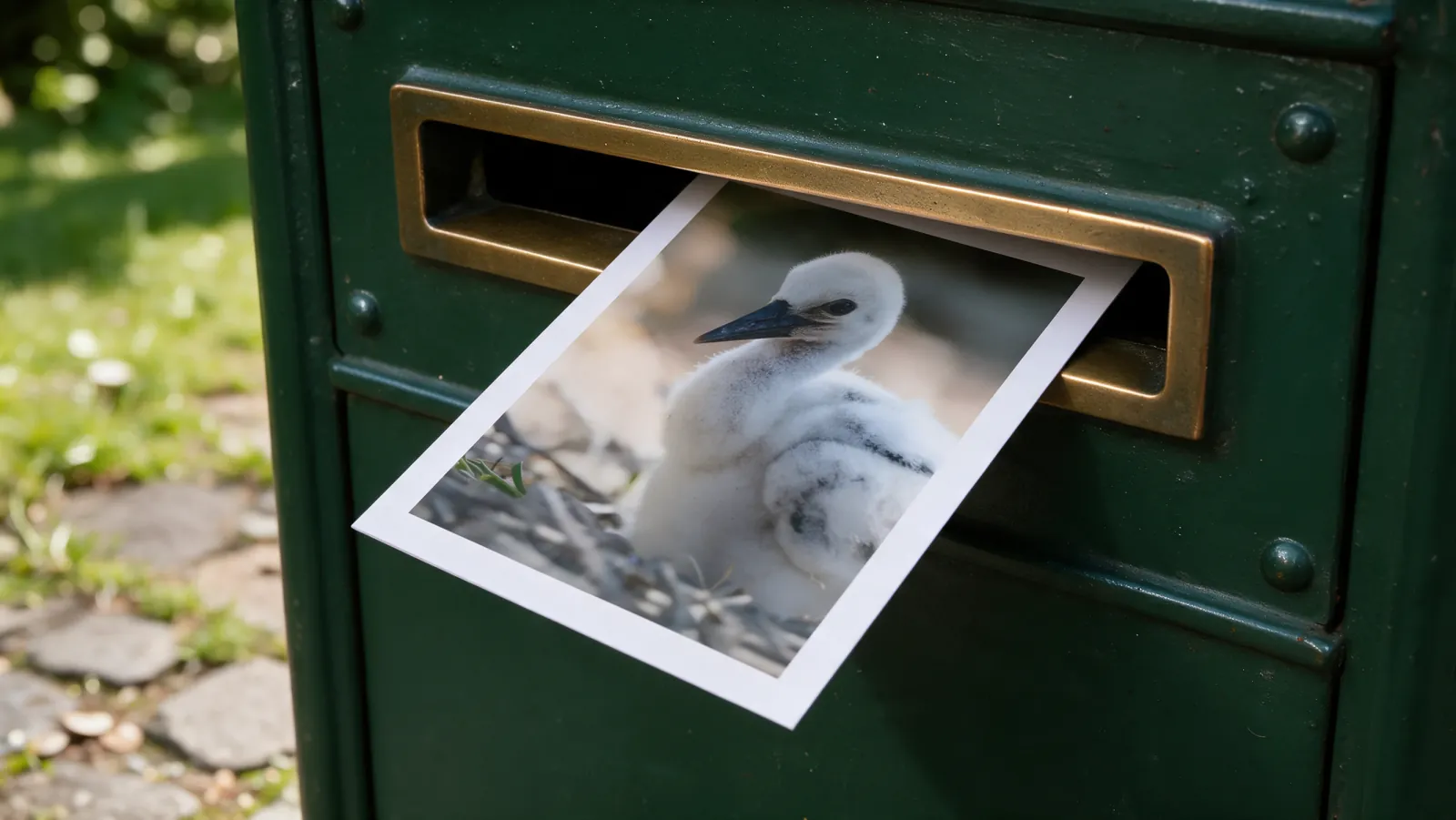
The keepsake that stays in the nursery is usually small and flat, and it is almost never the most expensive thing in the room. It is the card. It carries a baby's name, a message in an adult's handwriting, a photograph of a white stork and the name the family gave that bird.
What the card holds
A stork gift arrives with a personalised keepsake card. On it: the child's name, a short message, the stork's name, the stork's photograph, and a code that opens the following page.
The card is the part you can hold. Everything else in the gift is a year of movement, which is wonderful and impossible to wrap. The card is where a moving thing gets pinned down for a moment.
The card is also the piece of paper a family chose. A baby's first year produces appointment cards, scan images, a wristband from the hospital, a form from the register office. Most of it is administrative. The card was designed, printed and written on purpose.
There is no seal, no register and no legal weight. A symbolic adoption does not transfer an animal, and the paper does not pretend otherwise. What it does is fix a moment: this bird was chosen for this child on this day.
Why paper survives the clear-out
A nursery gets emptied every few years. Clothes go to a cousin, the cot goes to the loft, the plastic goes to whoever will take it. What survives tends to be paper: a scan, a bracelet, a card with a date on it.
Paper survives because it is quiet and because it is evidence. It does not need batteries and it does not get outgrown. It also survives because of where people put it, which is high up, out of reach, next to something else they intend to keep.
A card earns its place by holding a fact that would otherwise be lost. Niceness has little to do with it. A hospital wristband and a dated card pass the test; a gift bag with a nice pattern usually does not.
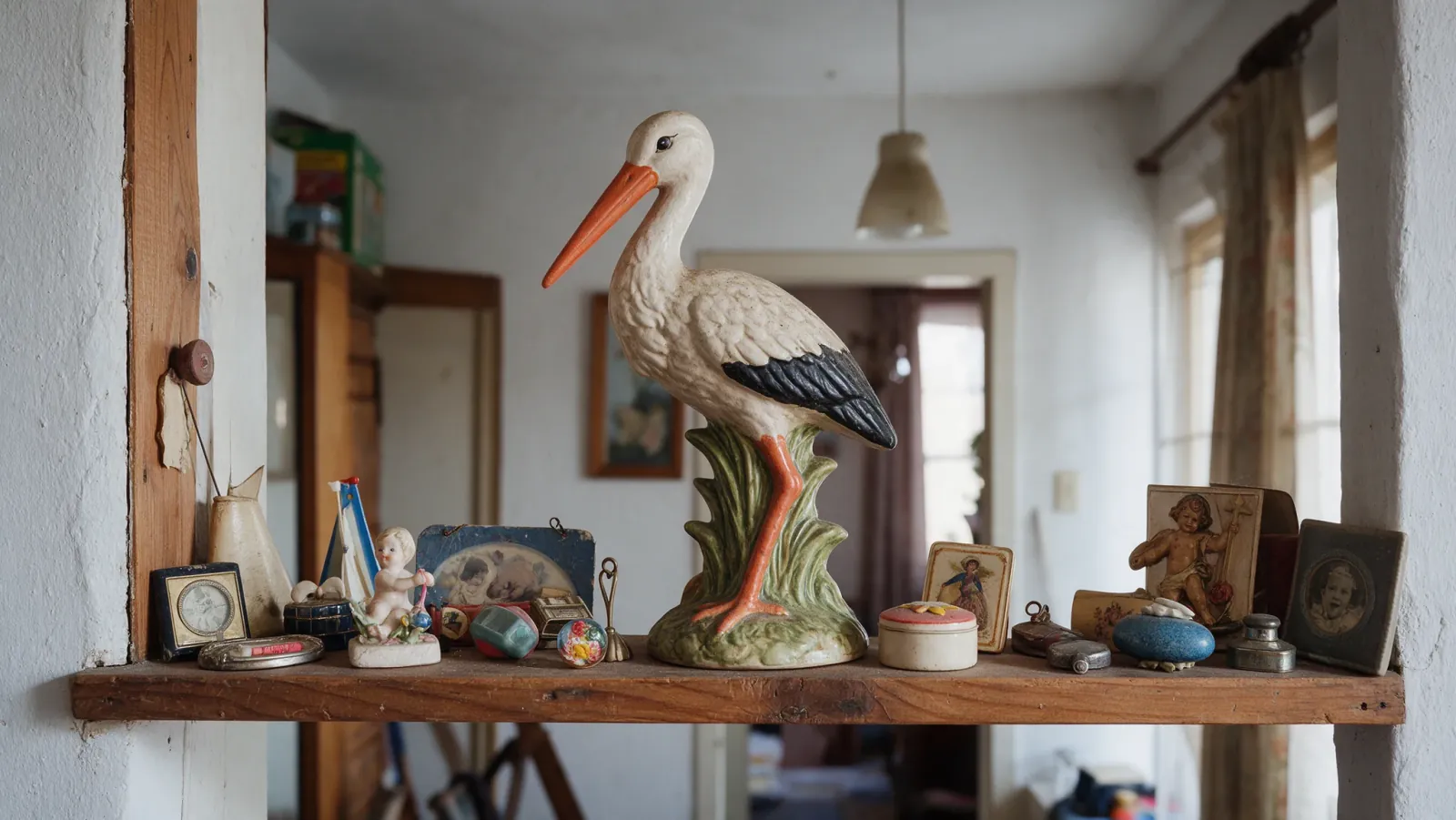
The shelf test
Imagine the room being repainted in five years and everything taken off the walls. What goes back up? Very little. A photograph, a print, a card. Objects that carry a record tend to come back out of the box, and objects that only carry fluff tend to stay in it.
The shelf changes as the child grows, and that is healthy. The first-year objects move aside for school objects: a drawing, a badge, a certificate from a swimming class. The stork card tends to stay through all of it, because it is one of the few things from before the child's memory.
Storage matters more than people expect. A toy in a damp loft grows mould and gets thrown out. A card in a shoebox in a wardrobe comes out years later, slightly yellow, entirely intact. That is a low bar, and most of the things a family tries to keep fail it.
Paper passes because it can be stored flat, in the dark, at the back of a cupboard, and forgotten for a decade without damage.
Toys have a shorter working life. A soft stork is made for a stage: chewed, dragged, washed, and eventually put in a bag for a charity shop. Each toy is a step, and steps get left behind on purpose. A card with a date on it passes the clear-out test because throwing it away would lose a fact.
Where it goes
Above a cot is common. So is a shelf, propped against a wall, or the inside of a cupboard door that gets opened every morning. Framing is optional and changes the object. A framed card becomes furniture: it stops being something that could be tidied away and becomes part of the wall. A card left unframed stays portable, which matters if the family moves or if the child wants it later.
Either choice is fine. The only wrong place is a drawer, because a drawer is where paper goes to be forgotten. A card that can cross the border from nursery to bedroom tends to survive longest: it is flat, it is quiet, and it does not look like baby equipment.
Light is the quiet enemy of paper. A card left on a windowsill for a summer will fade along one edge and never come back, because the ink has gone. A shelf on an inside wall is better than a windowsill, and a frame with glass is better than neither.
How its meaning shifts
A baby sees colour and light. A toddler learns the stork's name and points at the picture. A five-year-old asks why the bird is standing in water. A nine-year-old reads the message properly for the first time and finds out what an adult thought of them before they could speak.
The same card does different work at different ages, and none of that work is planned. It simply waits, in the same place, while the child changes. The card also survives moving house, which is more than most nursery furniture manages.
The message on the card is worth a little care, because it is the part that will be read aloud years later. Two or three lines are enough. Something true about the week the baby arrived, or about the person writing. Jokes age better than sentiment, and plain sentences age better than either.
The card also survives moving house. It goes in a folder, then in a box marked with the child's name, then onto a wall in a different town. Each move strips the room away and leaves the paper.
A tenth of profits goes to stork conservation each quarter, which means the paper on the shelf is connected to wet meadows and nesting platforms somewhere the family will probably never visit. In a room that changes every few years, a small flat thing that stays put ends up carrying more memory than anything with a motor.
The date that ages best
In the first year it is simply the day the gift was opened. In the fifth year it is a fact about the family's history that nobody has to remember, because it is written down. The date is the part of the card that ages best.
A child who finds the card at fifteen will see a date from before their memory, in an adult's handwriting, next to a bird's name they have heard all their life. That is a lot of information to fit on one sheet.
After a few years the card will show its age. The corner will soften. The colour will go slightly flat if it has been in sunlight. Somebody will have put a cup down on it. That wear is worth having: a pristine card looks like stock, and a card with a bent corner looks like an object that has been in a house. A stork gift costs €9.99 once, and the following continues through the year without a subscription.
Explore the gift