A stork on a chimney belongs to this spring, this nest and this field. The bones under the bird reach much further back. Storks have stood in shallow water for a span of time that makes a village look new, and people have been naming them, drawing them and printing them for most of the time they have watched. Four kinds of record survive: the fossils, the word, the coat of arms and the small portraits on coins and stamps.
The shape in the rock
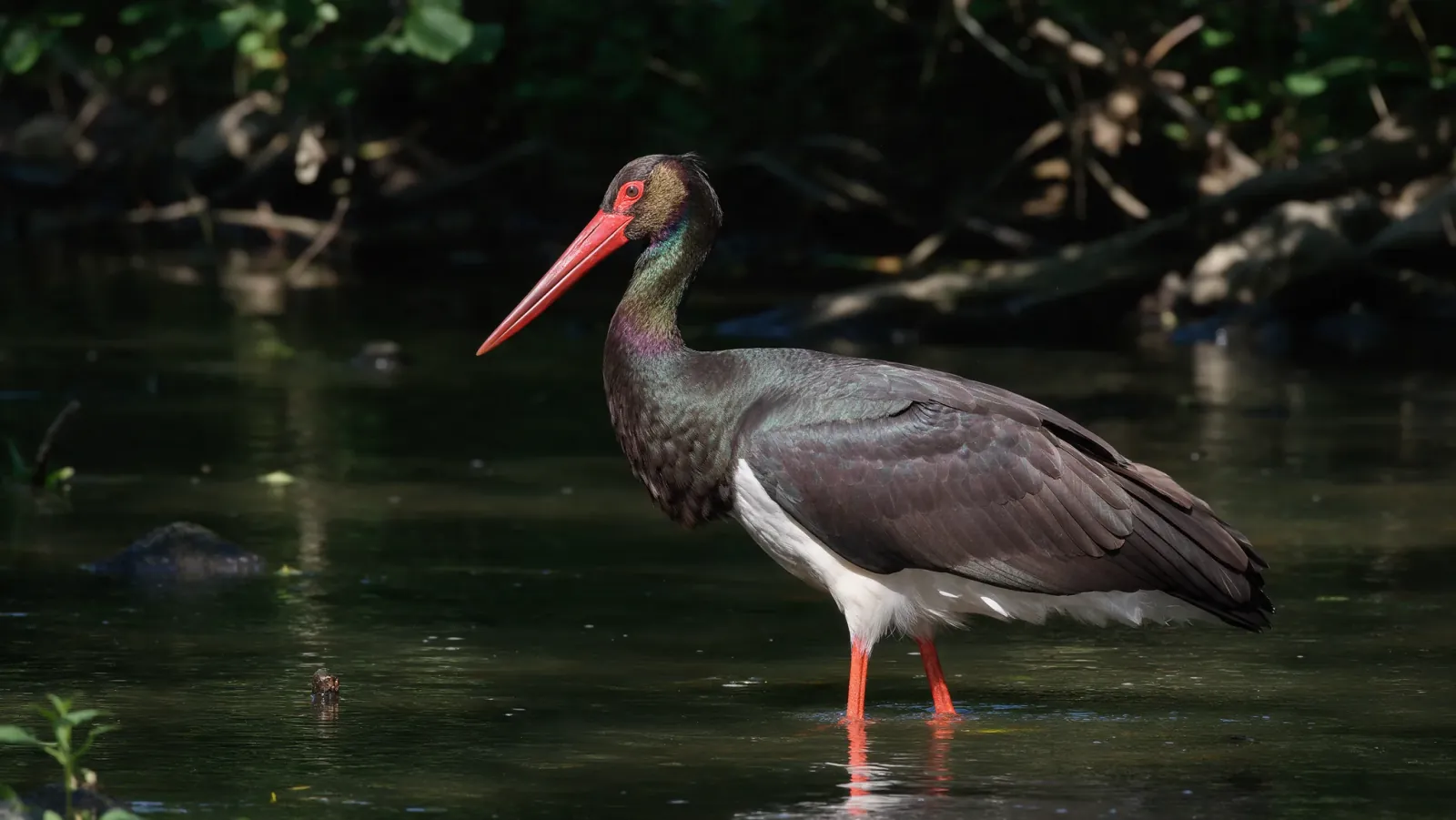
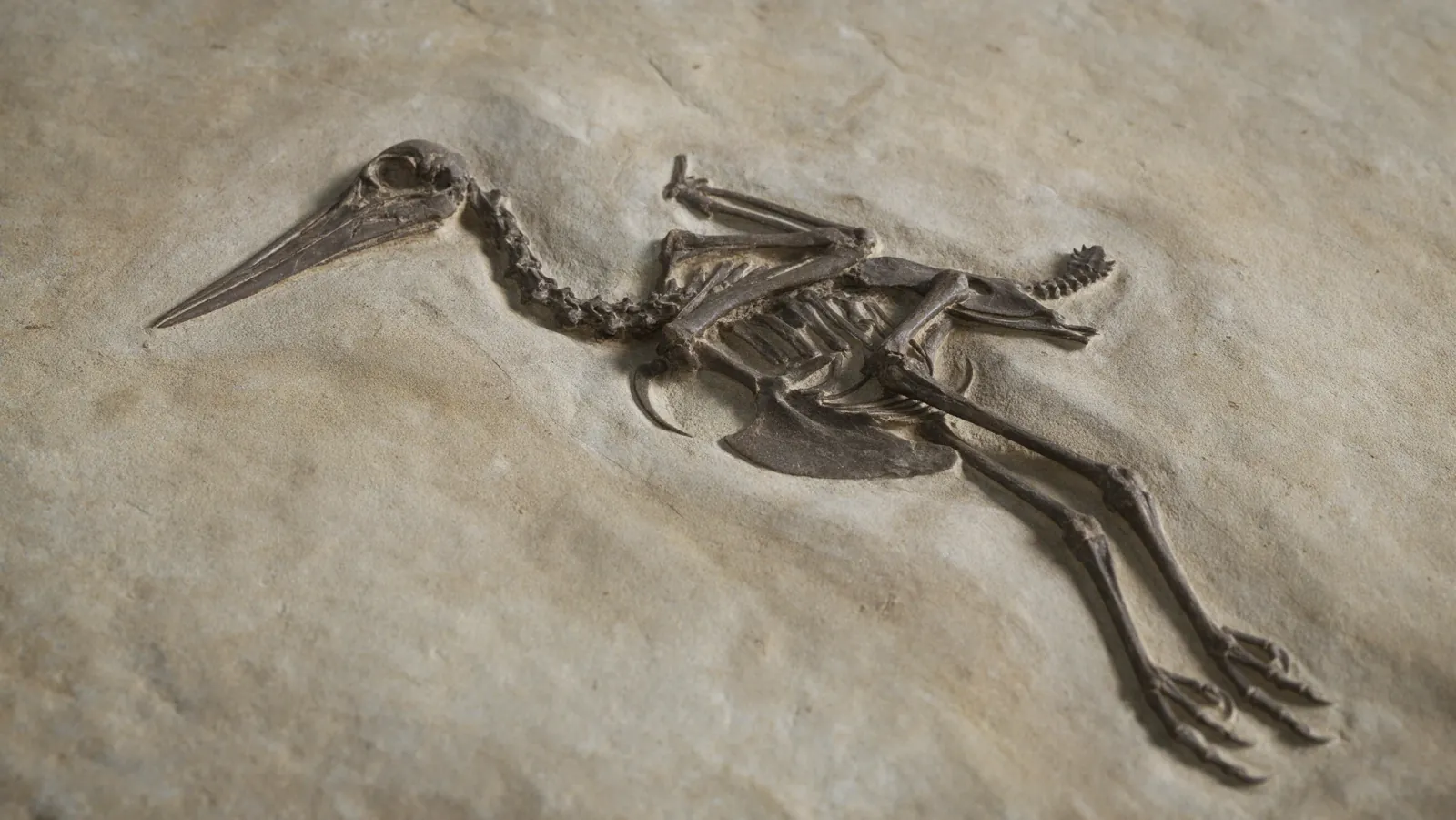
A stork is built to last in stone. Its legs are long and solid, its bill is long, and its bones are strong enough to survive being buried in wet ground and turned to rock. Stork bones are among the easier bird bones to recognise in old sediment. Wet, muddy ground preserves bone, and storks have always fed at the edge of wet ground, which is why their fossils turn up where ancient wetlands lay. A bird that died at the edge of a vanished lake could lie in the silt and be covered before it broke apart.
The record holds storks of many sizes. Some were much like the birds we know. Some were larger, with heavier bills, walking the wet ground of vanished places. The largest stood taller and stronger than a white stork. A single bone carries more information than it looks: its size suggests the size of the bird, its shape shows how the leg or wing worked, and the layer of rock around it gives an age. The stork's line has changed little while other bird lines came and went. Standing in water and striking at small prey has worked for a very long time.
A name that means stiff
The English word reaches back through Old English, where the bird was called storc. Close cousins of the word appear across the old Germanic languages. In German the bird is a Storch, and the similarity is easy to hear. Dutch has ooievaar, a different word for the same bird, which shows that the old root did not reach every language. The old root points to stiffness, to standing straight and firm. A stork stands for long stretches on legs that do not bend, patient and upright, and the name describes that stance.
French has cigogne and Spanish has cigueña, both from a Latin name. English kept the northern word and the Romance languages kept the southern one, so the map of the names follows the map of the languages. The bird itself crosses borders every year, and it has been named more than once along the way.
The word has travelled with the people who speak it. Through centuries of use it has kept its shape and its meaning, so a child learning it today is taking up a name spoken by people who watched the same bird from the same rooftops. Nothing about the word has needed modernising. The nursery story of the baby-bearing stork arrived much later than the word. For most of its history the bird had a plain, descriptive name, worn smooth by use.
The bird on one leg
Heraldry took the stork and fixed it in a pose. On a coat of arms the bird is almost never drawn in flight. It stands in profile on one leg, the other raised, and often it holds a small stone in the lifted foot. The story behind the pose is old and widely told: a stork kept watch while the flock slept, holding a stone so that if it dozed the stone would drop and wake it. On a shield the raised foot and the stone read as watchfulness.
The drawing is simple because it had to survive on stone and silver and read clearly from a distance. Families chose the bird for the habits they saw in the village. A white stork returns to the same nest, feeds its young for weeks, and was said in old stories to care for its aged parents. The pelican was the other bird of care on old arms, and the stork was the calmer of the two. A crane could be confused with it, and a crane was sometimes drawn with a stone as well, though a tuft at the tail gave the crane away.
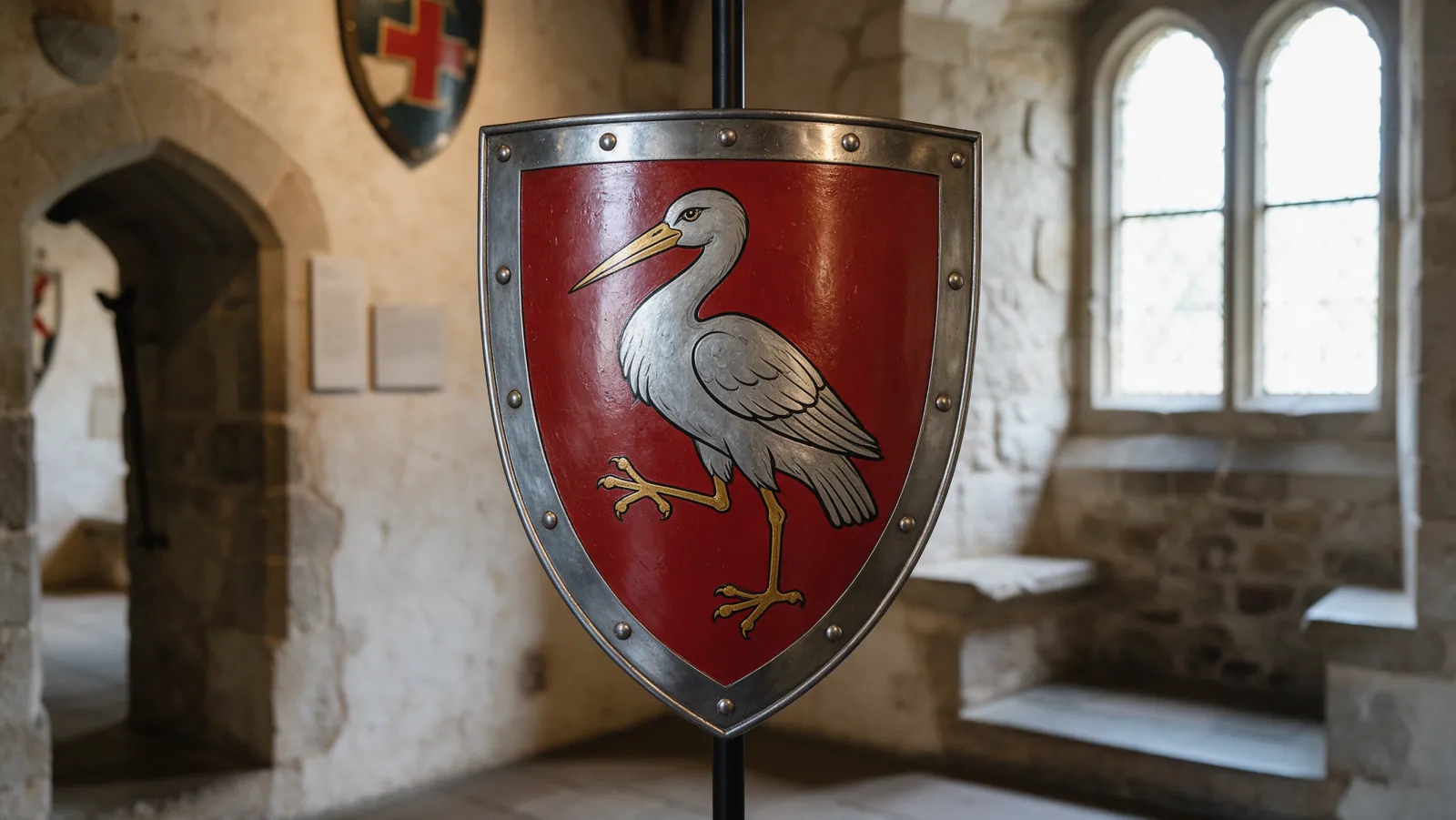
Towns with stork colonies put the bird on seals and flags, and in some places it became the whole town's badge. The Alsatian white stork sits on the arms of towns along the Rhine. The heraldic bird keeps the same quiet dignity wherever it appears, standing where a lion would roar.
A small portrait that travels
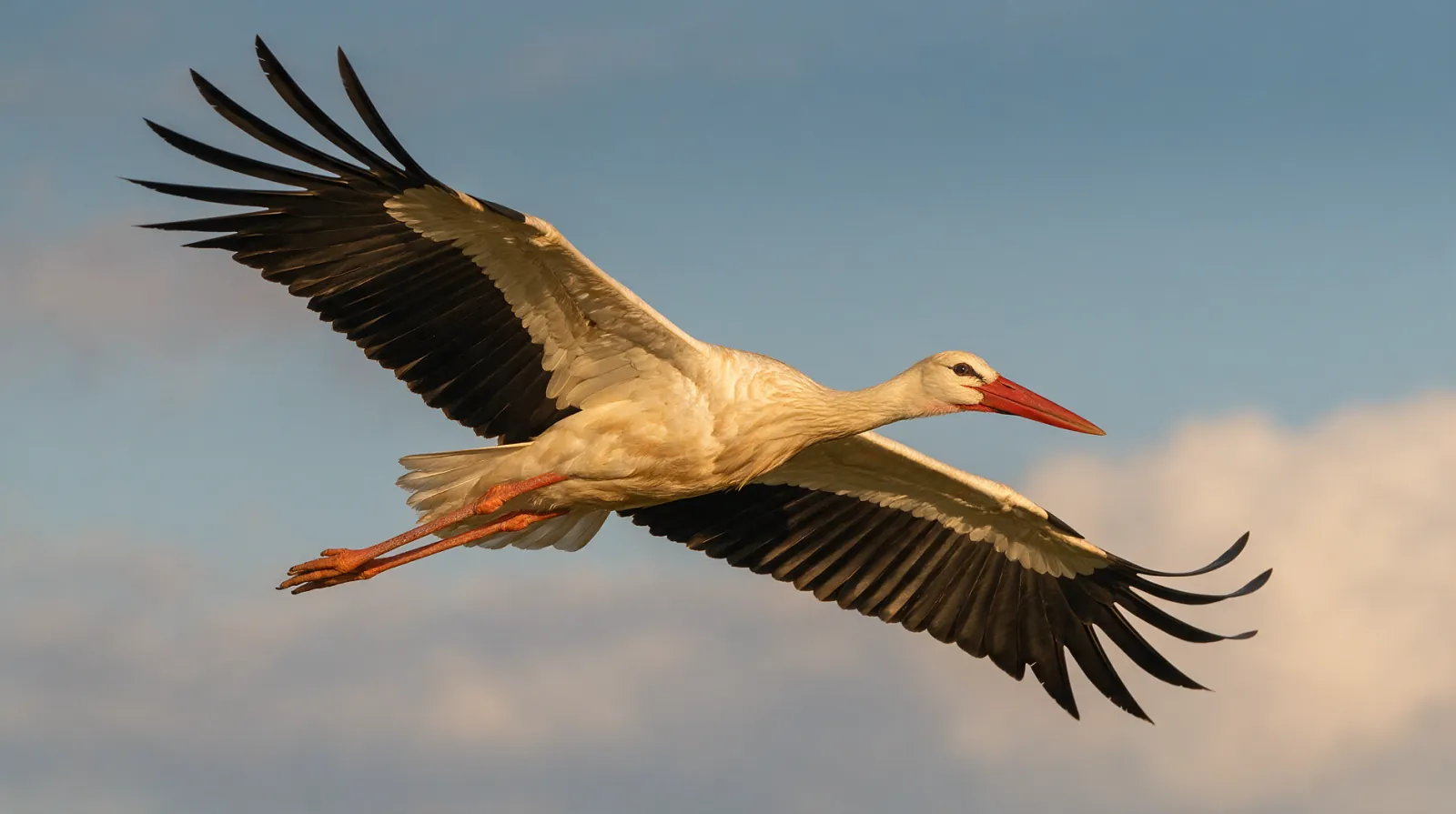
Postage stamps carried the stork into pockets and albums far beyond the fields where it nests. A stamp with a stork is often issued in spring, when the first birds return, and it usually shows the bird in flight or standing on a nest. The colours are usually white, black and red. A stork reads clearly at thumbnail size because the outline does the work. The long bill, the red legs and the black wingtips are the three marks a designer has to get right.
Coins and medallions with storks are rarer than stamps. They tend to be struck for an occasion: a nature anniversary, a conservation effort, or a town's own celebration. Metal holds an image longer than paper, and the bird's long legs and bill make a clean silhouette for an engraver. On a coin the stork is often shown in flight, wings spread to fill the round. The engraver has to fit a two-metre wing into a few centimetres of metal.
Storks appeared on postage in the first half of the twentieth century, as national posts began to print animals alongside kings and presidents. Collectors still hunt the older issues, and storks remain a favourite theme. A child can find one on an envelope and ask what it is.

The record on the roof
A fossil leg bone, a word in an old dictionary, a shield over a doorway and a stamp in an album all describe the same bird. The bone records a bird that stood in water. The word records a bird that stood still. The shield records a household that wanted to be seen as careful. The stamp records a country that wanted the bird on its mail.
Each record was made for a different reason. The fossil was made by mud and time, without anyone choosing it. The word was made by people who needed a name for a bird they saw every day. The shield was made by a family that wanted a picture of its own habits. The stamp was made by a postal service that wanted a small, clear image to carry across the world.
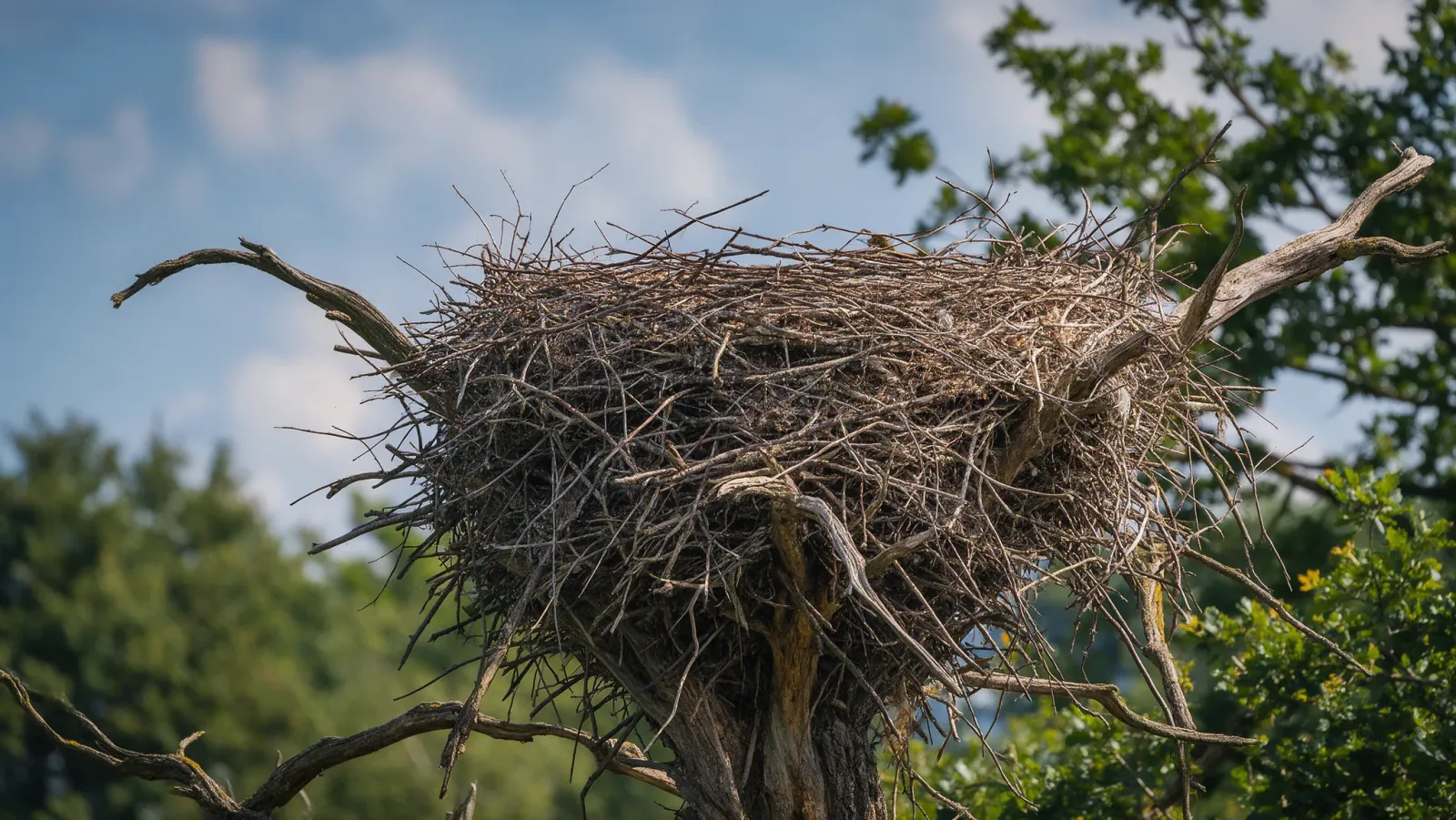
None of these records made the stork. The bird was already old when people began to name it, and it kept its shape while languages and borders changed around it. On a spring evening a stork lands on a chimney, folds its wings and begins to sort the sticks of its nest. The work is the same work the fossils show, and it is still going on above the street.
Explore the gift