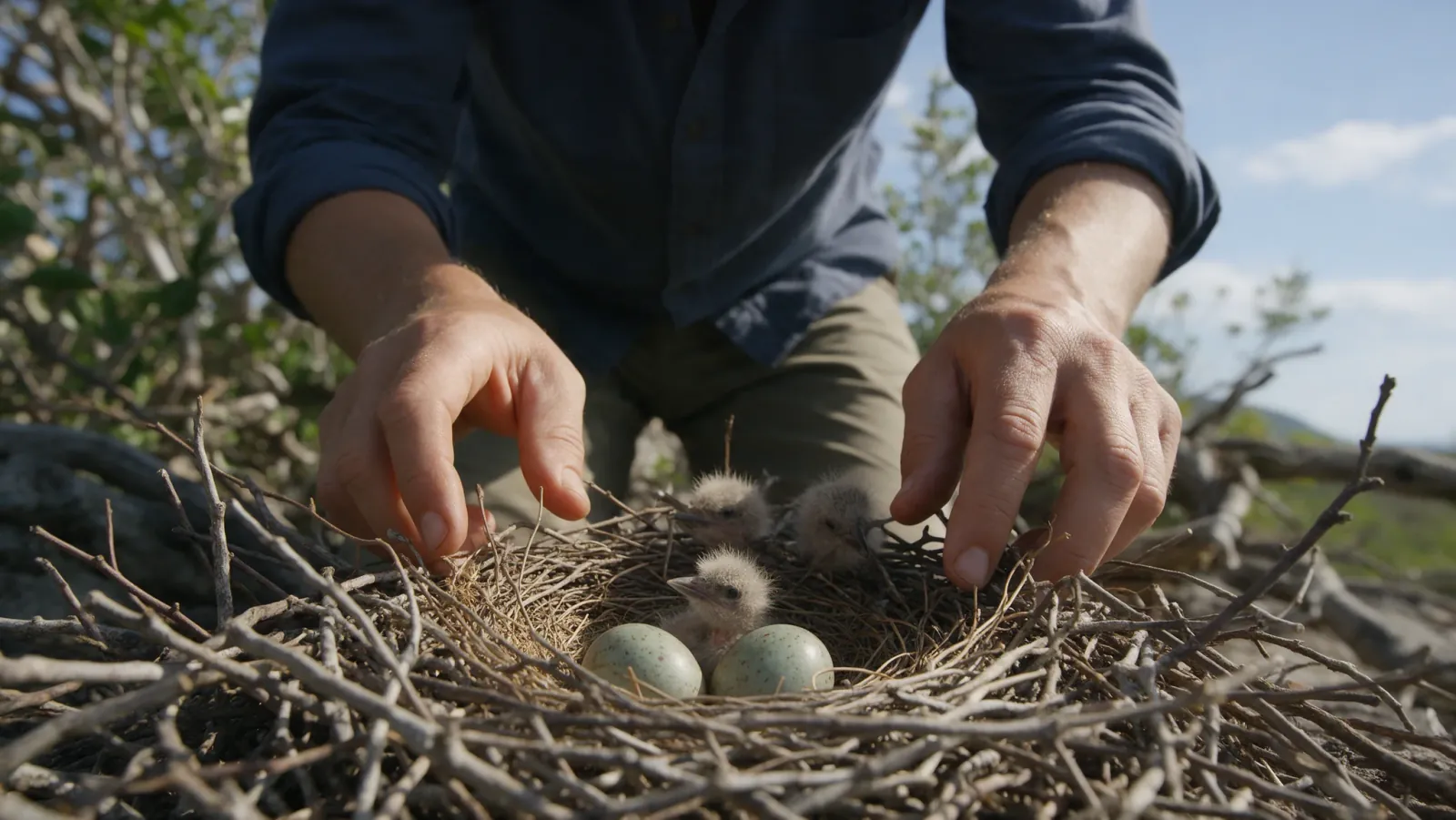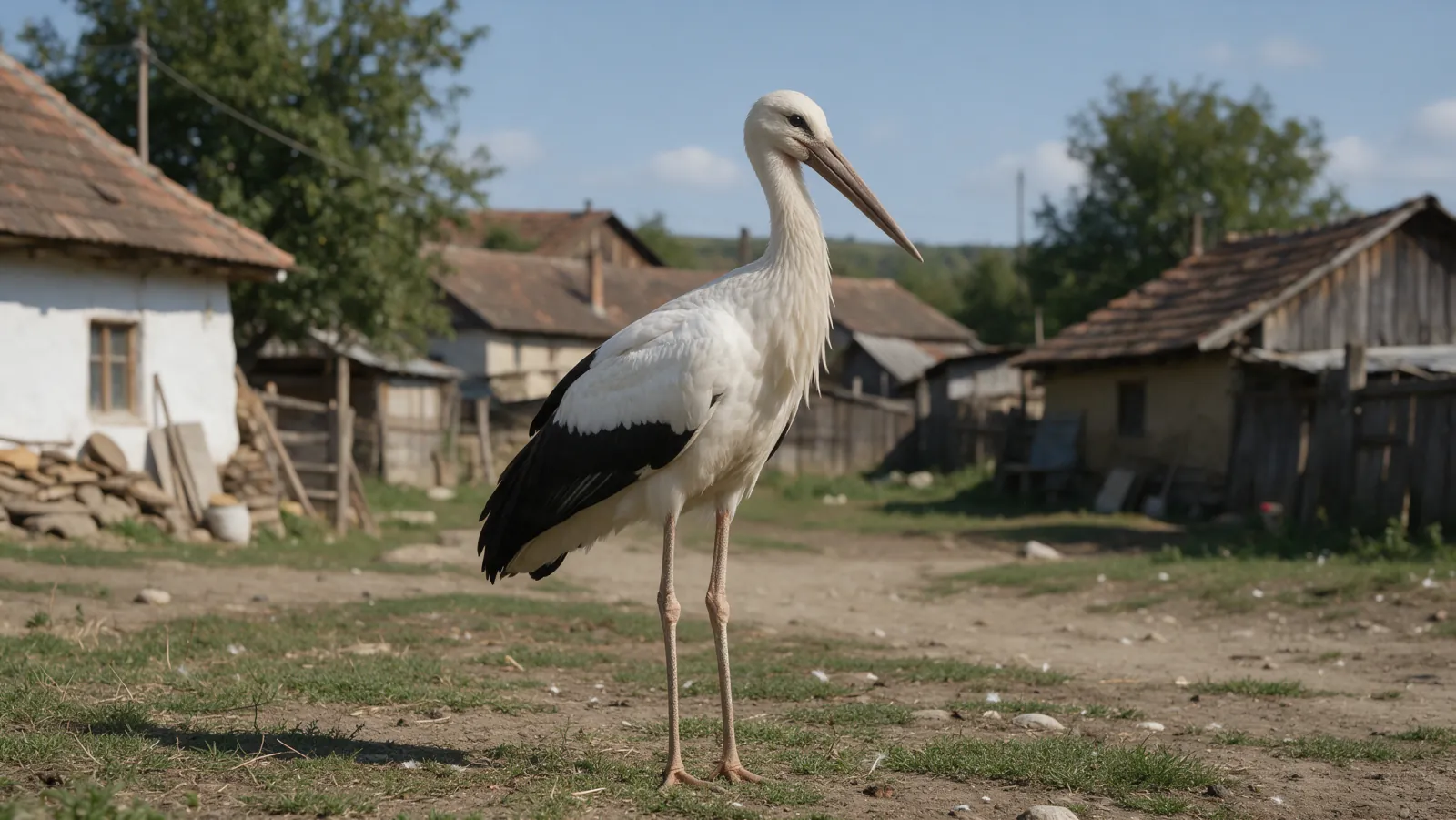
A young white stork leaves the nest at about eight weeks old, and a brood does not go at once. The eggs were laid days apart, so the oldest chick can be a week ahead of the youngest. One bird leaves, returns, leaves again. Another follows. For a while the platform still holds birds, and then it does not.
The last bird off
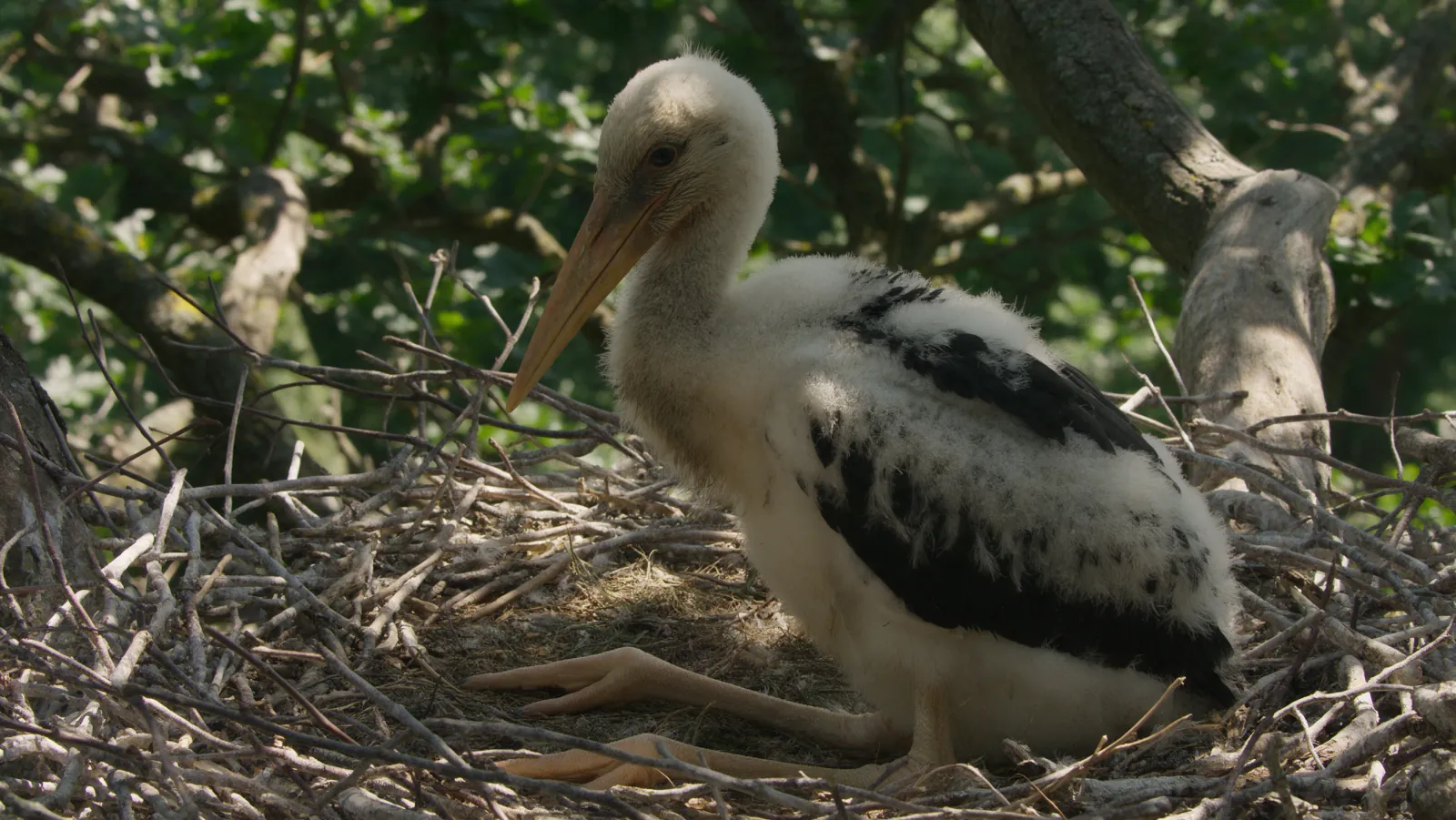
The oldest usually goes first, and the youngest may stay for days longer. In the last week before fledging the flight feathers are nearly full length, and the chicks spend hours flapping against the air. The first flight is short, often to a nearby roof or pole, and the bird comes back to the nest to be fed.
A chick that has flown is not gone. It stands on the rim, flaps, and waits for a parent to bring food. The young bird begs with its head thrown back and its bill clattering, and a parent answers by regurgitating onto the platform. The nest remains the base for a while, even as the birds begin to explore.
Fledging is spread across roughly a week, and the oldest bird in the brood usually leaves first. The nest empties by degrees, and the noise changes before the birds do.
For a few days the platform is a landing place rather than a home. Young birds come and go, and the parents follow them with their eyes. The clatter is still there, but it is scattered, and it stops earlier each evening.
What the empty nest holds
Eventually the returns stop. The last chick leaves in the morning and does not come back. The nest is empty, and the clatter that filled it for weeks is gone. A nest that was loud at dawn is silent by noon.
The empty nest holds evidence. The lining is pressed flat. The rim is worn where birds stood. White down and a few black feathers are caught in the sticks, and droppings streak the outer edge. A nest that has raised four chicks is a different nest from the one that started the season. It is wider, dirtier, and more settled, and the cup is a shallow bowl trampled smooth by four pairs of feet. The wear is the record of a brood that grew up standing in one place, and it stays after the birds have gone.
The change is easy to see from a ladder or a roof nearby, and hard to see from the road. The nest has been used, and the use is written into its shape.
The empty nest is the pause between the brood and the journey south. The structure has been changed by the birds that grew in it, and the pair that built it will add more material next spring.
A home that outlasts its pair
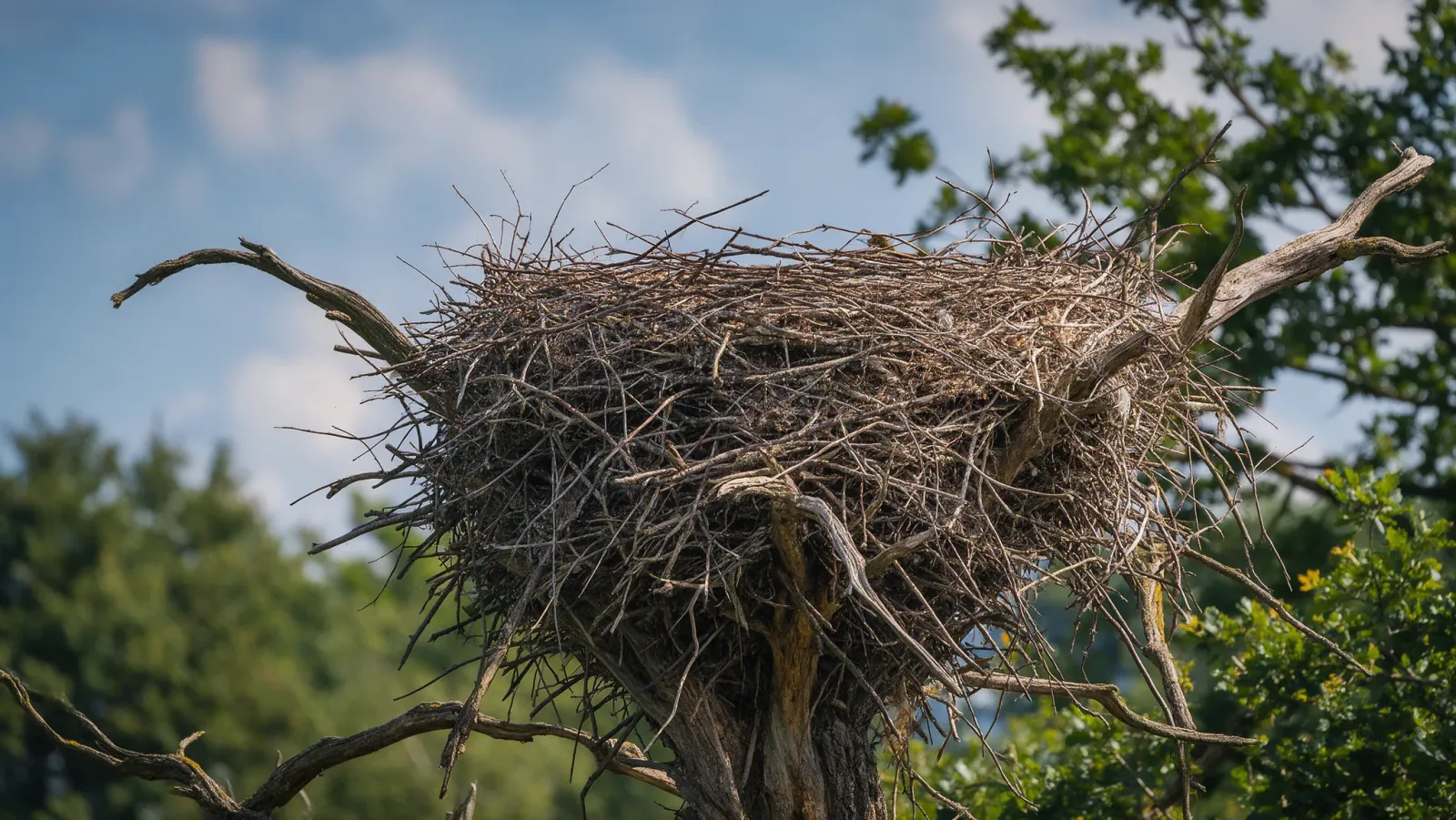
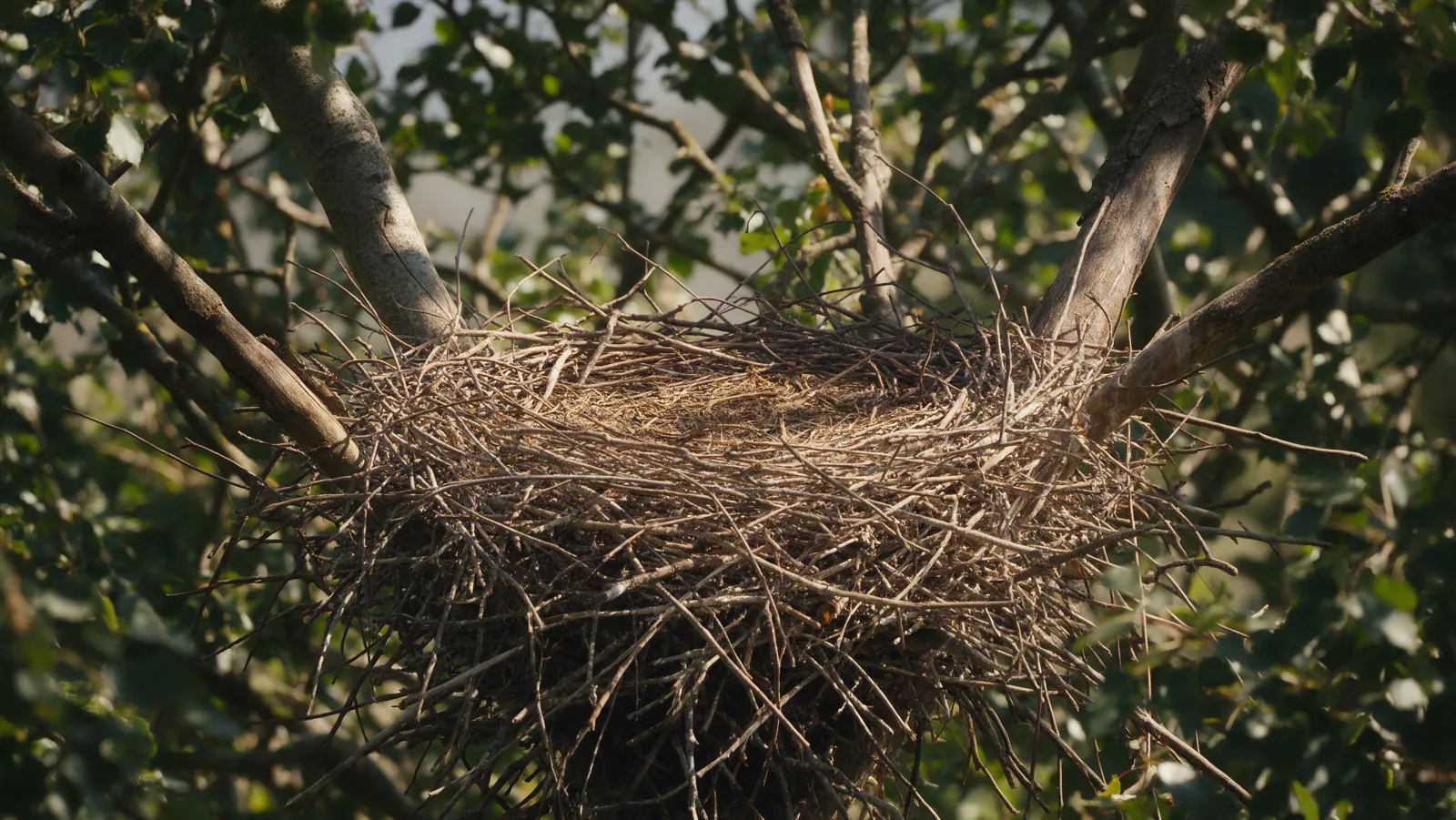
A white stork does not build a new nest every spring. It returns to the same platform, adds to it, and raises another brood. Over years the nest grows into a structure that no single pair could have built in one season. The same nest may be used by a pair, then by another pair, then by the children of the first pair.
Storks often return to the area where they hatched, and a good nest site is passed down through the local population. Ownership passes between pairs, and no single family holds the nest for centuries. Birds die, pairs break up, and nests are taken over. The site persists, and the birds that use it change.
The site outlasts the pair, and the pair is replaced when it has to be. A good site is hard to find. It needs height, an open approach, and a solid base. Roofs, chimneys, poles, and tall trees provide those things, and once a pair has a site it has an advantage. Returning to a known nest saves time, and the pair can start repairing and laying sooner.
A pair that already knows each other does not have to spend days establishing a bond. It rebuilds quickly, and the female can lay while the weather is still suitable. A new pair takes longer to reach the same point, and the season is already moving.
The weight of years
An old nest is heavy, and weight is a risk. A platform that has grown for decades can collapse in a storm or under its own mass. Chimneys can give way. Poles can bend. Storks keep adding material anyway. The nest is a signal of occupancy, and a large nest may attract a mate.
The pair maintains it because the cost of starting over is higher than the risk of the structure failing. A new site takes days to find and weeks to build. A known site is ready for repair. An old nest carries the weight of every spring it has survived. The birds add to it because the odds still favour the platform they know.
Some nests do come down. A storm can take a platform that has stood for years, and the pair must start again on another roof or pole. The heap of sticks below the roof is the evidence, and the next spring the birds build somewhere else.
The parents leave
For a few days after the young have gone, the adults stay close to the roof. They feed in the cut fields and return at dusk. Then they leave too. The pair may migrate separately. One bird goes, and the other follows days later.
Western birds drift south through Spain and cross at Gibraltar, while eastern birds funnel past the Bosphorus. Both routes end in the wetlands of sub-Saharan Africa. The nest is left to the weather, and the birds that built it will not see it again until spring. Before they go, the fields are full of storks in late summer. Young birds follow adults through the stubble, learning where the frogs and insects are.
The young must build strength for the journey, and the parents must recover the weight they lost carrying food to the brood. The first cold fronts of early September send the birds south. The parents may travel south alone, days apart, and meet again on the same roof in spring. The young birds will find their own way, and some will return to the area where they hatched to look for a nest.
The next landing
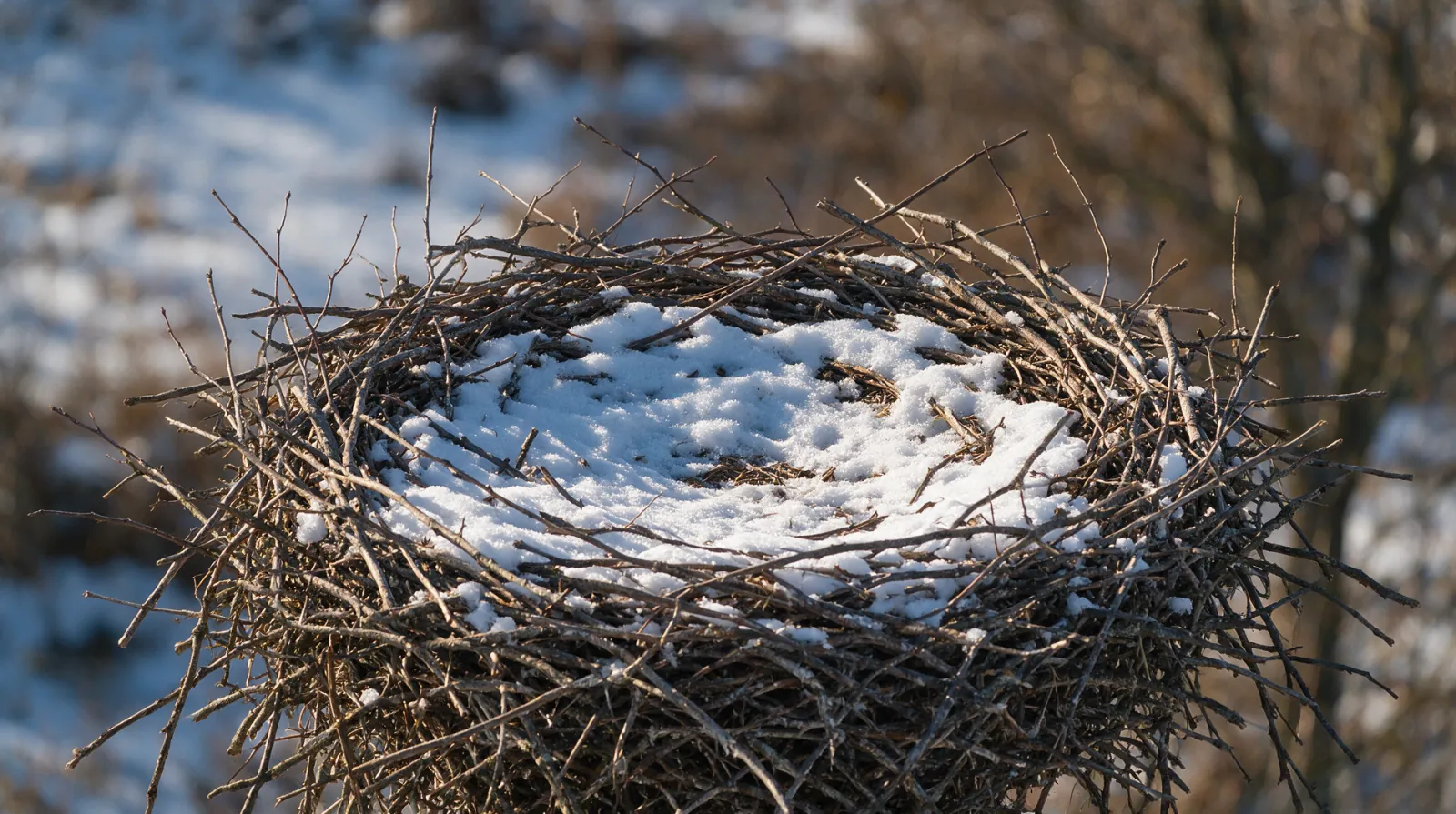
In autumn the birds leave, and the nest stays. It stands empty through winter, holding the shape of the season that ended. Snow collects on the sticks. The lining blows away. The rim keeps a white line where the birds stood.
Frost lifts the base, and the outer sticks work loose in the wind.
In spring a bird lands on it again. The cycle begins again with a repair, a greeting, and a new clutch. The nest that was old when the bird was young is still there, and the bird adds another layer to it. The platform has stood through another winter, and the bird that lands on it may be one that hatched there. By the time the first egg is laid, the rim has been rebuilt and the cup pressed smooth again.
Explore the gift