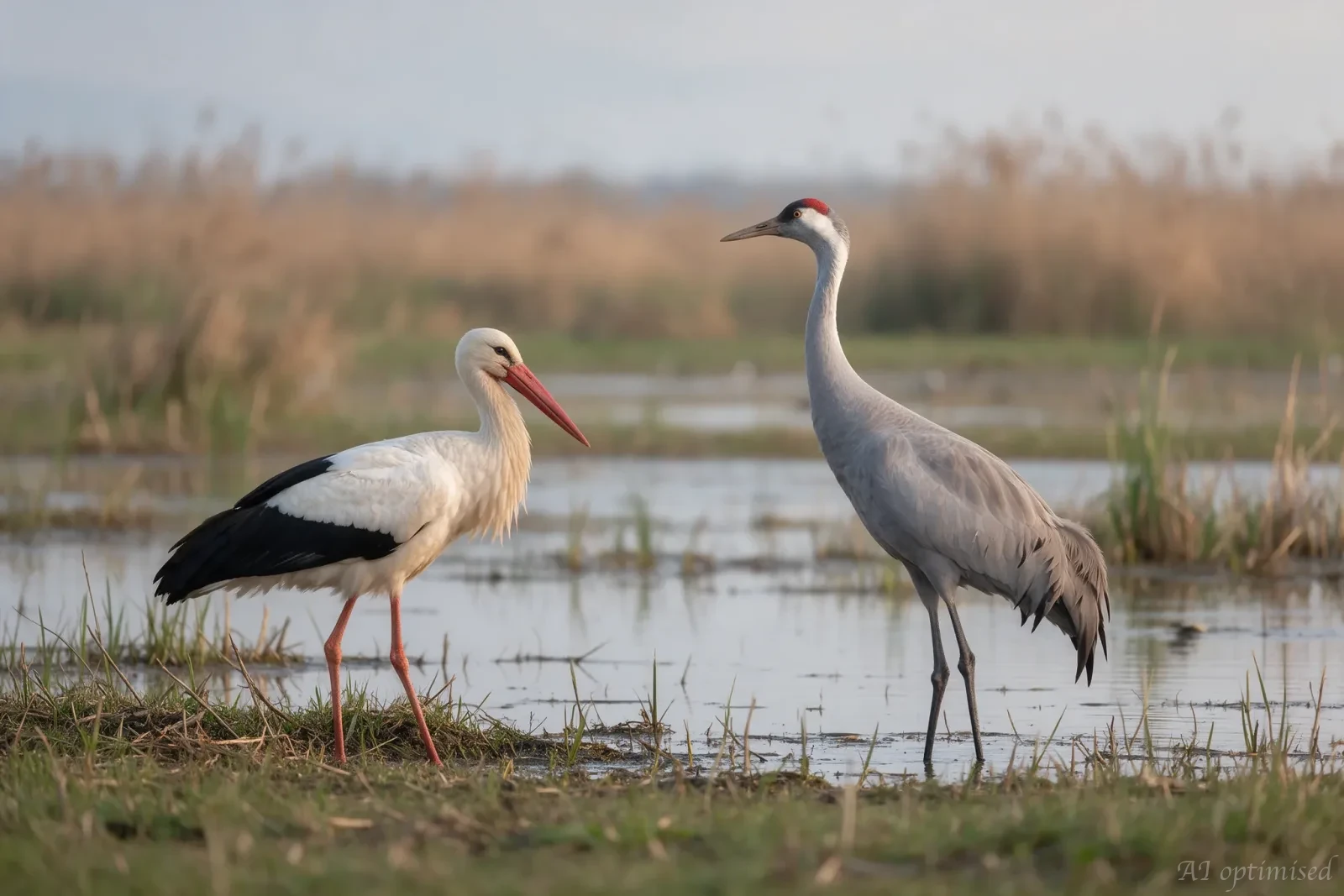
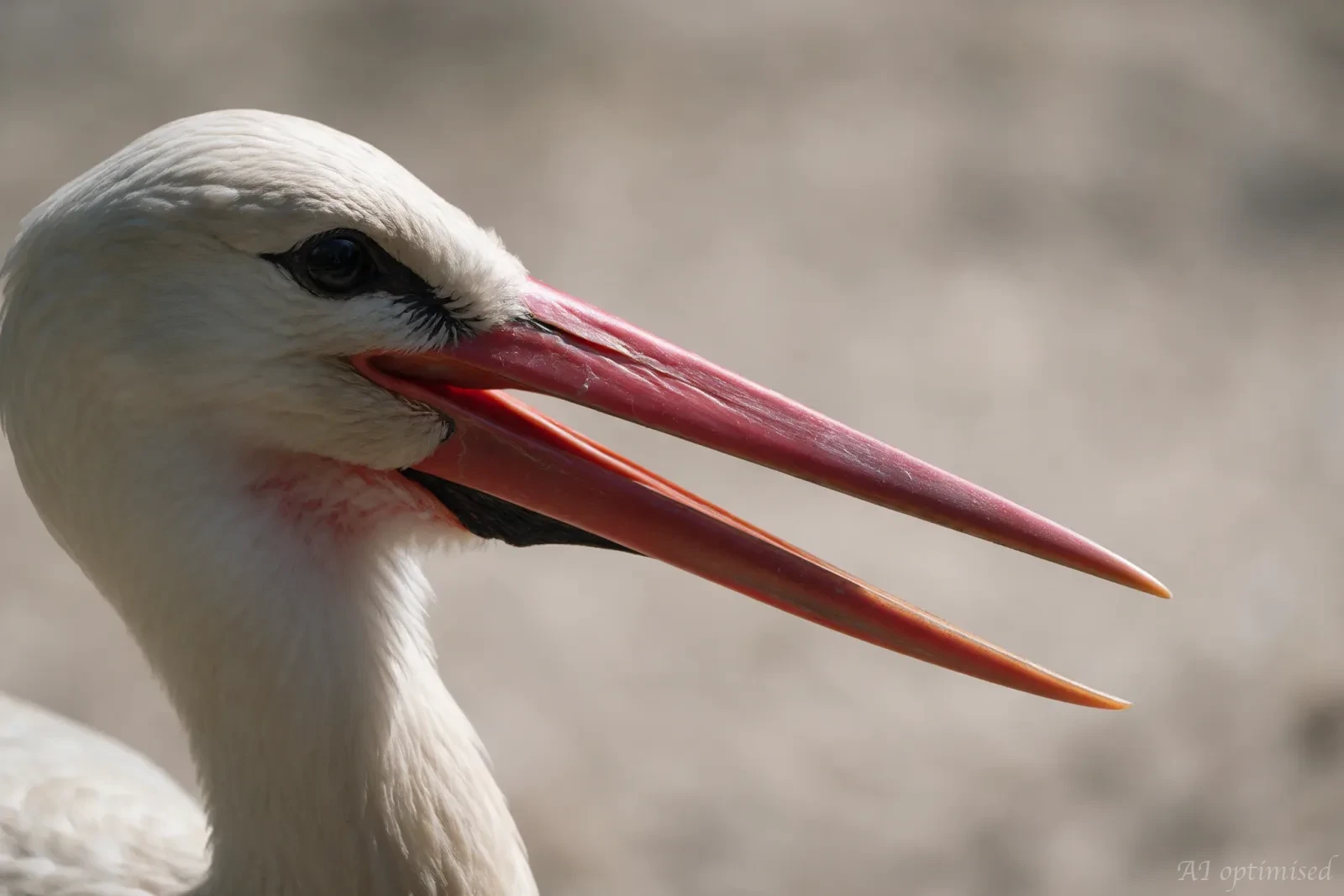
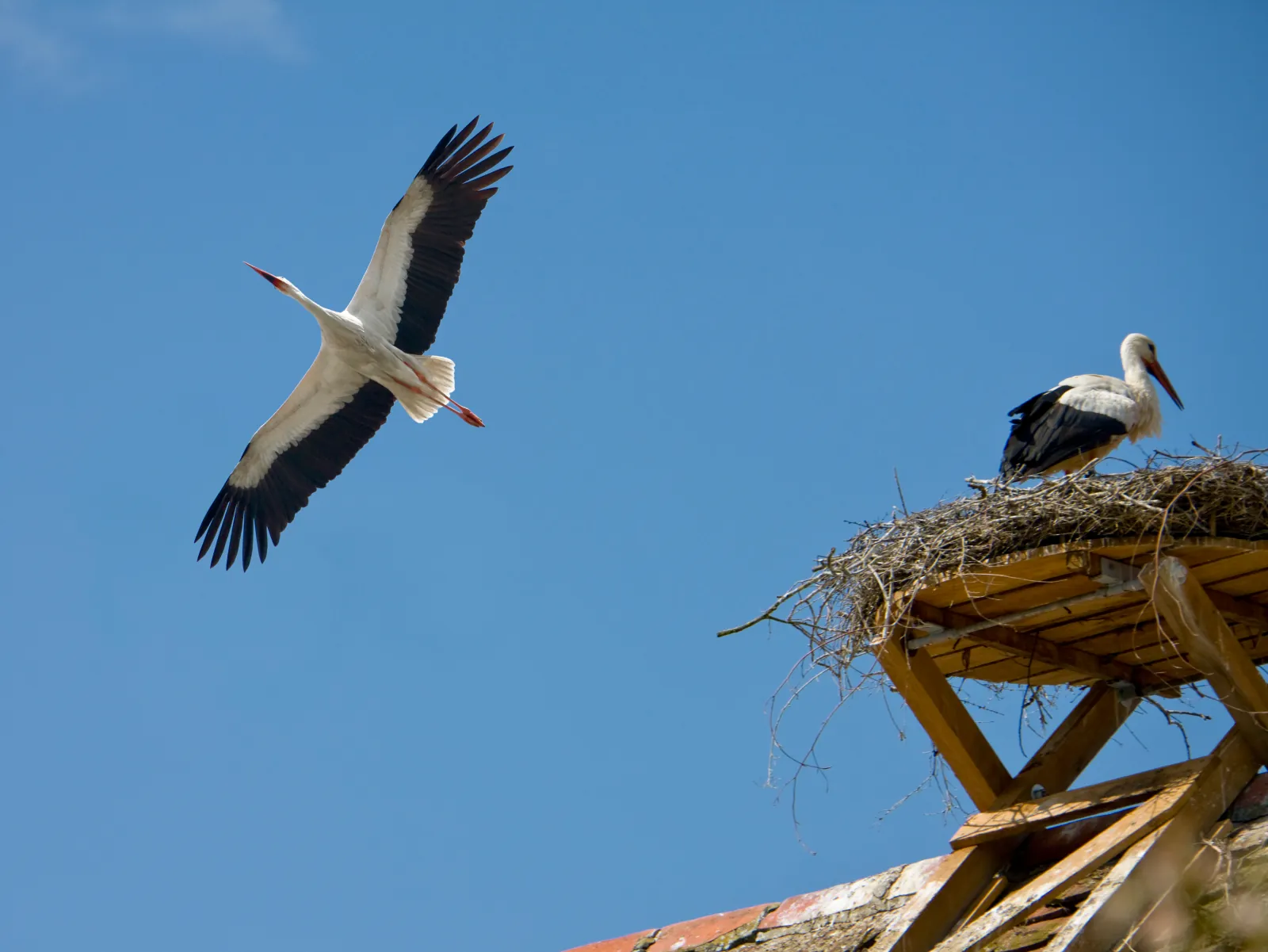
Storks greet each other with a rattling bill. White storks have no song, and their voices are weak, so they talk with their beaks instead. The two halves of the long red bill snap together in a rapid, rattling clatter that carries across a rooftop. When one bird returns to the nest and finds its mate standing there, the two meet with a bow, a clatter, and a toss of the head.
A voice made of two halves of a bill
By opening and closing the bill very fast, the bird makes a dry, mechanical rattle that can be heard some distance away. It is used at many moments, and the meaning changes with the posture around it. At a reunion the rattle comes with a lowered head, so the same sound that warns off a rival becomes a welcome. The clatter is the instrument, and the body is the grammar. A person who listens for a summer can start to hear the difference without seeing the bird.
The bill is long, hard, and slightly hollow, which helps the sound carry. A stork can vary the rate, and the rate changes the meaning. Close up the noise is almost painful. From a field away it is a dry flutter, like a distant woodpecker. People hearing it for the first time look in the hedges, and the sound is above them, on the chimney or the pole.
The greeting at the nest
Most of these exchanges happen on the platform. One bird has been away feeding and flies back to find its mate standing above the eggs or chicks. The returning bird lands, and the two face each other, bowing and clattering together, heads dipping low and then tipping back.
It is a quick ceremony, over in moments, and then the birds return to work. The two often stand together afterwards, bills nearly touching, before one of them settles back onto the eggs. A parent arriving with food clatters softly at the rim of the cup, and the chicks answer by gaping and flapping their stubby wings.
Telling welcome from warning
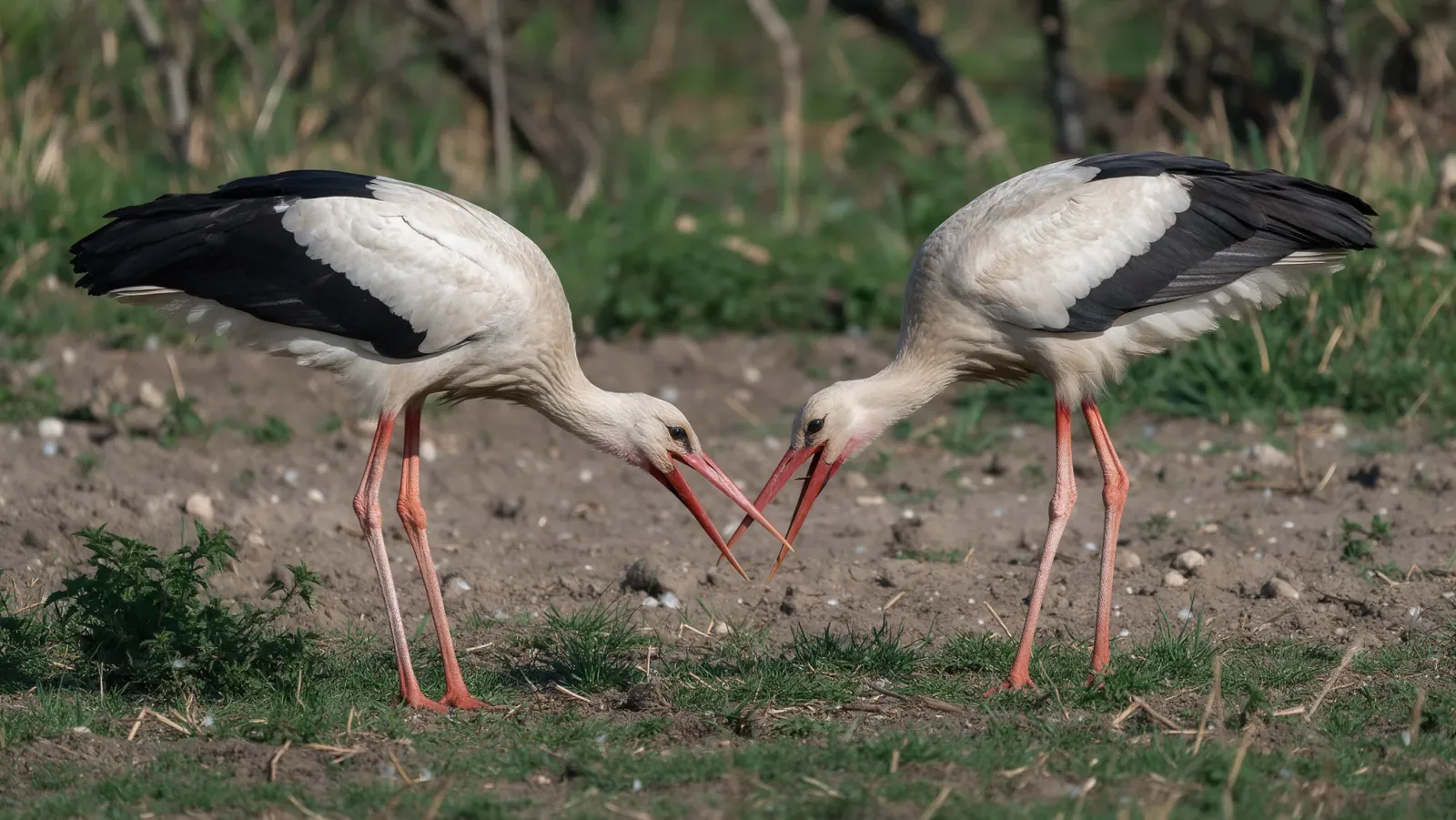
The greeting clatter is faster and lighter than the warning rattle, and it arrives with a looser body: wings relaxed, head dipping. The warning is hard, short, and aimed at one bird. In a colony, the difference is read instantly. A stranger walking too near a nest gets the sharp version and usually turns away. A mate gets the soft, rolling clatter, and the neighbour storks ignore it entirely, because they know what it means.
Storks also greet each other away from the nest. Birds that have been feeding apart will stop and clatter when they meet, a small exchange of recognition before they go back to hunting. It happens in cut fields and shallow water, in the middle of the day, with no nest in sight. In late summer, as the birds gather before migration, these greetings multiply. A field full of storks fills with the sound of bills rattling as the birds renew old ties and the young of the year meet birds they have never seen before.
A greeting is read in the neck. The bow is a sign of peace, a way of showing the other bird there is nothing to fear. A bow held long belongs to a settled pair; a quick dip is a passing hello between neighbours. The lifted head and backward toss that often follows is bolder, and it shows the bird's size. Old pairs sometimes greet with hardly any noise at all, a nod and a soft rattle before one bird steps aside for the other.
The head toss
A stork throws its head far back until the crown of the skull touches its back, points the bill straight up, and clatters, holding the pose for a long moment before the head comes down again. The movement looks like a salute, and it is one: a statement about who owns the nest.
A stork performs the head toss most often when it lands, especially on its own nest. The bird comes down, folds its wings, and at once throws its head back with the bill aimed at the sky, the bill rattling all the while. The display announces the bird to its mate and to every neighbour in sight. It is a claim made in silhouette, visible from the ground and from three roofs away. When both birds of a pair toss together, the two displays interlock, and the ritual becomes a shared statement about the nest and about each other.
A head toss is built to catch the eye. The white neck arches backward against the black wing tips, the red bill points up, and the wings lift slightly away from the body. A stork in the middle of the display looks larger than it does standing quietly. To a rival, the pose says the bird is healthy, well fed, and ready to defend what it holds. During a full toss the throat feathers lift and the neck seems longer than it does at rest, which exaggerates the bird's size again. There is no real voice behind the display, only the rattle of the bill and the shape of the body against the sky.
Courtship in early spring
The head toss reaches its fullest in the weeks after the birds return, because it carries the weight of courtship. A pair reunited after migration greets with deep, repeated tosses, the heads falling back in turn and the bills clattering without pause. The display says that the birds still recognise each other, that the nest is still theirs, and that they will keep it for another season.
Young pairs courting for the first time toss their heads for hours at a stretch, building a bond out of one repeated gesture and a great deal of noise. The female answers each toss with one of her own, and in a colony several pairs often toss at once, until the rooftops fill with white necks and red bills pointing at the same patch of sky.
One movement, several meanings
The same backward toss can mean welcome or warning, and the difference sits in the speed and the stance. A greeting toss is slow and fluid, with the body relaxed and the wings loose. A threat toss is quick and stiff, the wings held higher, the bill snapping faster. A threat is aimed at one bird, and it usually ends the argument. A rival that has come too close reads the stiff version, steps off the ridge, and flies on. The relaxed version is for a mate, and the neighbours pay it no attention at all.
At the arrival of a mate the toss is greeting. In the first warm weeks of spring it is courtship. When a strange stork circles too near the nest, it becomes a warning that says keep away. The bird does not run through a list of options. It reads the situation and produces the version that fits, and the whole exchange takes less than a second. Repeated a thousand times in a season, the gesture binds the nest, the pair, and the summer together.
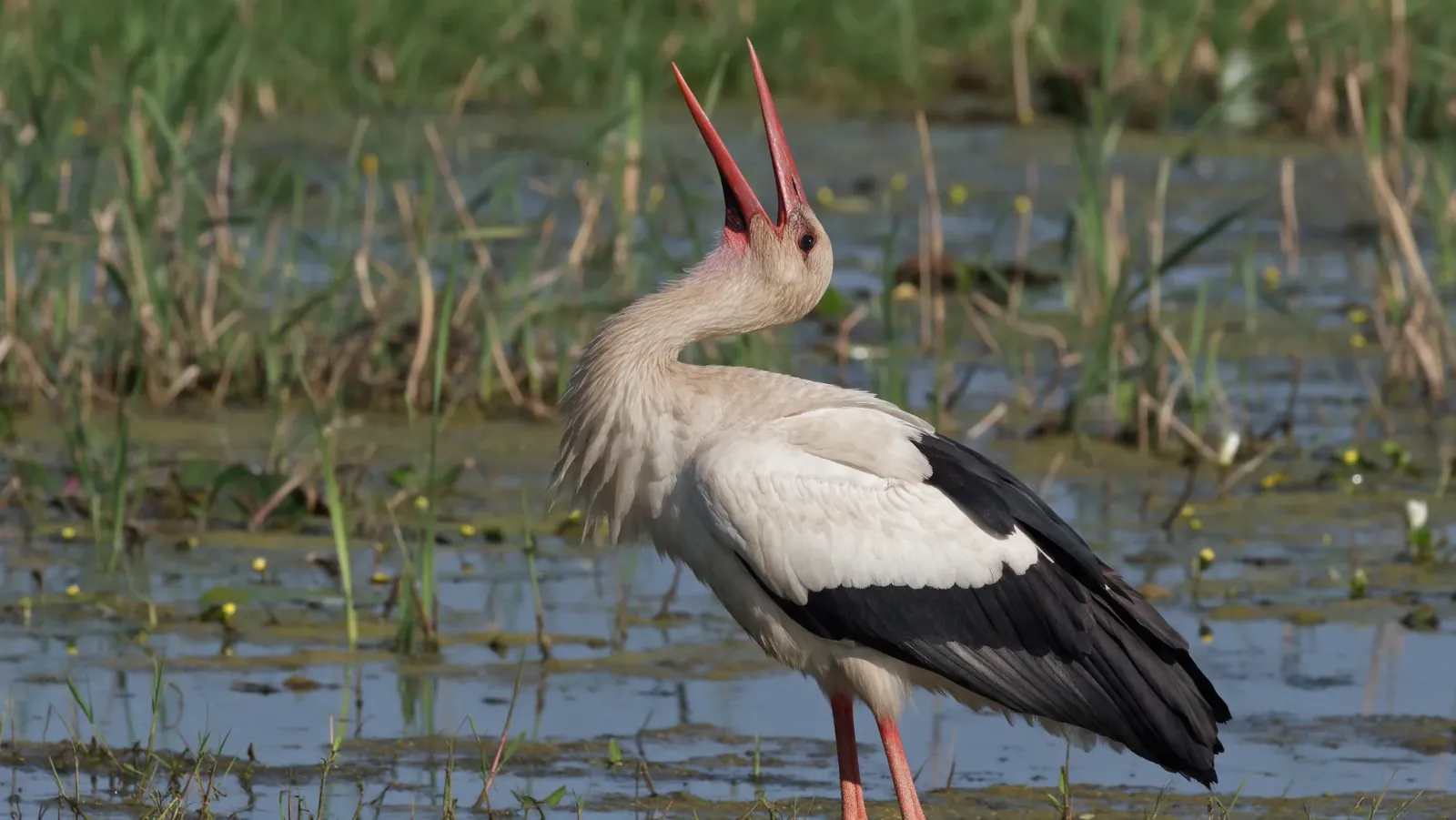
The greeting repeats every time one bird returns, from the first week of March until the young fledge.
Explore the gift