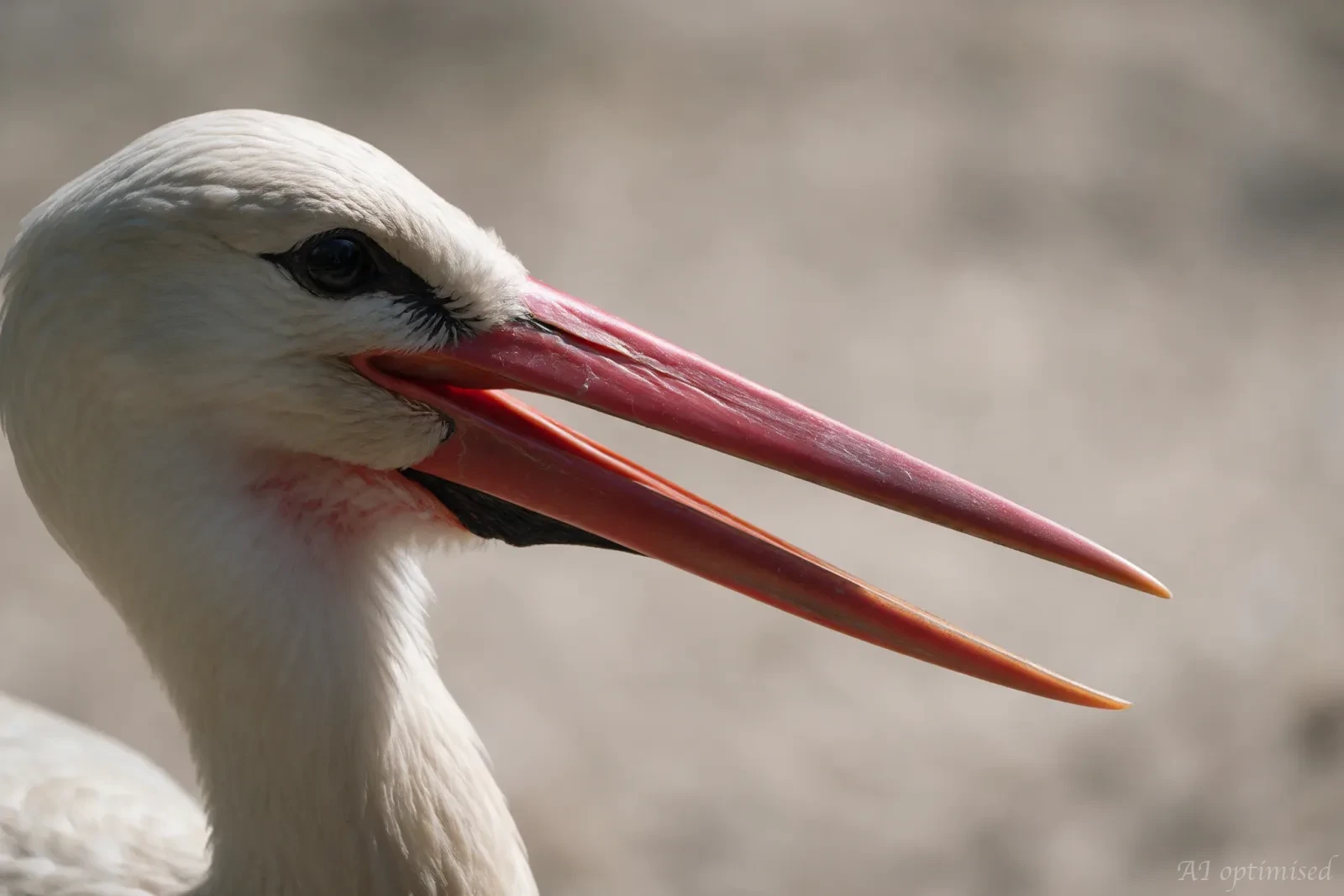
Nothing in a stork's bill resembles a tooth. The two halves are bone covered in a sheath of horn, with sharp edges and a pointed tip, and they are built for seizing prey.
The edge of the bill
Run a finger along the inside edge of a stork's bill, if you ever have the chance and a calm bird, and you feel a hard, slightly uneven rim. The upper and lower halves meet like the blades of heavy scissors. There are no sockets and no enamel.
The bill grows through the bird's life. Its outer layer wears at the tip from use, and new horn replaces it. A stork's bill is a pair of tongs with a sharp edge, kept in working order by wear.
What happens to a swallowed frog
A stork catches a frog, a locust or a mouse and works it toward the throat with small adjustments of the head. Then it tips back and the prey goes down whole.
There is no grinding in the mouth because there is no mouth to grind with. The food lands in the oesophagus and travels to a muscular stomach, where it is broken down by acid and by small stones the bird has swallowed. A stork will pick up grit from the ground and keep it in the stomach for that job. The tongue is short and does little beyond helping the prey along.
Why birds manage without teeth
Teeth are heavy. A jaw full of them needs strong bones, muscles and a lot of upkeep. A bird that flies trades that weight for a light beak and a fast digestive system. The trade is old. Birds have been toothless for a very long time, and the stork is one of the many birds that do well without them.
The bill does other work that teeth could not. It clatters. A stork snaps the two halves together in quick series, and the sound carries across a village. The same tool that catches frogs also makes the noise a pair uses to greet each other at the nest.
The tip that feels
Small sense organs sit at the end of the bill and respond to touch and to movement in water. A bird can stand in muddy shallows, bill partly open, and feel a frog shift a few centimetres away. The strike follows.
The bill works as a hand. It picks up a stick for the nest, turns an egg, preens feathers and lifts water. A tool that does all of that has little need of teeth.
A bill that carries water
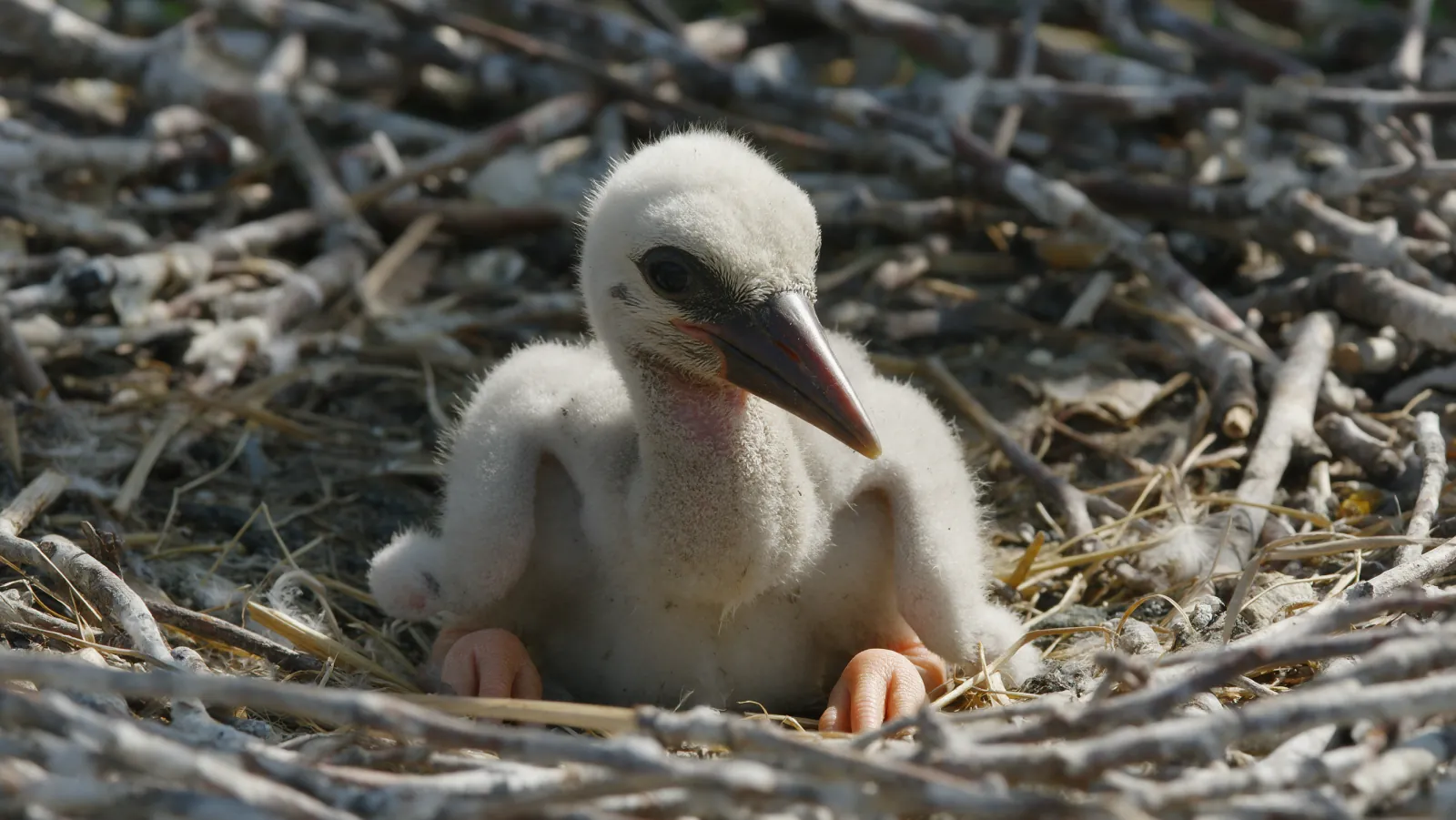
On a hot day a stork may fill its bill with water and pour it over the chicks in the nest. The bill makes a shallow scoop when the bird holds its head level, and a parent can carry enough to wet the down of several young birds.
The chicks lie with their bills open while the water runs off them. On a hot afternoon the same bill becomes a jug.
No teeth, no problem
Watch a stork feed and the absence of teeth stops mattering. The strike is quick, the prey is swallowed, and the bird moves on to the next patch of grass. The work is shared between a sharp bill and a stomach that can handle a whole frog.
The bird's whole feeding method is built around a quick strike and a whole swallow, and a mouth full of teeth would slow it down.
A heron, a crane and a stork all feed this way. The stork's bill is longer and heavier than most, and it does the same job with the same economy.
Explore the gift