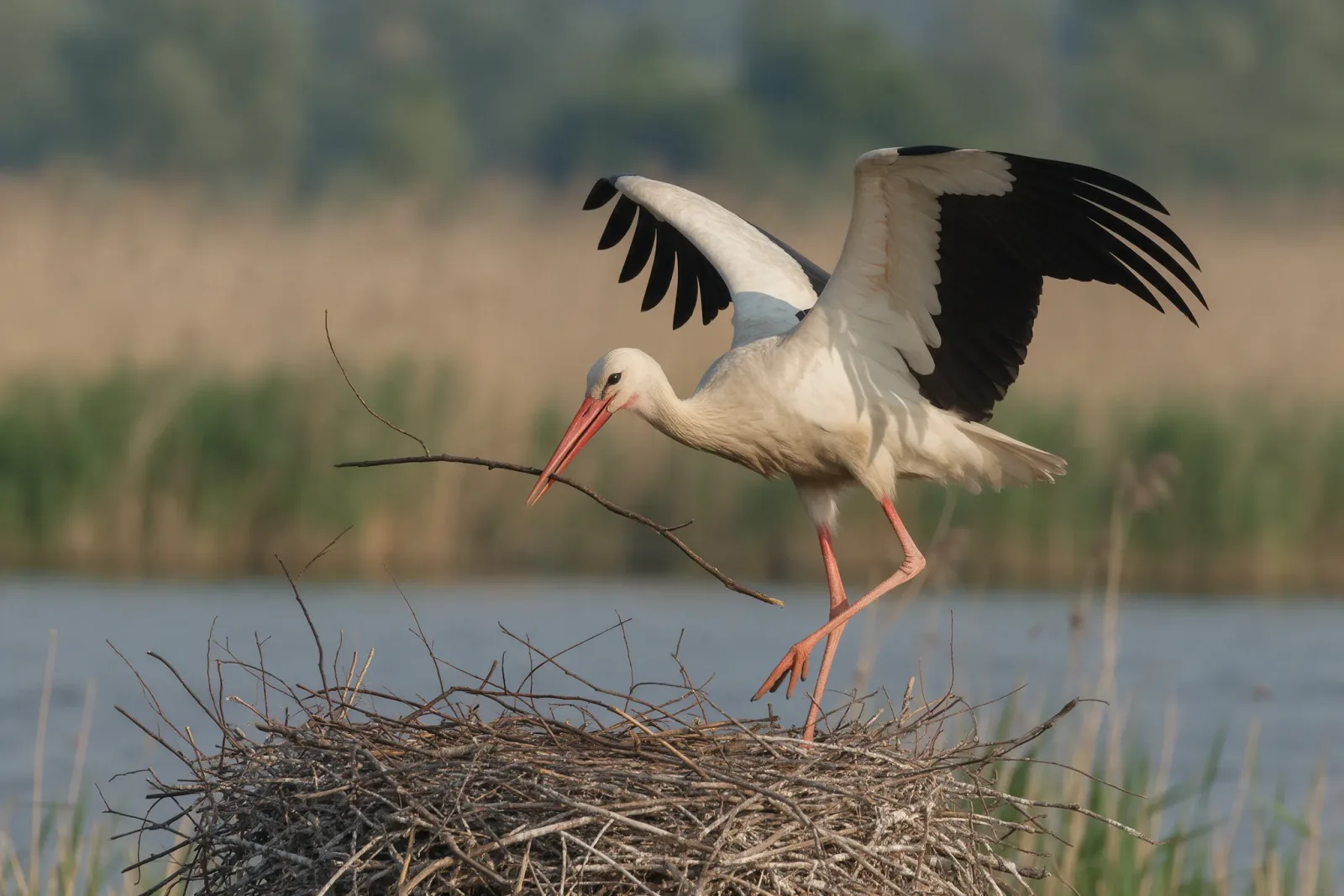
A white stork chick hatches small enough to cradle in two hands and flies from the nest about two months later at nearly the size of its parents. Almost all of that growth happens in a rush, on food carried in a parent's throat.
The first weigh-in
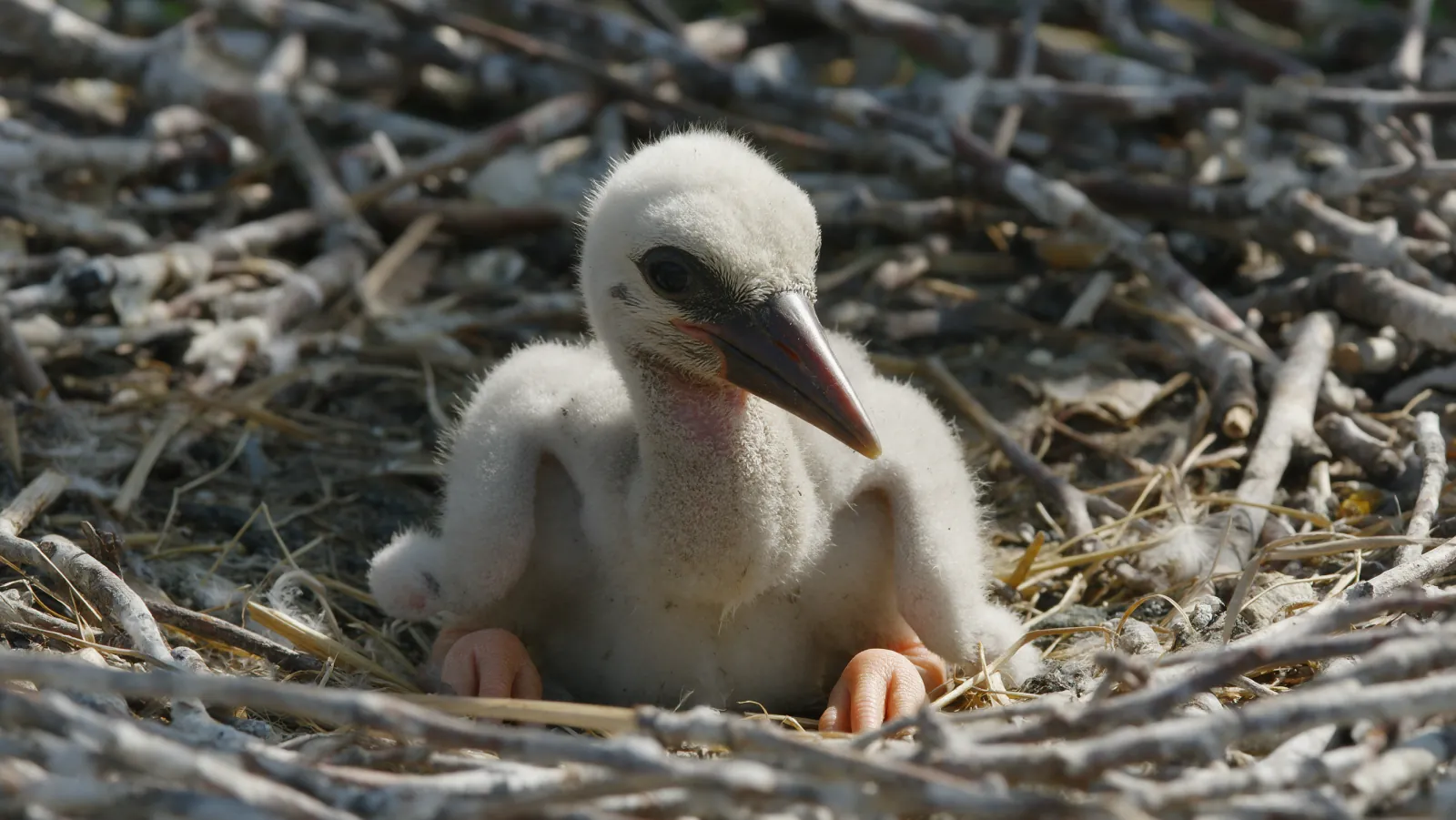
The chick breaks out wet and weak, with grey down and a head too heavy for its neck. It weighs a fraction of an adult, which runs about three or four kilos. On a kitchen scale a hatchling reads near the weight of a small apple. The legs are thicker than the neck, the bill is soft, and the eyes are open but unfocused. The parent's crop is a stretch of the oesophagus, and it can hold more than the bird needs for itself.
For the first days it cannot stand for long. It lies in the cup of the nest with its siblings, lifting its head when a shadow crosses the rim. A hatchling's only job is to gape and swallow. Everything else is done for it.
Food brought to the nest
Both parents feed the brood. One bird flies out to a meadow, a rice field or the edge of a landfill, fills its crop with insects, worms, frogs or small mammals and returns. At the nest it brings the food back up and lets the chicks take it from its throat.
The chicks shove their heads into the parent's open bill and pull out pieces. The parent holds back and waits. The result is a messy, noisy scramble several times a day, and the smallest chick is often at the back of it.
The steep weeks
Growth comes fast. By two or three weeks the chicks stand, grey and gawky, and beg with their heads tipped back. Down gives way to white feathers, and the black flight feathers push through the wings. The nest starts to look crowded.
Feeding goes on from dawn until evening. A parent that finds a heap of grasshoppers or a field turned by a plough can bring enough for the whole brood in one trip. The chicks turn most of it into body. In the weeks before flight a young stork puts on weight at a pace few farm birds can match.
Standing at the edge
At four or five weeks the chicks spend much of the day upright, flapping at the air. They shuffle to the rim of the nest and look out. The first lift usually ends in a short drop to a neighbouring roof or a clumsy circle back to the nest.
Fledging comes at about eight or nine weeks. The young birds are close to adult size by then, pale and long-winged, and still beg from their parents. For a week or two they follow the adults to feeding grounds and learn where the food is.
A young bird that flies early has an advantage in a crowded nest. It can follow a parent and take food before the others leave the cup. The last chick to fledge often leaves lighter than its siblings.
The weight that has to last
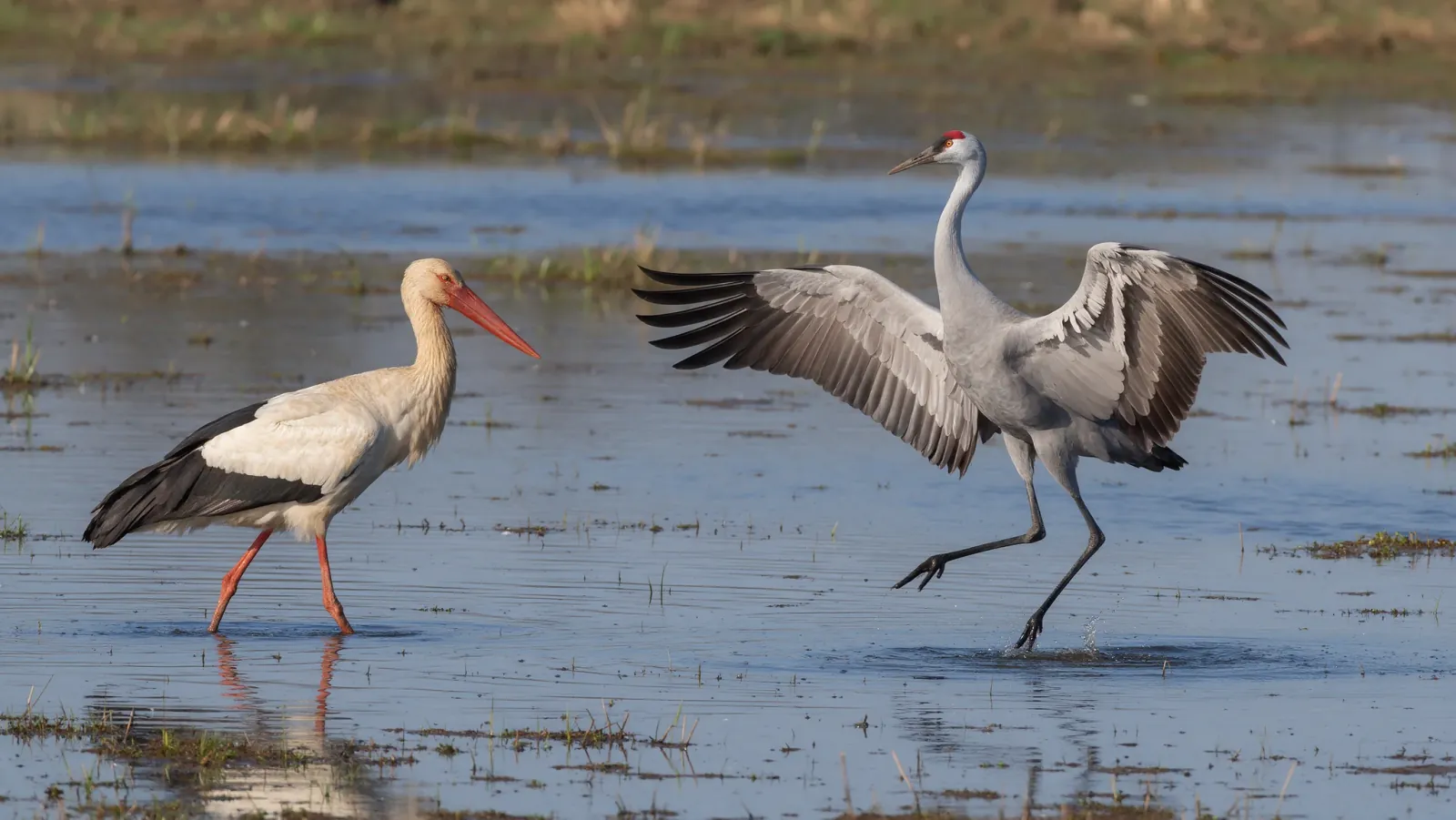
A young stork leaves the colony carrying enough fat to see it through the first bad days on the wing. The birds gather in loose flocks on cut fields and wet meadows through the summer, feeding hard before the southern flight. The weight gained in the nest is spent slowly over the first autumn.
By the time the birds come back north, the small apple of the first morning is a bird with a two-metre span, and it has done the whole thing in a season.
Explore the gift