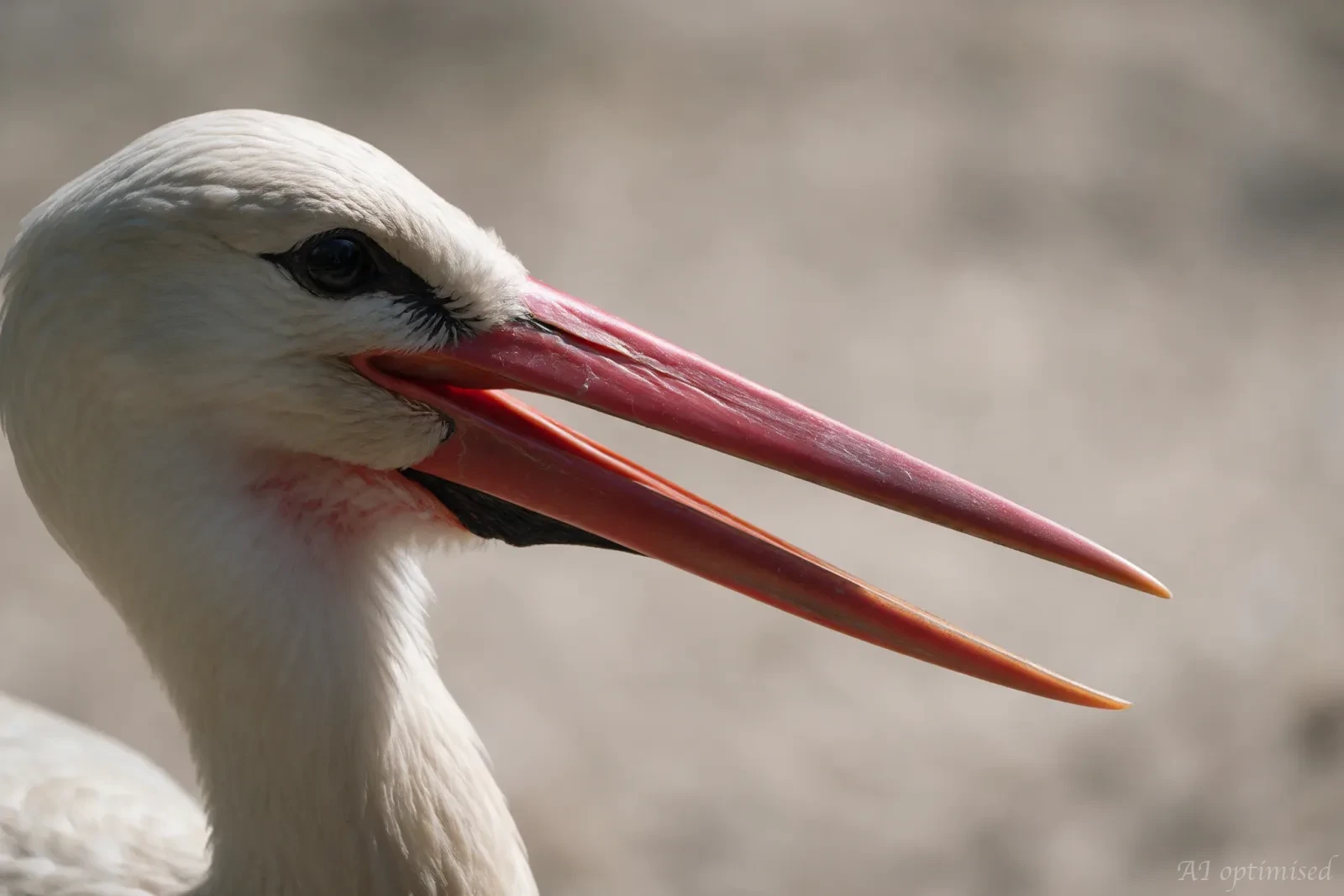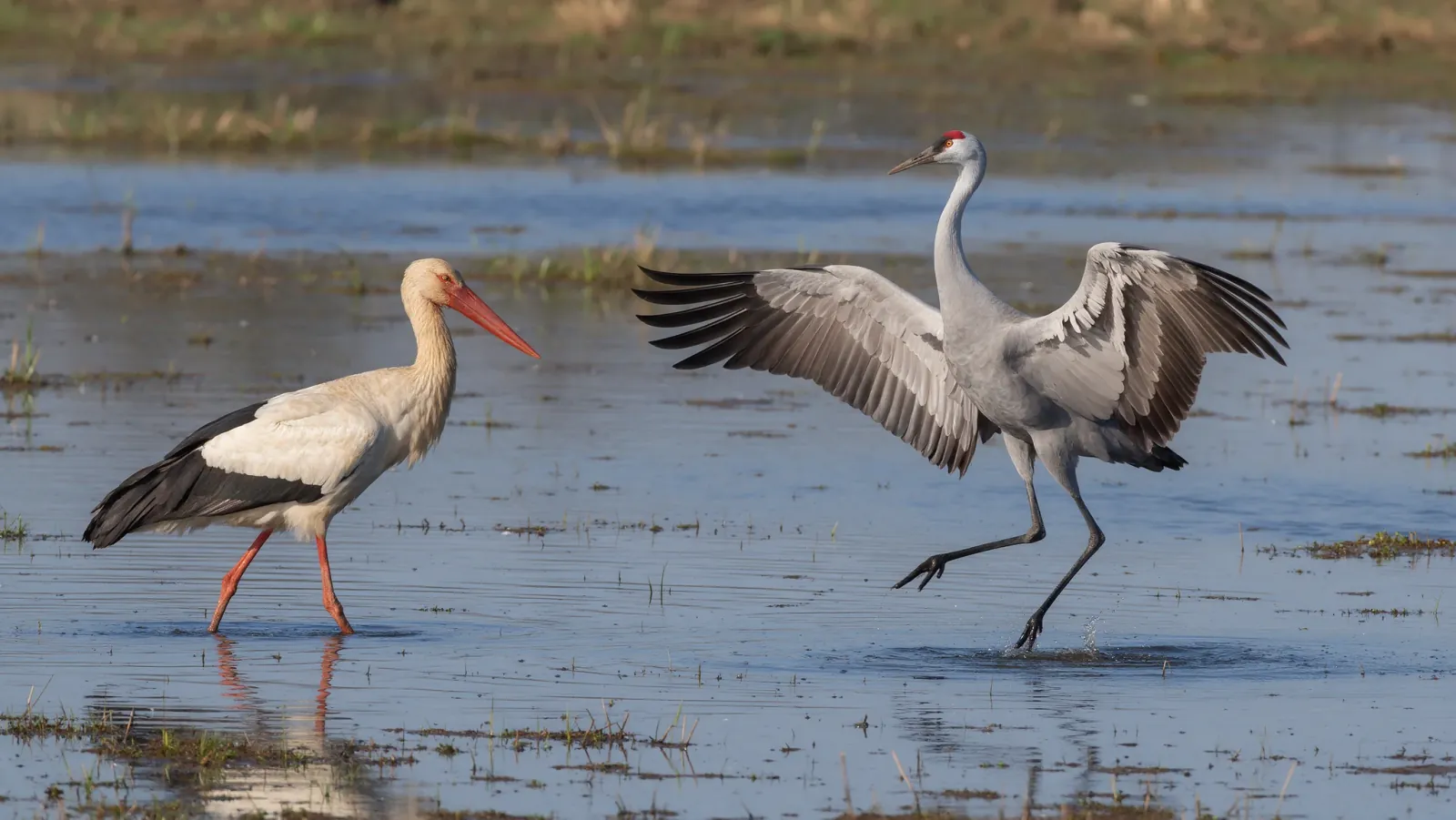
A flamingo and a white stork share the same tall silhouette, the same long neck, and the same habit of standing in shallow water. They are not close relatives, and the differences go deeper than colour. The pink is the first clue, not the last.
The colour is a meal
Flamingos are pink because of carotenoid pigments in their food. They eat algae and small crustaceans, especially brine shrimp, and the pigments settle in their feathers. A flamingo that is fed a plain diet fades toward grey or white. Chicks hatch grey and take months to turn pink. A flamingo's colour is a record of what it has eaten. The white stork is white with black flight feathers and bare red legs, and its colour does not depend on its diet. The black flight feathers show as a dark band along the trailing edge of each wing when the bird is standing, and they flash in flight. In a zoo or a park, flamingos are sometimes given a colour supplement to keep the pink, which shows how directly the colour depends on the menu.
The bill points down
A flamingo's bill is sharply bent downward in the middle, so the tip points back toward the water when the head is upside down. The bird feeds with its head inverted, pumping water through comb-like plates in the bill to strain out food. A stork's bill is straight and dagger-shaped, and a stork feeds with its head up, watching for movement. One bill filters; the other stabs. This single difference explains the rest: the flamingo feeds in open water, often in a crowd, while the stork walks the edge of the water and picks prey from the grass. The filter is fine enough to catch tiny brine shrimp and algae, food too small for a stork to bother with.
Legs, feet, and the water they choose
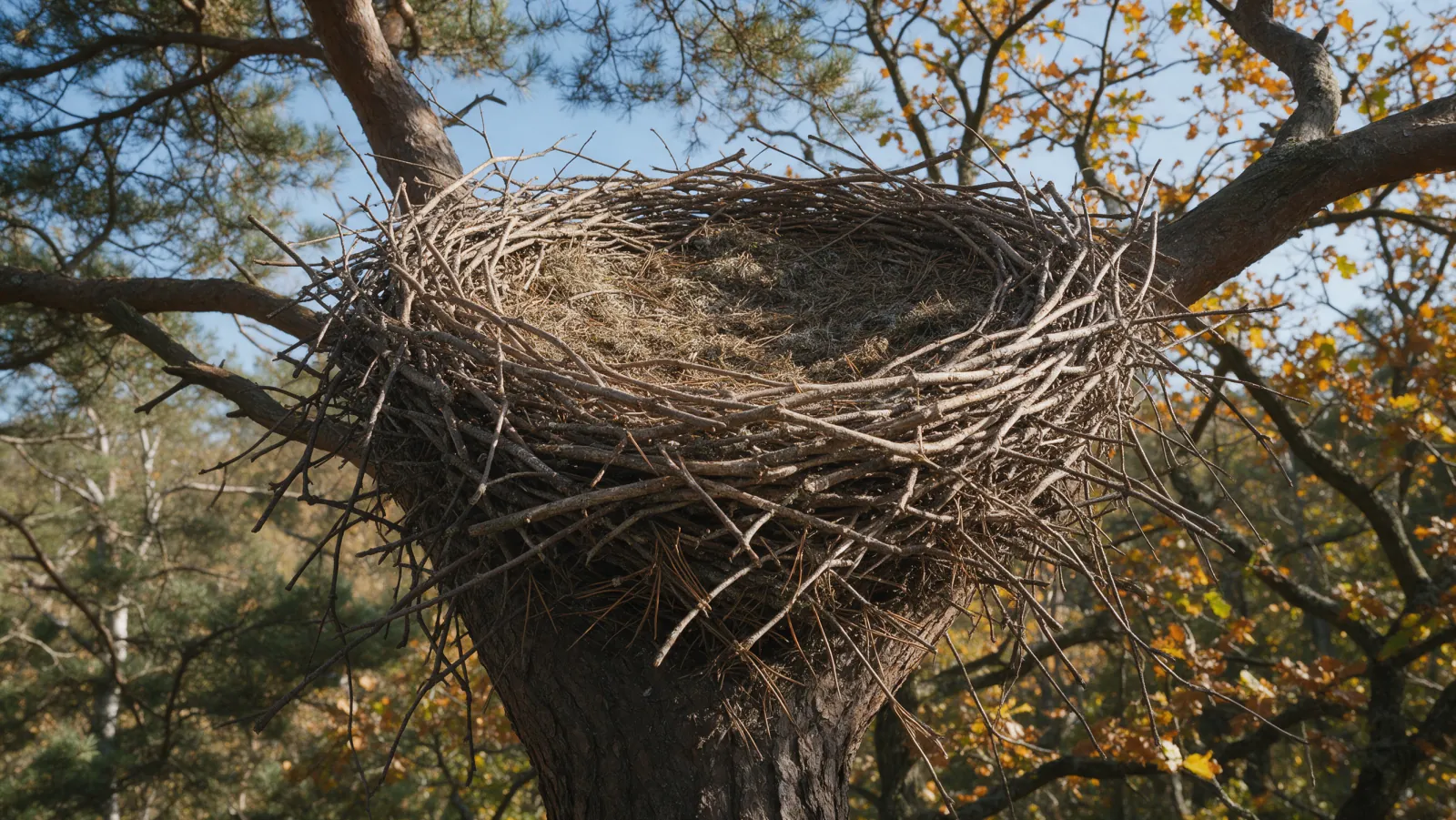
Both birds have very long legs. A flamingo's feet are webbed, and it often stands on one leg in shallow saline or alkaline lakes. A stork's feet have long toes for walking on soft ground, and it prefers freshwater meadows, farmland, and river margins. Flamingos gather where the water is salty; storks gather where the grass is wet. A flock of flamingos can number in the thousands and turn a whole lake pink. White storks nest in loose colonies and feed alone or in pairs.
Why the mistake happens
At a distance both birds are tall, pale or pink, and stand in water on long legs. In flat afternoon light the pink can drain away, and a flamingo seen against the sky can look like a white stork with a strange bill. The legs give a second clue: a flamingo's legs are thin and often held straight, and the bird stands with the body level. A stork often rests on one leg with the other drawn up, and its body looks heavier. When the light is poor, wait for the bird to move its head. A flamingo will tilt its head down to feed, showing the bend in the bill. A stork will keep its head up and walk.
Flight and company
Both fly with the neck extended and the legs trailing, so a distant bird can fool you. The flock usually gives the answer. Flamingos fly in long, loose lines and often call in a low, honking chorus. Storks fly in looser groups, often circling on thermals without a sound. A stork's wings are broad and black-tipped; a flamingo's are pink with black flight feathers. If the bird is pink and noisy, it is a flamingo; if it is white, silent, and circling, it is a stork. The mistake is easy to make at a distance, and the correction is easy too. Flamingos often fly at night during migration, and their calls carry down from a dark sky.
Explore the gift