In autumn the young storks fly, the parents follow, and the platform on the roof is left behind. For months it holds sticks, frost, and whatever small bird moves into the sides. The empty nest is the other half of the stork year.
The leaving
A white stork is gone from the breeding grounds by late summer, usually between mid-August and September. The young birds go first or with the adults. The journey south is long, and the nest is not a place to spend the winter.
Birds from western Europe cross at Gibraltar and winter in the Sahel. Eastern birds pass the Bosphorus and spread through East Africa. The departure spreads over days or weeks. A late brood can keep a pair on the roof into September after the first flocks have gone.
A nest may be empty while a neighbouring nest still holds a family. Then the whole village is empty, and the roofs go quiet.
The last birds often leave when the first cold rain arrives. A warm autumn can hold them back, and a late family may stay into October. The departure is spread across weeks, and the village empties in stages. The nest is left with whatever the weather brings.
Tenants of the empty platform
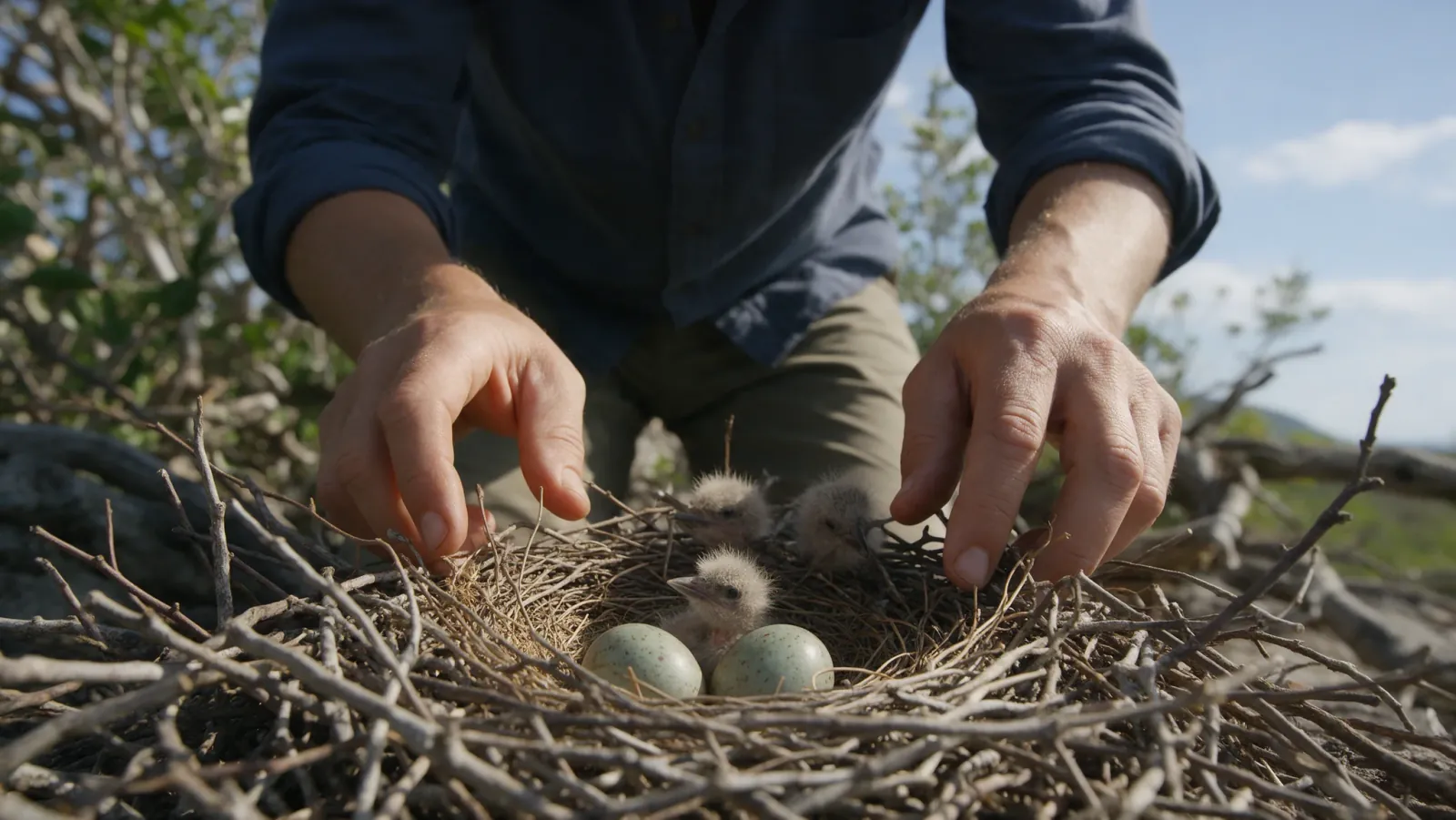
A stork nest is a solid structure, and other birds use it. House sparrows are common tenants and nest in the sides of the heap, safe from the wind. Kestrels and stock doves take over old stork nests in some places, and other small birds shelter there too.
The nest is never truly unused. Something lives in it even when the storks are gone. Mice and insects work through the lining, and the heap becomes a small habitat of its own.
The storks do not defend the nest in winter because they are not there. The structure belongs to the weather and to whoever can use it. A platform that was a nursery in July is a shelter in January.
A nest with a deep rim and a broad base holds more tenants. The sides are thick enough for sparrows to tunnel into, and the base is a warm pocket away from the wind. The storks built the shelter, and other birds move in as soon as the owners leave.
What frost does
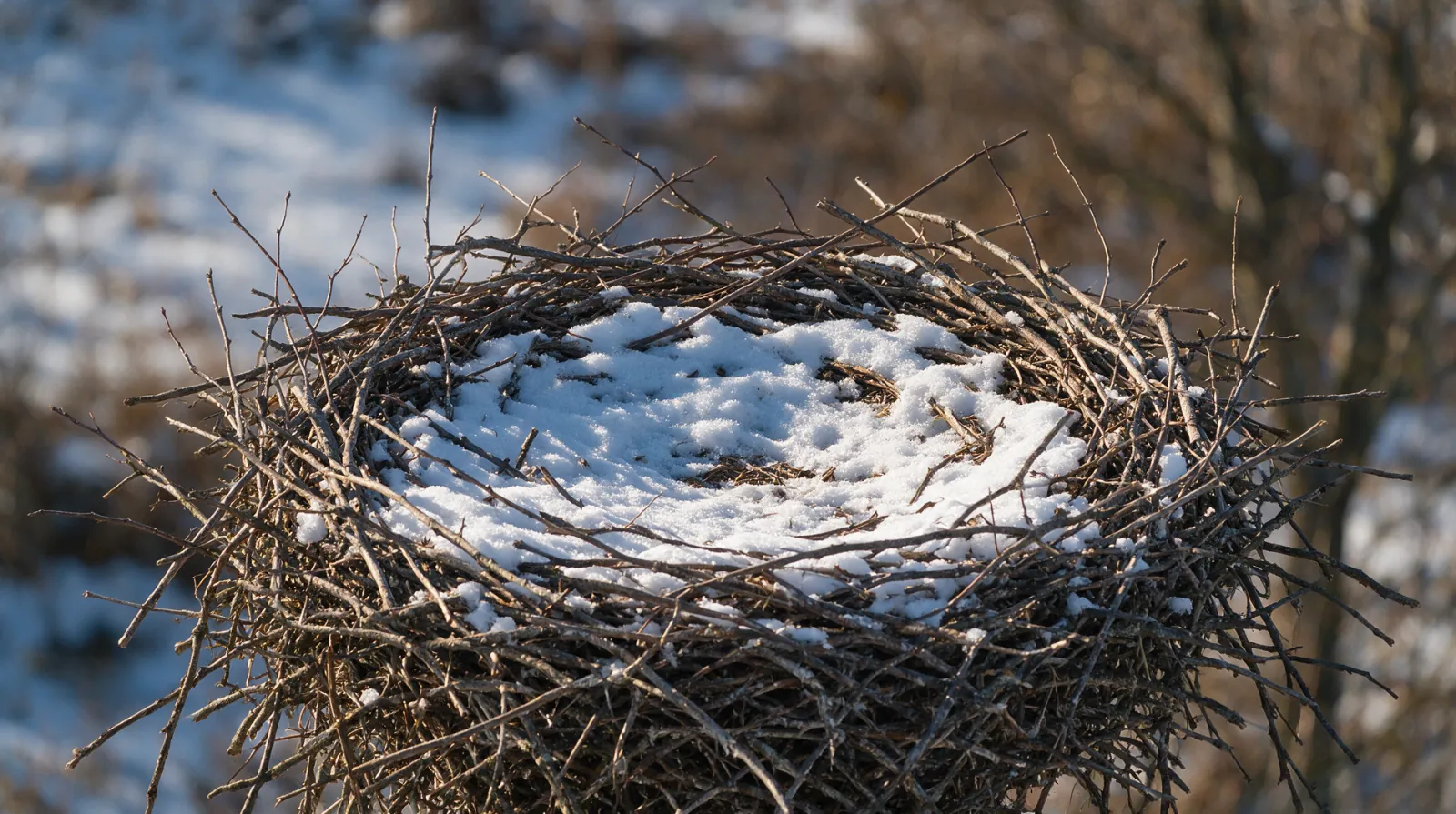
The weather works on the nest. Wind pulls at the outer sticks. Rain softens the soil. Snow adds weight. Frost lifts the base. A nest that has stood for years can lose a whole side in one storm, and the heap of sticks below the roof is the evidence.
A sheltered roof holds a nest that an exposed pole would lose. A nest that was solid in autumn may be ragged by spring. Some collapse entirely. The ones that survive are the ones built well and sited well, and those are the nests the storks return to.
The damage is part of the cycle. A platform that never failed would need no repair, and the returning birds would have less work. The work is what greets them.
The nest is also a record of the winter. A rim that has lost its outer sticks shows the direction of the worst wind. A base that has settled shows where water gathered. A returning bird reads none of this in words, and it tests the weak places with its bill before it adds new material.
The first arrival
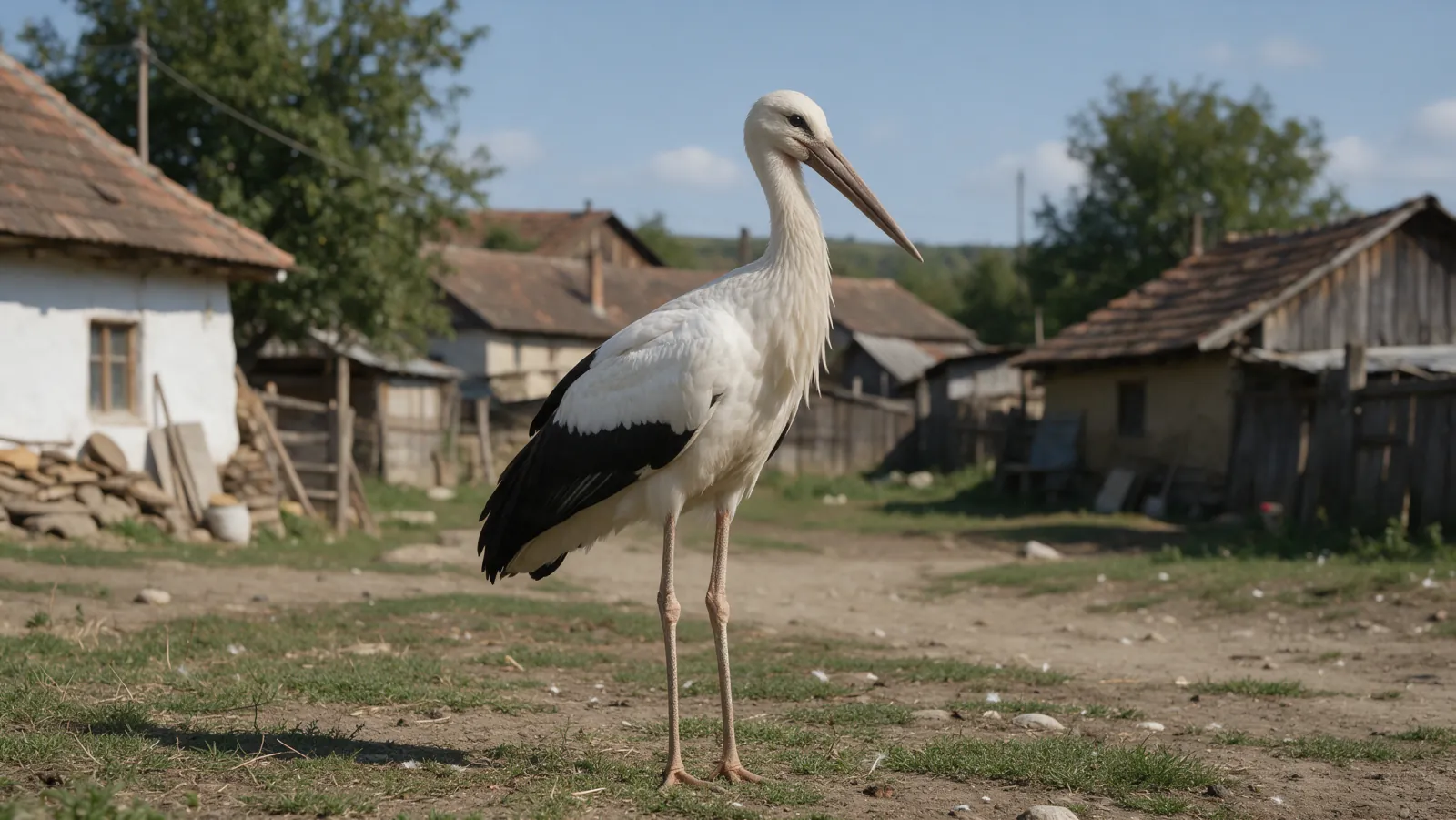
Spring begins with a bird on the old nest, sometimes while the weather is still cold. In central Europe the first birds often appear in late March, though a mild February can bring them earlier. The bird lands on the old nest, clatters, and begins to repair.
Males often arrive before females, and older birds before young ones. A male that finds his nest damaged spends his first days carrying sticks before a mate arrives. The sound carries across a village that has been quiet for months.
The return is staggered. A nest fills with birds over days, and the village comes back to life. The first arrival is the point where the empty platform becomes a home again.
A platform that waits
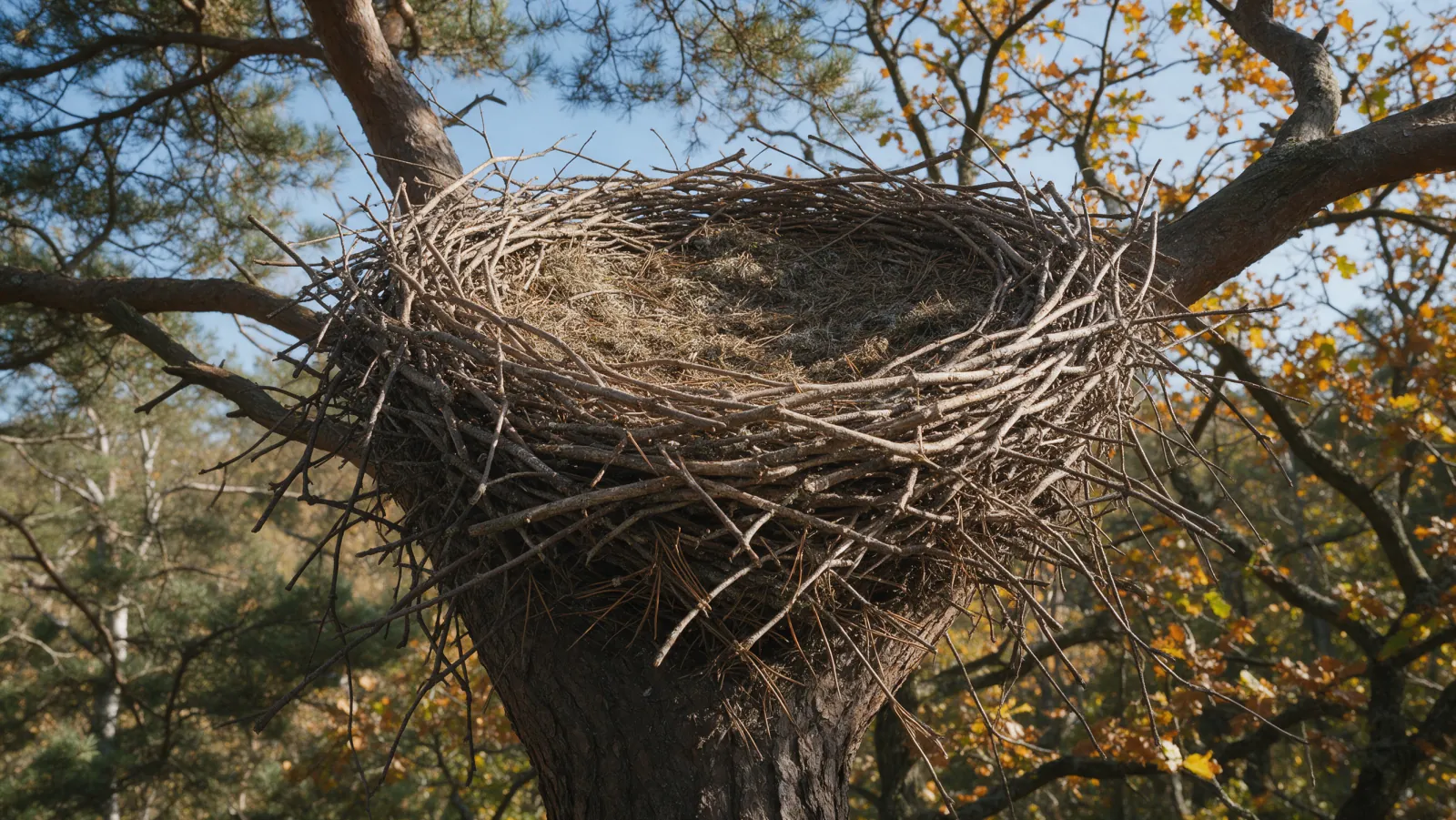
An empty nest is a promise that the season will come again. The sticks are still there. The site is still good. The birds are somewhere south of the sea, in wetlands that will dry as the season turns.
The platform can fail before the birds return. Some birds do not return. Some nests are taken by another pair before the owners arrive. A storm can bring the whole platform down, and the pair that returns may find only a scatter of sticks on the roof.
A site with no nest can still be used. A pair may rebuild on the same chimney, and a pole with a basket on top can replace a lost platform. People often keep the place ready during roof repairs. The structure waits, and the birds return to the place even when the old nest is gone.
A year in four moves
The cycle runs from a spring return through a summer of chicks to an autumn departure, and then a winter in the warm south. Every part is tied to the nest. A clutch of three to five is laid over several days, and incubation takes about a month, shared by both birds.
Summer is the brood. The eggs hatch over several days, and the chicks grow fast. The parents feed them from the crop, brood them when they are small, and defend the nest. By midsummer the platform holds a crowd of nearly full-sized young, and then the fledging begins.
Autumn is the gathering. Family groups join other families, and the birds move south. Winter is the pause. The bird feeds, rests, and waits on African grasslands and wetlands, and some white storks now winter in southern Europe where food is available all year.
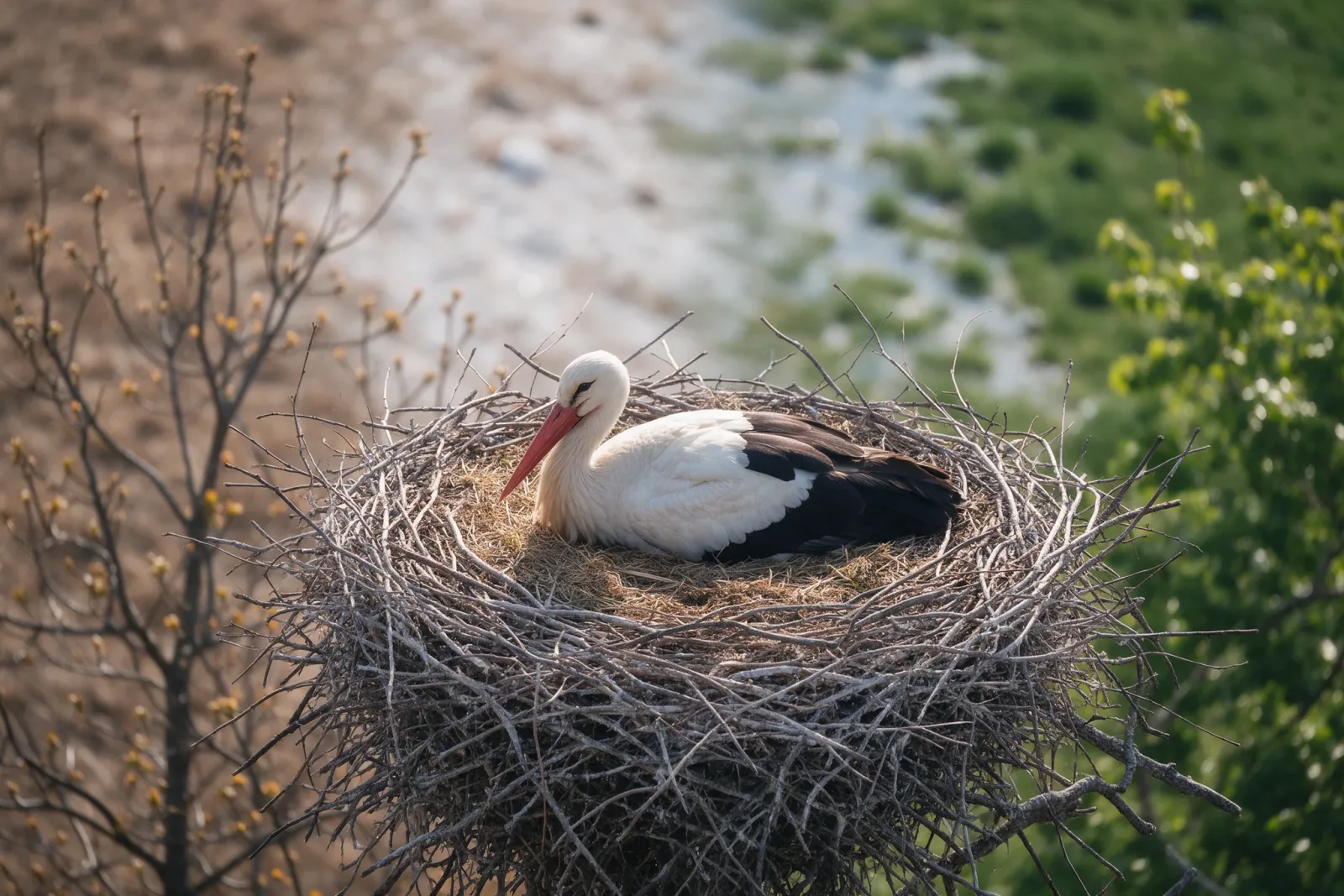
The year is also written into the bird. Fat laid down before migration, wear on the flight feathers, and the red of the bill at the height of the season all follow the same calendar. The nest stays in one place while the bird carries the season across two continents.
The nest changes hands
Storks do not pass nests down through a family line. Ownership follows occupation. A young pair looking for a site takes an empty nest, repairs it, and breeds there, and the previous owners are simply gone.
A single nest can hold decades of history. The bottom was built by birds that died long ago. The top is this year's work, and the pair on it may have no connection to the pair before. The platform is the inheritance, and the loyalty is to the place as much as to the partner.
People have watched the pattern for centuries. A nest on a roof was a sign that the building was solid, the fields were good, and the family was settled. When a platform comes down and the birds do not return, a house loses a marker, and the spring feels quieter.
The circle continues because the site keeps its value. As long as there is a high, solid place near wet fields, storks will build on it, and the next pair will find the work of the last. A nest that falls may be rebuilt on the same chimney, or replaced by a pole with a basket on top. The birds return to the place even when the old structure is gone.
Explore the gift