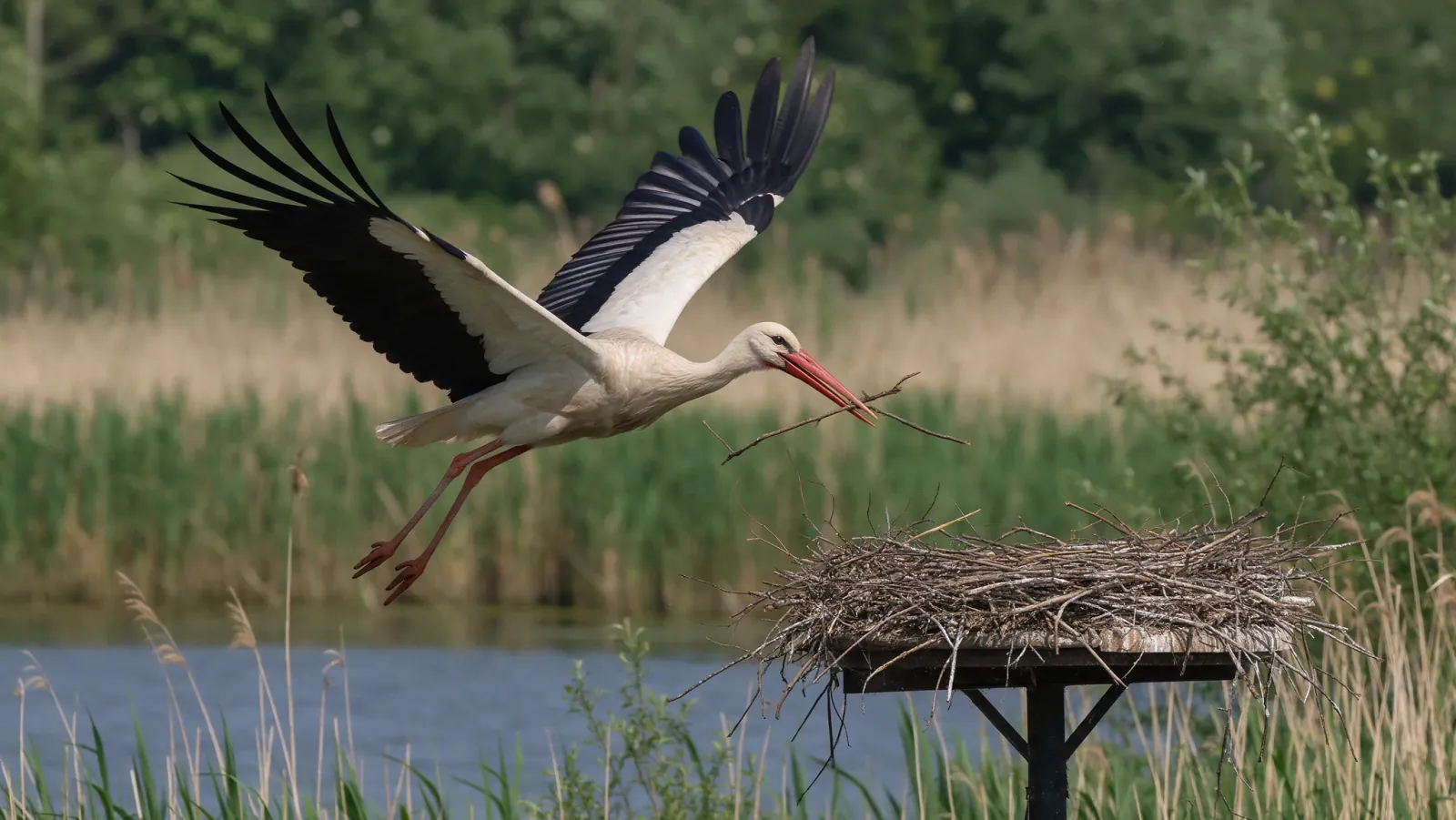
The sticks of a stork nest are building material, a claim on a roof, and the closest thing the bird has to a written record. White storks lay twigs and branches down fresh every spring, and the pile that results is never quite finished. A bird flying in with a branch in its bill is renewing the pair's hold on the nest for another year.
A nest is a claim
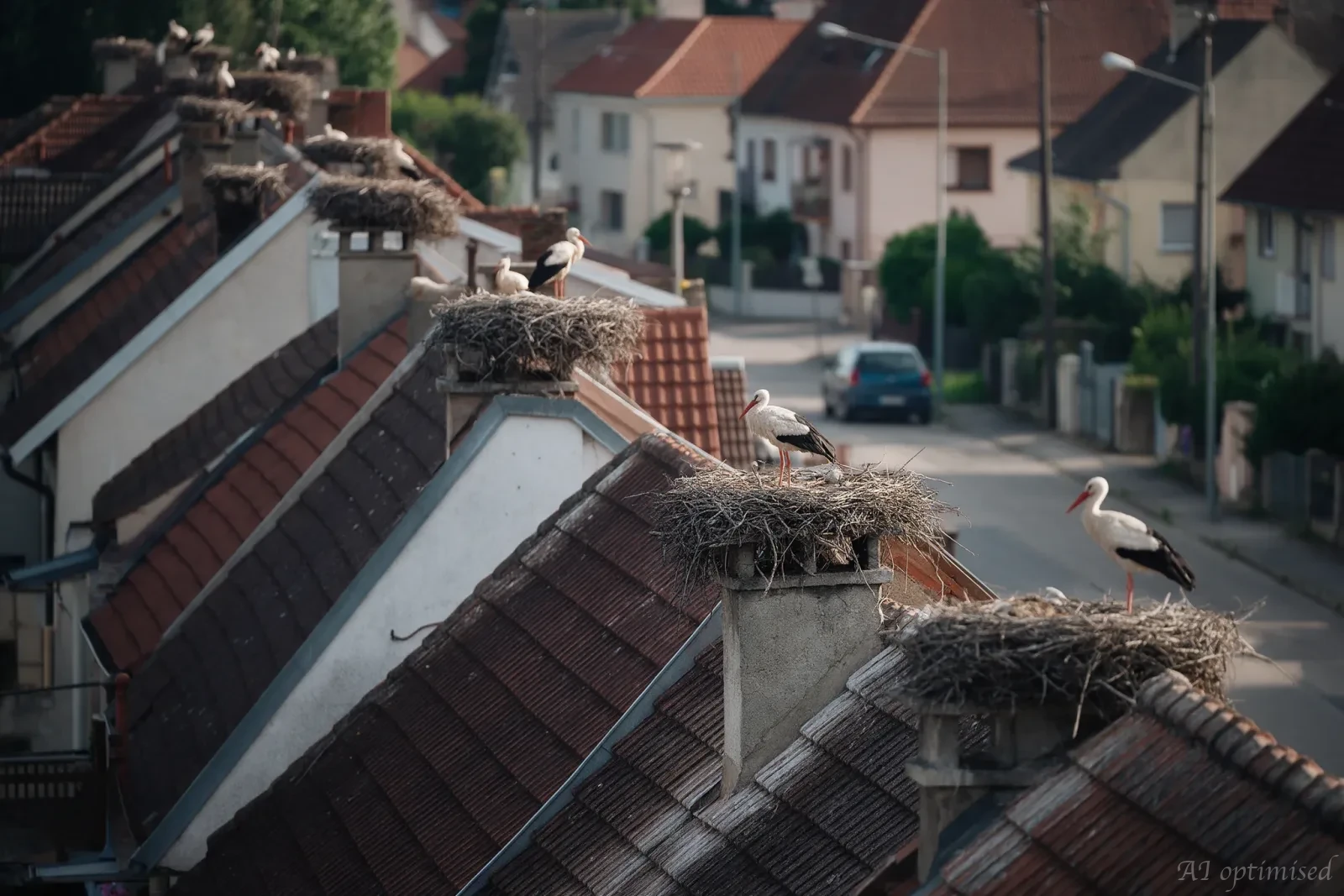
On a village roof, nests sit close together, and the size of the pile tells the neighbours something. An old, tall nest with fresh twigs on top says the pair is established. A thin, low platform says the owners are young, or that something went wrong last summer. Storks read these differences, and most disputes end with the weaker pair giving way. Every stick carried in is a small act of ownership, repeated until the season ends. The bird keeps adding while the eggs are warm and the chicks are small, and the building slows only when feeding takes all its hours.
Who carries, who places
Both birds bring material, and the work divides by habit. One bird may do most of the gathering while the other stands on the nest and sets each twig into place, pressing it down with the bill and turning it until it holds. Then they swap.
The exchange runs back and forth all morning, and the nest rises by inches. A stick passed from one bird to the other also works as courtship. The male arrives, the female takes the twig and works it in, and the pair bow and clatter over the new addition. The gesture says the bond survived the winter, in a bird that has no song to say it with.
Speech without a voice
White storks are nearly silent. They hiss, they snap, and they clatter their bills, and most of what they say comes through posture and through objects. A stick held in the bill, a deep bow, a lifted wing: these are the sentences.
The nest is the long message the pair writes together, one twig at a time, from March to August. In the first week of March the message is short and practical, a few branches laid on a winter-battered rim. By April it runs to a full paragraph of moss and hay. A bird returning to an empty platform with a branch in its bill is announcing itself before it has made a sound, and any stork nearby can read it.
The soft cup in the middle
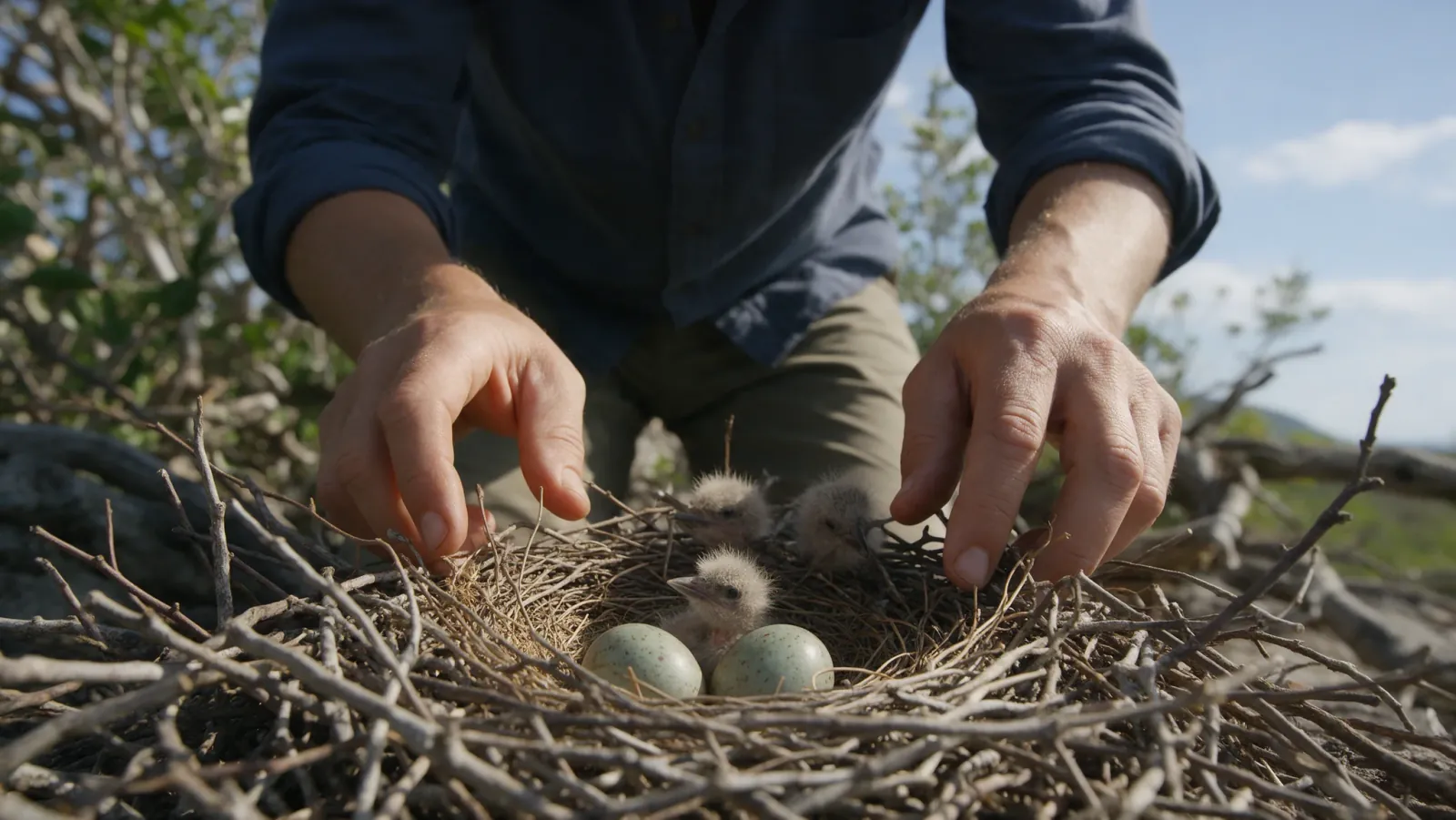
From the outside the nest looks like a rough heap of branches, and the base is exactly that. The cup in the middle, where the eggs sit and the chicks sleep, is lined with gentler material: grass, moss, turf, hay, and whatever else the birds can carry. The cup is shaped by the body of the bird sitting in it. A stork settling onto fresh material presses it down and turns, and the bowl that results fits the bird that made it. No two linings look quite the same, because no two birds sit the same way.
The birds gather what the land offers. In farm country that means hay and straw, sometimes pulled from a bale in a field. Near wet ground they take moss, grass, and clumps of turf, and they will tug at dry weeds along a verge. They also pick up cloth, paper, plastic twine, and torn fabric, and these get worked into the cup among the natural fibres. A lining gathered from a hay meadow smells of cut grass and dust when the bird first sits on it, and the smell fades as the material is pressed flat.
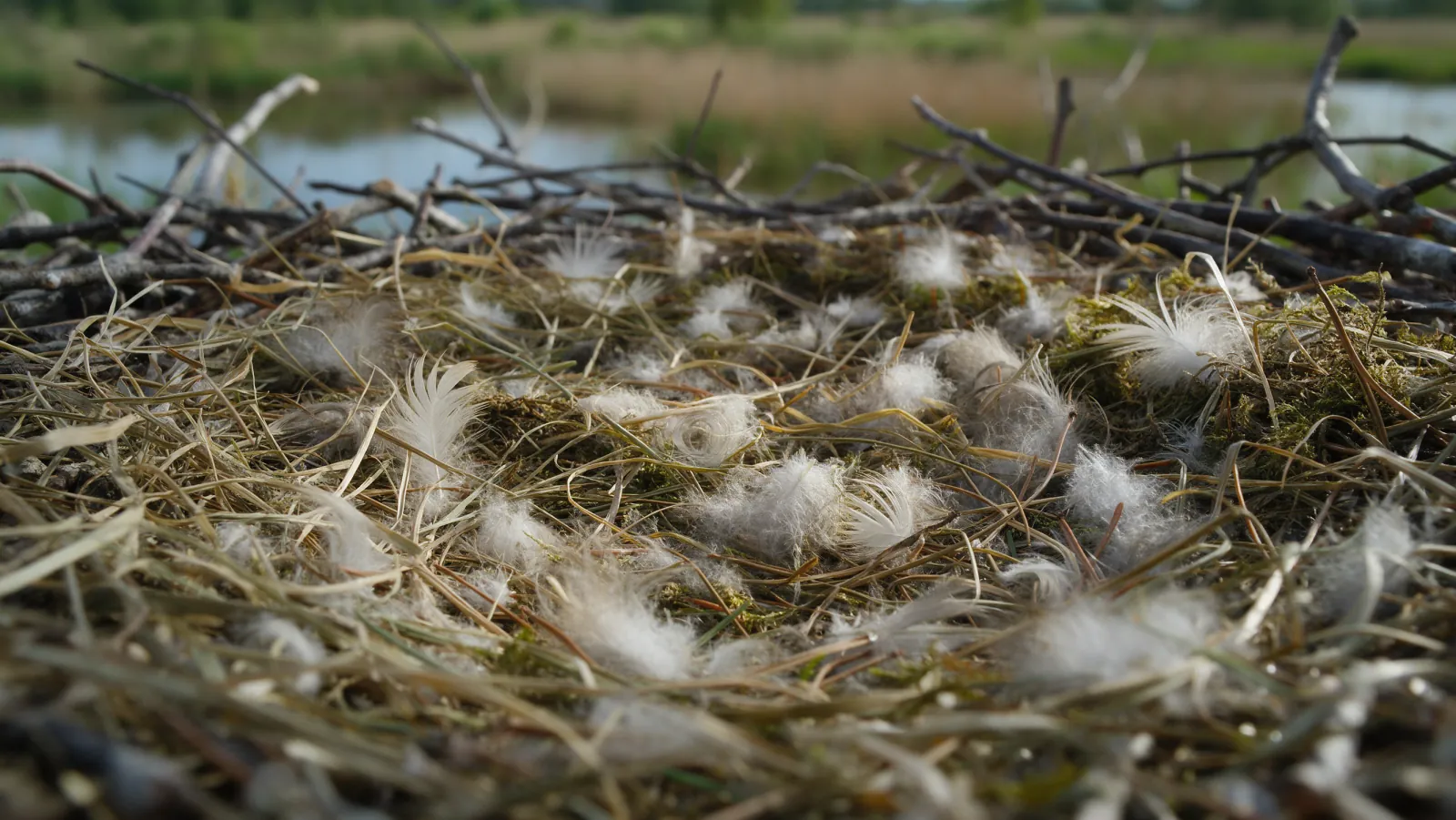
The lining is never finished. Chicks trample the grass flat, spill food into it, and foul it as they grow, and the parents keep bringing fresh material to lay over the mess. After a rainstorm the first thing a parent does is rearrange the cup, pressing the wet grass back into shape while the chicks crowd around its legs. Above all the lining holds warmth, and warmth is what turns an egg into a chick. A white stork egg is incubated for roughly a month, and through the cool nights a parent sits low over the cup with its bare brood patch against the shells. The grass and moss slow the heat escaping into the sticks and the night air.
Repair that becomes building
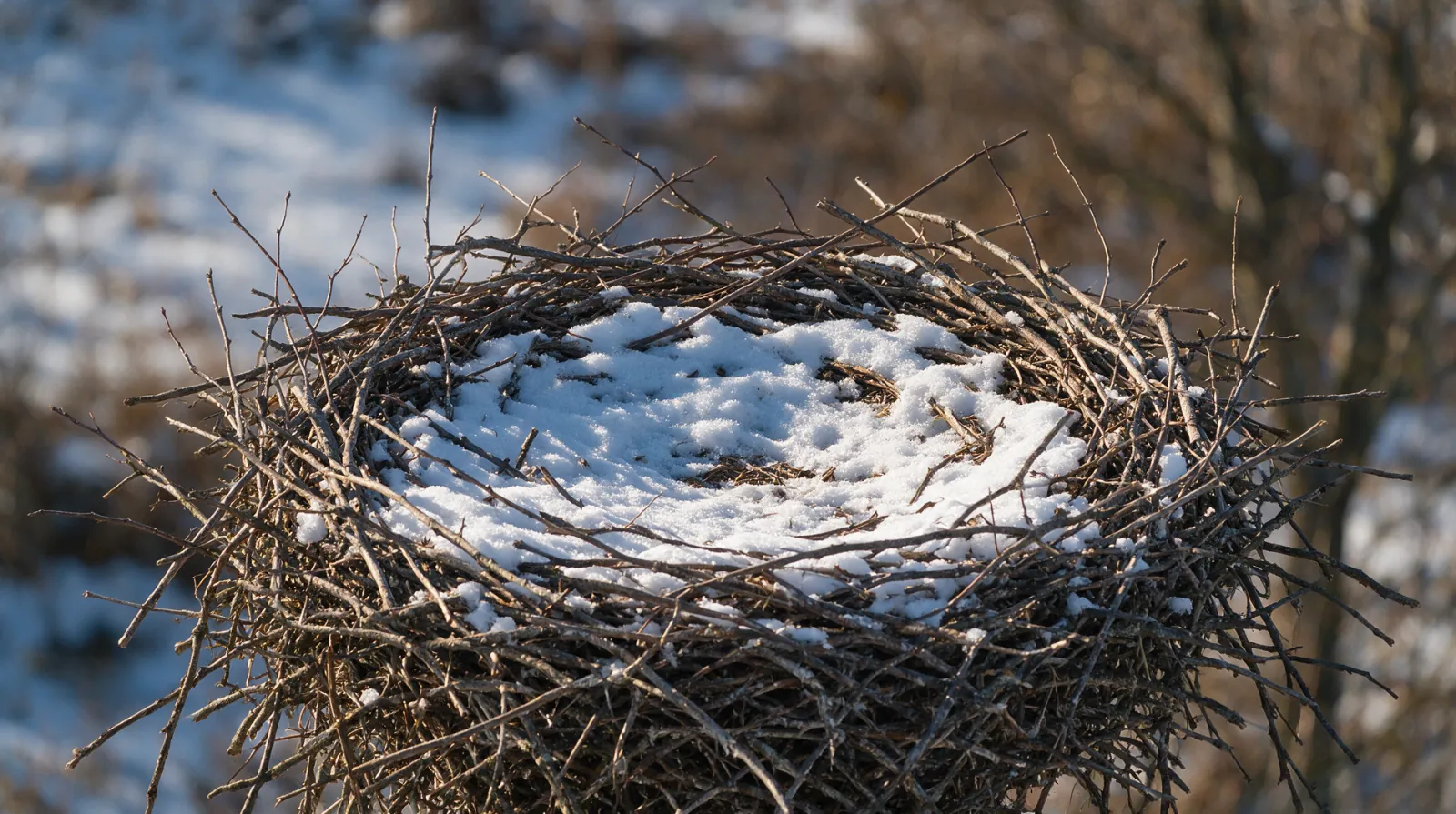
When a stork returns in spring, the first job is mending. Winter has loosened twigs and flattened the cup, and the birds bring fresh sticks to bind the old ones together again. What starts as repair slides into construction, because the birds carry more than the damage requires, and each season the rim climbs a little higher and pushes a little wider.
The hard skeleton stays and the soft centre is remade. Grass rots, moss dries, and the birds lay new lining over the old. A nest in use is a nest that keeps growing. A pair that bred well returns to the same roof or tower, and if one mate dies, the survivor often holds the nest and finds a new partner to share it. The structure passes along that way, and it becomes the one fixed point in a life spent moving with the seasons.
Read a nest through the season and the sticks tell you where you are. The first flurry in spring is the reunion. A steady run of building follows as the eggs are laid and incubation begins, since one bird is often free to fetch while the other sits. Building slows sharply when the chicks hatch, because two adults are now busy feeding four or five growing mouths. A last small burst comes in high summer, as the young stretch their wings and the platform has to carry more weight than it did in May.
Tenants in the walls
A big stork nest is a small building, and other birds move in. House sparrows and starlings tuck their own nests into the sides and the base, slipping in under the outer layer of sticks where the storks cannot easily reach them.
The storks tolerate the tenants, and the arrangement adds material and weight over time. The nest becomes a little community, with its own traffic of small birds coming and going beneath the long legs of the owners. Starlings are noisier tenants than sparrows, and their chicks add their own droppings to the base, which binds the lower sticks together. None of it harms the storks, and the pile grows a bit thicker every summer because of it.
The weight under the roof
All that growth has a cost, and people usually notice it first. A nest built up over many years can weigh a great deal, and it sits on the edge of a roof or the top of a chimney. Homeowners add metal supports under the platform, or move the whole nest a short distance onto a stronger base, to stop the building slowly coming apart. A nest that has stood for fifty years may hold more weight than the roof was designed to carry. The bird stands on the growing pile as if the whole thing weighed nothing, because to the stork the nest is simply home.
An old stork nest is a record of many summers. Some have stood on the same rooftop for decades, repaired and relaid so often that the oldest sticks at the centre are far older than the birds standing on them. The growth is slow and constant, a little each year. A loose plate of twigs becomes a deep and permanent crown, and it will still be there long after the pair that raised the last brood has gone.
A stork chooses twigs it can wedge and bind, and it works them until the structure resists the wind. The base of an old nest can be decades deep, a mass of interlocked branches that a person could not pull apart by hand. Rain rots the top, the birds add more, and the whole thing settles into something heavier than the sum of its twigs. When the young fledge, the nest stands empty with the season's work in it. Come March, the pair will land again and start carrying sticks, and the record will go on from where it stopped.
Explore the gift