Watching storks
How to find, watch and identify storks, whether you are out on a walk or watching from a kitchen window.
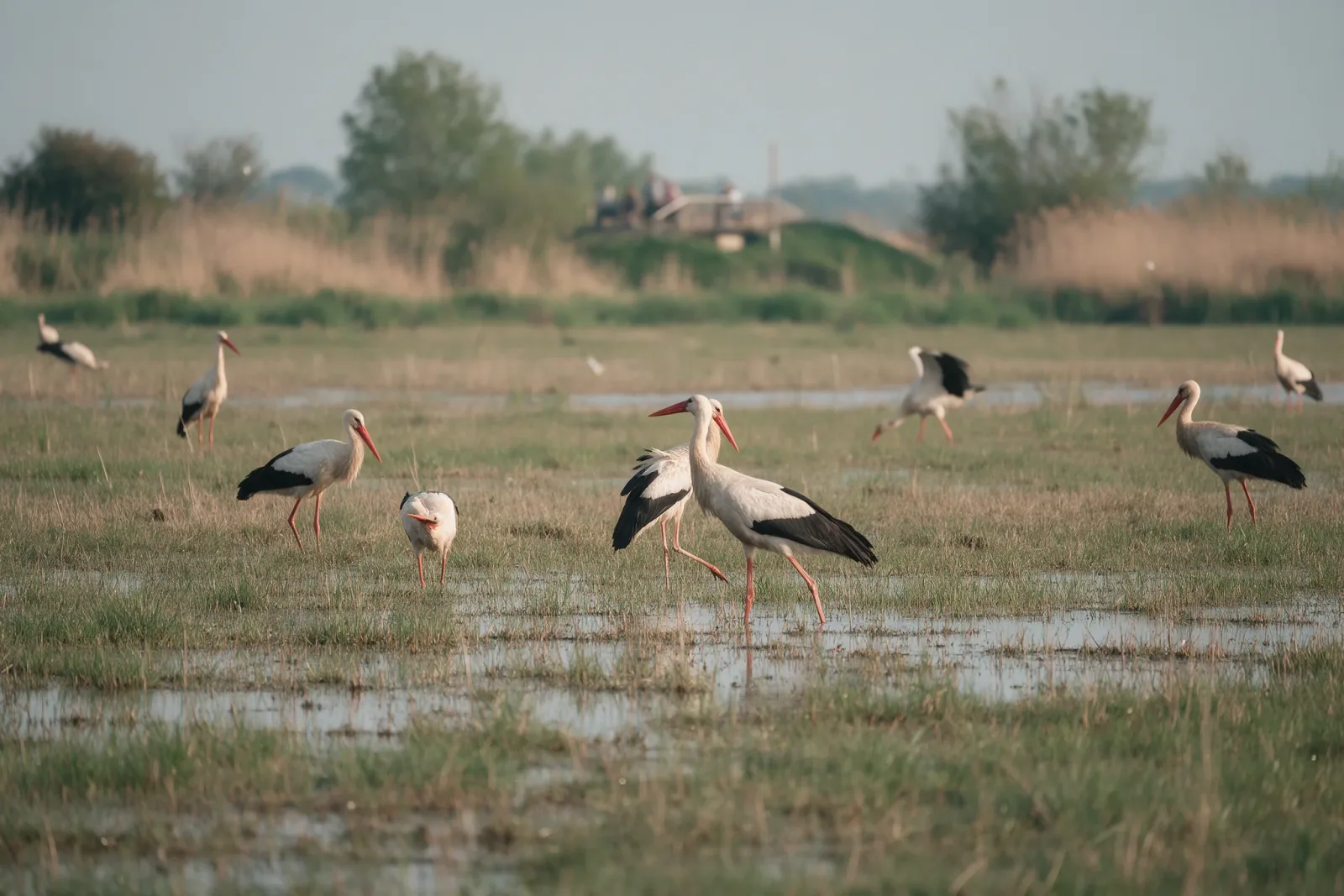
Where to see white storks: mown fields, ditches, roof nests
White storks feed where water sits thin over grass, so check cut hay meadows, shallow ditches, and the big stick nest on a village chimney.
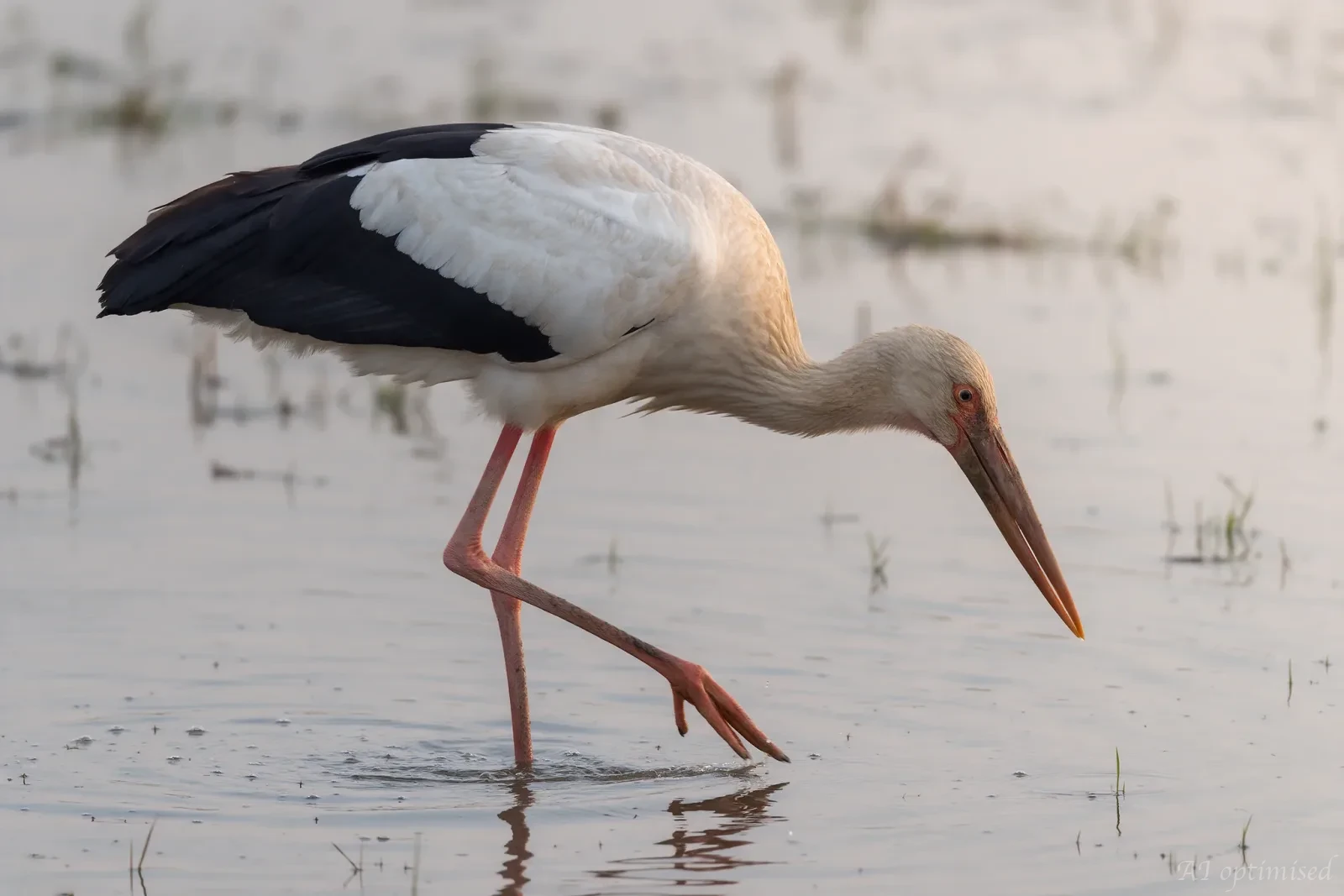
Reading a stork: the one-legged rest, the stab, the clatter
A white stork tells you what it is about to do through its stance, its walk, and a rattle of bills that carries across the colony.
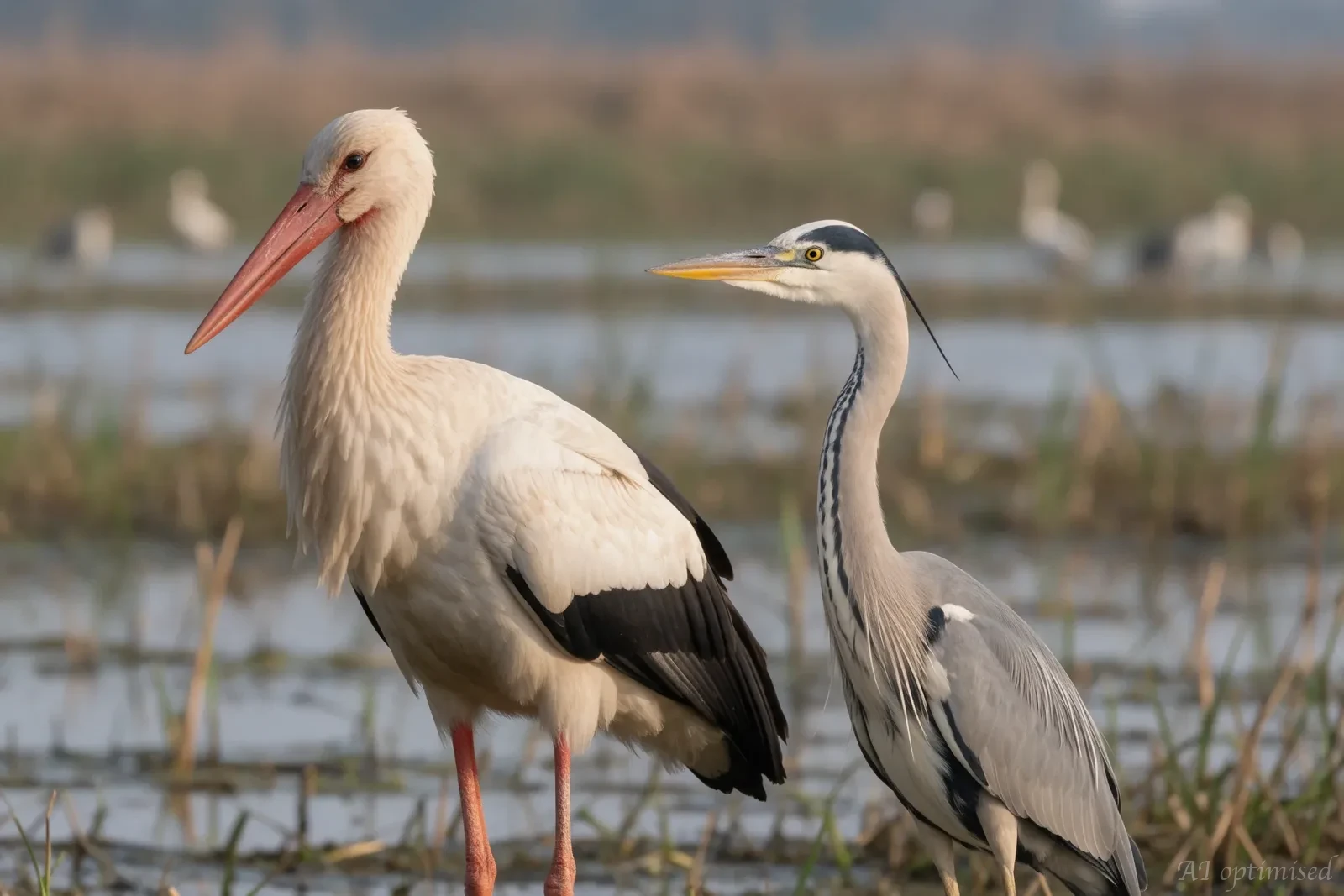
Stork or heron: the neck in flight settles it every time
A heron flies with its neck folded into an S, a stork holds its neck straight out, and that one mark separates them at any distance.
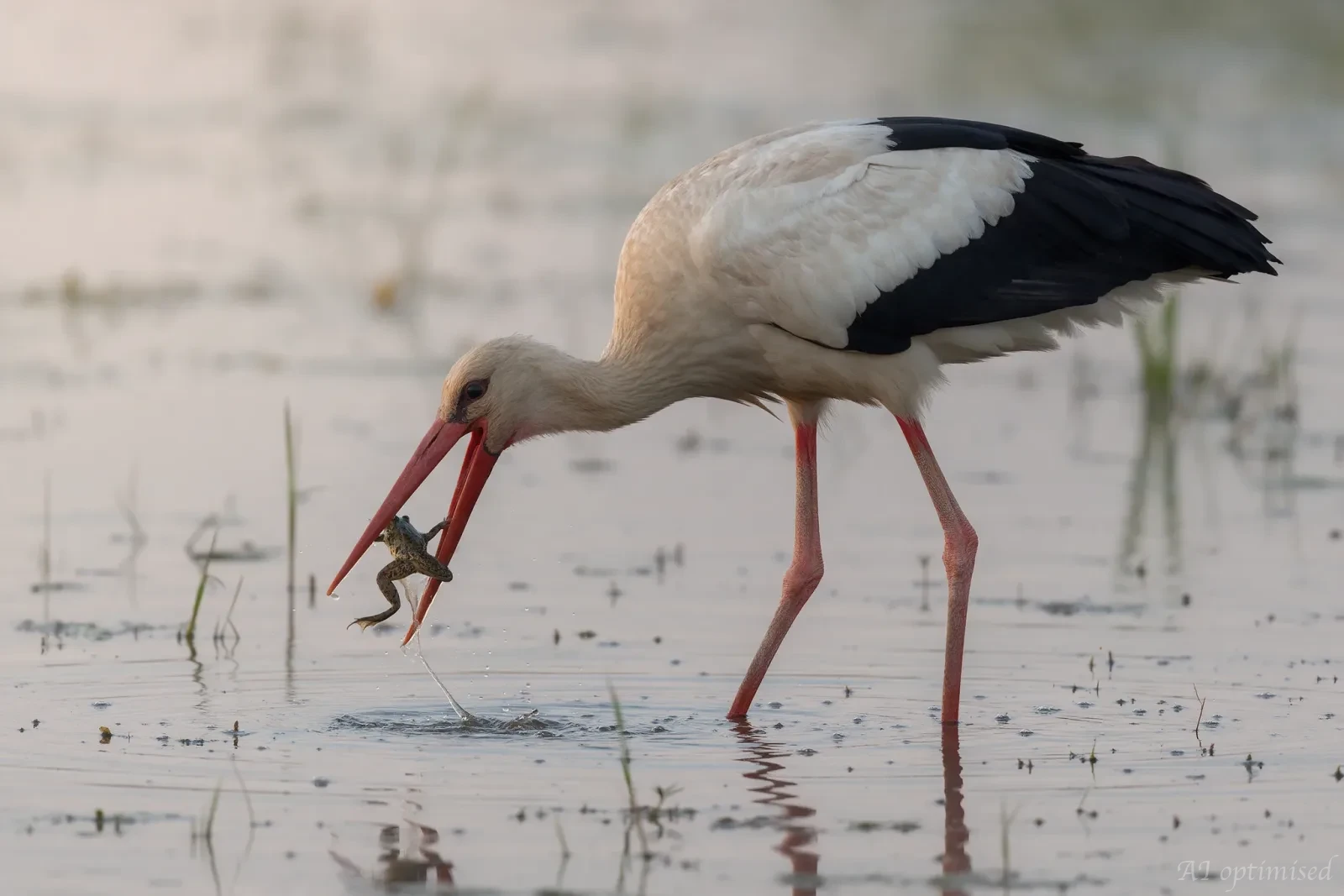
What storks eat: frogs, grasshoppers, and a summer of small prey
A white stork walks down frogs, grasshoppers, voles, and earthworms, and its menu shifts as the ground dries through summer.

Stork watching at your pace: alone, with a child, with a pencil
Going out alone lets a stork stay close, a child needs a job and half an hour, and a pencil slows the whole morning down.
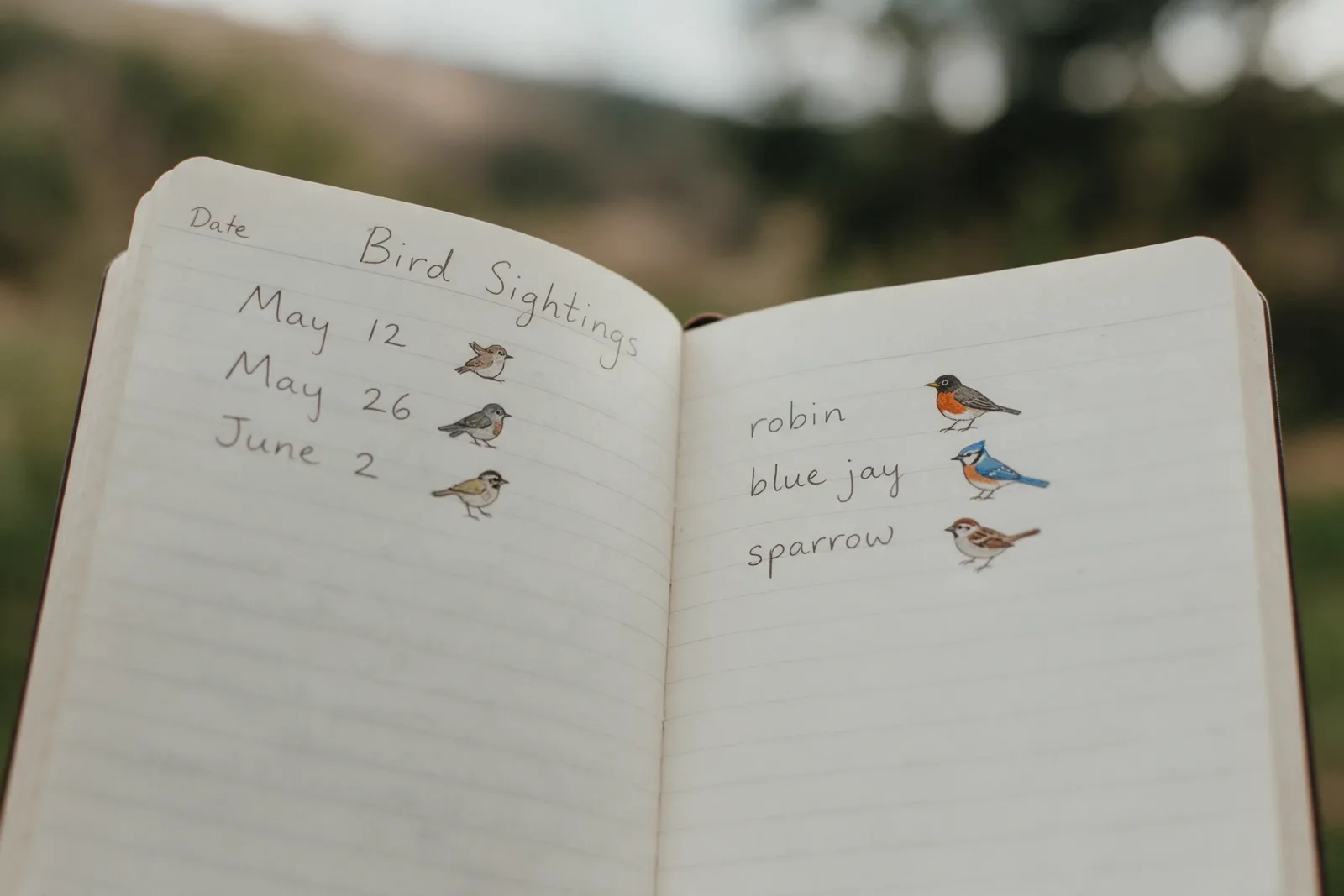
Keeping a stork journal: four lines that outlast a photograph
Date, place, weather, and what the bird was doing: four lines at the kitchen table turn a morning into a record you can compare.
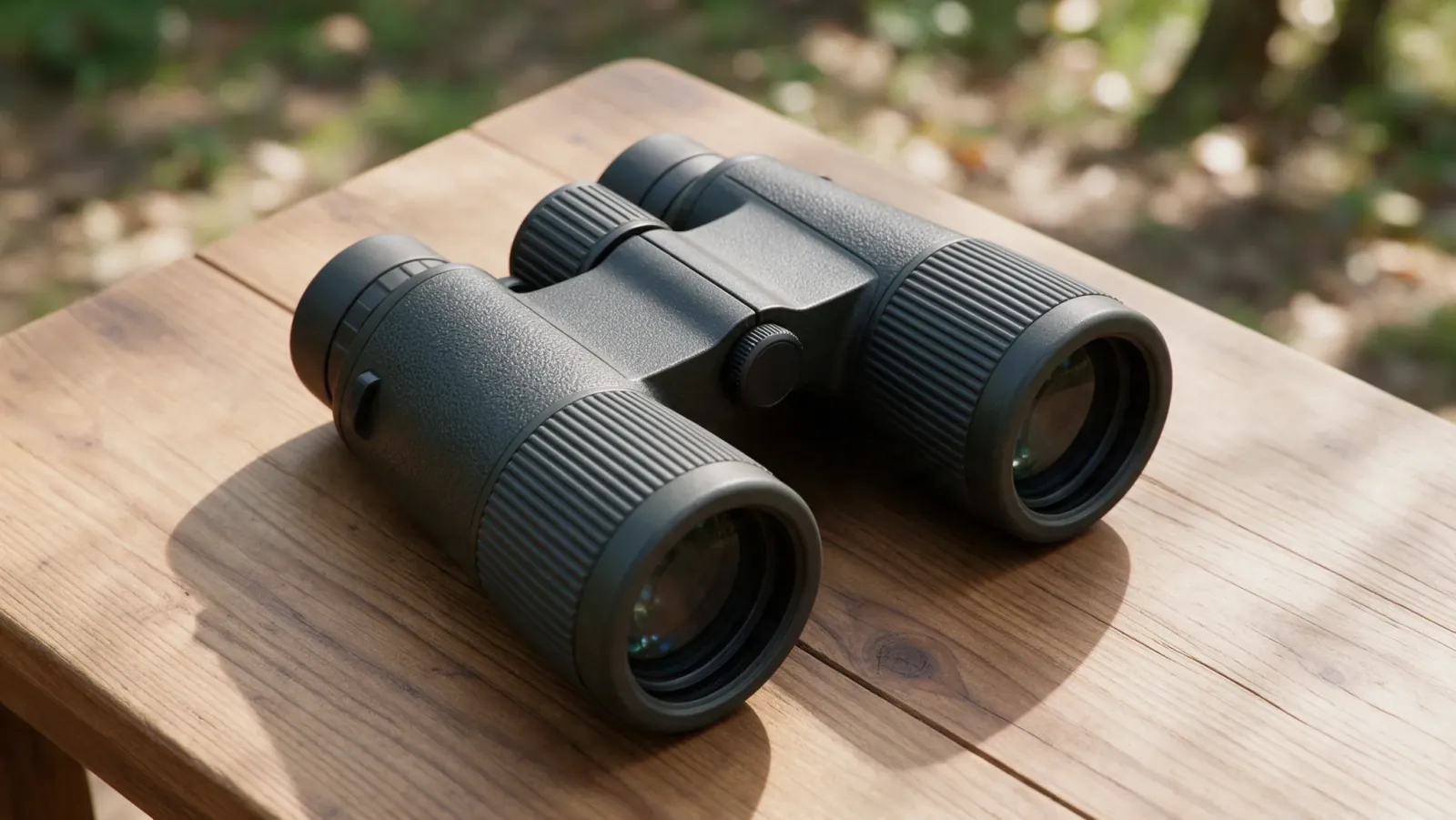
Binoculars for storks: what 8x42 means and when to add a scope
The two numbers on the barrel set how bright and how steady the view is, and 8x often suits storks better than 10x.
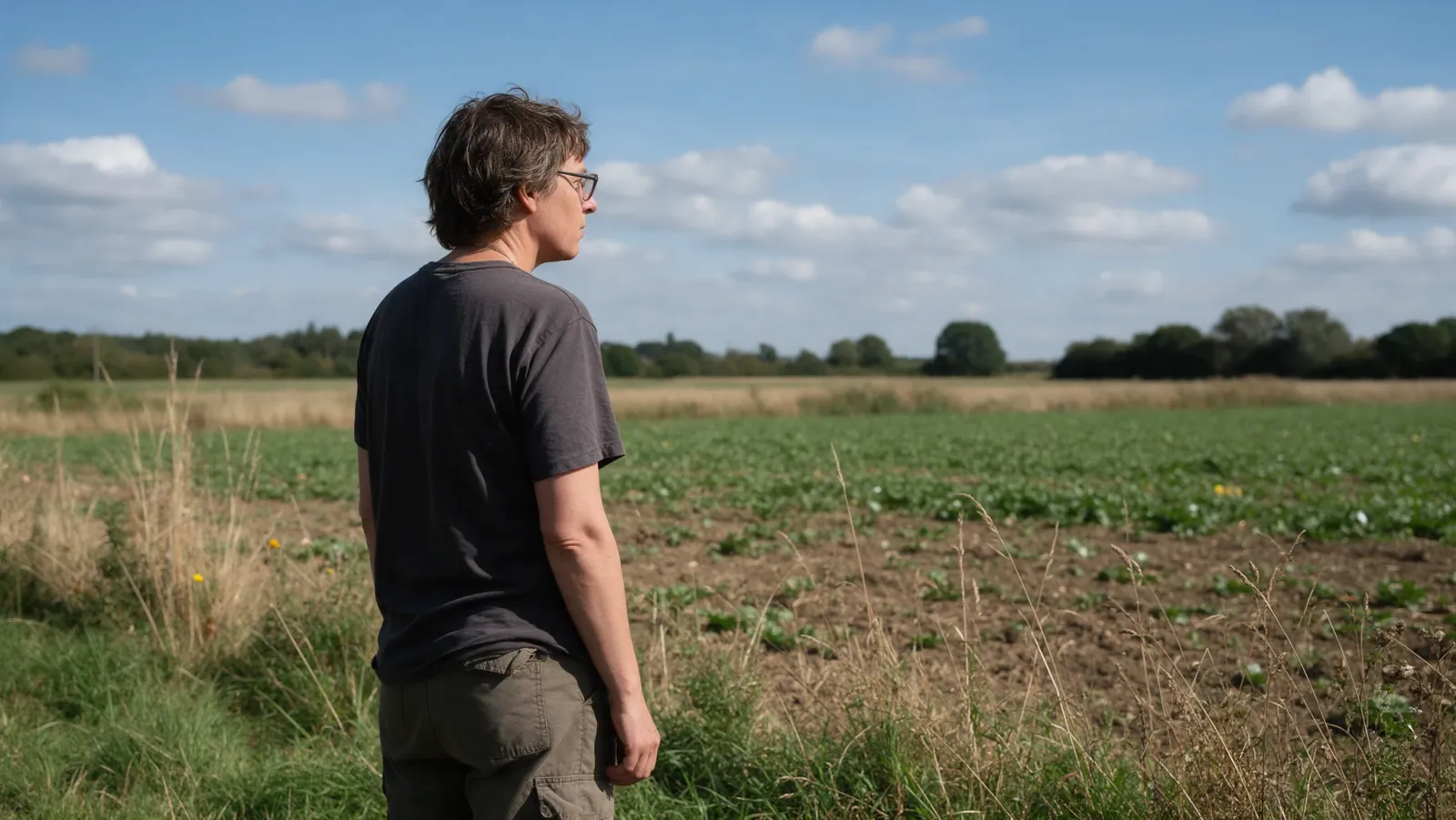
Standing still: how to read a stork's comfort line
A stork notices movement before colour, so a watcher who plants their feet and waits sees the bird relax and feed.
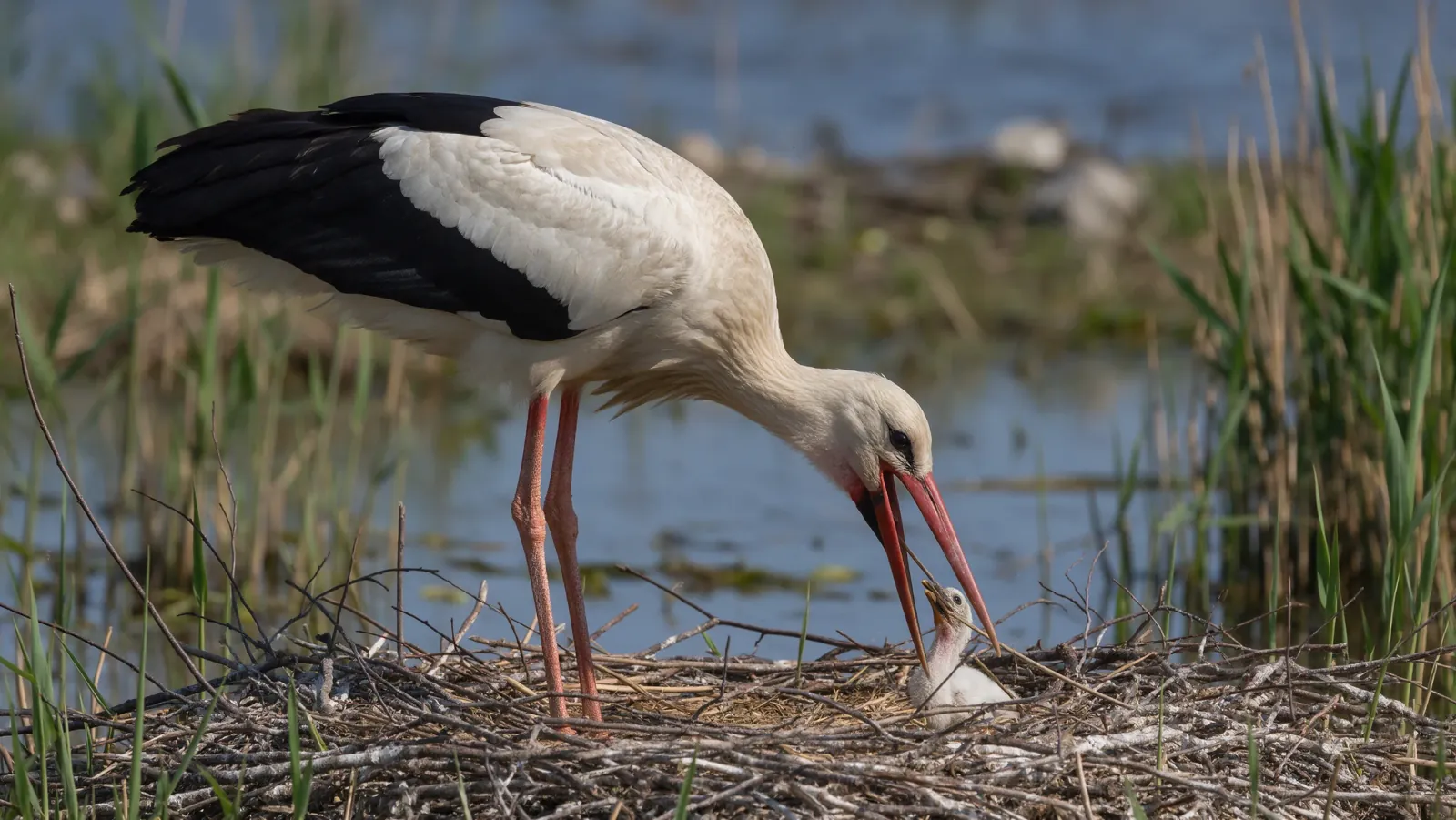
Stork clatter: the bill that greets, courts, and warns
The white stork has no song, so it throws its head back and snaps its bill to greet, court, and warn.
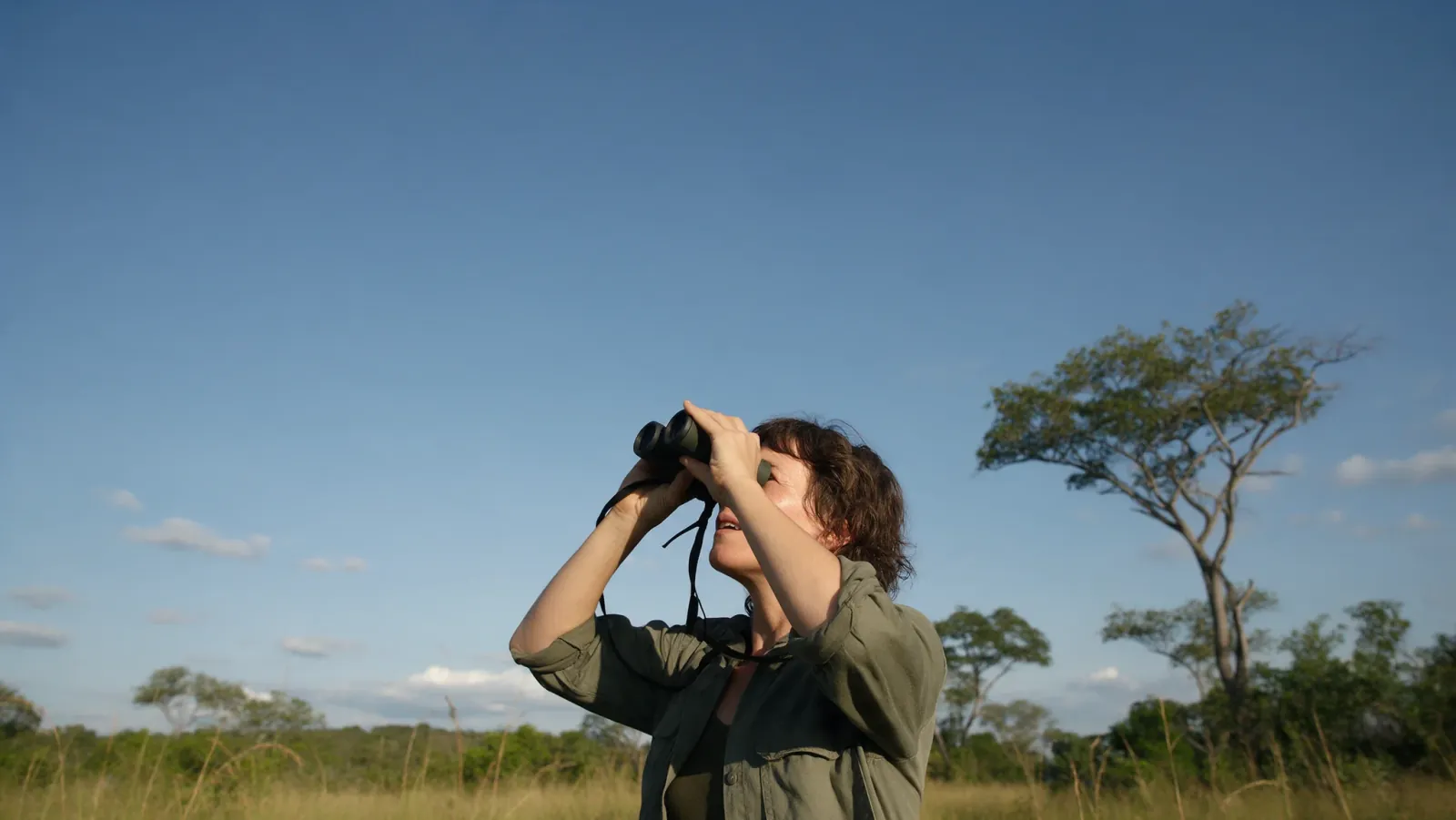
Reading the sky: thermals, wind lines, and the hour of light
Warm ground, a steady breeze, and low sun tell you where white storks will climb and cross before a bird appears.
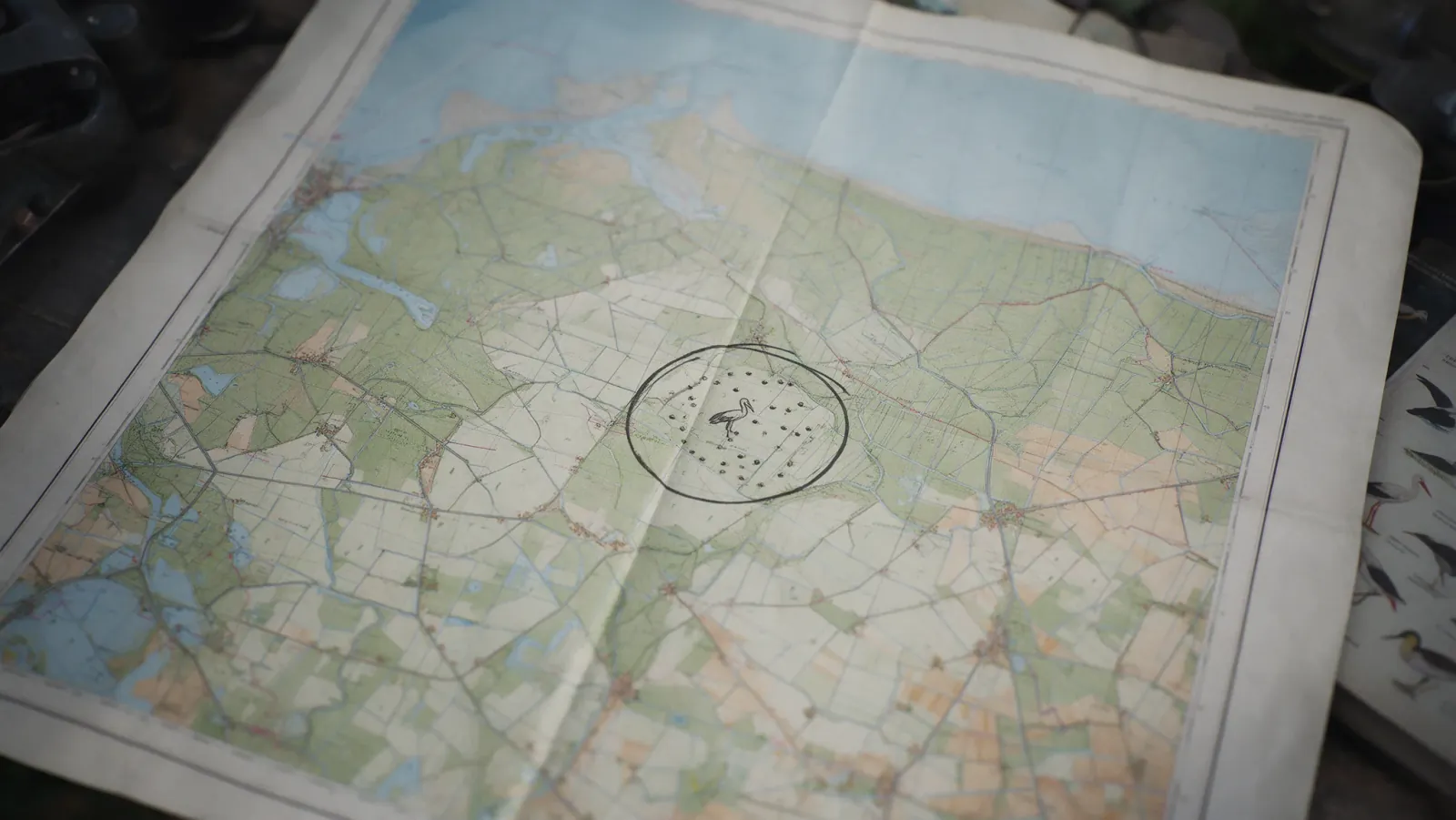
Finding storks: colonies, riverbanks, and the view from a train
White storks nest on chimneys, church towers, and raised poles, often in wet lowland villages closer than you think.
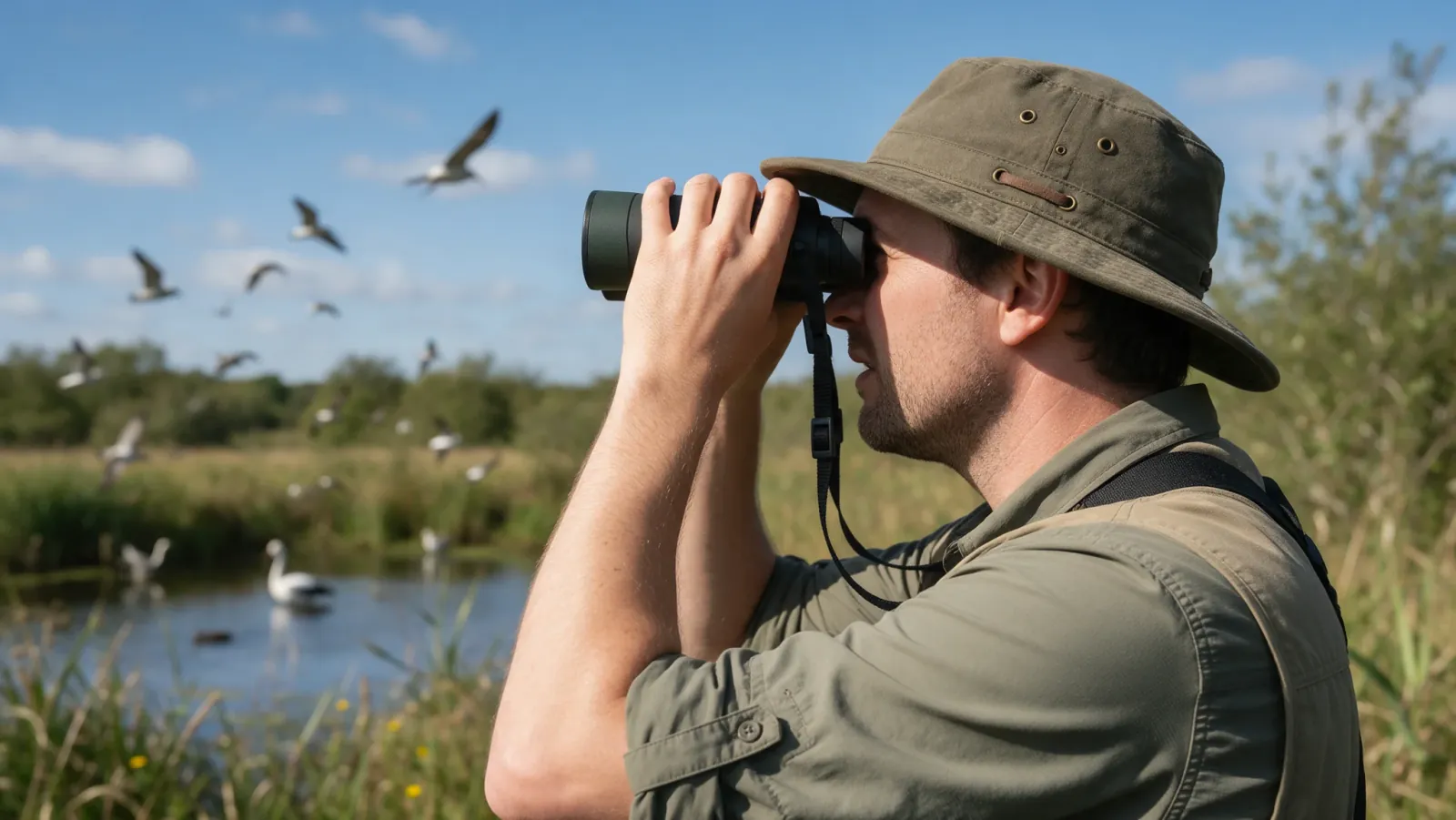
First trips: five mistakes, warm boots, and a child's pace
Walking straight at the bird, forgetting the sky, and mistaking a heron for a stork are all easy to correct.
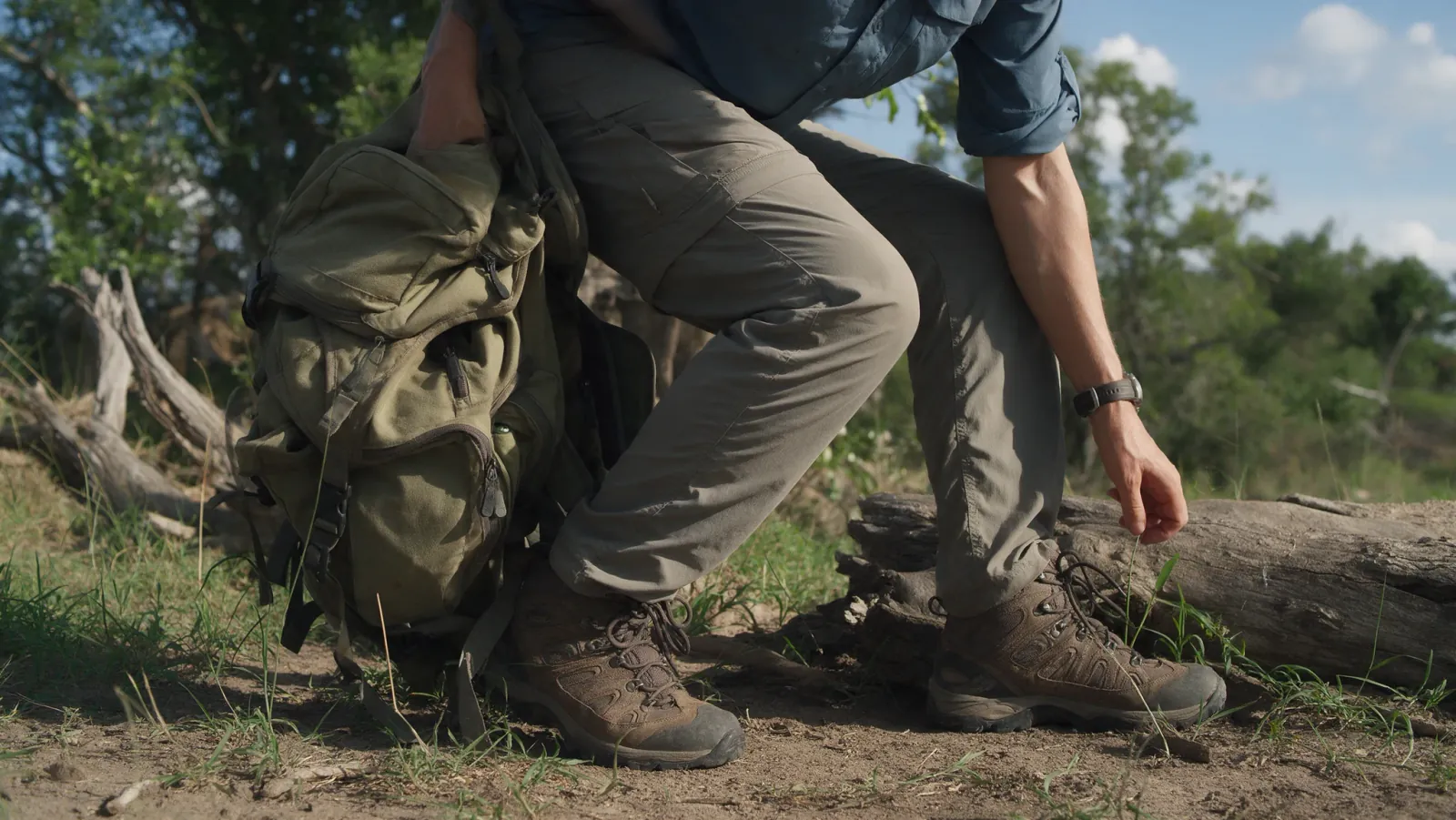
Returning daily: dates, habits, and the story a tracker tells
One visit shows you a bird; a season of visits shows the routine, the absences, and the day the first stork returns.
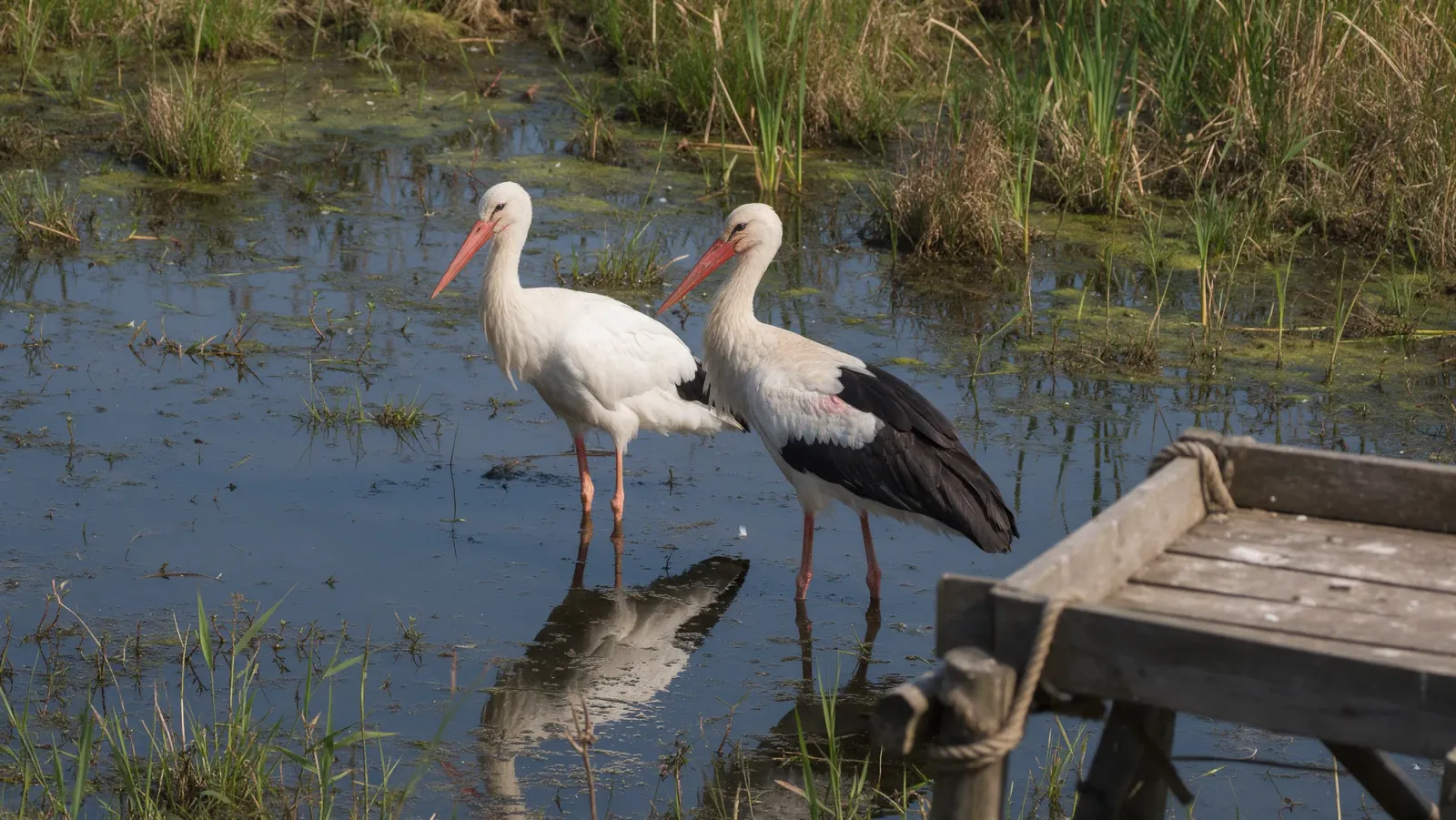
Telling storks apart: rings, habits, and the value of a blank day
A ring on a leg, a nick in a feather, or a bird that always feeds near the road turns a species into an individual.
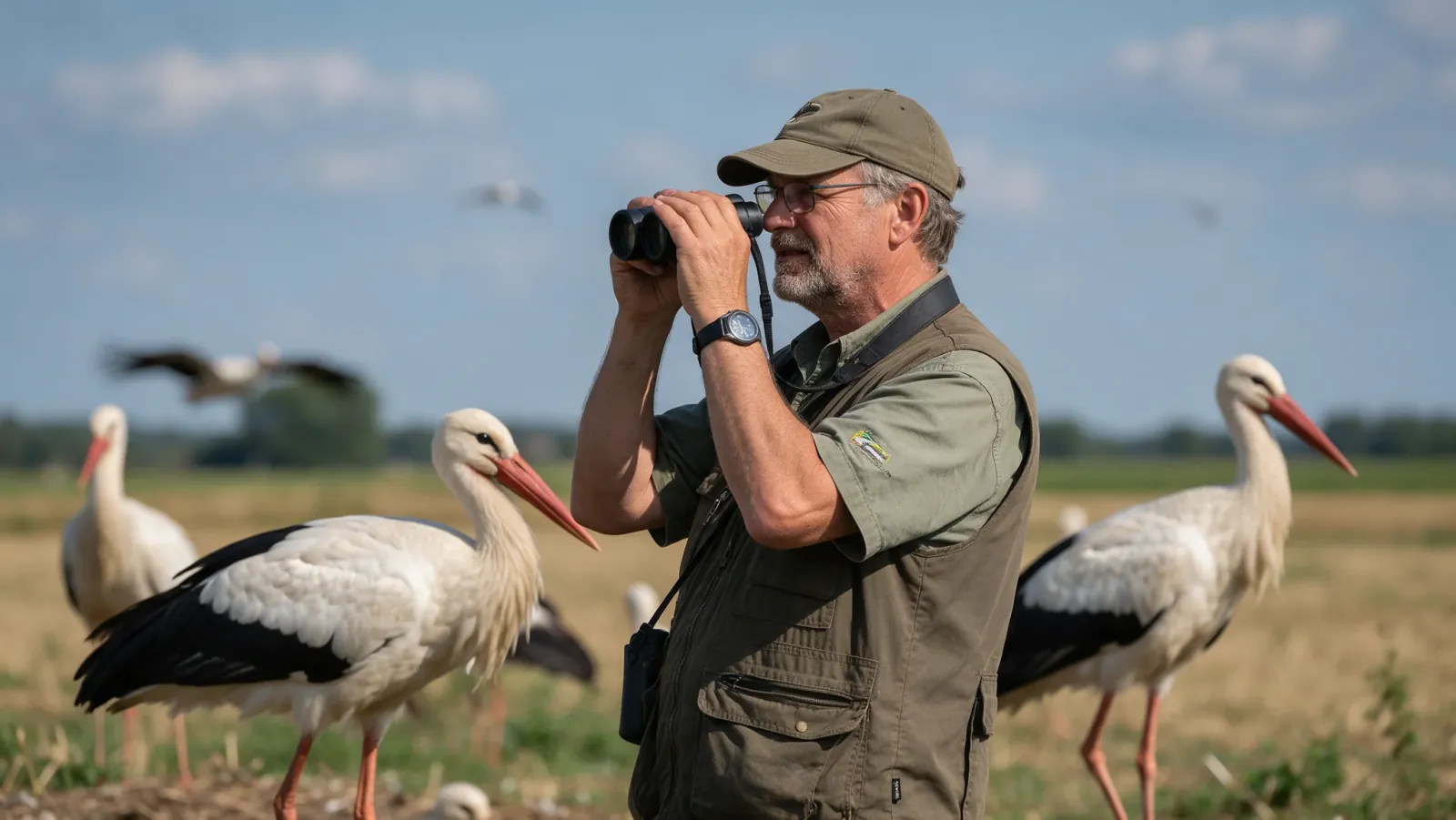
A year of stork watching: what each season asks of you
From the first March arrival to the empty winter nest, one local field gives every month a specific thing to look for.
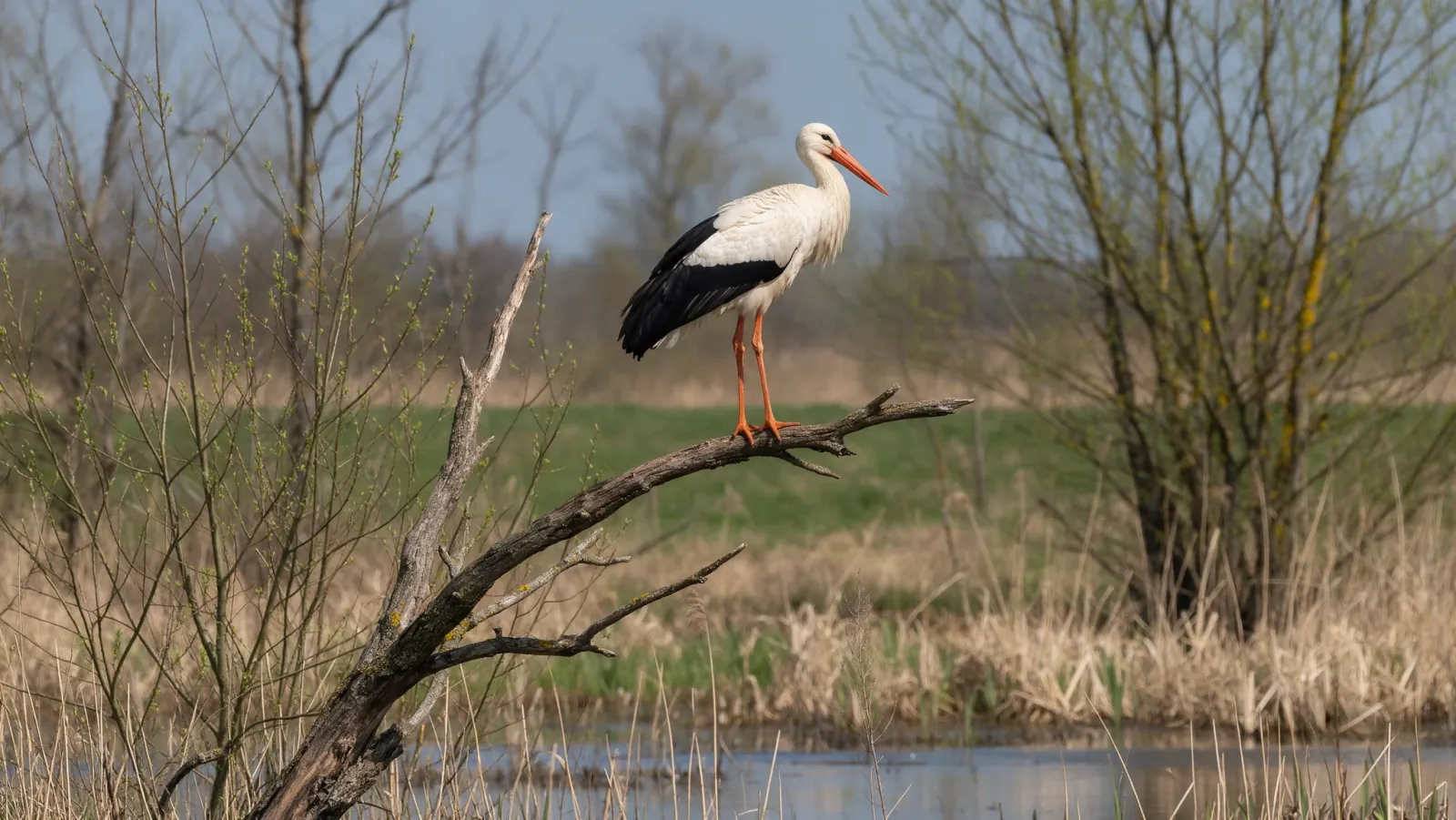
Your first stork of the season: where to look in late February
The first white stork usually appears over wet lowland in late February, weeks before the nests fill and the colony gets loud.