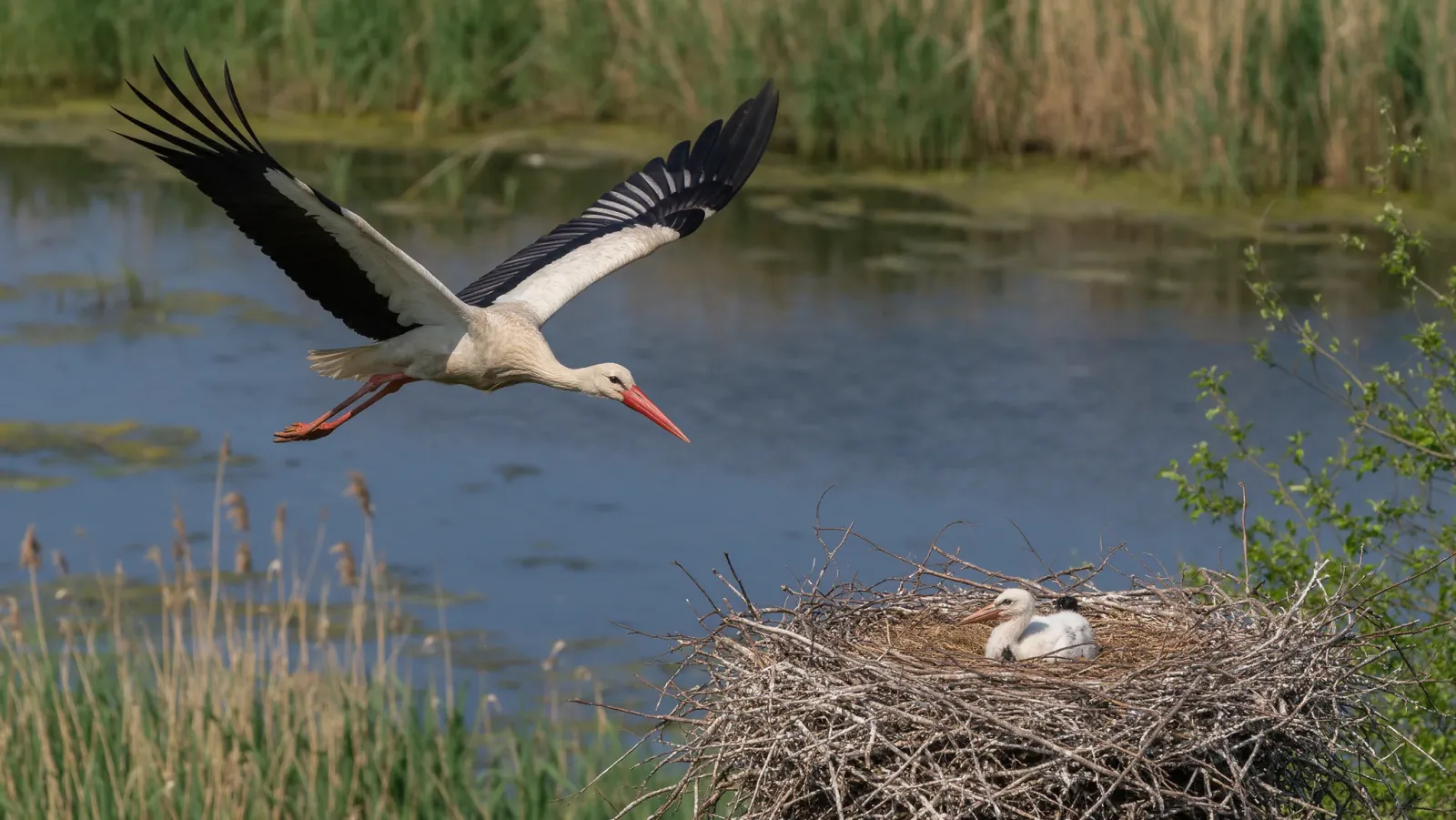
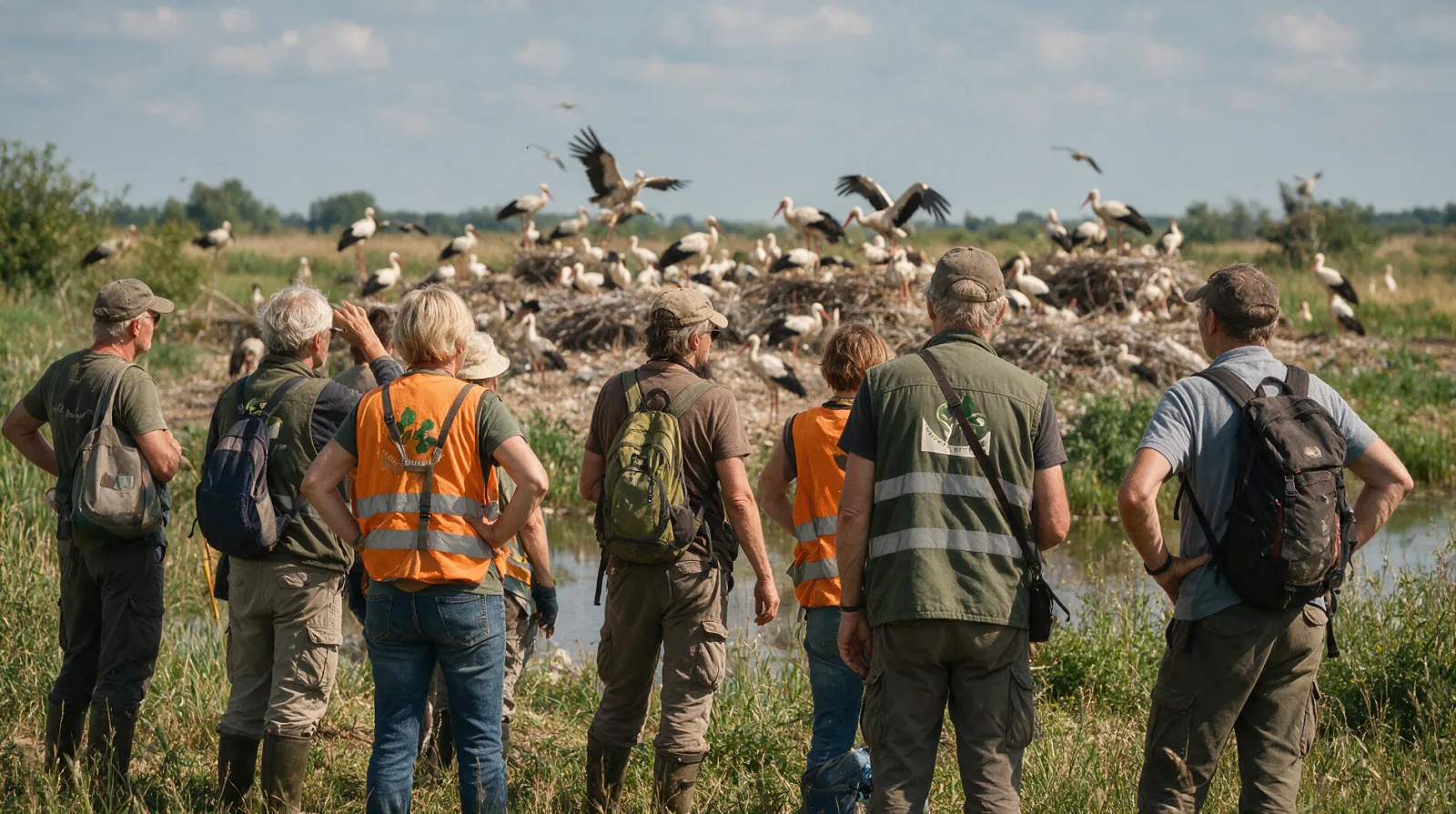
White storks like company and they like height. That combination makes a colony easier to find than most people expect. Look for wet lowland with villages in it, then look up.
Start with wet lowland
Storks need food within reach of the nest. That means shallow water, wet meadows, ditches, and the muddy edges of rivers and ponds. A colony usually sits in low, damp country where frogs, insects, and small fish are plentiful through the summer. Floodplains, old pasture, and farmland with ditches are good places to begin. Dry upland villages may have nests, but the birds travel further to feed, and the colony is often smaller.
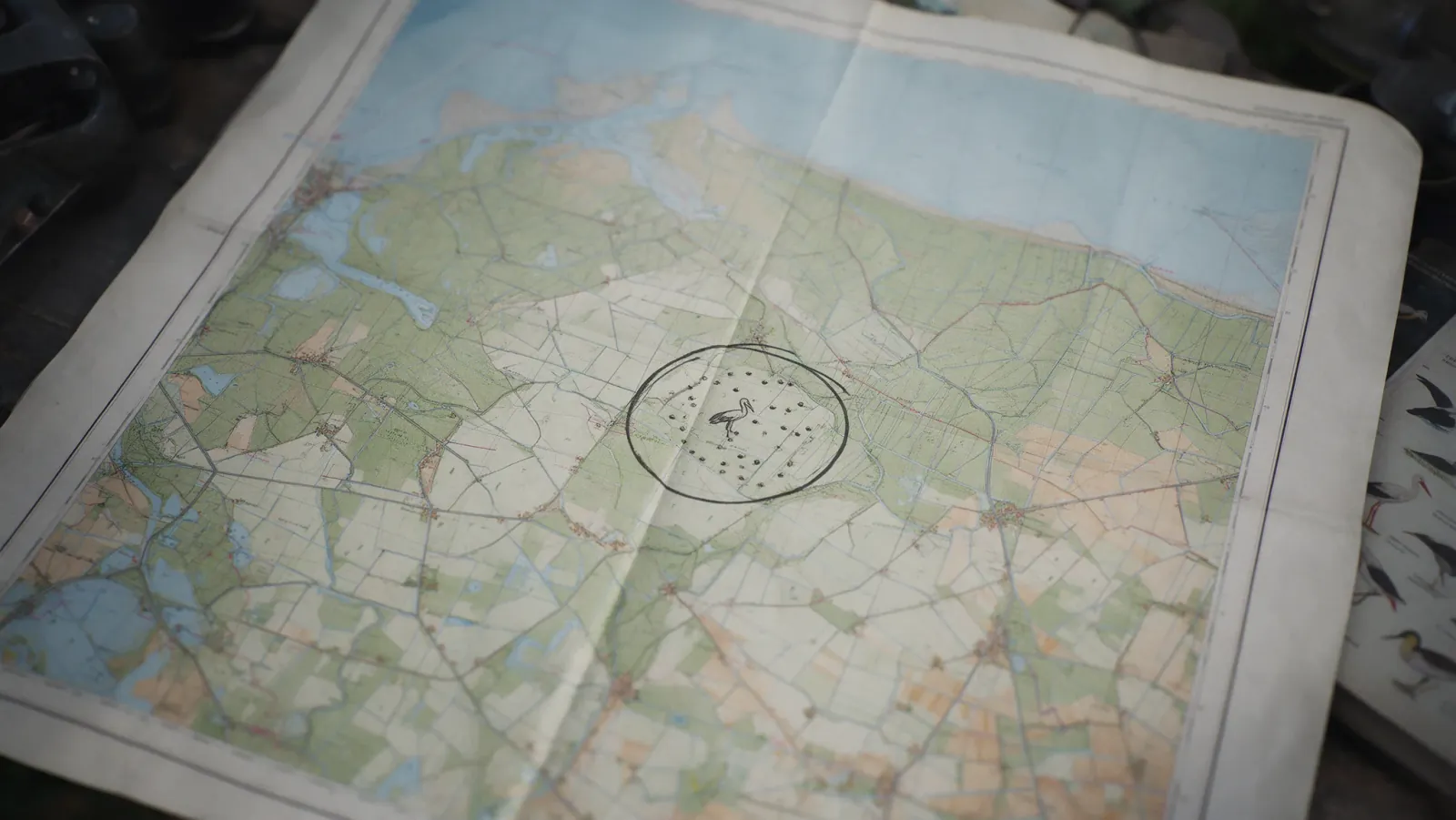
Water is the first thing to look for on a map. A river with a wide floodplain, a chain of ponds, or a low field that floods each winter will hold more storks than a tidy upland parish. A wet field within a few kilometres of a roof is what makes the roof worth using. The birds need that distance to stay short when chicks are small.
Roofs, towers, and poles
The nest sites are the giveaway. White storks build on chimneys, church towers, the tops of dead trees, and the platforms people raise on poles for them. In some villages almost every tall roof carries a nest. A line of untidy stick piles along the rooftops is the clearest sign of a colony. The birds add to the same nest year after year, so an old nest can be enormous. A nest that looks like a dark crown on a chimney is worth a second look in spring.
A platform on a pole is easy to spot once you know the shape: a wide tray of sticks and wire, fixed high, often with a shallow basket to stop the nest sliding off. The bird brings the rest of the material and builds the nest itself. Chimneys, ruins, and old trees do the same job where they still exist. The nest is above the clutter of the street, lit from the sky, and visible from a long way off.
Reading a nest from a distance
Stand back and use binoculars. A bird standing on the nest in March may be a returning owner. Two birds clattering means a pair is established. A bird lying low with only its head showing may be incubating. Chicks appear as small, dark, bobbing heads later in the season. Watch from the road or a public path and let the nest stay a nest. The birds tolerate a quiet observer at a distance and they do not tolerate a person at the base of the chimney.
A scope helps here. It shows the ring on a leg, the heads above the rim, and the change from one week to the next without moving you closer. Set it up where you are not blocking a pavement or pointing through a window, and keep the sun behind you.
The best months
Spring is the season of arrivals and courtship, and the colony is at its loudest. Early summer brings chicks and constant feeding trips. Late summer is quieter as the young fledge, and by autumn the nests empty and the birds gather before migration. A visit in May will show you more activity than a visit in August. Winter nests are worth noting for next year, when you can return and see who comes back.
A single nest on a farm roof is still worth watching. A true colony has several nests within sight of one another. A lone pair will show you the whole life of one family. Ask a shopkeeper, a farmer, or a neighbour which nests are active and where to stand without blocking a lane. Be brief, be quiet, and watch from public ground. A colony belongs to the village, and the birds belong to themselves.
The riverbank and the shallows
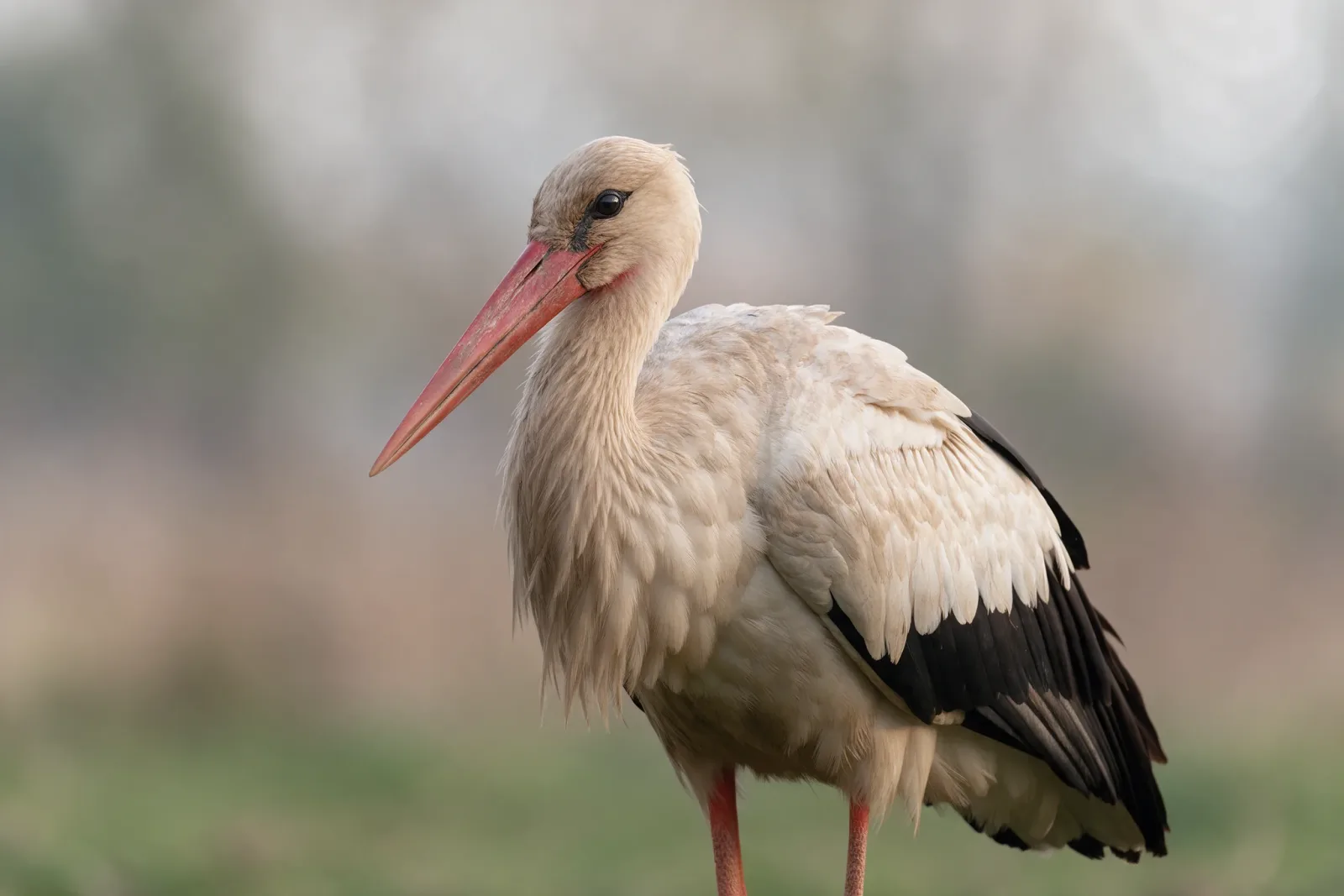
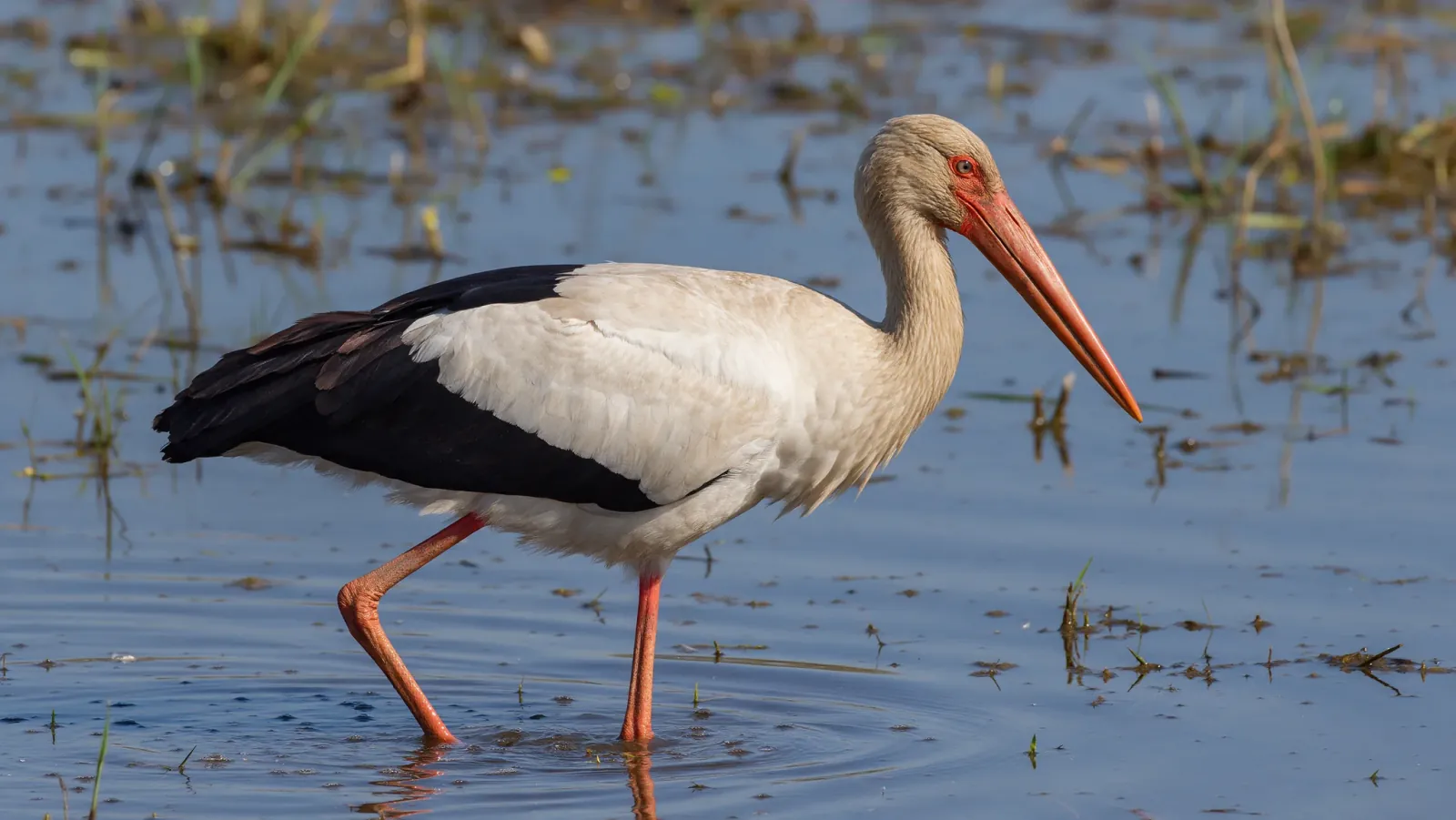
If you want to watch a stork at work, go to the shallows. A white stork spends much of its day where the water is thin, on the edge of a river or a flooded field, where it can see its food against clean mud. The bank gives you a place to sit and a straight view along the water. The shallows are a table set every day. The same stretch is worth returning to, because the bird knows it and works it in the same way. The bank is also a good place to learn patience, because the bird sets the pace.
The walk is slow: lift a leg, place it, pause. Then the neck shoots forward and the bill closes with a snap. Sometimes the bird misses and stands again as if nothing happened. The strike is the whole hunt in one motion. Watch for the pause before it, because that is where the aim happens. A miss is common, and the bird does not chase. It resets, looks, and waits. That small failure is part of the hunt, and a stork can fill its bill many times over before the chicks are satisfied.
A seat with the light behind
Find a low place on the bank and keep the water in front of you. A fallen trunk or a dry bank will do. Keep the sky out of your eyes and the glare off the water. The bird should be lit, and you should be a dark shape. A low seat also keeps your outline small.
A grey heron may share the same bank, and it is worth learning the difference. The heron stands with its neck folded and strikes with a dagger; the stork stands tall and strikes with a long straight bill. The heron often hunts alone and still, while the stork walks. Stay on the path, keep low, and let the bird keep its line. If it stops feeding and watches you, you are too close.
The train window
The view from a carriage gives you distance, height, and a moving frame. You are above the hedges, looking down into wet fields and across rooftops. The height of the window does half the work. Watch the flat, wet ground between stations: ditches, flooded corners, the muddy edge of a river. Then watch the roofs and poles as the line enters a village. A white stork stands still, and stillness is what your eye catches in a blur. Scan for a still shape.
A stork in a ditch may show only its head and back, so look for a white patch with a long red line beneath it. On a roof, the nest is the dark clump and the bird is the white flag above it. April and May give you the most birds per mile. Choose the window that faces the sun, because side light picks out white birds against dark fields. Look at the middle distance rather than the far horizon. A glimpse of a white stork in a green field is a real sighting, and it counts even if you could not raise binoculars.
A route can be as good as a patch. If you travel the same line often, note the stations and the fields between them, and you will learn which stretches are reliable. For a way to follow one bird between journeys, the flock page is a good place to start.
Explore the gift