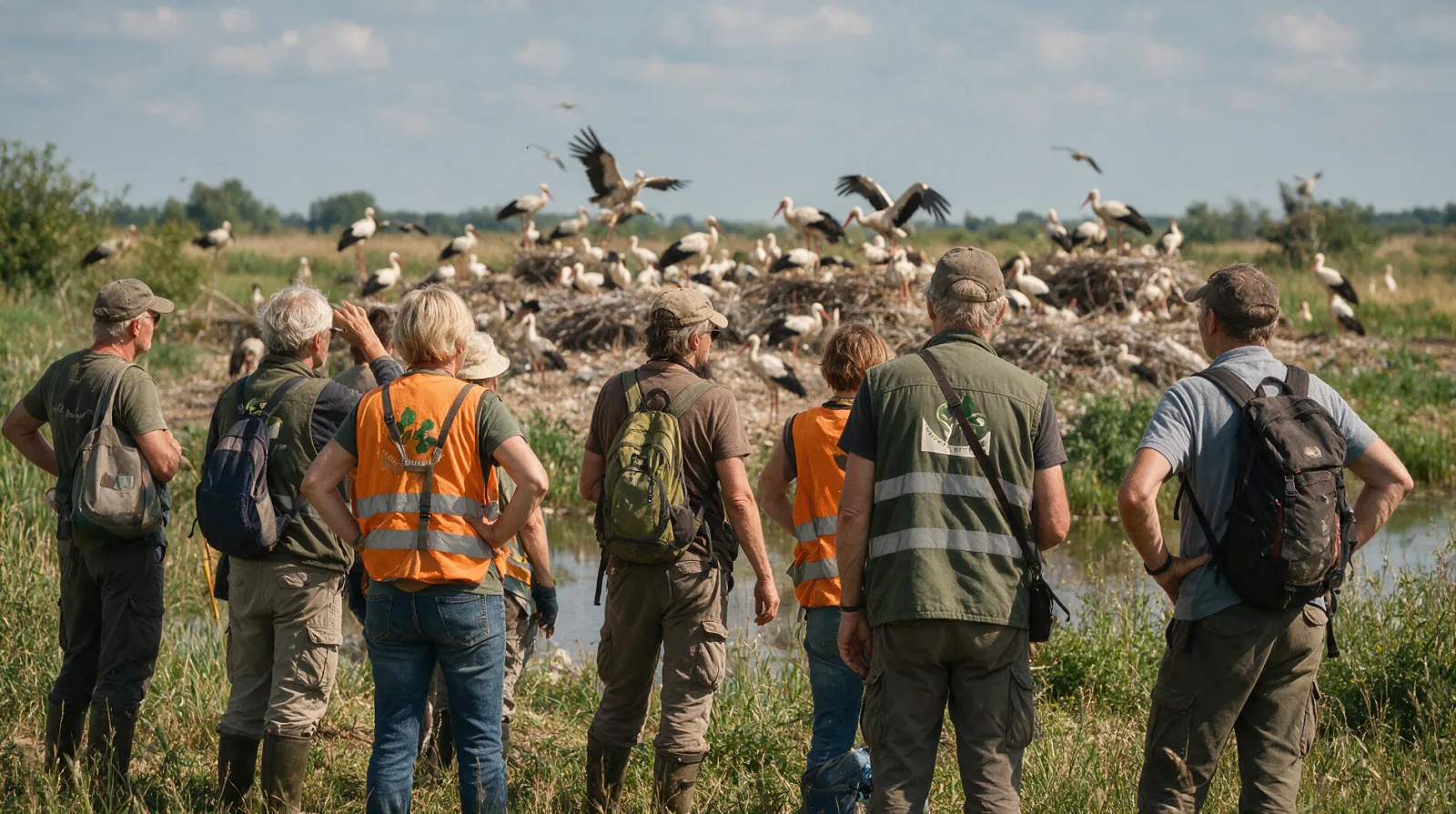
Most of the people who watch a stork colony are not paid, and they come back every spring. They are retired teachers, shopkeepers, nurses finishing a night shift, teenagers with a first pair of binoculars. What they share is a feeling that the birds on the chimneys are neighbours.
Who stands there
The shifts are unglamorous. Early morning before work, late evening after it, a flask and a notebook, storks clattering overhead. A colony with wardens is a colony that has been adopted by the street it lives on.
A volunteer warden keeps the nests counted, the dogs back and the first fallen chick from being the last. The work is a standing promise: watch the birds through the nesting season, keep disturbance down, and be on hand when something goes wrong. Nobody pays them, and they return every year.
Some arrive through a local group, some simply live beside a nest and start watching. A rota forms around jobs and school hours. The people who do it are not specialists, and that is part of the point: a colony watched by its neighbours needs no permit and no budget.
Reading the nests
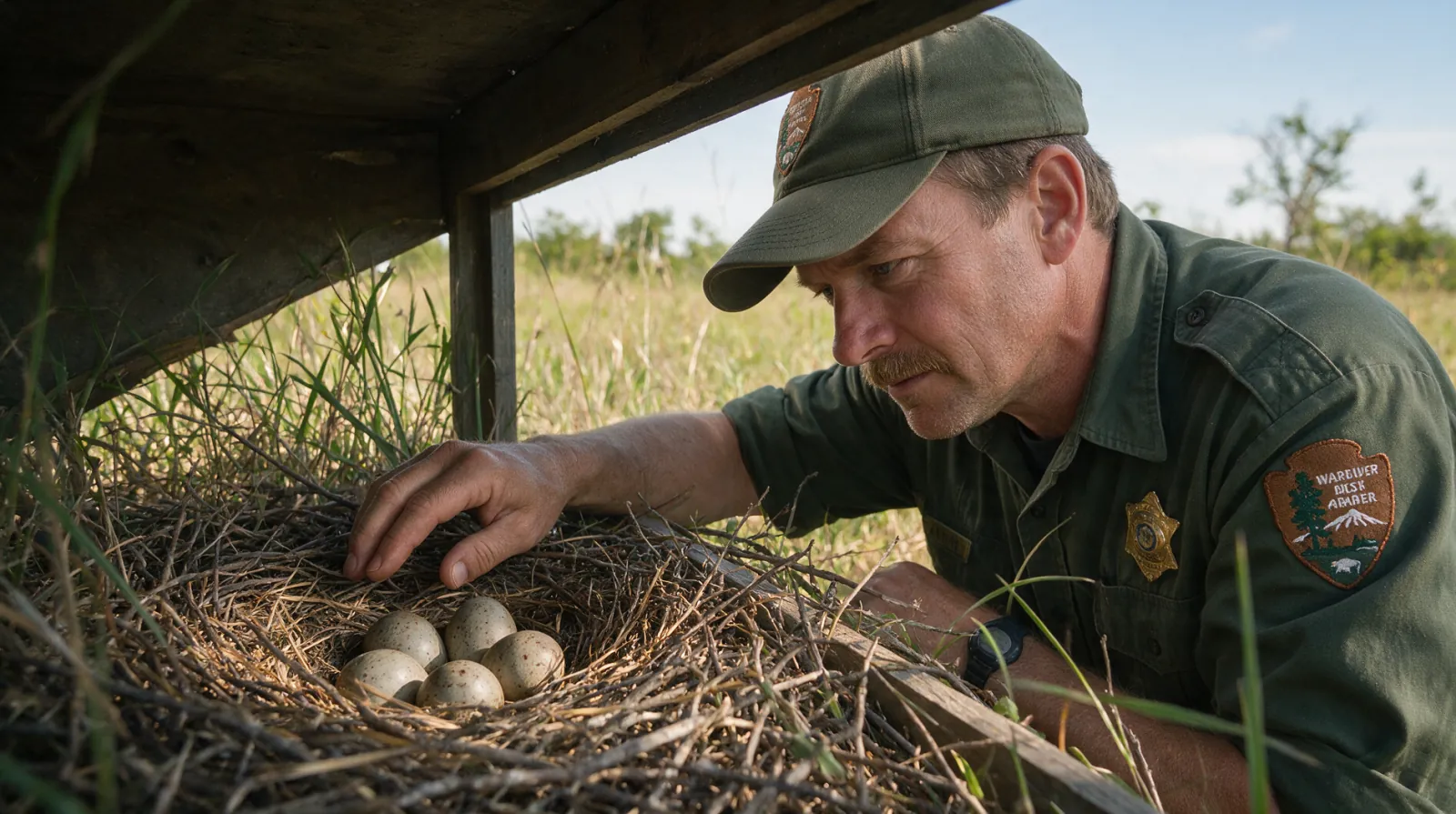
A conservation ranger does most of the work with a pair of boots and a pair of eyes. The job is attention: walking the same ground, watching the same birds, noticing the small change that comes before the large one. How many pairs are on nests, whether the chicks are growing, whether a parent is feeding or sitting too still.
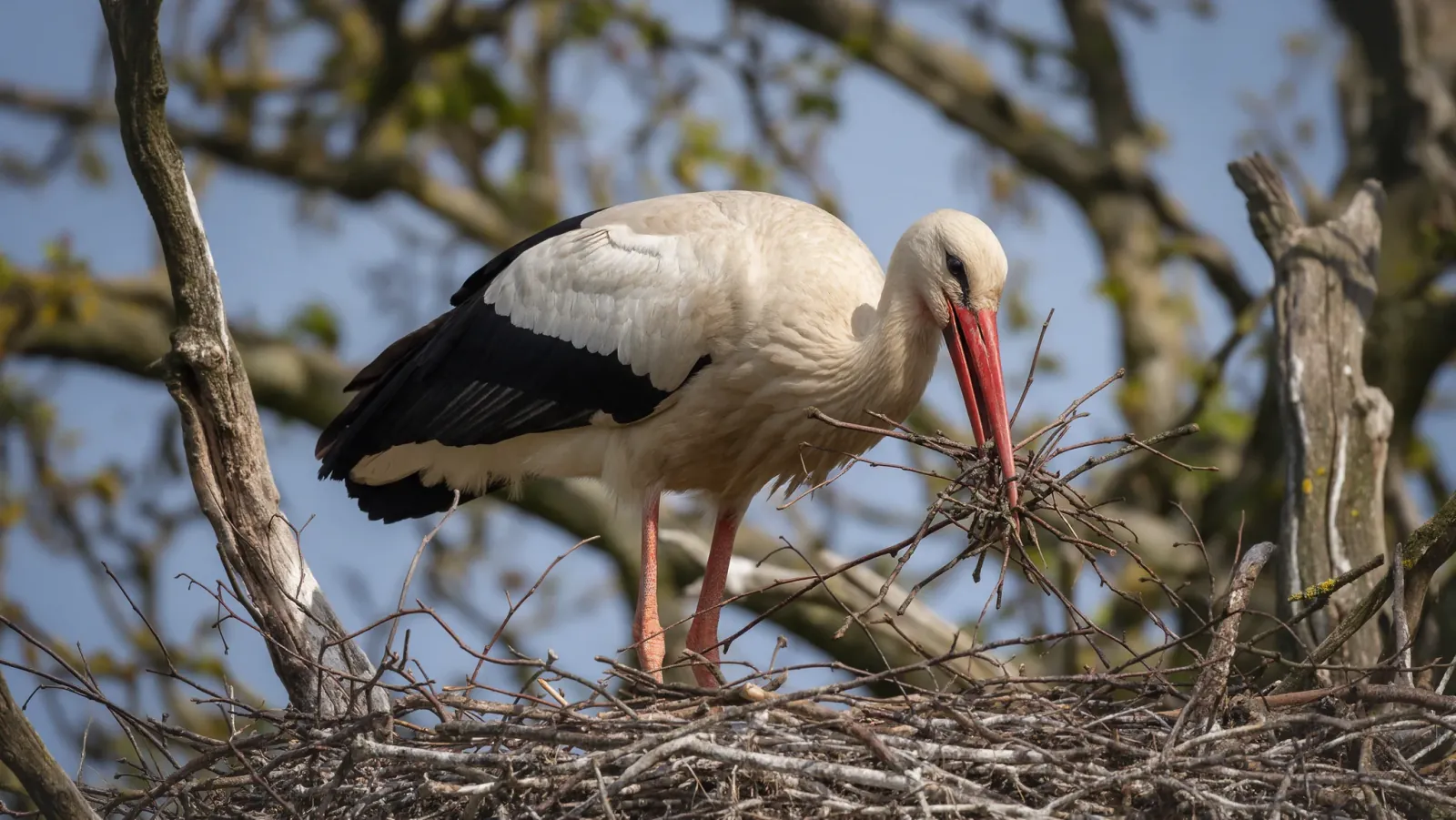
A healthy colony shows itself in small signs: a bird returning with a bill full of frogs, a chick lifting its head, the ordinary racket of a busy nest. A nest that has gone quiet is the first warning, and the ranger usually hears it before the count confirms it. A chick pushed away from the food by its siblings, a bird that will not settle, an adult that has stopped coming back. Each is a small thing that can decide a season.
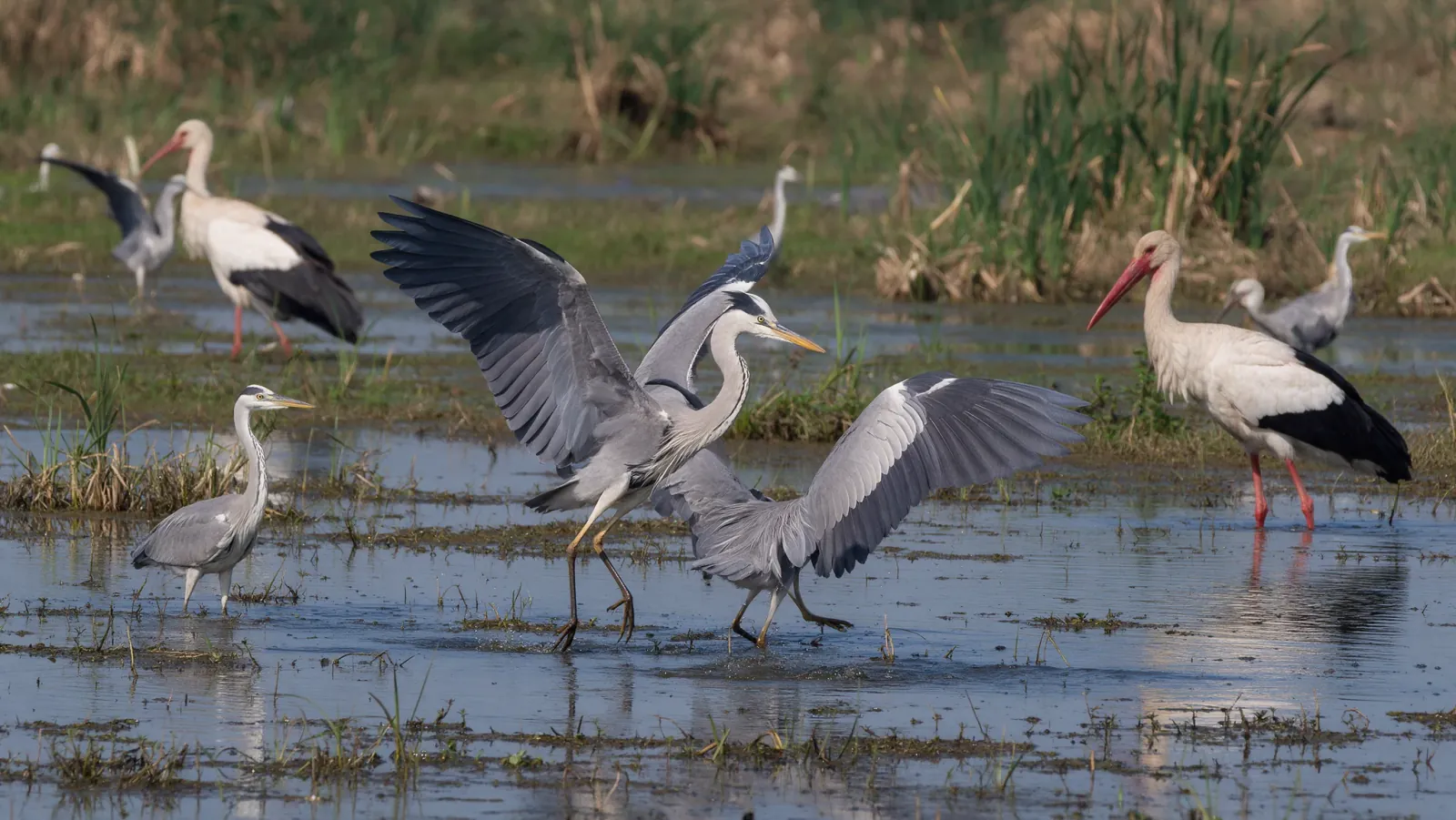
The ranger also reads the water. Storks depend on shallow water, so the level in the pools, the speed it drops in a dry spell and the number of frogs and insects along the edge all matter. If the food thins, the nests show it within days, and by then the cause is harder to fix. A ranger watching the water is really watching next month's nest.
The notebook
The first egg goes in as a date and a few words. Then the changeover on the nest. The first downy head above the rim of sticks. The day the chicks start standing. Each entry is small, and together they make a record that no single observation could.
Most of the work is counting. Nests built, eggs laid, chicks hatched, chicks fledged, and the date each thing happened. The numbers look small in a notebook and add up to the health of the whole colony. The count is the backbone of the whole effort, and it is made of ordinary evenings. Without it, a bad season is a rumour. With it, a bad season is evidence, and the local authority and researchers can act on it.
Over years the notebooks stack up, and what they describe is one place and its birds across a decade, seen from one chair behind one window. Some of the watching is about weather. A late frost, a week of rain, a heatwave in July: the warden notes how the chicks cope and whether the parents can still find food. A wet cold spell can empty a nest in days, and a hot one can kill chicks too young to shade themselves.
People at the gate
A warden is also the person who explains things. Why the dog should stay on its lead. Why the drone should stay on the ground. Why the path stops short of the nest. Most visitors take the point and thank them, and some come back to stand and watch.
The tone matters. A warden who scolds loses the visitor; a warden who explains keeps an ally. Protection at a colony is mostly a conversation held at a gate, repeated a hundred times a summer.
Some threats walk in on two legs. A ranger looks for footprints where there should be none, a cut fence, a dog loose in the reeds, a photographer who has come too close. Storks tolerate people up to a point, and past that point they leave. Most visitors do not mean harm; they simply do not know how far a nest can be disturbed.
The small rescues
Sometimes watching turns into doing. A chick falls from a nest and is found on the grass, and a warden makes the call that gets it back up or to a carer. A nest is blown loose in a storm, and the wardens are there at first light to see what can be saved.
Those moments are the ones people hear about. They rest on all the uneventful hours before them, when the wardens learned the nests well enough to notice the moment something changed. A rescue is a sprint at the end of a very long, quiet run.
A stork nest is a public thing. It sits high on a pole or a chimney where everyone can see it, and everyone has an opinion. People come close for a photograph. Dogs run through the field. Drones rise over the roof. A disturbance at the wrong moment can make a sitting bird leave its eggs, and eggs left in cold weather do not hatch. The warden keeps the line between watching and interfering. A nest with a witness is a nest that the whole street treats more carefully.
The last entry
By August the young are as big as their parents and spending more time on the wing. Then one morning the family rises, circles, and turns south. The warden writes the last line and closes the notebook, and the hide goes quiet for another year.
Staying all summer is easy to promise and hard to keep. It means early mornings with mist still on the field and long evenings when the light turns gold. There are dull stretches when nothing moves for hours, and the warden stays anyway, because staying is the job. The value of the watch is in the hours when nothing happens.
The nest stands empty through the winter. The record stays, and next spring someone will be back in the chair before the first bird arrives. New faces arrive as others grow older, the notebook passes from hand to hand, and the promise is renewed without ever being written down.
A season's notebook is useful on its own. A decade of them is evidence. The difference is kept by people who stay, and by the younger ones who learn where the frogs call and why the gate stays shut.
The slow changes are the ones a long watch catches. A reed bed drying at one edge. A channel silting up. A hedge cut harder each winter. None of it looks like much in a single season, and together it is how a wetland is lost without anyone noticing. A ranger is the marsh's memory: someone who can say what the ground looked like last year, and the year before, and when it began to slip.