Dreaming of a stork is read in popular dream lore as a sign of arrival, change, or a household matter already on its way. The readings are old in places and modern in others, and none of them is a prediction. A dream dictionary is a catalogue of associations, not evidence. These are the readings people most often look up.
A stork in flight
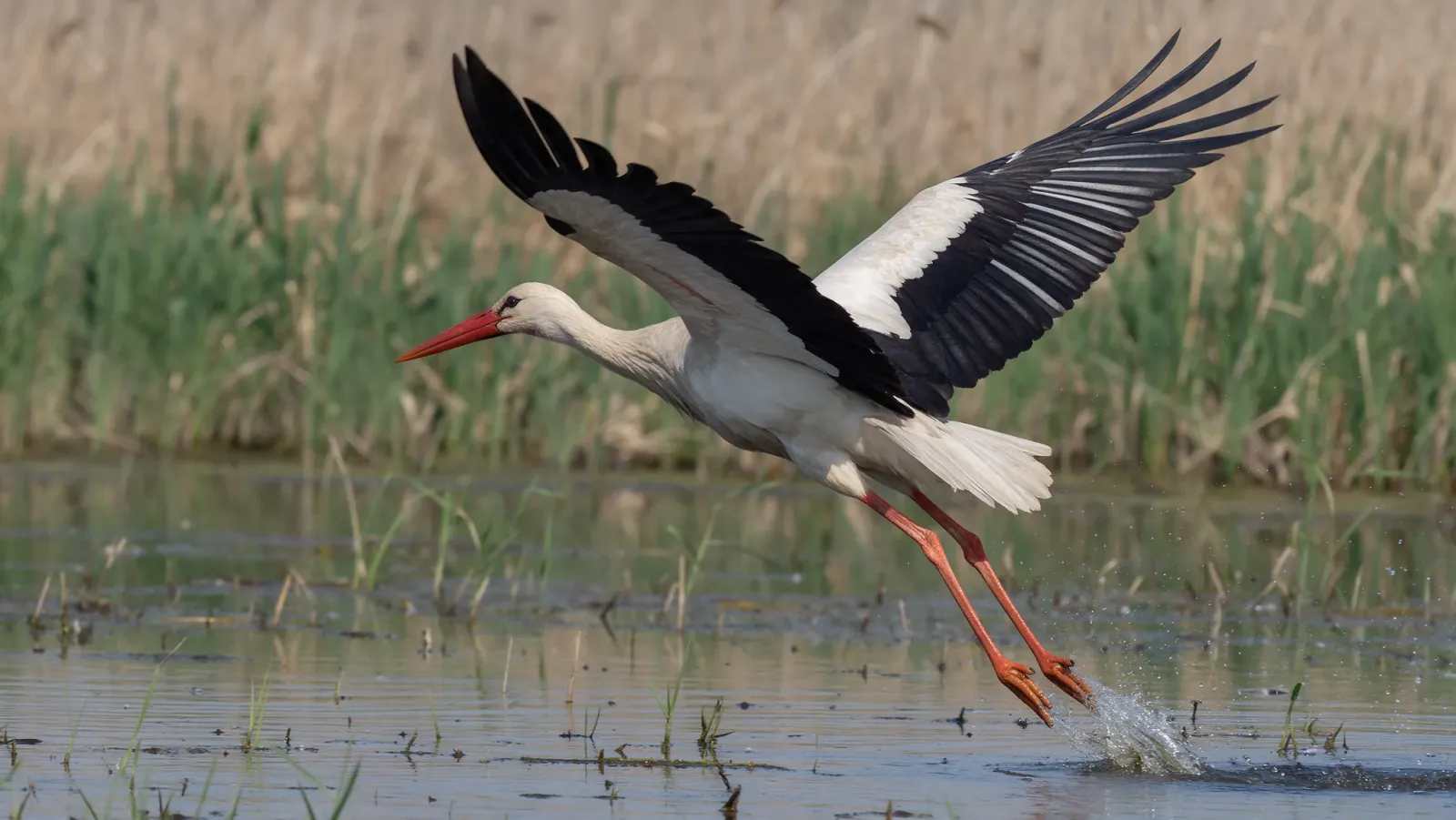
Flight is the most common image. A stork overhead is read as news coming, a journey, or a change that is already moving. In old folklore a stork in the sky was a good omen, and the bird's annual migration gave the idea a natural shape: something leaves, crosses a great distance, and returns. A dream of a stork flying north is often read as a return to ordinary life. A bird flying south is read as a departure or a necessary ending. The directions are a convention, and the feeling in the dream matters more.
A stork on the roof or the nest
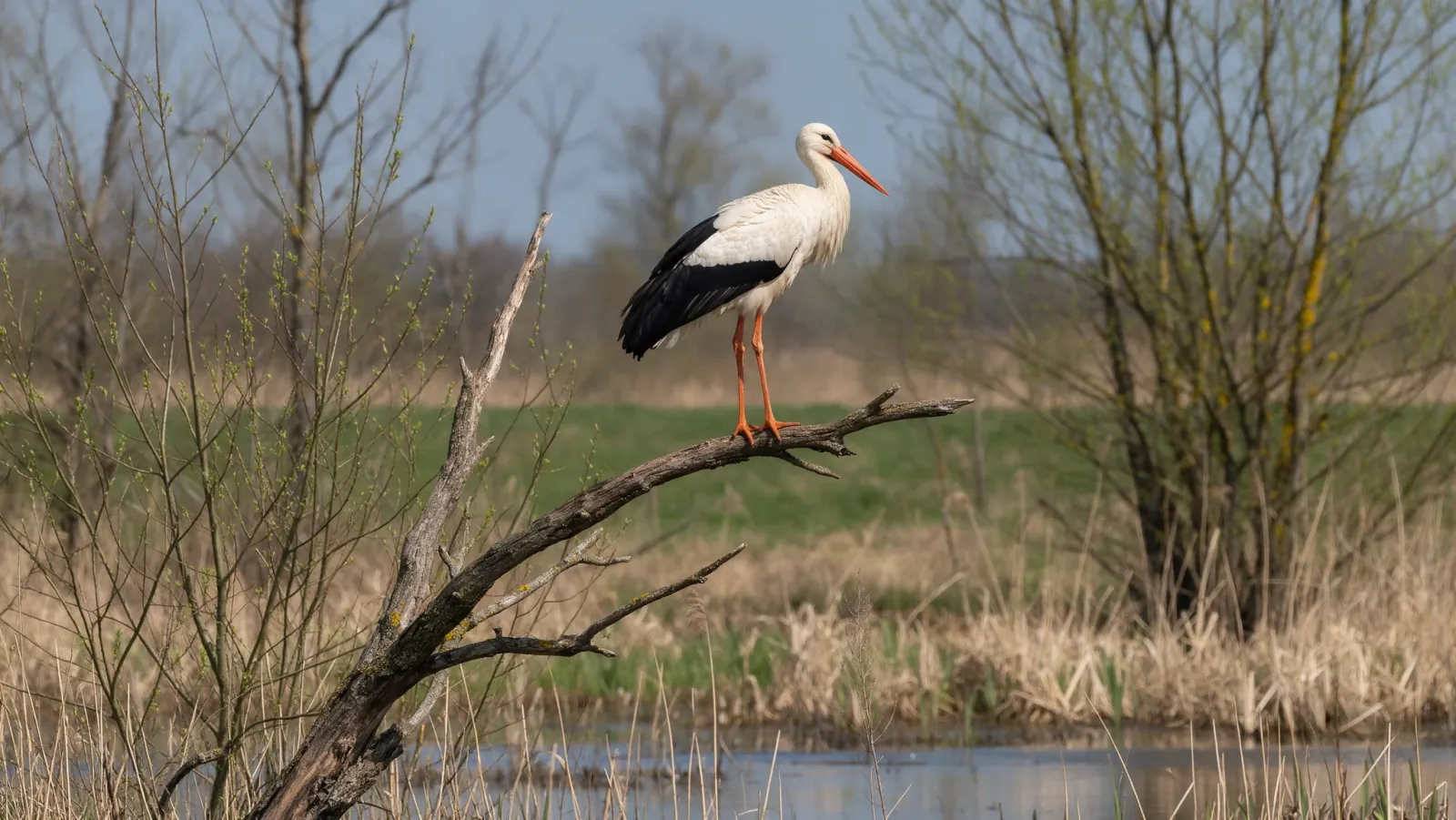
The roof setting pulls the dream toward home. Popular readings give a stork on the roof as domestic happiness, a house, a family matter, or a return. A nest with eggs is read as a project or a hope that is being tended. An empty nest is read as waiting. The nest is the most domestic image the bird offers, and dreams tend to use it for the parts of life that are built slowly. If the roof is unfamiliar, the reading often turns to a change of address or a new responsibility.
A stork carrying a bundle
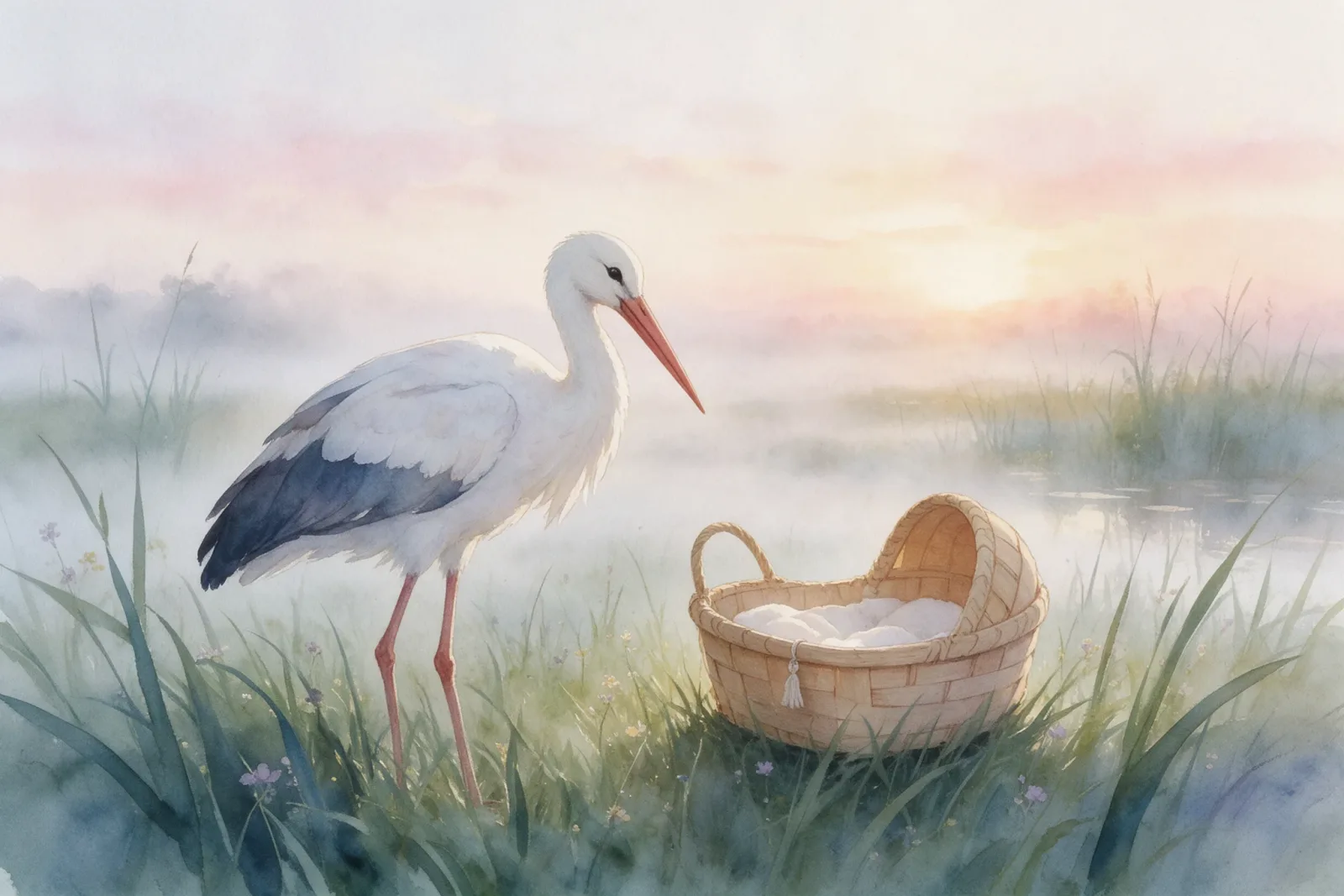
The bundle is the baby story, and in a dream it is read as a birth, a project, or a new responsibility. For someone not expecting a child, the reading is usually figurative: something is being delivered that will change the household. The bundle can also be read as news, a package, or a decision that arrives from elsewhere. Dream lore likes the bundle because it is a clear picture. It gives the dream a direction: something is coming toward you, and it is wrapped.
White and black
The white stork is the common dream bird, and its white plumage is read as clarity, openness, or a fresh start. The black stork is a different species, shy and forest-living, and in dream lore its dark plumage is read as secrecy, solitude, or a matter not yet spoken. The two are not moral opposites. A black stork is not a bad omen, and a white one is not a guarantee. The colours carry mood, and the mood is the dreamer's own.
A stork standing still
Stillness is read as patience. A stork that stands in shallow water and does not move is hunting, and the dream image can mean waiting for something to surface. A bird on one leg is a picture of rest and balance. If the stork is standing on a roof and looking at you, the reading turns to attention: something is being watched, or someone is waiting to be noticed. These are associations, and they work best as questions rather than answers.
An injured or dead stork
Popular dream books treat injury as worry about a plan, a home, or a person. A dead stork is often read as an ending, a hope that has gone quiet, or a change that cannot be undone. The readings are blunt, and they say more about the dreamer's mood than about the bird. A dream of an injured stork can also be a plain reflection of concern for an animal, especially for anyone who has been following a real bird on a map.
Reading your own dream
Start with the feeling, not the dictionary. Notice the setting, the weather, and whether the bird was close or far. Write the dream down before it fades, and look for the part that stays with you. A dream about a stork is a dream about the associations you already carry, and those associations are usually plainer than any symbol book. The stork may mean a baby, a house, a journey, or nothing more than a large white bird you saw last week. If the dream leaves you wanting a stork of your own, adopt one and give the image a route.
Explore the gift